
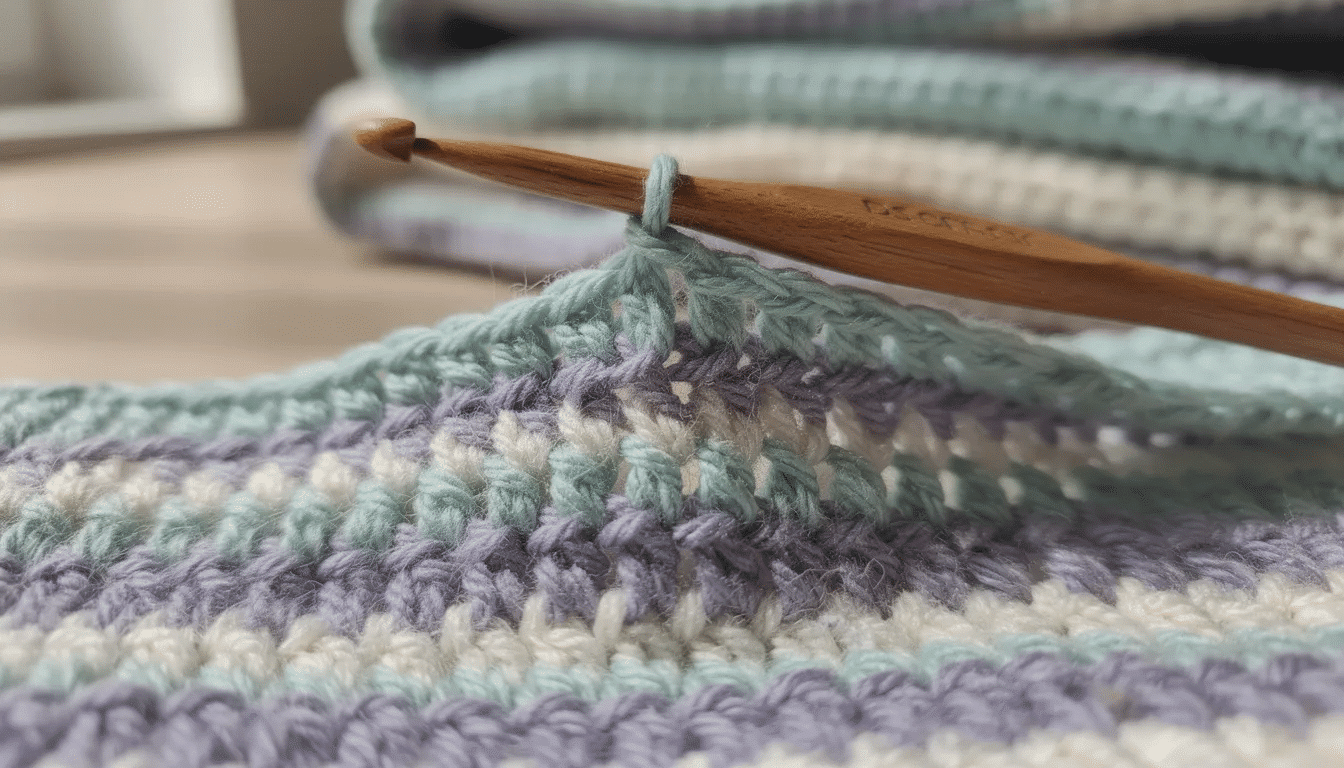
Learning stitch crochet opens the door to creating everything from cozy blankets to adorable toys. If you’ve ever watched someone’s hands move rhythmically with a hook and yarn and wondered how they do it, you’re in the right place.
Stitch crochet refers to the practice of learning, mastering, and combining individual crochet stitches to create fabric. Each stitch is a building block—a single unit that, when repeated and combined with others, forms scarves, garments, home décor, and amigurumi toys. Understanding these stitches is the foundation of every crochet project you’ll ever make.
This guide is designed for beginners starting their crochet journey in 2024 and 2025. You’ll find clear, step-by-step instructions for basic stitches, a breakdown of US versus UK terminology, and practical tips for reading patterns and improving your technique. By the end, you’ll have the confidence to pick up your hook and create something beautiful.
- Essential Tools and Materials for Stitch Crochet
- Understanding US vs UK Crochet Stitch Terminology
- Foundation Skills: Slip Knot, Chain Stitch, and Slip Stitch
- Core Crochet Stitches (US Terms)
- Stitch Crochet in the Round and Special Techniques
- Practical Stitch Crochet Projects for Practice
- Reading Crochet Patterns and Stitch Diagrams
- Finishing Techniques: Fastening Off, Weaving In Ends, and Blocking
- Tips for Improving Your Stitch Crochet Technique
- Key Takeaways
Essential Tools and Materials for Stitch Crochet
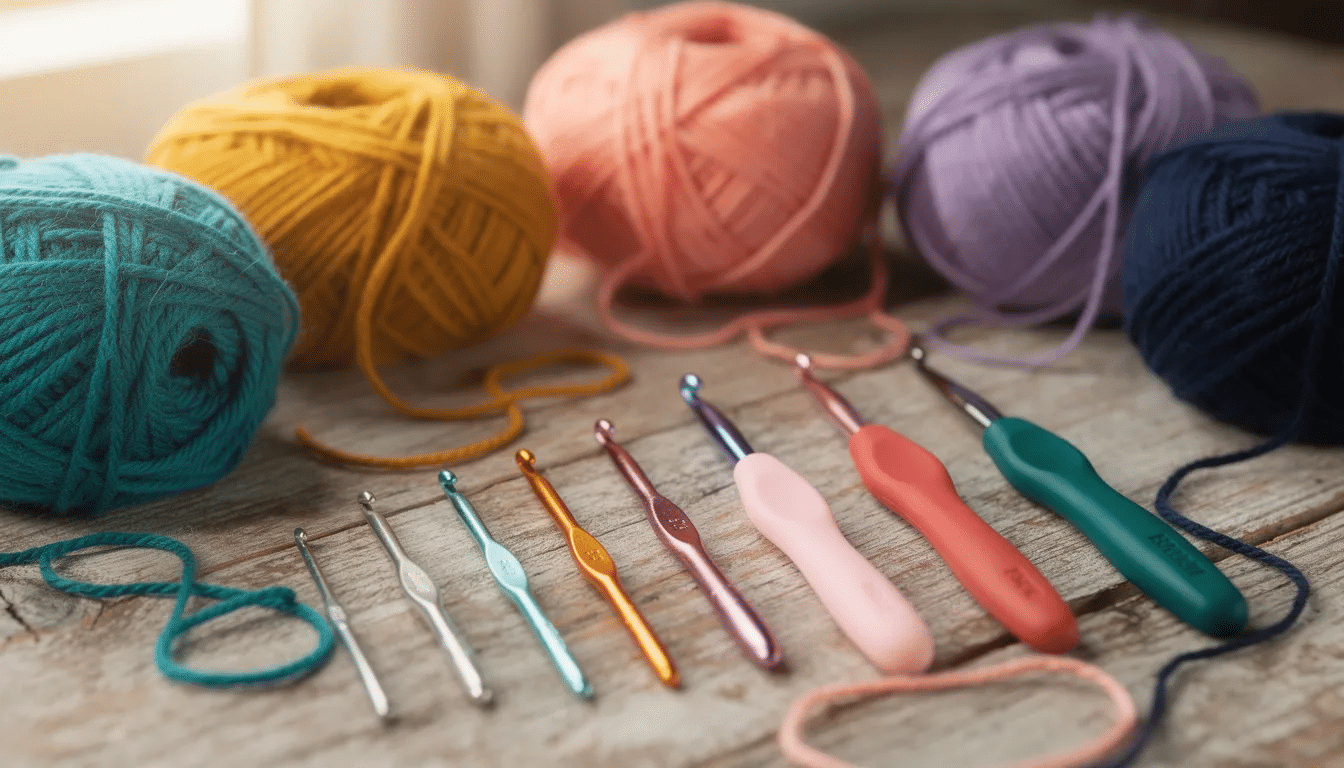
Having the right tools makes learning stitches easier and helps you achieve consistent results from your very first row. Before diving into techniques, gather these essentials.
The crochet hook is your primary tool. For beginners, start with a 4.0 mm (G/6), 5.0 mm (H/8), or 5.5 mm (I/9) hook paired with medium-weight yarn (worsted, category 4). This combination gives you enough stitch definition to see your work clearly while being comfortable to handle.
Hook types to consider:
- Aluminum hooks: Smooth, affordable, and widely available
- Ergonomic plastic hooks: Feature cushioned grips that reduce hand fatigue during long practice sessions
- Bamboo hooks: Lightweight with a slight grip that prevents yarn from slipping
Yarn choices for learning:
- Smooth, light-colored acrylic or cotton yarn works best for beginners
- Avoid fuzzy, textured, or very dark yarns—they make it difficult to see individual stitches
- Look for yarn labeled “worsted weight” or “#4 medium” from any widely available brand
Basic accessories:
- Stitch markers to track your place in rounds or patterns
- Yarn needle (also called a tapestry needle) for weaving in the tail end of yarn
- Small scissors for cutting yarn
- Tape measure or ruler for checking gauge
Each stitch section that follows assumes you have these tools ready at your side.
Understanding US vs UK Crochet Stitch Terminology
One of the biggest sources of confusion for anyone learning stitch crochet is the difference between US and UK terminology. Online tutorials, free crochet patterns, and books often mix these terms, which can lead to projects turning out completely wrong.
Here’s the key point: US terms and UK terms use the same stitch names for different heights of stitches. A “double crochet” in a US pattern is not the same as a “double crochet” in a UK pattern.
Always check the beginning of any pattern for a line that specifies “written in US terms” or “written in UK terms.” This single check will save you hours of frustration.
US to UK equivalence guide:
- US single crochet (sc) = UK double crochet (dc)
- US half double crochet (hdc) = UK half treble (htr)
- US double crochet (dc) = UK treble (tr)
- US treble crochet (tr) = UK double treble (dtr)
- US double treble (dtr) = UK triple treble (trtr)
Throughout this article, we’ll use US terms primarily but mention UK equivalents in brackets where helpful.
Foundation Skills: Slip Knot, Chain Stitch, and Slip Stitch
Every stitch crochet project begins with these three fundamental techniques. Master them, and you’ll have the foundation to learn any stitch that follows.
The Slip Knot
The slip knot is your starting point for nearly every crochet project.
- Form a loop with your yarn, leaving a 15 cm (6 inch) tail
- Cross the tail behind the working yarn (the yarn connected to your ball)
- Insert your hook under the working yarn strand in the center of the loop
- Pull the working yarn through the loop with your hook
- Tighten by gently pulling both the tail and working end until the knot sits snugly on your hook without being too tight
Your hook should slide freely inside the loop while the knot stays secure.
The Chain Stitch (ch)
The chain stitch creates the foundation row for most flat crochet projects.
- With your slip knot on the hook, wrap the working yarn from back to front over your hook (this is called “yarn over”)
- Pull the wrapped yarn through the loop on your hook
- You’ve made one chain stitch
- Repeat steps 1-2 to continue the chain
Practice chaining 15-20 stitches in a row. Focus on keeping even tension—each chain should look roughly the same size. Hold the chain near your hook with your thumb and finger to maintain control.
The Slip Stitch (sl st)
The slip stitch is the shortest crochet stitch, used for joining, moving across work, or creating neat edges.
- Insert your hook into the designated stitch
- Yarn over by wrapping yarn from back to front over your hook
- Pull the loop through both the stitch and the loop already on your hook in one smooth motion
Common uses include joining chains into a ring to work in the round, moving along a row without adding height, and creating a finished edge on completed projects.
Core Crochet Stitches (US Terms)
These are the stitches that form the backbone of most crochet patterns and stitch samplers. Each builds on the skills you learned in the foundation section, adding height and texture to your work.
For each stitch, practice by creating a small swatch. This hands-on repetition is how your hands learn the rhythm of crochet.
Single Crochet (sc) [UK: double crochet – dc]
Single crochet creates a dense, sturdy fabric that’s perfect for items that need structure, like amigurumi toys or washcloths. Each row adds approximately 6 mm (1/4 inch) of height.
Step sequence:
- Insert hook into the next stitch
- Yarn over and pull up a loop (two loops on hook)
- Yarn over and pull through both loops on hook
Practice swatch: Chain 12. Work into the second stitch from the hook (the first chain after the one directly on your hook), then single crochet in each chain across. You should have 11 stitches. Turn your work and chain 1 (this is your turning chain), then work single crochet into each stitch across. Repeat for 10 rows.
Half Double Crochet (hdc) [UK: half treble – htr]
Half double crochet is slightly taller than single crochet and creates a flexible fabric with a subtle texture. It’s commonly used in baby blankets for its softness against skin.
Step sequence:
- Yarn over before inserting your hook
- Insert hook into the next stitch
- Yarn over and pull up a loop (three loops on hook)
- Yarn over and pull through all three loops at once
Practice swatch: Chain 14. Yarn over, insert into the third chain from hook, complete the stitch. Work hdc across (12 stitches). Turn, chain 2, skip the first stitch, and work hdc in each stitch across. Continue for 8-10 rows.
Double Crochet (dc) [UK: treble – tr]
The double crochet stitch creates an airy, drapey fabric ideal for shawls, blankets, and lightweight garments. It’s taller than half double and works up approximately 40% faster than single crochet for the same length coverage.
Step sequence:
- Yarn over before inserting your hook
- Insert hook into the next stitch
- Yarn over and pull up a loop (three loops on hook)
- Yarn over and pull through two loops (two loops remain)
- Yarn over and pull through the remaining two loops
Practice swatch: Chain 18. Yarn over, insert into the fourth chain from hook, complete the stitch. Work dc across (15 stitches). Turn, chain 3 (counts as first dc), skip first stitch, dc in each stitch across. Practice for 8-10 rows until the motion feels natural.
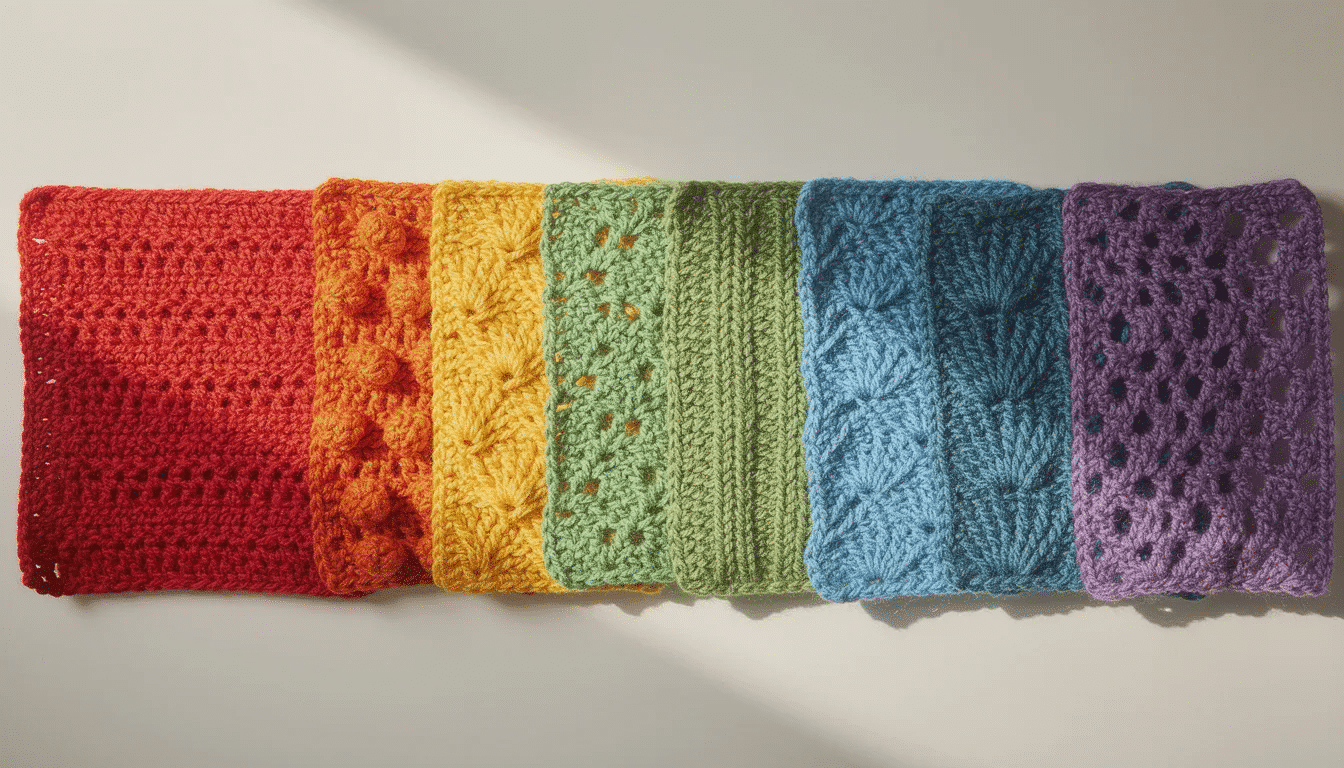
Treble Crochet (tr) [UK: double treble – dtr]
Treble crochet creates tall, lacy stitches perfect for shawls and decorative openwork. Each stitch produces significant height, allowing you to cover ground quickly.
Step sequence:
- Yarn over twice before inserting your hook
- Insert hook into the next stitch
- Yarn over and pull up a loop (four loops on hook)
- Yarn over and pull through two loops (three loops remain)
- Yarn over and pull through two loops (two loops remain)
- Yarn over and pull through the final two loops
Practice swatch: Chain 16. Work treble into the fifth chain from hook and across. Practice maintaining consistent tension as the taller stitch can be prone to uneven loops.
Double Treble Crochet (dtr) [UK: triple treble – trtr]
Double treble is very tall and primarily used for lace or decorative fabric where you want maximum openness.
Step sequence:
- Yarn over three times before inserting your hook
- Insert hook into the next stitch
- Yarn over and pull up a loop (five loops on hook)
- Yarn over and pull through two loops—repeat this step four times until one loop remains
This stitch appears in heirloom doilies and intricate lacework. Practice it after you’re comfortable with treble crochet.
Stitch Crochet in the Round and Special Techniques
Many stitch crochet projects—hats, granny squares, amigurumi—are worked in continuous spirals or joined rounds rather than flat rows. Understanding how to work in the round expands your project possibilities dramatically.
There are two main ways to start working in the round.
Chain ring method: Create a short chain (for example, chain 4), then join the last chain to the first with a slip stitch, forming a ring. Work your first round of stitches into the center of this ring.
Magic loop (magic ring) method: Wrap yarn around your finger twice, insert your hook under both strands, yarn over and pull up a loop, chain 1 to secure. Work your stitches into this adjustable ring, then pull the tail end to close the center hole completely.
The magic loop has revolutionized seamless amigurumi construction. Unlike the chain-join method, it leaves no visible hole at the center of your work.
Working stitches into a ring:
- For amigurumi: Typically start with 6 sc into a magic ring
- For flat circles: Often begin with 12 dc into a magic ring
- The number of starting stitches determines how flat or cup-shaped your circle becomes
Increasing in the round: To make your circle grow, place 2 stitches into one stitch from the previous round. A common pattern is “2 dc in each stitch around” for round two, then “1 dc, 2 dc in next stitch” for round three.
Decreasing stitches: Use “2 together” methods for shaping. For single crochet decrease (sc2tog), insert hook into the first stitch, yarn over, pull up a loop, then insert hook into the second stitch, yarn over, pull up a loop, yarn over and pull through all three loops on hook.
Special texture stitches:
- Crab stitch (reverse single crochet): Worked from left to right instead of right to left, creating a twisted, rope-like border ideal for hat brims or bag edges
- Puff stitch or bobble stitch: Multiple loops pulled up in one stitch and joined together for 3D raised texture, perfect for floral motifs or decorative blankets
Practical Stitch Crochet Projects for Practice
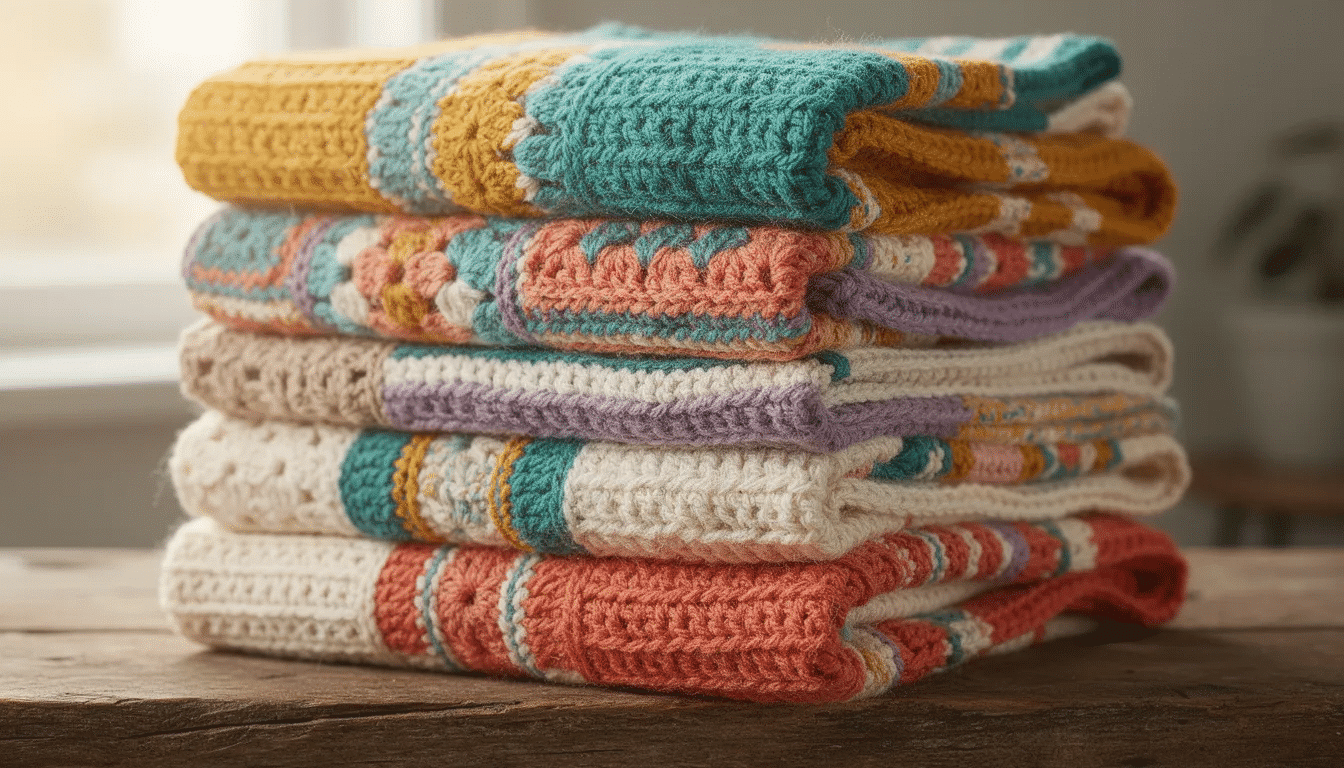
Applying your stitches to small, concrete projects helps solidify your skills faster than endless swatches. Each project below focuses on stitch practice rather than complex shaping.
Simple Single Crochet Dishcloth
Yarn: Cotton, medium weight Skills practiced: Slip knot, chain, single crochet, turning chain, fastening off Approximate size: 20-25 cm square
Chain 26. Single crochet in the second chain from hook and across (25 stitches). Turn, chain 1, and work sc in each stitch across. Continue for approximately 25 rows until the piece is square.
Half Double Crochet Cowl or Scarf
Yarn: Soft acrylic or wool blend, medium weight Skills practiced: Half double crochet, working in rows, consistent edges Approximate size: 150-180 cm length for a scarf, or 60 cm circumference for a cowl
Work flat in rows using hdc throughout. For a cowl, seam the short ends together after fastening off.
Double Crochet Baby Blanket
Yarn: Baby-soft acrylic, medium weight Skills practiced: Double crochet stitch, turning chains, simple color changes Approximate size: 75 x 100 cm
Chain 100. Work rows of dc, changing colors every 8-10 rows for stripes if desired. This repetitive project builds muscle memory while creating something useful.
Stitch Sampler Scarf
Yarn: Light-colored worsted weight Skills practiced: Multiple stitches combined in one project Approximate size: 20 cm wide, length as desired
Divide your scarf into sections: 10 rows of sc, 10 rows of hdc, 10 rows of dc, 6 rows of tr, and a border of crab stitch. This project teaches you how different stitches create different textures and drape.
Basic Beanie in the Round
Yarn: Medium weight acrylic or wool Skills practiced: Magic ring, increasing, working in the round, dc Approximate size: Adult medium
Start with a magic ring. Round 1: 12 dc into ring. Round 2: 2 dc in each stitch around (24 stitches). Continue increasing pattern until flat circle measures approximately 18 cm diameter, then work even rounds until hat reaches desired depth.
Reading Crochet Patterns and Stitch Diagrams
Mastering stitch crochet also means understanding how stitches are written and charted in patterns. Once you can read a pattern, you can access thousands of free crochet patterns and paid designs.
Common Pattern Abbreviations
Abbreviation | Meaning |
|---|---|
ch | chain |
sl st | slip stitch |
sc | single crochet |
hdc | half double crochet |
dc | double crochet |
tr | treble crochet |
dtr | double treble |
st(s) | stitch(es) |
rep | repeat |
inc | increase |
dec | decrease |
Remember that UK patterns use different abbreviations aligned with their terminology. Always check the pattern’s abbreviation key.
Understanding Written Instructions
Patterns provide row-by-row or round-by-round instructions. Here’s an example:
Row 1: Ch 11, sc in 2nd ch from hook and in each ch across (10 sc).
Breaking this down:
- Chain 11 stitches
- Work a single crochet into the second chain from your hook (not the loop on your hook, but the next one)
- Continue working sc in each remaining chain
- The number in parentheses (10 sc) is your stitch count—use it to verify you haven’t accidentally increased or decreased
Parentheses and brackets indicate repeats. For example, “(sc, dc) in next st” means work both a sc and a dc into the same stitch. Instructions like “rep from * 5 times” mean repeat the sequence following the asterisk.
Stitch Diagrams and Charts
Visual crocheters often prefer stitch diagrams, where each type of stitch has a standard symbol. Charts are typically read from bottom to top, with odd rows reading right to left and even rows reading left to right (mimicking how you turn your work).
Learning to read charts takes practice, but many find them clearer than written instructions for complex patterns. Look for a symbol key at the beginning of any charted pattern.
Finishing Techniques: Fastening Off, Weaving In Ends, and Blocking
Neat finishing transforms basic stitch crochet into professional-looking work. These techniques take only minutes but make a significant difference in your finished projects.
Fastening Off
After completing your last stitch:
- Cut your yarn, leaving a 10-15 cm tail
- Yarn over and pull the tail completely through the loop on your hook
- Pull gently to tighten the final loop
This secures your work and prevents unraveling.
Weaving In Ends
Every time you start a new ball of yarn or change colors, you create tails that need to be secured.
- Thread your tail onto a yarn needle
- Weave horizontally through the backs of 5-6 stitches
- Change direction and weave vertically through another 5-6 stitches
- Change direction once more for extra security
- Trim the excess close to the fabric
The direction changes help lock the tail in place so it won’t work loose with use or washing.
Blocking
Blocking evens out your stitches and helps your finished piece lie flat.
For cotton and wool:
- Gently wet your piece in lukewarm water
- Press out excess water (don’t wring)
- Pin to measurements on a blocking mat or towel
- Allow to dry completely before unpinning
For acrylic: Acrylic can be lightly steam-blocked by hovering a steam iron above the fabric without touching it. Avoid pressing directly on acrylic, as excessive heat can “kill” the fibers and make them limp.
Tips for Improving Your Stitch Crochet Technique
Consistent practice and patience are your best teachers. Here’s how to accelerate your progress and avoid common frustrations.
Practice tension consistently: Create small swatches using the same yarn and hook, then compare your stitch height and width. Tension naturally evens out with practice.
Count your stitches: At the end of each row or round, count your stitches. Accidental increases and decreases are the most common beginner mistakes.
Use stitch markers liberally: Mark the first stitch of every round when working in the round. Mark pattern repeats in complex designs. These small tools prevent big headaches.
Take regular breaks: Hand and wrist strain is real, especially during long practice sessions. Set a timer for 20-30 minutes, then stretch your hands before continuing.
Set realistic goals: Aim to learn one new stitch each week. By the end of a month, you’ll know four new techniques. Combine them into a sampler project to see how they work together.
Watch tutorials when stuck: Sometimes seeing a technique in motion helps more than reading about it. Search for specific stitches on video platforms when written instructions aren’t clicking.
Once you’re comfortable with basic stitches, experiment with combining them. Alternating rows of sc and dc creates interesting texture. Working into the back loop only adds ribbing. Crochet rewards curiosity.
Key Takeaways
Learning stitch crochet is a step-by-step process that builds naturally:
- Start with essential tools: a 5.0 mm hook, medium-weight light-colored yarn, and basic accessories
- Understand US vs UK terminology to avoid pattern confusion
- Master foundation skills first: the slip knot, chain stitch, and slip stitch
- Learn core stitches in order of height: single crochet, half double, double crochet, treble, and double treble
- Practice with small, achievable projects that reinforce each new skill
- Study pattern abbreviations and learn to read stitch counts
- Finish your work properly by fastening off, weaving in ends, and blocking
The crochet industry continues to grow, with renewed interest driving innovation in patterns, tools, and techniques. There’s never been a better time to start.
Pick up your hook, grab a ball of yarn, and chain your first stitches today. Your hands will find their rhythm, your tension will even out, and before long, you’ll be creating finished projects you’re proud to use or give away. Every expert crocheter started exactly where you are now—one stitch at a time.