Key Takeaways
- This toilet roll castle craft toddlers can help make uses recycled toilet paper rolls, cardboard tubes, a box lid, paper, and simple decorating materials.
- The project usually fits into 30–45 minutes, or under 45–60 minutes with paint drying, and works best for children around 2–4 years old with adult help.
- Building a toilet roll castle supports imaginative play, fine motor skills, counting, shapes, balance, and early STEM thinking.
- Using recycled toilet paper rolls and cardboard keeps the craft low-cost, eco-friendly, and easy to adapt.
- You’ll find a material list, step-by-step instructions, safety notes, age adaptations, play ideas, and a short FAQ.
Introduction: A Simple Toilet Roll Castle Toddlers Can Actually Make
It is a rainy afternoon in 2026, the craft table is clear for once, and your toddler has just decided the cereal box lid is “a house.” Add a few toilet paper rolls, scraps of colored paper, and a glue stick, and suddenly you are building a real roll castle together.
Toddlers do not need a fancy model with perfect towers. They need sturdy walls, a big door, a draw bridge, and enough space for a toy animal to live inside. This guide keeps cutting low, sticking high, and decorating open-ended, so little hands can create their own castle without frustration.
- Why Toilet Paper Rolls Are Perfect for Toddler Castles
- Materials: What You Need for a Toddler-Friendly Roll Castle
- Prepare the Cardboard Tubes and Craft Space
- Step-by-Step: How to Make a Toilet Roll Castle for Toddlers
- Make It Truly Toddler-Friendly: Safety and Simple Design
- Playing with Your Toilet Roll Castle: Ideas for Imaginative Fun
- Adapting the Toilet Roll Castle Craft for Different Ages
- Learning Through a Toilet Paper Roll Castle
- Storing, Repairing, and Recycling Your Roll Castle
- FAQ
Why Toilet Paper Rolls Are Perfect for Toddler Castles
Toilet paper rolls already look like towers, which makes them ideal for a castle. To create a toilet roll castle, you can use multiple toilet paper rolls to form towers and walls, allowing for a variety of designs and structures.
Using recycled materials like toilet rolls not only fosters creativity in children but also teaches them about sustainability and resourcefulness in crafting. In Europe, paper and cardboard tubes often contain high levels of recycled fibre, according to the European Core and Tube Association, so this is a simple way to turn trash into play before anything goes to the recycling bin.
The smooth surface of one toilet paper roll is easy to decorate with chunky markers, crayons, stickers, dot paint, or real sand for a stone texture. Empty tubes are also light, easy to glue to cardboard, and safe to knock over and rebuild.
Materials: What You Need for a Toddler-Friendly Roll Castle
Gather most materials from your recycling bin and a basic craft drawer.
Recycled basics
- 5–10 toilet paper rolls
- Optional paper towel rolls or paper towel rolls cut to tower height
- A stiff piece of cardboard for the base, such as a box lid
- Scrap cardboard for walls, windows, a gate, and roof pieces
- Construction paper or colored paper
- Cardstock for stronger flags or doors
Toddler decorating supplies
- Large crayons, washable markers, dot markers, or thick paint sticks and other best art supplies for young artists
- Stickers, large foam shapes, circles, and pre-cut paper bricks
- Glitter only for older kids with close supervision; avoid loose glitter for under-3s
- Small bits of paper scraps for “stones”
Tools and adhesives
- Child-safe glue stick, which supports many art and craft benefits for child development
- Non-toxic PVA glue
- Masking tape
- Blunt scissors for adults or older siblings
- Hot glue, a hot glue gun, or a craft knife for adult use only
- Old newspaper or a table cover
For a taller structure, combining four toilet rolls with two taller paper towel rolls can create a taller structure that still feels simple for toddlers, just like party planners might build a stunning balloon castle for parties using towers of different heights.
Prepare the Cardboard Tubes and Craft Space
Set up a contained craft station on a kitchen table, play mat, or washable floor space. Put the glue, stickers, tubes, and paper in shallow bowls so your toddler can reach them without tipping the rest over.
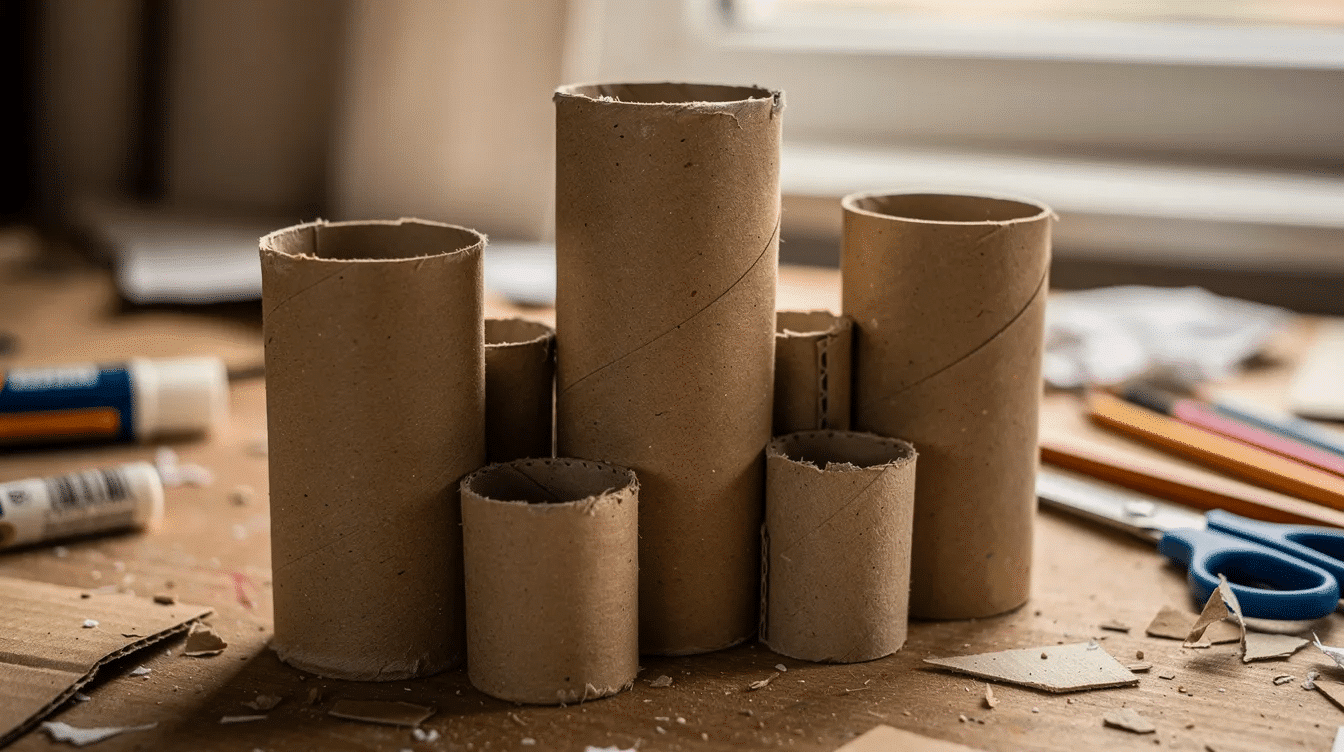
An adult should check each toilet paper roll, remove leftover toilet paper, flatten dents, and throw away any damp or damaged roll. If hygiene is a worry, use paper towel rolls cut down to size or shop for clean craft cardboard tubes.
Pre-cut tricky shapes before inviting your toddler over. Cutting small square, zig-zag, or “V” shapes out of the top edge of each tube creates the classic castle turret look. You can also cut holes for windows, fold a front wall, or cut a door shape in advance.
Step-by-Step: How to Make a Toilet Roll Castle for Toddlers
These instructions use simple shapes, minimal cutting, and lots of sticking. Of course, the finished castle may lean a bit, and that is part of the fun.
- Create the base
Cut a rectangular or oval base from cardboard, roughly A4 size. Let your toddler color grass, water, paths, or a moat with crayons or paint. - Add corner towers
Glue four toilet paper rolls to the corners. An adult can apply PVA glue while the toddler helps press each tube down. Using masking tape can help hold the tubes together while the glue dries. - Build the gatehouse
Fold a strip of cardboard into a front wall and cut an arch for the door. A drawbridge can be made by cutting its shape into the front wall and attaching string for operation. If “drawbridge” feels too advanced, call it a draw bridge and let your child pull it open. - Decorate towers and walls
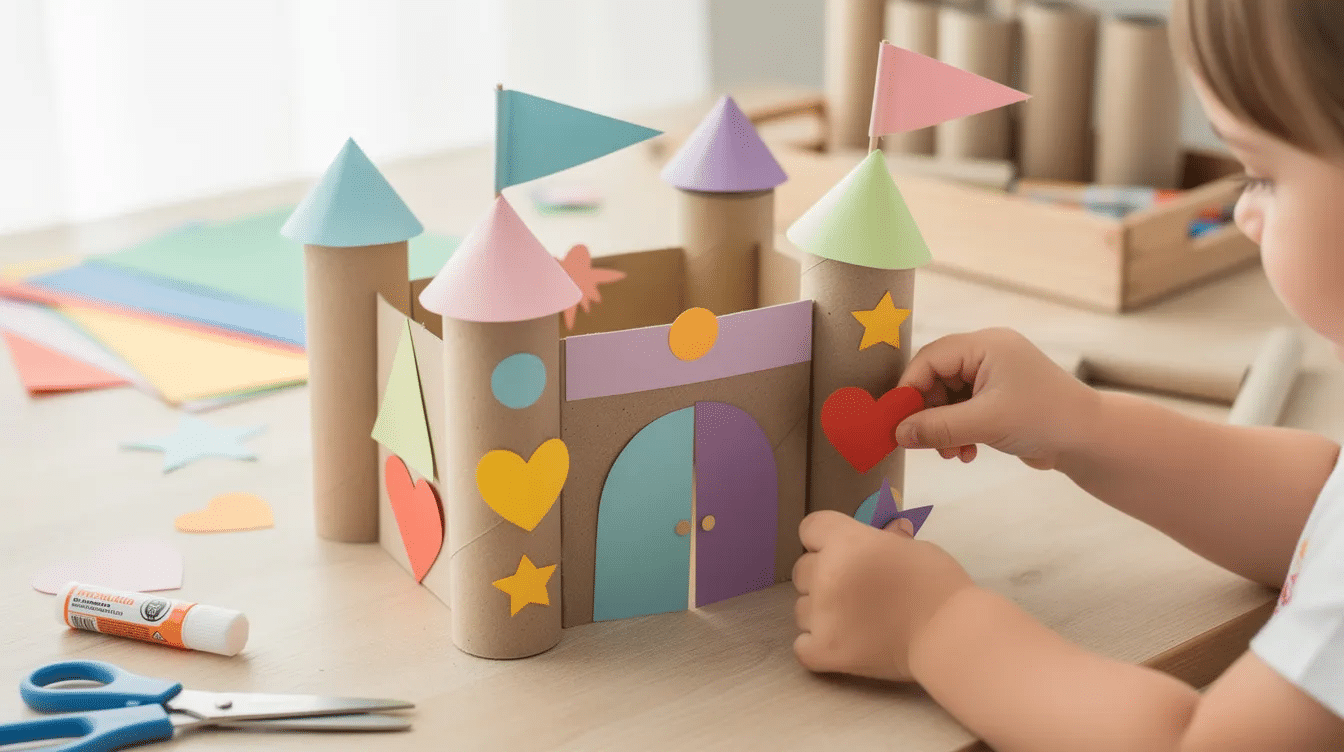
Invite your toddler to stick on paper bricks, stickers, circles, and colored paper. Decorating the castle can involve cutting battlements into the tops of the rolls and adding flags made from paper and toothpicks for a personalized touch, with toothpicks handled by adults. - Add roofs
For the towers of the castle, you can use whole toilet paper rolls or cut them in half to create smaller towers, and you can make roofs for the towers using colored paper cut into cone shapes. Flat paper circles also work if cones feel like too much. - Make it taller
Stack two tubes, attach them with tape, or place a kitchen tube in the middle. When assembling the castle, you can use hot glue or PVA glue to attach the walls and towers, ensuring that the structure is stable and secure. Toddlers should only press, decorate, and help hold. - Add finishing touches
Finally, add flags, a moat, a cardboard dragon, or a toy family. Then let the artist play with the castle right away, using it as a base for engaging activities for imagination and storytelling games.
Make It Truly Toddler-Friendly: Safety and Simple Design
Toddler crafts should use big movements, large pieces, and no tiny loose parts that could be swallowed. The American Academy of Pediatrics recommends choosing art supplies labeled non-toxic and age-appropriate, especially for young children (HealthyChildren.org).
Only adults should use sharp scissors, craft knives, hot glue, or a hot glue gun. Toddlers can use a glue stick, masking tape, peel-off stickers, and large paper shapes.
Avoid beads, sequins, and tiny buttons for children under 3. Use large foam stickers instead. And do not worry if the roll castle collapses; rebuilding teaches balance, patience, and problem solving.
Playing with Your Toilet Roll Castle: Ideas for Imaginative Fun
Building the toilet roll castle is only half the activity. The rest is storytelling, whether your child is imagining medieval life or stepping into a cardboard time machine craft to visit different eras.
Try prompts like:
- “Who lives in this tall tower?”
- “Can the animals cross the draw bridge?”
- “Is the dragon friendly today?”
- “Which tower is the tallest?”
You can also act out everyday routines inside the cardboard walls: bedtime, meals, visitors, washing clothes, or going to the market. Over several days, add a garden, a road, block houses, or a new roof. You might even create little figures that represent your household to weave in preschool crafts about family. The world around the castle can grow as your child’s ideas grow.
Adapting the Toilet Roll Castle Craft for Different Ages
The same toilet paper roll castle can be simplified or extended.
- 18–24 months: Decorate single toilet rolls as towers. Use scribbles, stickers, stacking, and close supervision.
- Ages 3–4: Let children choose where towers go, press glue, and stick on paper doors and windows, or try a related crab paper plate craft for kids for an ocean-themed day.
- Ages 4–5: Add arrow slits, flags they draw themselves, counted bricks, and patterned walls.
- Siblings: Older kids can cut and assemble; younger kids decorate tubes and place figures, or work together on tissue paper stained glass crafts to hang in the playroom.
Attention spans vary, so split the project if needed. A 5-minute decorating burst still counts as successful craft time.
Learning Through a Toilet Paper Roll Castle
Parents in 2026 often want screen-free activities that quietly teach useful skills. This project does exactly that.
Crafting with toilet paper rolls helps develop fine motor skills in toddlers, which are essential for tasks like writing and buttoning clothes. Squeezing glue, peeling stickers, wrapping paper around a tube, and pressing towers down all strengthen small hand muscles.
Engaging in crafting activities fosters spatial awareness and early engineering skills as toddlers learn about balance and structural integrity while creating with toilet rolls. They notice that tall tubes tip, walls need support, and towers stand better when spaced out, lessons that also carry over into creative crafts about space like rockets and moon bases.
You can also add simple history. Castles began to appear in the 9th and 10th centuries, initially constructed from earth and wood before transitioning to stone as the primary building material. Motte and Bailey castles, the earliest type of medieval castle, were first built in northern Europe in the 10th century, featuring a wooden keep on a hill surrounded by a palisade and a Bailey area for living. Stone Keep castles emerged around the 11th century, providing superior protection with thick stone walls and a central keep that housed kitchens and living quarters. Concentric castles, introduced in the late 12th and early 13th centuries, featured multiple layers of walls and were designed to withstand sieges, with a central area that was the highest point surrounded by lower outer walls.
For a “wow” fact, the Citadel of Aleppo, located in northern Syria, is one of the oldest standing castles in the world, with construction dating back to 3000 years B.C.
Crafting with recycled materials like toilet paper rolls teaches toddlers about sustainability and the importance of reusing resources, instilling eco-consciousness from a young age.
Storing, Repairing, and Recycling Your Roll Castle
Toilet paper roll castles are light and a bit fragile, so plan where they will live. A low shelf, coffee table corner, or playroom floor works better than a high shelf your toddler may climb to reach.
If a tower bends, attach a strip of masking tape. If a wall comes loose, add a dab of glue. Before you recycle the castle, take a photo and make cleanup a goodbye ritual: “Thank you, castle, you were fun.”
Then save new tubes for the next project. You might choose a themed DIY kit for creative projects, or the next post in your family craft story might be a rocket base, a zoo, or a cardboard town.
FAQ
Are toilet paper rolls safe and hygienic for toddler crafts?
Most families safely use empty toilet paper rolls for crafts if the rolls are dry, clean, and stored away from bathroom moisture once collected. If unsure, use paper towel tubes cut to size or clean craft tubes. A dry cloth wipe or a short airing in a sunny spot can add peace of mind.
What glue should I use so my toddler can help?
Use non-toxic glue sticks for toddler work because they are easy to control and less messy. Adults can use PVA glue, hot glue, or a hot glue gun for heavier cardboard walls or stacked tubes. Toddlers can still help by pressing pieces down while the adult glue sets.
How long does a toilet roll castle craft usually take?
A basic build and decorate session usually takes 30–45 minutes, with extra drying time if you use paint. If your toddler loses interest, split the project: build first, decorate later.
What if I don’t have enough toilet paper rolls saved up?
Scale down to two towers and one wall. You can also cut one kitchen paper tube into two or three towers, or use folded cardboard rectangles until more toilet paper rolls are available.
Can we reuse the roll castle for other activities?
Yes. Turn the castle into a counting game, puppet backdrop, animal rescue scene, or seasonal display with paper snow, leaves, or flowers. The best part is that your toddler can keep adding ideas until the castle is ready for the recycling bin.