

Most of us have a stack of unused picture frames somewhere—shoved in a closet after a gallery wall refresh, left over from a move, or inherited from family photos that no longer fit our style. Instead of letting them collect dust or tossing them in the donation bin, you can transform these frames into functional and beautiful home decor with minimal effort.
With 2026’s continued focus on sustainable living and rising costs of new decor, repurposed picture frames offer a smart alternative. You can create wall art, organizers, trays, and seasonal displays for a fraction of what you’d spend at a home goods store. The best part? Most projects require only basic supplies you probably already own—a hammer, wood glue, some paint, and a free afternoon.
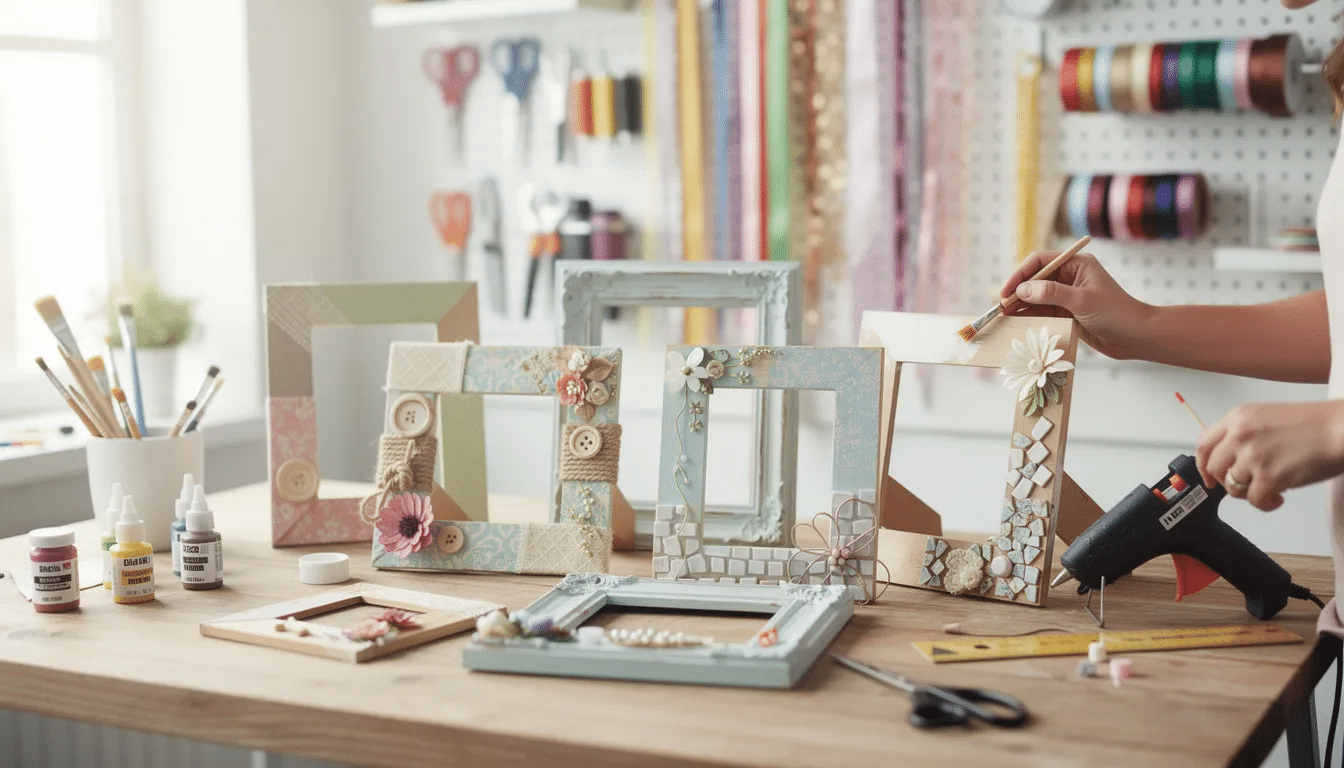
This post walks you through specific, achievable upcycle ideas using thrifted frames and forgotten ones from storage. Whether you love modern minimalism or rustic charm, there’s a project here that will fit your house and style, and inspire colorful craft ideas for a fun weekend beyond just frame projects.
- Getting Started: Sourcing and Preparing Old Photo Frames
- Wall Decor Transformations with Upcycled Frames
- Functional Upcycles: Turn Photo Frames into Organizers
- Decorative Trays, Shelves, and Surfaces
- Upcycled Frames for Seasonal and Holiday Decor
- Garden and Outdoor Uses for Old Frames
- Creative Art Projects: Frames as Canvases and Tools
- Step-by-Step Example: Turning One Old Frame into a Clothesline Photo Display
- Tips for Safe, Long-Lasting Frame Upcycles
- Conclusion: Give Your Frames a Second Life
Getting Started: Sourcing and Preparing Old Photo Frames
Before you start any project, you’ll need frames to work with. The good news is they’re everywhere—and often nearly free.
Check your local thrift store first. Goodwill, Salvation Army, and independent secondhand shops typically stock frames for $1–$3, sometimes less during sale days. Estate sales and flea markets are treasure troves for ornate frames from the 1980s and earlier. Don’t overlook your own attic or basement either—those mass-produced frames from big-box stores bought around 2010 or 1990s family portraits in dated gold frames are perfect candidates.
When you find potential frames, inspect them carefully. Check the corners for separation or damage, examine the backing for warping, and verify the hanging hardware is intact. If the glass is cracked, decide whether you need it for your project or can simply remove it. A missing piece of glass isn’t a dealbreaker for cork boards, key hangers, or open-frame wall art.
Cleaning old frames is straightforward. Use mild soap and water for wood and metal frames, then dry thoroughly. For glass, vinegar and newspaper create a streak-free shine. If you plan to paint a glossy or varnished frame, light sanding creates texture for better adhesion.
Supplies to gather before starting:
- Screwdriver and pliers (for disassembly)
- Sandpaper (120-150 grit)
- Primer and leftover wall paint
- Wood glue or craft glue
- Masking tape for clean paint lines
- New hanging hardware if needed
Wall Decor Transformations with Upcycled Frames
Turning plain old picture frames into statement wall pieces is one of the easiest ways to refresh a room. Whether your style leans mid-century modern, rustic farmhouse, or eclectic maximalist, frames can adapt to any aesthetic with the right treatment.
Mid-century modern collage frame: That $2 collage frame you caught at a thrift store last year can become a stunning art piece. Paint the entire frame matte black or brush on a brass-toned finish for warmth. Fill each opening with abstract prints, Brutalist-style textures cut from old magazines, or geometric wallpaper samples. The key is keeping the color palette cohesive—think mustard, burnt orange, and olive green against a neutral background, or even experiment with tissue paper stained glass crafts to create vibrant inserts for each opening.
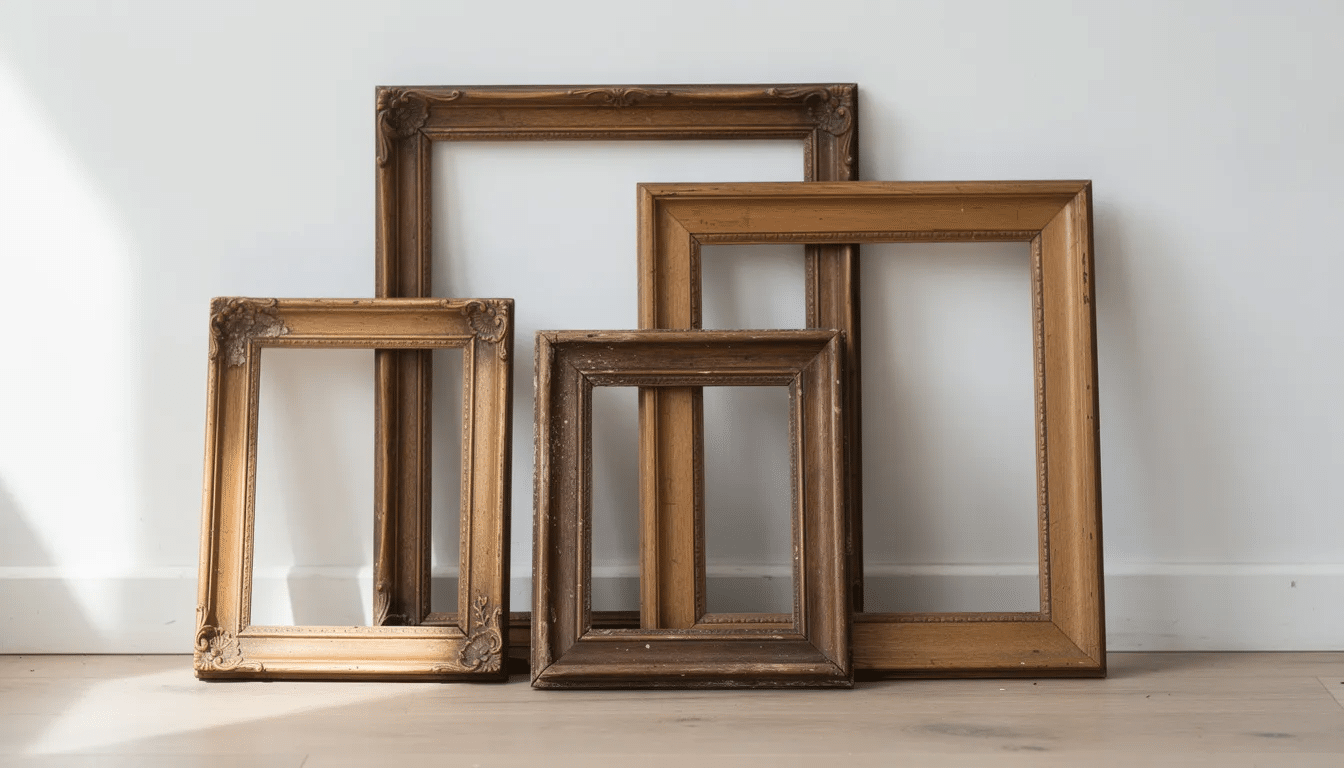
Empty gallery wall: Here’s a great idea that requires zero art: hang ornate gold frames from a 1980s house clearance completely empty. Mount them on a dark painted wall—deep navy, forest green, or charcoal—and let the frames themselves become sculptural art. Space them 2–3 inches apart for visual cohesion. This approach works especially well in hallways and dining rooms where you want drama without clutter.
Faux architectural molding: Take narrow frames apart and use the trim pieces to create rectangular panels above a sofa or along a hallway. Paint them the exact color of your wall for subtle dimension that mimics expensive millwork. This diy idea adds architectural interest to builder-grade rooms without the commitment of permanent molding.
The beauty of frame upcycling is mixing eras. A 1960s walnut frame, a 2000s IKEA frame, and a 2015 discount-store piece can look completely unified when painted the same color. White creates a clean gallery wall feel, while matte black adds modern edge.
Functional Upcycles: Turn Photo Frames into Organizers
Beyond wall art, frames can become practical everyday items that combine function with style. These projects prove that beautiful home decor can also hold your keys, organize your desk, and display your jewelry—perfect options when you’re looking for fun art to do when you’re bored and want a practical result.
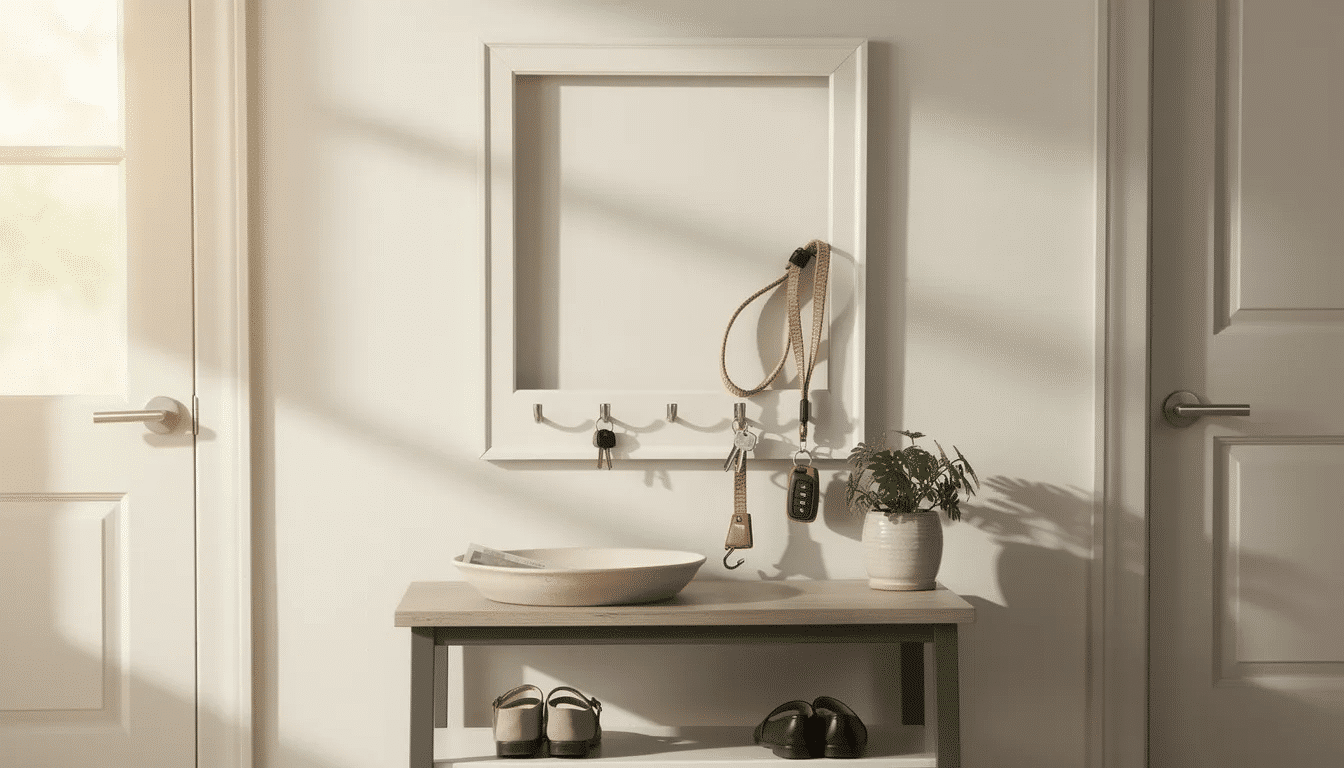
Key hanger for your entryway: Remove the glass and backing from a 5×7 frame and set them aside. Paint the frame to match your entryway—warm white for a bright look, or charcoal for something moodier. Attach 4–5 small cup hooks along the bottom rail, spacing them evenly. Hang the completed piece about 140–150 cm from the floor using D-ring hangers for stability. This keeps keys, dog leashes, and lanyards organized right where you need them.
Desk or wall organizer: Convert 2–3 old A4-size frames into shallow shelves for markers, washi tape, or incoming mail. Use scrap plywood or leftover 1×3 boards from a recent diy project to create small shelves behind the frame opening. Attach the frame face-down, with the shelf protruding through what was once the glass area. Mount these in a vertical line above your desk for an organized, gallery-style storage system.
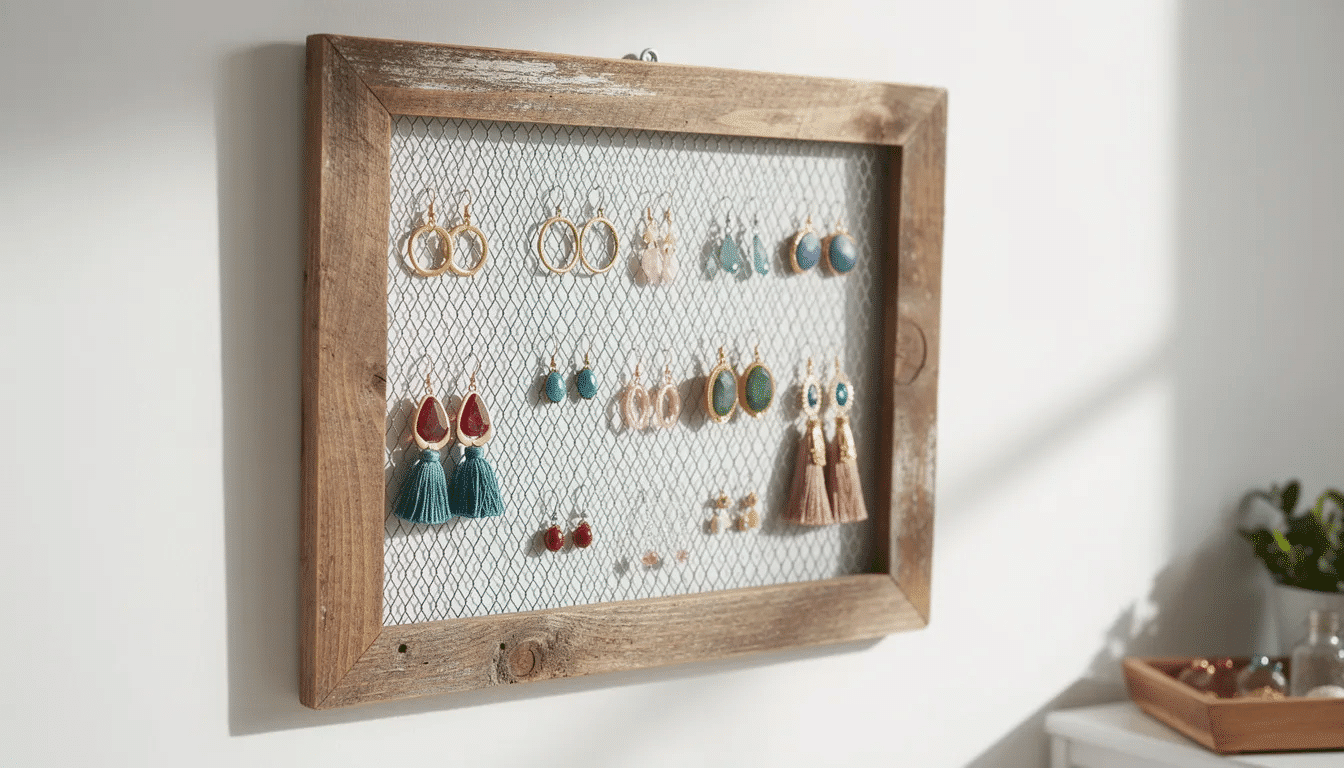
Jewelry display with chicken wire: This project is perfect for renters wanting vertical storage without bulky furniture. Take a 30×40 cm frame, remove the backing, and staple metal mesh or chicken wire across the back. Paint the frame to complement your bedroom decor. Hang earrings directly on the wire and drape necklaces over the top edge. The wire grid holds everything visible and tangle-free.
Bathroom organizer: Transform an ornate frame into a toilet roll holder by attaching a wooden dowel across the opening. Mount it beside the toilet at a comfortable reaching height. For humid bathrooms, seal the wood with waterproof varnish to prevent warping and mold.
Always use proper wall anchors for plaster or drywall, especially when mounting frames that will hold weight. Lightweight frames should stay light—don’t overload them with heavy items.
Decorative Trays, Shelves, and Surfaces
Frames don’t have to hang on walls. Laying them flat transforms them into trays, display surfaces, and unexpected shelving solutions.
Serving tray from a wooden frame: Choose a sturdy 8×10 or 11×14 frame—solid wood works best for this project. Remove the glass and insert plywood or a painted panel cut to size. Attach metal handles to the short sides and add felt pads underneath to protect surfaces. Use this tray for weekend breakfast in bed, coffee table styling with a candle and small book, or corralling remotes and coasters.
Jewelry or perfume tray: Create a mirrored tray using mirror-effect spray paint on the frame’s original glass. Apply several light coats, allowing each to dry completely, then place the glass back into the frame with the mirrored side facing up. Position this on your bedroom dresser to hold rings, watches, and vintage perfume bottles. The mirrored surface adds glamour while keeping small items from rolling away.
Vanity shelf from a shadow box: Deep shadow box frames flip easily into tiny floating shelves. Mount one near your bathroom mirror with the opening facing up to hold daily skincare products or makeup brushes. The depth keeps items contained while the frame adds a decorative touch.
Mini plant shelf: Reinforce an old frame with a small plank at the bottom to hold 2–3 tiny terracotta pots. Fill them with succulents and place the frame in a sunny kitchen window. The vertical display saves counter space while adding fresh greenery.
Upcycled Frames for Seasonal and Holiday Decor
One of the smartest things about frame projects is their adaptability. The same piece can be restyled for Christmas, Easter, Halloween, and everything in between across multiple years.
Rotating seasonal display: Carousel-style frames or multi-opening frames work perfectly for this. Display antique Christmas postcards in December, botanical prints in spring, and travel photos in summer. Store labeled seasonal sets in envelopes behind the backing—you can swap them in minutes when each holiday approaches. This single frame becomes a year-round decor investment.
Frame “wreath” for the front door: Use a wide, flat frame painted rich evergreen or matte black as a base. Decorate with faux eucalyptus and pinecones for winter, pastel flowers for spring, or dried orange slices for fall. Attach a satin ribbon dated “2026” to mark the year you created the piece. Unlike traditional wreaths, this style offers texture and depth that catches eyes from the street.
Easter “egg” frames: Vintage oval frames mimic egg shapes perfectly. Cover the backing with floral or pastel fabric stretched tight, then reassemble the frame. Create 3–5 of these in varying sizes and cluster them on a mantel or dining room wall. They store flat between seasons and last for years.
Halloween haunted house frame: House-shaped frames from kids’ bedroom decor make excellent haunted house scenes. Paint the frame black, line the opening with orange cardstock cut into window shapes, and place tiny battery tea lights behind. The glow creates an eerie effect perfect for October mantels.
Garden and Outdoor Uses for Old Frames
Weathered, chipped, or slightly damaged frames find perfect second lives outdoors. Projects that would look too rough for indoor decor become charmingly rustic in garden settings.
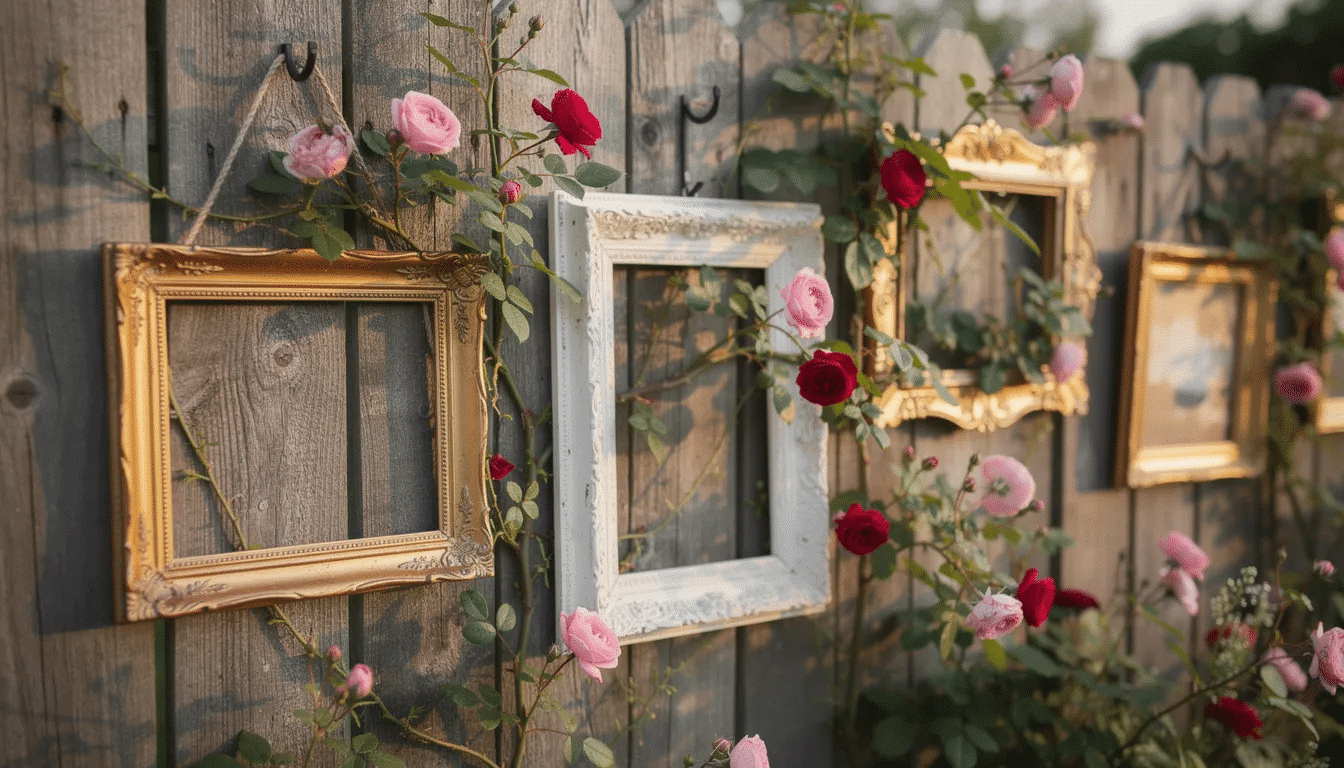
Junk garden wall: Hang empty frames directly on a shed wall or wooden fence, then let ivy and climbing roses grow through them over the seasons. The frames create “windows” into greenery, adding sculptural interest to otherwise blank surfaces. This approach works especially well with mismatched frames in varying sizes.
Herb drying rack: Staple twine or thin jute across an old wooden frame to create horizontal lines. Clip bunches of rosemary, thyme, and lavender harvested in late summer. Hang the frame in a dry, shaded spot like a covered porch or garage. The herbs dry beautifully while creating a fragrant, decorative display.
Frame-and-pot display: Secure chicken wire inside a tall frame, then wire small terracotta pots into the grid openings. Plant succulents or compact herbs in each pot. Mount the frame on a sunny fence or porch wall for a vertical garden that saves ground space.
Outdoor lantern: Build a cube lantern using four small glass-front frames of the same size. Remove backings, keep the glass, and join frames at the corners using wood glue and small nails or corner brackets. Place a battery-operated candle in the center for a 2026 summer patio dinner ambiance.
For all outdoor projects, remember weatherproofing. Apply exterior varnish to wood frames, use rust-resistant screws, and bring delicate items indoors during heavy rain or snow.
Creative Art Projects: Frames as Canvases and Tools
Frames don’t just hold art—they can become the art itself when you think creatively about their potential.
Fresh art in old frames: Don’t throw away a frame just because you don’t love the print inside. Cover dated artwork from early-2000s art sets with peel-and-stick wallpaper samples or scrapbook paper. Abstract patterns, botanical illustrations, or graphic designs from a book of scrapbook paper create modern art for under $5.
DIY cork board: Insert cork tiles cut to size into a large frame for an elegant memo board. This transforms a utilitarian office supply into home decor worthy of your workspace and pairs nicely with stocking up on the best art supplies for young artists if kids will also use the board for sketches or notes. Add brass pushpins and a 2026 calendar card to complete the setup. The frame elevates what would otherwise be a basic cork board into a design element.
Shadow boxes for keepsakes: Deep frames invite dimensional displays. Create shadow boxes for travel souvenirs—train tickets from 2022 trips, seashells collected on vacation, concert wristbands from your favorite shows. Baby keepsakes like hospital bracelets, first shoes, and photos fit beautifully in these displays. Label each item with small cards so details aren’t forgotten.
Embroidered and fabric art: Stretch vintage linen, completed cross-stitch projects, or 1990s floral fabric inside a frame for soft, textured wall art, or experiment with turning a photo into an appliqué and framing the finished fabric piece like traditional artwork. The texture adds warmth to bedrooms and hallways that printed art can’t match.
Mixed-media collage: Layer sheet music, old letters, and pressed flowers inside frames to create story-filled pieces. These make ideal gifts for birthdays and anniversaries when personalized with meaningful ephemera from the recipient’s life.
Step-by-Step Example: Turning One Old Frame into a Clothesline Photo Display
This complete tutorial walks beginners through one achievable project using a frame you likely already own.
Step 1 – Disassemble and prep: Remove the glass and backing from an 8×10 frame. If the glass is cracked or you simply don’t need it, wrap it in newspaper, label it “broken glass,” and dispose of it safely. Clean the frame with a damp cloth and let it dry.
Step 2 – Add the “clothesline”: Cut three or four lengths of natural twine or cotton string, each about 14 inches long. Stretch each piece horizontally across the frame opening, spacing them evenly. Staple the ends to the back of the frame, pulling the twine taut. Alternatively, tie the twine around small nails tapped into the back.
Step 3 – Finish the edges: Paint the frame a fresh color that complements your room—warm white brightens spaces, while charcoal adds modern edge. For a shabby chic look, paint the frame, let it dry, then lightly distress edges with sandpaper to reveal wood beneath.
Step 4 – Add photos: Use mini wooden clothespins to clip printed photos from any year, ticket stubs, or small postcards to each line. The clothespins make swapping images easy—rotate photos seasonally or add new ones as you print them.
Step 5 – Hang: Attach two D-ring hangers to the back of the frame, spacing them about 2 inches from each top corner. Use a level to mount the frame securely above a desk, in a hallway, or grouped with other wall decor.
Tips for Safe, Long-Lasting Frame Upcycles
A few practical considerations help your projects look great and stay secure for years.
Hardware tips: Choose hanging hardware rated for your frame’s weight. D-ring hangers work well for medium frames, French cleats support heavy pieces, and sawtooth hangers suit lightweight projects. Check the maximum weight listed on packaging and err on the heavier side.
Finishing tips: Glossy or varnished frames need primer before paint adheres properly. Apply 2–3 thin coats of paint rather than one thick coat for the smoothest finish. For high-touch projects like serving trays, add a clear sealant to protect against scratches and stains.
Glass safety: Remove glass from frames going into kids’ rooms or play areas. If you need a clear surface, replace glass with acrylic, which is lighter and shatter-resistant.
Moisture protection: Frames destined for porches, patios, or garden fences need exterior paint or marine varnish. Untreated wood warps and rots quickly when exposed to weather. Seal all surfaces, including the back and interior edges.
Conclusion: Give Your Frames a Second Life
Upcycling photo frames in 2026 offers an easy path to fresh decor, sustainable choices, and personalized style throughout your home. Every forgotten frame in your closet holds potential—as an organizer, a tray, a seasonal display, or a garden accent.
Start with one small project this weekend. Turn a single frame into a key hanger, a jewelry tray, or a clothesline photo display using supplies you already have. Once you see how simple the process is, you’ll never pass a thrift store frame without imagining what it could become.
Gather your unused frames today. Check the corners, clean the glass, and pick one idea from this post to try. That stack of clutter is waiting to transform into something you’ll love seeing every day.