
A yarn sewing kit is a compact collection of tools and yarn-based materials designed specifically for hand sewing, mending, and small yarn crafts. Unlike standard thread-focused kits, this version centers on thicker fibers, larger-eye needles, and accessories that work seamlessly with knits, felt, and light fabrics.
Whether you’re patching a favorite wool sweater, reinforcing a loose seam on a beanie, or adding decorative stitching to a canvas bag, a purpose-built yarn kit keeps everything you need in one portable space.
- Quick Overview of Our Yarn Sewing Kit
- What’s Included in a Yarn Sewing Kit
- Who a Yarn Sewing Kit Is For
- Yarn Sewing Kit vs. Standard Sewing Kit
- How to Use a Yarn Sewing Kit: Common Projects
- Choosing the Right Yarn Sewing Kit for You
- Care, Refills, and Sustainability
- Customer Feedback and Reviews
- Price, Ordering, and Support
Quick Overview of Our Yarn Sewing Kit
Our standard yarn sewing kit is priced at €14.90 (as of February 2026), with clear quantity and color options displayed directly on the product page. You can see exactly what you’re getting before you purchase—no guesswork involved.
Pickup is available from our workshop (check the product page for our full address and city), typically ready within 24 hours of ordering. Shipping options and delivery estimates appear near the price at checkout, so you’ll know when to expect your kit whether you’re across town or across the EU.
This kit is designed for both beginners learning their first repair stitches and experienced crafters who regularly work with yarn, felt, and knitted fabrics. It’s equally suitable for small repairs, visible mending projects, and creative embellishment.
What’s inside:
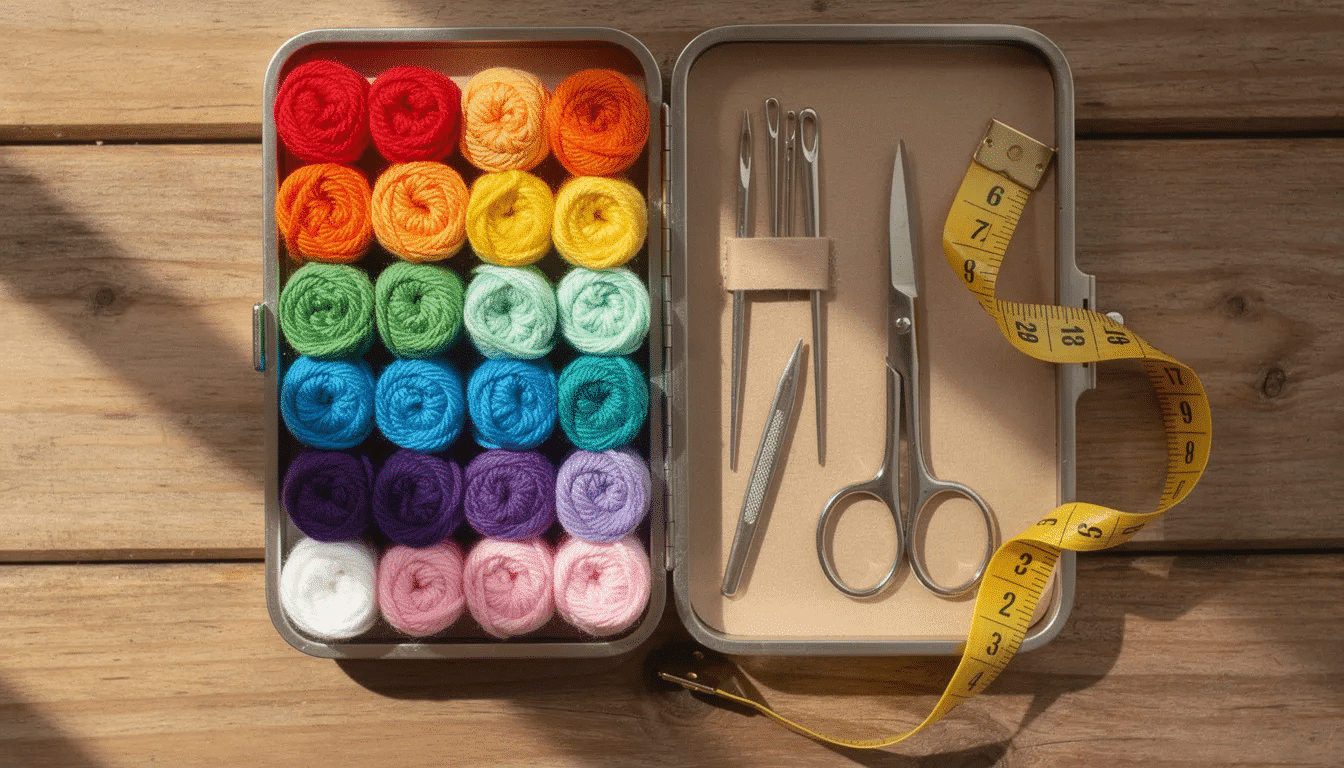
- Assorted mini-skeins of acrylic and cotton yarn in many colors
- Blunt tapestry needles and sharp hand-sewing needles
- Compact stainless steel scissors
- Needle threader and retractable measuring tape
- Zipped fabric case for organized, portable storage
What’s Included in a Yarn Sewing Kit
This section breaks down each component with concrete counts and materials so you know exactly what you’re working with. No vague descriptions—just the specifics.
Yarn Contents
The kit includes 12 mini-skeins of acrylic and cotton yarn (approximately 8 meters each), covering both neutrals and brights:
Color Category | Colors Included |
|---|---|
Neutrals | Black, white, cream, charcoal |
Cool Tones | Denim blue, forest green, teal, lavender |
Warm Tones | Mustard, brick red, blush pink, sunflower yellow |
This range lets you match most common garment colors for invisible repairs or choose contrasting shades for visible mending and decorative work. |
Needle Assortment
The needles cover multiple project types:
- 10 hand-sewing needles (sizes 3–9) for fine to medium-weight fabrics
- 4 large-eyed yarn/tapestry needles for wool, cotton blends, and bulky fibers
- 2 embroidery needles for detailed work on canvas bags and heavier textiles
This assortment handles everything from mending denim to darning sweaters to adding embroidery on accessories.
Tools
Every handy repair requires the right gear:
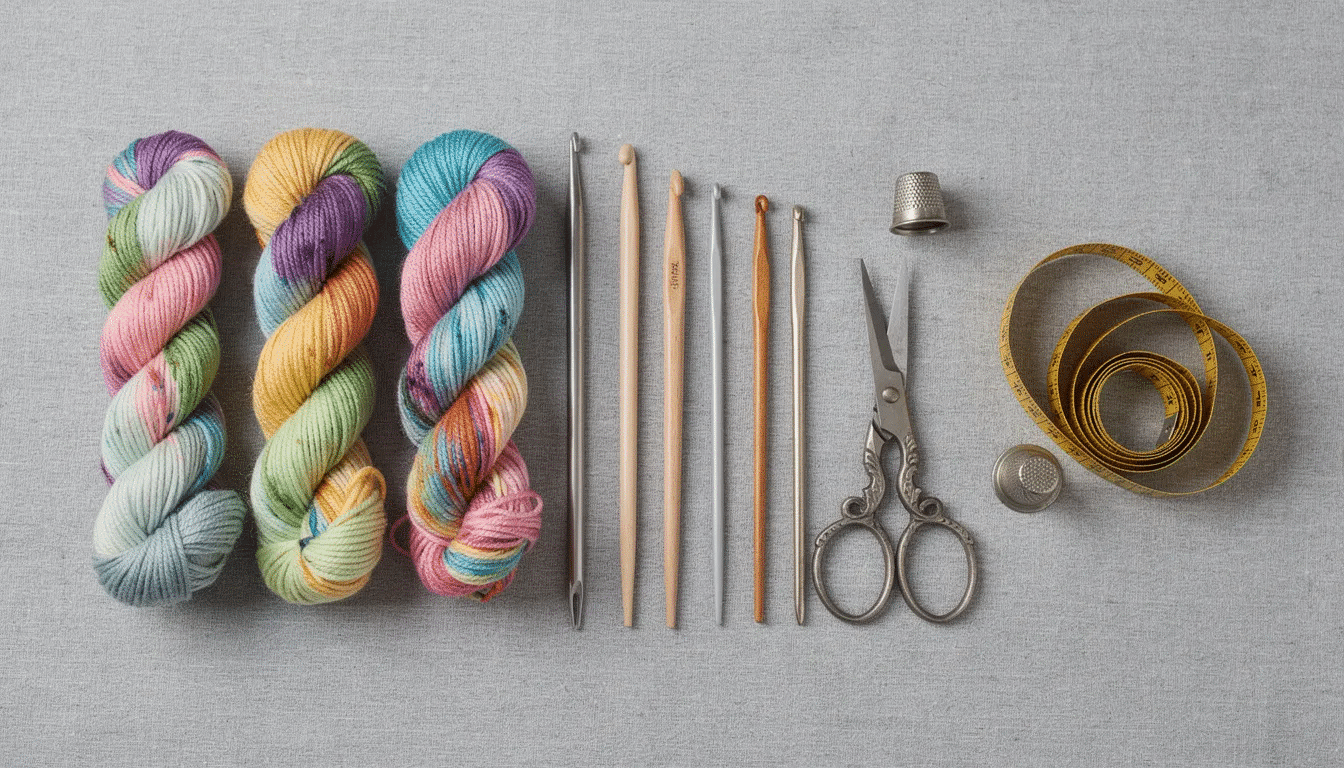
- Small 9–10 cm stainless steel yarn snips (sharp enough for clean cuts, compact enough to carry anywhere)
- 1.5 m retractable tape measure for quick measurements
- Metal thimble to protect your fingertip during extended stitching sessions
- Seam ripper for removing old stitches without damaging fabric
- Two needle threaders (because losing one is inevitable)
Storage
Everything fits inside a zipped fabric case (charcoal canvas with contrast orange zipper) featuring:
- Elastic bands to hold yarn cards in place
- Mesh pocket for small tools like the thimble and threaders
- Compact footprint that slides into a handbag, project bag, or car glove compartment
Note: This is a hand sewing kit—it does not include a sewing machine. It’s designed to complement your existing tools or serve as a complete standalone solution for yarn-based mending and crafts.
Who a Yarn Sewing Kit Is For
The ideal users range from people learning their first backstitch on a sweater to experienced knitters who simply want a travel-friendly repair kit. If you work with yarn in any capacity, this kit fills a gap that generic sewing supplies often miss.
Beginners
- People who want to start visible mending on sweaters, socks, and T-shirts without hunting for individual supplies
- Those interested in learning basic darning and decorative stitching techniques
- Anyone who finds standard fine needles frustrating when working with thicker fibers
Knitters and Crocheters
- Crafters who need a compact case for tapestry needles, small scissors, and leftover yarn
- Those who want to weave in ends or make quick fixes while working through a project
- Knitting enthusiasts who appreciate having quality tools rather than dollar store alternatives that break mid-project
Travelers
- Anyone who wants a lightweight kit for on-the-go repairs (popped buttons, loose seams, snagged cuffs)
- People who pack light but refuse to leave favorite garments unprotected against minor damage
- Those who find themselves in situations where waiting for professional repairs isn’t practical
Parents and Teachers
- Adults organizing craft afternoons with kids aged 10+ (supervised use of needles and snips) who also want age-appropriate art supplies for young artists
- Teachers running textile workshops who need reliable, complete kits for multiple students
- Parents teaching children fundamental mending skills
Age guidance: Recommended for ages 10 and up. Small parts and sharp tools are not suitable for children under 3 years.
How This Differs from a Basic Kit
A yarn-focused kit stands apart from what you’d grab at a dollar store in several key ways:
- Thicker yarn instead of fine polyester thread only
- Good scissors with stainless steel blades that stay sharp
- Larger-eye needles designed for bulky fibers
- Storage specifically organized for yarn cards and tools
Yarn Sewing Kit vs. Standard Sewing Kit
Many people search for a “sewing kit” without realizing yarn-focused versions exist specifically for knits and thicker fabrics. Here’s how they compare:
Threads vs. Yarn
Feature | Standard Sewing Kit | Yarn Sewing Kit |
|---|---|---|
Primary fiber | Fine polyester thread | Mini-skeins of acrylic/cotton yarn |
Best for | Woven fabrics, hems, buttons | Knitted fabrics, darning, embellishment |
Thread weight | Light (suitable for fine needles) | Medium to bulky (suitable for tapestry needles) |
Needle Types
- Standard kits center on sharp, fine needles designed for woven fabrics
- Yarn kits add blunt tapestry needles and larger eyes for wool, cotton, and blended yarns
- Both may include embroidery needles, but yarn kits emphasize larger sizes
Typical Projects
- Standard kits: Hemming pants, replacing buttons, mending woven shirts, minor seam repair
- Yarn kits: Sweater darning, patching socks, embellishing hats, visible mending, attaching felt patches
The Best of Both
Our kit still includes a few classic sewing standbys—black and white polyester thread on small 50 m spools—so you can fix both wovens and knits with one purchase. No need to stock two completely separate kits unless you’re doing heavy-duty work in both categories.
When to choose each type:
- Choose a standard kit if you primarily work with woven fabrics and need fine thread for precision stitching
- Choose a yarn kit if your wardrobe leans toward knits, wool, or you’re interested in decorative mending
- Own both if you’re a serious mender or regularly work with multiple textile types
How to Use a Yarn Sewing Kit: Common Projects
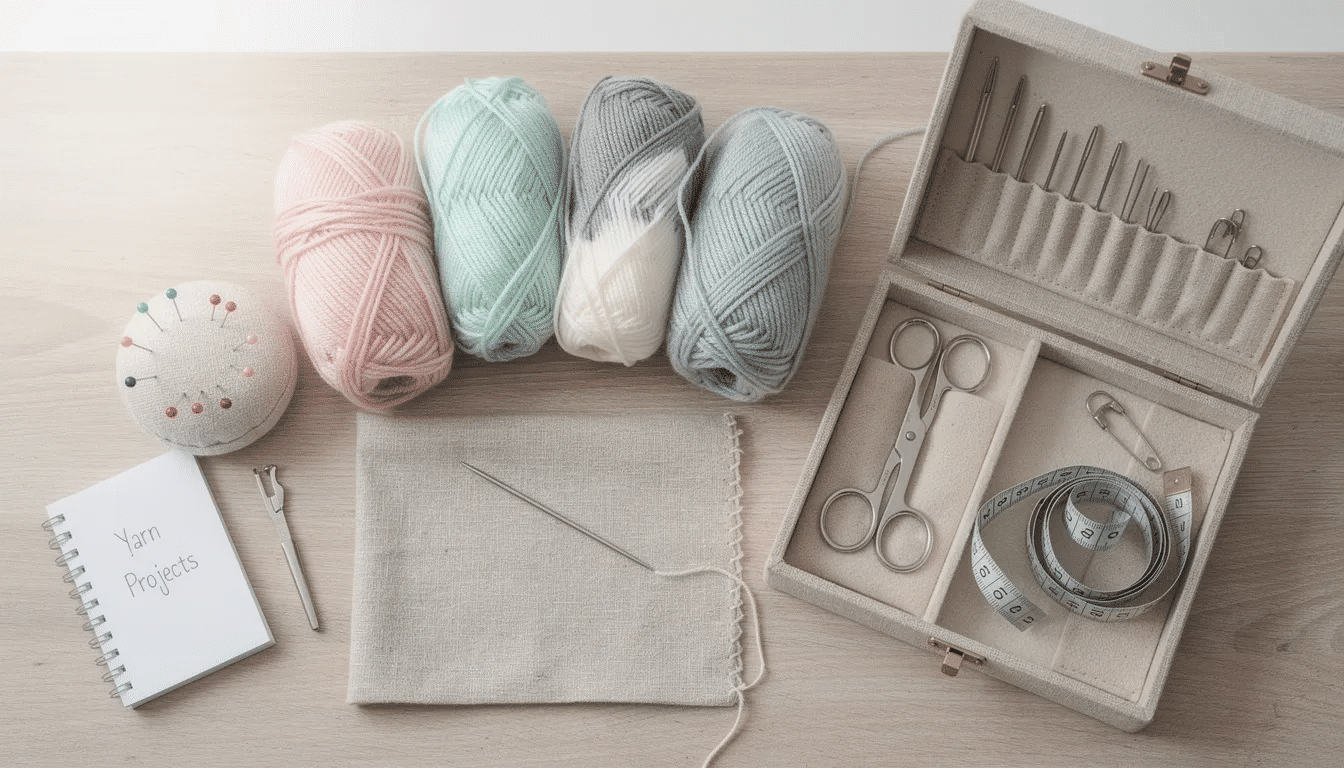
This section offers concrete project ideas that increase the practical value of your kit. Think of it as a starting point—each project naturally expands as your skills grow.
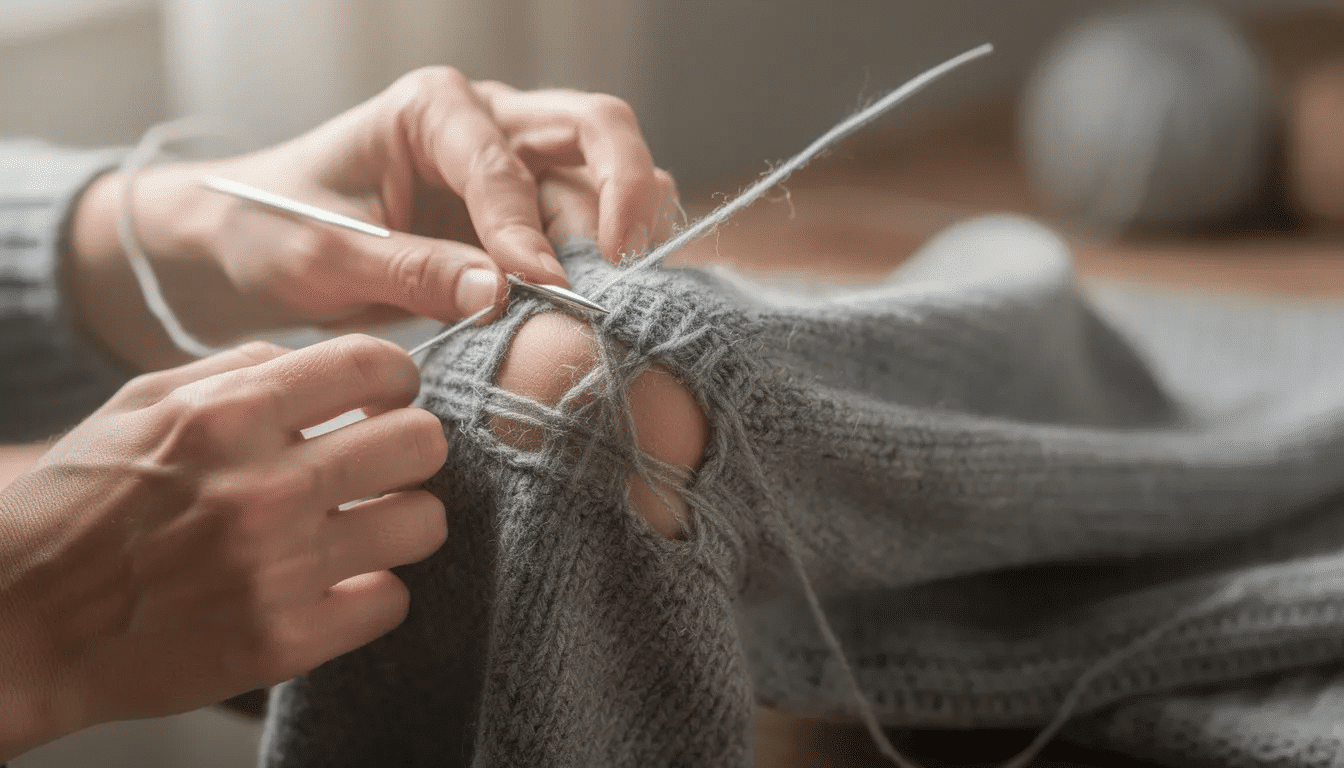
Darning a Hole
Repair a hole in a wool sock, sweater elbow, or cardigan cuff using the darning technique:
- Tools from kit: Blunt tapestry needle, matching or contrasting cotton-blend yarn
- Approach: Weave horizontal and vertical threads across the hole, creating a patch of new fabric integrated with the old
- Choose yarn color close to the original knit for invisible repair, or pick a bright shade for fun visible mending
Reinforcing Loose Seams
Fix a seam that’s pulling apart on a knitted hat, cuff, or sweater shoulder:
- Tools from kit: Tapestry needle, yarn in matching color
- Approach: Use backstitch along the seam line, catching both layers of fabric to secure them together
- This works particularly well on seams that receive regular stress from wear
Adding Decorative Embroidery
Transform a plain beanie, tote bag, or canvas surface with simple decorative stitching:
- Tools from kit: Embroidery needle, bright-colored yarn
- Ideas: Running-stitch stripes, star patterns, initials, simple geometric shapes
- Start with basic stitches before attempting more complex designs
Attaching Felt Patches
Add a patch to a cardigan, backpack, or jacket with visible contrast stitching:
- Tools from kit: Sharp hand-sewing needle, yarn in complementary color
- Approach: Pin the patch in place, then use blanket stitch or whip stitch around the edge
- This technique works for both functional repair and purely decorative crafts
Emergency Travel Fixes
Handle quick repairs when you’re away from home:
- Tools from kit: Fine needles, polyester thread, seam ripper if removing damaged stitches first
- Uses: Reattaching buttons, tacking up a fallen hem, securing a loose hook or zipper pull
- The compact case fits in luggage or a car glove box for on-the-go availability
Learning Resources
Pair the kit with online tutorials for stitches like whip stitch, blanket stitch, and basic darning. YouTube offers extensive video guides for beginners, and many crafters find watching the technique in action far more helpful than reading instructions alone.
Choosing the Right Yarn Sewing Kit for You
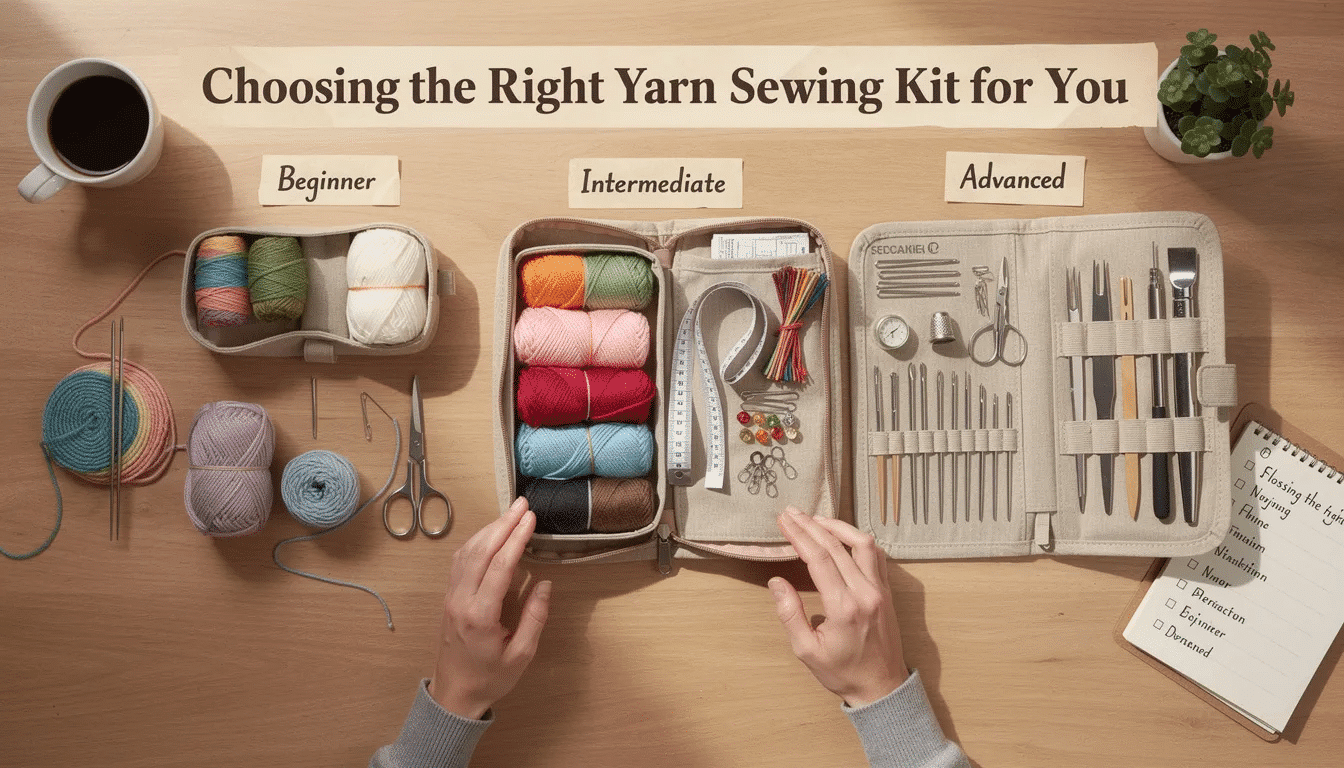
Not all yarn sewing kits are identical. This section helps you evaluate options and understand why specific configurations make sense for different users.
Factors to Compare
Yarn fiber content:
- 100% acrylic: Durable, machine-washable, budget-friendly—ideal for everyday mending
- Cotton blend: Softer hand feel, works well on lighter garments and household textiles
- Wool: Best for sweaters and socks but requires more careful handling
Color range:
- Neutral-heavy kits prioritize invisible mending on common garment colors
- Bright-heavy kits suit decorative visible mending and creative embellishment
- Balanced kits (like ours) cover both practical repair and fun accent work
Tool quality:
- Scissors should stay sharp through multiple projects—look for stainless steel blades
- Needles should be strong enough to handle repeated use without bending
- Tape measures should retract smoothly and display clear markings
Case design and portability:
- Hard tins protect tools but add weight
- Soft zip pouches fit more easily into bags and project totes
- Consider whether the case size works for your typical carry situation (handbag, backpack, project bag)
Our Kit’s Balance
Our configuration balances everyday mending needs (neutrals and strong tools) with several fun accent colors for visible mending trends. This makes it suitable as a first “all-rounder” for someone building their sewing supplies from scratch.
If you already own basic sewing tools, focus specifically on the yarn selection and large-eyed needle assortment when shopping—these are the main upgrades over generic kits you’d find at a dollar store or general craft shop.
Care, Refills, and Sustainability
A yarn sewing kit is meant to be reused and refilled, not discarded after a few projects. This approach makes it a more sustainable alternative to buying disposable repair materials repeatedly.
Caring for Your Tools
Keep your kit in good condition with these basics:
- Scissors and metal tools: Wipe dry after use, especially if working near damp yarn or steam blocking
- Needles: Store in the built-in felt strip or magnetic holder to prevent rust and loss
- Yarn snips: Avoid cutting paper, plastic, or anything other than thread and yarn—this preserves the blade edge
- Case: Close the zipper after each use to protect contents from dust and moisture
Refill Options
When you run low on specific materials, purchase individual refills rather than a complete new kit:
- Mini-skein bundles: Available in neutral or bright assortments (approximately 8 m per skein)
- Replacement tools: Fresh seam ripper, additional tapestry needles, spare needle threaders
- Thread refills: Black and white polyester spools for standard sewing needs
Refills reduce waste and let you customize your kit based on the projects you complete most often.
Packaging Details
Our kit ships in a recyclable cardboard sleeve printed with water-based inks. The internal wrap is paper—no single-use plastic where avoidable. We continue refining our packaging based on customer feedback and material availability.
Extending Kit Life
- Keep leftover yarn ends for future mending and decorative stitches—even small scraps have uses
- Store everything back in the case after each session
- Replace tools only when they no longer function properly (dull scissors, bent needles)
Customer Feedback and Reviews
This section summarizes typical customer experiences and how feedback shapes ongoing improvements to the yarn sewing kit.
Overall Reception
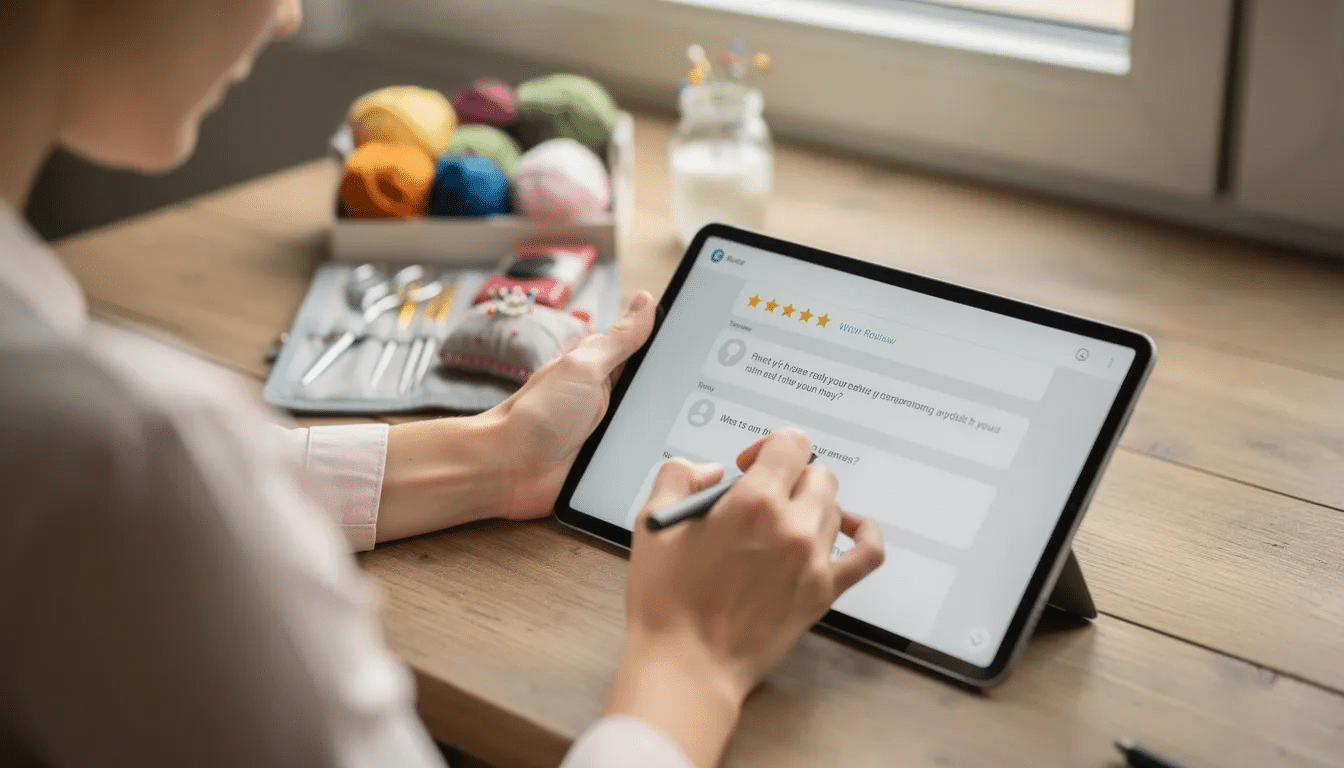
Average rating: 4.8/5 based on 250+ verified purchases (as of February 2026).
Common praise includes:
- Compact size that fits easily in bags
- Clear color selection covering both neutrals and brights
- Sturdy scissors that stay sharp through multiple projects
- Quality needle assortment with proper variety for different tasks
Who’s Leaving Reviews
We see feedback from several distinct user types:
- Beginners completing their first visible mending project
- Knitters adding the kit to their project bag as a permanent accessory
- Travelers using it for emergency repairs while away from home
- Gift-givers who purchased for crafters and mom figures in their lives, often alongside other DIY kits for creative projects
How We Collect Feedback
Customers can leave:
- Star ratings (1–5)
- Written reviews describing their experience
- Optional photo uploads showing completed projects
Recent reviews carry more weight in our overall rating to reflect current kit contents accurately.
Responding to Feedback
We actively use feedback to refine the kit. Examples:
- After several requests in 2025, we switched from plastic-handled scissors to all-metal snips
- We added a second needle threader based on reports of lost or damaged threaders
- Color selection expanded to include more cool tones after customer interest
Share Your Experience
If you try the kit, we encourage honest reviews—your feedback helps improve tool selection, instructions, and future configurations. Positive or constructive, it all contributes to a better product.
Price, Ordering, and Support
This final section covers current pricing, the ordering process, and how to get help if you have questions.
Current Pricing
Our standard yarn sewing kit is typically €14.90 including VAT. Seasonal discounts and bundle offers appear directly on the product page when available—no hidden codes required.
Prices may change over time based on material costs and supplier availability. The price displayed at checkout is always current and final.
How to Order
The ordering process takes just a few steps:
- Select your options: Choose case colorway or design variant if multiple are available
- Check availability: Stock status appears on the product page (e.g., “In stock – ships within 24 hours”)
- Add to cart: Click the button and proceed when ready
- Choose delivery method: Select local pickup or shipping at checkout
- Complete payment: Enter shipping details and payment method (card, PayPal, etc.)
Shipping and Pickup
- Pickup: Available from our workshop, typically ready within 24 hours
- Shipping: We currently ship across the EU and UK
- Estimated delivery: 2–5 working days depending on destination
- Tracking: Provided via email once your order ships
Support and Questions
Need help? Contact us through:
- Email: Listed on the product page
- Contact form: Available on our website
- Phone hours: Monday–Friday, 9:00–17:00 CET
We answer questions about kit contents, replacements, refills, and beginner guidance. Response time is typically within one business day.
Getting Started
When your kit arrives, don’t let it wait unopened. Start with one simple project—like mending a favorite sweater cuff or reinforcing a loose seam—to build confidence and get immediate value from your purchase.
The best way to learn is by doing. Pick up a needle, choose your yarn, and begin stitching. Everything else follows from that first line of thread through fabric.