At 18 months, your toddler is ready to move beyond pure sensory exploration into something more intentional. Those scribbles, dots, and smears? They’re the beginning of real creative expression. This is the age when little ones start to understand cause and effect—that dragging a crayon across paper leaves a mark, that pressing a finger into paint creates color.
If you’re wondering whether your 18-month-old is ready for art, the answer is yes. But you’re probably also thinking: “They still mouth everything,” “I don’t want paint all over my house,” and “What’s actually safe at this age?” These are valid concerns, and this guide addresses all of them head-on.
This post focuses on three priorities: non toxic, easy-to-clean supplies; tools sized for small hands; and ideas that work in real homes with limited space and short attention spans, while highlighting how arts and crafts support overall child development. The best part? Many of these art supplies will still be useful at age 2–3, so they’re solid investments.
What you’ll find in this guide:
- Safety markers to look for before buying anything
- Best crayons, markers, and dot markers for this age
- Paint options that won’t destroy your house
- Paper and surfaces toddlers actually enjoy
- Simple stickers, tape, and first collage materials
- Sensory art staples like playdough
- How to set up a toddler art space at home
- A practical starter kit checklist
- Tips for managing mess and building a positive routine
- Safety First: What to Look for in Art Supplies for 18-Month-Olds
- Best First Mark-Making Tools (Crayons, Markers, and Dot Markers)
- Best Paint Options for 18-Month-Olds (and How to Keep It Under Control)
- Paper and Surfaces: What Toddlers Actually Like to Draw On
- Stickers, Tape, and Simple Collage for Fine Motor Fun
- Sensory Art Staples: Playdough and Recyclables
- Setting Up a Simple Toddler Art Space at Home
- Sample Starter Art Kit for an 18-Month-Old
- Tips for Managing Mess and Building a Positive Art Routine
- Conclusion: Keeping Art Simple, Safe, and Joyful at 18 Months
Safety First: What to Look for in Art Supplies for 18-Month-Olds
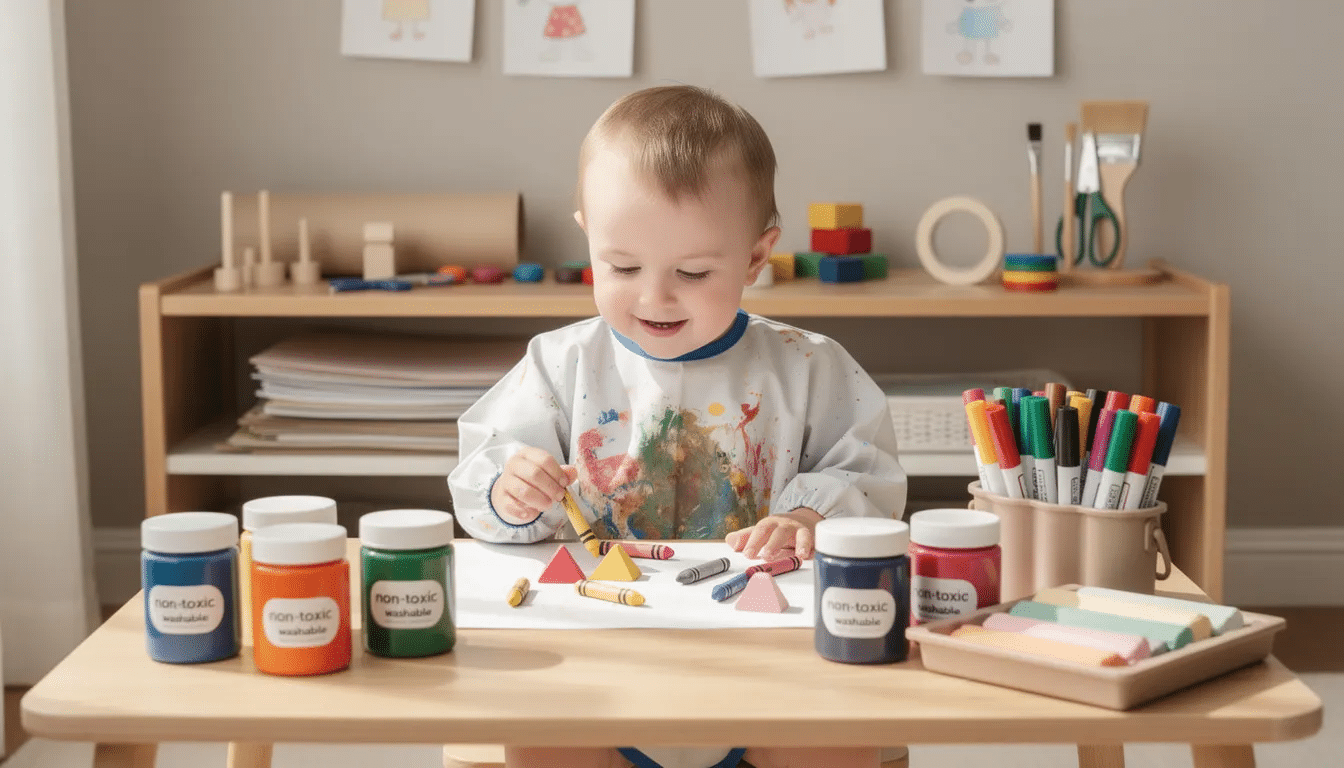
At 18 months, safety and simplicity outweigh any “fancy” art set. Your toddler still lacks the impulse control to consistently avoid tasting materials, so every supply you choose needs to account for that reality.
Key safety markers to look for:
- ACMI AP (Approved Product) seal—this verifies the product has been evaluated by toxicologists
- “Non-toxic” labels from reputable brands
- Age recommendations of 18m+ or 2+ (depending on your child’s mouthing habits)
Choose products that are:
- Washable and water-based (protects skin, clothes, walls, and furniture)
- Large and chunky—too big to be a choking hazard
- Free from strong solvents or harsh chemicals
Avoid these for now:
- Small loose embellishments like sequins, beads, or tiny pom poms
- Permanent markers or professional-grade supplies
- Anything labeled “for adult use only”
- Googly eyes and similar small craft pieces (save these for when they’re older)
Pro tip: Test new brands on a scrap of clothing or paper towel first to see how easily they wash out before committing to a full painting session.
Best First Mark-Making Tools (Crayons, Markers, and Dot Markers)
Mark-making—those scribbles, dots, and lines—is the core art skill at 18 months. These dry tools are easier to manage than open pots of paint and perfect for encouraging children to freely explore color and movement.
The key features to prioritize: chunky size, easy grip, strong color payoff with light pressure, and excellent washability.
Chunky Crayons for Little Hands
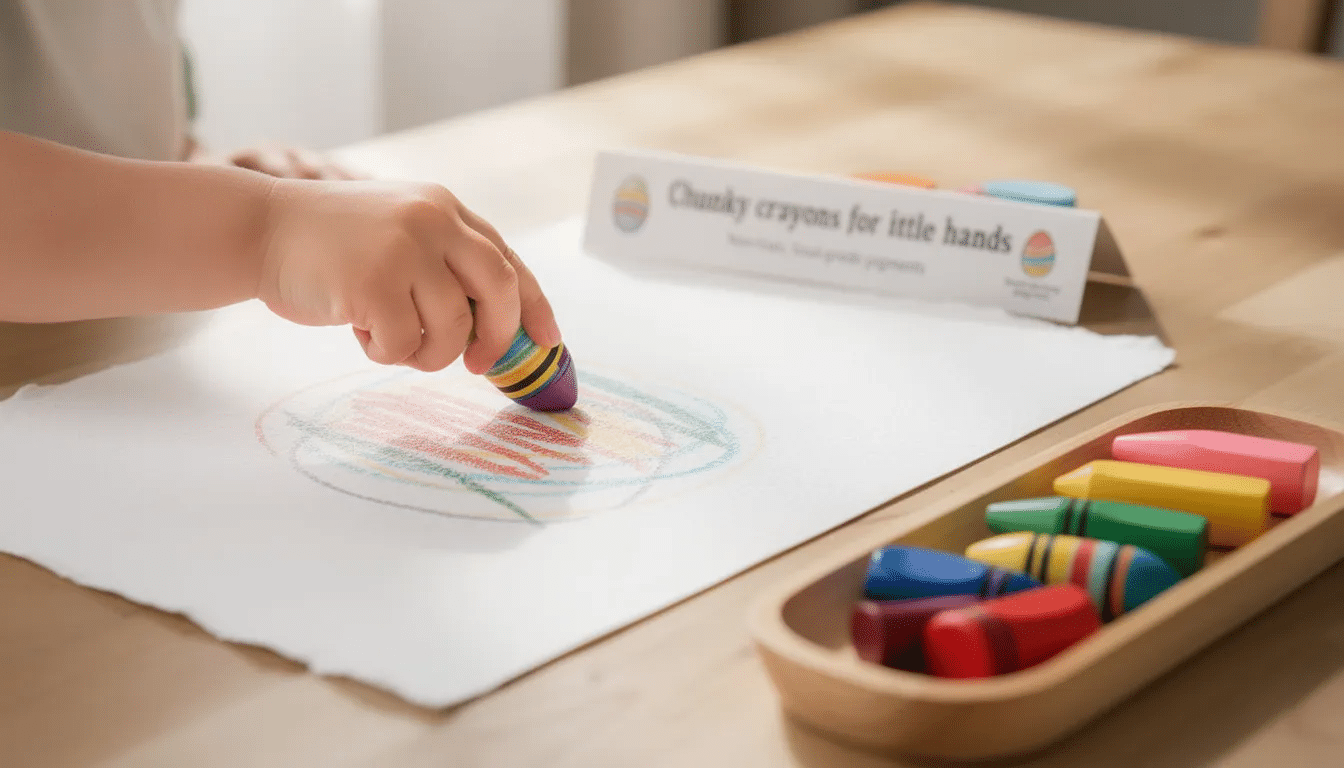
Crayons are a must have first art supply because they’re dry, portable, and far less messy than paint. But standard thin crayons don’t work well for this age—little fingers can’t grip them properly, and they break constantly.
What to look for:
- Egg-shaped or block crayons designed for a whole-hand grasp
- Non-toxic formulas (brands like Honey Sticks use food-grade pigments)
- Break-resistant construction
- Vibrant colors that show up with gentle pressure
Setup tips:
- Pair with heavier-weight paper or cardstock so enthusiastic scribbling doesn’t tear the page
- Store in a shallow tray or small basket within toddler reach
- Start with 6–8 colors to avoid overwhelm
Egg-shaped crayons are particularly effective because they encourage the palmar grasp that’s natural at this age, building toward the pencil grip they’ll develop later and laying groundwork for fine motor skills art activities.
Washable Markers for Easy Color
Washable markers can actually be easier than crayons for some 18-month-olds because they require less pressure to make vibrant marks. The key is choosing the right formula.
What to look for:
- “Ultra-washable” or “super washable” formulas marketed for toddlers
- Vented caps (for safety if swallowed)
- Thick barrels that fit a chubby grip
- Broad tips that won’t retract under pressure
Best practices:
- Introduce at a table with supervision to prevent wall murals
- Keep markers in a lidded container when not in use
- Start with a basic 6–8 color set
- Replace caps immediately after use (model this consistently)
Markers work well as a great activity for high chair time or at a low table where you can keep an eye on where those little artists are making their marks.
Dot Markers for Low-Mess Painting
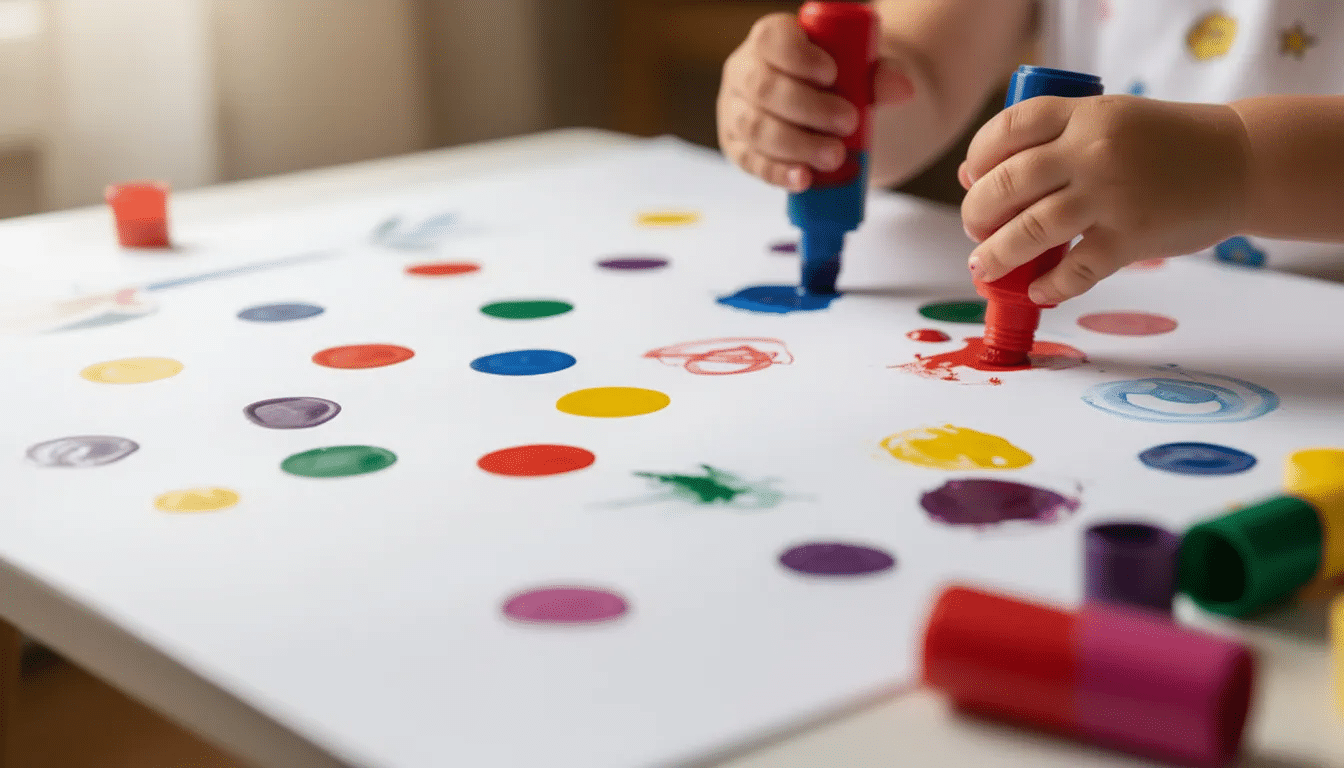
Dot markers are the perfect bridge between markers and paint. They deliver saturated, paint-like dots without open paint cups, brushes, or water—making them a true mess free option.
Why they work so well at 18 months:
- Built-in sponge tip controls drips
- Toddlers can stamp, drag, or dab
- No brush control required
- Cleanup is simple—just wipe the table and hands
How to use them:
- Provide large paper sheets to encourage focusing on the page
- Adults should help twist caps on and off at first
- Gradually let toddlers try themselves to build independence
- Use on printable dot pages for a focused activity
These paint sticks in marker form give you the fun of creating art with color without the stress of spilled paint.
Best Paint Options for 18-Month-Olds (and How to Keep It Under Control)
Paint feels intimidating, but it’s a huge sensory and creative win at this age. The trick is choosing the right type and setting up efficiently, just as with choosing the best art supplies for young artists. Each approach below can be ready in under 5 minutes.
Washable Finger Paints
Finger paint is ideal around 18 months because it supports sensory exploration, hand eye coordination, and fine motor skills development—all through direct tactile engagement.
What to look for:
- Thick, non-drippy formulas
- Labeled non-toxic and suitable for ages 12m+ or 18m+
- Bright, appealing colors (Djeco finger paints are a premium option)
Simple setup:
- Tape a sheet of paper to a high chair tray or low table
- Put small blobs of paint in a palette or directly on paper edges
- Keep only 2–3 colors out at a time (prevents muddy brown results)
- Let your toddler smear freely
For heavy mouthers: Use taste-safe DIY finger paint for the first few sessions. A simple recipe with yogurt and food coloring works perfectly—every ingredient is consumable without harm, and you can branch out later into other kid-friendly paint options like creative glue paint projects.
Solid Paint Sticks (Tempera or Kwik-Stix Style)
Think of these as paint in a glue stick tube. They glide on like lipstick, dry quickly, and completely skip brushes and water cups.
Advantages for 18-month-olds:
- No spills possible
- Strong, saturated color
- Easy to hold
- Minimal drying time (pages don’t smear)
How to use them:
- Start with a basic 6–12 color set
- Store tip-up in a cup or low box so toddlers can see all colors
- Use heavier paper or cardboard to handle the creamy texture
- Cleanup: usually just a damp cloth for hands and table
Avoid leaving them in direct sun or near heaters, as the paint can soften and become difficult to use.
Water-Only “Painting” for Mess-Averse Days
This is your secret weapon: painting with water only. Use a brush and plain water on construction paper, sidewalk, chalkboard, or cardboard—the surface darkens like magic without any pigment.
Perfect for:
- Very short attention spans
- Days when you can’t handle any mess
- Practice runs before introducing real paint
Setup:
- Chunky, short-handled brushes
- Small, stable bowls or cups of water (prevent spills with weighted bases)
- Dark construction paper or cardboard
Seasonal variations:
- Paint water on a dry fence or patio in summer
- “Magic” water painting on dark cardboard indoors during winter
This approach teaches brush-dipping and gentle strokes—foundational skills for when you add water to real watercolor painting later, and it fits beautifully alongside other no-mess activities for toddlers on days you want easy cleanup.
Paper and Surfaces: What Toddlers Actually Like to Draw On
At 18 months, the surface matters as much as the tool. Too-small or flimsy paper creates frustration. Toddlers need larger, sturdier surfaces that invite big arm movements.
Everyday Paper for Scribbling
Affordable options:
- Standard printer paper (use the backs of old documents)
- Construction paper in various colors
- Recycled paper sheets kept in a tray on the art shelf
Size matters: Bigger is better at this age. A3 or 12×18 inch sheets allow full arm movements without running off the edge constantly.
Tips:
- Tape corners to the table or tray to keep paper from sliding
- Offer a mix of light and dark papers
- White crayons and metallic materials show up beautifully on dark paper
Heavyweight Paper and Cardboard for Paint
Thicker paper prevents tearing and curling when wet art materials are involved.
Good options:
- Watercolor paper pads
- Mixed-media pads
- Cut-down cardboard boxes (free canvases)
Toddlers often enjoy the novelty of painting on cardboard, cereal boxes, or paper plates. Keep a stack of pre-cut cardboard pieces near the art shelf for spontaneous painting sessions that later grow into more complex preschool 3D art projects.
Alternative Surfaces: Easels, Windows, and the Bathtub
Vertical surfaces:
- An easel or wall-mounted paper roll supports drawing that helps shoulder and core strength
- Window crayons or window-safe markers allow supervised drawing on glass (easy wipe-off)
Bath art:
- Bath crayons made from rice bran (like Kitpas brand) let toddlers explore color on tile or tub sides
- Always verify products state “non-staining” and “bath-safe”
The bathtub is a contained environment where mess is expected—perfect for encouraging creativity without worrying about the floor.
Stickers, Tape, and Simple Collage for Fine Motor Fun
At 18 months, younger children are just beginning to enjoy peeling, sticking, and ripping. “Collage” at this age is simple and tactile—adults pre-prepare materials to make success more likely, which is a gentle on-ramp to later using more structured DIY craft kits for kids.
Dot Stickers and Simple Shapes
Dot stickers are perfect early collage supplies: easy to see, easy to grab, and flat (no choking hazard when supervised).
Making them accessible:
- Partially peel the backing and fold a corner so toddlers can remove dots more easily
- Start with large dots (about 1 inch diameter)
- Later offer smaller sizes or different shapes (stars, squares, hearts)
Simple activities:
- Filling in drawn shapes or outline templates
- Making sticker “paths” across paper
- Decorating cardboard scraps
Washi Tape and Easy-Tear Tape
Washi tape is low-tack, rips by hand, and comes in fun colors and patterns—ideal for toddlers with a bit of help.
Setup for success:
- Pre-stick short tape pieces to the edge of the table
- Let toddlers peel and place them on paper
- Use for making lines, borders, or “roads” for toy cars
Always choose non-permanent, removable tape to protect tables and walls from damage.
First Glue Experiences
Start with a glue stick instead of liquid glue to limit mess and give more control.
At 18 months, the goal is simple: Put glue on paper, stick something down. Precise placement isn’t the point.
Best collage items for this age:
- Tissue paper squares
- Torn construction paper
- Pre-cut shapes
- Large fabric scraps
Model how to twist glue sticks up and down, and remind toddlers that we don’t eat the glue (even non-toxic ones taste terrible).
Sensory Art Staples: Playdough and Recyclables
Not all art is flat on paper. Three-dimensional, squishy, and buildable materials count too—and they’re perfect for 18-month-olds exploring their world through touch.
Soft, Taste-Safe Playdough
Playdough builds hand strength, finger control, and imagination through rolling, poking, and pressing, just like simple outdoor projects such as nature stick crafts for kids.
What to choose:
- Very soft, non-toxic formulas
- Homemade playdough (fully edible-safe recipes exist)
- Brands like Eco-Dough made with non-GMO ingredients and soy-based pigments
Simple tools to include:
- Chunky rolling pin
- Plastic knife
- Big cookie cutters or craft sticks
Storage: Airtight containers, separate colors, and a dedicated “playdough tray” that can be pulled out quickly from your shelf.
Recyclable Materials for Early Building and Collage
Keep a small bin of safe recyclables for open-ended exploration:
- Cardboard tubes
- Cereal boxes
- Egg cartons
- Clean plastic lids
At 18 months, these are mostly for exploring, stacking, pushing, and occasionally gluing with adult help.
Simple ideas:
- Painting on cardboard pieces
- Sticking dot stickers on tubes
- Dropping pom poms into cut egg carton cups (supervised, as pom poms can be a choking hazard)
Always remove sharp edges, staples, or small parts when preparing recyclables for kids.
Setting Up a Simple Toddler Art Space at Home
A small, always-available art area means more frequent use, independent choice, and less “event” pressure around art activities. You don’t need a full classroom or playroom—just a corner, a low shelf, or a small trolley, similar to how organized spaces are used in creative kindergarten classroom setups.
Furniture: Tables, Chairs, and Easels
Starting simple:
- A low toddler table and chair set works well
- A high chair tray functions as the first “art studio”
- A simple easel is nice but optional—paper taped to the wall serves the same purpose
Practical considerations:
- Choose wipeable surfaces
- Add a plastic mat or old sheet under the art area
- Position near a sink or bathroom if possible for quick handwashing
Organizing Supplies Within Toddler Reach
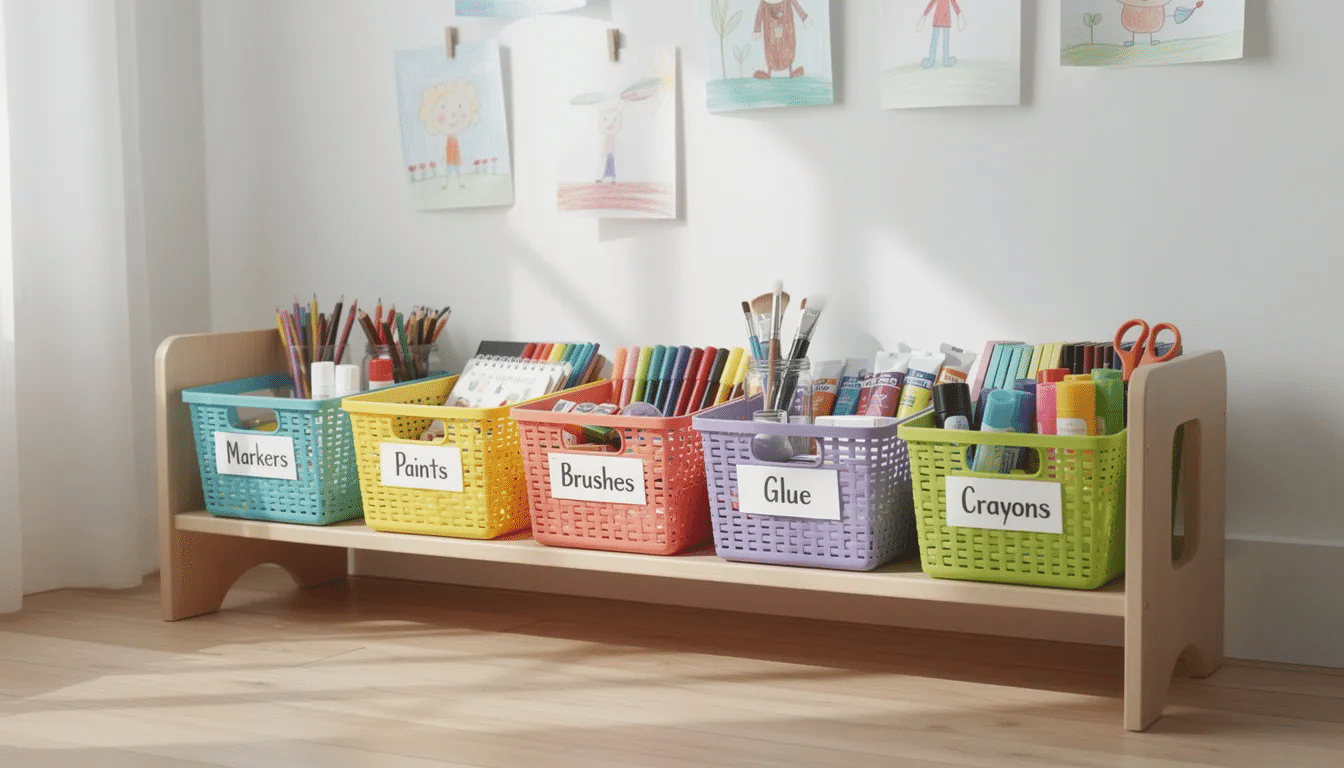
Use 2–3 open containers for everyday supplies:
Container | Contents |
|---|---|
Basket 1 | Drawing tools (crayons, markers) |
Basket 2 | Paper options |
Basket 3 | Stickers, playdough, or rotating item |
Rotation system: Keep only a handful of options out at once, with others stored away to swap in later. This prevents overwhelm and keeps materials feeling fresh. |
Label bins with simple pictures to help toddlers learn where things go. Leaving a single, ready-to-use invitation (paper + crayons already on the table) often invites spontaneous art.
Protecting Clothes, Floors, and Sanity
Essential protection:
- Long-sleeve, waterproof smock kept near the art space (Bumkins brand is lightweight and easy to clean; IKEA offers budget alternatives)
- Washable rug, splat mat, or shower curtain liner under the art area
- Baby wipes or wet cloth always within reach
Mindset shift: Some mess is normal and part of learning. The right supplies and setup keep it manageable without eliminating the joy of the experience.
Sample Starter Art Kit for an 18-Month-Old
This checklist summarizes everything above for parents who want to gather supplies efficiently. You don’t need all of this at once—start with a few items and add more as your artist shows interest.
Category | Suggested Quantity |
|---|---|
Chunky crayons (egg or block shaped) | 6–8 colors |
Ultra-washable markers | 6 markers |
Dot markers | 4–6 colors |
Finger paints | 2–3 colors |
Solid paint sticks | 6–12 colors |
Large drawing paper | Stack of 20+ sheets |
Heavy paper or cardboard | 10+ pieces |
Dot stickers (1-inch) | 1–2 sheets |
Glue stick | 1–2 sticks |
Washi tape | 2–3 rolls |
Soft playdough | 1–2 colors |
Waterproof smock | 1 |
Store this as a “toddler art trolley” or on a single low shelf so everything has a visible, accessible place. Of course, you can start with just crayons, paper, and a smock—then expand from there. |
Tips for Managing Mess and Building a Positive Art Routine
Mess is part of learning, but that doesn’t mean it has to take over your house. Here’s how to create a positive routine that works for both parent and child.
Keep sessions short:
- 5–10 minutes is plenty at this age
- End while your toddler is still engaged (not melting down)
- Short, frequent sessions beat rare, marathon ones
Build a consistent routine:
- Smock on
- Choose 1–2 materials together
- Create freely
- Sing a cleanup song
- Wash hands together
Model creative behavior:
- Sit and create alongside your toddler
- Use simple language: “dot,” “line,” “swirl”
- Show gentle use of materials
Strategic timing:
- Save messier supplies (finger paint, liquid glue) for days when you have more time and patience
- Avoid introducing new messy materials right before bedtime or outings
Remember: There’s no “right” way for an 18-month-old’s art to look. The focus is exploration and the joy of making marks—not finished products for the refrigerator.
Conclusion: Keeping Art Simple, Safe, and Joyful at 18 Months
A handful of thoughtfully chosen, toddler-friendly art supplies can offer months of creative play. You don’t need every product on the market—you need safe materials, easy cleanup solutions, and accessible storage.
Safety (non toxic, age-appropriate), ease of cleaning, and simple access matter more than having the fanciest art materials. When little ones can reach their supplies and you’re not stressed about the mess, everyone has more fun.
Rotate materials to keep things fresh, follow your child’s interests, and celebrate the process of making marks. That scribbled circle? That’s hand eye coordination developing. Those paint smears? That’s sensory exploration in action, right alongside other engaging imagination-building activities. All that experimenting is building the foundation for a lifetime of creativity.
Pick one or two supplies from this list and set up a simple art invitation this week. Tape some paper to the high chair tray, set out a few chunky crayons, and watch your little artist explore. The joy of creating art together starts now.