

Preschoolers build school readiness with their whole bodies, but the hands deserve special attention. The right fine motor skills activities preschool teachers and families use every day can make writing, dressing, eating, and creating feel easier and more enjoyable.
Key Takeaways
- Fine motor skills involve precise movement of the small muscles in the hands, fingers, and wrists; ages 3–5 are a key window for fine motor development.
- Simple, low-cost fine motor activities like playdough, finger painting, bead threading, and clothes pins games can be done daily at home or in a preschool setting.
- Fine motor skills activities support writing, buttoning clothes, pouring drinks, feeding, zipping, and independence.
- This guide gives practical fine motor games, routines, and adaptations for young children who need extra support.
- The FAQ answers how often to practice, what to do if a child avoids table work, and how to use everyday materials.
Understanding Fine Motor Skills in Preschoolers
Fine motor skills are the small, controlled movements of the hands, fingers, and wrists. They are different from gross motor skills, such as running, climbing, jumping, or riding a tricycle.
During ages 3–5, fine motor development moves quickly. A child may begin using child safe scissors, hold crayons with a more stable pencil grasp, develop a tripod grasp, manage large buttons, and turn book pages one at a time. These are not just “cute” milestones; they are essential skills in early childhood development.
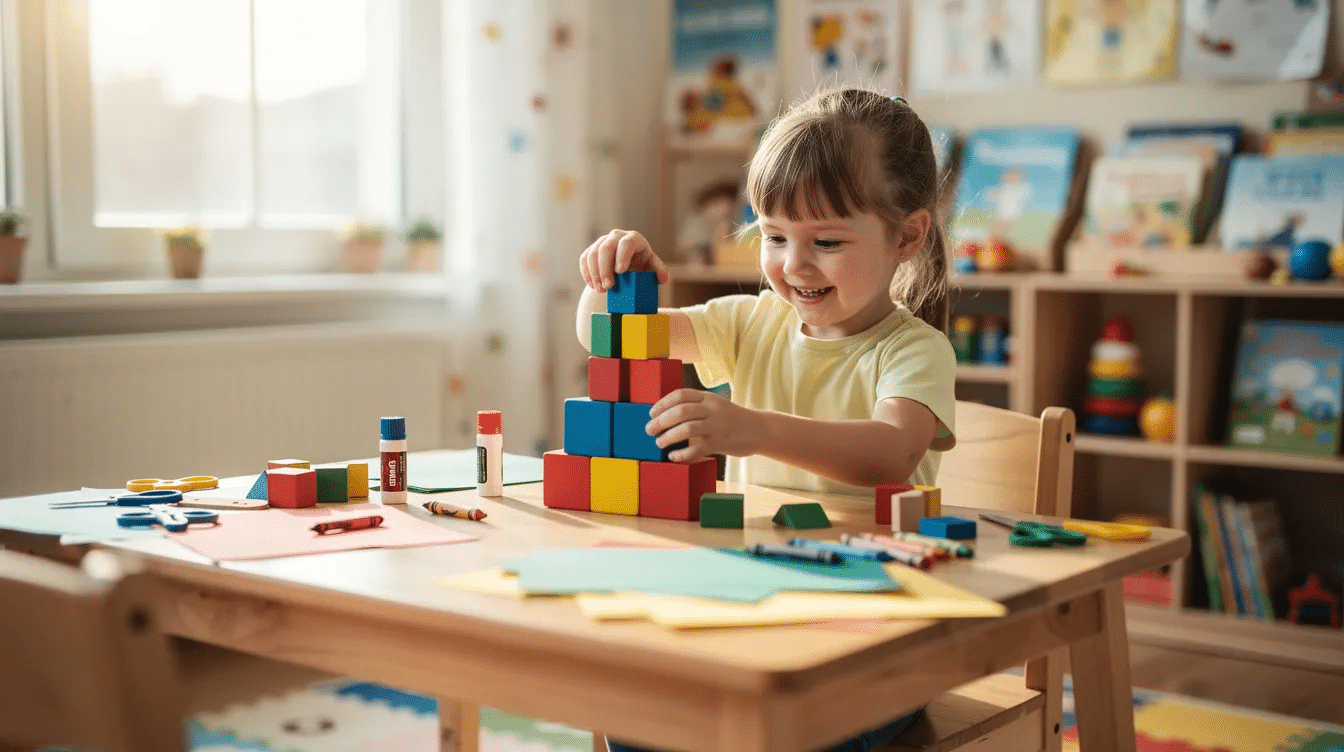
Everyday tasks count. Opening a lunchbox, stacking blocks, using a spoon without spilling, buttoning a coat, building puzzles, and placing paper clips into a plastic container all require hand control, hand coordination, and spatial awareness.
Research indicates that fine motor development is linked to cognitive skills, suggesting that children who engage in activities that enhance hand coordination also improve their problem-solving abilities. For example, a puzzle asks the brain to plan while the fingers rotate and place pieces. One study also found that preschool fine motor skills predicted later academic competencies more strongly than gross motor skills in some areas (Frontiers in Psychology).
Development still varies widely. Some 3-year-olds still use a fist grip, while others trace shapes or begin writing letters from their name. Progress matters more than perfect comparison.
- Why Fine Motor Skill Development Matters Before Kindergarten
- Classroom Strategies to Encourage Fine Motor Development
- Favorite Fine Motor Activities and Games for Preschoolers
- Fine Motor Activities at Home: Low-Cost and Everyday Options
- Supporting Children Who Struggle with Fine Motor Skills
- Conclusion: Making Fine Motor Practice Part of Everyday Play
- FAQ: Fine Motor Skills Activities for Preschoolers
- How often should preschoolers do fine motor activities?
- What can I do if my child avoids drawing, coloring, or other table-top work?
- What are simple fine motor activities I can do without buying new toys?
- How do I know if my preschooler’s fine motor skills are on track?
- Can fine motor activities help with early writing and letter learning?
Why Fine Motor Skill Development Matters Before Kindergarten
Strong fine motor skill development helps children draw, cut, color, write, dress, eat, and participate in preschool classroom routines. Fine motor skills are crucial for everyday activities such as dressing, eating, and writing, which support a child’s independence and self-confidence.
Fine motor strength and hand endurance matter for future handwriting. A child who can color a whole picture or write their name in September 2026 without hand fatigue is better prepared for longer kindergarten tasks. Playing with playdough allows preschoolers to roll, pinch, and shape the material, which strengthens the muscles needed for writing, buttoning coats, and holding utensils.
Fine motor activities also build confidence. Threading beads, completing a pegboard, or peeling stickers from their backing provides a deliberate pincer grasp workout for children and gives them a clear “I did it” moment.
Children who struggle with fine motor skills may experience frustration with daily tasks, which can lead to avoidance of these activities and hinder their overall development. Early, playful support can reduce that avoidance before school routines become more demanding.
Classroom Strategies to Encourage Fine Motor Development
Teachers do not need to isolate fine motor work as “extra.” Preschool environments often incorporate structured activities specifically designed to target fine motor skills, such as finger painting, cutting with scissors, and using tweezers to pick up small objects.
Try a 5–10 minute arrival warm-up with play dough, tweezers and pom-poms, pegboards, or sticker peeling. Rotate weekly themes: “garden week” can include seed sorting, while “ocean week” can include shell transfers.
Offer levels in the same preschool classroom: large beads and pony beads, thick crayons and thin pencils, wide strips and narrow cutting lines. This respects each child’s ability while still improving fine motor skills.
Preschool environments provide access to manipulative toys and games, such as building blocks, puzzles, and art-based fine motor activities, which challenge children’s fine motor skills and require precise hand movements and finger dexterity.
Setting Up Fine Motor Skill Stations in Daily Routines
Fine motor stations are small table or floor areas where children choose structured fine motor games and tasks. Use them during arrival, small groups, or transitions.
Good station ideas include a mix of flat art and 3D preschool art projects:
Station | Materials | Skill focus |
|---|---|---|
Lacing and threading | Yarn, pipe cleaners, beads, macaroni | Bilateral coordination, pincer grasp |
Cutting and gluing | Construction paper, tissue paper, glue, child-safe scissors | Scissor practice, hand strength |
Playdough tools | Rollers, scissors, cookie cutters | Finger strength, hand muscles |
Puzzle and pegboard | Pegs, knob puzzles, pattern cards | Hand eye coordination, planning |
Use shallow trays, picture labels, and small baskets for fine motor materials, along with age-appropriate art supplies for young artists. Track which stations children love and which they avoid, then adjust the challenge. |
Using Music, Movement, and Storytelling to Build Fine Motor Skills
Music and storytelling make finger movements feel like play. “Itsy Bitsy Spider,” “Five Little Ducks,” and “Open, Shut Them” support finger control, finger isolation, and rhythm.
During story time, children can “pinch” pretend seeds, “snap” twigs, “button” paper vests, or clip cardboard animal masks with chip clips. This is a fun way to reach children who resist seated fine motor tasks.
Engaging in outdoor play on age-appropriate playground equipment helps children develop hand strength and coordination, which are essential for fine motor skill development. So let children climb, grip, hang, dig, and enjoy fresh air too.
Observing and Tracking Fine Motor Progress in Preschoolers
Observation, not formal testing, is usually the best tool in a preschool setting. Watch how a child holds markers, snips paper, strings 5–10 beads, uses zippers, or manages buttons.
Keep a simple checklist dated fall 2025, winter 2026, and spring 2026. Celebrate steps like moving from a fist grip to a four-finger grip, or from ripping paper randomly to cutting along a thick line.
Documented observations help families, teachers, and a pediatric occupational therapist decide whether extra support is needed. Research reviews note that fine motor assessment varies widely, so consistent real-world observation is valuable (Frontiers in Psychology).
Favorite Fine Motor Activities and Games for Preschoolers
The best motor activities for preschoolers feel like extra fun, not worksheets. Use everyday materials like straws, pasta, cereal, recycled boxes, and art and craft supplies from the dollar store. Supervise small objects and tiny objects, especially beads, coins, and cereal.
Squeezing, Pinching, and Strength-Building Activities
Playing with playdough, such as rolling, pinching, and shaping, is a fun way for preschoolers to strengthen their hand muscles and improve dexterity. Hide beads inside dough, roll snakes, pinch dinosaur spikes, or flatten pancakes with palms.
Water squeezing activities, such as using turkey basters, build the muscles needed for a proper pencil grip. Eyedroppers, pipettes, and a squirt bottle can move water with food coloring into ice cube trays.
Using clothespins to pick up small objects or attach them to a container helps preschoolers practice their pincer grip and improve finger strength. Try clipping numbered clothespins to a box, hanging doll laundry, or moving pom-poms into cups.
Threading, Lacing, and Beading Fine Motor Games
Threading and lacing improve bilateral coordination, hand eye coordination, concentration, and pincer grasp. Threading and lacing activities involve stringing pony beads or O-shaped cereal onto shoelaces or pipe cleaners.
Stringing beads or macaroni on yarn is an effective fine motor activity that enhances hand-eye coordination and concentration in preschoolers. Stringing beads or macaroni on yarn is also an engaging activity that enhances hand-eye coordination and concentration, essential skills for writing and buttoning clothes; you can even turn it into a playful number 9 craft activity by counting and grouping nine beads at a time.
Make lacing cards from cereal boxes, then punch holes around leaves, hearts, or stars. Children can also weave yarn through a cooling rack for fine motor control and hand dexterity.
Cutting, Gluing, and Pre-Writing Fine Motor Tasks
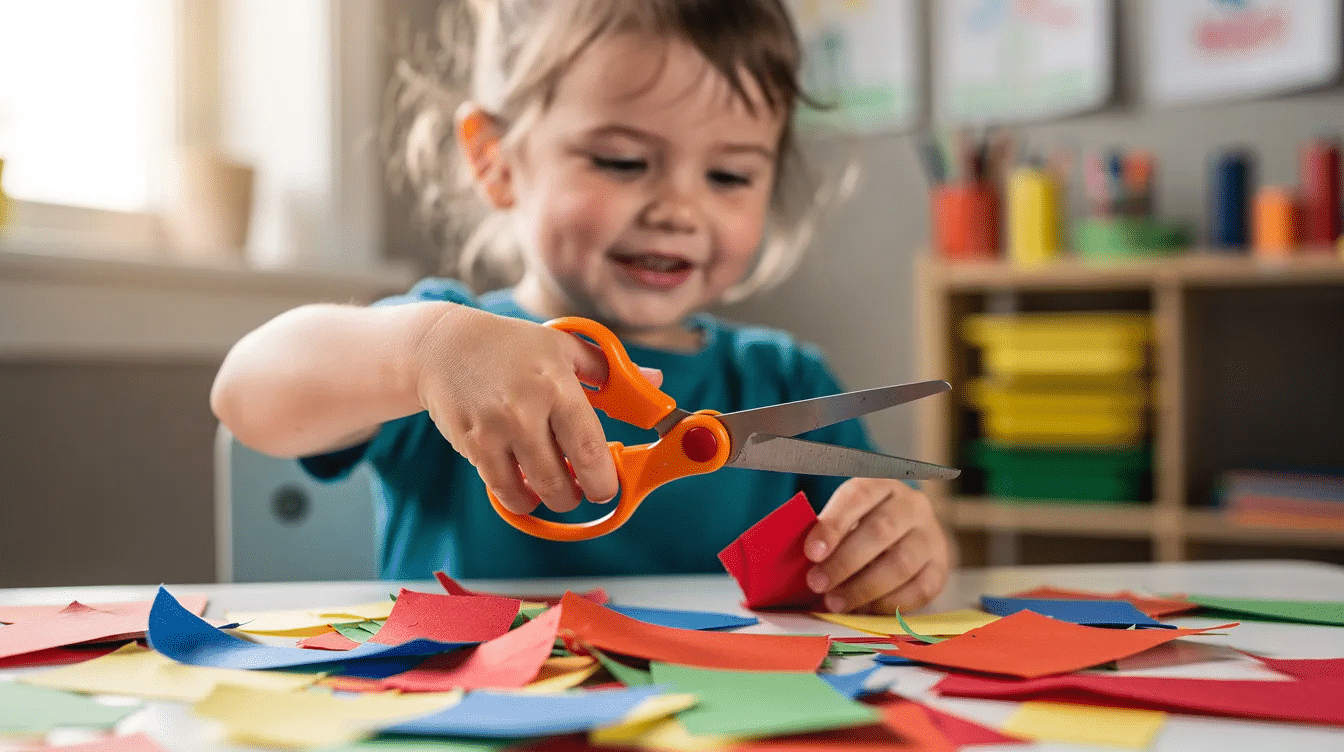
Cutting along straight and curved lines with safety scissors is a vital activity for preschoolers to develop their scissor skills and hand strength. Start by snipping playdough noodles, then fringe paper, then thick straight lines, and finally simple curves for older 4–5s.
Collage is simple and effective. Use magazines, construction paper, tissue paper stained glass crafts, tearing paper, ripping paper, glue dots, sequins, beans, and various art supplies to create animals, suns, or trees.
For pre-writing, trace paths in sand, salt, or shaving cream. Then move to crayons and large shapes before expecting smaller letters. These steps build muscle memory, pencil grip, and writing letters confidence.
Fine Motor Games for Extra Fun
Board and tabletop games double as fine motor games. Try stacking blocks, Connect 4-style games, matching cards, puzzles, or bead-transfer games, and rotate in engaging group activities for 5 year olds that build both social and motor skills.
Using tweezers to pick up small objects like pom-poms or beads helps develop a preschooler’s pincer grasp, which is essential for writing readiness. Using tweezers to pick up small objects like pom-poms or beads helps preschoolers develop their pincer grasp, which is critical for writing readiness activities.
Tweezer transfers help children practice fine motor skills by moving small items between trays. Use plastic bugs, cotton balls, beads, spoons, tongs, or melon ballers. Add simple rules: sort by color, fill an egg carton, or race the timer for 30 seconds.
Fine Motor Activities at Home: Low-Cost and Everyday Options
Families do not need expensive toys. Many strong motor skills activities happen during everyday activities like meals, bath time, dressing, and cleanup.
Follow the child’s interests. Cars can drive through shaving cream roads. Animals can eat pretend beads. Trains can carry pom-poms. Keep sessions short: 5–15 minutes is enough.
Kitchen and Snack-Time Fine Motor Practice
Food prep naturally builds motor skills. Children can stir batter, sprinkle cheese, peel bananas, snap green beans, place berries in muffin tins, stack crackers, or spread hummus with a child-safe knife.
Sensory tables filled with materials like rice or beans encourage wrist rotation and controlled pouring. At home, sensory bins can use oats, dry pasta, rice, scoops, cups, and hidden toys.
Cut round foods like grapes lengthwise, supervise closely, and keep sharp tools out of reach.
Bath, Outdoor, and Sensory Play Ideas
Bath time is full of fine motor work: squeezing washcloths, using suction toys as bowls, and transferring colored water with cups or droppers.
Outdoor preschool activities include sidewalk chalk, seed planting, leaf collecting with the thumb and pointer finger, and watering plants with spray bottles; ocean-themed days can also feature an easy crab paper plate craft for extra fine motor fun. Finger painting indoors or outdoors can encourage creativity while building finger movements, pointer finger control, and hand control.
Sensory play with rice, beans, shredded paper, or water lets little fingers scoop, pour, bury, and find objects, and simple DIY craft kits can provide all-in-one options for families who like ready-made activities.
Fine Motor Toys and Materials Worth Having
A small “fine motor box” can make quick practice easy. Useful items include:
- Building bricks, knobbed puzzles, pegboards, interlocking cubes
- Lacing beads, yarn, pipe cleaners, shoelaces
- Plastic tweezers, clothes pins, chip clips, hole punchers
- Child-safe scissors, eyedroppers, stickers, paper clips
Rotate materials every few weeks. Dedicated arts and crafts stations in preschool classrooms encourage children to use their fine motor skills while engaging in activities like drawing, coloring, and creating various crafts, including family-themed preschool crafts.
Supporting Children Who Struggle with Fine Motor Skills
Some children find fine motor tasks hard. Signs include frustration with crayons, avoiding art, tiring quickly, or struggling with zippers, buttons, and feeding tools.
Engaging fine motor activities include manipulating playdough, stringing beads, using tweezers to sort items, and practicing tasks like buttoning and zipping. Daily routines in preschool, such as self-help tasks like buttoning shirts and zipping backpacks, contribute to fine motor skill development by allowing children to practice and refine their movements.
Fastener boards allow children to practice buttoning, snapping, and zipping, developing self-care skills. Keep practice patient, brief, and success-focused.
Adapting Fine Motor Activities for Success
Small changes can make fine motor activities more achievable:
- Use thick crayons, broken crayons, triangular pencils, or adapted scissors.
- Start with big beads, jumbo pegs, wide paper strips, and large buttons.
- Tape paper down, use a slanted surface, or guide the hand for a few tries.
- Practice for 5–10 minutes, then stop while the child still feels successful.
This supports physical development without turning fine motor work into pressure.
When to Seek Professional Input
Many differences are typical, but support may help if a 4–5-year-old consistently cannot grasp small objects, use scissors despite practice, manage basic fasteners, or tolerate any table-top task.
An occupational therapist can assess fine motor strength, dexterity, hand eye coordination, sensory processing, and the child’s overall motor skill development. Ask a pediatrician or school team if concerns persist.
Early help can improve confidence and future success before formal schooling begins.
Conclusion: Making Fine Motor Practice Part of Everyday Play
Fine motor skills activities for preschoolers do not need to be complicated. Regular, playful practice through toys, art, sensory play, fine motor games, and everyday tasks builds independence and confidence.
Start with one or two fun fine motor activities this week: finger painting on Saturday, threading pasta after snack, or clipping clothespins onto a box. Every small action strengthens preschool hands for learning and life.
FAQ: Fine Motor Skills Activities for Preschoolers
How often should preschoolers do fine motor activities?
Brief, frequent practice is ideal. Aim for several short fine motor activities each day, such as five minutes of playdough in the morning and a puzzle or threading game after snack. Consistency across 2025–2026 matters more than one long session.
What can I do if my child avoids drawing, coloring, or other table-top work?
Start with high-interest play: stickers, finger painting, blocks, toy-car roads, or treasure maps. Keep it short, offer choices, and model without constant correction. If avoidance continues, talk with the teacher or pediatrician.
What are simple fine motor activities I can do without buying new toys?
Try tearing junk mail, cutting old magazines, threading pasta, transferring rice with spoons, clipping paper with clothespins, sorting bottle caps, stacking boxes, or using kitchen tools like tongs, whisks, strainers, and spatulas.
How do I know if my preschooler’s fine motor skills are on track?
By around 4–5, many children can hold a crayon with 3–4 fingers, cut along a simple line, string a few beads, and manage basic fasteners with some help. Compare your child mostly to their own progress over the past six months.
Can fine motor activities help with early writing and letter learning?
Yes. Strong fine motor skills provide the hand strength, control, and endurance needed for writing letters and numbers. Start with large lines, circles, zigzags, and sensory tracing in sand or shaving cream before moving to crayons and paper.