
Key Takeaways
- A dream jar is a simple jar filled with happy ideas, drawings, or affirmations that help children feel safe and excited about sleep. Dream jars are physical containers for children to capture hopeful thoughts and memories – not a manifestation tool designed for adults.
- Dream jars for kids can reduce bedtime battles and nightmares by giving children a sense of control and a comforting ritual that slots into everyday life.
- Parents can create a dream jar in under 30 minutes using everyday materials like recycled jam jars, tissue boxes, or plastic tubs – plus paper, crayons, and stickers most families already own.
- The activity suits ages 3–8, can be adapted for siblings or classrooms, and fits Little Button Diaries’ focus on frugal, creative family fun.
What Is a Dream Jar for Kids (and Why It Helps at Bedtime)?
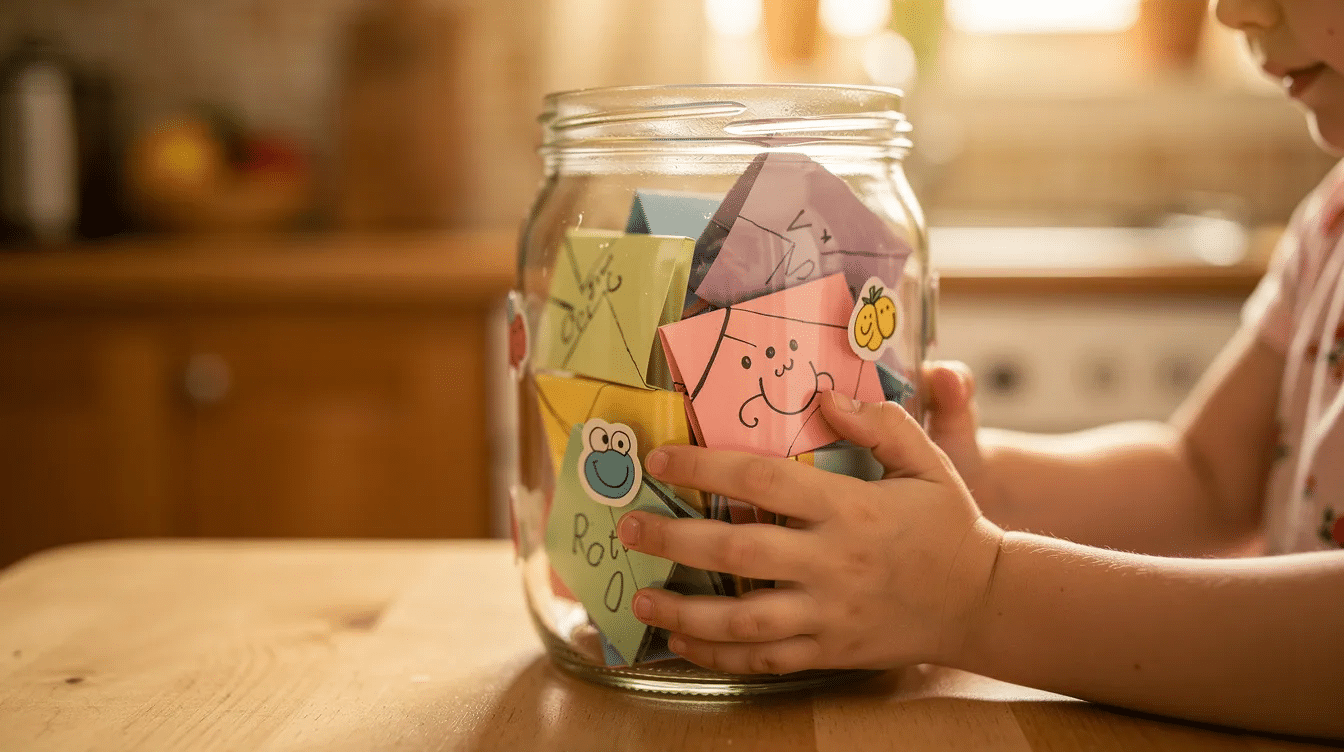
A children’s dream jar is a container your child fills with written or drawn “good dreams” and calming ideas. Each night before sleep, they choose one slip from the jar, read it (or have you read it), and hold that positive image in mind as they drift off. Think of it as a perfect place to store all the things that make your child feel happy, brave, and safe.
This is different from adult “manifestation” jars you might discover online. A kids’ dream jar is not about magical thinking or achieving material wishes. It is about soothing worries, replacing fears with positive thoughts, and giving anxious sleepers genuine agency over bad dreams. Dream jars serve as tangible mindfulness tools for children, helping them learn to manage big feelings at a time of day when everything can feel overwhelming.
Why does this matter? Many preschoolers begin reporting bad dreams and night-time fears around ages 3–6 – over a third of children in that range dream about monsters. Having a simple, creative ritual that helps families slow down together at the end of a busy day can change the whole mood of bedtime.
How Dream Jars Can Ease Bad Dreams and Night-Time Worries
Bad dreams and bedtime resistance are remarkably common in early childhood. Around 27% of dreams among children aged 4–8 contain negative or upsetting emotions, and typical night fears – monsters under the bed, loud storms, strange shadows – can turn lights-out into a battle. A dream jar becomes a reassuring bedtime tool, much like a favourite teddy or a night-light, giving your child something concrete to hold onto. Dream jars help children cope with nightmares by redirecting their imagination before sleep even begins.
The emotional benefits include:
- Naming worries – drawing or writing a fear externalises it, making it feel smaller and more manageable.
- Replacing scary images – slips filled with joyful or silly ideas offer the brain an alternative story to follow.
- Feeling heard – when a parent sits alongside and listens, it builds trust and resilience at bedtime.
Try this child-friendly explanation: “Bad dreams are just stories in your brain. We’ll fill your jar with new, happy stories to help your brain choose nicer ones tonight.” Choosing one slip each evening becomes a predictable step that can shorten long, stressful routines and bring calm to the whole house.
Materials You’ll Need for a Kids’ Dream Jar
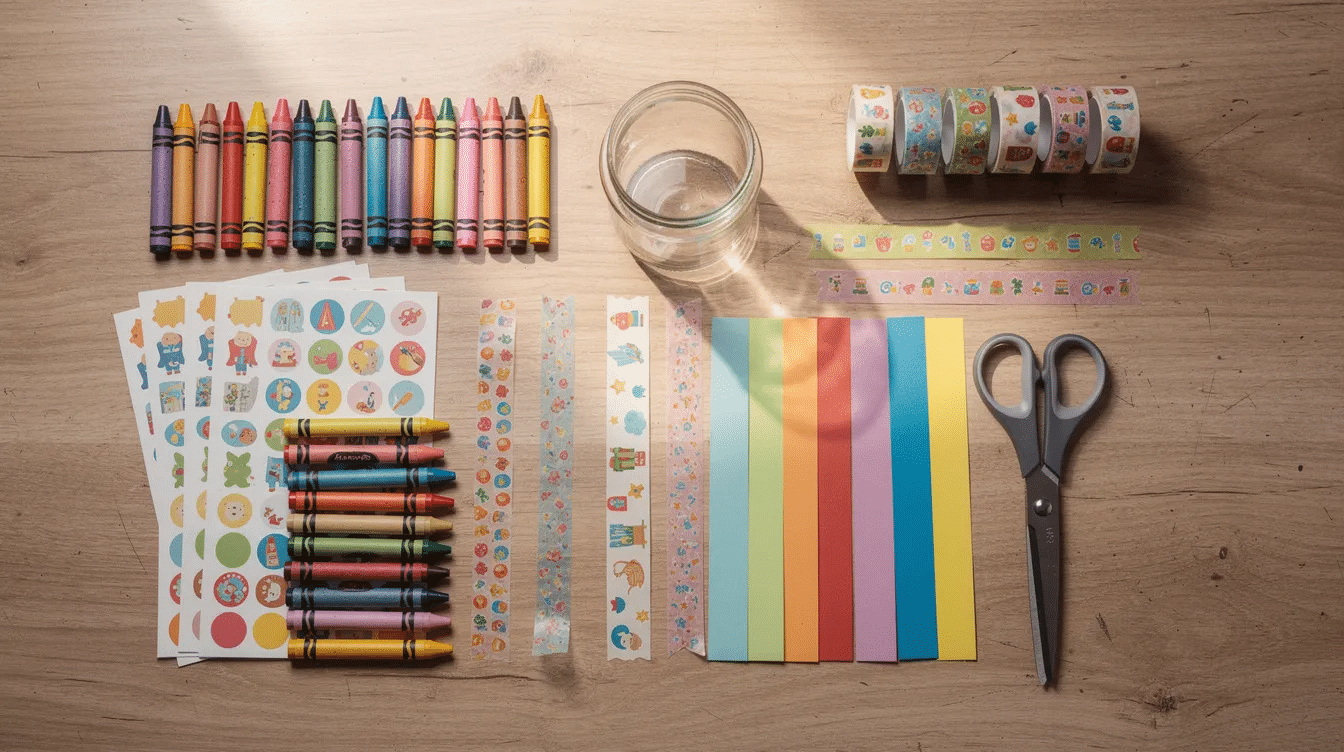
Most items can be found at home or in a pound shop, making this an easy, budget-friendly craft. Dream jars can be made from various containers, not just glass – so pick whatever suits your child’s age.
Container options:
- A clean 300–500 ml jam jar (great for ages 5+)
- An empty hot chocolate tin with a lid
- A plastic screw-top food tub – choose a non-glass container for safety at night, especially for toddlers
- A decorated tissue box or cardboard tube for very young children
Paper options:
Small slips of colorful paper work perfectly. Cut up A4 printer paper, use coloured index cards, sticky notes, or leftover wrapping paper offcuts turned blank-side-up.
Writing and decorating supplies:
Use paper, crayons, and a container as your starting set, then add washable felt tips, pencils, child-safe scissors, PVA glue, masking tape, stickers, washi tape, star-shaped confetti, and ribbon. Ensure all art supplies meet ASTM D4236 safety standards – look for “non-toxic” on labels. Avoid loose glitter for under-fives (inhaling risk) and skip real-flame candles entirely; an LED tealight is the only safe option.
Keep everything in a labelled “Dream Jar Kit” box so the activity can be repeated on future evenings without extra prep.
Step-by-Step: How to Make a Simple Dream Jar with Your Child
Creating a dream jar is a craft that can be engaging for children of any age. Follow these steps and you will have a finished jar in about 20 minutes.
Step 1 – Prepare the container. Wash and dry your jar or tub, remove any labels, and optionally paint the lid or wrap the outside in a piece of coloured paper. A girl or boy who loves space might choose dark blue paper dotted with silver star stickers.
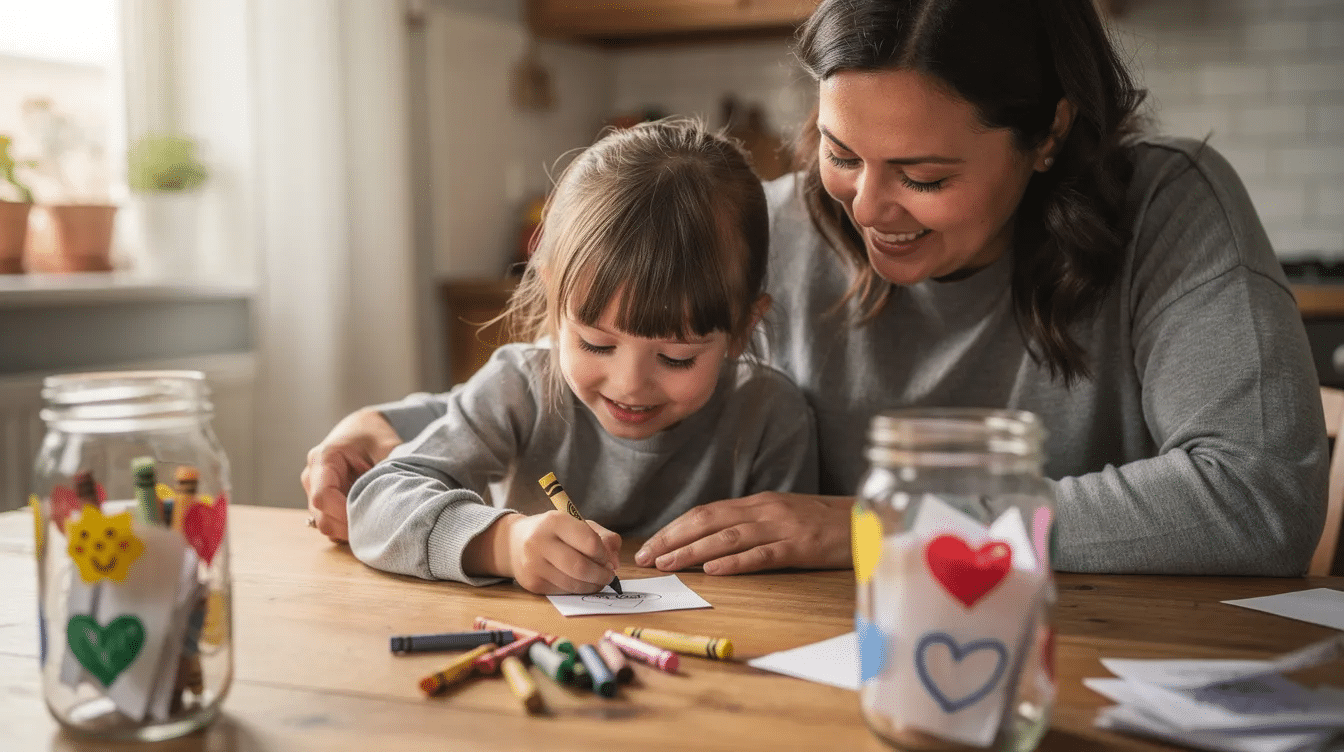
Step 2 – Decorate together. Write the words “Dream Jar” or your child’s name across the front. Stick on stickers, moons, clouds, or favourite characters. Decorating the jar encourages creativity in children and makes the item feel truly theirs.
Step 3 – Cut the dream slips. Cut paper into small rectangles – roughly the size of a playing card – and set them in a bowl.
Step 4 – Fill the slips. This is where imagination takes center stage. Draw pictures of good dreams to inspire creativity, or write short prompts:
- “Flying on a dragon over Brighton Pier”
- “Building a sandcastle in Cornwall”
- “Having a picnic with Grandma in the park”
Dream jars allow children to express themselves in a playful and creative manner. A dream jar can also hold drawings of happy experiences – encourage children to draw their happy memories for the jar alongside future adventure ideas.
Step 5 – Fold, fill, and place. Fold or roll each slip, pop it into the dream jar, give the jar a gentle shake, and choose a special spot by the child’s bedroom shelf, bedside table, or windowsill.
Age-by-Age Ideas for Filling Your Dream Jar
Dream jars work differently for a three-year-old than for a seven-year-old. Here are ideas grouped by age to spark inspiration.
Toddlers and preschoolers (ages 3–4): Keep things visual. Children can draw good dreams to place in the jar – simple pictures of rainbows, playgrounds, ice creams, or favourite animals. Parents can act as scribes, adding a short log of words like “rainbow slide” or “happy puppy.”
Ages 5–6: A child this age can write short sentences: “I’d like to dream about learning to ride my bike” or “Tonight I will dream that I’m a mermaid.” Introduce silly dreams too – dancing penguins in the kitchen or a big friendly giant reading a book in the garden. Children can fill dream jars with happy memories and gratitude notes at this stage, which is a great way to learn about hope and thankfulness.
Early readers (ages 7–8): Encourage richer detail: “A cosy treehouse with fairy lights and hot chocolate.” Include kind affirmations: “I am brave in the dark.” Children can use dream jars to visualize and hold onto their goals and wishes – perhaps “scoring the winning goal” or another future dream they are working towards.
Mix categories: happy memory dreams, future adventure dreams, silly dreams, and calm dreams. Siblings can each have their own colour-coded slips or share one big family dream jar. Families and teachers use dream jars to promote gratitude and goal-setting, so the concept adapts beautifully to activities for imagination in group settings too.
Turning Dream Jars into a Calm Bedtime Ritual
A dream jar works best when it becomes part of a predictable bedtime routine. Research confirms that consistent routines reduce sleep onset time, cut night wakings, and improve overall sleep quality. Talk about dreams before bedtime to enhance relaxation – it only takes a minute or two.
Sample nightly routine: Pyjamas → teeth → story → choose one dream from the jar → read it aloud → place the slip under the pillow or back in the jar → lights low.
When worries surface, try: “I hear that spiders feel scary. Let’s pick a dream about something that makes you feel strong and safe.” Pair the jar with other calming cues – soft music, a warm drink of milk, a night-light like a homemade birdbox nightlight, or a favourite cuddly toy that “guards” the jar.
Mornings matter too. Invite your child to remember any dreams and match them to slips, or add a new slip inspired by a particularly lovely dream they had. This turns the jar into a living journal of happy thoughts rather than a static object. Keep the ritual light – if a bad dream still pops up, reassure them that the jar is not a problem-solver with a 100% success rate, but a comfort they can always return to.
Creative Dream Jar Variations (Light-Up, Classroom & Party Ideas)
Once your family has tried a basic dream jar, you can transform the idea for different settings.
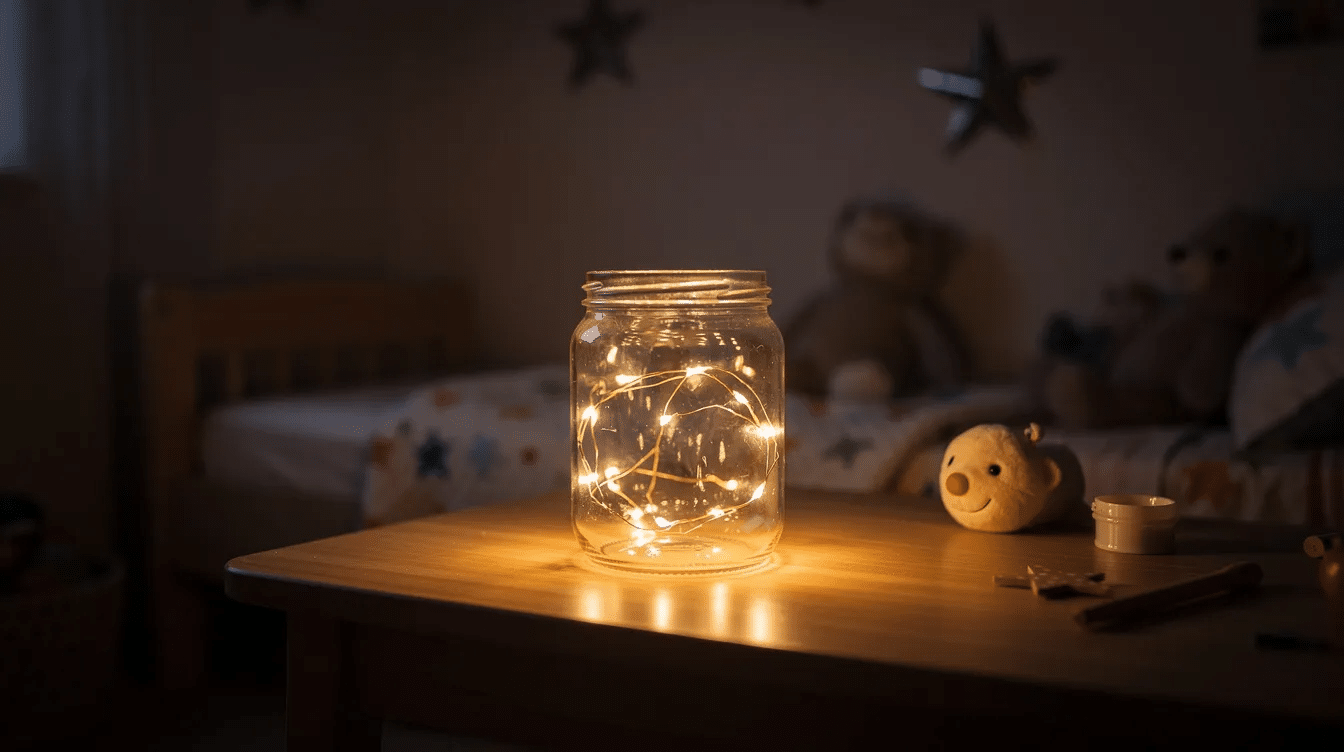
Light-up dream jar: Pop an LED tealight or a short set of battery-operated fairy lights inside the jar. Stick tissue-paper silhouettes of stars or clouds on the outside for shadow play. The soft glow in a dark bedroom is magical – and completely safe.
Classroom version: A large plastic jar where each child adds one dream for the week. During circle time, the teacher can read a few aloud as a positivity exercise, building emotional literacy across the group.
Party or sleepover jar: Each guest writes a silly or imaginative dream, decorates a mini jar (a baby food jar or yoghurt pot works well), and takes it home as a favour. It is a fun, low-cost party craft that guests will actually use.
Holiday dream jar: In the summer, families can create a “summer dreams” jar filled with ideas for beach days, camping trips, or picnics in the garden.
Gentle reuse and upcycling keeps the craft eco-friendly: cover old pasta sauce jars or tins with leftover wrapping paper or fabric scraps. No download or special kit required – just a little imagination and whatever you find in the recycling box.
Gentle Tips for Talking About Bad Dreams with Children
Bad dreams are a normal part of development and not a sign you are “doing bedtime wrong.” Nightmares tend to peak between ages 3 and 12, so most families will face them at some point.
Practical tips for those middle-of-the-night moments:
- Stay calm and keep your voice low.
- Listen briefly – don’t ask too many probing questions at 2 a.m.
- Save longer chats for morning when everyone is rested.
- Invite the child to add a new “comfort dream” slip the next day that directly counters the scary one (friendly dragons instead of frightening ones).
The concept of dream jars can include therapeutic practices like creativity and self-reflection. Try saying: “That was a very strong story your brain told you. Let’s help your brain practise a nicer story for tonight and pop it in your jar.”
If nightmares happen most nights for several weeks, or your child is too distressed to sleep alone, consider talking to your GP or health visitor. The goal is not to eliminate every bad dream but to give children tools – and a secure, loving connection – that make night feel manageable. Dream jars can help reduce anxiety in children, but they are one piece of a bigger picture of love and support.
Dream Jars and the Little Button Diaries Approach
Dream jars fit perfectly into the Little Button Diaries philosophy: simple, low-cost crafts that help families connect and make memories. The activity uses everyday materials parents are likely to find in their kitchens or craft drawers, making it accessible even on a busy Tuesday evening. No account with a specialist supplier needed, no expensive set of tools – just things you already have.
Combine dream jars with other easy craft ideas from Little Button Diaries, such as homemade night-lights, stitched star cushions, or DIY activities that bring bedtime to life. Reading about dream jars can ease children’s fears at bedtime, and sharing photos of your child’s decorated jars on facebook or printing them as photos for a scrapbook creates a digital “dream diary” the whole family can look back on in later years.
We’d love to see what you create. Whether you are a parent, grandparent, or preschool teacher, adapt the idea freely for your own children, classrooms, or nurseries. Every dream jar is perfect because it was made with heart and inspired by the child who owns it. Check out our reviews and craft activities for kids for even more ideas.
Frequently Asked Questions about Dream Jars for Kids
Below are answers to common questions not fully covered above.
What age is best to start using a dream jar?
Most children can begin around age 3, when they can talk about simple ideas and recognise pictures. At this stage, parents do most of the writing while the child helps draw. Older primary-school kids still enjoy the ritual – they simply write more detailed, independent slips. For under-threes, keep the jar out of reach and show one or two calming pictures at bedtime without expecting the child to contribute yet. Different uses for dream jars include tracking future goals and storing happy moments, so the jar naturally grows with the child.
How often should we add new dreams to the jar?
Adding 2–3 new slips once or twice a week keeps the contents fresh. Sunday evenings or the day after a particularly lovely outing are a great time. Every few weeks, have a “dream tidy-up”: recycle any crumpled slips and invite your child to create updated versions that match their current interests, whether that is dinosaurs this month or mermaids the next.
What if my child only wants to write scary dreams?
This is a signal the child needs to process fears – and that is completely true and valid. First, explain that you understand the feeling. Then gently guide them to “reverse” the scary image: draw the monster looking friendly, sleepy, or tiny, or give it a silly hat. That reworked version becomes the slip that goes into the dream jar as a solution that feels empowering rather than dismissive. Over time, this change in perspective builds real resilience.
Can dream jars replace bedtime stories?
Dream jars are best used alongside, not instead of, bedtime stories. Shared reading remains one of the most powerful ways to bond and calm children before sleep. Use the jar as a quick, final step after the story – it takes just a minute or two, so the routine does not become too long or stimulating. A book followed by a dream slip is a wonderful one-two combination.
Is it better to keep the jar by the bed or somewhere else?
The perfect place is usually somewhere the child can see from their pillow – a bedside table or a secure shelf. For toddlers using a glass container, keep it out of reach. Some families like to place the jar on a windowsill during the day, then bring it closer at night as part of the routine, making the moment feel special and intentional.