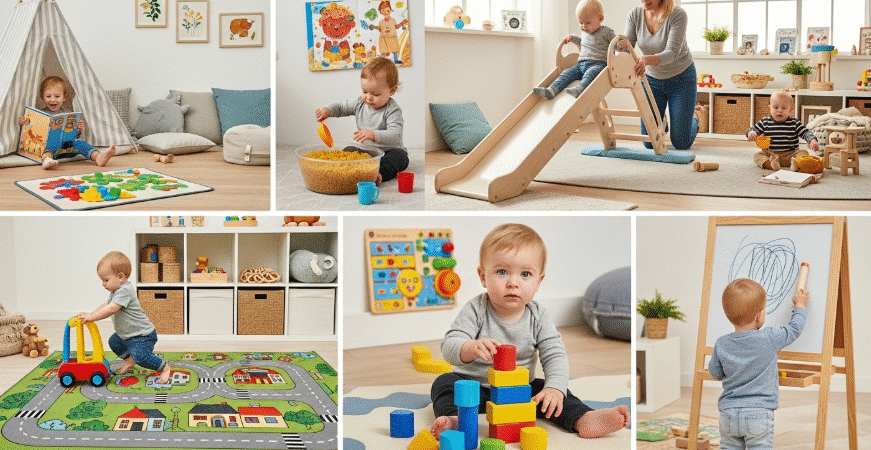

If you’re looking for activities for 18 month old toddlers, you’re in the right place. This age is full of curiosity and energy, and it’s a great time to try out new games and play ideas that help little ones learn and grow. I’ll share some easy and fun activities that you can do at home without a lot of fuss. These ideas focus on building skills like fine motor, language, and problem solving while making sure your toddler is having a good time.
- Introduction to Toddler Activities
- Month Old Developmental Milestones
- Sensory Play to Really Get Them Involved
- Using Everyday Items to Build Fine Motor Skills
- Making Language Fun
- Getting Moving for Physical Development
- Letting Imagination Run Wild
- Sorting and Matching to Build Problem Solving
- Music and Movement for Fun and Learning
- Getting Outdoors and Playing in Nature
- Water Play and Exploration
- Simple Tasks to Build Your Toddler's Confidence
- Fun and Messy Art and Craft Ideas
- Games That'll Keep Your Toddler's Brains Busy
- Tips for Making Playtime Easy and Fun
- The Final Word
Introduction to Toddler Activities
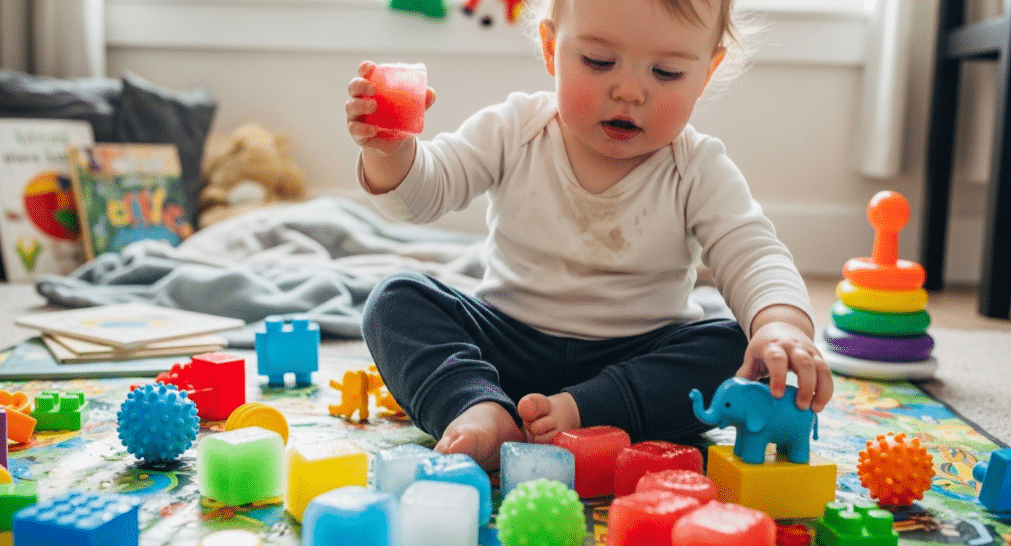
When your little one hits 18 months, they’re absolutely bursting with curiosity and dead keen to get stuck into exploring the world in all sorts of new ways. Its a cracking stage for getting them involved in loads of brilliant activities that’ll give their development a proper boost. Simple toddler activities can make a massive difference, helping your kid build up their fine motor skills, hand-eye coordination, and language skills—all while having a right laugh. You don’t need any fancy toys or anything like that; basic household bits like food coloring, ice cubes, and small toys can spark hours of creative play that’ll keep them entertained for ages. Sensory play, interactive games, and hands-on activity ideas are top picks for encouraging your little one to explore, have a go at problem solving, and pick up new skills along the way. In this post, you’ll find some brilliant ideas for sensory exploration, fine motor activities, and games that are absolutely perfect for your 18 month old. Let’s dive into some dead simple ways to get the learning going and make every day a proper adventure!
Month Old Developmental Milestones
By 18 months, your little ones are hitting some cracking new milestones that’ll shape the way they play and get stuck into learning. Most 18 month olds are getting dead confident on their feet, and you might spot them having a go at eating with a spoon or pointing at all sorts of bits and bobs around them. At this age, toddlers begin to show independence and may start to walk alone, exploring their surroundings with growing confidence. Their fine motor skills are coming on a treat, making it a doddle for them to pick up small toys, stack up blocks, or flip through pages in a book. Language is proper blossoming too—your child might knock out a few words and start getting the hang of simple instructions, which makes interactive games and music activities even more of a laugh. Sensory play becomes a top way to explore, as toddlers are mad about touching, feeling, and discovering new textures that get their hands busy. Getting your head round these milestones is a brilliant way to pick activities that match your child’s age and what they’re capable of, giving their growth a good boost and making playtime both fun and dead educational.
Sensory Play to Really Get Them Involved
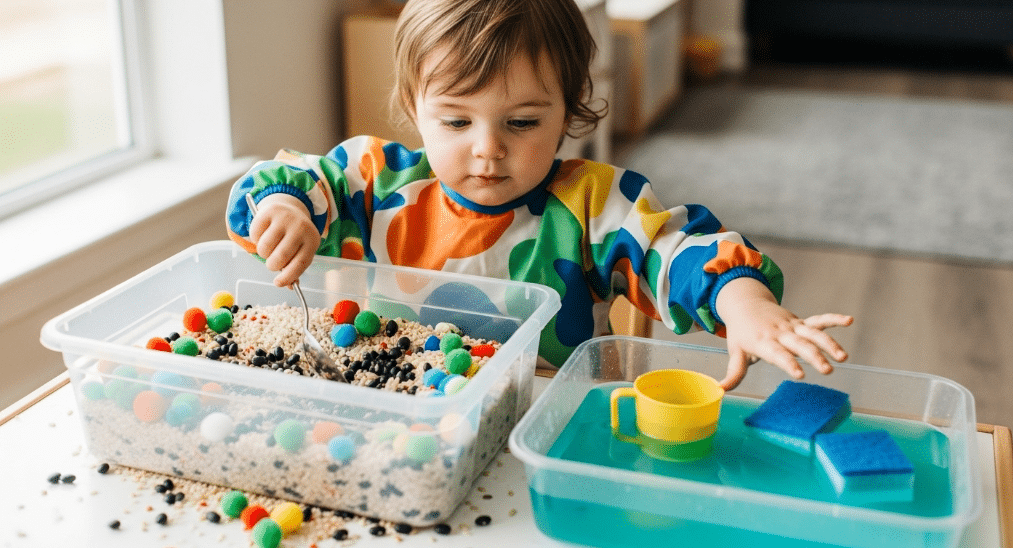
Kids are total tactile creatures – they love to touch and explore things, and that’s where sensory play comes in. Sensory bins are also great for babies and young toddlers, as they support early developmental milestones and sensory exploration. Set up a super simple sensory bin with rice, beans, or pom poms and let your child get in there with a spoon and really dig in. Add some small toys or a few colored balls in different colors to help with color recognition, and you’ll have a hit on your hands. Another fun twist is to freeze some flowers or small toys in ice cubes and watch as your toddler discovers what’s inside as the ice melts.
And then there’s water play – a toddler classic. Fill a shallow container with water, add in a few drops of food coloring in different colors and you’ve got a splashing good time. Give your toddler a cup, a spoon or a sponge to play with and they’ll be practicing hand-eye coordination and fine motor skills in no time. Just be prepared to keep an eye on things and make sure it doesn’t get too wet.
You can also create a sensory path for your toddler or baby to practice walking on different textures, like bubble wrap or soft mats, to encourage movement and coordination.
Using Everyday Items to Build Fine Motor Skills
Fine motor skills are all about using your fingers and hands to do small things. You can encourage your child to get good at this by giving them some stacking cups, nesting toys or some playdough to squish and mold. Finger puppets and felt boards are also great for little fingers to get to grips with. Try simple things like putting things in a container or pouring water from one cup to another. These are dead easy to set up and will give your toddler a chance to practice control and focus.
Or, if you want to get a bit creative, you and your child can have fun creating a DIY busy board with some buttons, zippers and snaps for your child to play with.
Making Language Fun
Talking and reading with your toddler is one of the best ways to help them pick up new words and sounds. Pick out books with bright pictures and simple words and point to the pictures as you read. Talking about the pictures helps build your child’s vocabulary by naming objects and describing what you see together. Sing songs and nursery rhymes together and use some hand motions to make it more fun. This helps the child connect words with actions and builds up their early language skills.
You can also play interactive games like peek-a-boo or pat-a-cake to get them talking. Talk about the steps or objects during the game to support language development. Respond to your child’s babbling by having a chat back to them and pointing out things around you. For matching games, use picture cards or books to enhance the activity and help your child learn new words. This kind of back-and-forth really helps build their confidence in using words.
Getting Moving for Physical Development
At this age, toddlers are always on the go – and that’s great for physical development. Creating obstacle courses enhances physical abilities and spatial understanding, making it a fun and educational activity. Set up a basic obstacle course using pillows, boxes or soft toys and watch as your child crawls over, under and through them. These games are often played by children to build coordination and balance.
And then there’s ball play – a toddler favourite. Playing ball games develops gross motor skills through rolling and throwing, which are essential for physical development. Roll, throw and catch with some soft balls or balloons and you’ll be helping to develop motor skills in no time. Bubbles are also great fun – and a good way to get your toddler moving and practicing hand-eye coordination. All of these activities are beneficial for children’s physical development.
Letting Imagination Run Wild
Toddlers love to use their imagination and play pretend. Dress-up clothes, stuffed animals and toy kitchens are perfect for this. Encouraging pretend play with dolls and toy phones fosters imaginative skills in toddlers, helping them create their own little stories and scenarios. Encourage your child to role-play simple things like cooking or looking after a doll. You can also involve family members in pretend play or create family-themed stories together, which helps foster family bonding and makes playtime even more meaningful. A homemade puppet show made from a cardboard box is also a great way to get them into storytime.
And don’t forget household items like cardboard tubes or paper towel rolls – these can spark all sorts of creative play. Your toddler might turn them into a telescope, a tunnel or a racetrack for their toy cars. Let their imagination lead the way.
Sorting and Matching to Build Problem Solving
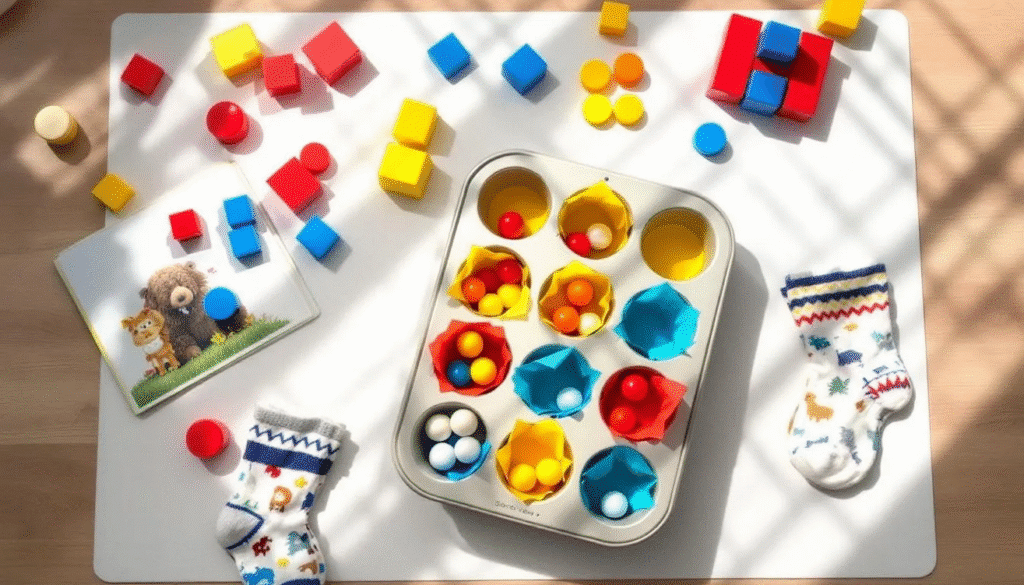
Sorting objects by colour, shape or size is a great activity to help toddlers build problem solving skills and learn to categorise things. Stacking and sorting shapes improve fine motor skills and problem-solving abilities, making these activities both fun and educational. Use some coloured balls, blocks or even socks to create some piles and get your child to match them. A muffin tin with some coloured paper at the bottom can turn into a colour sorting game with some small balls or pom poms.
Or try matching some toys to pictures in a book or pairing up some socks – these are simple games that also help with memory and recognition. These activities are easy to set up and will keep your toddler focused for longer stretches.
To keep your toddler engaged and learning, consider using activity rotation—switching up sorting and matching games regularly throughout the week.
Music and Movement for Fun and Learning
Music is a great way to support your toddler’s development. Play some different types of songs and get your child to clap, stomp or dance along. Making a shaker from a bottle filled with rice or beans is a fun little instrument to add to the mix.
Singing nursery rhymes with some hand actions is a great way to get language skills and memory going. You can even create some little dance routines together. Music and movement activities also support social development by encouraging interaction and cooperation with others. Observing what types of music or movement your toddler is most interested in can help you plan future activities. Music and movement is a great way to bond with your child and have fun while learning.
Getting Outdoors and Playing in Nature
Fresh air and nature will give you and your toddler a whole new world of play and learning opportunities. Walking nature trails and pointing out familiar objects promotes language development and curiosity, making outdoor adventures even more enriching. Outdoor play is especially important during early childhood, as it supports overall development. Take your little one on a walk and let them collect some leaves, sticks and rocks in a small basket – and then get them to tell you all about the different colours and shapes they’ve found.
Getting your toddler active in the garden or park is great for developing their gross motor skills – they’ll love running, climbing and just generally exploring all those new surroundings. Nature play also gets them curious about the world outside and develops a love for the great outdoors.
For even more activities, try nature scavenger hunts or simple gardening tasks to keep your child engaged and learning outdoors.
Water Play and Exploration
Water play is a cracking way to keep your 18 month old entertained while giving their development a proper boost. Its a brilliant sensory activity that gets the little ones exploring different textures, temperatures, and movements – dead simple but so effective! Try filling up a shallow tub or basin with water and chuck in a few drops of food coloring to create a rainbow of possibilities. Pop in some ice cubes for a chilly twist, or toss in small toys and let your toddler fish them out with their hands or a spoon – this is a top way to practice fine motor skills and hand-eye coordination. You can also sort out a pouring station with cups, funnels, and sponges, letting your child have a go at filling and emptying containers to their hearts content. Water play is not only a brilliant way to beat the heat, but it also gets problem solving skills going as your child figures out how to shift water from one place to another. Just remember to keep an eye on them closely and make sure the play area is safe and slip-free. With a bit of creativity, water activities can turn any day into a proper engaging, educational adventure for your toddler – give it a try and watch them have an absolute ball!
Simple Tasks to Build Your Toddler’s Confidence
Getting your toddler involved in simple household tasks is a two way street – they get to have fun and help out, and you get some extra help and some time to yourself. Give them a small cloth to wipe surfaces or a basket to gather toys – it’s great for teaching responsibility and helping with their motor skills.
But don’t just stop at chores – turn them into games, like sorting the laundry by colour or putting away plastic containers. Your toddler will feel a real sense of pride when they’re helping out and having fun at the same time.
Fun and Messy Art and Craft Ideas
Finger paint is a win-win for toddlers – it’s messy and fun, and great for helping them express themselves. Finger painting supports creativity and fine motor skills development, as it allows toddlers to explore textures and colors while using their hands. Grab some big sheets of paper and let your child get on with it – or try sticking them on ice cubes or bubble wrap for a new twist.
Making simple crafts with stickers and foam shapes is just as good – and using recycled material is a great way to teach your toddler about being creative and using up what you’ve got. For easy and fun art projects, you can also use free printable templates that are available online. Just keep the projects short and sweet, so your little one doesn’t get bored.
Games That’ll Keep Your Toddler’s Brains Busy
Games like “hide and seek” with toys or “find the object” under cups are great games played with toddlers—they help with thinking and problem solving. Or try hiding a toy under a cloth and asking your child to find it—or play a matching game with cards or pictures.
Observing which games your toddler is most interested in can help you choose the best activities for them.
Building towers with blocks and knocking them down is another great way to teach your toddler about cause and effect. Playing with blocks also develops motor skills and teaches balance, as toddlers learn to carefully stack and align pieces. It’s a fun way to help them focus, remember and solve problems.
Tips for Making Playtime Easy and Fun
- Keep things short and sweet – and switch things up when your child is bored with what they’re doing
- Try activity rotation—regularly switching up toys and activities—to keep your toddler engaged and prevent boredom
- Use what you’ve got at home – it’s a great way to save time and money
- Follow your child’s lead and join in on the fun – it makes it special for them
- Always keep an eye on your child during play, especially when they’re playing with small things or water
- Celebrate their efforts and discoveries – no matter how small they may seem
The Final Word
Playing with your 18 month old toddler doesn’t have to be a chore. With a bit of imagination and some simple materials, you can create a fun space where they’ll learn new skills and have a blast. Whether it’s a sensory bin, some music or an outdoor adventure, these ideas will keep your little one happy and engaged. We hope these activities and ideas inspire and support you as you engage your 18 month old. And remember – the best bit is spending time together and watching them grow.