
Quick Overview of Aluminum Foil Crafts for Preschoolers
Aluminum foil is shiny, inexpensive, and absolutely perfect for simple preschool crafts in 2026 classrooms and homes. This everyday kitchen supply transforms into a magical art surface that captures light and makes satisfying crinkly sounds that kids loved from their very first touch. The activities in this post focus on process art, sensory play, and fine motor skills for ages 3–5, and the best part is you likely already have everything you need in your kitchen drawer.
Key benefits of foil crafts for preschoolers:
- Sparks creativity and imagination through open-ended exploration
- Builds hand eye coordination and finger strength
- Provides rich sensory experience through touch, sound, and sight
- Creates calm, quiet time for focused play
- Why Aluminum Foil is Great for Preschool Crafts
- Basic Aluminum Foil Painting for Preschoolers
- Foil Collage and Sculpture Ideas for Preschoolers
- Process Art: Printing, Textures, and Finger Painting on Foil
- Seasonal and Holiday Aluminum Foil Crafts for Preschoolers
- Practical Tips: Setup, Safety, and Cleanup
Why Aluminum Foil is Great for Preschool Crafts
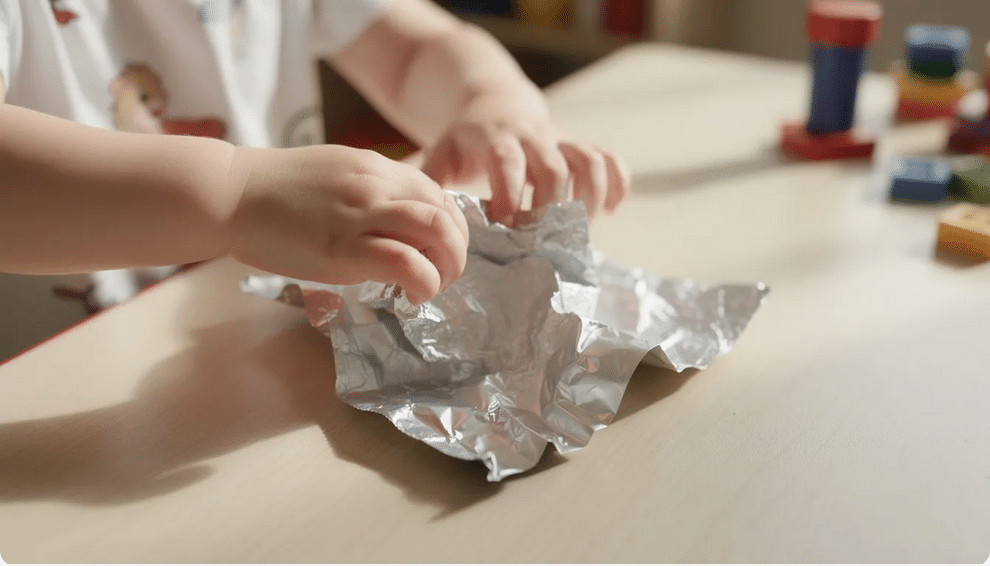
What makes aluminium foil special for little hands? It reflects light beautifully, creates that irresistible crinkly texture, produces satisfying sounds when scrunched, and shapes easily under small fingers. Unlike paper, foil holds its form when molded, making it a wonderful material for children to explore.
- Sensory appeal: Foil delivers a triple sensory hit—sight (shine and reflections that dance across the room), sound (that crunchy, crackly feedback), and touch (smooth surface versus crumpled texture). This multi-sensory input can be calming for anxious or sensory-seeking children.
- Skill-building: Working with foil supports fine motor skills development as children tear, scrunch, and mold. The process primes their hands for larger milestones like writing readiness while encouraging early mark-making and experimenting with materials.
- Practicality: A roll of tin foil costs very little and can be cut into foil sheets of any size. It wraps around cardboard for sturdy painting surfaces and can go into your recycling bin where local rules allow.
- Preschool appropriateness: Foil crafts adapt easily for every age group within the 3–5 range. With simple supervision and non-toxic materials, even younger toddlers can safely explore while older preschoolers tackle more detailed projects.
Basic Aluminum Foil Painting for Preschoolers
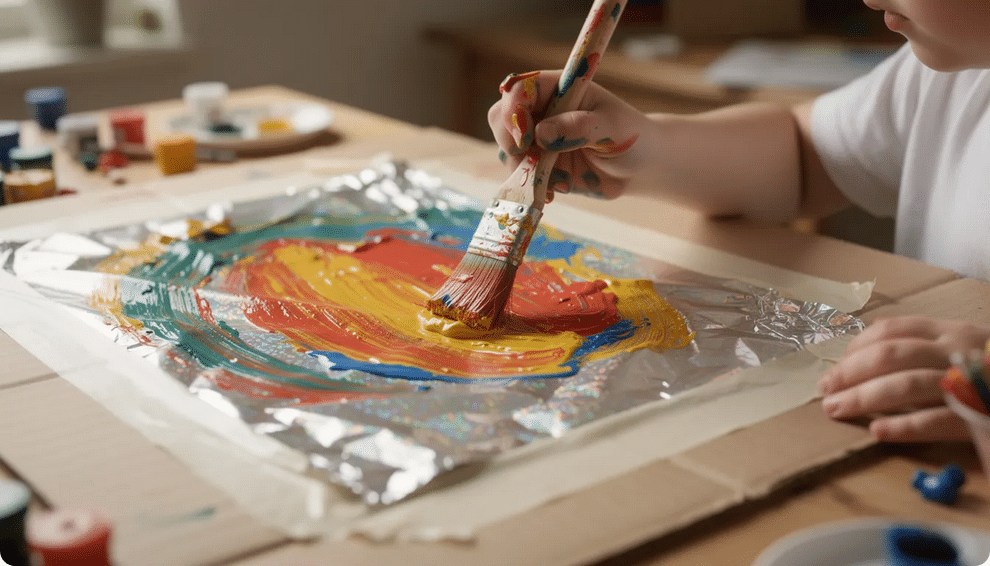
Foil painting is often the first “wow” activity for preschoolers discovering this material. It works like painting on paper, but the surface is shinier, more slippery, and way more fun. The light bounces off the foil as children add colours, creating an effect that feels almost magical to young artists.
Setting up is straightforward. Tape or wrap your foil around a piece of cardboard or a tray so it stays flat and won’t slide around the table. This stable surface lets children focus on their art rather than chasing runaway foil. For the paint, mix washable tempera with a single drop of liquid dishwashing detergent—this helps the paint stick to the slick foil surface and reduces cracking when it dries.
Offer a variety of tools for different mark-making options: chunky brushes work great for big strokes, q tips allow for finer details, and fingers let children feel the cool, slippery surface directly. Encourage them to create rainbow lines sweeping across the foil or burst patterns that look like fireworks exploding in colour.
The focus here should always be on open-ended exploration rather than creating a perfect finished product. Let your little one discover what happens when colours blend on the shiny surface.
Supplies for Simple Foil Painting
Here’s a quick checklist for setting up a foil painting activity in your 2026 preschool or home:
| Essential Supplies | Optional Extras |
|---|---|
| Aluminum foil sheets | Plastic tablecloth |
| Child-safe scissors | Painting aprons or old shirts |
| Masking or painter’s tape | Cardboard backing pieces |
| Washable tempera paint (red, blue, yellow, white) | Small containers for paint |
| Cotton swabs or thick brushes | Damp cloths for quick cleanup |
Adults should pre-cut foil and tape it down before inviting 3-year-olds to the table. This small bit of prep prevents frustration and keeps the activity flowing smoothly.
Step-by-Step: First Foil Painting Activity
Start by preparing your surface—cover the table with a plastic cloth or newspaper if you’re worried about mess. Tape your foil sheet firmly to a piece of cardboard, pulling it smooth so there are no major wrinkles. Pour small amounts of paint into containers, giving each colour its own cup.
Before handing over the brushes, demonstrate one or two simple strokes so children understand they can make marks on this unusual surface. Then step back and let them explore freely. This is their time to experiment.
As they paint, encourage children to talk about what they notice. Ask them about the sounds the foil makes or how the light looks different when paint covers part of the shiny surface. This verbal engagement deepens the sensory experience and builds vocabulary.
When paintings are finished, set them aside in a safe spot to dry for about an hour. You can display finished foil paintings on a classroom wall using tape or stick them on the refrigerator at home. The reflective quality makes them catch the eye in any room.
Foil Collage and Sculpture Ideas for Preschoolers
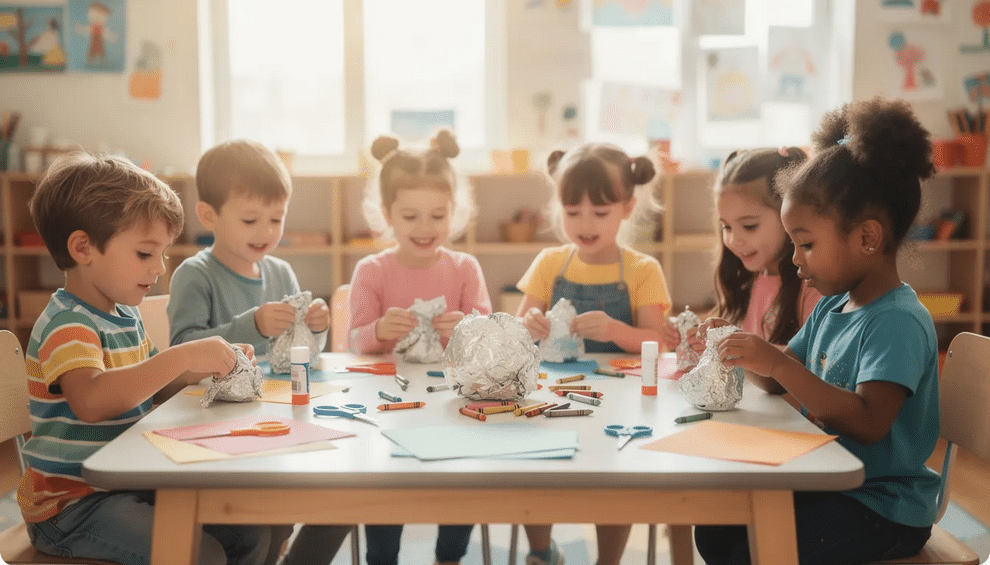
Beyond painting, foil can be ripped, rolled, and scrunched to create easy 3D art and collages. These activities let children build and construct rather than just paint, adding another dimension to their creative exploration.
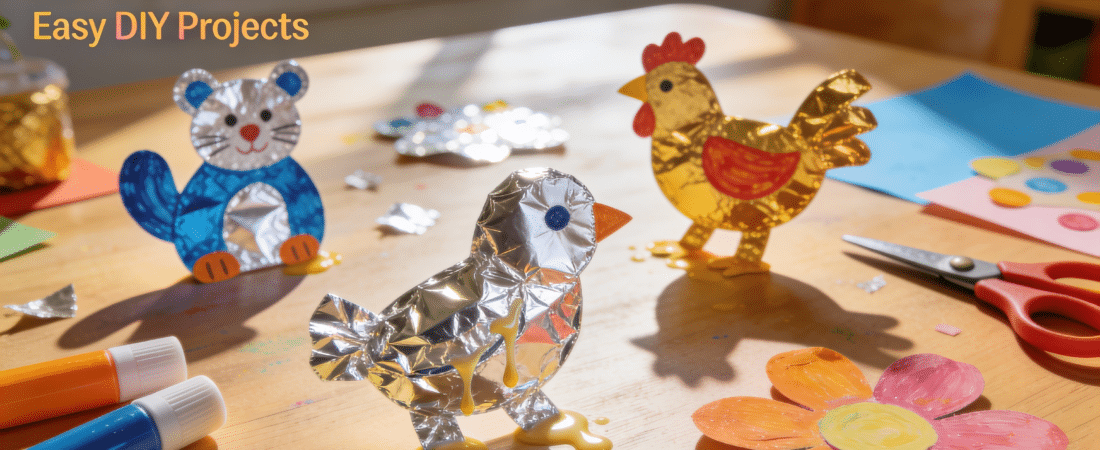
- Rip-and-glue collages: Children tear foil into pieces and glue them onto colored construction paper to make simple shapes like stars, fish, or houses. The contrast between shiny foil and matte paper creates pictures that really pop.
- Foil ball creations: Roll small foil balls to serve as 3D “rocks,” “planets,” or “jewels.” Kids can glue these into space scenes, treasure maps, or underwater worlds. The wonderful texture of crumpled foil adds visual interest to any project.
- Twisted sculptures: Help children twist strips of foil into spirals, trees, or pretend bracelets and crowns. With a bit of adult guidance on shaping the edges safely, these sculptures become wearable art or display pieces.
- Group foil city: Set up a “foil city” table where preschoolers build a collaborative sculpture on a cardboard base over several days. Each child adds buildings, roads, or characters throughout the week, watching their city grow.
Consider themed projects like farm animals made from foil-wrapped cardboard tubes or space rockets constructed from foil cones. These concrete ideas spark the imagination and give children a starting point for their own variations.
Foil Collage Setup and Safety Tips
Making foil collage safe and frustration-free for ages 3–5 requires a little forethought. Here’s how to keep things running smoothly:
- Pre-cut or pre-rip foil into different sizes to avoid sharp, fresh edges that could scratch small fingers
- Use school glue sticks or white glue applied with brushes so kids don’t get overwhelmed by sticky squeeze bottles
- Watch for children putting small foil bits in their mouths—this is especially important with younger preschoolers who still explore through tasting
- Have a small labeled container or bag ready for foil scraps so cleanup at the end of the activity is quick and calm
Process Art: Printing, Textures, and Finger Painting on Foil
Process art focuses on exploring materials rather than making a precise finished picture. It’s about the journey of creation, not the destination. Foil is a wonderful medium for this approach because it behaves so differently from paper—the surprise element keeps children engaged and curious.
- Foil printing: Paint a design on foil, then press paper on top and smooth gently. When children peel back the paper, they discover a surprise print that mirrors their original work. The excitement of that reveal never gets old.
- Texture stamping: Scrunch foil into a ball, dip it into paint, and stamp onto paper for dotted or patchy textures. The unique painting activity creates patterns impossible to achieve with regular brushes.
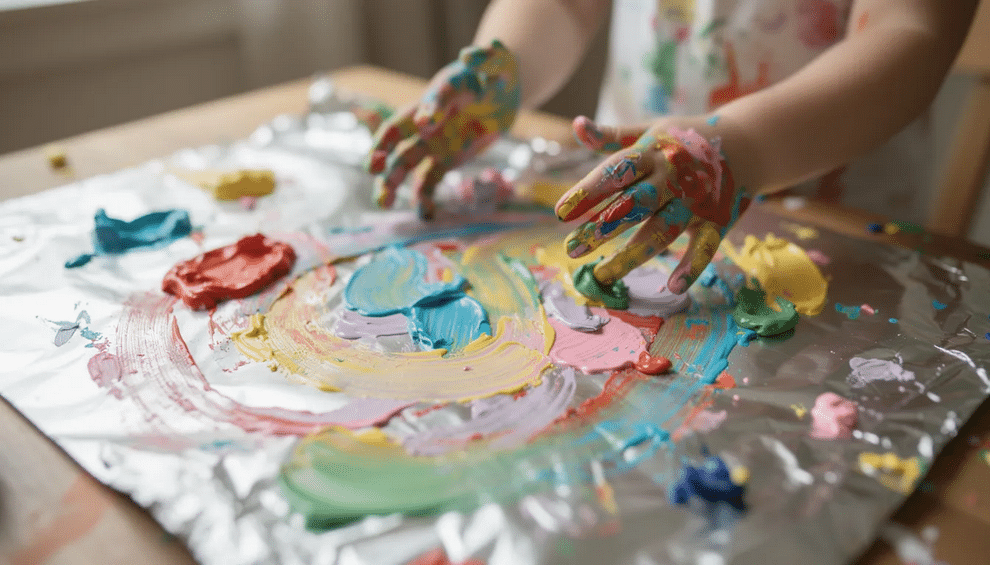
- Finger painting on foil: The slippery, cool feel of foil under fingers is a completely different sensory experience from paper. Kids can swirl colours together with their hands, watching shades blend and separate on the reflective surface.
- Found object printing: Press sponges, toy car wheels, or leaves into paint on foil, then transfer onto paper to make tracks and prints. This technique opens up endless possibilities for experimenting with household items and creative techniques.
Encourage children to try things without worrying about the outcome. Some of the most wonderful discoveries happen when kids are free to explore without pressure.
Choosing Paints for Foil Process Art
Preschool crafts should always use non-toxic, washable options—this keeps everyone safe and makes cleanup much easier for parents and teachers.
- Washable liquid tempera works best for most 3–5-year-olds. It comes in bright colours and washes out of clothing and off surfaces with minimal scrubbing.
- Adding dish soap helps tempera grip the foil surface and reduces flaking once the paint dries. Just a small amount mixed into the paint makes a noticeable difference.
- Fluorescent or neon paints can create a glowing effect on foil, especially when placed near a sunny window or under bright classroom light. The reflective surface amplifies the vibrancy.
- A note about acrylics: These are suitable for older kids and adults only, as they don’t wash out of clothing easily and require more careful handling.
Seasonal and Holiday Aluminum Foil Crafts for Preschoolers
Foil crafts tie beautifully into familiar preschool themes and holidays throughout the year. Whether you’re preparing for Valentine’s Day 2026, setting up a Halloween party, or celebrating winter, foil adds sparkle to seasonal projects.
- Winter ideas: Create foil snowflakes or icy trees on blue paper. Add white tempera as “snow” around the foil pieces for a frosty scene. The shiny foil catches light like real ice.
- Valentine’s Day: Cut or tear foil hearts and glue them onto red or pink cardstock. Preschoolers can add painted dots or fingerprints around the hearts as decorations. These make a great idea for classroom exchanges.
- Space theme: Wrap cardboard tubes in foil to make rockets, or cover circles to create planets for a “space day” display. The reflective surface makes everything look appropriately cosmic.
- Autumn crafts: Press foil over real leaves to capture the imprinted veins, then paint lightly with warm colours. This technique teaches children about texture while connecting them to nature.
These examples stay simple enough for a 15–20 minute preschool craft block while still producing results children feel proud to share and display.
Using Foil Crafts as Gifts and Classroom Displays
Preschool foil creations work wonderfully as easy gifts or decorations. With minimal extra effort, you can transform craft time into gift-making time.
Turn foil paintings into Mother’s Day or Father’s Day cards by gluing them onto folded cardstock. The shiny surface makes these cards feel special and stands out from typical paper creations. Children feel proud presenting something so visually striking to their families.
Create a classroom “shiny gallery wall” where children’s foil pictures are displayed at their eye level. This sign of respect for their work builds confidence and ownership. Rotate the display each week to give every child time in the spotlight.
Always add the date and child’s name on the back of artwork so families can remember when each piece was created. These details turn simple crafts into keepsakes that parents treasure for years.
Practical Tips: Setup, Safety, and Cleanup
Good preparation makes foil crafts smoother and more enjoyable for both adults and preschoolers. A few minutes of setup saves frustration during the activity and makes cleanup much faster afterward.
- Setup: Cover tables with plastic or newspaper, pre-cut and tape down foil, pour small amounts of paint into containers, and have wipes or a wash basin ready before children arrive at the table.
- Safety: Supervise any scissors use, fold over sharp foil edges, keep small pieces away from mouths, and use only non-toxic materials. These precautions make the process worry-free.
- Clothing: Recommend painting shirts or smocks for 3–5-year-olds, especially in group settings like preschools. Tempera washes out, but prevention is easier than stain removal.
- Cleanup: Show children how to help wipe tables, collect foil scraps in a designated container, and rinse brushes as part of the routine. This teaches responsibility and makes cleanup feel like a natural end to the activity rather than a chore.
- Recycling note: Check local rules before putting used foil into your recycling bin, as policies differ by city and country. Some areas accept clean foil while others do not.
Adapting Foil Crafts for Different Ages and Abilities
Supporting mixed-age groups and varying skill levels requires some flexibility. The beauty of foil crafts is their natural adaptability.
- Younger preschoolers (around 3 years): Provide larger foil sheets and thicker brushes. Focus on big strokes and sensory exploration rather than detailed work. Let them scrunch, tear, and feel without pressure to create anything specific.
- Older preschoolers (around 4–5 years): Introduce q tips for finer details, simple shapes, and patterns. Some children at this age enjoy early name-writing on foil or creating more structured pictures with recognizable subjects.
- Children with sensory sensitivities: Let them touch foil with tools first—brushes, sticks, or covered fingers—before moving to direct hand contact if they feel ready. Never force the sensory experience; let interest guide the process.
There is no “right” way to do these crafts. Every child’s exploration is valid, and every creation tells a story. The point is engagement, not perfection.
Aluminum foil crafts offer preschoolers a world of shiny, sensory-rich exploration without breaking your budget or requiring hours of prep. From basic foil painting to sculptural creations and seasonal ornaments, these art activities build fine motor skills, spark creativity, and provide the kind of engaging, hands-on learning that young children thrive on.
Grab a roll from your kitchen, cover the table, and watch your little one discover what magic happens when paint meets that crinkly, reflective surface. Start with one simple foil painting session this week—you might be surprised how much so much fun unfolds from such basic supplies.
Have questions or want to share your foil craft creations? Join our community by email continue following along, and explore more ideas for keeping preschool art time fresh and wonderful all year long.