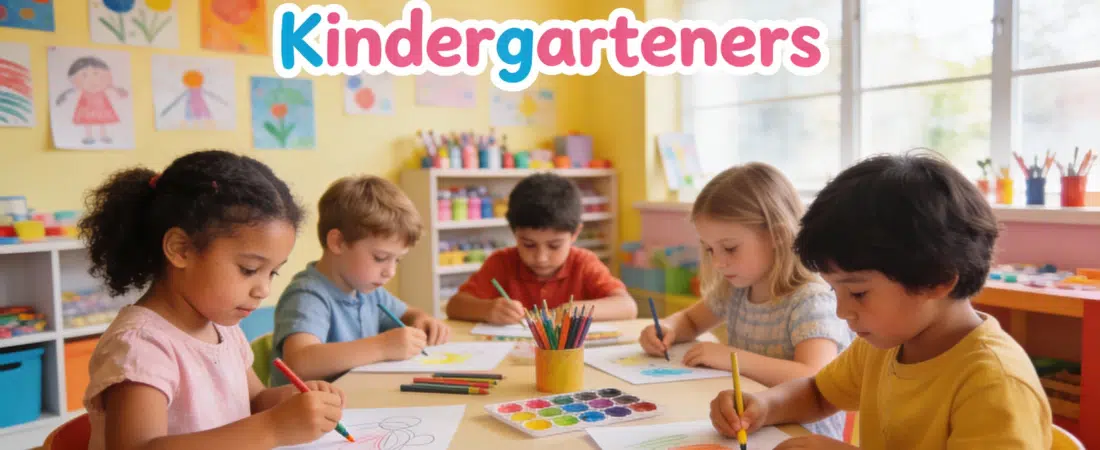

Art classes for kindergarteners are structured creative experiences designed specifically for children ages 5–6 who are just beginning their formal education journey. If you’re a parent wondering whether your child is ready for art instruction, the answer is almost certainly yes—and the benefits extend far beyond pretty pictures on the fridge.
At this developmental stage, art education supports fine motor skills needed for writing, provides a foundation for early literacy through labeling and storytelling, and gives children a safe outlet for emotional expression. Kindergarteners gain confidence as they create artwork that reflects their own ideas and experiences.
These classes typically feature concrete, age-appropriate projects like paper collage animals, watercolor rainbows, and clay pinch-pot “treasures”—not just generic crafts. Most programs run as 6–8 week sessions during the school year, with shorter holiday and summer mini-camps filling the gaps. No prior art experience is needed; curriculum is built specifically for first-time kindergarten artists.
Here’s what you’ll find in this guide:
- The developmental benefits that make art essential for 5–6-year-olds
- What actually happens during a typical kindergarten art class
- Core skills your child will learn, from drawing basics to creative thinking
- Types of classes available for young artists
- How to choose the right program for your kindergartener
- What parents should expect and how to support their child at home
Developmental Benefits of Art for Kindergarteners
Around ages 5–6, children hit concrete developmental milestones: developing grip strength to hold a pencil, learning to use scissors along a line, and beginning to tell simple stories with a clear beginning, middle, and end. Art classes create the perfect environment to practice and strengthen each of these skills while keeping kids engaged through fun activities.
- Fine motor skills: Using child-sized scissors, glue sticks, and fat paintbrushes strengthens the hand muscles kindergarteners need for writing in K and Grade 1. Regular practice with art materials builds the dexterity required to form letters and numbers.
- Cognitive growth: Pattern-making with shapes, creating simple symmetry butterflies, and counting petals on a flower drawing all reinforce early math concepts. Kids naturally compare sizes, sort colors, and explore spatial relationships.
- Language and storytelling: Children narrate their pictures, describing “a trip to the park in May 2026” or explaining why their monster has three eyes. This practice builds vocabulary, sentence structure, and the confidence to express ideas verbally.
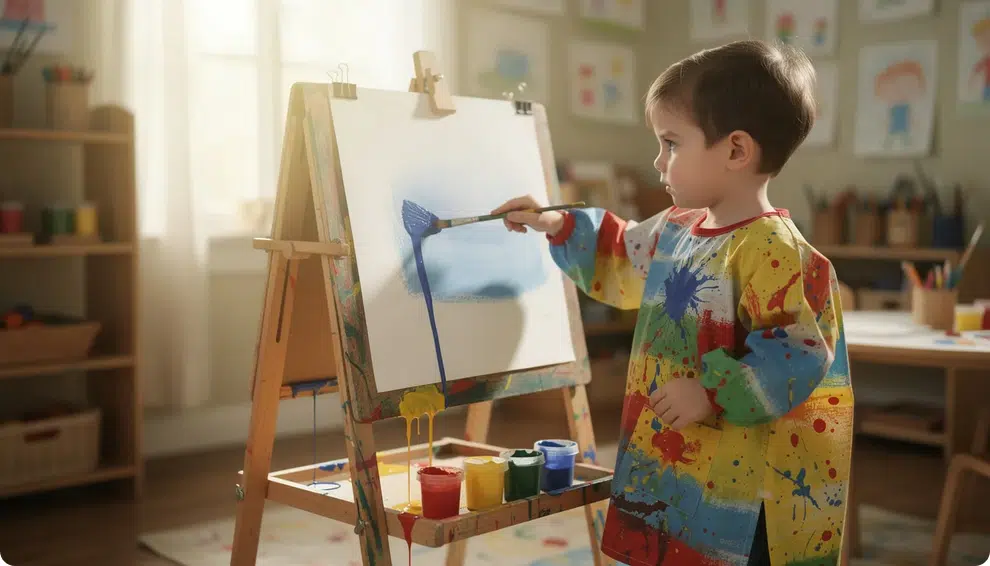
- Social-emotional skills: Turn-taking at shared easels, participating in compliment circles at the end of class, and learning to cope with “mistakes” by turning them into new ideas all develop problem solving skills and emotional resilience.
- Self-esteem: Displaying artwork in a mini “gallery wall” or sending pieces home weekly reinforces pride and independence. When a child sees their creation valued, they develop confidence in their own abilities.
- Self expression: Art provides a judgment-free zone where kids can explore feelings and ideas they might not have words for yet. A drawing of a “sad cloud” or a “happy house” becomes a window into their inner world.
What a Typical Kindergarten Art Class Looks Like
A well-structured kindergarten art class runs about 45–60 minutes—long enough for meaningful creative work, short enough to match a 5–6-year-old’s attention span. The format stays predictable week to week, which helps young students feel secure and focused.
Warm-up (5–10 minutes)
Classes begin with activities that prepare small hands for work. Instructors might lead finger warm-up doodles, drawing big circles in the air, or a quick “shape hunt” around the room. Some studios use the same opening song or ritual each week, creating a familiar transition from arrival to art-making.
Main project (25–35 minutes)
This is where the creative process unfolds. For more creative ideas for classroom engagement and learning, sample lessons for kindergarteners include:
- “Underwater City” mixed-media collage combining crayons, markers, and tissue paper layered to create an ocean scene
- “My Family in Winter” tempera painting using primary colors plus white, with students mixing their own shades
- Simple pinch-pot “memory bowls” made with air-dry clay, where kids press textures into the surface
Projects are designed so students can explore at their own pace while still working toward a finished piece. Teachers circulate to offer guidance, ask open-ended questions, and celebrate individual approaches.
Clean-up and reflection (10–15 minutes)
Kids help wash brushes, recycle scraps, and return materials to labeled bins. The session ends with “artist share time,” where each child says one sentence about their artwork. This reflection builds language skills and teaches children to appreciate their own work and that of their friends.
The classroom environment
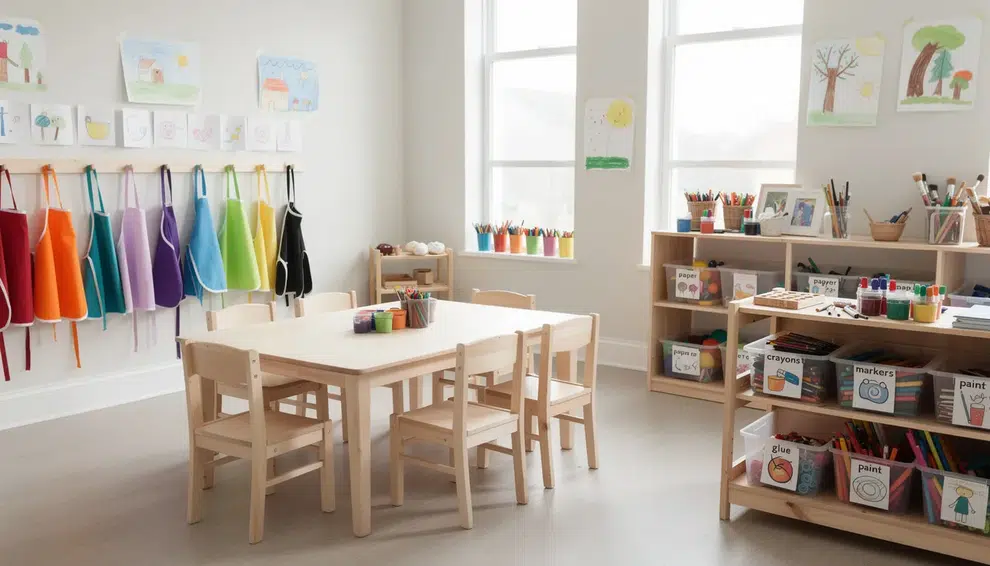
Kindergarten art studios are designed with small bodies in mind: low tables at the right height, drying racks for wet paintings, smocks or aprons sized for kids ages 5–6, and labeled supply stations with picture cues. Visual schedules on the wall show the class flow, helping children know what comes next.
Core Skills Taught in Kindergarten Art Classes
Art education for kindergarteners isn’t random—teaching art at this age follows a structured curriculum while still feeling playful. According to national standards, kindergarten art focuses on exploration and imaginative play with materials, building foundational skills that will develop throughout a child’s school years.
- Drawing basics: Students learn to use circles, squares, and triangles to build houses, animals, and self-portraits. Specific prompts like “draw your favorite playground from school” encourage personal connection while practicing pencil drawing techniques.
- Painting techniques: Children learn to hold a brush correctly, rinse between colors, and work with washable tempera and liquid watercolors on 9×12” paper. They discover how to control paint flow and create intentional marks.
- Cutting and gluing: The progression moves from straight-line cutting in fall, to curved shapes by mid-year, to simple layered collages by spring semester. These art projects build hand-eye coordination and planning skills.
- Color exploration: On “color discovery day,” kids mix primary colors to make orange, green, and purple. They learn vocabulary like light/dark and warm/cool, building a foundation for more advanced color theory.
- Texture and sculpture: Rolling, pinching, and pressing clay introduces three-dimensional thinking. Crayon rubbings from leaves or fabric teach children to observe and replicate texture.
- Creative thinking: Open-ended prompts such as “invent a new kind of bug” or “design a playground of the future” encourage original ideas over copying. This approach develops imagination and helps children trust their own artistic instincts.
These skills span a diverse range of media and techniques, giving students hands on experience with everything from paint to clay to sculpture materials.
Types of Art Classes for Kindergarteners
Families can choose from weekly classes, camps, and short workshops specifically designed for ages 5–6. Understanding the options helps you find the right fit for your schedule and your child’s interests.
- Weekly school-year classes: These after-school or Saturday sessions run in multi-week blocks—for example, a 9-week “Kindergarten Creators” series running March–May 2026. Weekly classes build skills progressively and let children develop relationships with their instructors and classmates.
- Themed mini-camps: MLK Day, Presidents’ Day, spring break, and summer “art adventure” weeks offer intensive creative experiences. Projects are tailored to kindergarten skill levels, and the camp format lets kids explore new styles and media.
- Parent–child “art together” sessions: Weekend workshops where adults and kindergarteners co-create a canvas or clay project. These are perfect for families wanting hands on class time together and make memorable alternatives to birthday parties or special outings.
- Special-focus classes: Options like “Storybook Art” (projects inspired by specific picture books), “Nature Art Explorers,” or “Shapes & Colors Studio” let children explore specific interests. Some studios offer graphic design basics for older kids, but kindergarteners benefit most from tactile, physical media.
- Inclusive and adaptive classes: Some art studio locations offer small-group sessions for kindergarteners who need sensory supports, extra transitions, or modified pacing. These classes accommodate all skill levels while maintaining the same creative goals.
- Age policies: Look for programs that clearly list age ranges, such as “for children currently in kindergarten or age 5–6 by September 1, 2026.” This clarity ensures your child will be grouped appropriately with peers at similar developmental stages.
How to Choose the Right Kindergarten Art Class
Parents often wonder about safety, mess, and whether their 5 or 6-year-old is “ready” for structured art instruction. The good news: if your child can participate in a kindergarten classroom at school, they can thrive in an art class. Here’s what to look for.
- Check class size and student–teacher ratio: Ideal ranges for kindergarten groups are 6–10 kids with one lead instructor plus an assistant. This ensures every child gets individual attention while still benefiting from a community of peers.
- Look for age-specific curriculum: Verify that projects are designed for kindergarten skills, not just scaled-down older kids lessons. Age-appropriate art classes for kids focus on exploration and process rather than perfect results.
- Teacher qualifications: Seek instructors with early childhood experience, current background checks, and training in child development and positive behavior guidance. Teachers should understand how to support artistic growth while managing a room full of 5-year-olds.
- Safety and materials: All supplies should be non-toxic and washable. The studio should provide smocks or aprons and have clear rules about tool use—child-safe scissors, no hot glue for this age, and proper ventilation for any specialty materials.
- Schedule and location: Consider early afternoon vs. early evening start times to match typical kindergarten schedules. Proximity to local elementary schools or your home makes drop-off easier, especially during the busy school week.
- Trial options: Ask about a one-time drop-in, an open house in fall 2025 or spring 2026, or short 3–4 week sessions before committing to a longer program. Trials help you assess whether the class is a good fit without a major commitment.
What Parents Should Expect (And How to Support Their Young Artist)
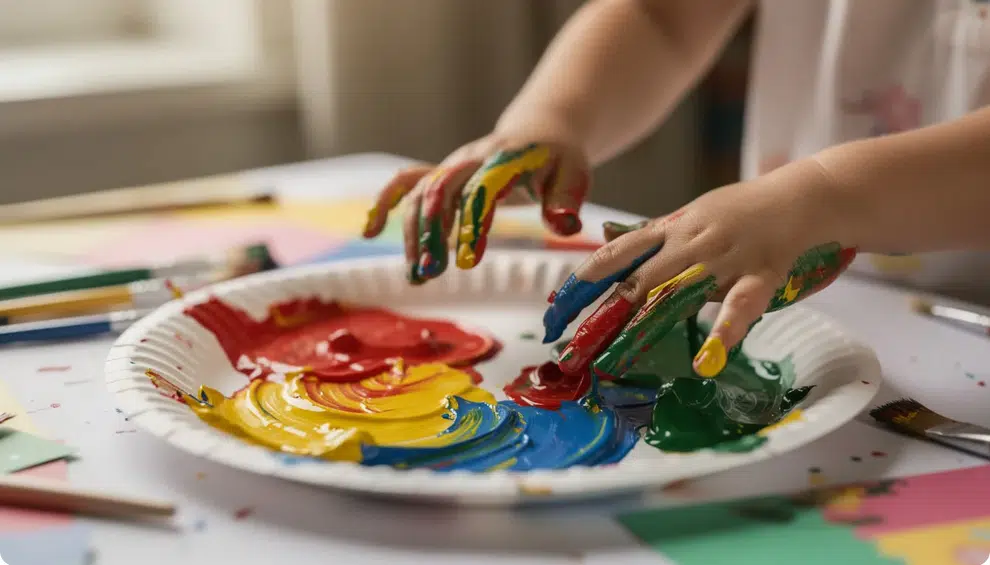
Art with kindergarteners is messy—and that’s exactly how it should be. Children at this age learn through exploration, and a paint-splattered smock is often the sign of a successful class. Here’s how to set realistic expectations and support your child’s creative development.
- Attendance and routine: Kids adjust best when attending regularly—for example, every Tuesday from January to March 2026. Familiar drop-off habits and consistent scheduling help children feel secure and ready to create.
- Finished work: Some days your child brings home a full painting, other days a nearly dry clay piece or practice sheets. Not every session produces “refrigerator-worthy” results, and that’s normal. The lessons learned through the creative process matter more than the final product.
- Home support: Set up a small art corner with crayons, large drawing paper, and a place on the fridge or wall to display creations. Having accessible materials at home lets children draw and experiment whenever inspiration strikes.
- Clothing and preparation: Send your child in play clothes that can handle paint and clay. Label water bottles, tie back long hair on messy media days, and pack an extra shirt in the backpack just in case.
- Communication: After class, ask one or two open-ended questions: “Tell me about your picture” works better than “What is it?” This approach invites storytelling and shows you value the work regardless of whether you can identify it.
- Build confidence through display: Hanging artwork prominently in your home reinforces your child’s confidence and self esteem. Even simple sketches deserve a spot on the gallery wall.
If you’re considering art education for your kindergartener, now is an excellent time to explore local options for fall 2026 or summer 2026 sessions. Many studios open registration in the spring, and popular classes fill quickly. Visit a nearby art studio, attend an open house, or join a trial class to see how your young artist responds.
Art classes give kindergarteners more than just a fun way to spend an afternoon. They develop skills for life—creativity, problem-solving, and the confidence to share their unique perspective with the world. Your child doesn’t need to be “artistic” to benefit; they just need the opportunity to explore.