DIY sock puppet ideas children can actually finish are the best kind of rainy-day project: simple, low-cost, expressive, and ready for play as soon as the glue dries. Sock puppets are classic, budget-friendly crafts, and Creating DIY sock puppets is a no-sew craft, which makes them approachable for parents, teachers, and kids who want a quick win.
A sock becomes a character when the toe turns into a face, the hand inside makes the puppet’s mouth move, and children add eyes, hair, a nose, a tongue, teeth, fur, wings, arms, legs, or accessories. According to the basic definition of a sock puppet, it is worn on the hand so the fingers can control the mouth for talking, acting, and storytelling. The ideas below are ranked for safety, cost, learning value, time, and how much imagination each finished product invites.
- How We Chose the Best DIY Sock Puppet Ideas
- Best 7 DIY Sock Puppet Ideas for Children
- Quick Comparison of the Best Sock Puppet Ideas
- How to Choose the Right Sock Puppet Project
- Which Sock Puppet Idea Is Best for You?
- Final Thoughts
How We Chose the Best DIY Sock Puppet Ideas
We prioritized puppet crafts that match real children’s attention spans, use easy craft supplies, and leave room to create new puppet friends without perfectionism. Younger kids need fewer steps, blunt scissors, and no small parts; older children can handle more detail, a pattern, sharper cuts, or supervised hot glue, especially when you choose age-appropriate art supplies for young artists.
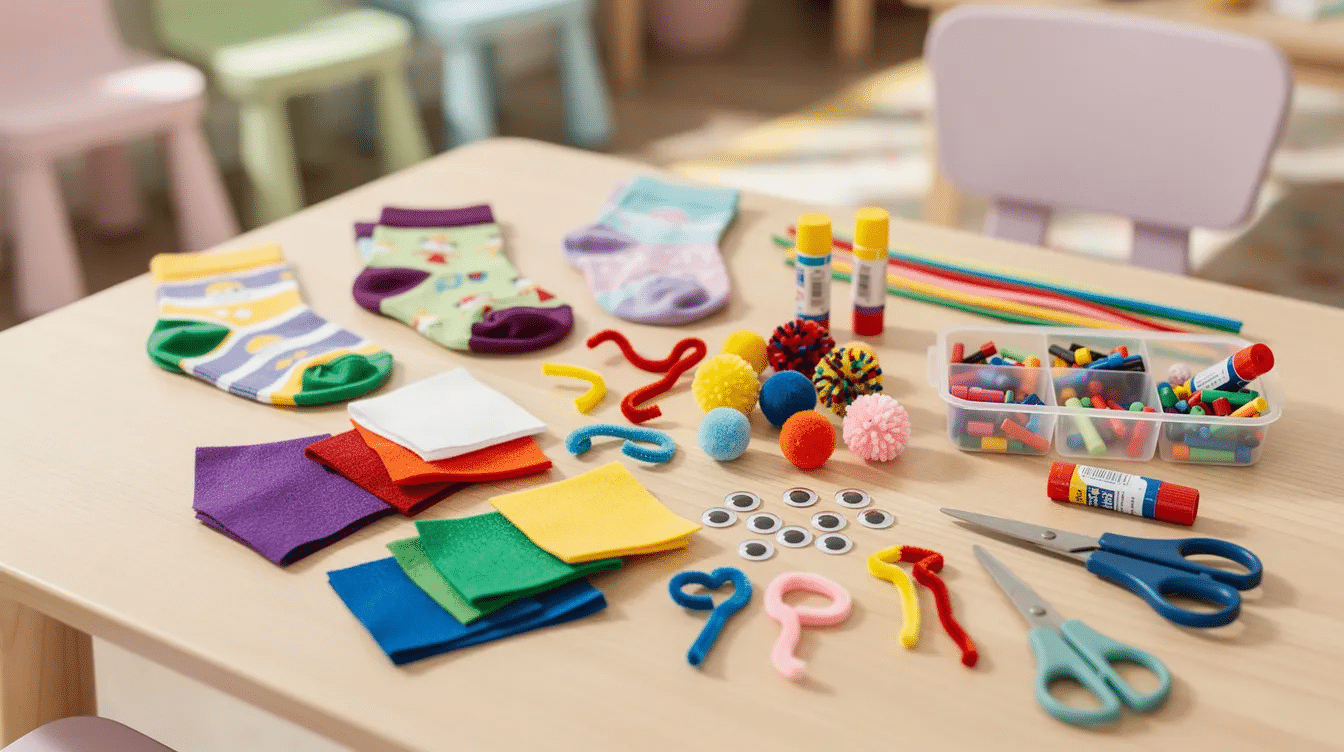
Common materials for making sock puppets include old socks, felt, googly eyes, and hot glue or tacky glue. You can use various accessories such as pom poms, buttons, and pipe cleaners to enhance your sock puppet’s features, or experiment with creative glue paint craft ideas to add color and texture. Different materials can be used to create expressive features on sock puppets, including pom poms for eyes, felt for mouths and teeth, and even feathers for added texture.
To create a sock puppet, start by cutting a piece of cardboard that fits just inside the width of the sock, then fold it in half to form the mouth. This cardboard mouth piece helps the puppet open and close. Cardboard can be used to create a mouthpiece for sock puppets, allowing for more expressive movement. When making the mouth of a sock puppet, you can use a hot glue gun to attach the cardboard mouthpiece to a piece of felt, which will serve as the inside of the puppet’s mouth. Red felt is a great place to start if you want a bright puppet’s mouth.
After creating the mouth, you can add features like eyes and a tongue using various materials such as pom poms, felt, or googly eyes, allowing for a wide range of creative expressions that also support fine motor skill art activities. Just be careful with sharp scissors, a hot glue gun, and any hot glue; an adult should attach tricky pieces so no one gets hurt.
Best 7 DIY Sock Puppet Ideas for Children
1. Simple Monster Sock Puppet
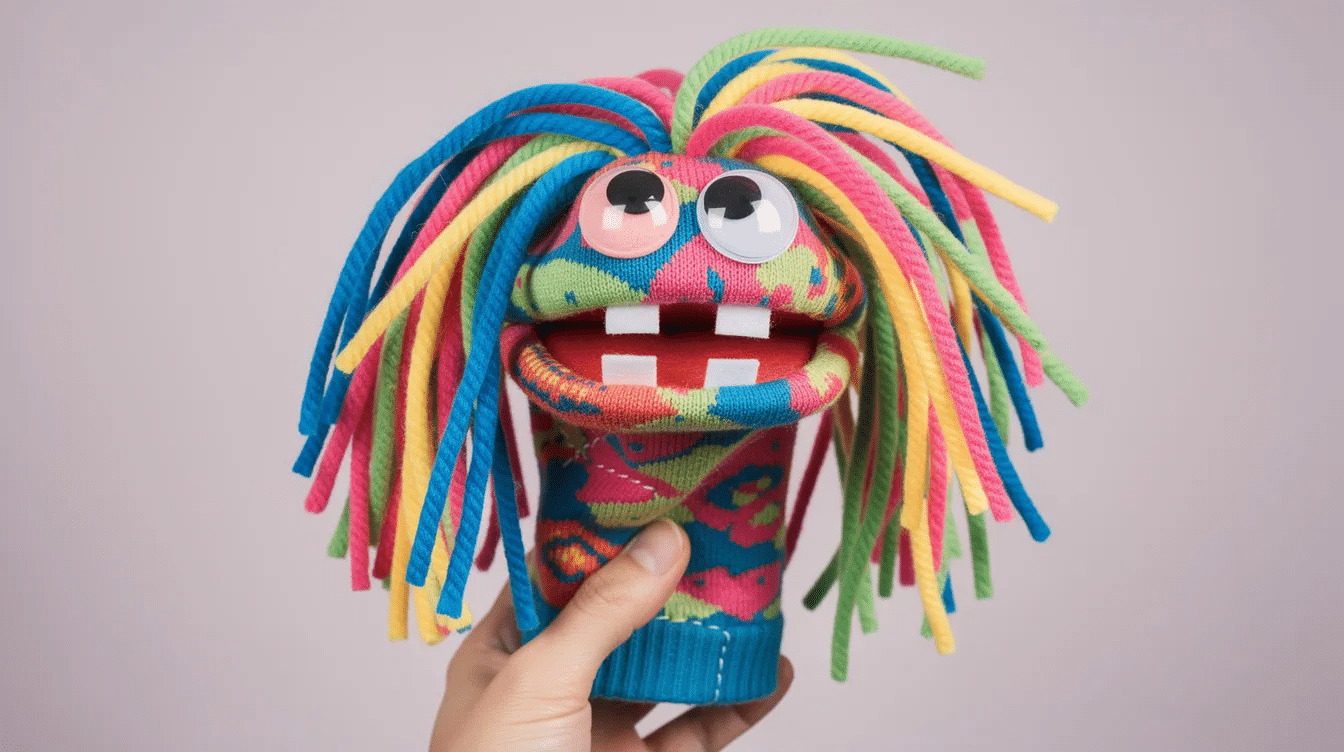
A simple monster is the easiest sock puppet friend to make. Use one sock, a cardboard mouth, felt inside the mouth shape, googly eyes, pom poms, and yarn hair. Mark the middle of the sock, slide the mouth piece in flat, glue it near the top edge, then stretch the sock over your hand to test the movement.
Why It Stands Out
Monsters have no rules. One eye, five eyes, a silly voice, a feather boa mane, pipe cleaners that bend into horns, or different colors all work.
Best For
Ages 3-6, beginner skill level.
Key Strengths
- Minimal stuff and supervision
- Usually done in 15-20 minutes
- Easy to draw, cut, glue, and decorate
Possible Limitations
It may need adult help with the hot glue gun, and older kids may want something more advanced.
2. Animal Character Sock Puppet
Animal puppets can become a dog puppet, cat, frog, bumblebee, lion, or jungle creature. Sock puppets can be designed to resemble various characters, such as dragons, bumblebees, and dogs, each with unique features like teeth, antennae, and bow ties.
Why It Stands Out
Animal designs combine craft time with learning. Kids can add felt ears, a button nose, a fur strip, paper cup snout, or pipe cleaners for whiskers.
Best For
Children aged 4-8 who love animals and storytelling.
Key Strengths
- Encourages animal sounds, movement, and observation
- Great for puppet friends in a farm, zoo, or pet show
- Works well for short videos or a classroom performance
Possible Limitations
Some animals need specific shapes. A dog puppet is simple, but a bumblebee may need wings, stripes, and antennae.
3. Fairy Tale Character Puppet
Fairy tale puppets turn a favorite book into a small stage. Children can make a wolf, princess, giant, witch, knight, or talking tree and use them to retell scenes.
Why It Stands Out
Making sock puppets from stories supports vocabulary, sequencing, and reading comprehension. A review of early childhood creativity research found strong links between arts and crafts for child development and language and social development over time.
Best For
Children aged 5-10 who enjoy reading and dramatic play.
Key Strengths
- Encourages children to act out favorite stories
- Helps them practice character, voice, and plot
- Lets families create a full cast instead of one puppet
Possible Limitations
Costumes can take longer. You may need felt scraps, fabric, a small roll of ribbon, or a cape to cover the body.
4. Emoji Expression Puppet
Emoji puppets use simple faces: happy, sad, surprised, angry, worried, or sleepy. Cut felt circles or ovals, then attach eyebrows, a mouth, and eyes that clearly show the emotion.
Why It Stands Out
This is a practical way to teach feeling words. Ask, “What happened to make this puppet feel that way?” Then let the child answer through the puppet.
Best For
Children aged 6-12 learning about emotions and social skills.
Key Strengths
- Builds emotional vocabulary
- Easy to recognize and copy
- Works well for calm-down corners or group discussions
Possible Limitations
The design can feel flat for advanced crafters unless you add accessories, hair, arms, or a reversible face.
5. Superhero Sock Puppet
A superhero puppet can be original or inspired by a familiar hero. Add a mask, cape, lightning badge, felt gloves, or a cardboard shield.
Why It Stands Out
Hero stories help children talk about courage, kindness, fairness, and helping others. They also make puppet shows active and fun, especially when paired with props like a DIY cardboard sword craft for dramatic play.
Best For
Children aged 5-10 who love action and adventure stories.
Key Strengths
- Promotes positive values
- Easy to customize with capes and symbols
- Great for rescue scenes and teamwork play
Possible Limitations
Some kids may focus on copying an exact character. Encourage them to invent powers, a name, and a unique problem to solve.
6. Family Member Puppet
A family puppet represents a parent, sibling, grandparent, friend, or even the child. Add yarn hair, glasses from pipe cleaners, a felt shirt, or a tiny scarf, similar to other preschool family-themed craft activities.
Why It Stands Out
Personal puppets can help children process relationships and everyday routines. They can practice saying hello, apologizing, sharing, or asking for help.
Best For
Children aged 4-8 who enjoy role-playing family scenarios.
Key Strengths
- Makes the craft personally meaningful
- Encourages bonding and conversation
- Helps children explore family roles safely
Possible Limitations
Capturing exact features can be hard. Keep it playful, not realistic.
7. Dragon or Fantasy Creature Puppet
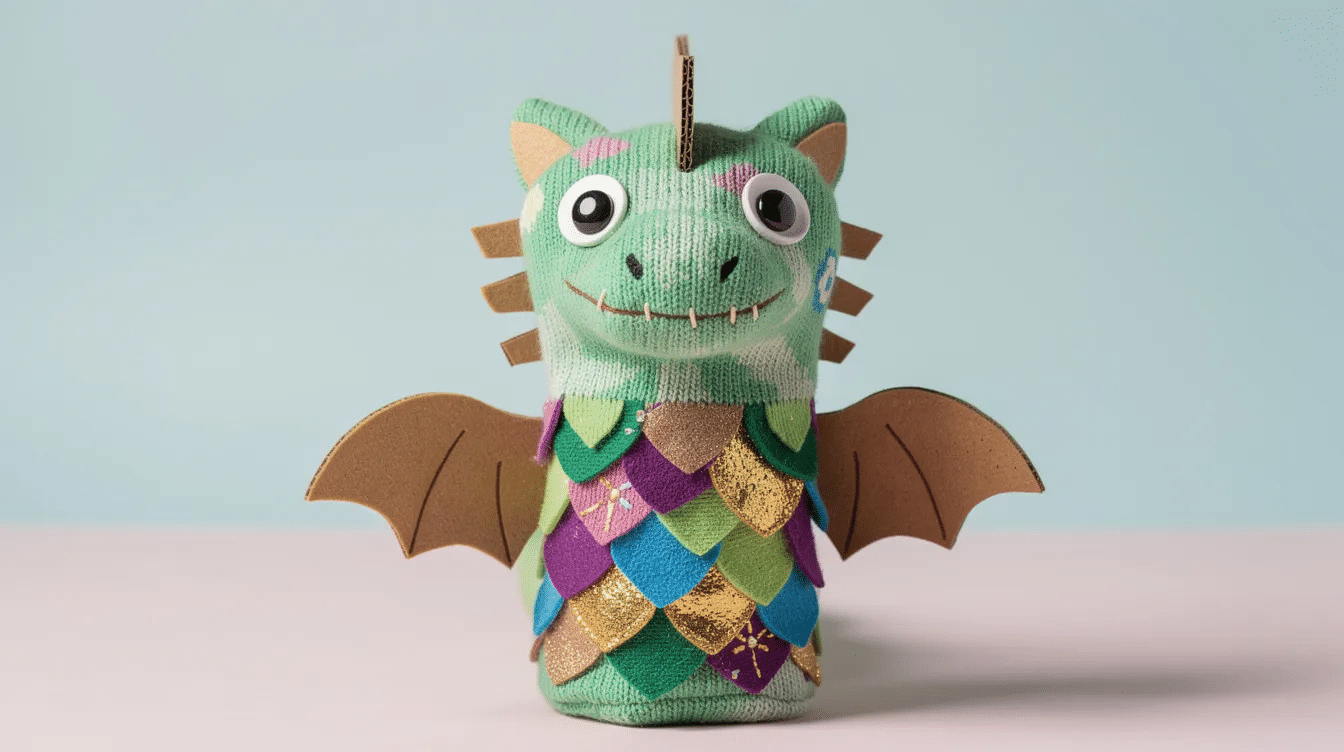
A fantasy creature is the most detailed option. Add felt scales, cardboard spikes, wings, teeth, a long tongue, and nostrils. Cut a small hole only if an adult is guiding the step, and watch that the edge does not tear.
Why It Stands Out
Dragons, unicorns, sea monsters, and aliens offer the widest creative range. You can extend the theme with fun dragonfly craft ideas for kids or other flying creatures. Sock puppets can be customized with various accessories such as googly eyes, felt ears, and even additional limbs, allowing for endless creative possibilities.
Best For
Children aged 8-12 with stronger fine motor skills and patience, who may also enjoy other preschool 3D art project ideas as they explore more complex builds.
Key Strengths
- Develops planning and problem-solving
- Uses many textures: felt, cardboard, feathers, fur, and pom poms
- Produces a durable puppet for longer-term play
Possible Limitations
It may take multiple sessions. Younger children may need help to pull pieces into place, wrap details around the sock, and attach small parts.
Quick Comparison of the Best Sock Puppet Ideas
Idea | Best for | Time | Main benefit |
|---|---|---|---|
Simple Monster Puppet | First-time makers and toddlers | 15-20 min | Creative freedom |
Animal Character Puppet | Nature lovers and educational play | 20-30 min | Animal learning |
Fairy Tale Character Puppet | Young readers and storytellers | 30-45 min | Literacy practice |
Emoji Expression Puppet | Emotional learning and modern appeal | 20-30 min | Feeling vocabulary |
Superhero Sock Puppet | Action-oriented heroic play | 30-45 min | Values and confidence |
Family Member Puppet | Personal connection and bonding | 20-40 min | Social-emotional play |
Dragon Fantasy Creature | Advanced crafters | 45-90 min | Challenge and detail |
These are not marionettes with strings; they are hand puppets, so children can immediately place a hand inside and test the voice, mouth, and movement. |
How to Choose the Right Sock Puppet Project
Choose Based on Child’s Age and Skill Level
For ages 3-5, choose large pieces, soft materials, tacky glue, and simple shapes. For ages 6-8, add cutting, folding, and more specific details. For ages 9-12, let kids plan the pattern, cut cardboard, bend pipe cleaners, and build layered accessories.
Choose Based on Available Time
If you have 15 minutes, make a monster or emoji. If you have an afternoon, create animal or superhero puppets. If you have a weekend, build a dragon, fairy tale cast, or family set. Completion matters because the finished product gives children a sense of pride.
Choose Based on Materials and Budget
Start with household items: an old sock, cardboard, glue, felt scraps, and markers. Then add extras only if they improve play, like simple tissue paper stained glass crafts to hang behind your puppet theater or a DIY craft kit for creative projects that gathers everything in one box. A paper cup can become a snout, cardboard can become teeth, and a feather boa can become wild hair or dragon fur.
Which Sock Puppet Idea Is Best for You?
Choose the Simple Monster Puppet if your child is new to crafting or under age 5.
Choose the Animal Character Puppet if you want educational value combined with fun.
Choose the Fairy Tale Character if your child loves books and storytelling.
Choose the Dragon Fantasy Creature if you have an older child ready for a crafting challenge.
Final Thoughts
The best project depends on your child’s interests, age, patience, and confidence with scissors and glue. Start simple, let children make design choices, and move toward more complex puppets as their skills grow.
Gather a clean sock, felt, cardboard, googly eyes, and a few playful accessories, then create one puppet today. The goal is not a perfect craft; it is imagination, conversation, and quality time together.