If you have searched for gross motor skills activities indoor toddlers, you are probably trying to help a busy child move safely when outdoor play is not an option. Gross motor skills are the big movements toddlers use for crawling, walking, jumping, throwing, kicking, climbing stairs, and balancing. They are different from fine motor skills, which involve smaller hand and finger movements.
The best indoor activities help toddlers build balance, coordination, strength, core muscles, and body awareness without needing fancy equipment. They also support emotional regulation, social interaction, problem solving, brain development, and social emotional growth. Play is essential for a child’s health and well-being, serving as the primary vehicle for learning and building neural pathways, fostering creativity, and helping children process emotions.
According to the American Academy of Pediatrics, active play supports crucial developmental milestones through physical fitness, sensory stimulation, social interaction, and cognitive growth. The American Academy of Pediatrics recommends that toddlers engage in at least 180 minutes of physical activity per day to support healthy sleep and development.
- How We Chose the Best Indoor Gross Motor Activities
- Top 7 Indoor Gross Motor Activities for Toddlers
- 1. Pillow Obstacle Course
- Why It Stands Out
- Best For
- Key Strengths
- Possible Limitations
- 2. Animal Movement Games
- Why It Stands Out
- Best For
- Key Strengths
- Possible Limitations
- 3. Dance and Freeze Games
- Why It Stands Out
- Best For
- Key Strengths
- Possible Limitations
- 4. Balloon Volleyball
- Why It Stands Out
- Best For
- Key Strengths
- Possible Limitations
- 5. Indoor Scavenger Hunt
- Why It Stands Out
- Best For
- Key Strengths
- Possible Limitations
- 6. Soft Ball Games
- Why It Stands Out
- Best For
- Key Strengths
- Possible Limitations
- 7. Toddler Yoga and Stretching
- Why It Stands Out
- Best For
- Key Strengths
- Possible Limitations
- Quick Comparison of the Best Indoor Gross Motor Activities
- How to Choose the Right Activity for Your Toddler
- Which Activity Is Best for Your Toddler?
- Final Thoughts
How We Chose the Best Indoor Gross Motor Activities
We selected these indoor gross motor activities based on what actually works for 12-36 month old children: safety, simplicity, developmental value, and repeatability.
Good gross motor activities should:
- Be safe for younger toddlers and younger children.
- Use household items like pillows, blankets, chairs, couch cushions, a cardboard box, a laundry basket, rolled up socks, toy cars, building blocks, empty plastic bottles, plastic bottles, painter’s tape, or pool noodles.
- Help develop gross motor skills through big movements like crawling, jumping, balancing, kicking, and reaching.
- Build core strength, coordination, hand eye coordination, and gross motor skill development.
- Work in a realistic indoor play area, especially during rainy days, cold weather, and the winter months.
- Let each child move at their own pace.
Creating a safe indoor play area involves clearing space of physical hazards, such as fragile items or furniture with sharp edges, to prevent injury during play. Clear spaces free of sharp-edged furniture enhance safety during indoor gross motor activities for toddlers. A “Yes Space” is a fully kid-proofed environment where toddlers can explore safely without constant correction, allowing for independent play.
Experts recommend a mix of structured and unstructured play, as both types facilitate independent exploration and learning, which are vital for toddler development. Structured games teach a specific movement, while imaginative, unstructured play lets a naturally curious child develops confidence through exploration.
Top 7 Indoor Gross Motor Activities for Toddlers
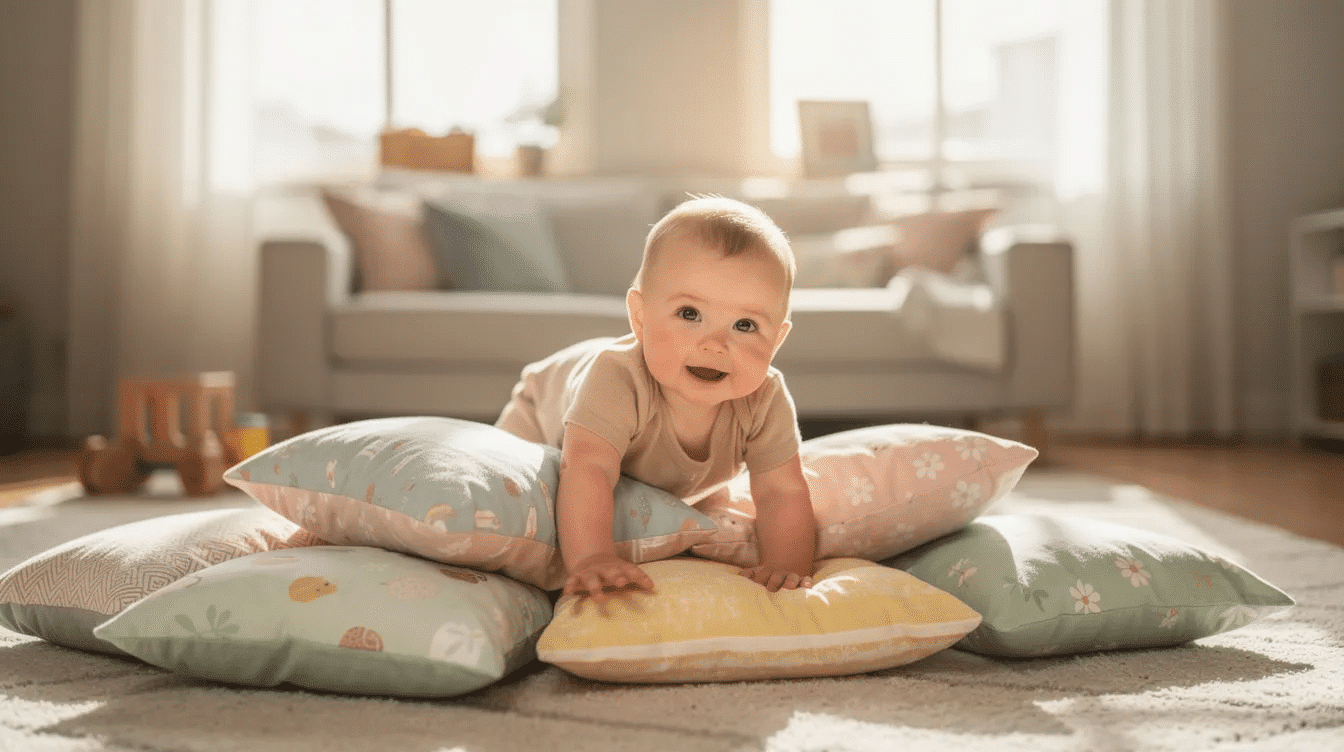
1. Pillow Obstacle Course
Indoor obstacle courses can be created using everyday household items like pillows, blankets, and chairs, helping toddlers develop gross motor skills through activities like jumping, crawling, and balancing. Obstacle courses can be easily set up indoors using household items like pillows and blankets, helping toddlers develop balance, coordination, and strength.
Try a simple path: crawl over couch cushions, step across a blanket “river,” walk along a painter’s tape line, then toss rolled up socks into a laundry basket at the finish line.
Why It Stands Out
An obstacle course combines balance, crawling, climbing, stepping, squatting, and motor planning in one activity. Effective indoor gross motor activities for toddlers include building obstacle courses with pillows, playing balloon volleyball, and following painter’s tape lines on the floor to improve balance and coordination.
Best For
This is best for active toddlers with boundless energy who need movement, challenge, and practice using their whole body.
Key Strengths
- Develops core strength, balance, and coordination.
- Uses everyday household items like pillows, blankets, and chairs to create engaging indoor play setups, such as obstacle courses or forts, that promote physical activity and imaginative play.
- Can include a low balance beam made from pool noodles or a taped floor line.
Possible Limitations
It needs floor space and setup time. It may also overstimulate some sensitive toddlers, especially before sleep.
2. Animal Movement Games
Animal walks like bear crawling and frog hopping engage toddlers’ imagination and promote physical activity. Ask your toddler to move like different animals: bear crawl across the rug, crab walk to the couch, hop like a frog, slither like a snake, or stomp like an elephant.
Why It Stands Out
Activities like dancing and animal walks not only promote gross motor skills but also enhance creativity and imaginative play in toddlers, making them great options alongside other low-mess activities for 2 year olds.
Best For
Animal movement games are best for kids who love pretend play and need strength-building fun activities with no setup.
Key Strengths
- Builds full-body strength, shoulder stability, and core muscles.
- Encourages creativity, eye contact, turn taking, and social emotional skills when adults join in, similar to cooperative group activities for 5 year olds.
- Requires no equipment.
Possible Limitations
Some movements, such as crab walk or bear crawl, may be hard for toddlers with motor skills delays. These games can also be too energetic for calm-down times.
3. Dance and Freeze Games
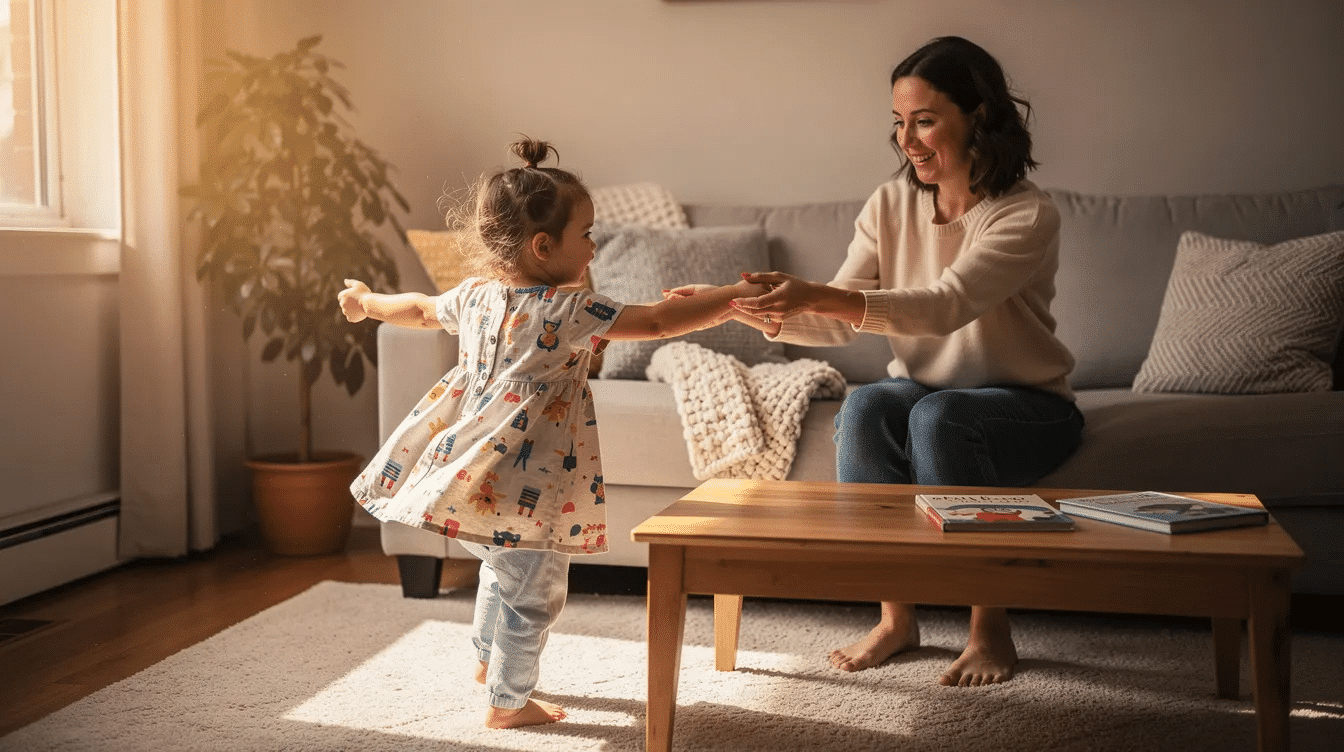
Dance parties are an excellent indoor activity for toddlers, promoting physical movement while enhancing balance, coordination, and emotional expression through music and dance. Put on action songs, start a dance party, and let your toddler move freely.
Why It Stands Out
A freeze dance activity enhances listening skills and coordination through movement when music plays. When the music stops, toddlers freeze like statues, which builds balance, impulse control, and body awareness.
Best For
This is ideal for music-loving toddlers and children working on listening, rhythm, and self-control.
Key Strengths
- Supports emotional regulation and expression.
- Builds balance, rhythm, coordination, and brain growth.
- Needs only music and a small indoor play space.
Possible Limitations
Freeze dance may be too exciting before nap or bedtime. It also requires a device or music system.
4. Balloon Volleyball
Playing balloon volleyball indoors is a fun way to improve hand-eye coordination for toddlers, as they hit a balloon back and forth without needing much space.
Why It Stands Out
The balloon moves slowly, giving toddlers more time to track, reach, tap, and adjust their bodies. This makes it easier than catching a regular ball.
Best For
Balloon volleyball is best for toddlers practicing hand eye coordination in smaller rooms.
Key Strengths
- Develops timing, tracking, and coordination.
- Works solo, with siblings, or with an adult for social interaction.
- Can be played over a couch cushion “net.”
Possible Limitations
Balloons can pop and become choking hazards, so supervision is required. Very active toddlers may need a more intense activity afterward.
5. Indoor Scavenger Hunt
Engaging toddlers in activities like treasure hunts motivates purposeful movement through crawling or jumping. Hide toy cars, building blocks, or animal figures around the room, then give movement clues: “crawl to the chair,” “jump to the blanket,” or “walk sideways to the box.”
Why It Stands Out
An indoor scavenger hunt blends gross motor development with problem solving, language, memory, and early math skills when children count objects or steps, and it pairs well with creative art fine motor skill activities.
Best For
This works well for curious toddlers who enjoy challenges, clues, and variety in their indoor activities.
Key Strengths
- Combines cognitive play with gross motor movement.
- Can include sensory bins, forts, tunnels, or a cardboard box, or even kinetic sand sensory play.
- Creating DIY movement dice with different actions encourages physical activity in a playful manner; roll the die and do the action before finding the next clue.
Possible Limitations
It requires advance preparation. It may be too complex for younger toddlers unless the clues are very simple.
6. Soft Ball Games
Use a soft ball, foam ball, or rolled up socks for throwing, catching, kicking, and rolling. Have your toddler kick toward empty plastic bottles, toss into a laundry basket, or roll a ball through a tunnel made from chairs.
Why It Stands Out
Soft ball games safely introduce fundamental movement patterns indoors and help toddlers learn object control.
Best For
These activities for toddlers are best for children learning to throw, catch, kick, and aim.
Key Strengths
- Improves hand eye coordination and foot-eye coordination.
- Can be adapted for different skill levels.
- Builds confidence through repeated success, especially when combined with arts and crafts for child development.
Possible Limitations
Even a soft ball can knock over fragile items, so clear the area first. You also need safe, age-appropriate balls.
7. Toddler Yoga and Stretching
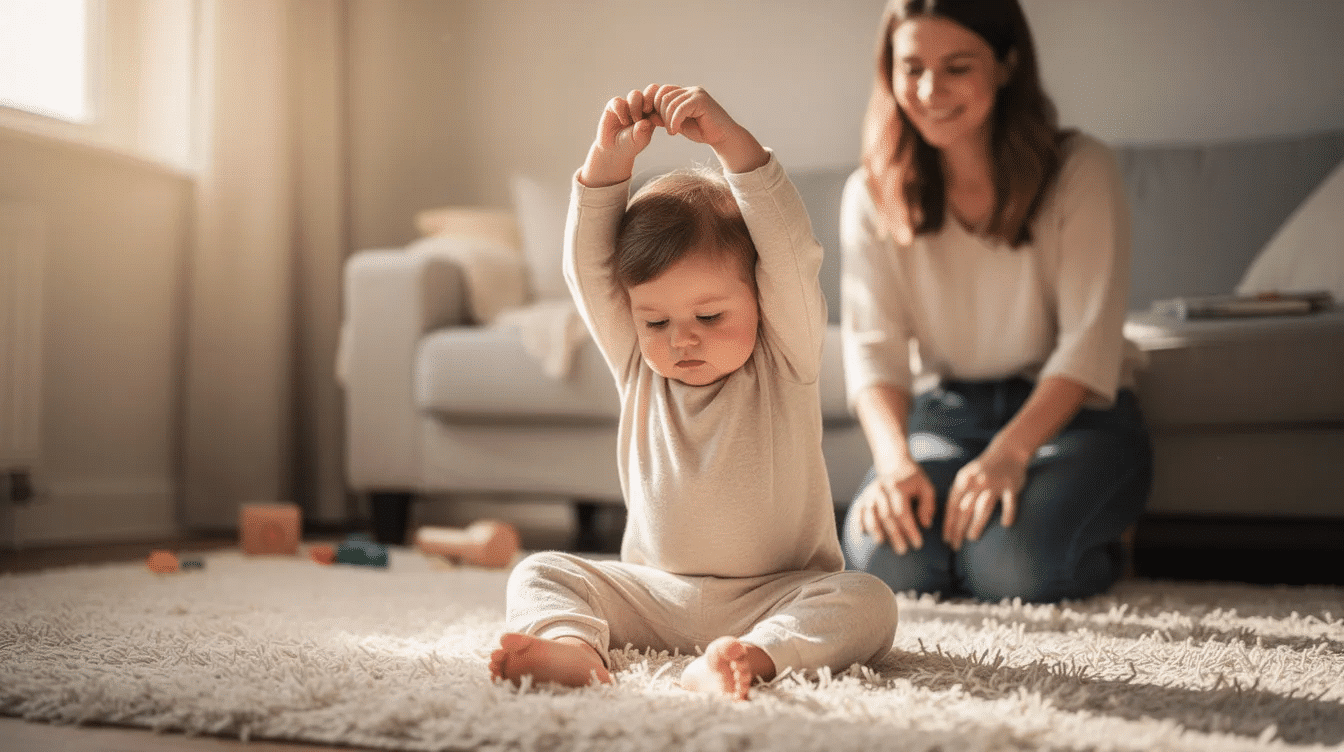
Toddler yoga uses simple poses: reach tall like a tree, fold like a turtle, stretch like a cat, or balance briefly on one foot with adult help, and can be complemented with open-ended play using art supplies for young artists.
Why It Stands Out
Yoga supports flexibility, calm focus, body awareness, and core strength. It can also help toddlers settle after high-energy gross motor play.
Best For
Toddler yoga is best for calmer children, tired toddlers, or kids who enjoy copying adult movements.
Key Strengths
- Requires minimal space.
- Supports balance and well being.
- Helps the child connect movement with breathing and calm attention.
Possible Limitations
It may not release enough energy for very active toddlers. Adult modeling and gentle guidance are important.
Quick Comparison of the Best Indoor Gross Motor Activities
Activity | Best For | Main Benefit |
|---|---|---|
Pillow Obstacle Course | High-energy toddlers needing comprehensive motor skill development | Strength, balance, coordination |
Animal Movement Games | Imaginative toddlers who need strength building | Full-body movement and creativity |
Dance and Freeze Games | Music-loving toddlers working on self-control | Rhythm, listening, emotional expression |
Balloon Volleyball | Developing hand-eye coordination in smaller spaces | Tracking and timing |
Indoor Scavenger Hunt | Curious toddlers who enjoy problem-solving challenges | Movement plus cognitive growth |
Soft Ball Games | Learning fundamental ball skills safely indoors | Throwing, kicking, catching |
Toddler Yoga and Stretching | Calming activities and body awareness development | Flexibility, balance, calm |
How to Choose the Right Activity for Your Toddler
Choose Based on Energy Level
If your toddler has boundless energy, start with an obstacle course, animal walks, or soft ball kicking. For older toddlers, you can add simple jumping jacks, short races, or a finish line.
If your child is tired, sensitive, or overstimulated, choose yoga, slow action songs, or gentle stretching. The goal is not to force performance; it is to support the child’s development through consistent play.
Choose Based on Available Space
Small spaces work well for balloon volleyball, freeze dance, toddler yoga, painter’s tape balance lines, and rolled up socks toss games.
Larger spaces are better for obstacle courses, scavenger hunts, animal walks, and forts. These activities help toddlers build core strength and coordination in limited space, but they still need enough room to move safely, and you can rotate in simple DIY kits for creative projects when your child is ready to sit and focus.
Choose Based on Developmental Goals
For balance, use tape lines, a soft balance beam, yoga, or freeze dance. For strength, use animal walks and crawling tunnels. For coordination, try balloon volleyball, soft ball games, and obstacle courses, and for classroom settings consider broader kindergarten class activity ideas.
If your toddler is practicing confidence with movement, keep the activity short and repeat it often. Research on toddler movement programs shows that even brief daily practice can support gross motor development when it is consistent.
Which Activity Is Best for Your Toddler?
Choose Pillow Obstacle Courses if your toddler has high energy and needs comprehensive motor development.
Choose Animal Movement Games if your toddler loves pretend play and needs strength building.
Choose Dance and Freeze if your toddler enjoys music and needs to work on listening skills.
Choose Balloon Volleyball if you have limited space and want to focus on hand-eye coordination.
Choose Indoor Scavenger Hunt if your toddler enjoys challenges and problem-solving.
Choose Toddler Yoga if your toddler needs calming activities or flexibility work.
For more ideas, rotate two or three indoor gross motor options each week instead of trying to do everything in one day, and mix in open-ended preschool 3D art projects when your child is ready for calmer, creative play.
Final Thoughts
The best indoor gross motor activity depends on your toddler’s energy level, available space, and developmental needs. Some toddlers need big movements and active challenges; others need slower movement, repetition, and reassurance.
Combining multiple indoor gross motor activities throughout the week gives children a wider range of movement experiences. That variety supports gross motor skill development, social emotional growth, brain development, and everyday confidence.
Most importantly, choose activities your toddler enjoys. When children thrive through fun, safe, repeated play, indoor gross motor play becomes a natural part of your routine no matter the weather.