Geometric crafts use circles, triangles, squares, and other geometric shapes to turn simple materials into hands-on learning experiences for preschoolers. They build spatial awareness, shape vocabulary, and math readiness – all while keeping things fun. Geometric craft is gaining popularity in 2026, and current craft trends blend clean geometry with organic aesthetics. Below is our curated list of the seven best trending ideas, plus how to pick the right one for your family.
How We Chose the Best Geometric Craft Trends
Under the given conditions, we evaluated each trend against these criteria:
- Age-appropriate complexity for kids ages 2–6
- Use of everyday household items and affordable supplies
- Educational value in teaching patterns, shapes, and spatial concepts
- Safety for young children
- Visual appeal and instagram-worthy results parents want to share
- Adaptability across skill levels
- Time investment suitable for busy families
Top 7 Geometric Craft Trends for Kids and Families
1. Shape Collage Art with Cut Paper
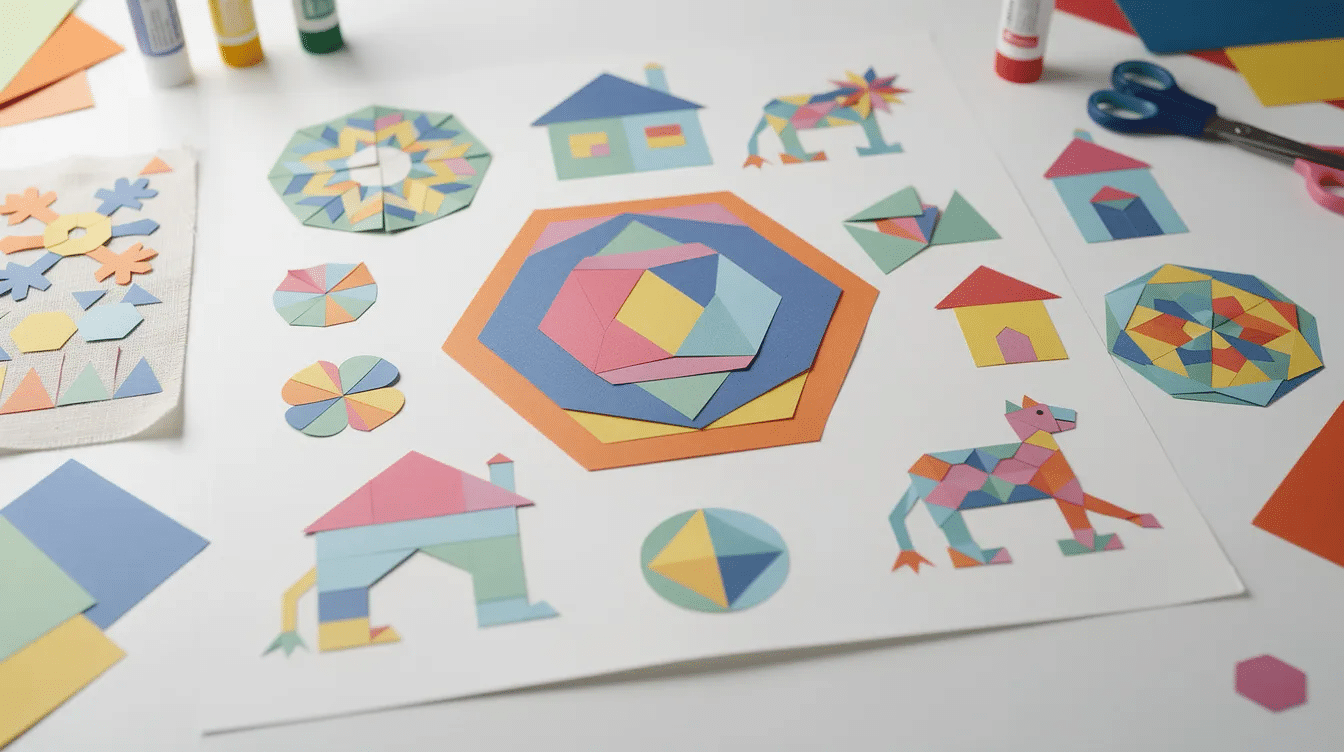
Geometric paper cutting involves intricate cutouts based on symmetry that children arrange into animals, houses, or abstract art. Geometric patterns can be applied across various mediums including paper and textiles, and current geometric crafts feature oversized motifs as focal points. Imperfect geometry combines hand-drawn elements with crafts for a relaxed aesthetic – no perfection required.
Best for: Toddlers and preschoolers learning basic shapes. No scissors needed; adults pre-cut the shapes. Develops art fine motor skills and shape recognition. Can get messy with glue, but the creative possibilities are endless.
2. Geometric Tape Resist Painting
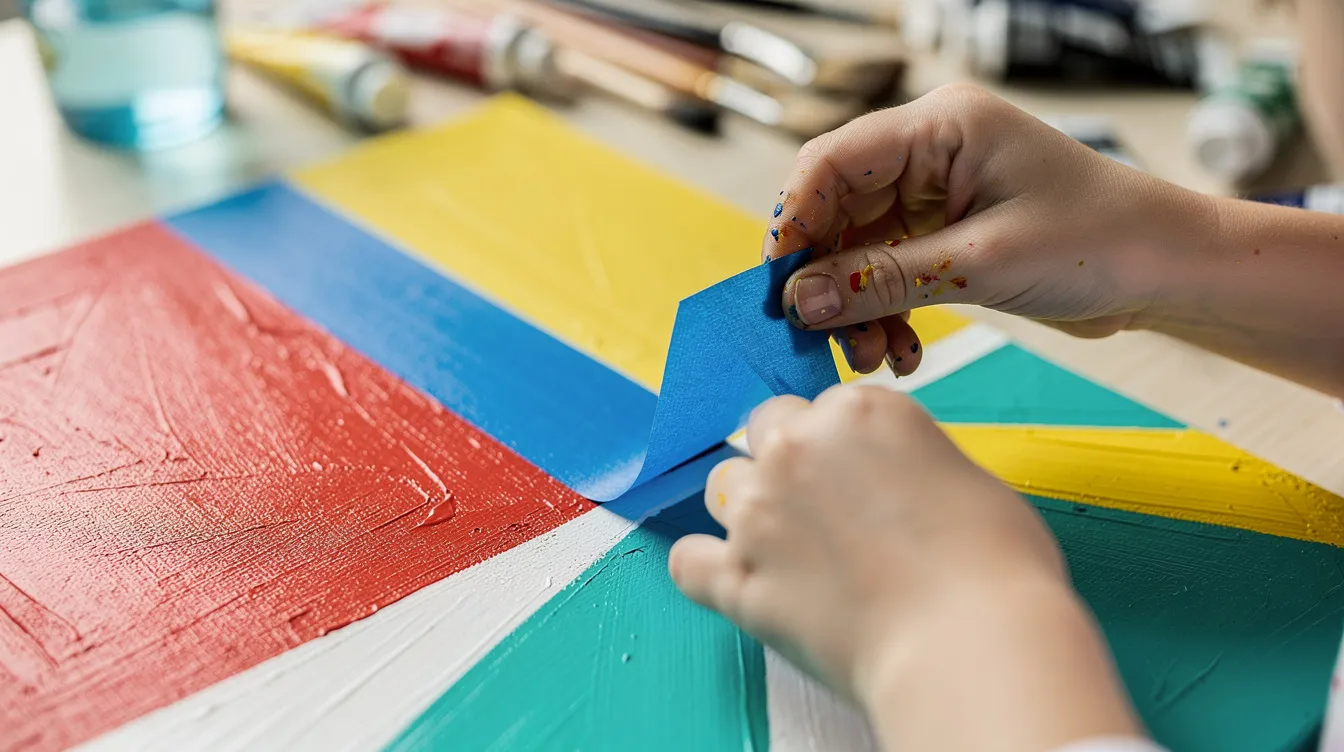
Use painter’s tape on canvas to create geometric patterns, then paint over and peel for a satisfying reveal. Geometric arts can include handmade texture with bold patterns. This painting technique teaches patience and planning. Watercolor painting is popular for its beginner-friendly approach and works beautifully here. Paint can bleed under tape if not pressed firmly, so check edges before starting.
Best for: Older preschoolers who can handle brushes. Works on canvas, paper, or wood spaces.
3. Pattern Block Printing with Sponges
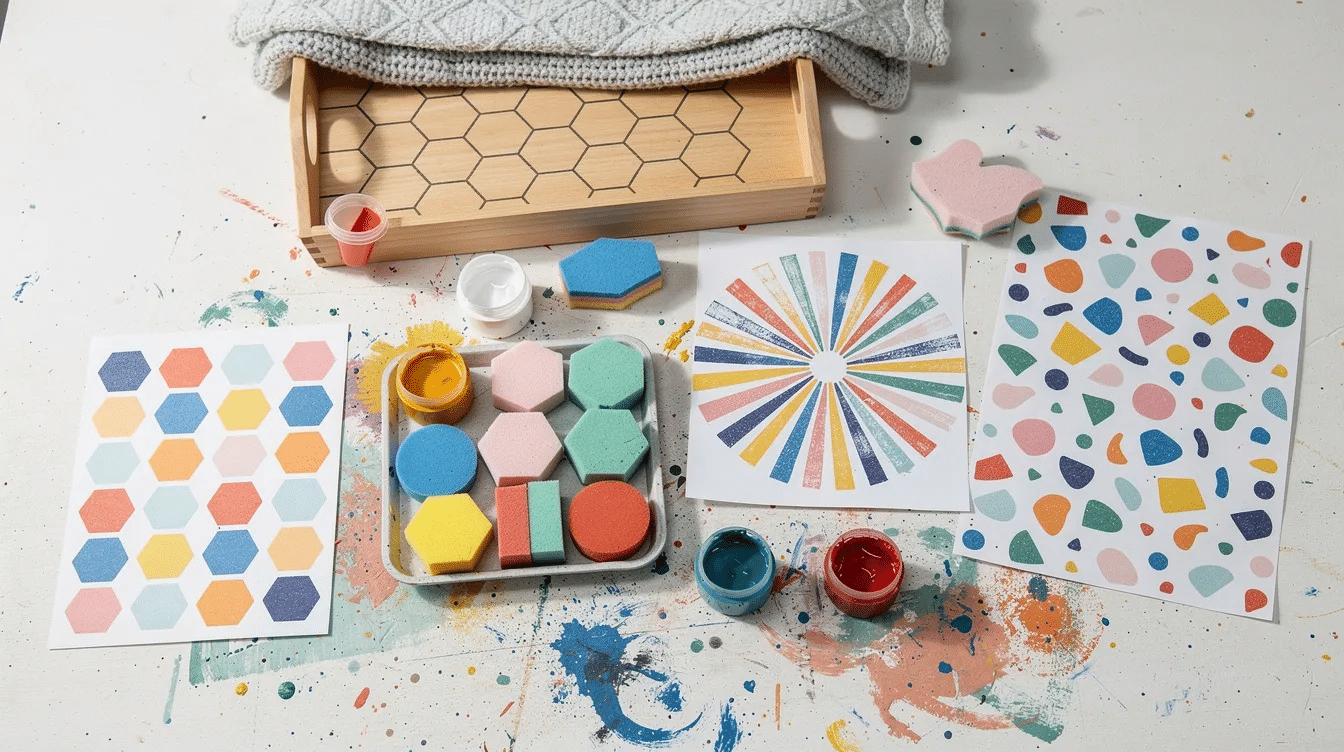
Cut sponges into shapes for stamping repeating patterns – ABAB, radial, or free-form. Current design includes colorful terrazzo-inspired crafts, and hexagon grids dominate modern crafts like wooden trays and blankets. Reusable sponge stamps keep the volume of waste low while techniques stay simple. Easy cleanup with washable paints.
Best for: Children who love repetitive, methodical activities and showing off their creations.
4. Origami Geometric Animals
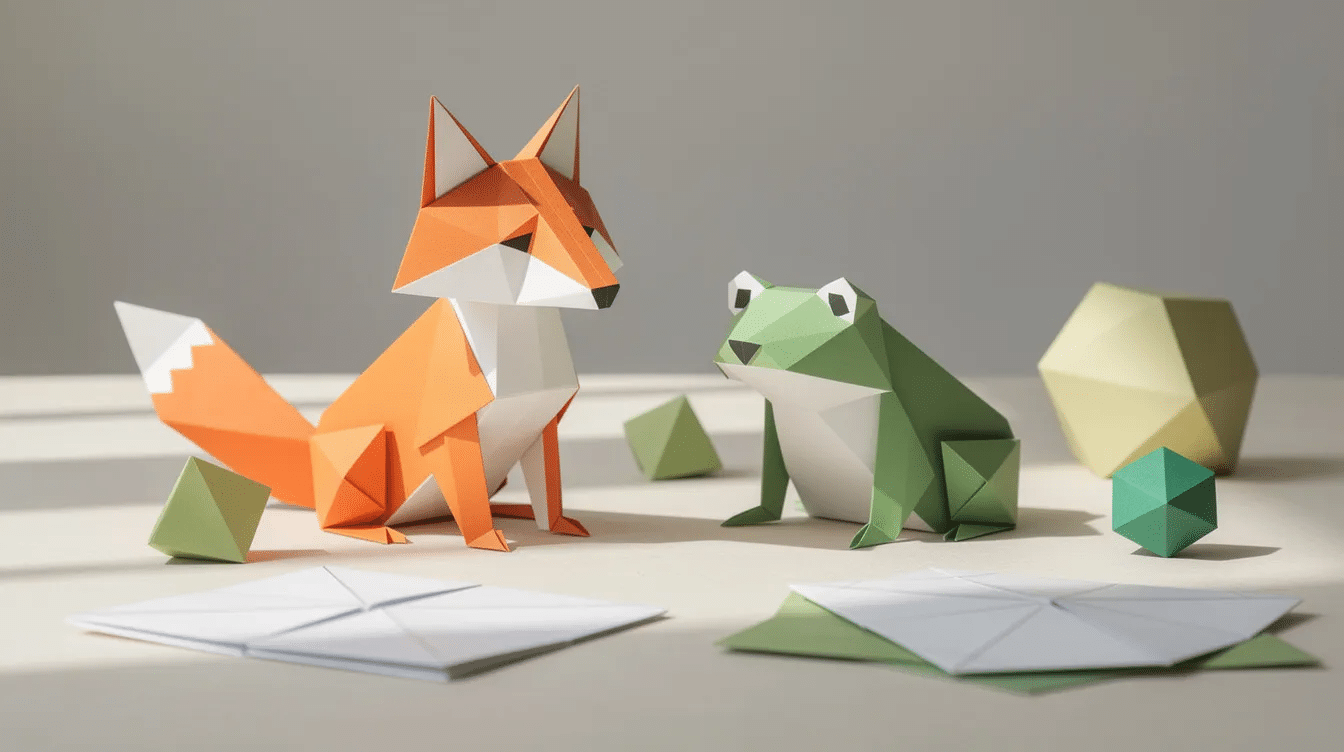
Geometric origami involves folding paper into various shapes like polyhedra, and low-poly papercraft translates computer graphics into physical 3D sculptures. Start with simple folds – a triangle-eared fox or square-bodied frog. No materials needed beyond paper, making it a screen-free, portable new hobby. Can be frustrating for younger preschoolers; pre-crease the lines to build confidence.
Best for: Patient kids who enjoy step-by-step instructions. A great sign of ready focus for kindergarten.
5. Tessellation Art with Stencils
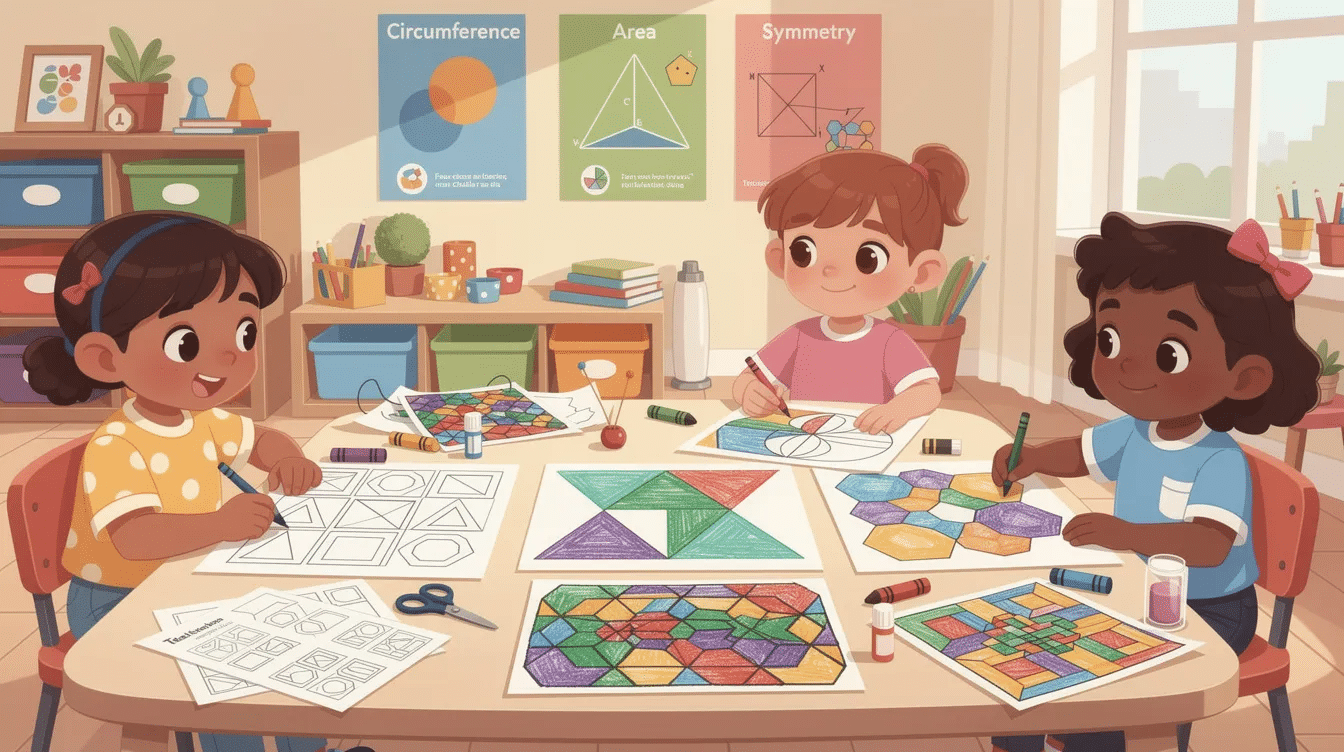
Tessellations are repeating patterns covering a surface area without gaps. Textured geometric patterns use high-pile yarn and tufted techniques in advanced versions, while mosaic crochet creates intricate patterns without changing colors frequently – but for preschoolers, printable stencils keep it accessible. Creates stunning, complex-looking art that introduces math concepts like circumference, area, and symmetry early.
Best for: Pattern-loving kids fascinated by turning shapes into something bigger.
6. 3D Geometric Paper Sculptures
Fold cardstock nets into cubes, prisms, and pyramids – bridging 2D to 3D understanding. Himmeli structures are traditional Finnish geometrical designs made from straws, offering lighter alternatives. Faceted concrete planters are a popular trend in modern decor, and miniature craft kits combine building and crafting elements in a similar way. Requires adult help but creates impressive display pieces.
Best for: Older preschoolers ready for construction projects. Great DIY activities for weekends.
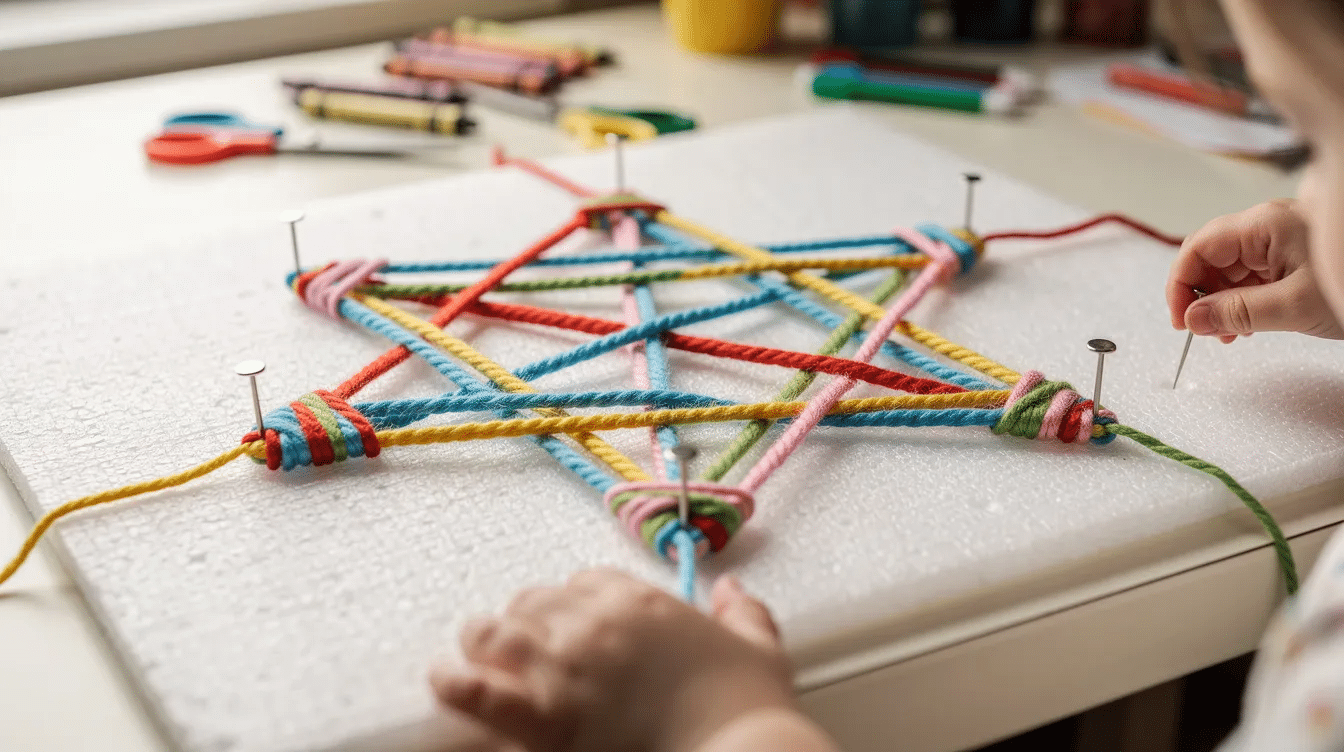
7. Geometric String Art for Little Hands
Geometric string art uses nails and threads to create designs, but for little hands, use foam boards, large yarn, and push pins with supervision. Kids count sides and angles as they thread each circle, set of triangles, or star. Excellent texture and fine motor development.
Best for: Children working on hand-eye coordination. Creates tactile artwork you’ll want to display.
Quick Comparison of the Best Geometric Craft Trends
Trend | Best For | Mess Level | Adult Help |
|---|---|---|---|
Shape Collage | Toddlers learning shapes | Medium | Pre-cut shapes |
Tape Resist | Painting lovers | Medium | Tape setup |
Block Printing | Stamping fans | Low | Sponge cutting |
Origami Animals | Patient kids | Low | Minimal |
Tessellation Art | Pattern seekers | Low | Stencil prep |
3D Sculptures | Builders | Low | Significant |
String Art | Fine motor focus | Low | Threading help |
How to Choose the Right Geometric Craft Trend
Pick based on your child’s age – collage and stamping work at age 2, while origami and 3D sculptures suit ages 5–6. Consider available materials: most crafts need only paper, glue, and paint. If your learning goals include spatial reasoning, pick 3D sculptures or origami; for patterning, try tessellations or block printing.
Craft kits simplify the crafting process for beginners, and craft kits provide all necessary materials for projects. Most craft kits target beginner crafters, and craft kits help crafters try new skills easily. Craft kits are popular for hands-on activities with kids, so if prep time is limited, they’re a smart way to get started.
Which Geometric Craft Trend Is Best for You?
- Choose Collage if you have a toddler just learning shapes
- Choose Tape Painting if your child loves the magic of reveals
- Choose Block Printing if you want reusable materials
- Choose Origami for screen-free, portable crafting
- Choose Tessellation if your child shows interest in patterns and math
- Choose 3D Sculptures if your family enjoys building together
- Choose String Art if fine motor development is a priority
Final Thoughts
The broader crafting world is booming alongside these geometric trends. Paint party kit searches increased by 329 percent year over year, and searches for ‘girls night crafts’ rose by 244 percent. Group crafting sessions are replacing solo couch time – even for adults sitting at home. Meanwhile, 51% of customers are DIY-ing gifts to save money, and people are crafting hyper-personal, story-driven presents. DIY gifts include personalized items like embroidered initials, and crafting gifts emphasizes the emotional value of handmade items.
Beyond geometry, the gen z crafting movement is pushing every hobby forward. Glass painting is a popular trend on TikTok right now. Paint by number kits are trending for adult crafters. Knitters are turning sock scraps into multicolor cardigans, and scrap quilting uses tiny fabric pieces to create new items. The Woobles started in 2020 and grew rapidly, proving how craft kits can spark a new hobby across every gen. Upcycled sewing uses recycled materials for new garments, thrift stores are popular sources for upcycled materials, and visible mending transforms worn items into unique pieces – a great way to repurpose everyday items with your family.
Memory keeping is trending beyond weddings and baby books, with junk journaling searches increased by 63 percent year over year and interest in vision boards rose by 61 percent recently. Memory keeping includes personalized charm collections and shadow boxes. Crafting trends emphasize tactile making with clay and paper, and you can find inspiration at stores like Michaels or right on this page. Published research from Stanford’s DREME network confirms that experts agree: hands-on geometry builds math relationships early.
In fact, the best trend is whichever one makes your child feel excited to read shapes in the world around them. Thanks to simple materials and flexible techniques, these crafts grow with your child year after year. Start with one this march weekend, watch their confidence with shapes build, and check out our full craft activities for kids for even more inspiration. The sales pitch here is simple – grab some paper, set aside twenty minutes of time, and let the art and embroidery of learning begin. Whether your family leans toward knitting, crochet, sewing, or paper crafting, geometric shapes are the way in.