Foam sticker crafts for toddlers are a simple way to turn a quiet afternoon, waiting-room visit, or rainy morning into hands-on play. With a small kit, a few sheets of paper, and large foam stickers, toddlers can peel, press, decorate, and discover without a big cleanup afterward.
- Foam Sticker Fun: Why Toddlers Love These Easy Kids Crafts
- The Benefits of Foam Sticker Crafts for Toddlers
- Getting Started: Supplies and Safety for Toddler Foam Crafts
- Simple Foam Sticker Craft Ideas for Toddlers (Ages 1–3)
- Seasonal and Holiday Foam Sticker Crafts for Little Hands
- Learning Through Play: Turning Foam Stickers into Simple Learning Games
- Tips to Make Foam Sticker Craft Time Smooth and Enjoyable
- Foam Sticker Crafts FAQ for Parents of Toddlers
Foam Sticker Fun: Why Toddlers Love These Easy Kids Crafts
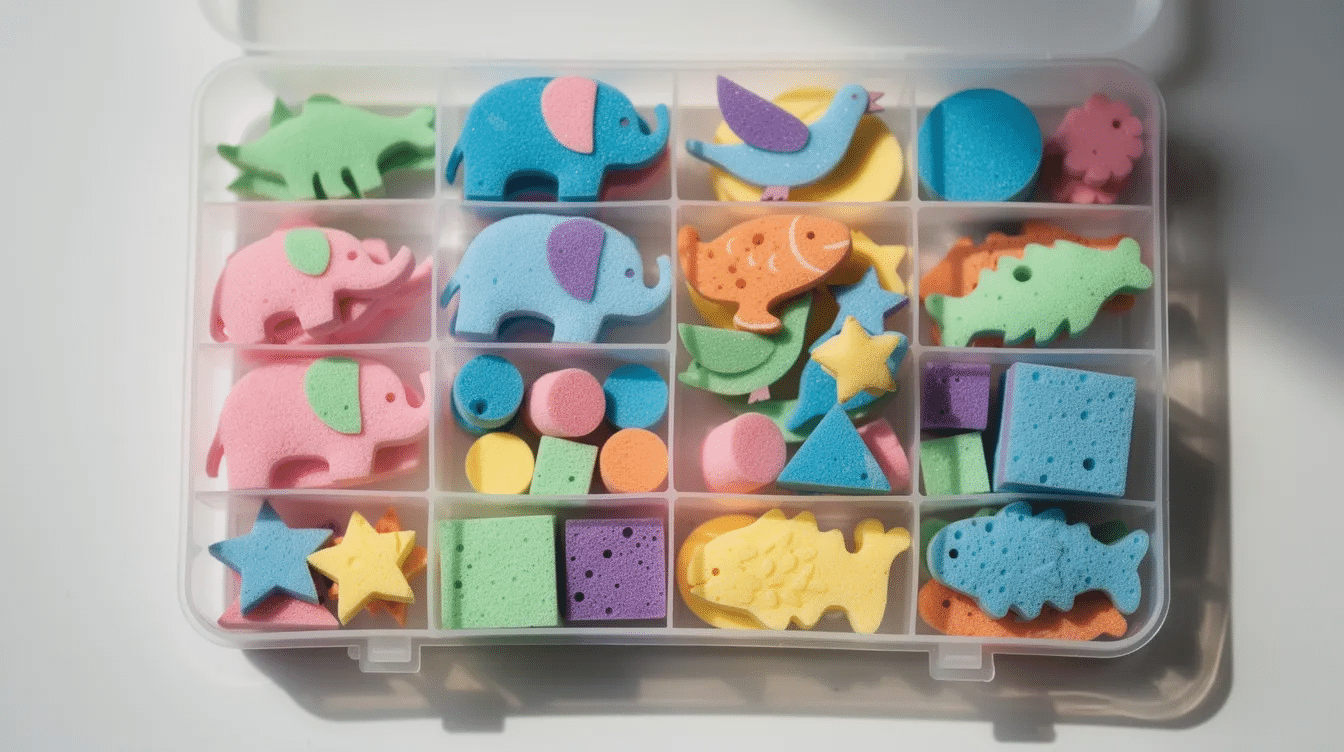
Foam stickers are thicker, softer stickers made from lightweight foam, often pre-cut into animals, stars, flowers, alphabet letters, circles, squares, rectangles, and favorite characters. Foam crafts can also use craft foam sheets, sticky-back foam sheets, or loose foam pieces to create simple projects.
For parents of 1–3 year olds, the appeal is practical: these kids crafts are low-prep, nearly mess-free, and easy to pause when your child loses interest. Most ideas below use cheap supplies, such as a $5–$10 package of foam stickers, card stock, paper plates, washable markers, and a small basket or cart to keep everything together.
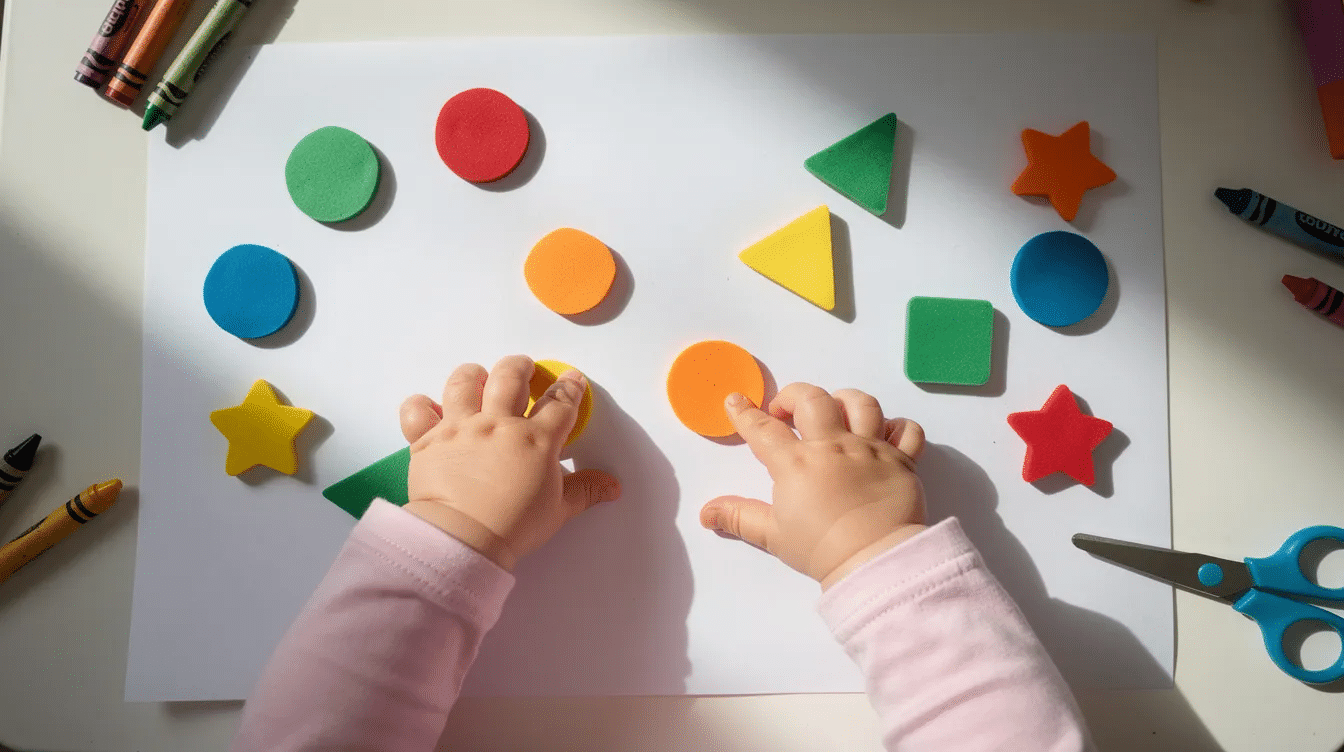
Foam stickers are easier for little hands to grip than flat paper stickers. The raised texture gives toddlers something sturdy to hold as they peel the backing, place the sticker, and press it down. That small act can build fine motor skills, color and shape recognition, early counting, sorting, confidence, and independent play.
The Benefits of Foam Sticker Crafts for Toddlers
Foam sticker activities look simple, but they support a surprising range of early learning.
Fine motor skills and hand-eye coordination. Crafting with foam helps develop fine motor skills as children engage in activities like cutting shapes, peeling stickers, and placing pieces accurately. Peeling a sticker backing strengthens the fingers, while pressing foam pieces onto a canvas, card, or paper plate improves hand-eye coordination as children learn to direct their hands based on visual input during crafting activities.
Language and thinking skills. Foam crafts encourage toddlers to explore shapes and colors, as they can sort and organize foam pieces by various attributes, enhancing their learning experience. Parents can teach words like red, blue, star, under, next to, big, and small while the child plays. Research on early learning suggests young children often pay close attention to shape when learning object names, making hands-on shape play especially useful (PMC).
Social-emotional growth. A finished foam craft gives toddlers something to show with smiles and pride. Following one or two steps, coping with the challenge of a tricky peel, and trying again all support patience and confidence.
Early writing and stem foundations. Matching, sorting, counting, and making patterns are early stem concepts. These same finger movements also support later skills such as drawing, writing, using utensils, and dressing.
Foam crafts are generally safe for toddlers when proper supervision is provided, with an emphasis on using larger foam pieces and foam stickers to prevent choking hazards, and they offer many of the same broad arts and crafts benefits for child development seen in other creative activities. For toddlers under 3, avoid smaller pieces and stay close.
Getting Started: Supplies and Safety for Toddler Foam Crafts
Start with a small, simple supply pile. You do not need a full art room.
Basic supplies include assorted foam stickers, a few sheets of craft foam, card stock, paper plates, washable markers, and child-safe scissors for older toddlers, alongside a few essential art supplies for young artists. Craft foam sheets are the most common and versatile type of foam used for children’s crafts, available in various thicknesses and colors, with sticky-back foam sheets being particularly suitable for younger children.
Choose big stickers with bold color, easy-peel backing, and no tiny embellishments. Skip loose glitter, beads, or decorations that can detach. Themed stickers can be used on backgrounds made from large foam sheets to create scenes for children, such as a farm, ocean, garden, or outer-space world.
When using foam for crafts, it is important to ensure that all glues and markers are non-toxic and child-safe, especially for toddlers who may put small pieces in their mouths. Look for non toxic materials and age guidance on the package.
Set up a craft zone with a washable tablecloth or tray, a small basket for stickers, and a box or folder to save finished art. Keep packaging, scraps, and rejected backing paper out of reach. Old clothes or an apron help parents relax about mess and keep the focus on fun.
Simple Foam Sticker Craft Ideas for Toddlers (Ages 1–3)
Each foam craft here is designed to be finished in 5–15 minutes, which is usually enough for toddlers.
Foam Sticker Color Collage. Give your child blue paper with blue stickers, yellow paper with yellow stickers, or green paper with green stickers. This easy game helps kids connect color words with real objects and is perfect to add to a list of no mess activities for 2 year olds.
First Sticker Scene. Draw a big tree, road, or pond on card stock. Let toddlers decorate it with leaves, animals, cars, flowers, or stars. Using foam stickers and shapes allows children to engage in open-ended projects that foster creativity and imagination without the constraints of specific instructions.
Shape Garden. Turn circles into flower centers, squares into planters, rectangles into tree trunks, and triangles into roofs or leaves. This is a fantastic way to introduce shape names while still letting creativity lead.
Foam Sticker Faces. Cut large circles from craft foam or paper. Let your toddler add foam eyes, mouths, hats, hair, and silly details to practice fine motor skills through art activities. Talk about happy, sleepy, surprised, and grumpy faces.
Textured Collage Art. Textured collage art can be made using a mix of standard, glitter, and shimmer foam stickers on heavy paper or cardboard, giving toddlers an easy introduction to preschool 3D art projects. Foam crafts provide sensory exploration opportunities, allowing children to engage with different textures and materials, which is crucial for sensory integration.
Foam Sticker Stamps. Foam stickers can be used to create unique, textured patterns when applied to a surface and dipped in paint. Stick a simple star or circle onto a cardboard block, dip it lightly in washable paint, and stamp patterns with close supervision.
Waiting-Room Notebook. For busy days, pack a notebook and one sticker sheet in a zip pouch. Your toddler can decorate pages while you wait, with very little mess.
Creative ideas for using foam stickers include making custom crowns, designing textured collages, building personalized scenes, crafting puppets, and creating wearable items like masks, and families who enjoy these may also like trying themed DIY craft kits for creative projects.
Seasonal and Holiday Foam Sticker Crafts for Little Hands
Seasonal foam crafts help toddlers notice the time of year, family traditions, and changes in the world around them.
For spring or Easter, decorate big paper flowers or easter eggs with chick, bunny, dot, and flower stickers. Foam crafts can be adapted for every season and holiday, allowing children to create themed projects like Christmas trees or Easter eggs.
For summer, make a foam ocean scene with fish, shells, and starfish stickers on blue paper, or pair it with a simple crab paper plate craft for kids for an easy ocean theme. Add wavy marker lines for water and count the animals together.
For autumn, cut a large paper leaf or pumpkin and cover it with foam leaf and acorn stickers. This is great for naming red, orange, yellow, and brown.
For winter or Christmas, decorate a tree, snowman, or door hangers with star, circle, and snowflake stickers as ornaments and buttons, or try pairing them with space-themed crafts and activities for a fun “winter night sky” theme. These creations can become quick homemade cards for grandparents, teachers, or small businesses that host children’s holiday events.
Learning Through Play: Turning Foam Stickers into Simple Learning Games
These are playful learning ideas, not formal lessons. Let your child’s interest guide the activity.
Try a color hunt by placing a pile of mixed stickers on the table and saying, “Find all the red ones.” Then switch to blue, yellow, or green.
For shape matching, draw simple outlines of a circle, star, heart, square, or rectangle. Your child can place matching foam stickers on top.
For early counting, line up 1–3 stickers and count aloud while your toddler taps each one. Keep it short and cheerful.
Foam letter stickers can help toddlers and preschoolers learn to spell their names while decorating with shape stickers. Start with the child’s first initial, then add more letters as their ability grows.
Use foam animals or vehicles to tell a story: “The bus goes to the farm,” or “The dog finds a treasure.” This helps vocabulary, imagination, and the ability to connect ideas, just like making fun and easy dragonfly crafts for kids to act out garden or pond stories.
Using foam stickers can help children develop color recognition and enhance their creative decoration skills. Foam crafts encourage creativity and imagination, allowing children to experiment with colors, shapes, and textures without restrictions, and they pair well with nature stick crafts for kids for outdoor-inspired art sessions.
Tips to Make Foam Sticker Craft Time Smooth and Enjoyable
Toddlers have short attention spans. They may dump the whole pile, stick foam pieces to their sleeves, or get frustrated when a sticker will not peel. That is normal.
Keep sessions short and stop before your child gets cranky. Five good minutes are better than a 20-minute battle.
For younger children, partially peel the sticker backings before handing them over. Model one or two stickers, then step back and let the child lead, even if the finished art looks random.
Use a small trash bowl for backing paper. Wipe the table with a damp cloth, then store leftover foam pieces in a clear zip bag or box. If stickers land on furniture, peel slowly and use mild soapy water if needed.
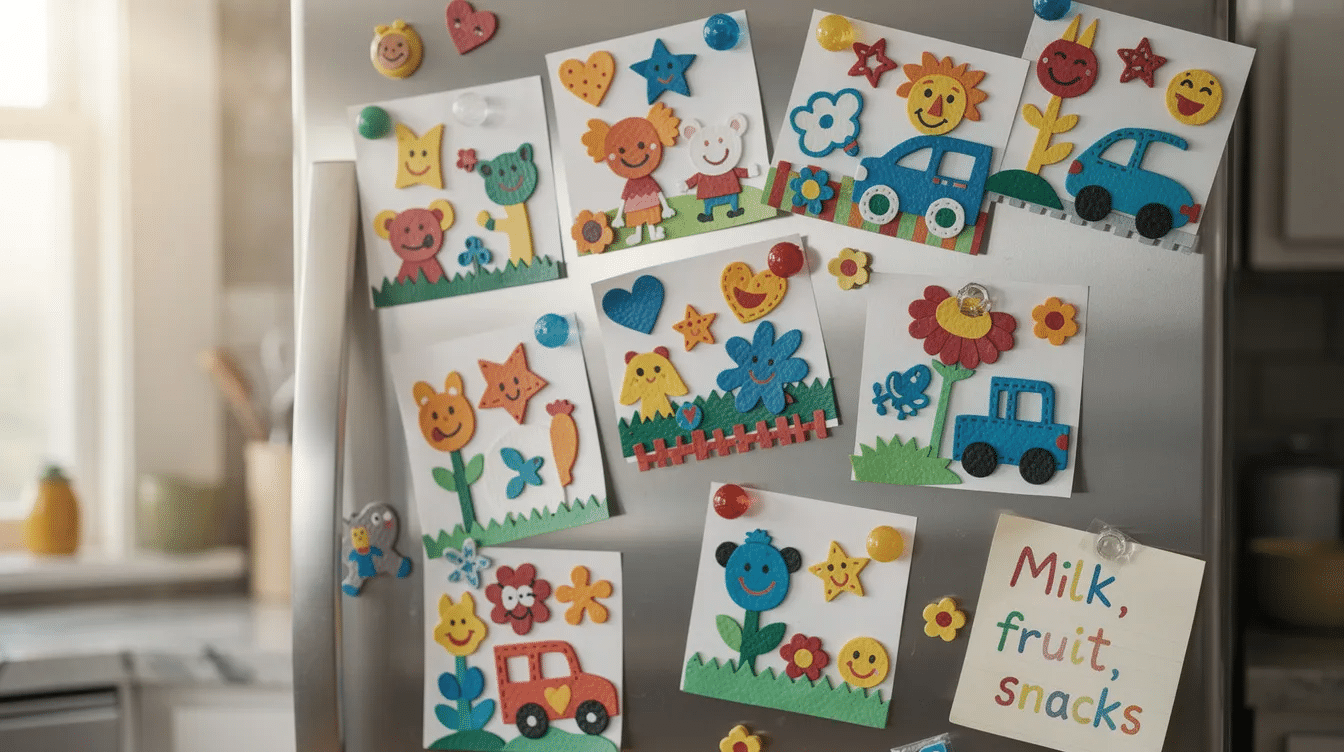
Display a few finished crafts at your child’s eye level, such as on the fridge or bedroom door. Seeing their own creations builds ownership and confidence.
Foam Sticker Crafts FAQ for Parents of Toddlers
What is the best age to begin foam sticker crafts?
Many toddlers can begin around 12–18 months with large stickers and help peeling. Ages 2–3 can usually handle more ideas, such as sorting, simple patterns, and scene-building.
Are foam sticker crafts safe for toddlers?
They can be safe with supervision, large foam pieces, and child-safe materials. Avoid very small stickers, loose decorations, and anything your child may put in their mouth.
What if my toddler puts stickers on walls or furniture?
Redirect them to paper, a tray, or a designated sticker notebook. Remove stickers slowly and use a damp cloth or mild soap if adhesive remains.
How should I store foam stickers?
Use shallow, labeled containers so toddlers can see choices without emptying everything. Keep tiny pieces and extra packaging out of reach.
How do I keep my toddler engaged?
Rotate themes: animals one week, vehicles the next, then flowers or characters. Let your child choose the next sheet, color, or project.
Are foam craft kits worth buying?
Foam craft kits can be useful when they include large pieces, simple designs, and safe materials. Check the ages on the package before adding one to your cart.
Can foam stickers travel well?
Yes. Pack a small folder, notebook, and a few sticker sheets for car rides, flights, restaurants, or appointments.
Foam sticker crafts for toddlers do not need to be perfect to be valuable. Keep the supplies simple, supervise closely, and let your child create, play, and discover at their own pace.