Key Takeaways
- Hand sewing projects build fine motor skills, patience, hand-eye coordination, confidence, and creativity.
- You do not need a sewing machine or advanced lessons to begin, just safe tools, felt, thread, and preparation.
- Beginner sewing projects for kids include Felt Monsters, Button Tree Pillows, Felt Bookmarks, lavender sachets, soft toys, scrunchies, tote bags, and simple masks.
- This tutorial shows how to teach basic stitches safely and keep kids engaged with fun, practical sewing crafts.
- The FAQ covers age, session length, frustration, storage, and needle safety.
Introduction to Hand Sewing Projects for Children
Hand sewing projects for children step by step are perfect for kids aged about 6–12 in 2026 because they are portable, calming, creative, and screen-free. Sewing helps improve hand-eye coordination and fine motor skills while teaching patience and focus, which are essential for children’s development. The rhythmic, hands-on process of sewing promotes calmness and mindfulness, providing children with a relaxing break from screens and fast-paced activities. Compared with sewing machine projects, hand sewing is simpler, quieter, and safer for beginners. This guide focuses on affordable hand sewing projects, sewing projects for kids, and every easy sewing project that uses felt, cotton, and fabric scraps.
- Essential Tools and Materials for Kids’ Hand Sewing
- How to Teach Kids Basic Hand Sewing Stitches
- Step-by-Step Hand Sewing Projects for Children
- Planning and Running a Kids’ Hand Sewing Session
- Keeping Kids Motivated and Helping Them Enjoy Sewing
- Frequently Asked Questions about Kids’ Hand Sewing Projects
Essential Tools and Materials for Kids’ Hand Sewing
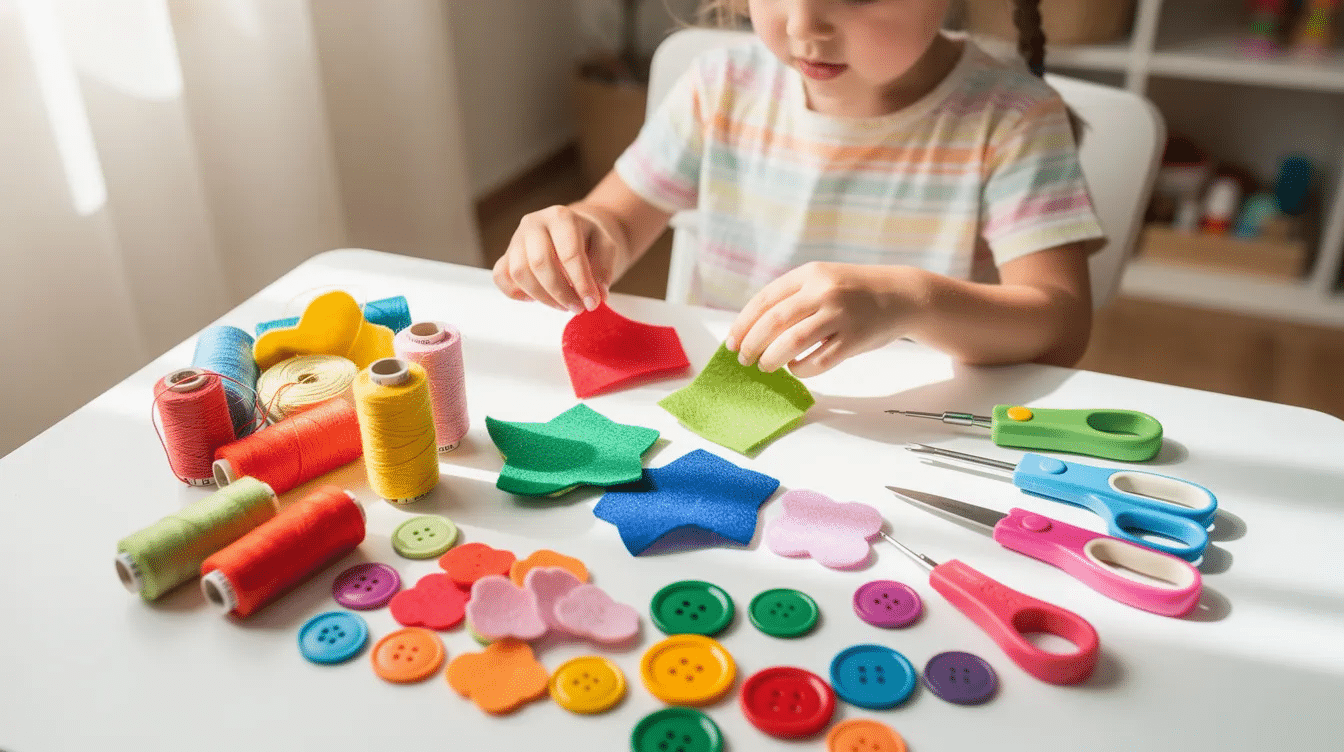
Having the right kit ready makes teaching kids to sew smoother and safer, just as choosing the best art supplies for young artists helps support creative confidence in other projects. Most supplies are inexpensive at a craft store, and many can come from a recycling bag or old clothes.
You will need:
- Large, blunt plastic tapestry needles for younger children
- Embroidery floss, because embroidery floss is thick and easy to see, making it suitable for children’s sewing projects
- Felt sheets; 100% wool felt is more durable and maintains its appearance longer than standard craft felt, making it a preferred choice for hand sewing projects
- Cotton fabric scraps, small squares, and simple shapes cut in advance
- Fabric markers, buttons, ribbon, thread, pins or clips, and safe scissors
- Dried lavender for lavender sachets
- Stuffing, such as fabric scraps, polyfill, or Cluster Stuff, a hypoallergenic polyester stuffing material that is designed to never clump, making it easier to work with when stuffing small items
- Optional embroidery hoop for children who want to try decorative embroidery
Felt is a popular material for children’s sewing projects because it doesn’t fray and is easy for kids to sew through, making it ideal for beginners. Felt is an excellent material for children’s sewing projects because it does not fray and is easy for kids to sew through, making it ideal for beginners. Using forgiving materials like felt or cotton eliminates frustrating fraying. Using fabric scraps for hand-sewing projects not only encourages creativity but also promotes sustainability by repurposing leftover materials into unique items. Using fabric scraps for hand sewing projects is a sustainable choice that helps reduce waste and encourages creativity by transforming leftover materials into unique items.
Keep needles in a small box, tray, or magnetic holder. Avoid tiny buttons for very young kids, and skip a zipper until children can sew straight lines confidently.
How to Teach Kids Basic Hand Sewing Stitches
A few stitches are enough to begin most projects: running stitch, whip stitch, and later, backstitch. Before real fabric, use cardboard or a paper plate with punched holes so children can push the needle through safely.
- Cut thread no longer than the child’s arm to prevent tangles.
- Thread the needle with embroidery floss and tie a knot at the end.
- Secure the first hand stitch by pushing up from the back, pulling until the knot catches, and keeping fingers away from the point.
- A running stitch involves an “in-and-out” motion and is used for outlining details.
- A whip stitch involves wrapping the thread over the edge of both pieces and pulling it through.
Keep first lessons to 20–30 minutes. Encourage big, visible stitches and say “good enough” often. Encouraging children to embrace imperfect stitches promotes creativity over perfection.
Step-by-Step Hand Sewing Projects for Children
The following projects move from flat and easy to slightly more detailed. Each one uses hand sewing, no sewing machine needed, and many use fabric scraps, similar to how DIY craft kits for creative projects bundle simple materials into ready-to-go activities. Let children choose colours, animals, decorations, and shapes so they enjoy sewing and feel proud of their creations.
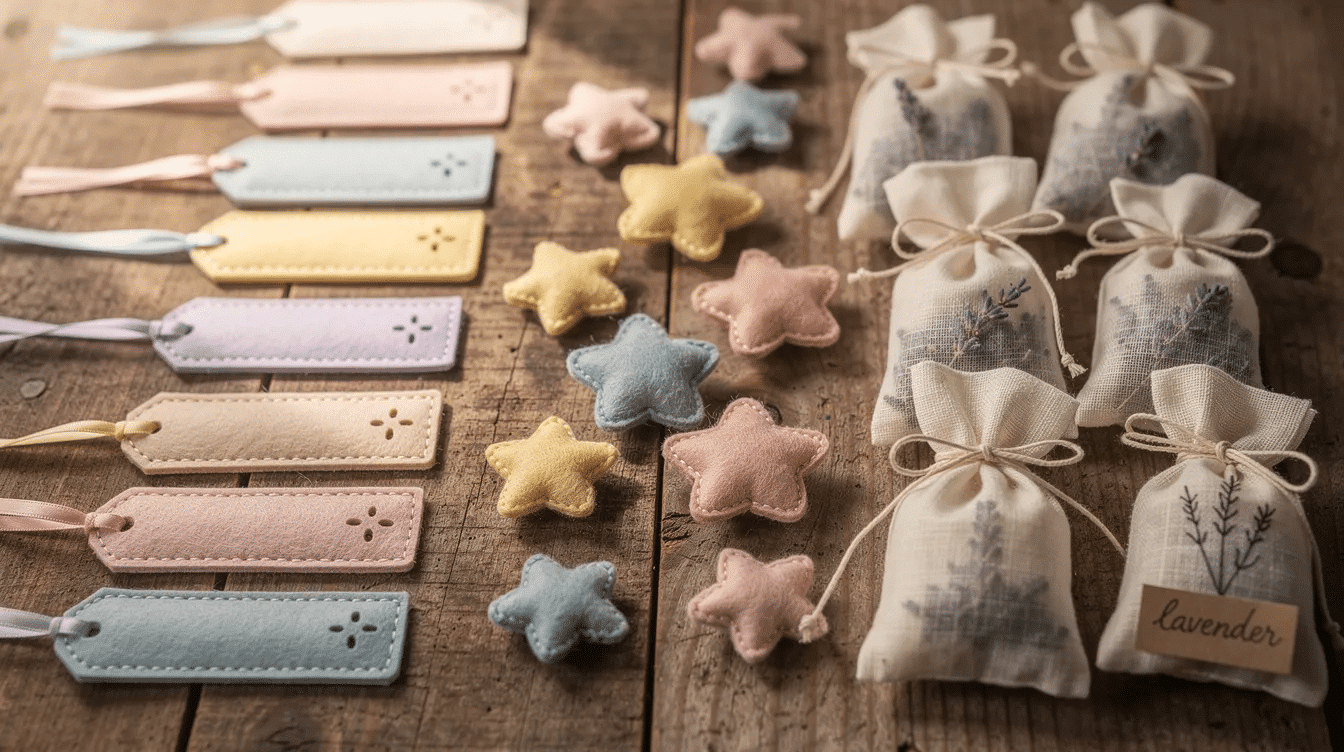
Felt Bookmarks: The First Easy Sewing Project
Felt Bookmarks are ideal first hand sewing projects because they are flat, cute, and use simple shapes like rectangles, hearts, or stars, and you can combine them with easy heart crafts for all ages for themed gifts.
Materials: felt, embroidery floss, blunt needle, fabric marker, scissors, ribbon, buttons.
- Draw a 5 cm × 18 cm rectangle or trace a heart.
- Cut the felt carefully.
- Sew around the edges with running stitch or whipstitch.
- Decorate with initials, a small felt animal, a button, or ribbon at the top.
Sewing projects like mini felt animal ornaments or bookmarks are great for children, as they are easy to make and can be personalized with decorations, and they pair nicely with simple owl crafts for kids if you’re planning an animal theme.
Lavender Sachets for Drawers and Gifts
Lavender sachets are quick, fragrant gifts for parents, teachers, friends, or school fairs, and they fit beautifully into festive holiday craft round-ups when you need handmade presents. Simple hand sewing projects for beginners can include items like scrunchies, tote bags, and lavender sachets, which are easy to personalize and make great gifts.
Materials: two cotton squares about 10 cm × 10 cm, dried lavender, needle, thread, paper cone.
- Cut two matching squares.
- Place right sides together.
- Sew three sides with running stitch.
- Turn right side out.
- Fill gently with dried lavender.
- Close the final edge with small stitches.
Try heart sachets, old-shirt fabric, or a ribbon loop to hang in wardrobes.
Soft Sock Snake or Felt Monster from Fabric Scraps
This fun project is great for boys, girls, and any kids who love imaginative play. Old socks and scraps become soft toys, monsters, snakes, or silly animals, much like open-ended preschool 3D art projects that invite kids to build characters and scenes from simple materials.
Materials: clean sock or felt, stuffing, needle, thread, felt scraps, fabric glue.
- Stuff the sock with shredded fabric scraps.
- Sew the open end closed with whip stitch.
- Add button eyes or contrasting shapes from felt for plush projects.
- Cut triangles for teeth, circles for spots, and a tongue.
- Let kids create a drawing first, then turn the art into a soft character.
Common beginner projects for children include Felt Monsters, Button Tree Pillows, and Felt Bookmarks, and you can expand the theme with fun and easy dragonfly crafts that use many of the same basic supplies. In the spirit of red ted art-style recycled craft ideas, this project turns leftovers into something personal.
Superhero Mask or Simple Cape by Hand
Masks and capes combine sewing with imaginative play, so kids enjoy the result immediately.
Mask materials: stiff felt, elastic cord, template, scissors, needle, thread.
- Trace the mask with fabric markers.
- Cut the mask and eye holes.
- Stitch elastic to each side with several strong knots.
- Decorate with felt stars, initials, or lightning bolts.
For a cape, use a rectangle of lightweight fabric or an old pillowcase. Sew a casing along the top edge, thread ribbon through, and tie it loosely. Creating a simple tote bag is a beginner-friendly sewing project that teaches kids about straight-line stitching and allows for personal decoration, and older children may enjoy upcycling a shirt into a little girl’s dress as another step-up project, so a cape or bag can be a natural next course.
Mini Pincushion or Stuffed Star from Fabric Scraps
This is a slightly harder fun project because children sew around corners or curves.
Materials: fabric scraps, star or circle template, needle, thread, stuffing.
- Trace two identical shapes.
- Cut both pieces.
- Sew around the edges, leaving a small gap.
- Children should leave a small gap when stuffing a sewn item to allow for easy closure.
- Turn, fill, then sew the opening closed.
Kids can create simple felt heart ornaments, which can also serve as keyrings or Christmas tree decorations, making them a versatile sewing project that displays beautifully alongside tissue paper stained glass crafts. Older children can use the finished star as a supervised pincushion or a tiny doll cushion.
Planning and Running a Kids’ Hand Sewing Session
Plan the space before you begin. Use a bright table, put needles in one container, and set a rule: no walking with a needle. For ages 6–8, aim for 20–30 minutes; for ages 9–12, try up to 45 minutes with stretch breaks.
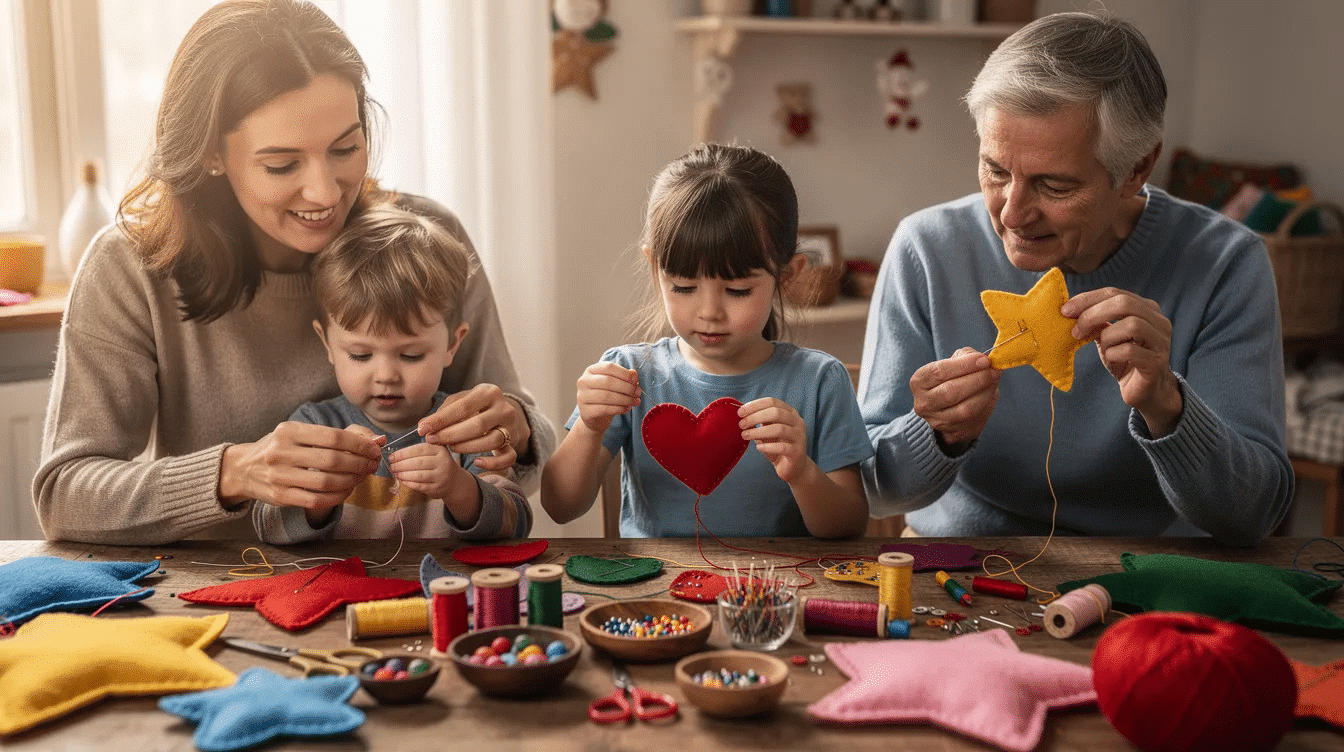
Pair a beginner with a slightly more confident child, or let siblings work on related projects at different levels. End with “show and tell” so children share progress, not only finished sewing projects. Completing a sewing project gives children a genuine sense of pride and achievement, which can significantly boost their confidence and self-esteem.
Keeping Kids Motivated and Helping Them Enjoy Sewing
Enjoying sewing matters more than perfect stitches. Let children choose colours, decorate freely, and decide whether to sew small squares, sew simple shapes, make soft toys, or create gifts.
To reduce frustration:
- Break each project into one edge, one eye, or one knot at a time.
- Use thicker thread and bigger needles.
- Celebrate threading a needle as real progress.
- Mix seasonal ideas: felt hearts in February, stars before holidays, lavender sachets for end-of-school gifts, or a simple fabric kite craft for kids on breezy spring days.
Adults can sew alongside children and model calm problem-solving instead of correcting every stitch. I hope these practical ideas help kids enjoy sewing and build skills with confidence.
Frequently Asked Questions about Kids’ Hand Sewing Projects
At what age can children start hand sewing safely?
Many children can begin around ages 6–7 with blunt tapestry needles, cardboard lacing cards, and close supervision. Ages 8–10 can often manage full projects like bookmarks, masks, and sachets. Adjust for maturity, attention span, and fine motor skills.
Do kids need a sewing machine to learn sewing skills?
No. Hand sewing teaches threading, seam basics, pattern following, and patience. A sewing machine can come later with adult supervision, but many families complete plenty of satisfying sewing projects entirely by hand.
How can I store and organize fabric scraps for children’s sewing projects?
Sort fabric scraps by colour, size, or fabric type in clear boxes, zip bags, or drawers. Keep one container for kid-friendly felt and soft cotton only, and let children “shop” from it when planning new sewing crafts.
What if my child loses interest halfway through a sewing project?
Shrink the goal. Finish one side of a sachet, add one monster eye, or turn a large cushion into a smaller stuffed shape. Unfinished creations still build skills and can be revisited later.
How do I handle needle safety with a group of children?
Use blunt needles, count every needle before and after the session, and keep extras in one container. Give a short safety talk first, supervise knotting and cutting, and remind children that needles are tools, not toys.