Teaching a toddler to write their name is less about worksheets and more about play, repetition, and readiness. The goal is to help your child connect their own name with meaningful marks, then slowly build the control needed for handwriting.
Key Takeways
- Most children begin name writing around the age of 4, though some start as early as 3.5 years old.
- Fine motor skills come first: toddlers need finger strength, dexterity, and an understanding of lines and shapes before holding a pencil.
- Capital letters are often the first letters children learn to write because they are easier to identify, memorize, and copy.
- Short, playful practice works best; practice sessions for name writing should typically last no more than 3 to 5 minutes for young toddlers.
- Praise effort, not perfection. Reversed letters, shaky lines, and uneven sizes are normal in preschool.
- When Can a Child Start Writing Their Name?
- Build Fine Motor Skills Before Formal Writing
- Introduce Name Recognition and Letter Order
- Fun Pre-Writing and Letter Formation Activities
- Step-by-Step: Teaching a Child to Write Their Name
- Tools and Set-Up for Successful Name Writing
- Teaching Letter Formation with Verbal Instructions
- Correct Pencil Grip and Posture
- Keep It Positive: Motivation, Praise, and Patience
- Frequently Asked Questions
When Can a Child Start Writing Their Name?
Name writing is usually a preschool skill. Children typically start developing pre-writing skills around 12 to 18 months, progressing from scribbling to forming lines and shapes by ages 3 to 4. Research on emergent writing shows that most children begin to write parts of their own name between ages 3 and 5, with full-name attempts often appearing closer to 4–5 years old.
Most children can roughly write their name by school reception or kindergarten, but age ranges vary. Focus on progress rather than comparing your child with other kids. Backward letters and wobbly form are expected when a young child starts writing.
If a child in the late 5s has no interest in drawing, scribbling, or making marks, it may help to chat with a teacher, health visitor, or pediatric professional.
Build Fine Motor Skills Before Formal Writing
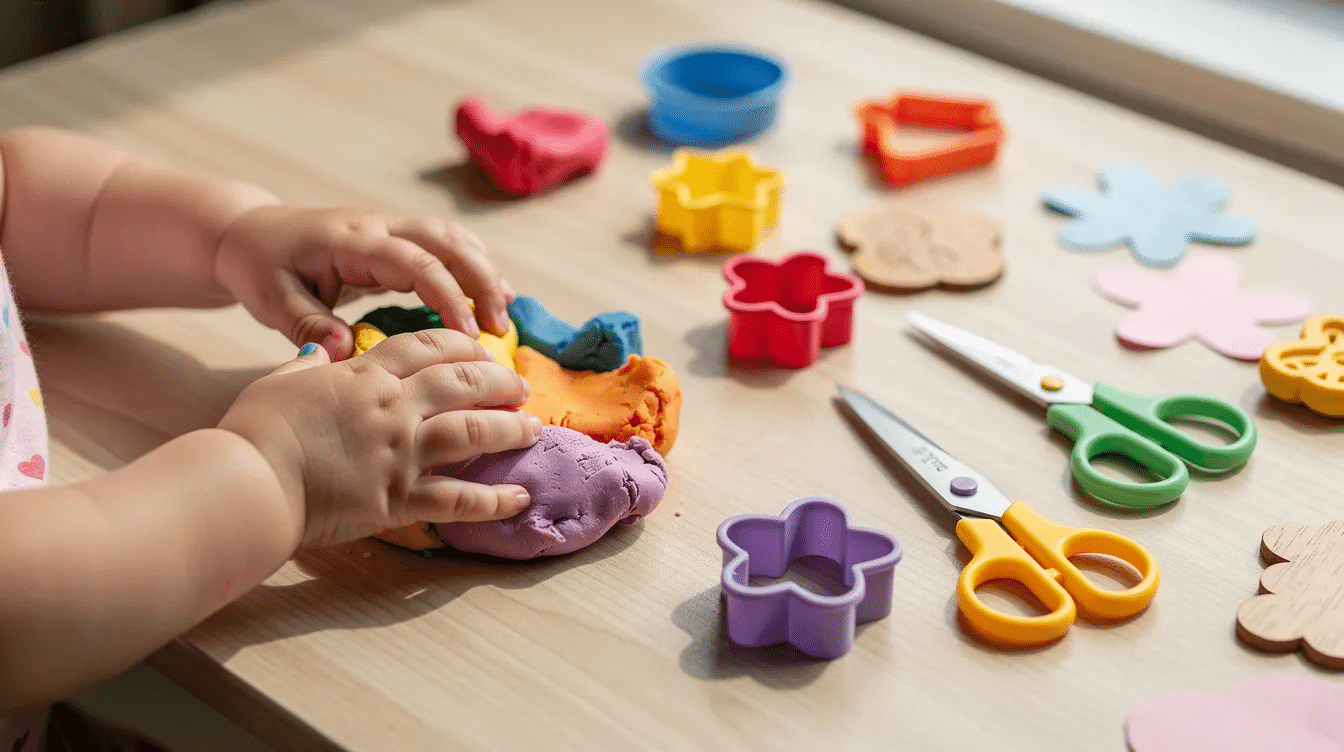
Before your child learns to write their name, they need to develop basic motor skills, which can be practiced by tracing over dotted lines that form each letter in their name. Fine motor skills are essential for controlling small muscles in the fingers, which are necessary for tasks like writing, buttoning clothes, and zipping zippers.
Useful activities include:
- rolling playdough “snakes” and pinching clay
- tearing paper for crafts
- peeling stickers
- using child-safe tweezers to pick up dried fruit
- opening lunchbox lids and turning book pages
- drawing with colored pencils, chunky crayons, or sidewalk chalk
These motor skills build stamina before writing letters. Keep activities short and fun rather than turning them into formal lessons, and consider engaging art activities to enhance fine motor skills in children as part of your routine.
Introduce Name Recognition and Letter Order
A child should recognize their own name before you expect them to write their name. Recognizing their name is crucial for children as it helps them identify personal belongings and navigate their environment, especially in school settings where items are often labeled with their names.
Children who can recognize and write their name have a significant advantage in school, as it helps them find their locker, cubby, and other personal items, reducing frustration during their daily activities. Frequent exposure to their name in various forms helps children develop recognition skills, which is the first step towards being able to write their name independently.
Hang posters, label toy boxes, add a name card to a coat hook, and point out the first letter often. Use magnetic letters, fridge magnets, alphabet blocks, or cards to build a name puzzle in the correct order. Start with upper case letters like “EMMA,” then show proper capitalization: one uppercase letter followed by lowercase letters, such as “Emma.”
Fun Pre-Writing and Letter Formation Activities
Learning to write begins before a pencil. Children learn through movement, touch, and play, so use fun ways to practice pre writing skills and offer the best art supplies for young artists so materials are easy and enjoyable to use.
Try these ideas:
- trace straight lines, curves, and zigzags on large paper
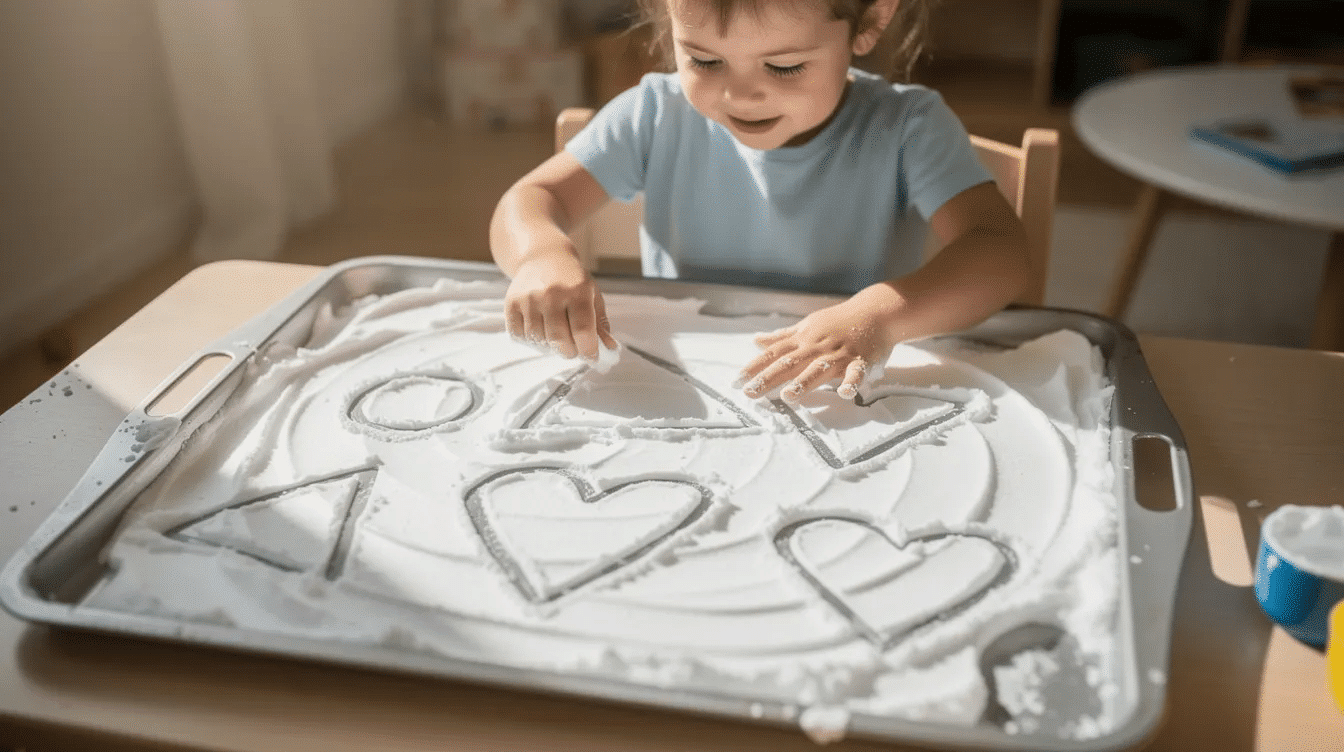
- draw individual letters in shaving cream or a salt tray
- use a yellow marker to write a model for your child to trace
- make letters from clay, paints, or snack pieces
- practice a big curve for “C” or a small line for “E”
Children enjoy a multisensory approach to learning, so using materials like clay, paints, or even food items to form letters can make writing their name more engaging. Incorporating preschool 3D art projects with clay and recycled materials can also strengthen the same fine motor and spatial skills they need for handwriting. Writing letters in the air with their finger is a fun activity for preschoolers that helps them practice letter formation while being active.
Auditory reminders, such as verbalizing movements while writing, can help young children learn.
Step-by-Step: Teaching a Child to Write Their Name
Here is a simple routine for how to teach a toddler to write their name.
- Begin with capital letters because it is generally easier for children to write capital letters than lowercase letters, making capital letters the first focus when teaching name writing.
- Write the child’s name clearly at the top of the page.
- Add dotted lines for the child to trace.
- Put a distinct black dot at the starting point of each letter to teach toddlers where to begin writing.
- Let the child copy underneath.
- Later, move to title case with lower case letters.
For example, a child might first practice “MIA,” then eventually learn “Mia.” Keep each practice writing session to 3–5 minutes for most toddlers.
Tools and Set-Up for Successful Name Writing
Set up the space so a child start writing without strain. Use a child-sized chair, feet flat, and paper tilted slightly toward the writing hand.
Offer thick crayons, triangular pencils, or a dry erase marker on laminated paper. Lined or bordered paper helps kids keep letters roughly the same height, especially when practicing an entire name.
These small tips support writing success and make it easier for children to write names with confidence.
Teaching Letter Formation with Verbal Instructions
Consistent verbal instructions help with learning letter formation. Demonstrate slowly while your child watches, hears, and copies.
Examples:
- A: “Start at the top, slant down, slant down, then cross.”
- M: “Big line down, climb up, slide down, climb up, big line down.”
- S: “Start here, curve around, then curve back.”
Ask your child to repeat the words while tracing. This helps them form letters and place letters correctly without guessing.
Correct Pencil Grip and Posture
Encouraging your child to practice writing their name with a proper pencil grip is essential for developing good handwriting skills early on, ideally using the tripod grasp with the thumb, index, and middle fingers.
Teaching children the correct pencil grip, known as the tripod grasp, is crucial for developing good handwriting skills and ensuring fluid movement of the hand. In simple terms, the pencil rests on the middle finger and is held gently by the thumb and index finger. The ring and little fingers tuck in; some parents place a cotton ball there to encourage the grip.
Keep shoulders relaxed, hold the pencil correctly without squeezing, and stabilize the page. Grip will develop between ages 3–6, so minor variation is normal.

Keep It Positive: Motivation, Praise, and Patience
Emotional experience matters as much as skill. Teaching a toddler to write their name involves play and repetition, not pressure.
Praise effort: “You worked hard on that first letter,” or “I like how you stayed with it.” Display early handwriting attempts on the fridge. Stop before frustration starts.
Name writing should feel like reading, drawing, and language skills coming together-not a test. With steady practice, most children eventually learn to write their name.
Frequently Asked Questions
What if my 4-year-old refuses to write their name?
Reluctance at this age is common. If your child enjoys drawing and hand play, avoid forcing pencil and paper. Try a name puzzle, magnetic letters, sand writing, or favorite colors instead.
Should my child learn lowercase letters at the same time?
Many educators teach children capital letters first because they are simpler to copy. Then introduce proper capitalization: one uppercase first letter followed by lowercase letters. Focus only on the letters in the child’s name before the whole alphabet.
My child writes some letters backwards-is this a problem?
Reversals are common in preschool and early kindergarten. Gently trace the letter together, repeat where to begin, and move on. If strong reversals continue beyond about age 7, ask a teacher or specialist for advice.
How often should we practise writing their name at home?
Aim for 3–5 minutes a few times per week. Short, regular practice is better than long drills. Labels, puzzles, tracing, and drawing all count as practice.
What if my child has a very long or unusual name?
Start with the first few letters, then build toward the entire name. A nickname can help at first, but keep showing the full name so the pattern becomes familiar.