If you’ve ever watched someone pull a handmade dress out of their closet and thought “I could do that,” you’ve probably also wondered: is sewing worth it in 2024? The answer depends entirely on what you’re hoping to get out of it.
For budget shoppers chasing rock-bottom prices, sewing your own clothes will rarely beat a $15 H&M dress. For fashion lovers who want specific silhouettes, premium fabric, and a wardrobe that actually fits, sewing can absolutely deliver. And for sustainability-minded readers tired of contributing to the fast fashion cycle, making your own garments offers a tangible way to step off that treadmill.
- Answering the big question up front: is sewing worth it?
- What does it really cost to sew your own clothes?
- When does sewing actually save you money?
- Benefits of sewing beyond the price tag
- What makes sewing hard (and how long does it take to get comfortable)?
- How to start sewing without spending a fortune
- Can sewing make you money? (Side hustles and small business)
- So… is sewing worth it for you personally?
Answering the big question up front: is sewing worth it?
Let me be direct: sewing is usually NOT cheaper than fast fashion in 2024. A basic cotton dress from a budget retailer might cost $15-25. To sew a similar dress, you’ll spend $30-50 on fabric alone, plus another $10-30 on a pattern, thread, zipper, and other notions. That’s $40-80 for something you could buy for less than twenty bucks.
But here’s where the math shifts. That same dress made from quality linen or organic cotton, with proper seam finishes and a custom fit, would cost $150-250+ at a boutique. Suddenly your $60-80 investment looks pretty good. Sewing beats mid-range and high-end brands, especially for tailored garments, special sizes, and natural fibers that retailers mark up heavily.
Sewing is most “worth it” as:
- A creative hobby that gives you something tangible to show for your time
- A way to get better fit and style control than any store can offer
- A route to more sustainable, longer-lasting clothes made with materials you actually choose
Sewing is probably worth it for you if:
- You care more about fit and fabric quality than having lots of clothes
- You enjoy hands-on crafts and don’t mind a learning curve
- You’re frustrated with RTW sizing that never quite works for your body shape
- You want to reduce your environmental impact through buying less but better
Sewing is probably not worth it if:
- Your main goal is spending less money on basic clothes
- You hate the idea of spending a weekend on one garment
- You need instant gratification from shopping
- You have zero interest in the process of making things
What does it really cost to sew your own clothes?
When calculating whether sewing is worth learning, you need to account for both money and time. A $200 machine sitting unused in a closet is a terrible investment. That same machine used weekly for years becomes one of the best purchases you’ll ever make.
The good news: beginner projects in 2024 have fairly predictable price ranges. Here’s what you’re looking at for startup costs:
- Sewing machine: $120-250 for a new entry-level machine (Brother, Singer, or Janome at big-box stores or Amazon), or under $100 for a quality used machine from Facebook Marketplace, Craigslist, or a local repair shop
- Basic tools: $20-40 for fabric shears, pins, seam ripper, measuring tape, and a few other essentials
- First project materials: $15-30 per simple garment in fabric and notions
Recurring costs add up over time: thread ($3-8 per spool), needles ($5-10 per pack), zippers ($2-8 each), elastic ($3-6 per yard), and patterns ($5-25 each, though free sewing patterns exist online). Plan for machine servicing too—a tune-up every couple of years runs $75-120.
Now let’s talk about sewing time. If you value your hours at any wage, the math gets complicated. A beginner might spend 6-8 hours making a simple skirt that costs $25 to buy. At $15/hour, that’s $90-120 in “time cost” plus materials. Shopping takes 10 minutes.
But this calculation misses the point for most sewists. Nobody asks whether knitting a scarf is “worth it” compared to buying one at Target. The process itself has value—relaxation, creativity, pride in what you create.
The learning curve also creates temporary inefficiency that shrinks dramatically over your first 6-12 months. You’ll unpick seams, ruin fabric, and abandon projects. Budget for this. Consider your first few yards of fabric as “tuition” rather than finished garments.
When does sewing actually save you money?
Sewing sometimes saves real money, but only under specific conditions. If you’re expecting to slash your clothing budget by sewing basic t shirts and underwear, you’ll be disappointed. But certain scenarios make sewing genuinely cost effective.
High-quality natural fiber garments:
- Sewing linen trousers: $40-60 in fabric vs $120-200+ retail for comparable quality
- A wool winter coat: $80-150 in materials vs $300-600 at department stores
- Silk blouses: $30-50 in fabric vs $150-300 ready-to-wear
Uncommon sizes and custom fit needs:
- Plus-size workwear where RTW options are limited and expensive
- Petite or tall lengths that require costly alterations
- Athletic builds with waist/hip ratios that don’t match standard sizing
Mending and alterations instead of replacement:
- Patching jeans instead of buying new: $0-5 vs $50-100
- Replacing zippers: $5-15 in supplies vs $20-40 at a tailor
- Hemming coats and trousers: minimal cost vs $15-25 per item
Thrift stores and estate sales can dramatically lower your fabric costs. A cotton sheet from Goodwill ($3-8) works as muslin for testing basic patterns. Vintage fabric from estate sales often includes quality materials no longer manufactured.
Watch for sales at major chains like Joann Fabrics: pattern sales for $1.99-4.99 (down from $15-25), and seasonal 40-60% off fabric promotions. Strategic shopping makes a real difference.
Consistent mending extends garment life by years. Re-elasticizing waistbands, reinforcing seams, and patching worn spots keeps clothes out of landfills and your wardrobe functional.
Items often cheaper to sew:
- Formalwear and special occasion dresses
- Tailored blazers and structured jackets
- Niche-size swimwear
- Quilts and home goods
- Doll clothes and costumes for kids
Items not worth sewing for savings alone:
- Basic t shirts (retail has this nailed)
- Underwear and socks
- Cheap kids’ clothes they’ll outgrow in months
- Simple basics you can find at thrift stores for $3-5
Money saving is a bonus, not the primary reason most people continue sewing. The real value lies elsewhere.
Benefits of sewing beyond the price tag
Once you start wearing clothes you made yourself, something shifts. Sewing becomes less about saving a few dollars and more about having a wardrobe that actually works for your life. It’s a lifestyle and creative skill, not just a means to an end.
The non-financial benefits fall into four main categories: fit, style freedom, confidence, and sustainability. Many sewists stay with the hobby for decades even when they realize it’s not always cheaper—because these intangible perks are genuinely powerful.
These benefits typically become obvious after a few completed garments. Within your first 3-6 months of regular practice, you’ll start understanding why people get so passionate about this craft.
You get clothes that actually fit your body
Ready-to-wear clothing assumes a “standard” body that doesn’t actually exist. If you’ve ever dealt with:
- Waist vs hips mismatch (pants gap at back, tight at hips)
- Gaping bust on button-down shirts
- Tight biceps with loose shoulders
- Petite lengths that require hemming everything
- Plus-size styles with unflattering proportions
…then you know the frustration of clothes that technically “fit” but don’t actually work.
Sewing patterns can be adjusted to match your actual measurements:
- Lengthening or shortening bodices, sleeves, and pant legs
- Full bust adjustments for better dart placement
- Grading between sizes (size 12 waist, size 16 hips)
- Adding width for shoulders or thighs without changing the whole garment
Consider someone who wears a size 18, has a large bust, and a short torso. Finding blazers that fit in any store is nearly impossible. But by altering a pattern to her exact measurements, she can have finished garments that look like they were made for her—because they literally were.
Learning fit takes time. It’s a multi-month process of trial, adjustment, and gradual improvement. But each garment you improve gives an immediate quality-of-life upgrade. Custom fit is especially valuable for plus-size sewists, very tall or short people, and those with mobility needs, braces, or sensory preferences (like avoiding tags or rough seams).
You control style, fabric and quality
Home sewists can recreate silhouettes from high-end brands at a fraction of the price. That $250 Reformation-style wrap dress? Make it yourself for $60-80 using quality fabric and a $15 pattern.
More importantly, you control what goes into your garments:
- Fiber content: 100% linen, Tencel, organic cotton, wool coating instead of the polyester blends dominating mid-range stores
- Weight and drape: Heavier denim for jeans that last, lined wool for winter coats
- Practical details: Avoiding see-through, clingy, or scratchy fabrics that look fine on hangers but feel terrible to wear
You can also customize basic patterns endlessly:
- Swap necklines between patterns
- Change sleeve lengths and styles
- Add pockets (the eternal complaint about women’s clothing)
- Choose nicer fabric than anything available at your price point retail
Well-made garments with good seam finishes and sturdy fabric can last 5-10+ years of regular wear. A $60 handmade linen dress worn 100 times costs $0.60 per wear. A $20 fast fashion dress that pills and fades after 10 wears costs $2 per wear—and ends up in a landfill.
Think of sewing as building a small but cohesive wardrobe rather than a huge closet of stuff you barely wear. Quality over quantity becomes natural when you’ve invested hours into each piece.
The creative and confidence boost
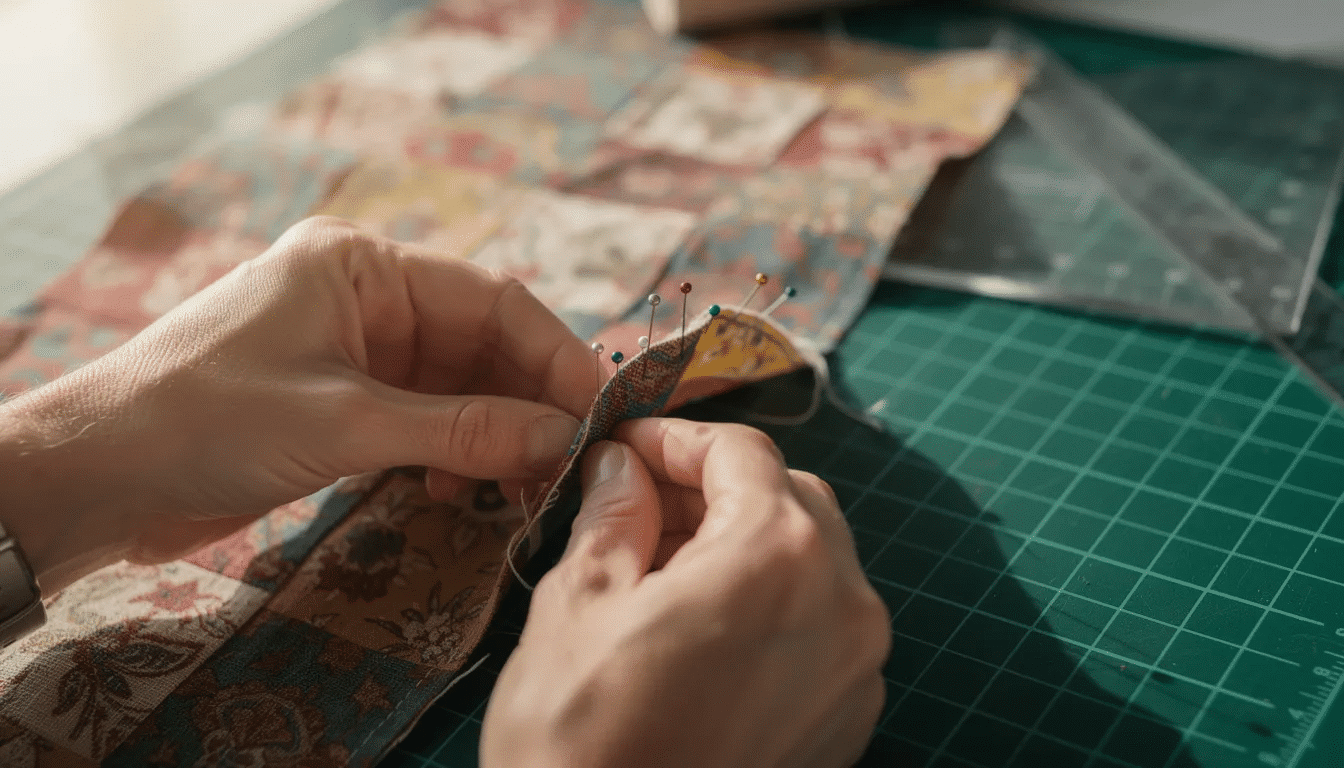
The first time you wear a “me-made” garment in public, even if it’s imperfect, something changes. There’s pride in answering “thanks, I made it” when someone compliments your skirt. Ownership and uniqueness that wearing clothes can’t normally provide.
Sewing can actually improve body image. When you take measurements regularly, your body becomes neutral information—data points for pattern adjustments rather than numbers that make you feel bad. You stop thinking “I’m a size 14” and start thinking “I have a 38-inch hip and need a full bust adjustment.”
As a hobby, sewing offers something increasingly rare: screen-free, hands-on making things with tangible results. Many sewists find it genuinely meditative. The focus required crowds out anxious thoughts. You finish a sewing project and have something real to show for your time.
Achievable early wins build momentum:
- A simple tote bag (2-4 hours)
- An elastic-waist skirt (3-5 hours)
- Pajama pants from a free pattern (4-6 hours)
These aren’t impressive to experienced sewists, but completing them feels great. Many report a noticeable confidence shift around their 5th-10th garment—the point where you stop worrying about whether you can finish and start enjoying the process.
Sustainability and ethics
Fast fashion relies on low wages in overseas factories and heavy resource use. A single pair of conventional jeans requires approximately 2,700 liters of water to produce. The industry generates massive textile waste—over 500,000 tons diverted annually in the EU alone through sewn repurposing and upcycling.
Sewing your own clothing makes you viscerally aware of what garments actually cost to make. You understand why paying fair wages and using sustainable fabrics matters when you’ve spent 8 hours on a single dress.
Practical ways sewing reduces environmental impact:
- Mending: Patching holes, reinforcing seams, extending garment life
- Upcycling: Turning worn jeans into shorts, old shirts into a little girl’s dress, or old shirts into bags
- Refashioning: Taking in thrifted finds that almost fit
- Using scraps: Patchwork, quilting projects, small accessories
Second-hand textiles work beautifully for sewing practice. Thrifted curtains or sheets become muslins for testing patterns. Deconstructing old garments yields zippers, buttons, and fabric for smaller projects.
Handmade garments typically lead to buying less but better. When you know how much work goes into clothes, impulse purchases lose their appeal. This isn’t about perfection or preachiness—just small, realistic changes that add up over years.
What makes sewing hard (and how long does it take to get comfortable)?
Sewing isn’t instantly easy, but it’s very learnable with consistent practice. Anyone who can follow a recipe can learn to follow a pattern. The question is whether you’ll enjoy sewing enough to push through the awkward beginner phase.
Rough timeline for skill development:
- 2-4 weeks: Comfortable threading the machine and sewing straight seams
- 2-3 months: Finishing simple garments like skirts, pajamas, basic tops
- 6-12 months: Tackling fitted garments with darts, zippers, and multiple pattern pieces
- 1-2 years: Confident with lining, tailoring techniques, and complex construction
Key beginner challenges include using the machine smoothly, controlling speed, cutting fabric accurately, understanding pattern instructions, and predicting how different materials behave.
Reassurance: even experienced sewists regularly use seam rippers. Learning never stops. After 30 years, people still discover new techniques and make mistakes. The difference is confidence that mistakes are fixable.
Skill level matters significantly when calculating whether sewing is “worth it” in time and money. Beginners are slower and make more errors. A skirt that takes a beginner 8 hours might take an experienced sewist 2 hours. Factor this in when planning.
Using the machine and foot pedal
Coordinating hands and foot feels initially awkward—similar to learning to drive a car with pedals. You’re simultaneously guiding fabric, watching the seam, and controlling speed with your foot. It takes time for this to become automatic.
Start with slow, straight practice lines on scrap fabric to build muscle memory. Cut up old sheets into strips and sew stitch after stitch until your hands stop feeling clumsy.
If your machine has a speed limiter, use it. Otherwise, deliberately sew at half-speed for your first few weeks. Racing through at full speed is how you end up with crooked seams and fabric bunched in the needle plate.
Common beginner issues (all normal and solvable):
- Bird’s nests of thread under the fabric
- Fabric getting pulled into the needle plate
- Uneven stitch length
- Breaking needles by sewing too thick of layers
Keep a small “test scrap” next to your machine. Before sewing on your actual project, run a few inches on the scrap to check thread tension and get your foot-speed calibrated.
Sewing straight lines and control
Sewing straight is harder than it looks. Fabric shifts under the presser foot. Your hands unconsciously drift. And watching the needle instead of the seam guide throws everything off.
The key insight: watch the seam guide markings on your throat plate, not the needle. Most machines have lines marked at common seam allowances (1/4”, 3/8”, 5/8”). Keep your fabric edge aligned with the appropriate line and let the needle do its job in your peripheral vision.
Simple early projects that build seam control:
- Pillowcases (straight seams, useful result)
- Cloth napkins (small, quick, makes good gifts)
- Basic tote bags (practical and forgiving)
After a few weeks of regular practice, most people notice their seam lines getting straighter and more consistent. It’s one of the first visible signs of improvement.
Mastering hems and finishing
Hems are often where a sewing project looks “homemade” versus “handmade.” Wobbly hem lines and uneven folds broadcast beginner status instantly.
The good news: proper pressing solves most hem problems. Here’s a basic double-fold hem:
- Press the raw edge up by 1/4” (or your hem allowance)
- Press again, folding the raw edge inside
- Pin or clip in place
- Stitch close to the inner folded edge
Pressing is as important as sewing—maybe more. A well-pressed, decently-stitched hem looks better than a poorly-pressed, perfectly-stitched one.
Start with straight hems on flat items like tea towels or table runners before attempting curved hems on skirts. Curved hems require easing and are genuinely tricky.
Beginner-friendly alternatives:
- Bias tape binding (encases the raw edge, no folding needed)
- Hem tape (iron-on adhesive, no stitching)
- Patterns designed with simple straight hem lines
Your hems will improve dramatically after 5-10 projects. Early wobbles are expected and temporary.
How to start sewing without spending a fortune
You do NOT need a $1,000 machine or a room full of supplies to begin in 2024. The sewing machine market might be valued at billions globally, but your entry point can be under $150 total.
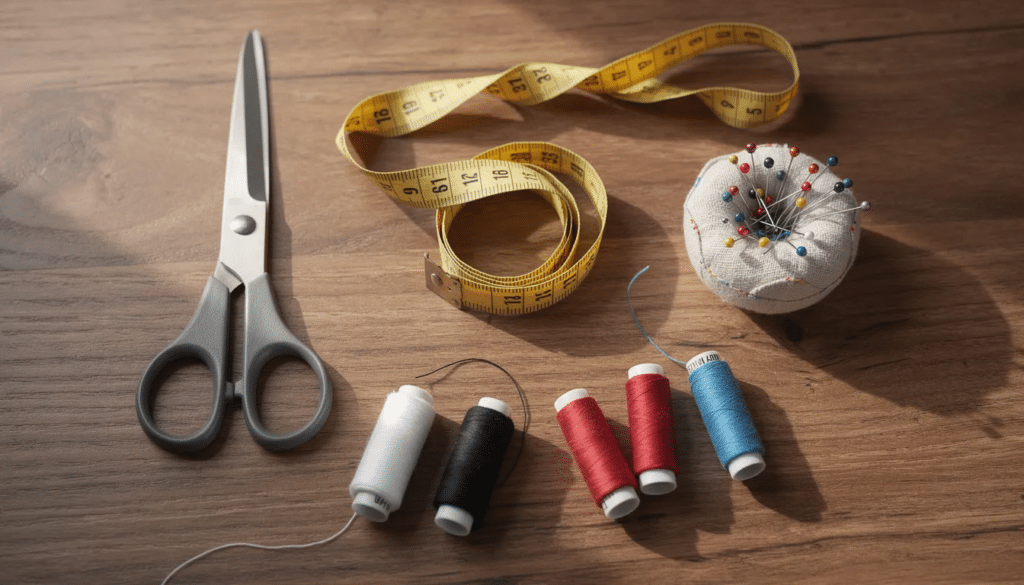
Minimalist beginner kit:
Item | Typical 2024 Price |
|---|---|
Used or entry-level machine | $80-200 |
Fabric shears | $15-30 |
Pins or clips | $5-10 |
Seam ripper | $3-5 |
Measuring tape | $3-5 |
All-purpose thread (2-3 neutral colors) | $10-15 |
Beginner pattern | $0-15 (many free options) |
Practice fabric | $10-20 |
Total | $125-300 |
For your first projects, avoid expensive fabric. Use: |
- Thrifted cotton sheets ($3-8 at Goodwill)
- Clearance quilting cotton at the fabric store
- Flat-weave tablecloths from thrift stores
Avoid slippery satin and very stretchy knits until you have more experience. Stable woven cotton is your friend.
Free and low-cost learning resources:
- YouTube channels (Made to Sew, Professor Pincushion, Evelyn Wood)
- Sewing blogs with free tutorials
- Local library workshops
- Community college continuing education classes ($50-100)
- Free sewing patterns from independent designers
Choose one small, achievable project and finish it before buying more supplies. Resist the urge to stock up “for later”—unused materials create guilt and clutter.
As your sewing skills grow, you’ll naturally identify where to invest. Better shears make cutting easier. Specialty presser feet enable new techniques. Higher-quality fabric yields better finished garments. But none of this is necessary on day one.
Can sewing make you money? (Side hustles and small business)
It’s possible to earn money from sewing, but let’s be realistic: it’s real work, requires solid skills, and isn’t passive income. Most people who enjoy sewing as a hobby would hate doing it for demanding clients under deadlines.
That said, common paid sewing avenues include:
Mending and alterations:
- Hemming jeans: $10-20
- Replacing coat zippers: $20-40
- Taking in or letting out seams: $15-35
- Formal wear alterations (wedding dresses, suits): $50-200+
Costume and specialty work:
- Theater costume construction
- Cosplay commissions
- School play and dance costumes
- Renaissance faire garments
Small-batch products:
- Tote bags, scrunchies, fabric accessories
- Baby items (bibs, burp cloths, simple clothes)
- Pet accessories
- Craft fair and Etsy sales
Once sewing becomes a business, some expenses may be tax-deductible: machine depreciation, fabric, thread, patterns, workspace costs. Consult a local tax professional for specifics in your area.
Build solid skills on your own projects first. Spend 6-12 months of regular practice before charging for client work. Nothing tanks a side hustle faster than delivering poor quality or missing deadlines.
Even if you never “go pro,” having the option to barter services with friends, earn a little holiday money at craft fairs, or take occasional paid alterations makes sewing more flexible. The valuable skill of construction and fitting has real-world applications beyond your own wardrobe.
So… is sewing worth it for you personally?
Whether sewing is worth it comes down to what you value. Money alone? Probably not—fast fashion wins on pure price. But time invested in a creative skill, clothes that fit your personal style, quality you can feel, and the satisfaction of making things yourself? That’s where sewing delivers.
Quick self-assessment:
- “I care more about fit and fabric quality than having lots of clothes” → Sewing could be great for you
- “I enjoy hands-on crafts and don’t mind a learning curve” → You’ll likely enjoy the process
- “I’m okay with spending a weekend on one garment” → You have realistic time expectations
- “I want more control over my wardrobe than stores offer” → Sewing solves this directly
If you’re still unsure, try a low-risk experiment. Borrow a machine from a friend or family member, or pick up a cheap used one for under $100. Sew 3-5 simple projects over a few months. A tote bag, some pajama pants, maybe a gathered skirt. Then reassess honestly: did you enjoy sewing? Do you want to continue?
There’s no single right answer. Sewing is absolutely worth it for some people and just a passing curiosity for others. Both are fine. The hobby isn’t going anywhere—the global sewing and quilting market continues growing at nearly 7% annually as people discover (or rediscover) the satisfaction of making their own clothes.
If you’re still curious after reading this post, take one small step. Look up a free pattern online. Watch a YouTube tutorial. Visit a fabric store just to touch the materials. See if that spark of interest turns into something more.
The machine will wait. The skills will come. And if sewing turns out to be your thing, you’ll wonder how you ever lived without it.