Kids bring home a surprising amount of artwork during the school year. One week it is a cute preschool handprint; the next, the table is covered with paper, letters, samples, and one “masterpiece” your child insists must stay forever. These kids art portfolio scrapbook ideas help you save the best without letting art take over the house.
Key Takeways
- A labeled art portfolio by school year helps curate a representative sample of your kids’ creative growth.
- A 2-inch D-Ring binder with plastic sleeves is the fastest, lowest-cost portfolio option.
- Let your own kids choose favorite pieces; it builds pride and decision-making skills.
- Photograph oversized, textured, digital, or 3-D artwork to save memories without storing everything.
- Washi tape, photos, captions, and simple writing make the project fun without becoming too time consuming.
- Why a Kids Art Portfolio Scrapbook Is Such a Great Idea
- Step 1: Gather and Sort Your Own Kids’ Artwork
- Step 2: Choose the Treasures to Keep
- Simple Binder-Style Kids Art Portfolio (Fast, No-Fuss Option)
- Creative Scrapbook-Style Kids Art Portfolio (Decorate with Washi Tape and Photos)
- Documenting a Full School Year in an Art Portfolio
- Including 3‑D Artwork and Oversized Pieces
- Involving Your Child in the Process
- Storing and Displaying Finished Kids Art Portfolios
- What to Do with Extra Artwork You Don’t Scrapbook
- FAQ
- How many art portfolios should I make for each child?
- What if my child doesn’t want to throw any artwork away?
- Which supplies are truly essential if I’m short on time and budget?
- How do I handle digital art or artwork created on a tablet?
- When is the best time to put together a kids art portfolio scrapbook?
Why a Kids Art Portfolio Scrapbook Is Such a Great Idea
From preschool through elementary school, kids create a plethora of artwork: drawings, paintings, doodled school papers, holiday crafts, and projects from special events. Storing it all in bins is easy, but it becomes clutter fast.
Curating an art portfolio is different. Instead of saving every piece, you create a themed art binder or portfolio that organizes and showcases selected pieces of children’s artwork, making it easier to revisit and enjoy their creative expressions over time. Label it clearly, such as “Age 4 – 2025–2026 school year.”
There is emotional value, too. Research on young children and visual art links creative arts and crafts participation with self-expression and emotional development. When kids display and revisit their work, they see progress and feel proud.
Step 1: Gather and Sort Your Own Kids’ Artwork
Start with one child at a time. Grab a grocery bag, plastic tub, or box and label it with the name and school year.
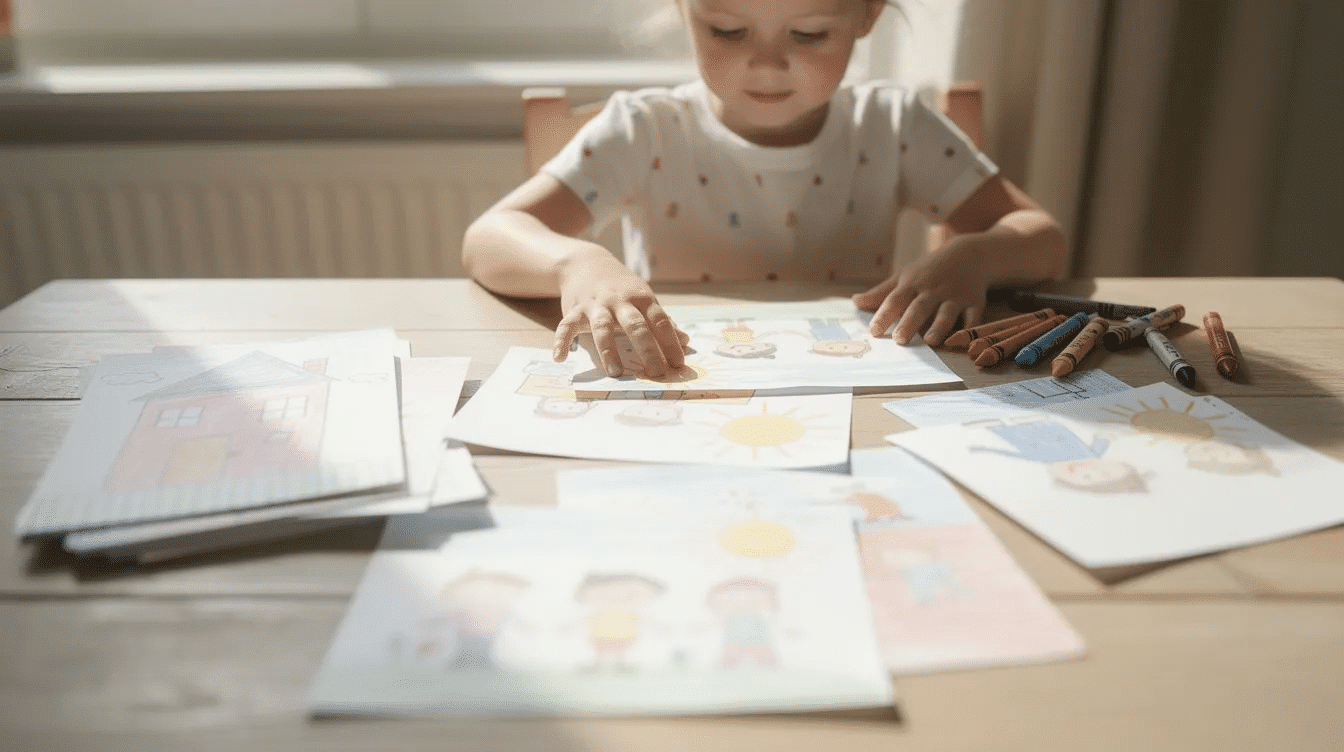
Collect artwork from the fridge, bulletin boards, backpacks, bedroom walls, school folders, and drawers. Then create piles for display, storage, or recycling to manage children’s artwork effectively. On the floor or table, sort into:
- Flat drawings and paintings
- Large posters
- 3-D pieces
- School papers with doodles or art
Turn it into an art treasure hunt. Your son, daughter, or student can help find every favorite piece from the past few months.
Step 2: Choose the Treasures to Keep
Think like a tiny museum curator. Creating an art portfolio can involve selecting a limited number of favorite pieces, such as 20 artworks, to showcase, allowing children to participate in the decision-making process.
When selecting artwork to keep, consider involving your child in the process by allowing them to choose their favorite pieces, which can help them learn decision-making skills. A good split is 10 chosen by the child and 10 chosen by the adult.
Choose for:
- Emotional value, like a first self-portrait
- Progress, such as September vs. May writing
- Variety, including paint, collage, and cutting projects
- Memories, like a field trip picture
Recycle extras with kindness, or save a bit for cards, wrap, or a gift.
Simple Binder-Style Kids Art Portfolio (Fast, No-Fuss Option)
This is the quickest kids art portfolio scrapbook idea: use a D-ring binder with plastic sleeves, which is a practical way to store and display children’s artwork, allowing for easy organization and access.
A DIY art portfolio can be created using a 2-inch D-Ring binder that holds 8.5 by 11 inch sized paper, allowing for easy storage and display of children’s artwork. Add clear protective sleeves; using clear protective sleeves in binders allows for chronological storage of children’s artwork.
Supplies (pair this with quality art supplies for young artists):
- 1.5–2 inch D-ring binder
- Page protectors
- Scissors or trim tool
- Marker
- Glue, tape, or washi tape
Slide a favorite full-page artwork into the front cover. Add sticker letters, name, grade, and school year. When creating a DIY art portfolio, it’s recommended to select a limited number of favorite pieces, such as 20 artworks, to showcase rather than trying to include everything.
Annotating children’s artwork with details such as the date, child’s age, and the story behind the drawing adds context to the collection.
Creative Scrapbook-Style Kids Art Portfolio (Decorate with Washi Tape and Photos)
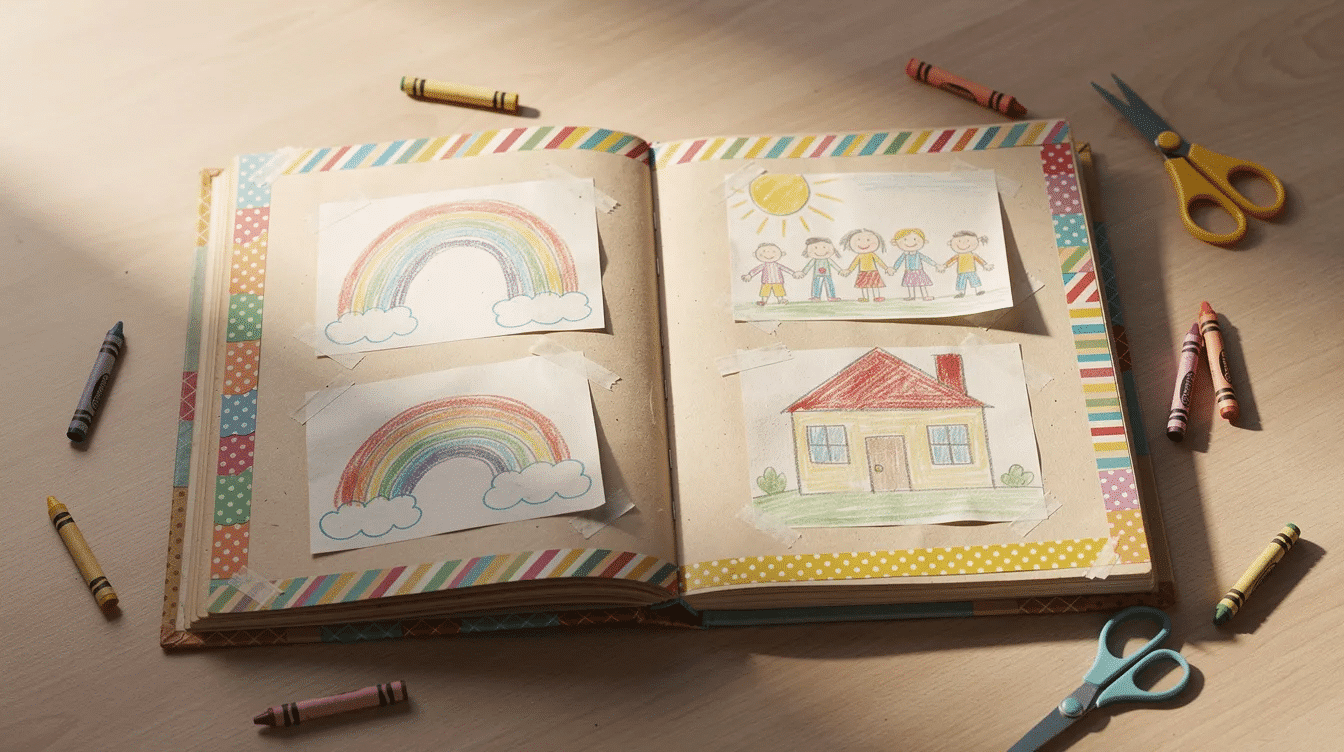
If you love scrapbooking, this is the perfect way to turn the portfolio into a keepsake book. Use a sketchbook, 12 × 12 album, or kraft notebook with sturdy pages.
Design each spread with one artwork, one photo, and a title like “Messy Paint Day.” Incorporating photographs of children creating their artwork alongside the pieces can add a personal touch to the art portfolio, capturing memories of the creative process.
Use washi tape as a border, photo corners, month label, or hinge. Using hinges to create double-layered pages in scrapbooks adds interactive elements to the display of children’s artwork. You can secure a flap, fold it open, and hide a note underneath, or incorporate tissue paper stained glass crafts as bright window-style pages.
Add ticket stubs from a museum trip, a ribbon, or a progress report comment about art.
Documenting a Full School Year in an Art Portfolio
Some families make one portfolio per school year, from the first day to the end. Divide it by month or theme: holidays, science, free drawing, or school projects.
Create a first day spread with a photo, self-portrait, and questionnaire. At the end, add a last-day self-portrait and a quote: “I loved making robots.” Over time, these books become a timeline of creative life.
Including 3‑D Artwork and Oversized Pieces
Clay animals, cardboard cities, and giant posters are often the coolest pieces, especially preschool 3D art projects, but they rarely fit in a binder.
To manage the volume of artwork created by children, it is recommended to take photos of larger or three-dimensional pieces and create a digital archive, which can save physical space while preserving memories. Taking a picture of 3D or textured art, including creations from DIY craft kits for kids, before recycling the original helps preserve the memory without the physical item.
Use natural light, a plain background, and one shot with your child holding the project. To accommodate oversized or three-dimensional artwork in a DIY portfolio, taking photos of these pieces and printing them in 8.5 by 11 inch size is a practical solution.
Photographing children’s artwork for a digital photo book helps reduce physical storage space while preserving memories.
Involving Your Child in the Process
Kids care more when they have control. Let them pick tape, choose order, place stickers, or write labels by hand, and encourage them to try fun art activities when they’re bored to keep new pieces flowing into the portfolio.
Set a monthly rhythm: first Saturday, add new work. Older kids can write what was hard, what they love, or what they would change. You might even plan a themed crafting afternoon, like making wax paper stained glass and suncatcher projects, so there are fresh pieces to add. Of course, if they want dinosaur drawings together instead of chronological pages, hear them out.
If you post a finished page on pinterest or a family app, avoid sharing names; use private settings, no comments, and keep anything tagged or published limited.
Storing and Displaying Finished Kids Art Portfolios
Store finished books in a magazine file, bookcase cube, or low shelf where kids can reach them. Label the spine with the child’s name, school year, and a small doodle.
Keep the current book out for grandparents or a mom who wants to flip through it after dinner. Move older books to a safe shelf away from sunlight, damp basements, and hot attics.
What to Do with Extra Artwork You Don’t Scrapbook
Not every doodle needs to stay. The process matters more than the paper.
Try these suggestions:
- Cut strips into bookmarks
- Fold art into greeting cards
- Use paintings as birthday wrap
- Turn drawings into nature stick craft decorations
- Save small samples for collage, or trim them into shapes for simple owl crafts for kids
Creating an “Artwork Quilt” involves cutting and collaging small pieces from various drawings to form a visual memory display. Photograph it, print it, and put that single page in the portfolio.
FAQ
How many art portfolios should I make for each child?
Most families do one per school year or one per age. For heavy art years like preschool, split into fall and spring if the binder gets bulky.
What if my child doesn’t want to throw any artwork away?
Take photos first. Then set a clear limit, such as 20–30 favorites. Calling it a museum collection makes the choice feel special, not sad.
Which supplies are truly essential if I’m short on time and budget?
You only need a binder, page protectors, scissors, and a pen. Washi tape, cardstock, stickers, and photos are optional inspiration.
How do I handle digital art or artwork created on a tablet?
Print digital art on regular paper or photo paper. You can also make one gallery page with several small thumbnails and store the full files in date-labeled folders.
When is the best time to put together a kids art portfolio scrapbook?
Monthly is easiest, but the start of summer works well too. Grab one stack today, choose the first 20 pieces, and let the book begin.