
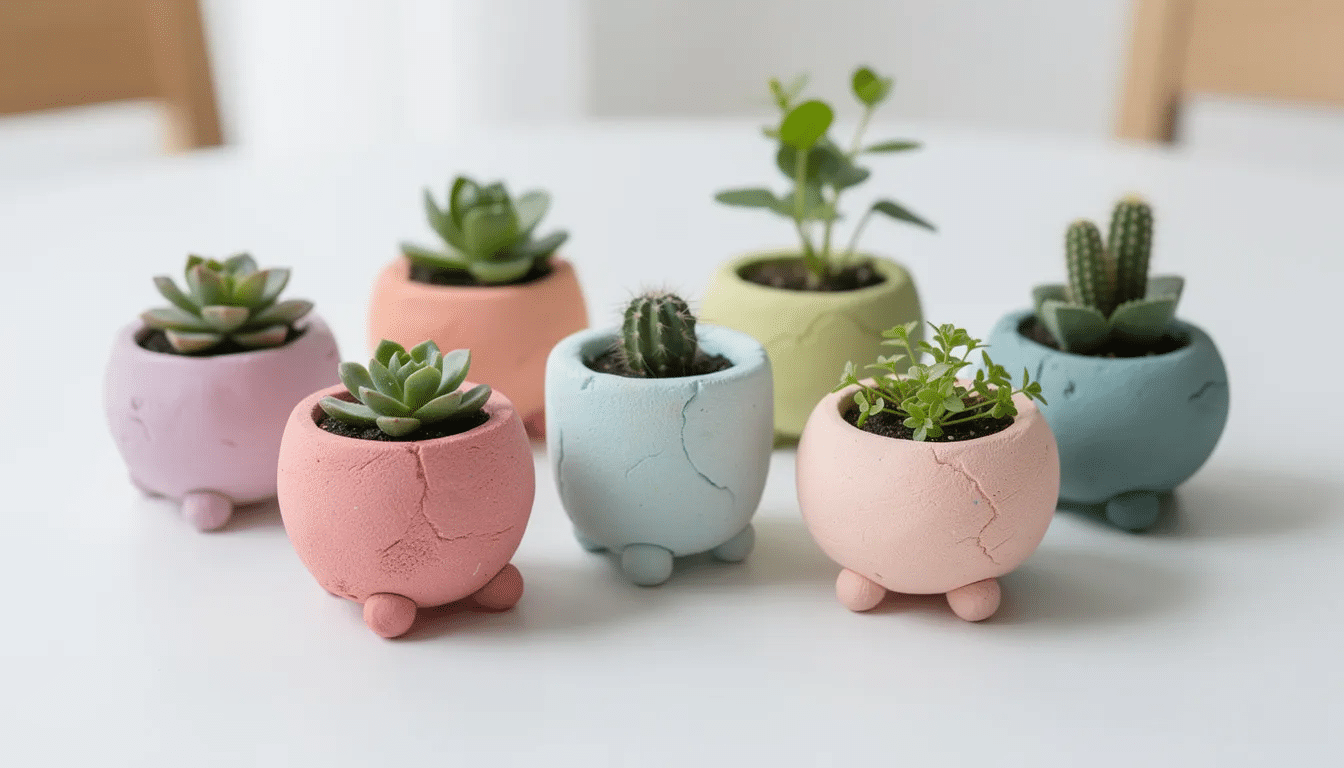
Mini air dry clay planters are one of the easiest weekend crafts you can tackle in 2026. No kiln, no oven, no special equipment—just a block of clay, your hands, and a few simple tools. These tiny pots work beautifully for succulents, herb cuttings, or faux plants, and they’re small enough to tuck onto any windowsill, desk, or bookshelf.
This tutorial focuses on truly mini sizes, about 2–5 cm tall, making them perfect as gifts, party favors, or sweet little accents around your home. Air dry clay is affordable, kid-friendly, and available worldwide in 1 kg blocks, so beginners can jump right in without a big investment.
In this guide, you’ll walk through everything from tools and materials to three simple planter shapes, plus drying, sealing, and styling tips that will help your creations last.
What you’ll learn:
- Essential materials and tools for mini air dry clay planters
- How to handle and prep clay for small projects
- Three beginner-friendly shapes: pinch pot, cylinder, and character/face planters
- Drying, sanding, and sealing techniques for durability
- Painting, decorating, and planting ideas to bring your mini planters to life
- What You Need to Make Mini Air Dry Clay Planters
- Getting Started with Air Dry Clay
- Step-by-Step: Simple Mini Pinch Pot Planter
- Step-by-Step: Mini Cylinder and Sleeve Planters
- Step-by-Step: Mini Character & Face Planters
- Drying, Sanding, and Sealing Mini Planters
- Painting and Decorating Your Mini Planters
- Planting, Propagation, and Care for Tiny Planters
- Ideas, Styling Tips, and Gift Uses for Mini Planters
What You Need to Make Mini Air Dry Clay Planters
A basic kit is all you need to get started with these air dry clay projects. You probably have most items at home already, and the rest are inexpensive and easy to find.
Materials:
- 500 g–1 kg white air dry clay (brands like DAS or Sculpey Air-Dry work well)
- Small succulents, cuttings, or faux plants to fill your finished pots
- Acrylic paints in your chosen colors
- Soft brushes, including one fine round brush for details
- Clear acrylic sealer or Mod Podge for waterproofing
- Fine sandpaper (400–600 grit) for smoothing edges
- Cup of clean water for blending and smoothing
- Paper towels for cleanup
Tools:
- Rolling pin or glass bottle for rolling clay to even thickness
- Plastic knife or craft knife for cutting shapes
- Cookie cutters or jar lids to create a perfect circle
- Wooden skewer or straw for making a drainage hole
- Small tins or spice jars (about 3–4 cm diameter) to use as molds
- Parchment paper or wax paper to protect your work surface
Optional extras:
- Texture tools like lace, burlap, or rubber stamps for pattern details
- Permanent markers for adding faces or fine lines
- Small magnets to create fridge planters
- Floral foam or sand for arranging faux plants and flowers
Getting Started with Air Dry Clay
Before you shape anything, take a moment to understand how this material behaves. Air dry clay hardens through moisture evaporation rather than heat, which means keeping it workable requires some attention to humidity and handling.
- Set up your work surface: Use a non-porous surface like a ceramic tile, silicone mat, or a sheet of parchment paper. This prevents sticking and makes cleanup easy.
- Cut a workable piece: Slice off a golf ball–sized portion from your 1 kg block. Immediately wrap the remaining clay tightly in plastic wrap or store it in an airtight container to prevent it from drying out.
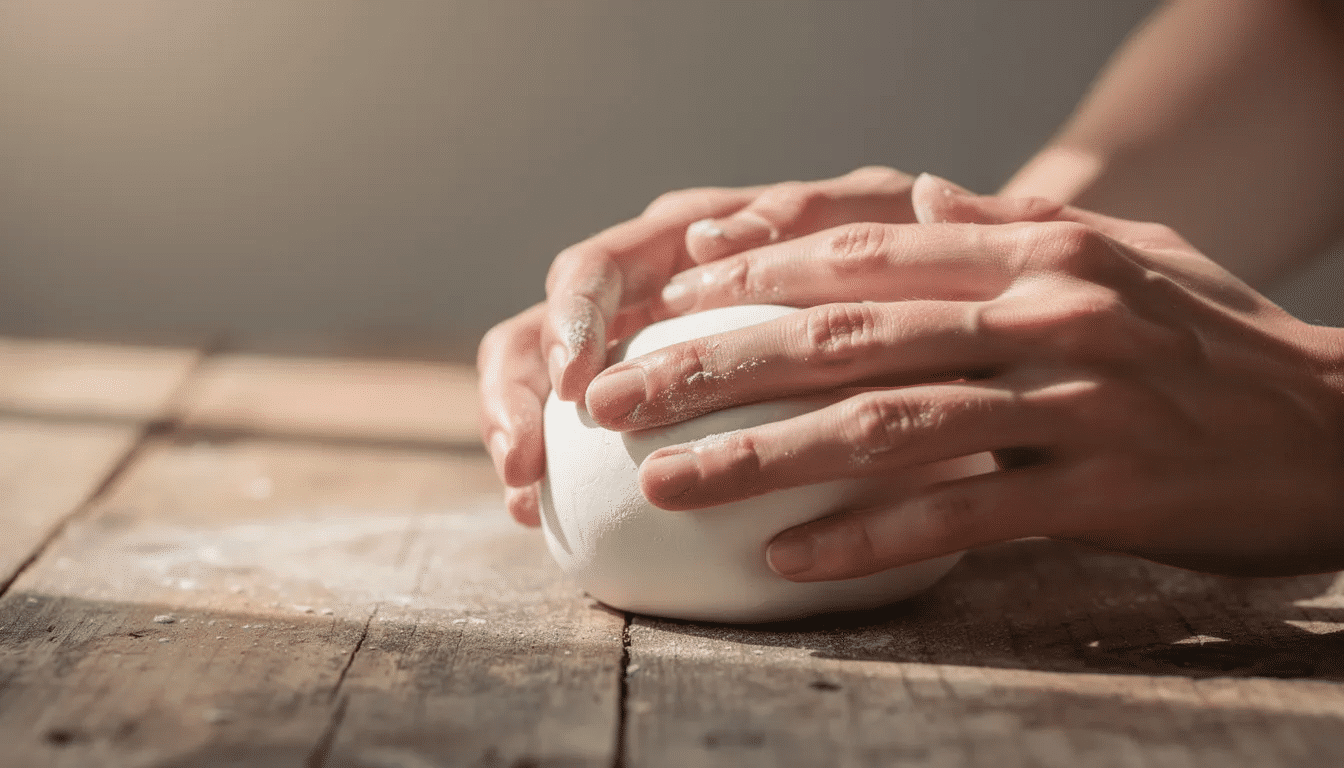
- Knead the clay: Work the clay between your hands for 1–2 minutes until it’s smooth and pliable. If it feels stiff or starts cracking, lightly dampen your finger with water and continue kneading.
- Roll to even thickness: When rolling slabs, place two guides (like popsicle sticks) on either side of your clay to maintain a consistent 4–5 mm thickness. This prevents thin spots that crack and thick areas that take forever to dry.
- Safety and cleanup: Use a dull plastic knife for kids’ projects. Wipe surfaces with a damp cloth rather than rinsing excess clay down the sink, which can clog drains over time.
Step-by-Step: Simple Mini Pinch Pot Planter
The pinch pot is the fastest, most beginner-friendly mini planter shape you can make. It requires zero tools beyond your hands, making it ideal for kids or a quick 30-minute craft session when you’re short on time, especially if you already have essential art supplies for young artists on hand.
- Make the ball: Take a walnut- to golf ball–sized piece of clay (about 3–4 cm in diameter). Roll it between your palms until completely smooth—any cracks now will grow larger during drying.
- Form the cavity: Press your thumb firmly into the center of the ball, stopping about 5 mm from the bottom. Pinch the walls with your thumb inside and finger outside, rotating the pot as you work. Aim for walls about 4–5 mm thick for strength without excessive drying time.
- Shape your planter: Create different silhouettes by adjusting as you pinch. Go for a rounded bowl, a slightly square form, or an oval shape. Keep the base flat by gently pressing it against your work surface so the finished pot will stand steady.
- Add a drainage hole: If you’re planting real succulents, poke a small hole in the center of the base using a skewer or straw while the clay is still soft. Skip this step if you’re using faux plants or planning to line the inside with plastic.
- Smooth and repair: Dip your finger in water and gently rub over any small cracks or rough spots. Be careful not to make the clay too wet—a light touch is all you need. Fine cracks may still appear during drying, and that’s perfectly normal for very small pots.
Step-by-Step: Mini Cylinder and Sleeve Planters
Cylinder sleeve planters look more polished than pinch pots and are perfect for creating matching sets. Line them up on a windowsill or arrange them on a table as a centerpiece—the clean lines make them surprisingly elegant.
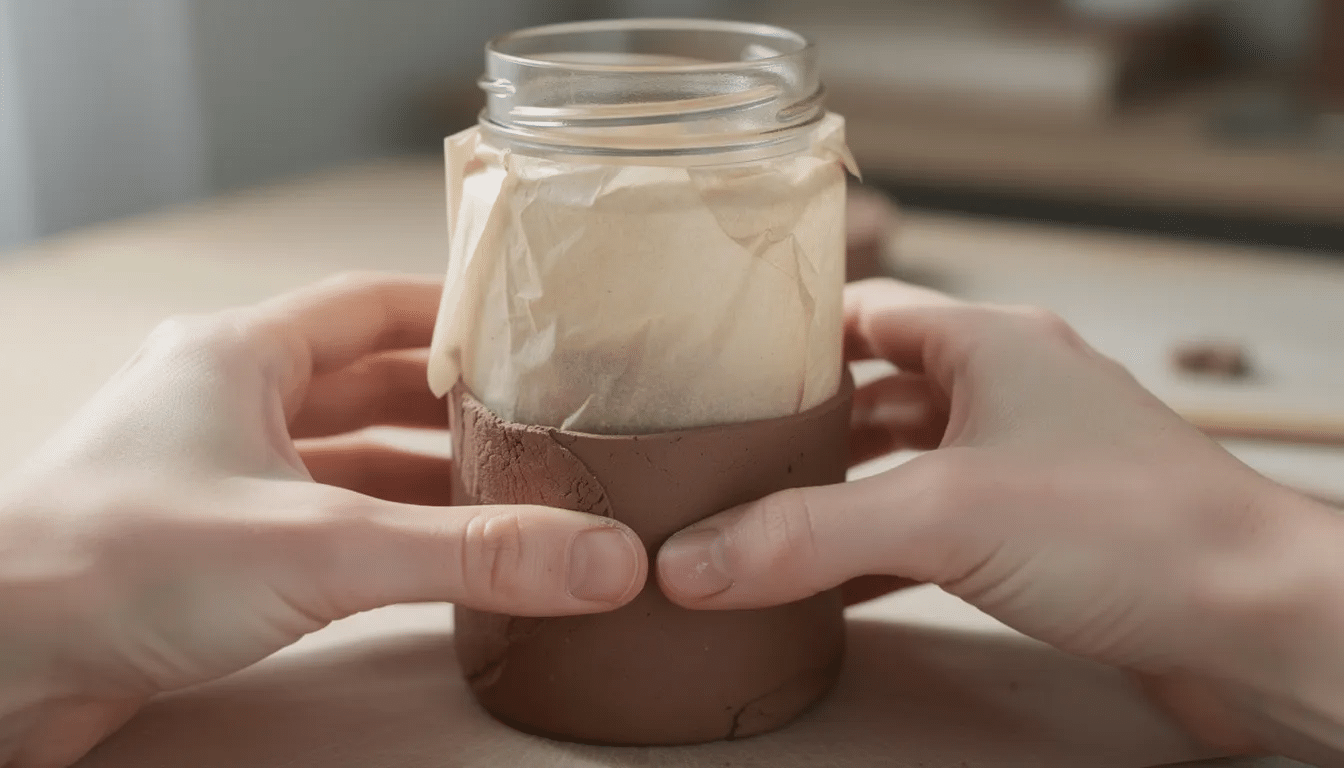
- Roll your slab: Use your rolling pin to create a sheet of clay about 3–4 mm thick. Make it large enough to wrap around a small mold like a spice jar (about 4–5 cm tall and 3–4 cm in diameter).
- Measure and cut: Wrap a strip of paper around your jar to create a template, then lay the paper on your clay and cut a matching rectangle with a knife and straight edge. This ensures a perfect fit.
- Wrap the clay: Cover your jar mold with parchment paper or cling film to prevent sticking. Wrap the clay rectangle around the jar, either overlapping the edges slightly or butting them together. Score the seam edges lightly with a knife, apply a dab of water as slip, and press together firmly.
- Smooth the seam: Use a damp finger to blend the seam until it’s nearly invisible. Work gently to avoid distorting the shape.
- Attach the base: Either pinch a small piece of clay into a flat circle and attach it to the bottom, or press your wrapped cylinder down onto a rolled clay slab and cut around the edge. Score both surfaces, add water, and join them with gentle pressure and a slight wiggle motion to create a strong bond.
- Add feet for character: For mini pedestal planters, roll three or four tiny clay balls or short coils and attach them under the base. This adds visual interest and allows airflow during drying.
- Dry and remove: Let the planter firm up for 12–24 hours before carefully sliding it off the jar mold. The clay should feel leather-hard—firm but not completely dry.
Step-by-Step: Mini Character & Face Planters
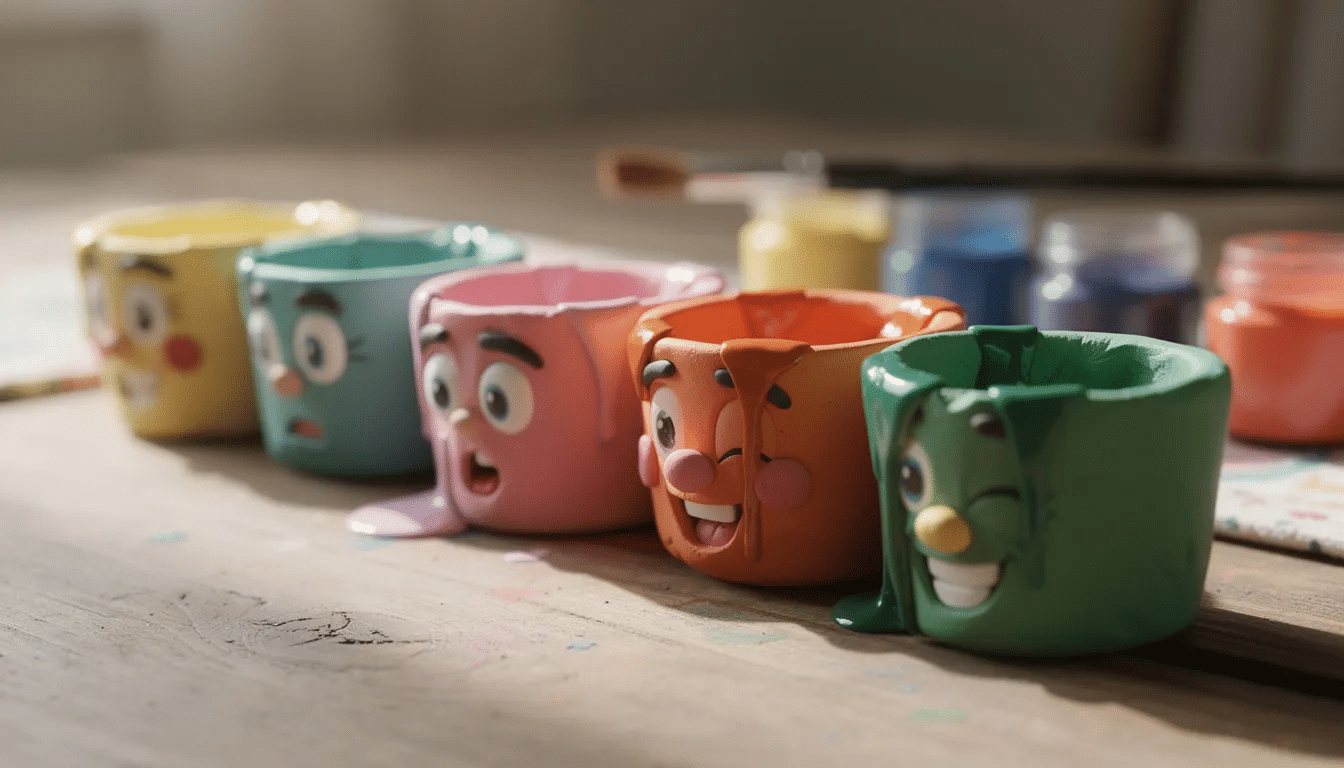
Mini face and character planters are wildly popular on social media and make fun, thoughtful gifts. They’re cute additions to any space and a great way to add personality to your air dry clay projects, especially when you’re inspired by creative clay bear planter ideas and other animal themes.
- Start with a base shape: Begin with either a pinch pot or small cylinder. Decide which side will be the front before adding any features.
- Add 3D features: Roll small coils for noses, flatten tiny balls for cheeks, and shape little ears or snouts for animal characters. Before attaching, score both the feature and the pot surface lightly with a skewer, then add a dab of water as glue. Press firmly and blend the edges with a damp finger.
- Create simple expressions: You don’t need to be an artist. Closed eyes made with curved lines, dotted freckles, tiny smiles, or sleepy expressions can all be added later with a fine paintbrush or permanent marker after the clay dries.
- Try themed sets: Make animal mini planters like cats, bears, or bunnies. Create plant-person planters with tiny leaf crowns. Design seasonal characters for spring holidays or cozy autumn decor to coordinate with festive holiday craft projects.
- Keep features secure: Because these planters are so small, added features should be proportionally tiny and thoroughly blended at the attachment points. Anything that sticks out too far will be prone to snapping off during drying or sanding.
Drying, Sanding, and Sealing Mini Planters
Patience during drying and careful sealing will make your mini planters last much longer, especially if they’ll be anywhere near moisture or soil.
- Create ideal drying conditions: Place your planters on parchment paper or wax paper set on a cooling rack. Air circulation around all sides speeds drying and reduces warping. Keep them away from direct sun, radiators, and cold drafts.
- Expect these drying times: Small 3–5 cm mini planters typically need 24–48 hours to dry completely. Thicker bases or humid climates may require up to 72 hours. Don’t rush this step.
- Test for dryness: Touch the thickest area of your planter. If it still feels cool or slightly soft, give it more time. Completely dry clay feels room temperature and is uniformly hard throughout.
- Sand gently: Once fully dry, use fine sandpaper (400–600 grit) to smooth rims, bases, and any visible seams, much like refining details on beginner sand sculpture projects. Wipe away dust with a slightly damp cloth before sealing.
- Choose your sealer: Options include clear acrylic spray sealer, brush-on acrylic varnish, or Mod Podge. Apply at least two coats to the exterior. If using real soil, seal the interior walls about halfway up to protect against moisture wicking.
- Consider a liner: For very water-sensitive dry clay, line the inside with a small piece of plastic bag or use a tiny nursery pot insert. This protects the clay from constant moisture exposure when you’re growing real plants.
Painting and Decorating Your Mini Planters
Acrylic paint works best on air dry clay, bonding well to the porous surface and offering endless color possibilities that pair perfectly with colorful weekend craft ideas. Mini planters are perfect for simple designs that don’t require advanced painting skills.
- Apply a base coat: If your clay dried slightly off-white or uneven, start with a coat of white or light neutral acrylic. Let it dry completely before adding color—this makes your final colors pop.
- Try easy design ideas: Dip the bottom third of your planter in a contrasting color for a modern look. Paint two-tone rims, horizontal stripes, or tiny dots. Use low-tack tape to create crisp edges on geometric shapes.
- Paint faces and details: Use a fine round brush with black or dark brown acrylic for eyes and mouths. Add rosy cheeks by diluting pink paint with water and applying with a dry brush technique. A light touch prevents smudging.
- Add metallic accents: Gold, copper, or silver paint on rims, feet, or facial details gives your planters a more polished, finished appearance. A little metallic goes a long way on small pieces.
- Allow proper drying time: Wait at least 1–2 hours between paint coats. Only seal once your final paint layer is completely dry to the touch—rushing this step can cause smearing or cloudiness in your sealer.
Planting, Propagation, and Care for Tiny Planters
Mini air dry clay planters work best with drought-tolerant plants and small root systems. They’re also ideal for faux plants when you want zero-maintenance decor or you’re making gifts that need to stay fresh without care, and they can pair nicely with preschool-friendly 3D art projects when crafting with young kids.
- Choose the right plants: Tiny echeveria offsets, string of pearls cuttings, sedum variations, haworthia pups, or small rooted cuttings of jade (Crassula ovata) all thrive in mini planters. Spring and summer are the best seasons for propagation.
- Use the right soil: Fill your planter with a gritty, well-draining cactus or succulent mix. Avoid regular houseplant soil, which retains too much moisture and can damage unglazed clay planters over time.
- Water sparingly: These tiny pots may need only a teaspoon or two of water per week during warm months. Let the soil dry completely between waterings. Overwatering is the fastest way to damage both your plants and your handmade pot.
- Protect the clay: Insert a small plastic nursery pot or tiny cup inside the clay planter, or line with thin plastic before adding soil. This creates a barrier between wet soil and porous clay.
- Use faux alternatives: When making gifts, party favors, or kids’ projects, consider preserved moss, artificial succulents, or dried flowers. They look beautiful, require no care, and won’t introduce moisture that could warp or crack your creations.
Ideas, Styling Tips, and Gift Uses for Mini Planters
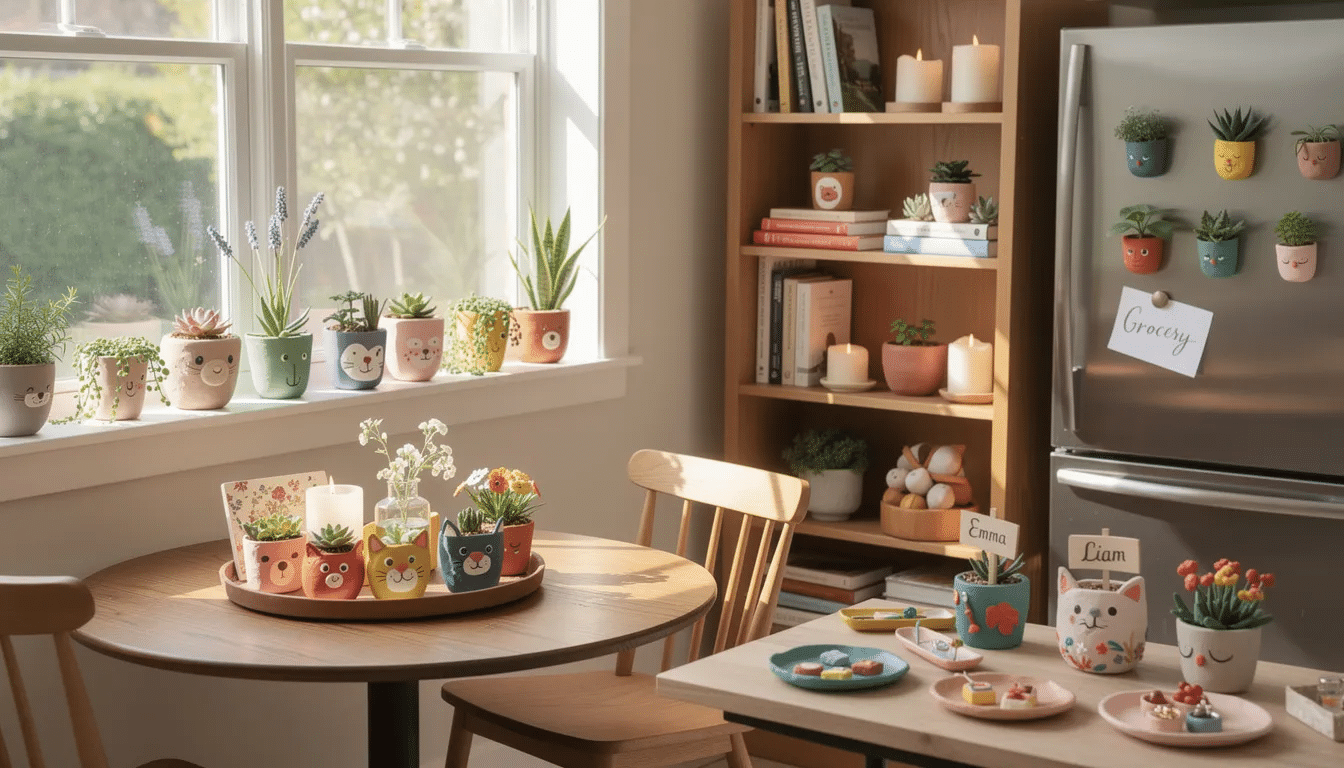
Mini air dry clay planters can transform from simple craft projects into intentional decor pieces, just like many of the cute craft ideas for a fun and creative day you can mix into your decor. Group them into sets for impact, or use individual planters as charming accents throughout your home—in your backyard sunroom, home office, kitchen, or kids’ room.
- Display ideas: Arrange a row of matching planters along a windowsill for a cohesive look. Create a cluster on a small tray as a living centerpiece for your table. Mix mini planters on a bookshelf among books and candles for an eclectic, collected feel.
- Creative variations: Glue small magnets to the back to create fridge planters. Use them as place-card holders for dinner parties by writing names directly on the pots. Package mini planters with tiny succulents as wedding favors or thoughtful gifts that guests can take home.
- Seasonal themes: Paint soft pastels for spring 2026, bold color-blocked designs for summer, or muted terra cotta–inspired tones for cozy autumn decor. Holiday-themed face planters make fun gifts that spread cheer.
- Use your excess clay: Don’t let leftover clay go to waste. Roll out matching accessories like tiny trinket dishes, ring holders, or catchalls that coordinate with your mini planter set. These combinations make impressive handmade gifts.
- Inspired by life around you: Look to your backyard garden, favorite flowers, or beloved pets for character planter ideas. The possibilities expand as your confidence grows with each project.
Whether you’re a complete beginner or looking for a new creative outlet, mini air dry clay planters offer a satisfying, accessible craft that results in genuinely useful, genuinely cute objects. Start with one simple pinch pot this weekend, experiment with texture and paint, and see where your creativity leads. These small creations have a way of multiplying—before you know it, you’ll have a whole collection ready to fill every sunny spot in your space or wrap up as heartfelt, handmade gifts.