

Key Takeways
- A toddler nature scavenger hunt is a low-pressure outdoor scavenger hunt where little ones search, point, touch, or collect safe natural objects.
- Keep the hunt short: 5 to 7 items and 10–15 minutes is usually enough for toddlers.
- Use pictures, real objects, or simple clues instead of written lists.
- The best ideas work in a backyard, garden, neighborhood, beach, or local park.
- End with sorting, crafts, or a nature tray to stretch the learning.
Introduction: What Is a Toddler Nature Scavenger Hunt?
A nature scavenger hunt is a simple scavenger hunt for kids where very young children look for easy-to-spot nature items like leaves, stones, flowers, sticks, clouds, or bugs. It is not a race. For toddlers, the goal is to explore, notice, name, and enjoy the outdoors with adults close by.
Nature scavenger hunts can happen in a garden, on a short neighborhood walk, in the yard, at the park, or anywhere your family can safely head outdoors for 10–30 minutes. Nature scavenger hunts encourage children to connect with the natural world in an active, hands-on way, fostering observation skills and curiosity.
This easy outdoor scavenger hunt is also a great activity for language, gross motor play, and the senses. Participating in nature scavenger hunts can help children develop cognitive and physical skills, as they engage with their surroundings and experience the joy of discovery firsthand. These hunts provide an opportunity for children to learn about ecosystems and biodiversity while enjoying time outdoors, which can reduce stress and promote teamwork.
- How to Make a Nature Scavenger Hunt Toddler-Friendly
- Easy Outdoor Nature Scavenger Hunt Ideas for Toddlers
- Garden Scavenger Hunt Just for Toddlers
- Screen-Free and Printable Nature Scavenger Hunts
- Making Your Toddler Nature Scavenger Hunt Safe and Stress-Free
- Extending the Fun: After-the-Hunt Activities
- FAQ: Nature Scavenger Hunts for Toddlers
- What age can my child start doing a nature scavenger hunt?
- How do I run a nature scavenger hunt with a toddler who can’t read yet?
- What if my toddler just wants to pick up everything or wander off?
- Can I do a nature scavenger hunt indoors on a rainy day?
- How often can we repeat the same outdoor scavenger hunt without kids getting bored?
How to Make a Nature Scavenger Hunt Toddler-Friendly
Toddlers need visual, hands-on, very simple clues. Skip riddles and long checklists. Successful hunts for toddlers rely on simple visual cues, short lists, and physical containment, such as a fenced backyard, stroller-friendly path, or small garden.
Here are the main rules:
- Use illustrated printables, drawings, or real-world examples rather than just plain text for toddlers.
- Limit your checklist to 5 to 8 total items to accommodate toddler attention spans.
- Toddlers have shorter attention spans, so a hunt with 5 to 7 items is usually sufficient for engagement.
- Choose obvious objects: a red flower, a rough tree trunk, a smooth stone, a yellow leaf, or something that smells nice.
- Allow pointing instead of collecting, especially for bugs, mushrooms, flowers in public spaces, or fragile plants.
- Keep tasks highly interactive to build early vocabulary and keep toddlers engaged.
- Scavenger hunts should include simple descriptions for found items to build vocabulary: “soft petal,” “brown stick,” “tall tree,” or “round rock.”
Toddlers learn heavily through touch and should focus on how items feel instead of what they are. That makes a sensory outdoor nature scavenger hunt especially useful. Nature scavenger hunts for toddlers must focus on basic sensory, color, and texture concepts.
For younger children around 18–24 months, remove tiny or hard-to-identify objects like ants. For preschoolers and nearly 4-year-olds, add trickier finds like a clover leaf, feather, acorns, or different shapes in leaves. These scavenger hunts can be tailored to different age groups, making them suitable for toddlers, preschoolers, and older children by adjusting the complexity of the items to find, and they can complement engaging kindergarten classroom activities and outdoor learning.
Easy Outdoor Nature Scavenger Hunt Ideas for Toddlers
Here are five outdoor scavenger hunt ideas you can use today. Outdoor scavenger hunts can be designed for individuals or groups and are a fun way for children to explore nature and learn about their environment.
Idea 1 – Backyard or Garden Scavenger Hunt
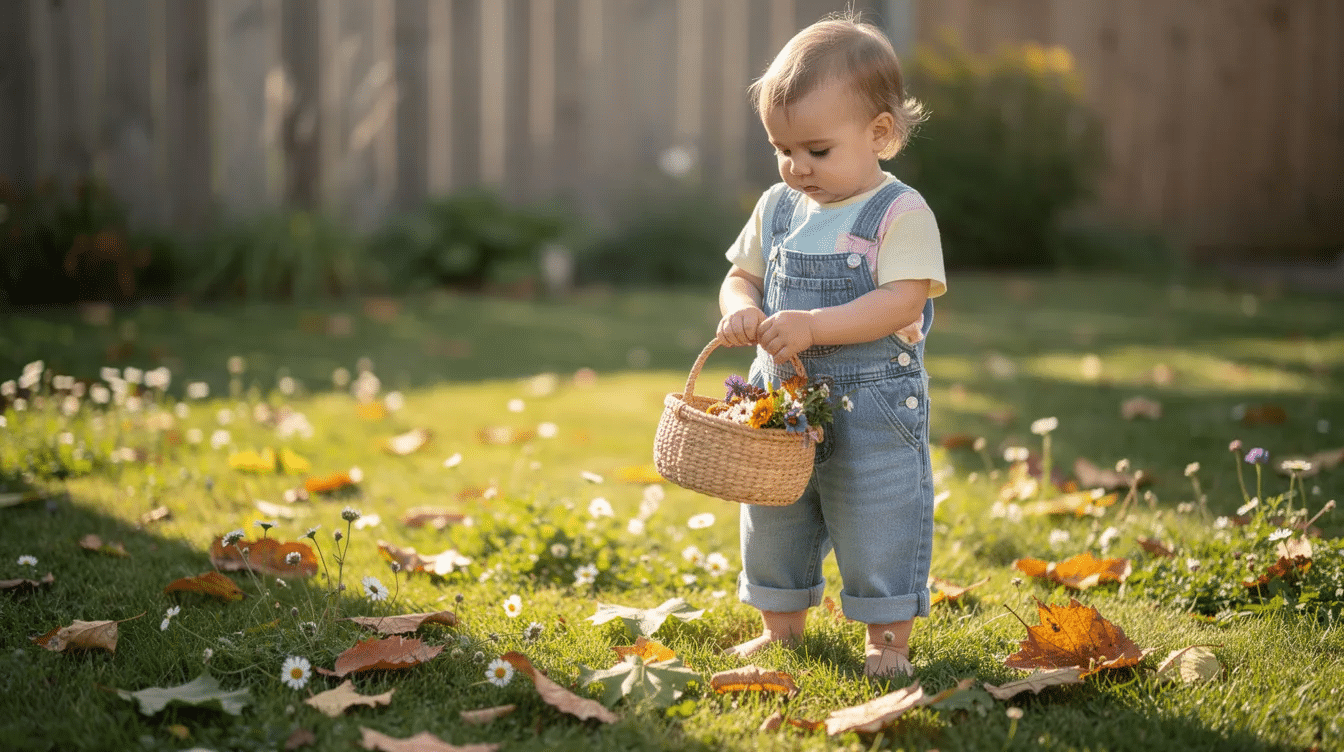
This nature scavenger hunt idea is super easy because most items are already close to home. Ask toddlers to find a green leaf, brown stick, flower pot, worm, smooth rock, or fallen petal. If you decided to collect treasures, use a small bucket and only gather safe, non-living objects.
A backyard hunt works well in summer, spring, or fall. In winter, swap flowers for bark, pinecones, or footprints.
Idea 2 – Neighborhood Walk Hunt
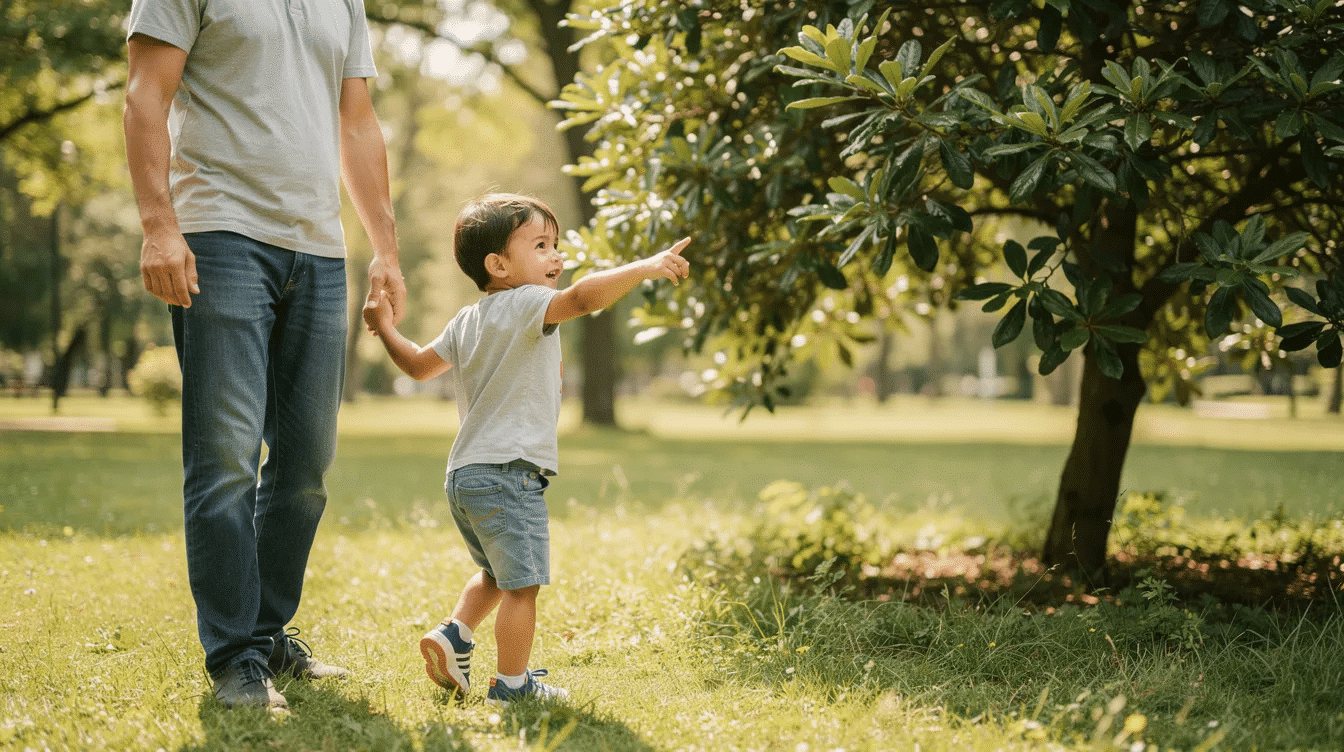
A neighborhood walk makes spending time outside feel like an adventure. From the sidewalk, kids find clouds, a bird, a parked bicycle, a puddle, a dog on a leash, a mailbox with a number, or a big tree.
This is a fun way to mix nature with everyday observation. It also works well with friends or family participants because adults can each help one child identify objects safely.
Idea 3 – Park or Playground Nature Scavenger
At a local park, look for pinecones, long grass, tree bark, dandelions, squirrels, birds’ nests from a distance, feathers, and various types of leaves. A nature scavenger hunt can include searching for specific natural items like acorns, feathers, and various types of leaves, making it a versatile activity for young children.
Use “look, don’t touch” for nests and animals. Research on outdoor play spaces shows that nature-rich environments with loose natural elements support exploratory play and physical activity in young kids, according to a review published in the International Journal of Environmental Research and Public Health.
Idea 4 – Color Hunt in Nature
A color hunt is a perfect activity for toddlers learning color words. Search for something yellow, red, brown, green, blue, or white. Examples include a yellow flower, red leaf, brown dirt, green grass, blue sky, or white cloud.
This simple hunt encourages creative thinking because children learn that colors can appear in many places, not just on toys.
Idea 5 – Texture Hunt
For a texture hunt, ask children to find something soft, rough, smooth, crunchy, wet, or bumpy. Try moss, petals, bark, pebbles, dry leaves, mud, or shells if you are near the beach.
Nature scavenger hunts can be tailored to different sensory experiences, incorporating touch, sound, and smell, which enhances children’s engagement with their environment. Nature scavenger hunts can incorporate various sensory elements, allowing children to engage with their surroundings through sight, sound, touch, and smell.
Garden Scavenger Hunt Just for Toddlers
A garden scavenger hunt is especially good for toddlers because the location is small, familiar, and easier to supervise. Invite your child to “help the nature scavenger find” each object.
Try these garden items for ages 2–4:
- Flower bud
- Watering can
- Bee or butterfly seen from afar
- Vegetable leaf, such as tomato or lettuce
- Tiny stone
- Twig shaped like a “Y”
- Clover
- June ladybugs, if they are common where you live
Create a short route around the garden beds and lawn. Give your child a basket, bucket, or paper bag for safe treasures like fallen leaves, petals, and pinecones. Leave living creatures where they are.
To make it a game, ask, “Can we find 3 yellow flowers?” or “Which leaf is biggest?” This adds counting, comparison, and observation without making the hunt stressful.
Screen-Free and Printable Nature Scavenger Hunts
You can run an outdoor nature scavenger hunt with or without paper. A free printable nature scavenger hunt for kids is usually a one-page PDF with big pictures of a tree, bird, leaf, rock, flower, cloud, stick, and bug. A scavenger hunt checklist should comprise drawings or cut-out pictures of 5 to 8 obvious items.
Older toddlers can carry the printable on a clipboard and tick or color each picture. Younger toddlers can have adults or siblings hold the sheet and point to pictures. Using a nature sensory card can help toddlers and preschoolers identify what to look for during a scavenger hunt, making the activity more accessible for pre-readers.
Parents can create a portable reference board for sensory items. Add photos or pictures for “soft,” “rough,” “smooth,” “loud,” and “nice smell,” then print or laminate it for repeat use. If you like saving inspiration on Pinterest, keep a folder of printables and outdoor scavenger hunt ideas you can adapt by season.
No printer? Use verbal clues, draw quick icons, or place real examples on a picnic blanket before you search.
Making Your Toddler Nature Scavenger Hunt Safe and Stress-Free
Safety matters more than finishing the hunt. Stay close, choose flat routes, and use contained places like a fenced backyard, community garden path, or short loop in a local park.
Avoid poisonous plants and unknown mushrooms. Common garden plants such as foxglove can be unsafe for children, and the Children’s Hospital of Philadelphia recommends knowing what grows in your garden for child safety: CHOP plant safety guidance. Teach “look, don’t touch” for insects, spiders, bees, and public flowers.
Keep it short. Around 10 minutes may be enough for 18–24 months, while 3–4 year olds may enjoy 15–25 minutes. Attention span guidance from pediatric sources such as Happiest Baby supports keeping toddler activities brief and engaging.
Dress for the environment: sun hats in July, waterproof boots in October, closed shoes for rocky paths, and layers in cool weather. When the hunt ends, transition with snack time, a nature book, or laying out found objects together.
Extending the Fun: After-the-Hunt Activities
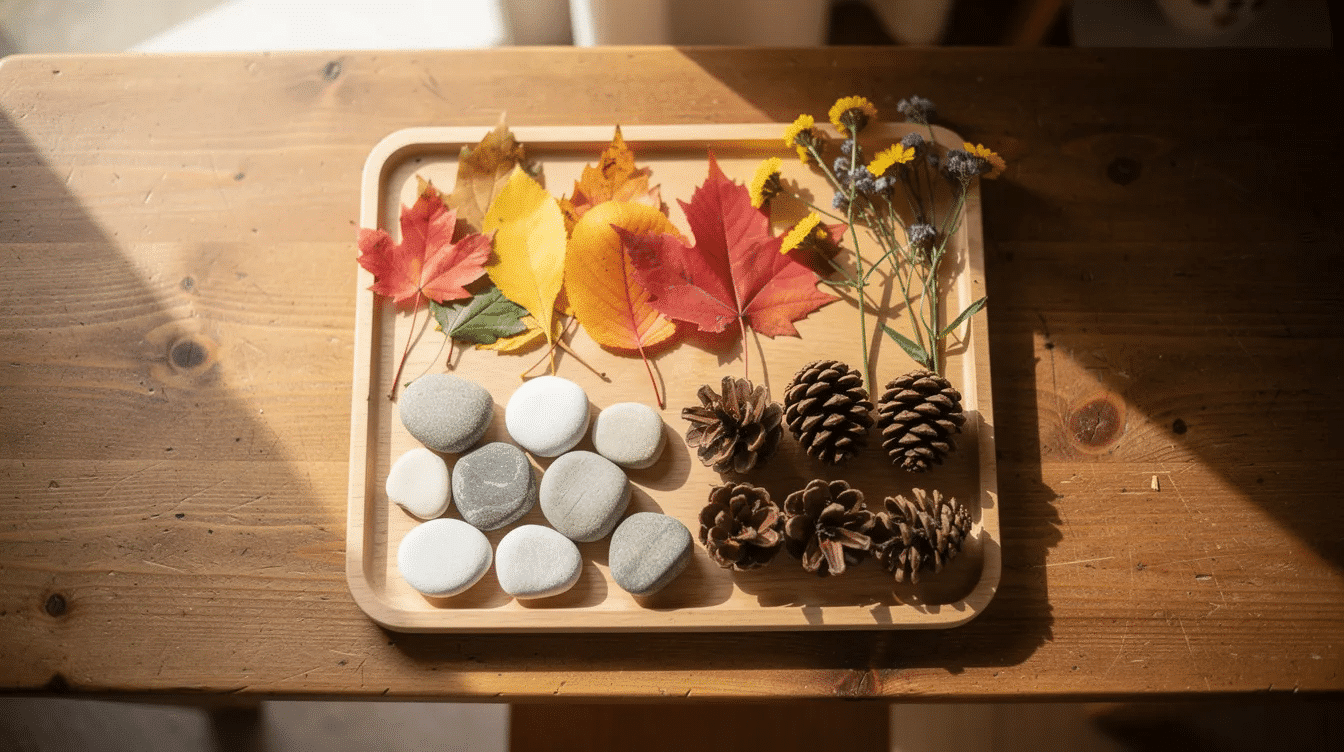
The learning does not have to stop outdoors. A sorting phase can be added at the end of a scavenger hunt to enhance learning.
Try these simple follow-ups:
- Sort natural objects by color, size, texture, or shapes.
- Count sticks, stones, leaves, or flowers.
- Line up treasures from smallest to largest.
- Create crafts, such as a leaf tree collage, stick crafts inspired by nature walks, nature crown, or crayon leaf rubbing.
- Make a nature shelf or treasure chest craft so toddlers can revisit objects during the week.
- Pair the hunt with picture books about bugs, trees, gardens, or seasons.
FAQ: Nature Scavenger Hunts for Toddlers
What age can my child start doing a nature scavenger hunt?
Many toddlers can start around 18 months with adult-led prompts like “Can you find a leaf?” or “Point to a bird.” Pre-verbal toddlers can still participate by pointing, touching safe objects, and listening as adults name what they discover.
How do I run a nature scavenger hunt with a toddler who can’t read yet?
Use pictures, drawings, cut-out photos, or real objects as clues. Model the search side by side: “Let’s find something round,” then show a stone or seed pod.
What if my toddler just wants to pick up everything or wander off?
That is normal toddler play. Treat the scavenger hunt as a loose guide, not a checklist to complete. Set boundaries, such as staying on the path or inside the garden fence, and give your child a small container for a limited number of safe treasures.
Can I do a nature scavenger hunt indoors on a rainy day?
Yes. Create an indoor nature table with shells, pinecones, leaves, rocks, or seed pods, then hide them around one room. You can also do a window hunt for birds, raindrops, clouds, trees, or moving branches.
How often can we repeat the same outdoor scavenger hunt without kids getting bored?
Toddlers often enjoy repetition. Repeat the same garden scavenger hunt weekly, then change 2–3 items by season, such as swapping “yellow leaf” for “acorn” in September. Start with five pictures, a basket, and ten minutes-the best nature adventures are usually the simplest.