

Quiet time activities for toddlers are calm, low-stimulation ways for little ones to rest, reset, and practice independent play without needing a screen. They can happen after nap time, during an afternoon lull, or anytime your child needs a break but may not fall asleep.
The best quiet activities do more than keep kids busy. Research on quiet free play has linked calm, child-led activities such as books, puzzles, drawing, and building with later self-regulation skills. Early childhood movement guidelines also encourage reading and storytelling over screen time during sedentary periods.
In this post, you’ll find a few activities that are simple to set up, developmentally useful, and realistic for a busy house. The goal is not to force an hour of silence on day one. It is to start small, create a predictable rest time rhythm, and help toddlers spend quiet time safely and independently.

How We Chose the Best Quiet Time Activities
The best quiet time activities for toddlers were chosen using practical criteria: age fit, independent play potential, developmental value, setup time, mess level, engagement length, safety, and cost.
For toddlers around 18 months to 3 years, activities should be simple enough to avoid frustration but interesting enough to hold attention. Activities that foster independent play focus on gentle, low-stimulation tasks like drawing, sticker play, or listening to audiobooks.
Engaging quiet time activities for toddlers include sensory bins, magnetic tiles, sticker books, and simple puzzles. Maintaining the same quiet time toys in a designated bin can help provide consistency. Many parents use a quiet time bin, busy bags, or other no-mess activities for 2 year olds so the child knows these toys are only for quiet time.
Starting with shorter quiet time intervals, such as 10 to 30 minutes, and gradually increasing the duration as the child’s independence grows can help establish a successful routine. Using a visual timer or an ok-to-wake clock can help children understand when quiet time starts and ends, reducing anxiety about the duration. Using a visual timer or an ok-to-wake clock can help toddlers understand when quiet time begins and ends, reducing anxiety about the duration of quiet time.
Establishing clear rules and consistency around quiet time helps children know what to expect, making the transition from nap time to quiet time smoother. A video monitor can be an effective tool for supervising toddlers during quiet time, allowing parents to ensure safety without interrupting their child’s focus on solo play. Dim lighting and a calm environment should be maintained to avoid overstimulation during quiet times.
Top 7 Quiet Time Activities for Toddlers
1. Sensory Bins
Sensory bins are containers filled with safe materials toddlers can scoop, pour, sort, and explore. Sensory bins filled with dry rice, pasta, kinetic sand, or lavender-scented salt encourage calm, tactile exploration. Sensory bins filled with items like shredded paper or colored rice can engage toddlers during quiet time, allowing them to explore and play independently.
Why It Stands Out: Tactile sensory play can keep toddlers focused for a surprisingly long time while supporting fine motor skills.
Best For: Toddlers who love hands-on exploration and parents who can handle contained mess.
Key Strengths:
- Easy to fill with pom poms, scoops, cups, pasta, or shredded paper
- Builds fine motor control through pouring, pinching, and sorting
- Supports counting, color sorting, and early problem-solving
Possible Limitations: Sensory bins need supervision if materials are small, and cleanup can take a small amount of effort.
2. Magnetic Play
Magnetic tiles, letters, numbers, and boards are excellent independent activities because toddlers can stick, pull, stack, and rearrange pieces quietly.
Why It Stands Out: Magnetic play is super fun, often mess free, and fascinating for toddlers who like cause and effect.
Best For: Parents needing hands-off quiet time and toddlers learning letters, numbers, shapes, or simple patterns.
Key Strengths:
- Portable and easy to store
- Helps with early school readiness through letters and numbers
- Encourages imaginative play, such as building houses, towers, or train tracks
Possible Limitations: Small magnets can be dangerous, so choose toddler-safe pieces and check in regularly.
3. Sticker Activities
Sticker books, dot stickers, and reusable sticker scenes are great ideas for fine motor practice. Peeling and placing stickers strengthens small hand muscles.
Why It Stands Out: Stickers have minimal setup and kids love decorating pages, animals, cars, or pretend scenes.
Best For: Toddlers developing fine motor skills and children who enjoy creating.
Key Strengths:
- Affordable and easy to rotate every few weeks
- Encourages creative choices
- Helps with hand-eye coordination and fine motor precision
Possible Limitations: Younger toddlers may need help peeling stickers at first. Keep sticker play on trays, paper, or coloring books to protect furniture.
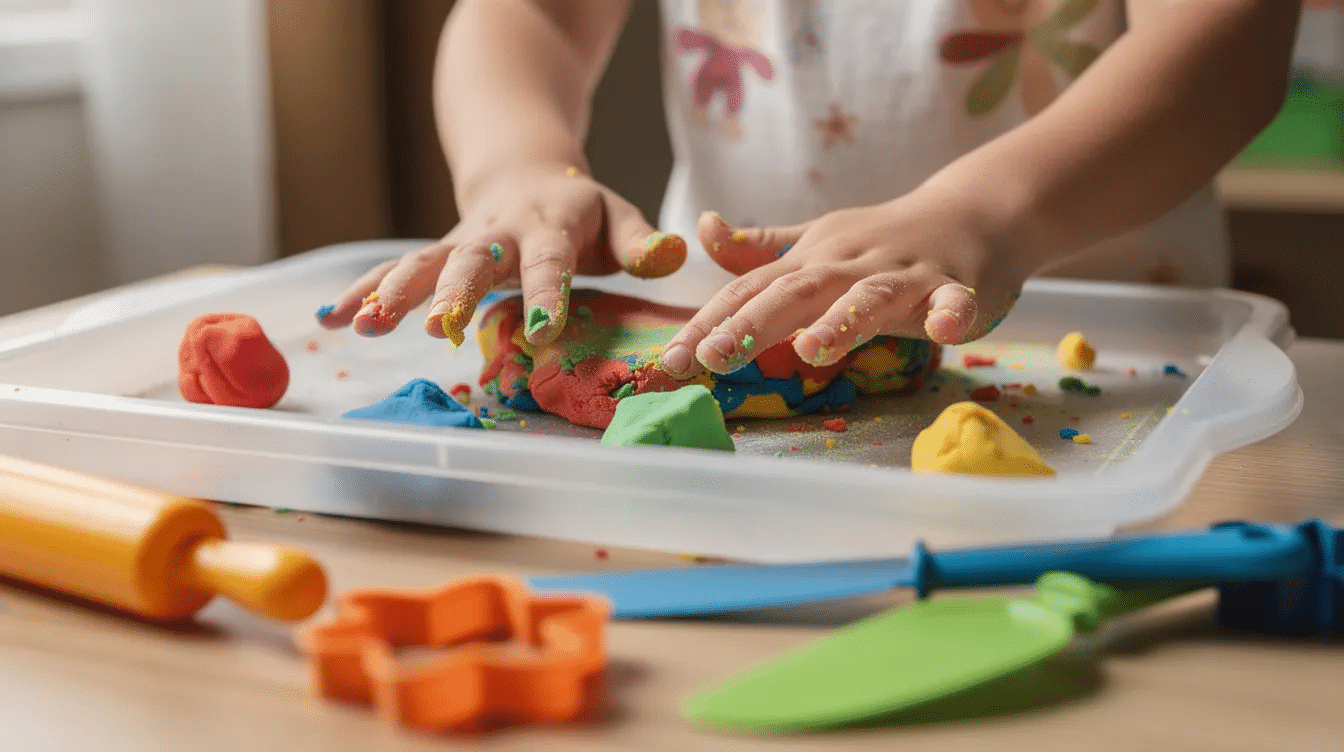
4. Playdough Exploration
Playdough is one of the most flexible quiet time activities because toddlers can squish, roll, cut, stamp, and create at their own level. Studies on preschoolers have found that playdough activities can improve fine motor skill performance, especially hand strength and coordination, much like art activities that build fine motor skills.
Why It Stands Out: It supports creativity, sensory needs, and fine motor development all at once.
Best For: Creative toddlers and parents who are comfortable with contained mess.
Key Strengths:
- Strengthens hands, wrists, and fingers
- Works well with cookie cutters, rollers, or popsicle sticks
- Encourages calm, open-ended play
Possible Limitations: Playdough dries out, colors get mixed, and tiny bits can spread around the room. Art projects, such as using do-a-dot markers or creating with playdough, can be effective quiet time activities that encourage creativity and independent play.
5. Simple Puzzles
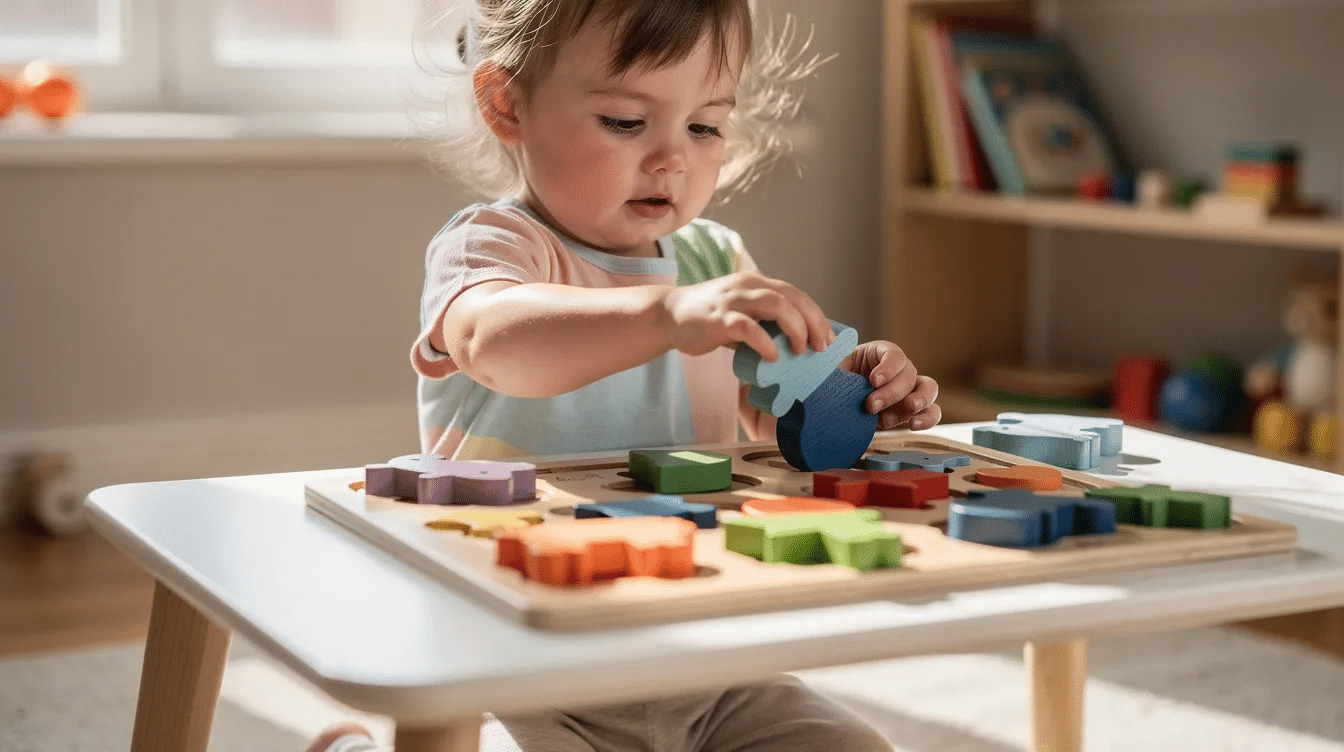
Knob puzzles, chunky shape puzzles, and two- or three-piece puzzles give toddlers a just-right challenge, and planning how to store puzzles with smart puzzle storage ideas can make rotating quiet time activities much easier.
Why It Stands Out: Puzzles balance effort and success, which helps toddlers practice patience.
Best For: Toddlers ready for problem-solving and parents who want quiet activities with a clear learning benefit.
Key Strengths:
- Builds spatial awareness and matching skills
- Encourages persistence
- Gives a satisfying sense of completion
Possible Limitations: If a puzzle is too hard, a toddler may have a hard time and give up quickly. Limit options to only 2-3 choices can prevent overwhelm for toddlers during quiet time.
6. Threading and Sorting Activities
Threading and sorting activities are simple, focused, and excellent for fine motor skills. Threading large beads, pasta, or straws onto pipe cleaners can be a quiet activity for toddlers, just like creating simple nature stick crafts for kids after a walk outside.
Why It Stands Out: It combines concentration, coordination, patterning, and early math in one activity.
Best For: Toddlers working on precision, sorting, and pattern recognition.
Key Strengths:
- Supports bilateral coordination
- Teaches colors, size, and counting
- Works with pipe cleaners, large beads, pom poms, cups, or muffin tins
Possible Limitations: Small items can be choking hazards. Activities like button trees, popsicle sticks with clothespins, and busy bags can help toddlers develop fine motor skills during quiet time, but they should match your child’s age and safety needs.
7. Audio Books and Music
Audio books, calm stories, and soft music can help children rest without needing a screen. Calm music or audiobooks can serve as a helpful tool during quiet time, providing a soothing background that can help children relax and pass the time while still leaving room for imaginative activities that inspire creative thinking.
Why It Stands Out: It requires almost no setup and supports language development.
Best For: Parents needing truly hands-off time and toddlers who enjoy stories.
Key Strengths:
- Builds listening comprehension and vocabulary
- Helps toddlers relax before sleep or after a busy morning
- Pairs well with a book basket, dolls, felt boards, or quiet coloring
Possible Limitations: Audio is more powerful when paired with interaction. Research comparing shared reading with screen viewing found that storybook reading led to richer parent language and more new words for toddlers. A special book basket can help maintain a dedicated collection of board books or picture books for quiet time. If possible, read books together at other points in the day, too.
Quick Comparison of the Best Quiet Time Activities
Here is a quick way to scan all the great ideas:
Activity | Best Use |
|---|---|
Sensory Bins | Best for hands-on learners who love exploration |
Magnetic Play | Best for completely independent play |
Sticker Activities | Best for fine motor skill development |
Playdough | Best for creative expression and sensory needs |
Simple Puzzles | Best for cognitive challenge and problem-solving |
Threading Activities | Best for precision and concentration building |
Audio Content | Best for language development and truly passive quiet time |
Calm and soothing quiet time activities for toddlers include looking at books, simple puzzles, sensory bins, stacking blocks, and playing with soft dolls or felt boards. Simple felt shapes and scenes allow for creative, silent play, and you can even make your own fuzzy felt activity board at home. A teaching mama might also rotate favorite things into quiet boxes so the routine stays familiar but not boring. |
How to Choose the Right Quiet Time Activity
Choose Based on Your Toddler’s Developmental Stage
An 18-month-old may do better with board books, stacking blocks, soft dolls, chunky puzzles, and large magnetic pieces. A 3-year-old may be ready for threading, simple patterns, sticker scenes, and longer stories.
Preschoolers can often play quietly for longer, but toddlers still need practice. If your daughter or son is new to quiet time, expect short bursts at first. The idea is to build the skill, not demand perfect silence.
Choose Based on Available Time and Energy
If you are exhausted, choose mess free options like audio books, magnetic tiles, or coloring books. If you have more energy, fill a sensory bin, try one of your favorite DIY activity kits for creative projects, or set out playdough on a tray.
For a busy family, it makes sense to prep a few options in advance. Keep them in the same place, use the same quiet time rules, and avoid offering too much. Two or three choices usually work better than a room full of toys.
Choose Based on Learning Goals
If fine motor skills are the focus, try stickers, threading, button trees, or playdough. If language is the priority, choose audio books, picture books, and simple retelling games. If your toddler needs calming input, use sensory bins, felt boards, soft music, or gentle imaginative play, and as they grow, you can introduce engaging group activities for 5 year olds to build social and creative skills.
This is also where free play matters. Toddlers learn when they choose, repeat, explore, and solve small problems independently.
Which Activity Is Best for You?
Choose sensory bins if your toddler needs tactile stimulation and you can handle contained mess.
Choose magnetic play if you need completely hands-off quiet time and want toys your child can use independently.
Choose audio content if your priority is language development with zero setup.
Choose sticker activities if fine motor skills are your main developmental focus.
Choose playdough if your toddler is creative, sensory-seeking, and enjoys open-ended play.
Choose puzzles if your toddler likes a challenge and enjoys figuring out where things go.
Choose threading and sorting if you want fun ways to practice precision, patience, and counting.
Final Thoughts
The best quiet time activities are the ones your toddlers will actually use quietly. You do not need a perfect system, expensive toys, or a school-style plan. You need a calm space, a few activities, clear quiet time rules, and consistency.
If your child resists at first, do not feel guilty. Start with 10 minutes, check in, and try again the next day. Over time, quiet time can become one of the most helpful rhythms in your afternoon: a chance for little ones to rest, for parents to breathe, and for the whole family to reset.