
Simple science experiments for toddlers at home work because toddlers learn best with their hands, eyes, ears, and sometimes their noses. During the preschool years, science is less about formal lessons and more about helping little scientists watch, pour, mix, test, and explore the world in a safe, engaging way.
These easy science experiments use household ingredients and common items, so you do not need a lab kit. Simple and safe science activities for young children include sink or float water tests and magic milk painting. Easy science experiments for toddlers often use common household items to explore sensory experiences and simple reactions. These activities promote curiosity and foundational scientific concepts through play.
Adult supervision is required for every experiment, especially around water, vinegar, baking soda, ice cubes, small objects, and anything a child may try to taste. Avoid choking hazards, keep materials non-toxic, and use trays, paper towels, or a shallow dish to control spills.
- How We Chose the Best Science Experiments for Toddlers
- Top 7 Simple Science Experiments for Toddlers at Home
- 1. Magic Milk Color Dancing
- Why It Stands Out
- Best For
- Key Strengths
- Possible Limitations
- 2. Baking Soda and Vinegar Volcano
- Why It Stands Out
- Best For
- Key Strengths
- Possible Limitations
- 3. Rainbow Water Walking
- Why It Stands Out
- Best For
- Key Strengths
- Possible Limitations
- 4. Dancing Raisins
- Why It Stands Out
- Best For
- Key Strengths
- Possible Limitations
- 5. Oobleck (Liquid or Solid?)
- Why It Stands Out
- Best For
- Key Strengths
- Possible Limitations
- 6. Floating and Sinking Discovery
- Why It Stands Out
- Best For
- Key Strengths
- Possible Limitations
- 7. Ice Rescue Mission
- Why It Stands Out
- Best For
- Key Strengths
- Possible Limitations
- Quick Comparison of the Best Science Experiments
- How to Choose the Right Science Experiment
- Which Experiment Is Best for You?
- Final Thoughts
How We Chose the Best Science Experiments for Toddlers
We selected these science experiments using six practical standards:
- Safety: non-toxic materials, no sharp tools, and no unsupervised various small objects.
- Simplicity: simple ingredients such as milk, food coloring, dish soap, baking soda, vinegar, salt, and warm water.
- Visual impact: colors swirl, bubbles rise, raisins dance, and ice melts quickly enough to hold attention.
- Learning value: each hands on activity introduces cause and effect, density, buoyancy, surface tension, or chemical reactions.
- Mess factor: the best ideas can be done in a muffin tin, clear cups, a tray, bathtub, or outdoors.
- Duration: toddlers often focus for only a few minutes on structured tasks, so fast feedback matters. Early childhood guidance also supports inquiry through looking, touching, and trying things repeatedly (ECE Resource Hub).
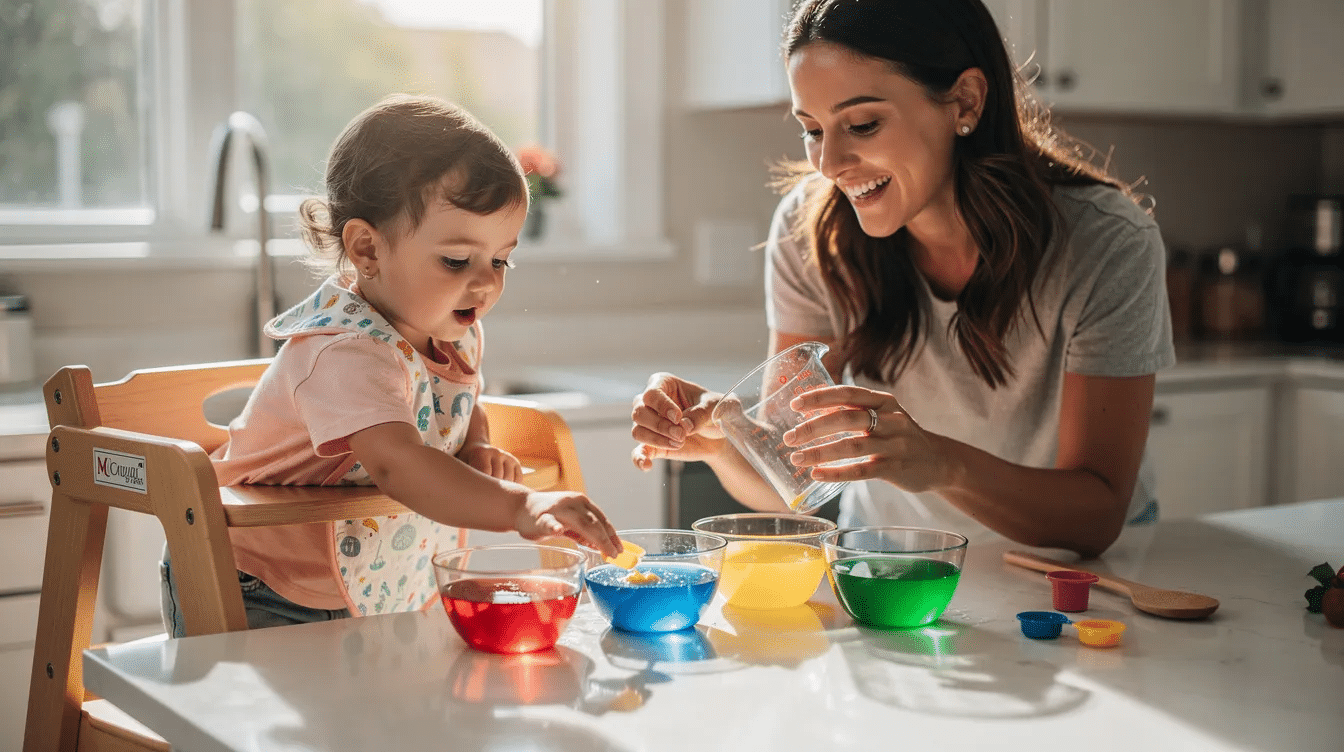
Top 7 Simple Science Experiments for Toddlers at Home
1. Magic Milk Color Dancing
Pour whole milk into a shallow dish. Add a few drops of food coloring in different colors. Dip a cotton swab into dish soap, then touch it to the milk and watch the colors swirl.
The Magic Milk experiment involves adding food coloring to milk and using dish soap to create swirling colors, demonstrating surface tension and chemical interactions. The concept of surface tension can be demonstrated through the Magic Milk experiment, where soap disrupts the surface tension of milk, causing food coloring to swirl and mix. The Magic Milk experiment illustrates how dish soap disrupts the surface tension of milk, causing food coloring to swirl and mix, showcasing a chemical reaction.
Why It Stands Out
Magic milk gives instant results. A couple drops of color can create a bright, moving pattern that feels like art and science at the same time.
Best For
Visual learners, color-loving children, and toddlers who enjoy short, repeatable science activities, as well as kids who get excited about colorful rainbow crafts and projects.
Key Strengths
- Uses safe household ingredients.
- Produces immediate, dramatic visual results.
- Teaches surface tension and chemical interactions in an easy science format.
Possible Limitations
Whole milk works best because of its fat content. It can also stain surfaces if food coloring spills.
2. Baking Soda and Vinegar Volcano
Place baking soda in a cup, bowl, or small water bottle. Add vinegar and watch the fizzing eruption. For extra fun, add food coloring first.
The classic baking soda volcano experiment is a fun way to introduce toddlers to chemical reactions, as it creates an exciting fizzing eruption when vinegar is added to baking soda. The baking soda and vinegar reaction produces carbon dioxide gas, which can inflate a balloon, demonstrating a chemical reaction and gas expansion.
Why It Stands Out
It is loud, bubbly, fast, and repeatable. If you stretch a balloon over a bottle with baking soda and vinegar inside, the balloon inflates as gas forms.
Best For
Active toddlers who like dramatic reactions, outdoor play, and fun science experiments with big effects.
Key Strengths
- A classic experiment that never gets old.
- Can be repeated with different colors.
- Introduces chemical reactions with clear cause and effect.
Possible Limitations
Best done outside, in the bathtub, or on a tray. Measurements matter: too much liquid can overflow quickly.
3. Rainbow Water Walking
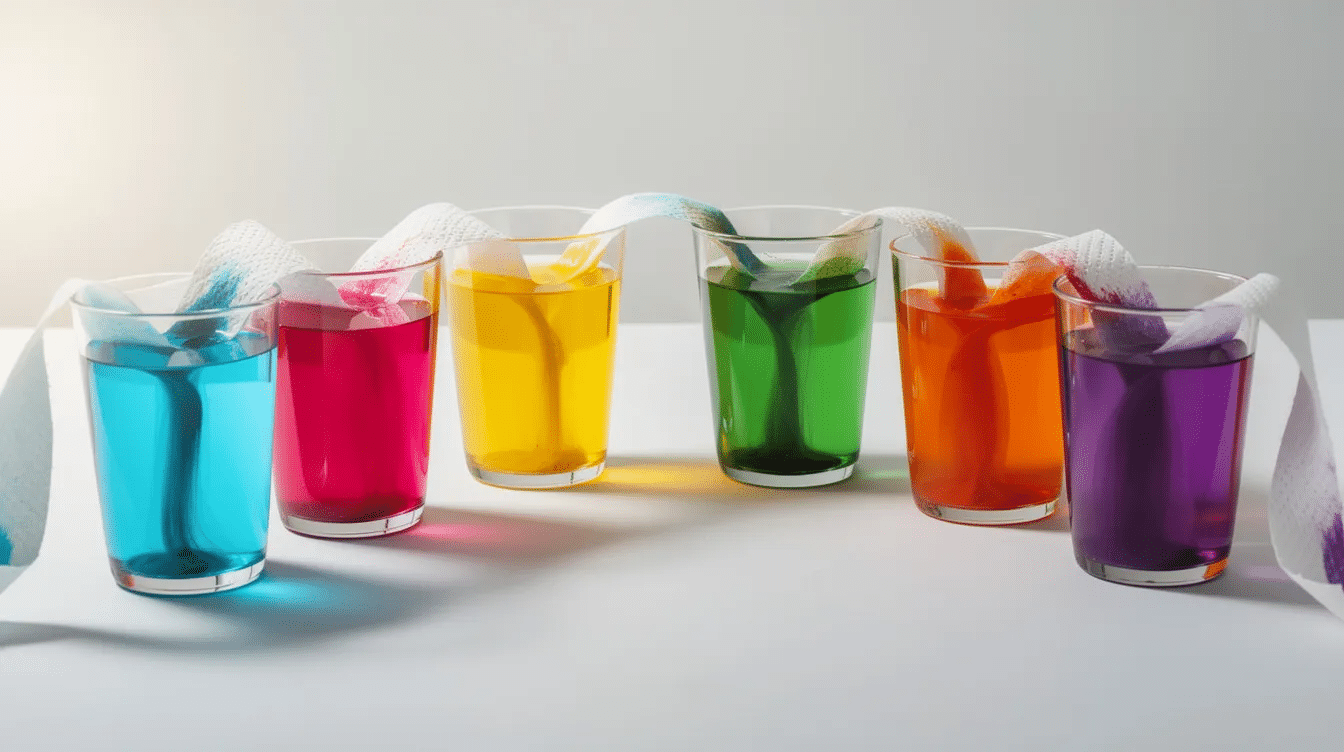
Fill clear cups with colored water using water and food coloring. Fold paper towels into strips and place each paper towel between cups so the ends touch the liquid.
The Crawling Rainbow experiment introduces children to capillary action and color mixing, as water travels up a paper towel, carrying colors along with it.
Why It Stands Out
It is slower than fizzing experiments, but the payoff is beautiful. Children can watch colored water “walk” from one glass to another and create new colors.
Best For
Patient toddlers, kids who love rainbows, and children who enjoy watching a process unfold.
Key Strengths
- Teaches color mixing and absorption.
- Uses minimal materials.
- Creates a pretty result you can leave out for observation.
Possible Limitations
It may take 20–60 minutes to see the full effect, so it works best when paired with another quick hands on activity.
4. Dancing Raisins
Fill a clear glass with sparkling water or carbonated soda. Drop in raisins and watch them rise and fall.
The dancing raisins experiment demonstrates buoyancy as raisins rise and fall in carbonated soda due to the bubbles attaching to them, illustrating the principles of density and gas behavior. The Dancing Raisins experiment uses carbonated soda to make raisins float and sink, allowing children to observe buoyancy and gas effects in a fun way. The Dancing Raisins experiment involves placing raisins in carbonated soda, where the bubbles attach to the raisins and lift them, creating a fun visual effect that teaches about buoyancy and gas.
Why It Stands Out
It looks silly, and toddlers love silly. The bubbles lift the raisins; when bubbles pop, the raisins sink again.
Best For
Toddlers who like movement, giggles, and simple cause-and-effect demonstrations.
Key Strengths
- Only two ingredients.
- Demonstrates buoyancy and gas bubbles.
- Easy to repeat with a fresh drink.
Possible Limitations
The effect slows as carbonation decreases. Raisins may be choking hazards, so supervise closely and discard after the experiment.
5. Oobleck (Liquid or Solid?)
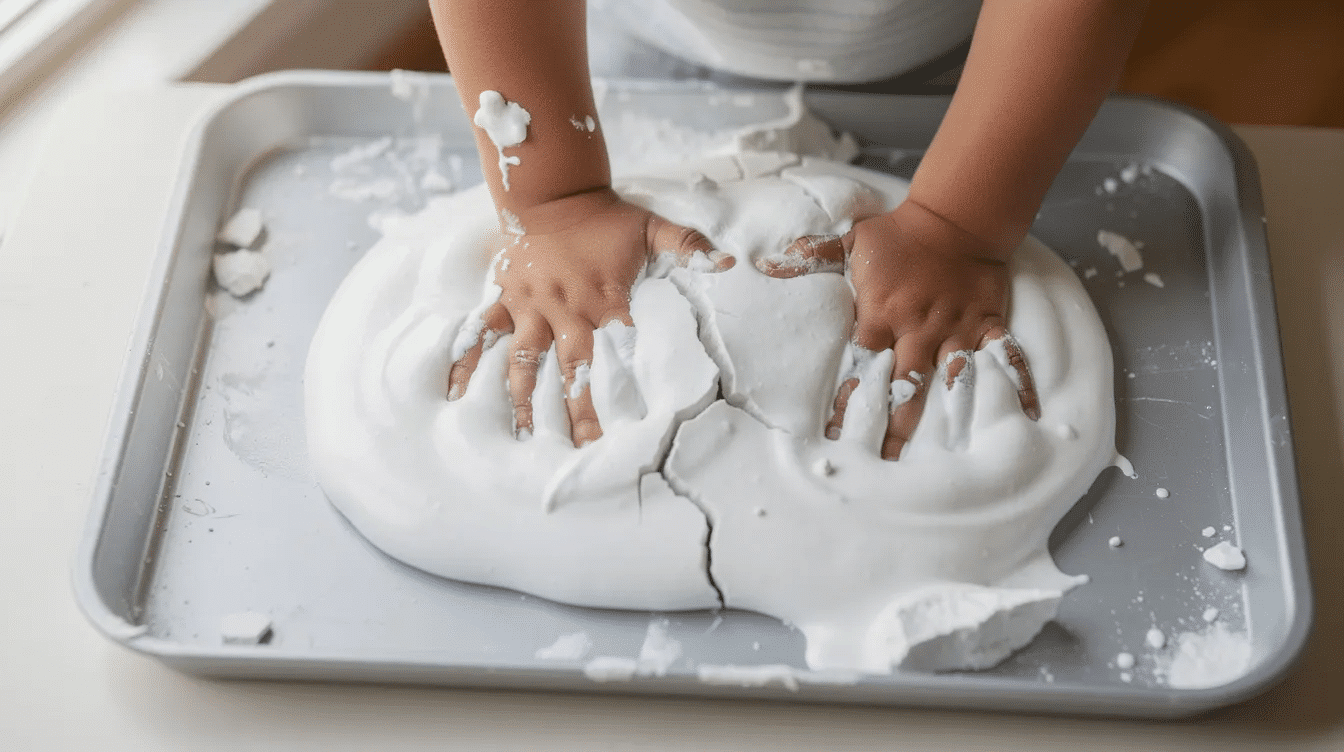
Mix cornstarch with water until it feels firm when pressed but runny when lifted. Let your toddler squeeze, tap, and scoop it.
Creating slime with household materials can help teach children about polymers, while oobleck introduces a related idea: some mixtures do not behave like normal liquid or solid materials.
Why It Stands Out
Oobleck feels impossible. It can drip like a liquid, then resist pressure like a solid.
Best For
Sensory-seeking toddlers who love texture, squishing, and messy fun science projects, or who enjoy kinetic sand sensory play.
Key Strengths
- Incredible sensory experience.
- Only two ingredients.
- Opens conversation about states of matter.
Possible Limitations
It is messy and can be hard to clean from fabric. Do not pour it down the drain; scrape it into the trash.
6. Floating and Sinking Discovery
Fill a bowl or bin with water. Gather various objects made from different materials, such as a spoon, cork, block, leaf, toy boat, and plastic lid. Ask your child to predict, then test.
The sink or float experiment introduces children to the concepts of buoyancy and density by testing various objects to see if they sink or float in water. The sink or float experiment teaches children about buoyancy and density by allowing them to predict whether various objects will sink or float in water.
Why It Stands Out
It naturally follows the scientific method: ask a question, make a guess, test, observe, and talk about what happened.
Best For
Curious toddlers who enjoy sorting, pouring, and making discoveries.
Key Strengths
- Uses objects found around the house.
- Builds observation skills and critical thinking.
- These experiments use household items to explore density, chemical reactions, and buoyancy.
Possible Limitations
Avoid small objects that fit in a toddler’s mouth. Expect wet sleeves, wet floors, and repeated requests to test “one more thing.”
7. Ice Rescue Mission
Freeze small washable toys in ice cubes or a muffin tin overnight. The next day, give your toddler warm water, salt, and a spoon or dropper to rescue them.
Why It Stands Out
It turns science into a story. Your child gets to create a rescue mission while learning that ice melts faster with warmth and salt.
Best For
Toddlers who like pretend play, problem-solving, and nature-themed activities on a sunny day.
Key Strengths
- Combines play with learning about states of matter.
- Can be repeated with different toys.
- Connects to bigger ideas like how water evaporates, freezes, melts, and returns in the water cycle.
Possible Limitations
It requires freezing time. Use towels nearby because cold water spreads quickly.
Quick Comparison of the Best Science Experiments
Experiment | Best For | Main Concept | Mess Level |
|---|---|---|---|
Magic Milk | Instant visual wow factor | surface tension | Low |
Baking Soda Volcano | Active, energetic toddlers | chemical reactions | Medium-high |
Rainbow Water Walking | Color-loving, patient children | capillary action, color mixing | Low |
Dancing Raisins | Giggles and cause-effect | buoyancy, gas behavior | Low |
Oobleck | Sensory seekers | states of matter | High |
Floating and Sinking | Prediction skills | density, buoyancy | Medium |
Ice Rescue | Storytelling with science | melting, temperature | Medium |
A bonus lava lamp experiment can be created by mixing vegetable oil and water, then adding an alka seltzer (Alka-Seltzer) tablet to create bubbles, illustrating density and gas expansion. The lava lamp experiment, which involves pouring vegetable oil into water and adding an effervescent tablet, visually demonstrates the principles of density and immiscibility of liquids. The Lava Lamp experiment can be created by pouring vegetable oil into water and adding an Alka-Seltzer tablet, which causes bubbles to form and rise, mimicking a lava lamp effect. |
How to Choose the Right Science Experiment
Choose Based on Your Toddler’s Attention Span
If your toddler has a short attention span, start with magic milk, dancing raisins, or baking soda and vinegar. If your child can watch longer processes, try Rainbow Water Walking or Ice Rescue.
Choose Based on Available Materials
For the simplest setup, choose dancing raisins, floating and sinking, or oobleck. If you have vegetable oil, a tablet, and a clear bottle, the lava lamp is another strong option. If you have celery or carnations, plant science experiments can demonstrate how plants absorb water using food coloring and celery or carnations.
Choose Based on Mess Tolerance
Low-mess choices include magic milk, Rainbow Water Walking, magnetic magic with large magnets and safe metal items, and dancing raisins. For days when you want to avoid cleanup altogether, you can also rotate in no-mess activities for 2 year olds. Messier choices include the volcano, oobleck, and Ice Rescue. If you want to explore air pressure, try squeezing an empty water bottle or placing paper over a glass of water with adult help.
Which Experiment Is Best for You?
Choose Magic Milk if you want immediate visual impact with minimal mess. Choose Baking Soda Volcano if your toddler loves dramatic reactions and you do not mind cleanup. Choose Rainbow Water Walking if your child enjoys slower, process-oriented activities. Choose Dancing Raisins if you want something simple that always works.
Choose Oobleck if your toddler loves sensory experiences. Choose Floating and Sinking if you want to encourage scientific thinking. Choose Ice Rescue if you want to combine storytelling with science. Choose a bonus lava lamp if your child loves bubbles, light, and watching blobs rise and fall.
Final Thoughts
The best simple science experiments for toddlers at home depend on your child’s interests, your available time, and the materials you already have. Introducing children to science does not require perfect results. It requires a safe space to explore, ask questions, and try again.
Start with one experiment this week, then let your toddler help choose the next generation of kitchen-table scientists activities. Keep it playful, keep it supervised, and let the fun lead the learning.