
So you’ve unboxed your new sewing machine and stitched your first wobbly seam—congratulations! Now comes the fun part: figuring out which accessories will actually help you create better projects without emptying your wallet. Whether you’re a complete beginner or returning to the craft after years away, the right sewing machine accessories transform frustrating sessions into genuinely enjoyable creative time. This guide walks you through everything from the bare essentials to smart upgrades, so you can build your sewing kit with confidence.
- Quick Start: The 10 Accessories You Should Buy With Your First Machine
- Understanding Sewing Machine Accessories (and Why They Matter)
- Essential Presser Feet Every Sewist Should Own
- Needles, Thread, Bobbins & Threading Helpers
- Cutting & Measuring Tools That Make Sewing Easier
- Pressing Essentials: Irons, Mats, and Tools for Crisp Seams
- Handy Extras & Maintenance Tools You’ll Be Glad You Bought
- Brand Compatibility & How to Choose the Right Accessories
- Smart Shopping Strategy: Building Your Accessory Kit Over Time
- FAQ: Common Questions About Sewing Machine Accessories
Quick Start: The 10 Accessories You Should Buy With Your First Machine
If you just purchased a machine in 2024 and want a concrete shopping list without wading through pages of information, this section is for you. These ten items cover the gaps left by most entry-level machines and set you up for success on your first real projects.
- Schmetz universal needles in size 80/12 (a pack of 5-10 covers most light to medium woven fabrics)
- Class 15 or L-style bobbins matched to your machine (grab at least 6-10 extras)
- 8” or 9” fabric shears by Fiskars or Gingher, reserved only for fabric
- Clover seam ripper with an ergonomic handle for comfortable unpicking
- Magnetic pin dish and glass-head pins or fine silk pins
- 18” x 24” self-healing cutting mat for rotary cutting and protecting your work surface
- 45mm rotary cutter with a safety lock mechanism
- Dritz sewing gauge or 6” seam gauge for checking hems and seam allowances
- A reliable steam iron with adjustable temperature settings
- Wool pressing mat (13” x 17” is a wonderful starting size) for crisp seams on any flat surface
Plan around $60–$120 in addition to your machine for these starter supplies, depending on brand choices and where you shop. Sales events can bring this total down significantly.
Understanding Sewing Machine Accessories (and Why They Matter)
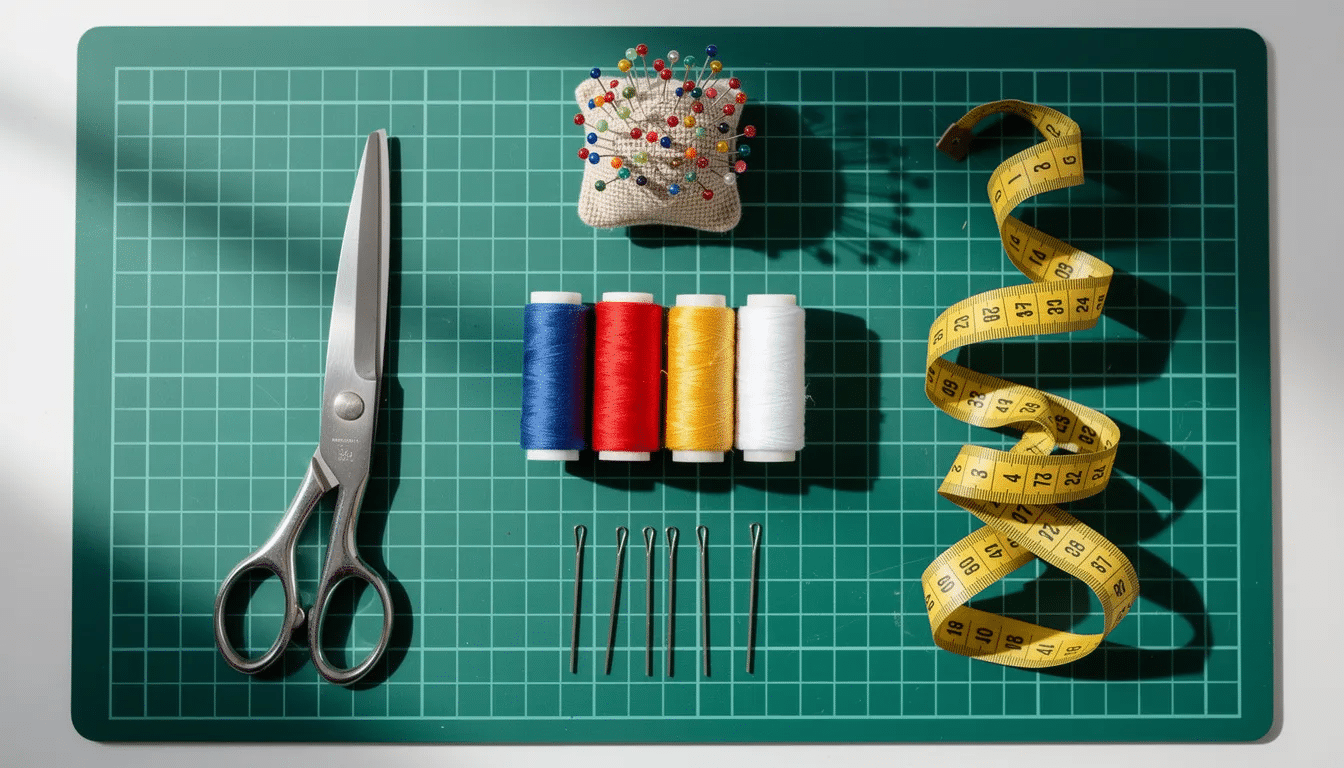
Sewing machine accessories are the interchangeable tools, attachments, and components that adapt your machine to specific tasks—think presser feet, needles, bobbins, and extension tables. These differ from general sewing notions like buttons or zippers, which become part of your finished garments.
The right accessories improve stitch quality, accuracy, and overall enjoyment, especially for new sewists using entry-level Brother, Singer, Janome, or Bernette machines. Most machines ship with only a few basic feet and tools, which means add-ons like better needles, extra feet, and quality cutting tools become essential for tackling anything beyond a simple straight seam.
This article focuses on practical add-ons that most home sewists will actually use for garments, quilting, and basic home décor—not rare specialty parts that collect dust in a drawer. Additionally, we’ll help you understand which accessories to prioritize based on your projects and budget, so you can build your collection strategically.
Essential Presser Feet Every Sewist Should Own
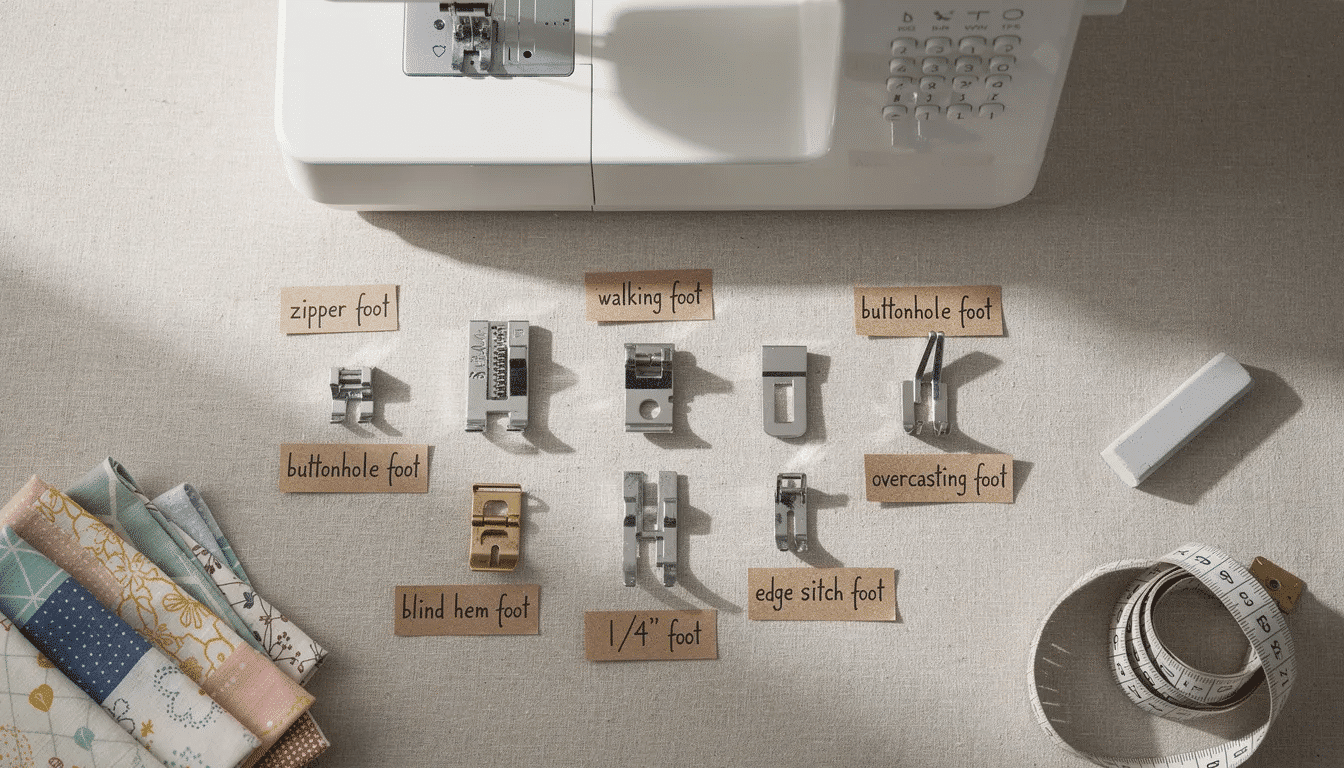
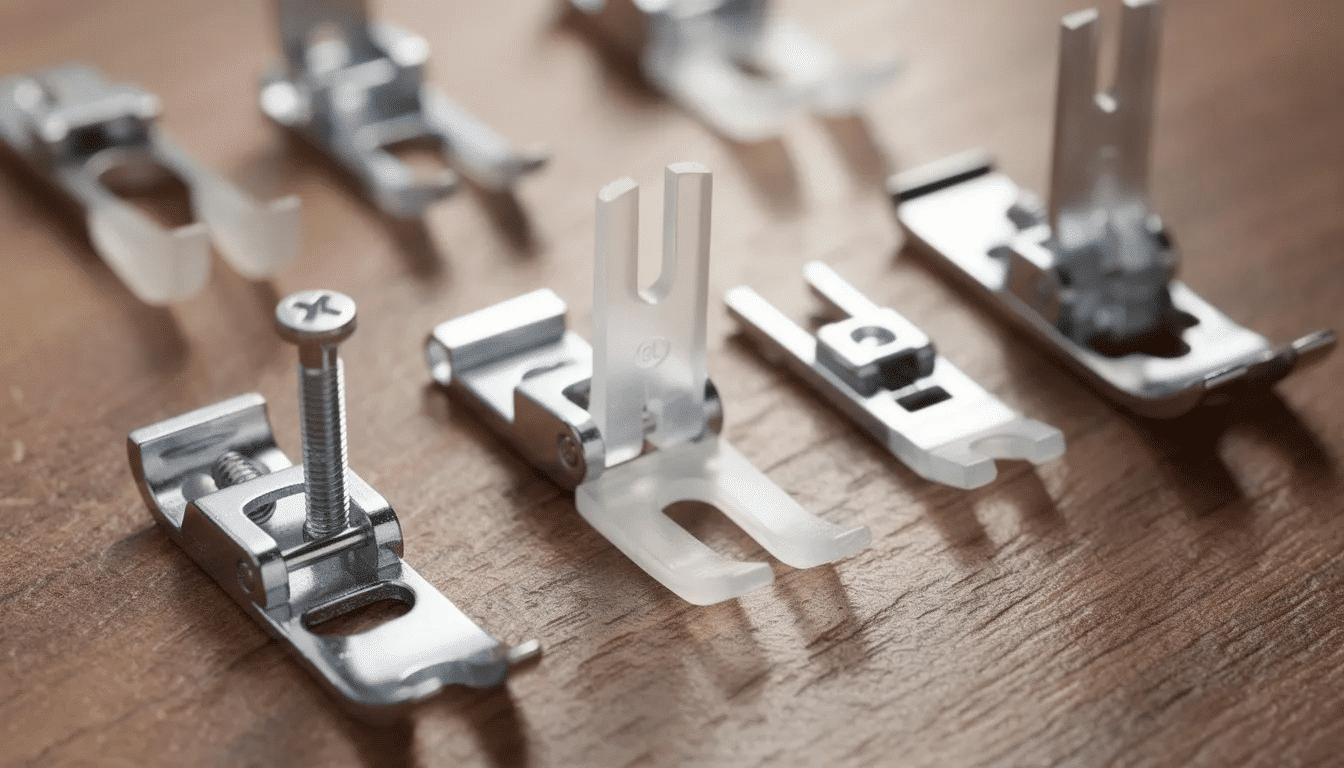
Presser feet are job-specific tools that hold your fabric against the feed dogs while allowing varied stitching methods. The key thing to remember is that compatibility depends on your brand and shank type—low shank, high shank, slant shank, or snap-on systems. Before you grab any presser foot online, confirm it matches your machine.
The Standard Zigzag/All-Purpose Foot
This is the baseline foot that comes with virtually every domestic machine. It handles straight seams and zigzag stitching on most fabrics, making it your go-to for everyday sewing. You’ll use this for probably 70% of your projects, so getting comfortable with it is the first job.
Zipper Foot
A zipper foot lets you stitch as close as 1-2mm to zipper teeth, bulky edges, or piping by offsetting the foot’s position. Some machines include an adjustable version that moves to either side of the needle. This is fantastic for installing regular zippers, adding piping to cushions, and sewing near raised seams. If your machine came with one, you’re set; if not, it’s worth the small investment.
Walking Foot (Even-Feed Foot)
The walking foot is a game-changer for quilting layers, sewing knits, and handling slippery fabrics like vinyl or satin. It incorporates an additional set of feed dogs on top that synchronize with the bottom feed dogs, advancing both fabric layers at the same rate. Without it, layers can shift by 5-10mm over the length of a seam—a frustrating problem on larger projects.
This foot is often an optional purchase rather than an included accessory, typically costing $15-40 for generic versions or more for brand-specific models. If quilting or working with stretch fabric is in your future, a walking foot should be near the top of your list.
Open-Toe or Embroidery Foot
An open-toe foot provides better visibility when doing appliqué, decorative stitches, or simple machine embroidery. The cutaway front lets you see exactly where your needle is landing, which makes following curves and intricate patterns much easier. This is a helpful addition once you move beyond basic construction.
Buttonhole Foot
Many machines include a basic buttonhole foot, but it’s worth upgrading to a sliding or sensor buttonhole foot if you sew garments regularly. These feet produce more consistent buttonholes by automatically measuring button size and maintaining even stitch density. Uniform buttonholes make your finished garments look professional.
1/4” Quilting Foot with Guide
Anyone piecing quilt blocks needs a 1/4” foot with a built-in guide. This foot enforces exact seam allowances, which is vital for quilting where even small deviations compound into wavy borders across a large quilt. It’s a gold standard accessory for quilters at any skill level.
Non-Stick (Teflon) Foot
For vinyl, leather, cork, and other “sticky” fabrics, a non-stick foot glides smoothly without dragging or leaving marks. This specialty presser foot makes projects like bags, raincoats, and faux leather accessories much more manageable. It’s not essential for beginners but becomes valuable as you stretch into new materials.
Needles, Thread, Bobbins & Threading Helpers
Most stitch problems—skipped stitches, thread nests, broken thread—are solved by using the right needle, quality thread, and correct bobbins. This is where small investments deliver big returns in stitching quality.
Essential Machine Needle Types and Sizes
Sewing machine needles come in various types and sizes, each designed for specific fabrics:
- Universal needles (70/10–90/14): The workhorse for most woven cottons and blends, featuring a slightly rounded point that works on many fabric types
- Ballpoint/Stretch needles: Feature rounded tips that part knit fibers rather than piercing them, preventing runs and holes in jersey and other stretch fabrics
- Microtex/Sharp needles: Have acute points for silks, fine wovens, and synthetics, minimizing puckering on delicate materials
- Denim/Jeans needles (90/14–110/18): Boast reinforced shafts and chisel edges to penetrate heavy canvas, denim, or leather without breaking
Trusted brands like Schmetz and Organ fit standard domestic machines regardless of machine brand—so yes, you can use Schmetz needles in your Brother or Singer without worry.
When to Change Your Needle
Change your needle every 8-10 sewing hours or at the start of a major project. A dull or damaged needle causes skipped stitches, tiny fabric snags, and that frustrating popping sound as it struggles through material. When matched correctly to your fabric, needle breakage rates drop by about 40%.
Bobbins: Type and Quantity
Bobbins come in specific classes—Class 15 bobbins are 20mm in diameter and standard for most home machines, while L-style and M-style fit other models. Using the wrong size or material can throw off tension and potentially damage your hook mechanism. Always check your sewing machine’s instruction manual to confirm which bobbin type you need.
Keep multiple extra bobbins pre-wound with neutral thread colors: white, black, light grey, and beige cover most projects. Having 6-10 bobbins ready saves 2-5 minutes of rewinding time per color change and keeps your momentum going during longer sessions.
Thread Choices
For most garments and quilting cottons, 100% polyester all-purpose thread offers strength, slight stretch, and color variety. Cotton thread remains popular for traditional quilting where a matte finish and natural fiber are preferred. Specialty stretch thread or woolly nylon works best for serger rolled hems and activewear with high stretch demands.
Threading Helpers
Simple threading helpers reduce frustration significantly:
- Needle threaders: Whether built-in (with about 95% success rate on modern machines) or handheld, these save your eyes and patience
- Thread stands: Accommodate large cones up to 5-pound capacity and feed thread at consistent angles, preventing the bird-nesting jams that halt production
- Spool caps: Come in small, medium, and large sizes to secure varying spool diameters and prevent thread from catching or tangling
Cutting & Measuring Tools That Make Sewing Easier
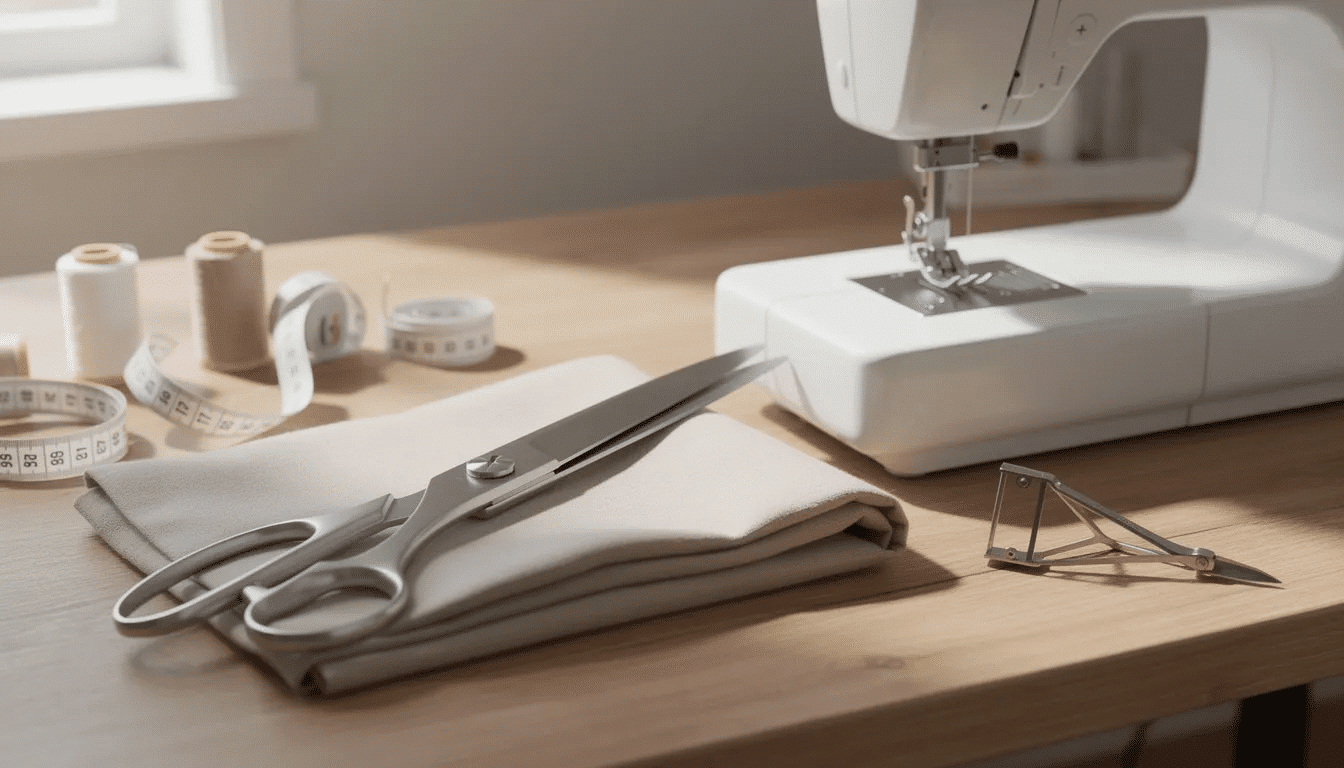
Accurate cutting and measuring are as important as the machine itself for professional results. You can have the perfect fabric and optimal machine settings, but crooked cuts will still show in your finished project.
Fabric Shears and Thread Snips
Invest in a sturdy pair of 8”–9” dressmaker shears and reserve them only for fabric—never paper, which dulls blades quickly. A good pair from Fiskars, Gingher, or Kai will last years with proper care. Keep small thread snips at your machine for trimming threads as you sew; they’re faster and more precise than reaching for large scissors.
Rotary Cutting System
A 45mm rotary cutter paired with a self-healing cutting mat (start with approximately 18” x 24”) and clear quilting rulers revolutionizes how you cut fabric. The standard ruler sizes—6” x 24” and 6” x 12”—cover most cutting needs for garments and quilting. This system delivers straighter cuts than scissors and speeds up prep work dramatically.
Measuring Tools
Build your measuring tools collection with:
- A flexible 60” tape measure for body measurements and curved edges
- A clear 2” x 18” ruler for checking grain lines and pattern placement
- A sewing gauge (the small metal ruler with a sliding marker) for consistent hems, button placements, and seam allowances
Marking Tools
Marking tools transfer pattern lines and construction marks to your fabric:
- Heat-erasable pens (like Frixion) disappear with iron heat
- Tailor’s chalk and chalk wheels work on most fabrics and brush away
- Washable markers rinse out with water
Always test marking tools on a fabric scrap first—some can leave permanent marks on certain materials or react unexpectedly with heat.
Pattern-Tracing Tools
If you work with paper patterns, you’ll appreciate pattern paper, a tracing wheel, and fine-tip pens or pencils for transferring pattern pieces. Tracing rather than cutting your original patterns preserves them for future sizes and projects.
Safety Notes
Choose a rotary cutter with a reliable safety lock and build the habit of closing the blade immediately after each cut. These tools are sharp enough to slice through multiple fabric layers—and unfortunately, fingers too.
Pressing Essentials: Irons, Mats, and Tools for Crisp Seams
Understanding the difference between ironing (moving the iron back and forth) and pressing (lifting and placing the iron with pressure) changes your results immediately. Good pressing tools can make homemade projects look store-bought.
Steam Iron
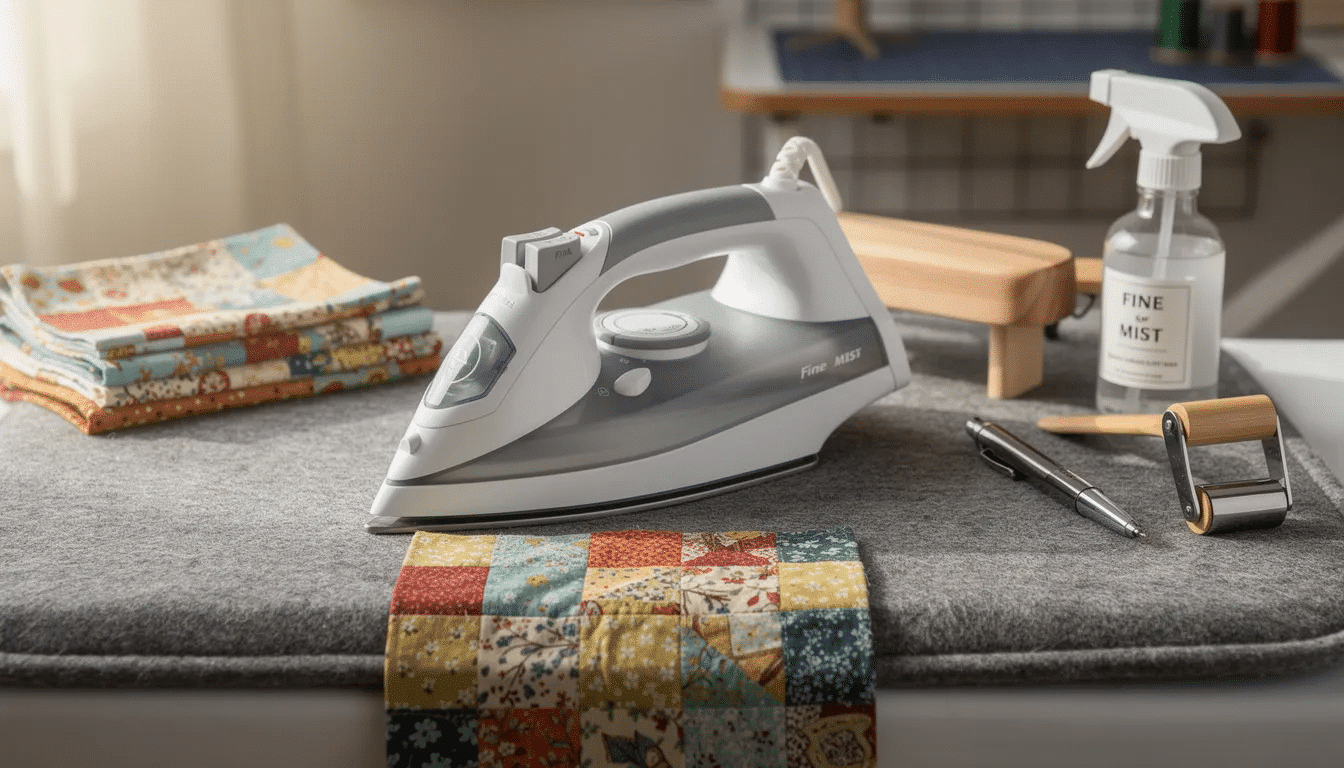
A medium-weight steam iron with adjustable temperature and auto-shutoff handles most sewing tasks. Heavier irons often give better pressing results because their weight does some of the work. You don’t need a fancy dedicated pressing station to start—your everyday iron works fine.
Wool Pressing Mat
A wool pressing mat (commonly 13” x 17” or 17” x 24”) placed on any sturdy flat surface reflects heat from both sides of your fabric, giving you crisper seams with less effort. It’s ideal for piecing quilt blocks and pressing seam allowances open. This is one of those accessories sewists wish they’d bought sooner.
Seam Roll and Tailor’s Ham
A seam roll helps you press long seams without creating creases on either side—perfect for sleeves and pant legs. A tailor’s ham shapes curves, shoulders, darts, and sleeve seams without flattening the garment’s three-dimensional structure.
Wooden Clapper
For ultra-flat seams on cotton, linen, and denim, a wooden clapper (pressing block) is wonderful. Apply steam, then immediately press down with the clapper to trap heat and moisture while forcing the fabric flat. This technique yields sharp edges on collars, cuffs, and quilt blocks.
Additional Pressing Supplies
- A spray bottle with distilled water or commercial pressing spray/starch helps achieve crisp collars, plackets, and quilt seams
- Heat-resistant pressing cloths protect delicate fabrics like rayon challis, silk, and synthetics from shine and scorching
Prioritize your iron and wool pressing mat first, then add specialty tools like hams and clappers as you take on more complex projects.
Handy Extras & Maintenance Tools You’ll Be Glad You Bought
These relatively low-cost gadgets save time, reduce frustration, and often rescue a project from disaster. Think of them as your sewing room’s supporting cast.
Quality Seam Ripper
A quality seam ripper with an ergonomic handle makes the inevitable unpicking process faster and less damaging to your fabric. Advanced models include LED lights for visibility in dense seams. You’ll use this tool constantly—it’s a friend to every sewist, not a sign of failure.
Pins and Clips
A magnetic pin dish keeps pins organized and easy to grab, while glass-head pins or fine silk pins pierce fabric cleanly without leaving holes. For thick layers, vinyl, leather, and other materials that would show pin holes, fabric clips (like Wonder Clips or Clover clips) hold edges securely without damage.
Machine Maintenance Tools
Keep your machine running smoothly with:
- A small lint brush for cleaning around the bobbin area after each project
- A small vacuum attachment or compressed air alternative for deeper cleaning
- Sewing machine oil (only if your machine’s manual specifies oiling is needed—many modern machines are self-lubricating)
- A small screwdriver set (often included with your machine) for changing needle plates and adjusting accessories
Thread Delivery Helpers
Extra spool caps in various sizes and spool nets prevent thread from tangling or catching on spool edges. These tiny accessories solve annoying thread delivery problems that cause tension issues.
Organization Solutions
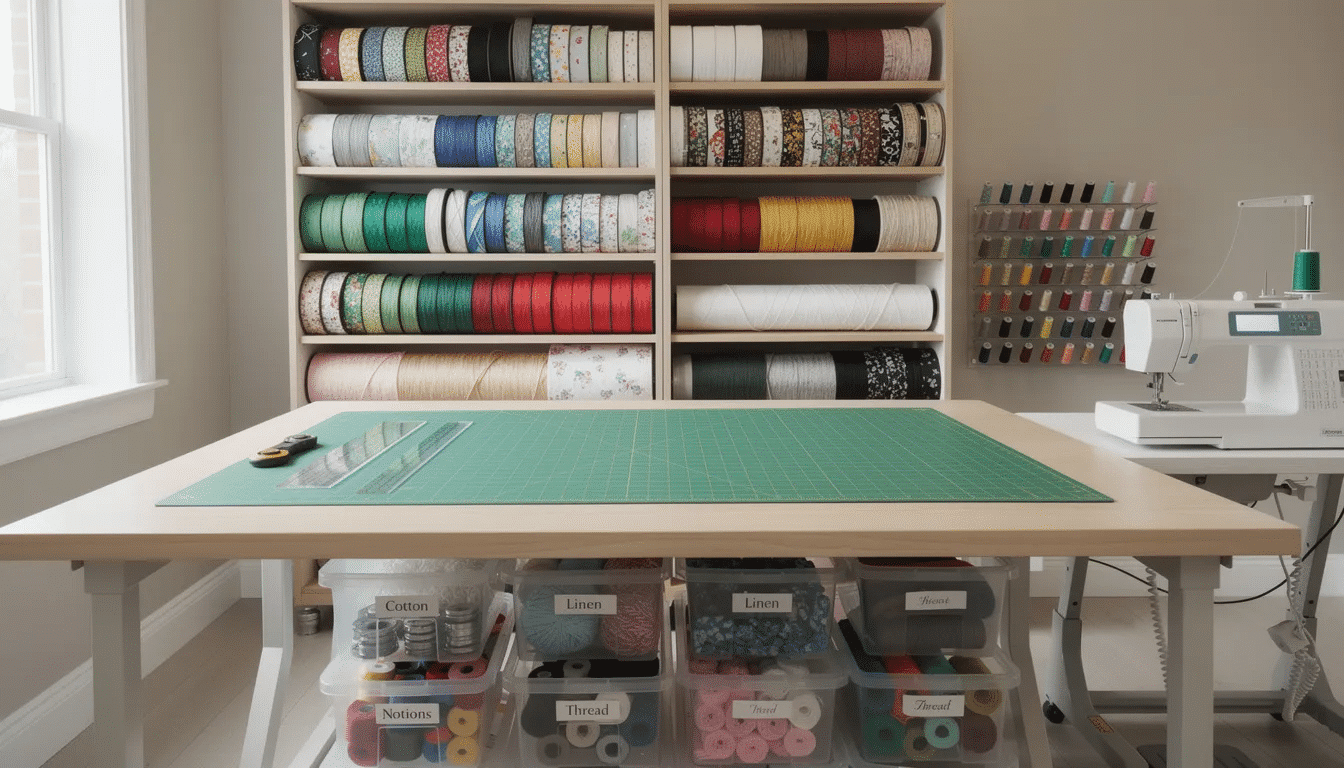
Clear storage boxes keep presser feet and bobbins visible and accessible. Two-gallon freezer bags work surprisingly well for organizing works-in-progress with their pattern pieces, notions, and thread. A simple label system prevents the “what was this cut for?” confusion.
Comfort and Safety
Good task lighting (an LED lamp with adjustable brightness) reduces eye strain during long sessions. A comfortable chair at the right height prevents back and neck pain. These aren’t glamorous accessories, but they make extended sewing time sustainable and fun.
Brand Compatibility & How to Choose the Right Accessories
Not every “universal” accessory fits every machine, especially presser feet and bobbins. Checking compatibility prevents damage and wasted money—a bit of research before purchasing saves a lot of frustration.
Use Your Manual as the Primary Guide
Your sewing machine’s instruction manual lists the model number, shank type, bobbin type, and recommended needle systems. Keep this document accessible when shopping online. If you’ve lost the paper copy, most manufacturers offer PDF versions on their websites.
Understanding Shank Types
Presser feet attach via different shank systems:
- Low shank: Most common on home machines (Brother, Singer, Janome, and many others)
- High shank: Found on some industrial-style home machines and older models
- Slant shank: Primarily older Singer machines
- Snap-on systems: Quick-change feet that click onto a shank adapter (most modern machines use this)
Snap-on feet change in about 5 seconds versus 20-30 seconds for screw-on feet, making them more convenient for projects requiring multiple foot changes.
Check Product Listings Carefully
Look for product listings that explicitly name compatible brands and models, such as “fits Brother CS6000i, Singer Heavy Duty 4423, Janome 2212.” Generic descriptions like “fits most machines” require more investigation before you buy.
Original vs. Third-Party Accessories
Brand-name accessories from your machine’s manufacturer typically guarantee a perfect fit and may preserve warranty coverage. Third-party or “universal” parts often cost less and work well for many sewists—but quality varies. For critical items like needles, presser feet, and bobbins, sticking to trusted brands reduces the risk of compatibility issues or premature wear.
Use Community Feedback
Before buying unfamiliar accessories, check reviews and sewing community feedback. Forums, Facebook groups, and YouTube reviews from sewists using your exact machine model provide real-world experience that product descriptions can’t match.
Smart Shopping Strategy: Building Your Accessory Kit Over Time
You don’t need to buy everything at once. Building your stash in phases based on real projects and budget makes more sense than accumulating tools that sit unused.
Phase 1: Brand-New Sewist Essentials
When you’re just starting out, focus on these fundamentals:
- Extra needles (universal pack plus ballpoint if you’ll sew knits)
- Extra bobbins (6-10 matched to your machine)
- Quality fabric scissors reserved for fabric only
- A sharp seam ripper
- Pins or clips and a magnetic dish
- Basic marking tools (chalk or erasable pen)
- A flexible tape measure and sewing gauge
- A reliable iron (you likely already own one)
- Simple presser feet beyond what’s included (zipper foot if not provided)
This covers 90% of beginner projects and lets you learn your machine without overwhelm.
Phase 2: Comfortable with Basics
Once the fundamentals feel natural—typically after 3-6 months of regular sewing—add:
- Walking foot for quilting, knits, and slippery fabrics
- 1/4” quilting foot if you’re interested in piecing
- Rotary cutter, self-healing mat, and clear rulers
- Wool pressing mat
- Additional specialty needles (denim, microtex) matched to your projects
- Better quality thread in a wider color collection
Phase 3: Intermediate and Advanced Upgrades
As your skills develop and you tackle more ambitious projects:
- Extension table for supporting larger projects (quilts, maxi skirts, curtains)
- Specialty feet like a ruffler, bias binder, or invisible zipper foot
- Thread stand for cone thread
- More quilting rulers in various shapes
- Improved task lighting
- Ergonomic tools like bent tweezers and point turners for precision work
Money-Saving Tips
- Shop during major sales events (Memorial Day, Black Friday, end-of-season clearances)
- Look for accessory bundles that include multiple feet at a discount
- Check secondhand options for non-electronic tools like scissors, rulers, and pressing equipment
- Prioritize quality over quantity—one excellent pair of scissors beats three mediocre ones
Let your preferred sewing type guide your purchases. If you’re mainly sewing garments, invisible hems and buttonhole upgrades matter more than quilting rulers. If quilting is your passion, invest in the walking foot and 1/4” foot early.
FAQ: Common Questions About Sewing Machine Accessories
I just bought my first machine in 2024—what are the absolute bare-minimum accessories I need this month?
Start with extra needles (a universal pack), at least 4-6 extra bobbins matched to your machine, fabric scissors, a seam ripper, pins with a magnetic holder, a flexible tape measure, and one marking tool like tailor’s chalk or an erasable pen. This stripped-down kit handles most beginner projects while you figure out what your sewing style actually needs. Everything else can wait until you’ve completed a few projects and understand where your current tools fall short.
Do I really need a walking foot, or can I wait?
You can absolutely wait if your current projects involve single-layer woven fabrics and basic garment construction. The walking foot becomes essential when you start quilting multiple layers, working with knits that tend to stretch, or handling slippery fabrics like satin and vinyl where layers shift during stitching. If those aren’t on your immediate project list, save your budget for other tools and add the walking foot when you’re ready to tackle those materials.
How do I know when to change my sewing machine needle?
Change your needle after 8-10 hours of sewing time or at the start of any major project—whichever comes first. Symptoms of a dull or damaged needle include a popping sound as it pierces fabric, skipped stitches, tiny snags or pulls in your material, and thread breakage. When you notice any of these issues, swap in a fresh needle before troubleshooting other causes. Needles are inexpensive, and a new one solves more stitch problems than most sewists expect.
Can I mix brands—for example, use Schmetz needles in a Brother or Singer machine?
Yes! Standard home sewing machine needles follow universal sizing systems that work across major domestic machine brands. Schmetz, Organ, Klasse, and other quality needle brands fit Brother, Singer, Janome, Bernina, and most other home machines without any issues. The right foot is different—presser feet require brand and shank-type matching—but needles are wonderfully interchangeable.
Which accessories should I upgrade first if I’m frustrated with my results?
Start with high-quality needles matched to your fabric type and weight, then evaluate your thread quality. These two items solve a surprising number of stitching problems. Next, look at your cutting tools—dull scissors or a damaged rotary blade create jagged edges that affect seam allowances. Finally, examine your pressing routine, because proper pressing with a good iron and wool mat transforms the finished appearance of any project. These four areas deliver the fastest visible improvements.
Keep your machine’s manual nearby as you explore new accessories, and add tools one project at a time for the best learning experience. Every addition to your sewing accessories collection should solve a real problem or enable a project you’re excited to create. Happy stitching!