
Upcycling transforms waste materials into something more valuable—and for students, it’s one of the smartest ways to create useful items without spending money. Whether you’re turning cardboard delivery boxes into desk organizers or cutting old t shirts into stylish accessories, upcycling projects for students combine creativity with environmental responsibility.
- Intro: What Are Upcycle Projects for Students?
- Safety First: Simple Guidelines for Student Upcycling
- Quick Upcycle Wins for the Classroom (Elementary & Middle School)
- Dorm & Study-Space Upcycles for High School and College Students
- Wearable Upcycle Projects: Fashion for Students on a Budget
- Eco Decor & Gifts: Turning Trash into Treasure
- Project-Based Learning: Classroom Upcycle Units for Teachers
- Developing Student Ideas: From Sketch to Finished Upcycle
- Conclusion: Make Upcycling a Habit, Not Just a Project
Intro: What Are Upcycle Projects for Students?
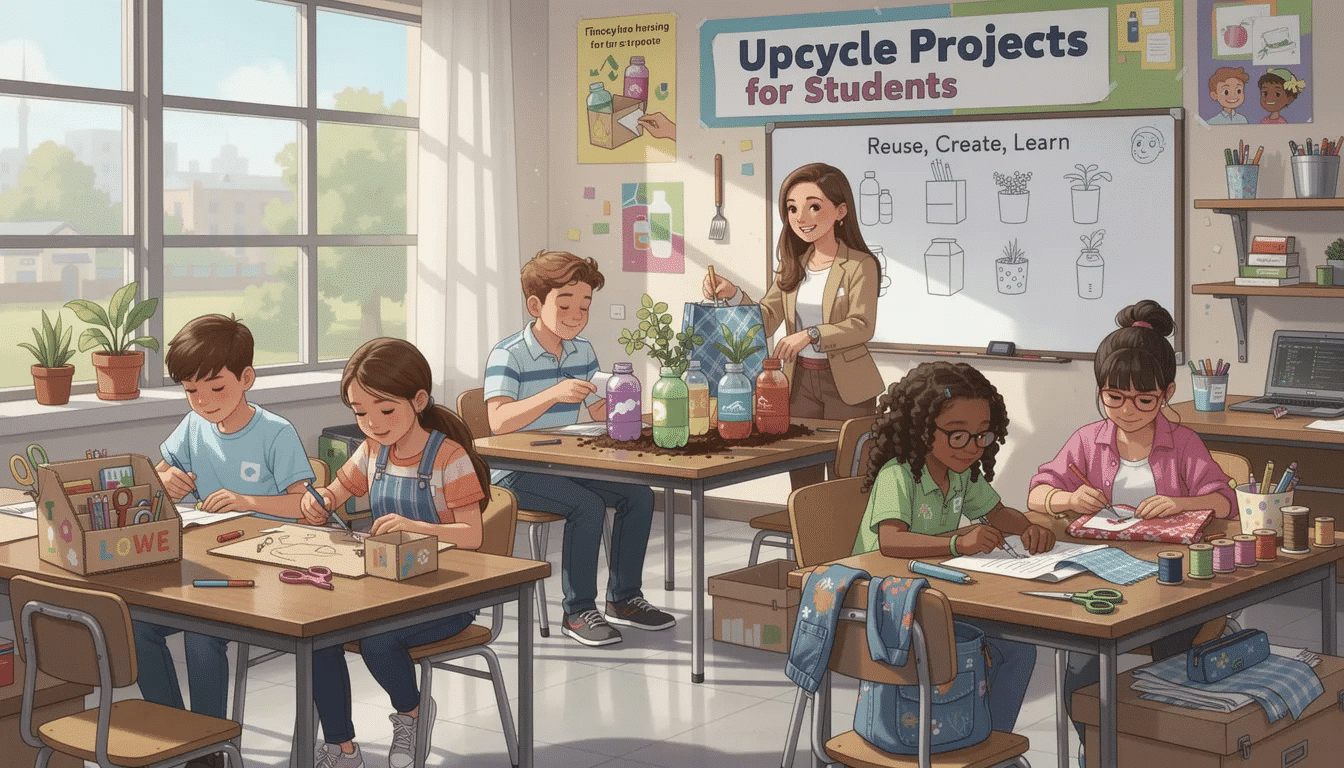
In simple terms, upcycling means taking stuff you’d normally throw away and turning it into something better. Unlike traditional recycling, which often breaks materials down into lower-grade products, upcycling adds value through creativity and craftsmanship.
Why does this matter in 2026? Global textile waste alone exceeds 92 million tons annually, and the average student faces tight budgets while surrounded by packaging from online orders, food containers, and worn-out clothing. Upcycling projects address both problems at once.
Key benefits for students include:
- Saving money on decor, storage, and accessories
- Reducing trash that ends up in landfills
- Building design thinking and hands-on skills
- Creating portfolio-worthy creative projects for school assignments
All the ideas in this article can be done at home, in dorms, or in the classroom using materials commonly found in 2024–2026—think fast-fashion t shirts, delivery boxes from online shopping, and glass jars from 2025 food brands. You’ll find concrete project ideas, safety tips, and guidance for adapting projects to different ages and group sizes.
Safety First: Simple Guidelines for Student Upcycling
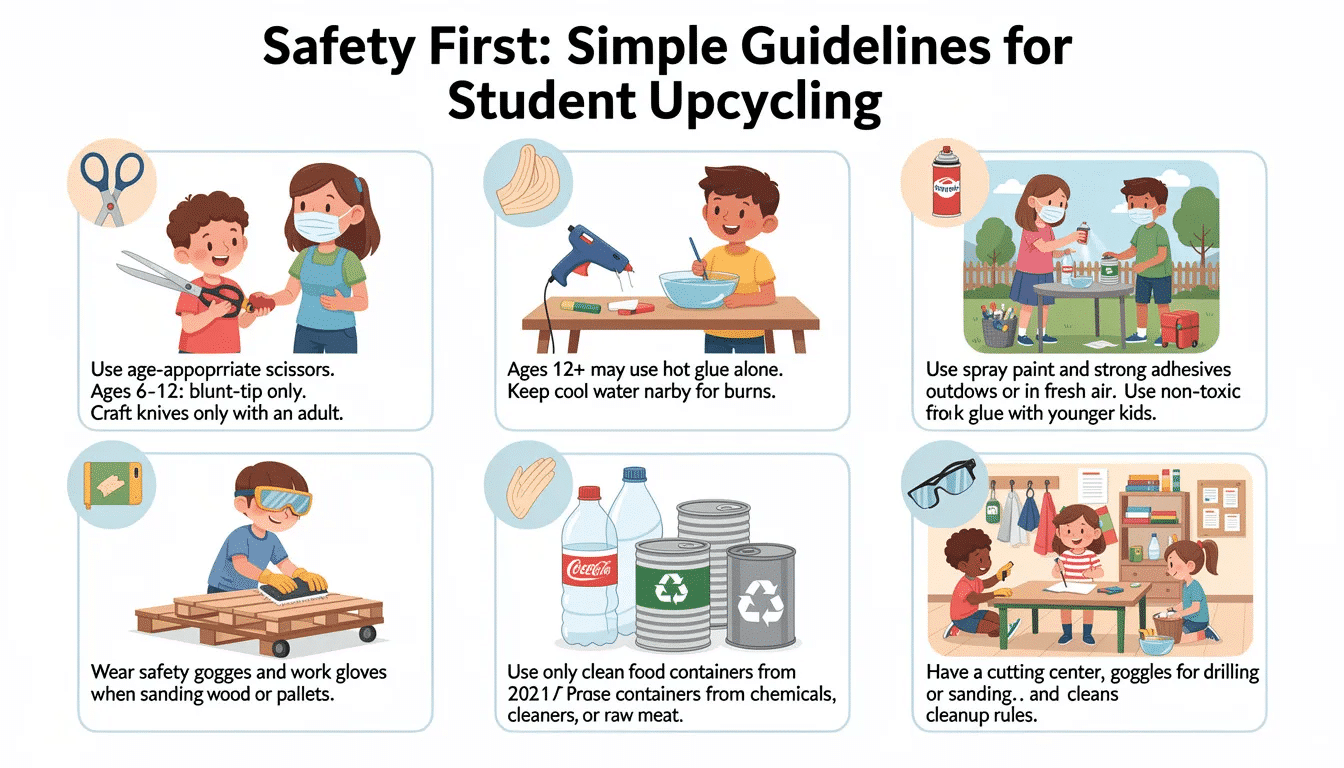
Before diving into any project, students (especially those in elementary and middle school) should work with adult supervision when using tools or adhesives.
Essential safety points:
- Cutting tools: Use age-appropriate scissors. Younger students (ages 6–12) should stick to blunt-tip scissors only. Craft knives require adult supervision for teens.
- Hot glue gun: Keep a bowl of cool water nearby for accidental burns. Only students 12+ should operate hot glue independently.
- Spray paint and adhesives: Work in well-ventilated areas or outdoors. Non-toxic glue is mandatory for younger kids.
- Sanding wood or pallets: Wear safety goggles and work gloves to prevent splinters and dust inhalation.
- Material selection: Only use clean food containers from 2024–2026 (washed jars, plastic bottles, tin cans). Avoid containers that held chemicals, cleaners, or raw meat.
- Classroom rules: Set up a designated cutting center, require goggles for drilling or sanding, and establish clear cleanup expectations.
When in doubt, stick with scissors, non-toxic glue, and paint—these cover 90% of student-friendly upcycling crafts.
Quick Upcycle Wins for the Classroom (Elementary & Middle School)
These easy ideas work perfectly for teachers running single-lesson activities (30–60 minutes) using typical school waste like snack boxes, toilet paper rolls, and donated magazines from families, and they pair well with nature-inspired stick crafts for kids during outdoor learning days.
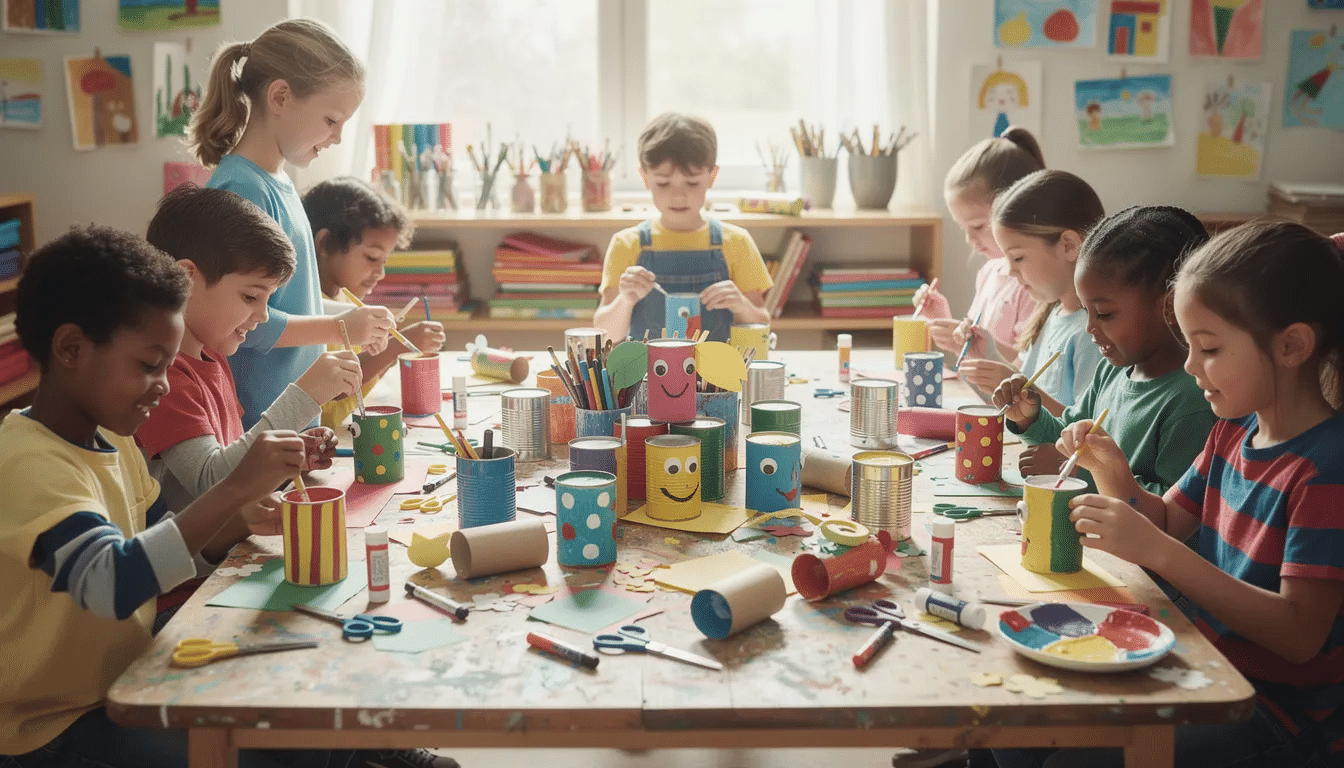
Toilet Roll Safari Binoculars
- Glue two cardboard tubes together side by side
- Decorate with crayons, markers, and stickers featuring nature themes
- Punch holes and attach a yarn string for wearing
- Perfect for Earth Day nature walks or outdoor science lessons
Magazine Collage Posters
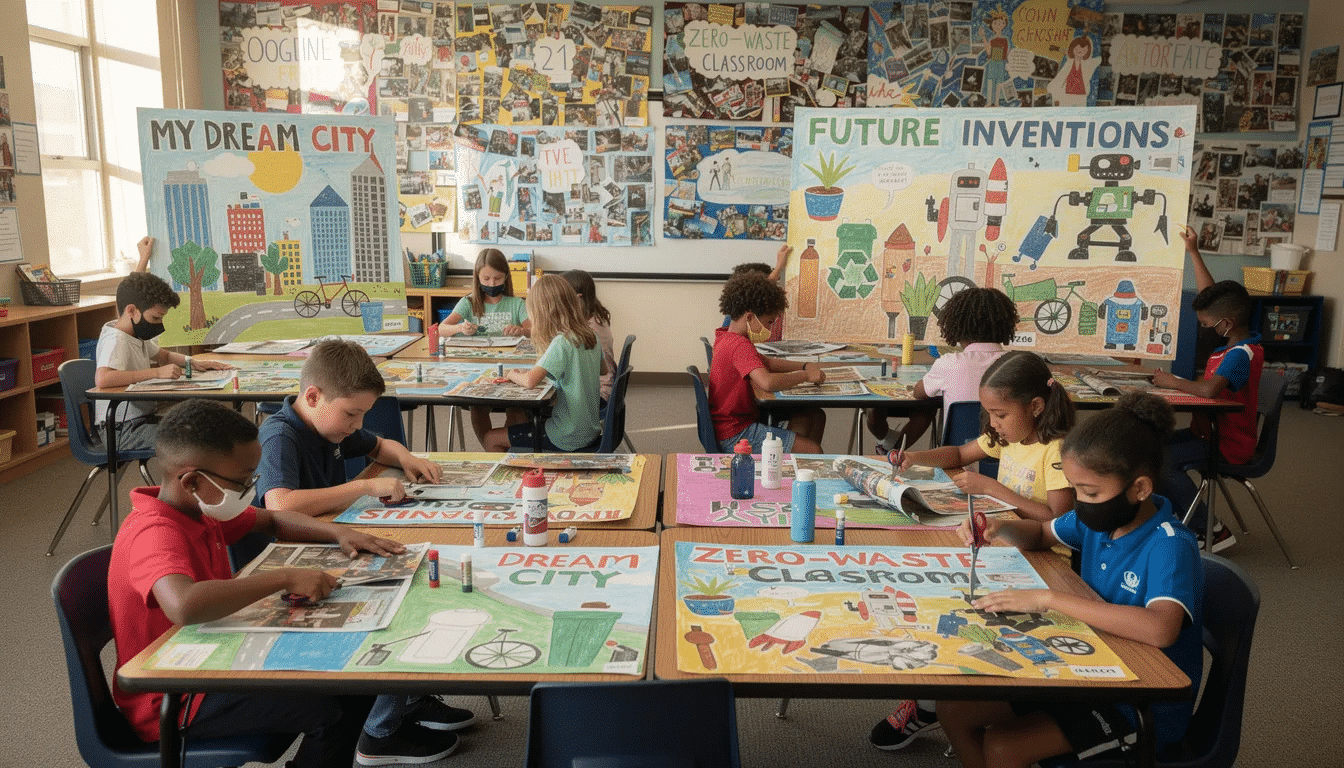
- Collect donated magazines from families (issues from 2023–2026 work great)
- Students cut words and images to create themed posters
- Suggested themes: “My Dream City,” “Zero-Waste Classroom,” or “Future Inventions”
- Hang finished posters to decorate the classroom space
Egg Carton Garden Tray
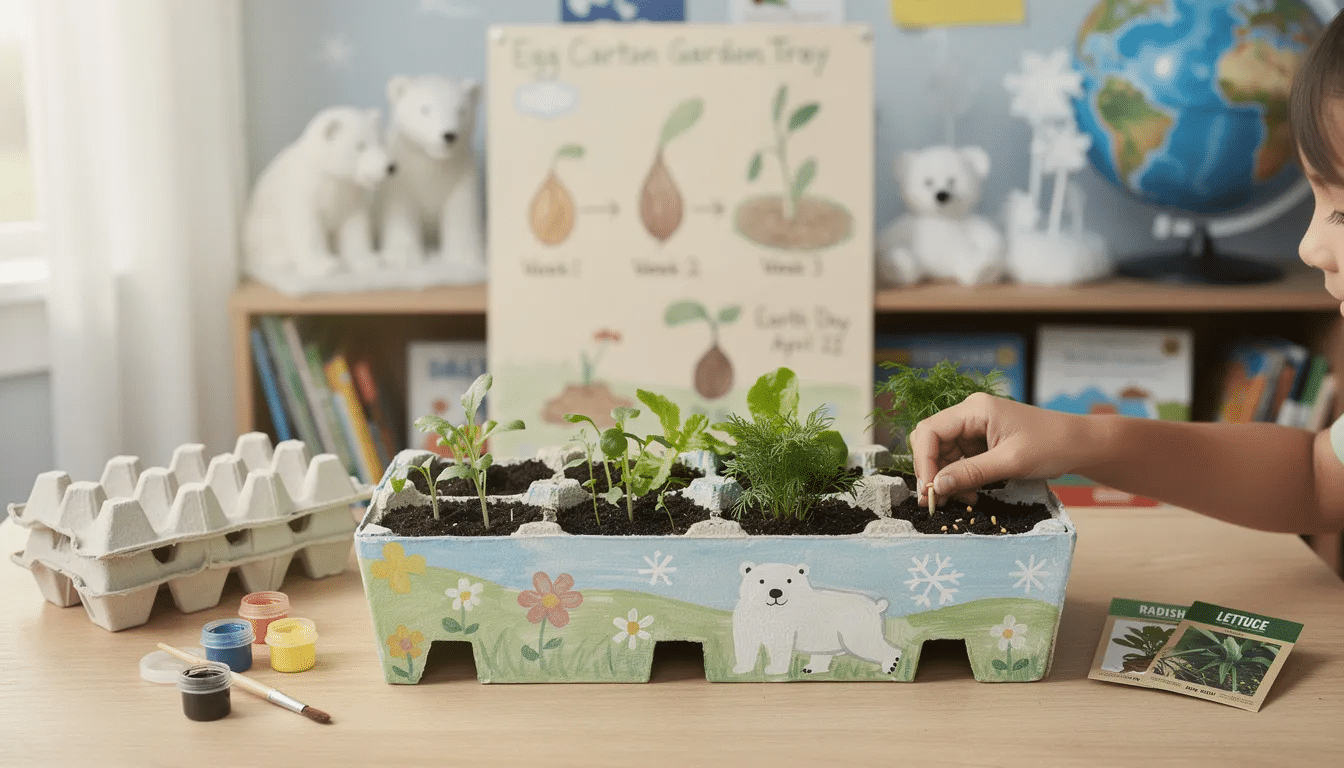
To extend your science or winter units, you can also explore polar bear themed winter crafts that use similarly simple materials.
- Cut a 12-cup egg cartons section and decorate the outside with paint
- Fill each cup with soil and plant fast-growing seeds (radish, lettuce, or herbs)
- Use as a simple science experiment tracking growth over 3–4 weeks
- Start this project in late March to have sprouts ready for Earth Day (April 22)
Tin Can Supply Caddies
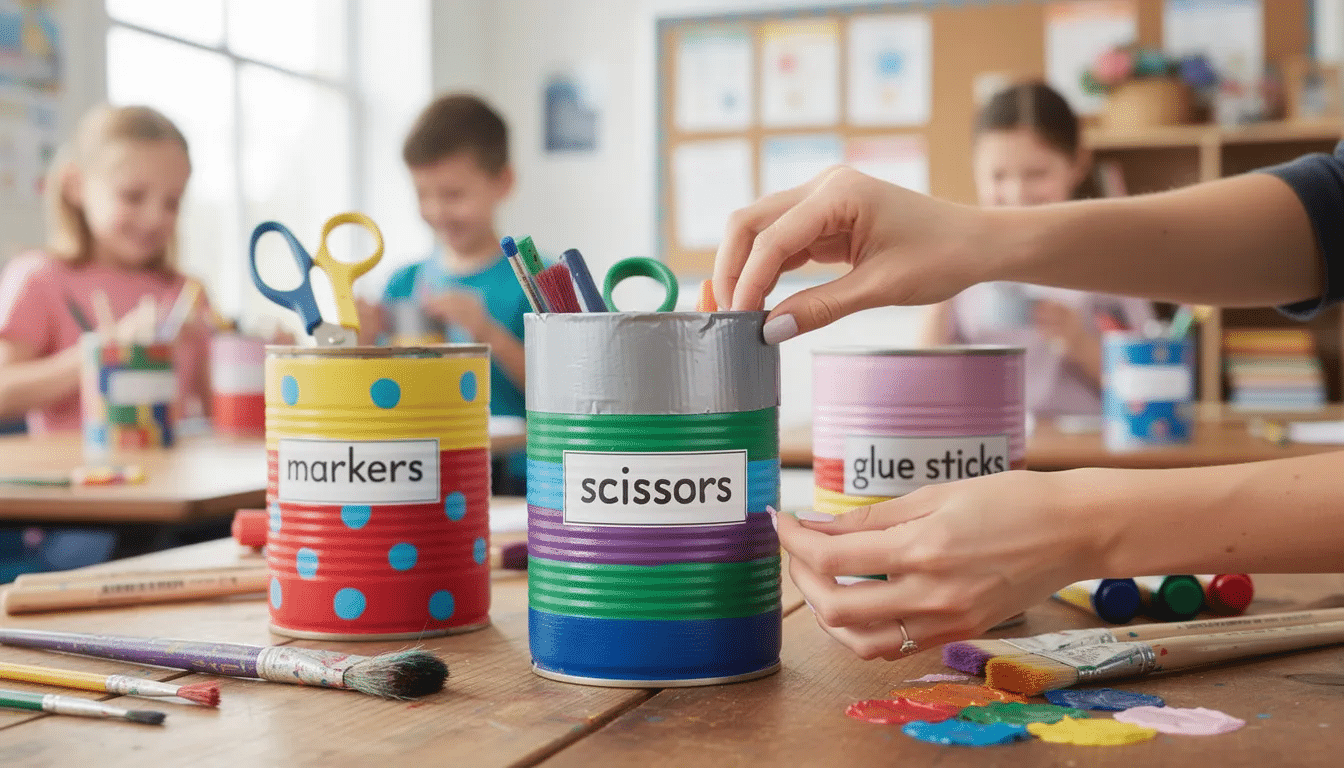
- Students paint cleaned tin cans with acrylic paint in their favorite colors
- Add labels for markers, scissors, and glue sticks
- Teacher should check edges and wrap rims with duct tape if sharp
- Creates cute, functional storage for classroom materials
Dorm & Study-Space Upcycles for High School and College Students
Moving into a dorm or shared apartment (especially during fall semesters 2024–2026) often means needing cheap organization solutions. These diy projects turn delivery waste into functional decor, much like curated DIY craft kits for creative projects that bundle supplies and instructions for beginners.
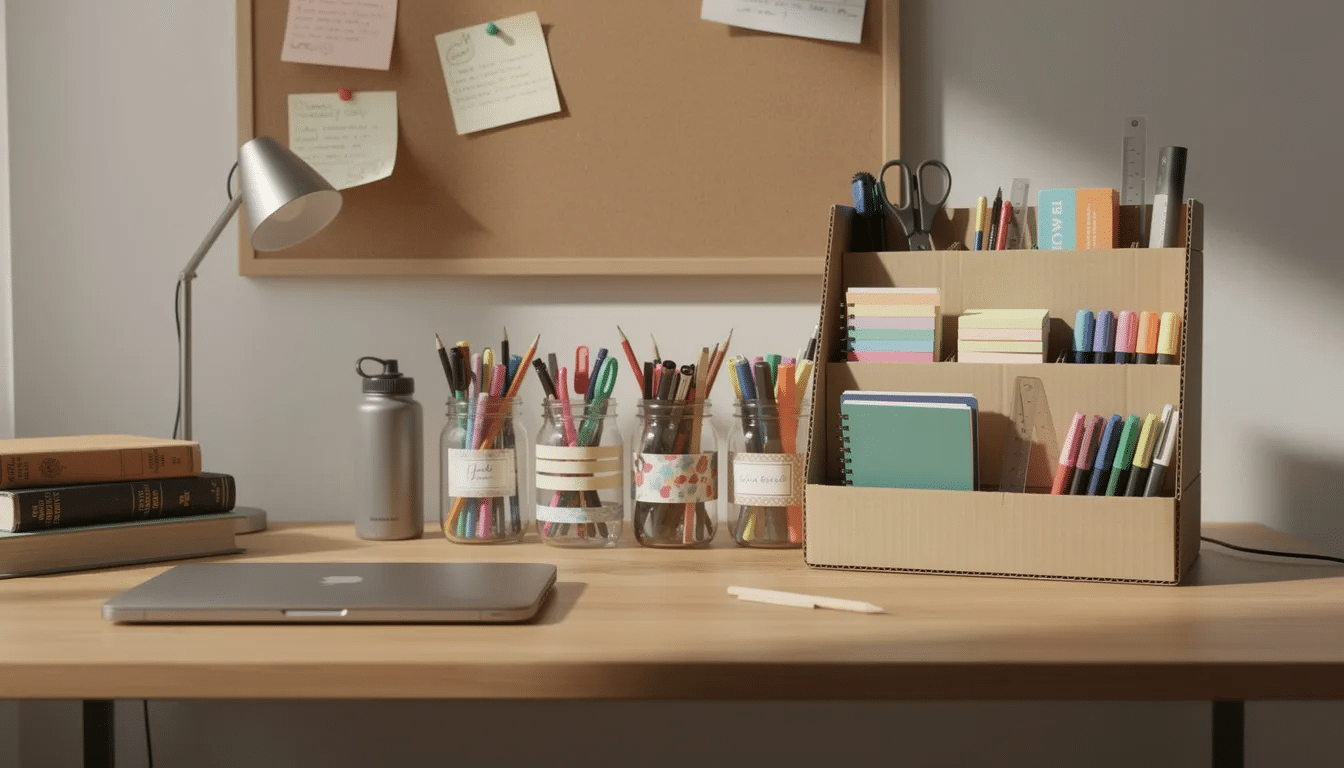
Cardboard Desk Organizer
- Reuse laptop shipping boxes or online-delivery cartons
- Cut cardboard into compartments sized for notebooks, chargers, and pens
- Attach sections using hot glue or duct tape
- Wrap with scrap fabric or leftover wrapping paper for an elegant finish
Glass Jar Lanterns & Pen Holders
- Upcycle pasta sauce jars or coffee jars from 2025 brands
- Wrap with twine, paint with acrylics, or decoupage with tissue paper
- Use LED tealights for safe ambient lighting (no open flames in dorms)
- Group several jars together for a gorgeous display on your desk or table
Denim Pocket Wall Organizer
- Cut back pockets from worn jeans you’d otherwise throw away
- Glue or sew pockets onto thick cardboard or a canvas backing
- Hang near your desk to store USB drives, keys, notes, and pens
- Add a pin to each pocket for attaching reminders
Wine Cork or Bottle-Cap Pin Board
- Collect wine corks from cafés or restaurants (with permission)
- Arrange and glue corks onto a picture frame backing or cardboard base
- Creates a budget friendly bulletin board for photos, tickets, and reminders
- Alternatively, use bottle caps for a more colorful, creative look
Wearable Upcycle Projects: Fashion for Students on a Budget
Fast fashion contributes to 13 million tons of textile waste in U.S. landfills annually. Instead of buying new accessories, students can refresh their wardrobes using 2023–2026 clothing they already own, or try upcycling a shirt into a little girl’s dress as a more advanced sewing project.
T-Shirt Yarn Accessories
- Cut old club or event t shirts from 2022–2025 into 1-inch horizontal strips
- Stretch each strip to create t shirt yarn that curls into rope-like strands
- Braid three strands together for headbands, bracelets, or key fobs
- No sewing required—just secure ends with a simple knot or stick with hot glue
Sweater Beanie and Leg Warmers
- Find an outgrown winter sweater made of cloth you still like
- Cut the body into a slouchy beanie shape and stitch the top closed
- Turn sleeves into matching leg warmers with minimal alterations
- Hand-sew or use a machine—perfect as a winter break project
Fabric-Wrapped Bangles
- Gather scrap fabric from old pillowcases, shirts, or curtains
- Cut into long strips about 1 inch wide
- Wrap tightly around plain plastic bangles or cardboard rings cut from paper towel rolls
- Secure ends with glue for a polished, boutique-style look
Patchwork Tote Bag
- Upcycle several worn t shirts or flannel shirts into fabric squares
- Sew squares together to create a simple tote for books or groceries
- Add handles from denim jeans waistbands or braided fabric strips
- Best suited for older teens with basic sewing skills and access to thread and a machine
Eco Decor & Gifts: Turning Trash into Treasure
Making meaningful, low-cost gifts for birthdays, the holiday season, or teacher appreciation days becomes simple when you reuse 2024–2026 household waste like jars, tin cans, and cardboard boxes, especially if you draw on festive holiday craft round-ups for extra seasonal inspiration.
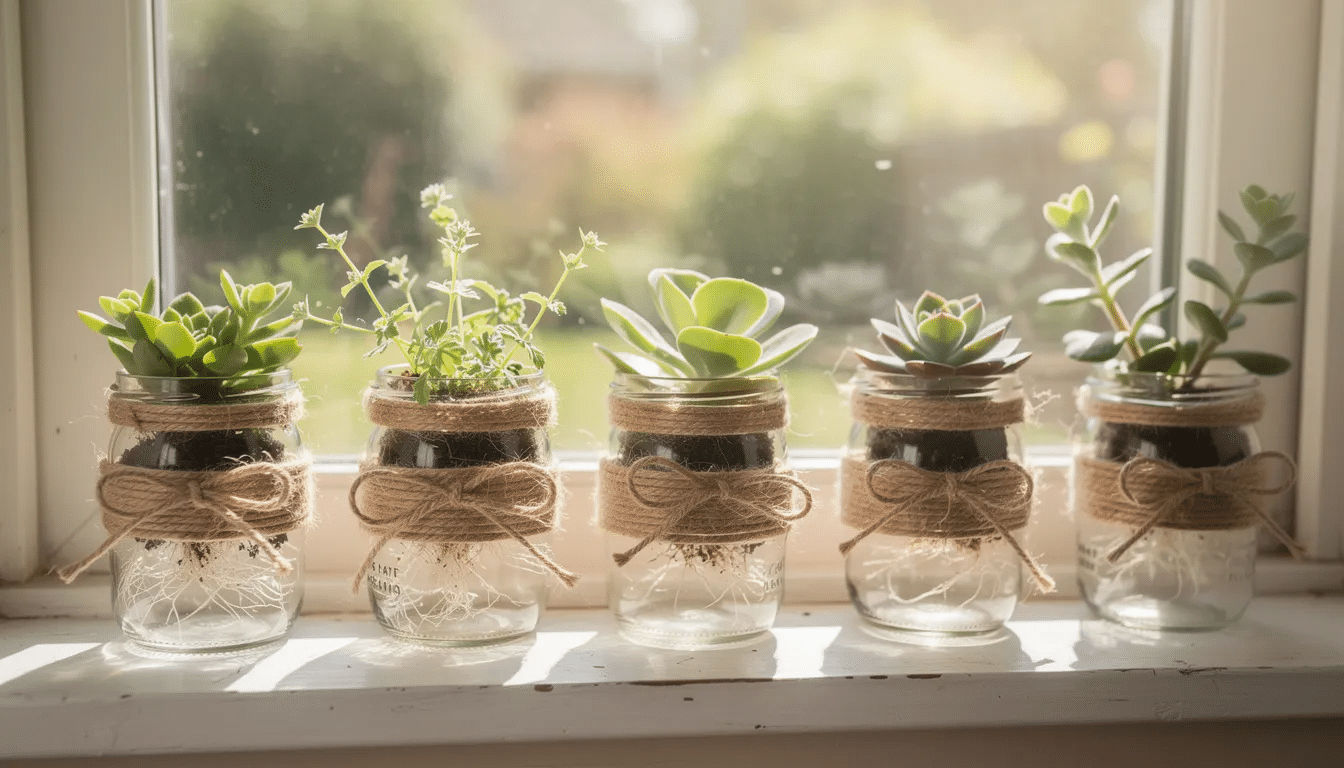
Tin Can Planters
- Decorate cleaned cans with paint, paper, or wrap with jute twine
- Drill drainage holes in the bottom (older students only, with supervision)
- Plant hardy herbs like basil, mint, or rosemary
- Perfect for dorm windowsills or as gift giving items for teachers
During the winter holidays, these can accompany a playful recycled Christmas wreath as part of a coordinated eco-friendly decor set.
- Cut frame shapes from cereal box cardboard
- Wrap with leftover wrapping paper from December 2025 holidays
- Decorate with buttons, ribbon, or scrap fabric flowers
- Insert photos and attach a stand or loop to hang on the wall
Jar Snow Globes or Memory Jars
Pair these with tissue paper stained glass crafts to create colorful window displays or classroom gallery corners.
- Fill old jam jars with water, glycerin, and glitter for snow globe effects
- Add small waterproof figures (available at craft stores) and secure lids with hot glue
- Alternatively, create memory jars filled with ticket stubs, notes, and small mementos from the school year
- Both make thoughtful, personalized gifts that celebrate shared experiences
Decorated Mason or Yogurt Jars as Candle Holders
- Frost glass jars with white paint or spray for an elegant look
- Add twine around the rim and attach small charms or dried flowers
- Use LED candles only to comply with school and dorm safety regulations
- Group multiple jars together for centerpieces at events or in your space
Project-Based Learning: Classroom Upcycle Units for Teachers
Teachers from upper elementary through high school can build 2–4 week units around upcycling ideas, connecting to science, design, and social studies standards while reducing classroom waste; texture-rich media like student-friendly glue paint projects can be incorporated as part of these units.
Structuring the Unit
- Frame students as “eco-designers” serving their school community
- Use a goal-oriented framework: define the problem, identify the audience, create and test solutions, reflect on environmental impact
- Allow students to work in group settings, building teamwork alongside creativity
Sample Scenario: Staff Appreciation Gifts (Grades 7–10)
- Students collect recyclable materials at school over two weeks
- Design useful upcycled gifts for staff: desk organizers from cardboard, planters from tin cans, decorated candle holders from jars
- Present finished products during a school assembly or appreciation event
- Assess based on creativity, functionality, and material reuse
Green Audit + Upcycle Solution (Ages 15–18)
- Older students survey classroom or campus trash for one week in 2026
- Identify the most common waste items: plastic bottles, snack packaging, paper scraps
- Design one upcycle prototype to address each waste stream
- Document the process and present findings to younger students as environmental resources
Assessment Ideas
- Rubrics measuring creativity, functionality, sustainability impact, and written reflection
- Peer feedback sessions where students evaluate each other’s prototypes
- Optional: track materials saved from landfill and calculate environmental impact
Developing Student Ideas: From Sketch to Finished Upcycle
Helping students move from vague ideas (“a cool recycled thing”) to concrete designs requires a structured process that encourages both creativity and practical thinking.
Step 1: Brainstorm Materials and Products (10–15 minutes)
- List as many possible materials available at home or in class right now
- Explore what products could solve real problems: storage, organization, decor, wearables
- Encourage wild ideas first, then narrow down to feasible options
Step 2: Create Annotated Sketches
- Students draw 2–3 favorite ideas with simple labels
- Note specific waste items they’ll use: “March 2026 cereal box,” “old hoodie,” “juice bottles”
- Include measurements if the project requires precise cuts
Step 3: Define Design Criteria
- Durability: Will it last more than a few uses?
- Safety: Are there sharp edges or toxic materials?
- Sustainability: Is it made mostly from recycled materials?
- Aesthetics: Would someone actually want to keep and use this?
Step 4: Build Quick Prototypes
- Use tape and cardboard to create rough versions before committing to glue or sewing
- Test functionality: Does it hold items? Does it fit properly?
- Make adjustments easily at this stage
Step 5: Execute the Final Design
- Once satisfied with the prototype, begin the finished product
- Apply paint, attach permanent adhesives, and add decorative elements
- Document the process with photos for portfolios or class presentations
The goal isn’t perfection on the first try—it’s learning to iterate and improve through the creative process.
Conclusion: Make Upcycling a Habit, Not Just a Project
Upcycle projects for students reduce waste, save money, and build creativity across grade levels and subject areas. From simple toilet paper rolls binoculars to sophisticated patchwork tote bags, these upcycling projects prove that what we throw away often has untapped potential.
Start with one small project this month—a jar pen holder or t shirt yarn bracelet takes under 30 minutes and costs nothing. Once you’ve experienced the fun of transforming waste into something useful, you can branch into colorful weekend craft ideas or expand to class or campus-wide challenges by the end of the school year.
Track how many items you keep out of the trash between now and Earth Day (April 22, 2027). Even small efforts add up: one denim quilt reuses 10–15 pairs of jeans, and a single reusable fabric wrap can replace 500+ plastic bags over its lifetime.
Students aren’t just crafters—they’re designers of a more sustainable future, capable of reshaping everyday waste from the world around them into useful, beautiful objects. The environment needs more creative problem-solvers, and every upcycling project is practice for that role.