If your son has ever ignored an expensive toy and spent twenty minutes rubbing the tag on his blanket instead, you already understand the appeal of a dinky dinosaur tag toy. This cute, palm-sized sensory friend combines everything babies love – soft fabric, crinkly textures, and ribbons to fiddle with – in a dinosaur shape that kids can’t wait to collect and carry everywhere.
Key Takeaways
- A dinky dinosaur tag toy is a small, soft dino toy with ribbon tags sewn around its edges, created for babies and toddlers to explore with their fingers and mouth.
- The toy is inspired by the iconic Dinky the T-Rex from Fallout: New Vegas, reimagined by Little Button Diaries as a safe, cuddly sensory friend for real-life little ones.
- Core benefits include fine-motor practice, sensory exploration, comfort at nap time, and an easy-to-pack size for travel or stroller rides.
- Parents must watch for choking hazards – especially loose tags, stuffing, and small embellishments – and follow age-appropriate safety guidelines.
- This article includes simple sewing instructions, upcycling ideas, and FAQs so you can either make your own dino toy or know what to look for when buying one.
What Is a Dinky Dinosaur Tag Toy?
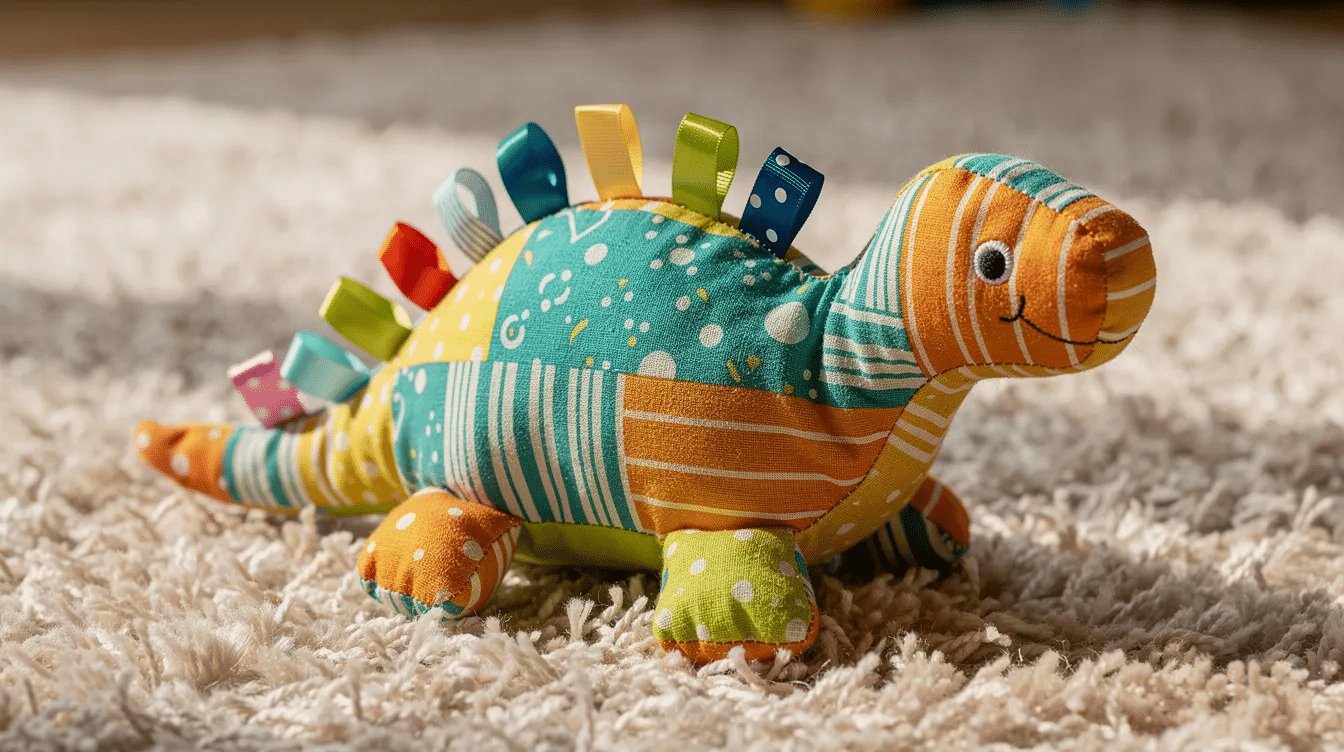
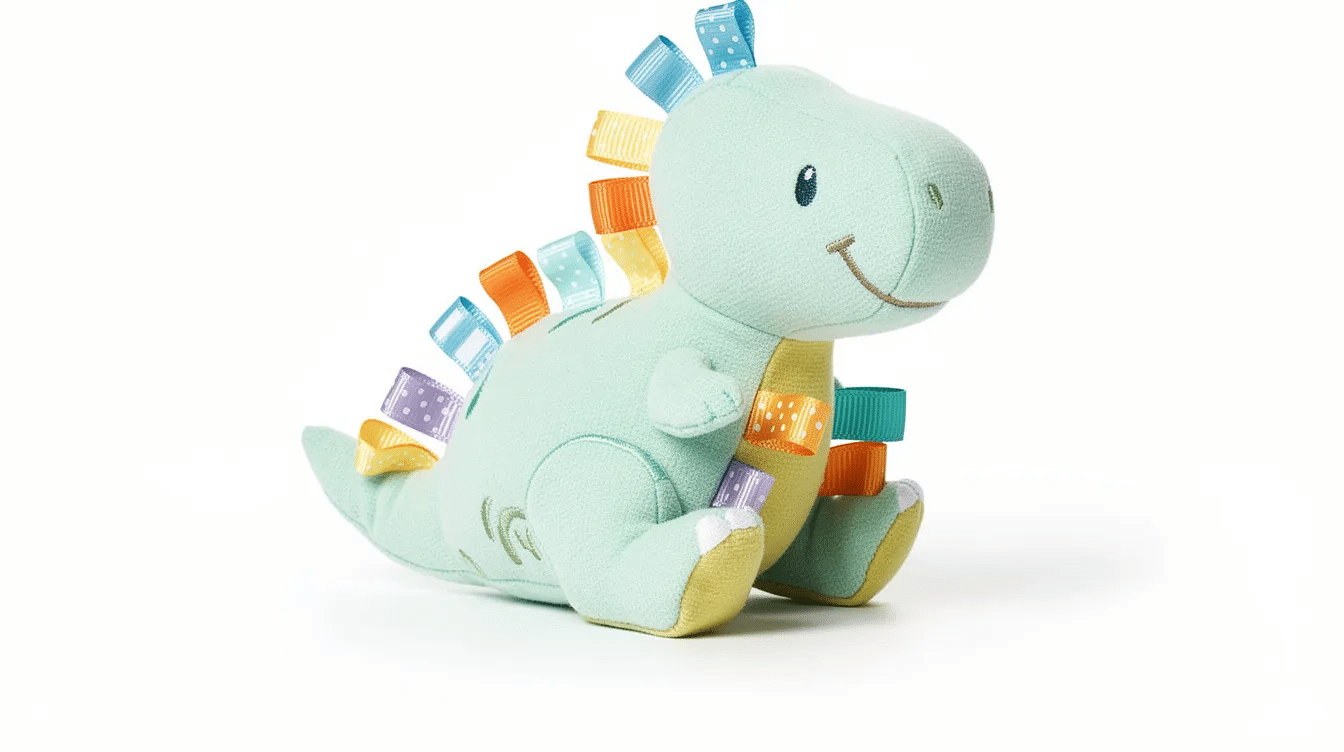
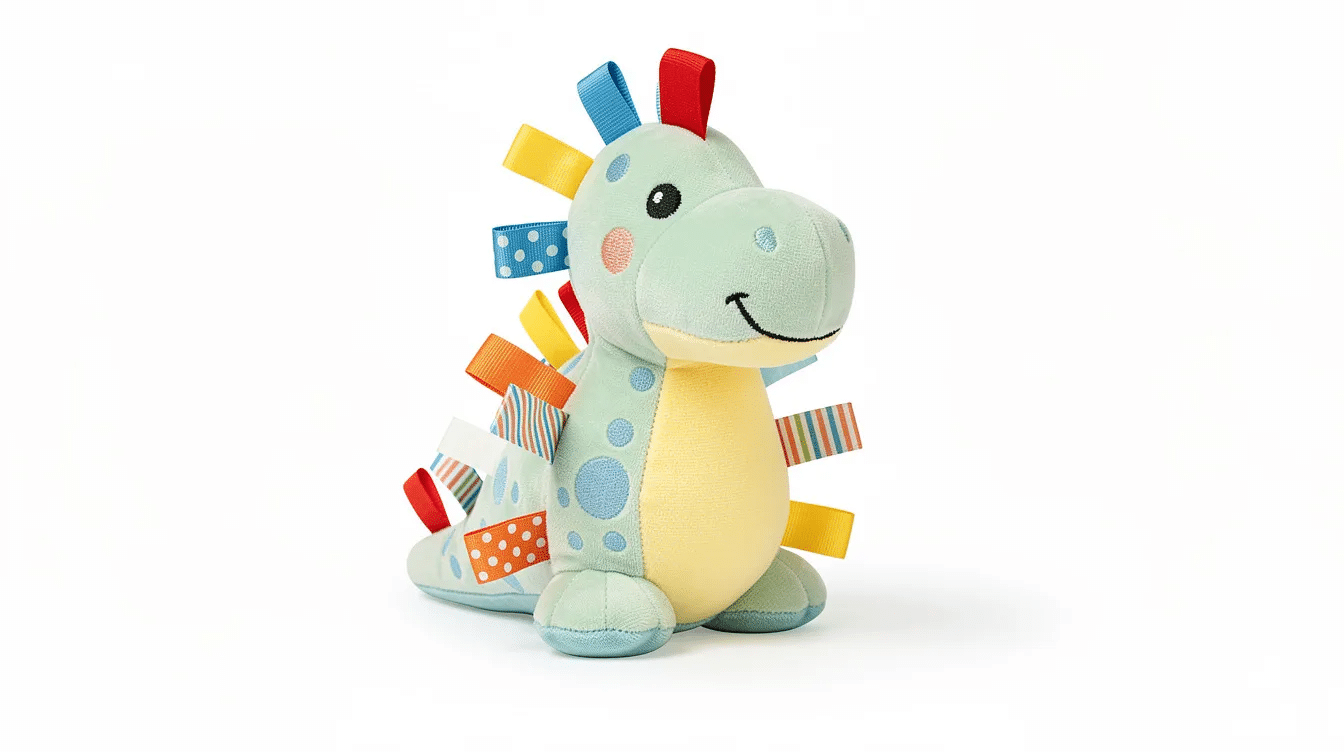
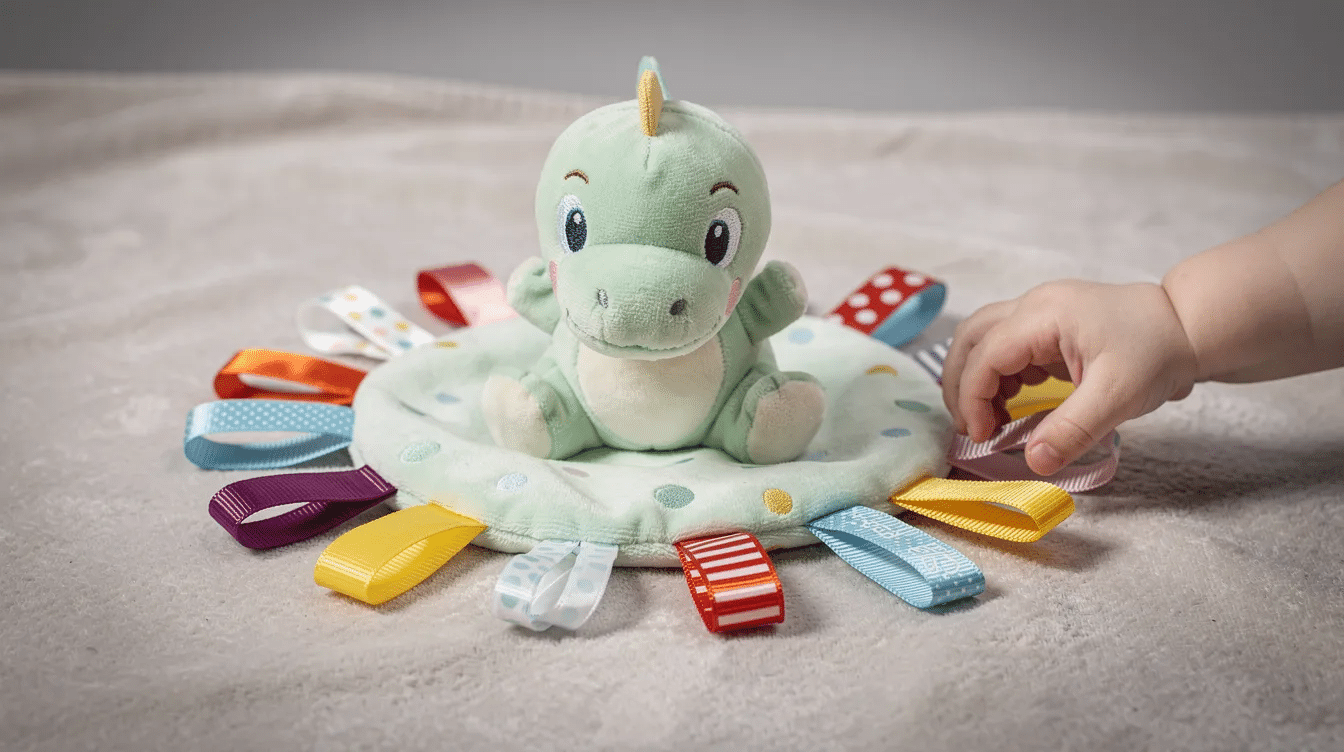
A dinky dinosaur tag toy is a flat, lightly padded plush shaped like a friendly dinosaur – roughly 6 to 8 inches long – with multiple colorful tactile ribbon loops sewn around its edges. Dinky dinosaur tag toys are handmade or specialty soft sensory baby toys, and they feature a plush dinosaur shape made from soft fabrics like quilting cotton, flannel, or minky. The body is typically made from plush or textured fabrics, and each toy has 10 to 20 short tags of satin, grosgrain, or textured webbing for babies to grab, rub, and chew.
The dinky dinosaur tag toy concept draws from the Taggies sensory revolution. Tag toys gained popularity in the early 2000s as infants preferred tags to expensive toys, and commercial brands grew from observations of children’s attraction to sensory tags. The fun twist here? A dino-shaped version inspired loosely by Dinky the T-Rex from Fallout: New Vegas – that towering roadside dinosaur from the video game – reimagined as a baby-safe fabric friend rather than a hard desktop collectible.
Main features of a dinky dinosaur tag toy:
- Small and lightweight for easy grasping by tiny hands
- Soft, squeezable body with thin wadding (not pillow-like)
- 10–20 ribbon tag loops in varied textures and colors
- Dinky dinosaur design features ribbons that mimic a dinosaur’s spines along the back
- Suitable for chewing, squishing, and cuddling – not a hard plastic action figure
Why Parents Love Dino Tag Toys
At Little Button Diaries, we hear from parents all the time that a simple tag toy is the one item they never leave the room without. Children find dinosaur-themed toys particularly appealing, and a dino tag toy quickly becomes the perfect “take everywhere” companion – from buggy rides to friday grocery runs to waiting at the doctor’s office.
Here’s why these items earn so much love:
- Fine motor development: The loops of satin or grosgrain ribbon provide fine motor skill practice. Research shows that infants who actively explore objects with their hands perform better in cognitive tasks later. Dinosaur toys can help develop fine motor skills in young children through all that pinching, pulling, and transferring between hands.
- Sensory soothing: The tactile ribbon loops help soothe infants and provide sensory input, making tag toys perfect for nap transitions and fussy moments. Tag toys combine early motor-skill practice with comforting companions.
- Dinosaur toys can enhance sensory development in children through contrasting textures and colors that support visual and tactile discrimination.
- Dinky dinosaur toys can stimulate babies’ senses through tactile exploration every time they reach for a different tag.
- Budget-friendly: Making one at home costs next to nothing, especially when you upcycle old baby blankets or scrap ribbon. Far cheaper than anything you’d find at a store.
If you’re looking for more ways to support art fine motor skills in children, sensory tag toys are an easy place to start.
Safety First: Avoiding Choking Hazards
Safety is the top priority when making or buying any toy for babies, and that reality applies doubly to items with tags and embellishments. Safe designs are essential for infant toys to prevent hazards, and toys must comply with international safety standards like ASTM F963 in the USA and EN-71 in Europe. These standards apply whether you live in the US, Canada, Australia, Poland, or any other country – always check local guidance.
What counts as a choking hazard for under-3s:
- Any small parts that can fit through a tube roughly 1.25 inches in diameter (the small-parts test cylinder) – toys should not have small parts that can be swallowed
- Loose buttons, beads, bells, or glued-on eyes
- Long ribbons that could wrap around a neck or fingers
- Frayed seams that expose stuffing
Design rules for your dinky dinosaur tag toy:
- Keep tags no longer than about 2 to 2.5 inches when folded
- Use no detachable eyes or plastic pieces – embroider features instead
- Triple-stitch or backstitch seams, especially where tags are sewn in
- Use a short stitch length (2 to 2.5 mm) for strength
Toys are tested to ensure they are safe for children, but homemade toys need your own rigorous checks. The AAP reports that more than 77% of non-food choking episodes happen in children age 3 or younger. Always supervise play, inspect the toy before each use, and retire it if any part is damaged. Label homemade toys conservatively as suitable for 6+ or 12+ months depending on construction.
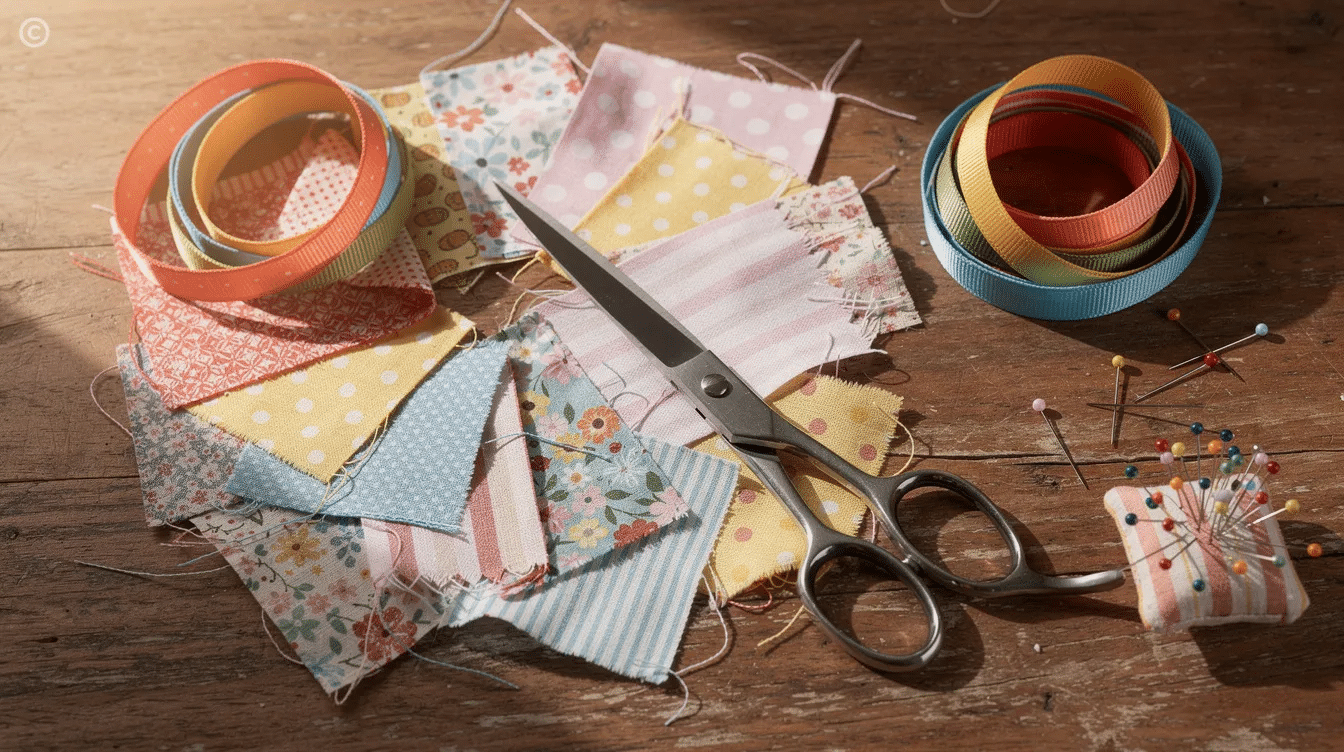
Materials and Tools You’ll Need
This section is your practical shopping list. Remember, you probably already have most of these items at home.
Fabrics:
- Pre-washed quilting cotton or soft flannel for the front
- Fleece or minky for the back (adds texture contrast)
- Optional: corduroy scraps for spine or belly panels
Stuffing:
- Thin polyester wadding or a single layer of cotton batting – keep the toy mostly flat so it stays easy to grasp
Tag materials:
- 10–20 short lengths of ribbon (cut to about 4–5 inches before folding) in different widths and textures: smooth satin, ridged grosgrain, soft cotton tape
- Avoid wired ribbon or anything with glitter that can shed
Tools:
- Paper and pencil to sketch a simple dinosaur silhouette
- Fabric scissors, pins or clips, matching thread
- Sewing machine (or hand-sewing needle) and fabric marker or chalk
Upcycle what you already have: old baby blankets, outgrown pyjamas, scrap ribbon from gift wrap. This process keeps the project frugal and adds sentimental weight to the finished toy.
Step-by-Step: Sewing Your Own Dinky Dinosaur Tag Toy
Here’s a simple walkthrough you can read through before loading up your sewing machine. For the full original tutorial, visit our dinosaur tag toy for babies craft page.
- Draw your pattern. Sketch a friendly T-rex silhouette – think Dinky from New Vegas but softened. Round the jaw, tail tip, and any points. Aim for about 6–8 inches in total length. Cut this out as your paper pattern.
- Cut your fabric. Pin the pattern to your front fabric and cut one piece, adding a quarter-inch seam allowance. Repeat on the back fabric. If you want a little fabric “spine” detail, appliqué it now with rounded edges.
- Prepare the tags. Cut your ribbons to roughly 4–5 inches each. Fold each into a loop and pin them around the dinosaur’s edge with raw ends aligned to the fabric’s raw edge, loops pointing inward. Space them fairly evenly but keep them away from very narrow points.
- Sew the body. Place front and back pieces right sides together, sandwiching the ribbon loops. Stitch around the entire shape with a 2 mm stitch length, leaving a 2-inch turning gap on the tummy. Backstitch over every tag entry point.
- Turn and stuff. Trim seam allowances, clip curves carefully – don’t cut through tag stitching. Turn right-side out through the gap. Insert a thin, even layer of wadding. Avoid overstuffing.
- Topstitch and finish. Topstitch around the full edge, about an eighth of an inch from the seam, closing the gap and reinforcing every tag. Add embroidered eyes or nostrils with satin stitch. Never use glued-on or plastic safety eyes for children under 3.
Wait until you’ve washed and inspected the finished toy before handing it to your little one.
Adding Sensory Elements Without Compromising Safety
Want to add extra engagement? Here’s how to do it without introducing trouble.
- Crinkle layer: The toys often include a hidden crinkle paper or rattle for sensory stimulation. Use clean, food-safe crinkle material sewn securely between the fabric layers. Sensory sounds can be incorporated into tag toys to engage infants’ hearing this way.
- Texture mix: Vary tag textures and widths generously. Add a fleece tummy panel or corduroy back plates directly to the dinosaur body – all edges fully enclosed and stitched.
- Color contrast: Younger babies respond to high-contrast colors, so mix bold ribbons with lighter fabric. Some dinosaur toys feature sound and movement for added fun, but for bedtime and travel, many parents prefer quiet toys.
- Rattles: Only include internal rattles for older toddlers (12–18 months and up), enclosed in a double-stitched inner pouch. For babies who still mouth everything, skip them entirely.
For more sensory project ideas, check out our guide to sensory art activities for special needs.
Play Ideas for Babies and Preschoolers
A dinky dinosaur tag toy isn’t just for chewing – it’s a springboard for screen-free play and gentle teaching moments.
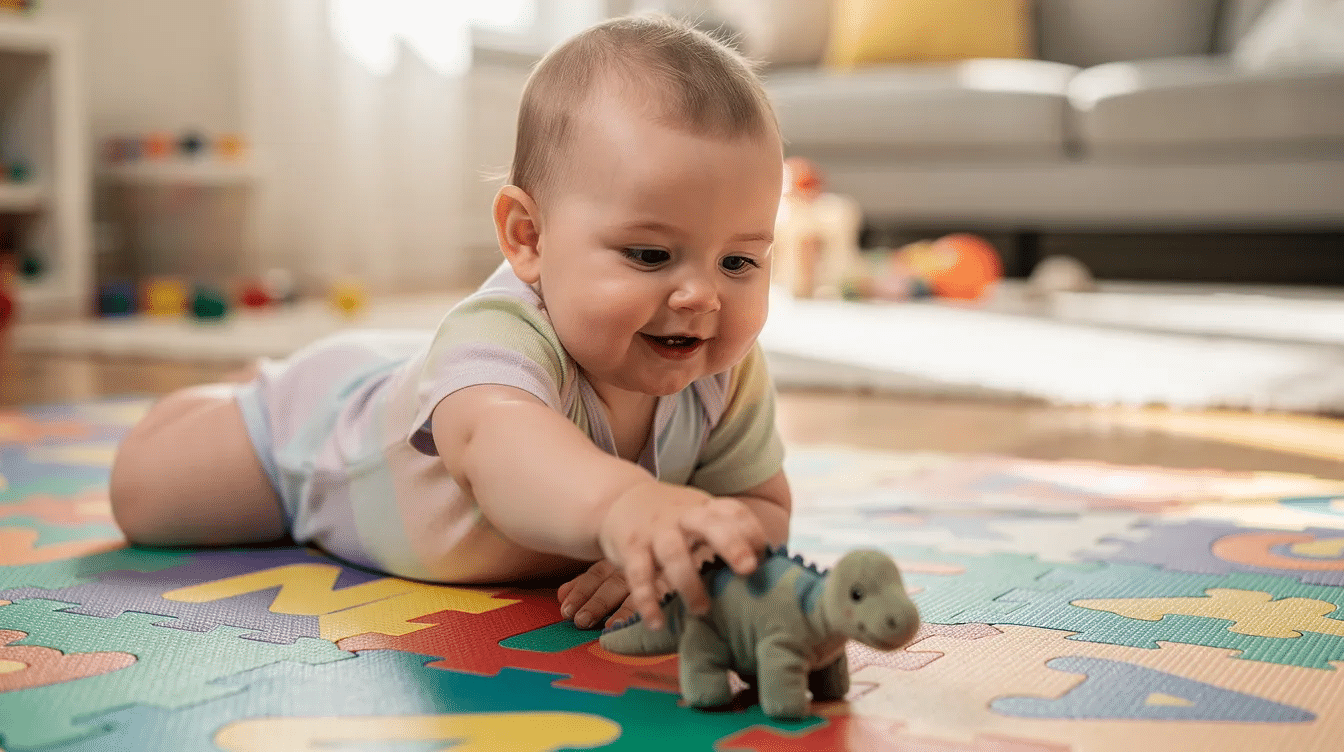
- Babies (3–12 months): Place the dino just out of reach during tummy time to encourage reaching. Name the colors and textures as your baby explores each tag. Play peekaboo by hiding the toy under a muslin.
- Toddlers (1–3 years): Try simple role-play games like “feeding” the dinosaur or tucking it into a toy bed. Pair it with a dinosaur storybook at bedtime as a comfort object.
- Preschoolers (3–5 years): Interactive dinosaur toys can engage children aged 3 to 5 years through imaginative adventures. Pretend the dino is a tiny mascot exploring “wastelands” in the garden – a softer nod to those Vegas adventures from the Fallout history. Dinosaur toys can promote imaginative play and creativity at this age.
- Early learning: Count the tags together, sort ribbons by color, or talk about textures. These are gentle pre-maths and language activities you can share anywhere.
If your kids also love DIY fidget toys, a tag toy makes an excellent complement.
Upcycling and Themed Variations
At Little Button Diaries, we live for upcycling everyday materials into keepsake toys with personal meaning.
- Sentimental makes: Cut your dinosaur from an old baby sleepsuit, a favourite (but stained) muslin, or an outgrown pillowcase with a fun print. Use the clean sections and turn memories into play.
- Themed sets: Create a trio – T-rex, stegosaurus, triceratops – in different fabrics. Try a night-sky colourway with dark starry fabric for a “New Vegas desert” vibe, or a bright rainbow version perfect for baby showers.
- Clip-on loop: Sew a fabric loop on the dinosaur’s back so it can clip onto a buggy strap. No more fishing the toy off the shelf under the stroller.
- Involve older kids: Let siblings pick fabrics and ribbons. It’s a great way to add a personal account of their taste and keep them engaged in the process.
Browse more hand crafting ideas for projects the whole family can enjoy.
Cleaning, Care and When to Retire the Toy
Because babies mouth tag toys constantly, regular cleaning isn’t optional – it’s essential.
- Washing: Pre-wash all fabric and ribbons before sewing at 40°C (104°F) with baby-safe detergent. Machine-wash the finished toy on a gentle cycle inside a mesh laundry bag.
- Drying: Air-dry flat or tumble on low heat. Check that tags haven’t frayed and seams remain tight after each wash. Keep notes on any wear you spot.
- When to retire: Significant fraying, loose stitching around tags, thinning fabric, or any visible stuffing means it’s time. Don’t pose a risk by continuing to use a worn-out toy.
- Keepsakes: Particularly beloved or first-made dinky dinosaur toys make wonderful memory-box items once they’re no longer safe for everyday play.
Buying vs. Making: What to Look For in a Store-Bought Dino Toy
Not every mom sews, and that’s perfectly fine. Many families prefer to purchase a ready-made tag toy from trusted sellers or customers on handmade marketplaces. Since 2015, packaging weight across the toy industry has been reduced by 41%, reflecting a broader push toward sustainability – but packaging isn’t the only thing to check.
Your checklist for a bought dino toy:
Feature | What to look for |
|---|---|
Age label | Clear recommendation (0+, 6+, or 12+ months) |
Safety markings | ASTM F963, EN-71, or equivalent for your country |
Tags | Securely sewn, no loose stitching |
Eyes/details | Embroidered, not glued or snapped on |
Internal parts | No hard components you can feel through the fabric |
Delivery/shipping | Confirm shipped from reputable locations with safety compliance |
Read customer reviews carefully – look for mentions of how the toy holds up after chewing and washing. Be cautious about items listed across many categories without clear safety data.
Gaming collectibles like Fallout: New Vegas Dinky statues and dino figurines are fun for adults and older kids to collect and display on a shelf or desk, but they are not designed for babies to play with or mouth. Stick with lightweight, fabric-based dinosaur toys labelled as suitable from birth or 6+ months.
FAQ
What age is a dinky dinosaur tag toy suitable for?
When made without small parts and with securely sewn ribbons, many parents introduce tag toys around 3 to 6 months – the age when babies start grabbing and exploring textures. Every child develops at a different pace, so always supervise use and follow manufacturer guidance for store-bought toys. Err on the side of caution for babies under 1.
Can I safely add a rattle or squeaker inside the toy?
It’s possible for older toddlers, but only if the rattle or squeaker is enclosed in a strong inner pouch and then fully sewn inside the dinosaur with reinforced seams. Avoid rattles for babies who are still mouthing everything, as the extra internal component adds another point that must never come loose. You don’t want to hear a rattle rolling free inside a toy.
How many tags should I include around the dinosaur?
A typical number is 10 to 20 tags for a 6–8 inch dino toy, spaced evenly but kept away from very narrow points like the tip of the tail or jaws. More tags offer more to explore, but too many can make the edges bulky and harder for tiny hands to grasp. Balance is key.
Is it okay if my baby chews on the ribbons?
Occasional chewing is expected – it’s the whole point of a sensory tag toy. That’s why non-wired, non-fraying, colourfast ribbons are essential. Inspect the toy daily, remove it if any tag is damaged, and offer the dinosaur alongside other age-appropriate teething items rather than as the sole thing to chew.
Can I base my pattern directly on the Fallout: New Vegas Dinky the T-Rex?
You can loosely use the idea of a friendly standing T-rex with an open mouth as inspiration, but keep your craft pattern simple, chunky, and rounded to protect against thin points and weak spots. For home use a generic cartoon dinosaur silhouette works great. If you plan to sell finished toys, avoid copying any branded artwork exactly – and make sure your designs meet all applicable safety and tax requirements for commercial sellers in your country, whether you log sales through an online page or a local shop. Aug is typically a strong month for baby-shower craft fairs, so plan accordingly.