
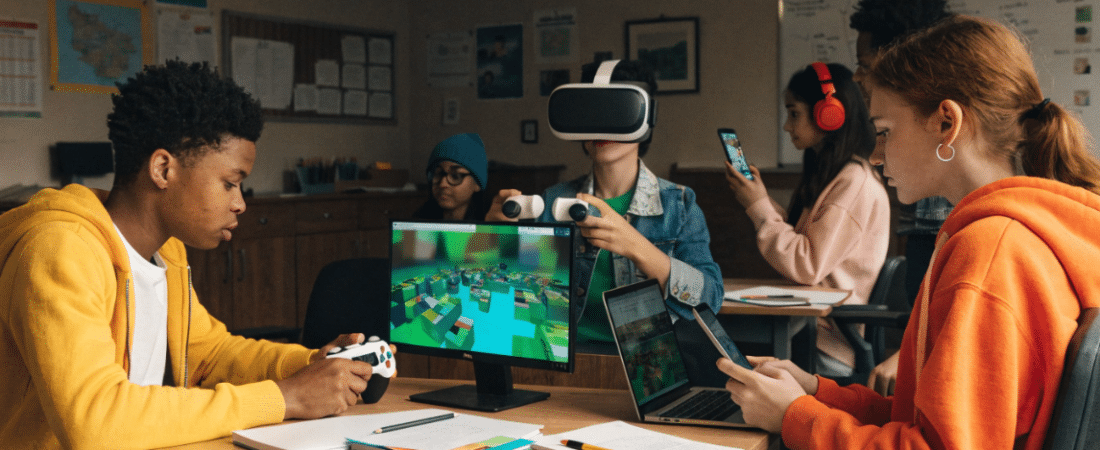
Walk into any K-12 classroom in 2024, and you’ll notice something different from a decade ago. Students aren’t just reading about ancient civilizations—they’re building them block by block. They’re not memorizing the water cycle—they’re simulating it in virtual ecosystems. Schools across the world have embraced video games, VR headsets, mobile apps, and interactive platforms as serious learning tools, not just entertainment distractions. According to the Entertainment Software Association’s 2021 survey, 76% of children under 18 play video games regularly, and by 2024, the global games audience has surpassed 3 billion players. This article explores how and why education loves all tech game approaches—from game-based learning and gamification to creative game design—and how these methods prepare students for an AI-driven, rapidly changing future. At the heart of this transformation is the idea of using innovative concepts like game-based learning and gamification as a core strategy, guided by a clear vision to create engaging, meaningful, and socially impactful educational experiences through technology and storytelling.
When we talk about “all tech game” in education, we’re describing a spectrum of tools. This includes console and PC titles like Minecraft Education Edition, browser-based educational games, mobile learning apps, immersive VR simulations, and low-cost classroom platforms that any teacher can access. The common thread? They all leverage the engaging power of play to teach students, build skills, and make learning meaningful. But what truly matters is how these tools are used to address core issues and make a real difference, ensuring that educational technology drives social impact and transformation.
- The Digital Generation: Why Games Fit How Students Learn Today
- From Play to Practice: Game-Based Learning in K–12 Classrooms
- Gamification: Quests, Badges, and XP in Everyday Lessons
- Building Digital Citizenship and Future-Ready Skills
- Beyond Playing: Students as Game Designers and Change-Makers
- Advanced Technologies Powering the Next Generation of Educational Games
- Tech-Free and Low-Tech Games: Balancing Screens and Play
- Conclusion: Designing a Future Where Education and Tech Games Grow Together
The Digital Generation: Why Games Fit How Students Learn Today
Today’s students don’t just play games—they live in gaming ecosystems. Before school, they’re dropping into Fortnite matches. After homework, they’re building worlds in Roblox or collaborating with other students on Minecraft servers. By 2023, gaming revenue had surpassed film and music combined, signaling that interactive media has become the dominant form of entertainment for young people.
This isn’t just about fun. It’s about how brains develop in a digital age. Games are familiar to kids in ways that textbooks never will be. And that familiarity creates powerful learning opportunities.
Here’s why games naturally support modern pedagogy:
- Problem solving through iteration: Games reward trial-and-error thinking. Players test strategies, fail, adjust, and try again—exactly the kind of resilience educators want to cultivate.
- Systems thinking: Many games require players to understand interconnected variables (resources, timing, cause-and-effect), which translate directly to science, economics, and social studies concepts.
- Immediate feedback: Unlike traditional tests where students wait days for results, games provide real-time information about what’s working and what isn’t.
- Social learning: Many K-12 students already socialize in virtual spaces, making digital games a natural context for group projects and collaborative learning.
When an entire class can jump into a shared virtual world they already understand, teachers don’t have to spend hours explaining controls or interfaces. They can focus on the actual learning goals.
From Play to Practice: Game-Based Learning in K–12 Classrooms
Game-based learning isn’t just handing kids a controller and hoping for the best. It’s the intentional use of games—digital or otherwise—to achieve specific educational objectives. This approach differs from unstructured screen time because teachers design lessons around gameplay, align activities with standards, and assess student progress through reflection, builds, or written assignments.
Consider these concrete classroom examples:
- Fractions through Minecraft: A 4th-grade teacher assigns students to build a model neighborhood where each lot must represent a specific fraction of the total space. Students practice math concepts while creating something they’re proud to show.
- Ecology simulations: Middle school science classes use ecosystem games where students manage populations, resources, and environmental variables—watching in real time how changes ripple through food webs.
- Historical strategy games: History teachers use turn-based strategy games to model events like the Industrial Revolution or westward expansion, asking students to make decisions and face consequences.
- Language arts quests: Elementary teachers embed vocabulary and reading comprehension into adventure narratives where students must demonstrate understanding to progress.
Microsoft expanded the Minecraft Education lesson library significantly between 2020 and 2023, offering ready-made STEM and social studies curriculum that teachers can adapt. These resources help educators align game activities with Common Core, NGSS, and state standards without starting from scratch.
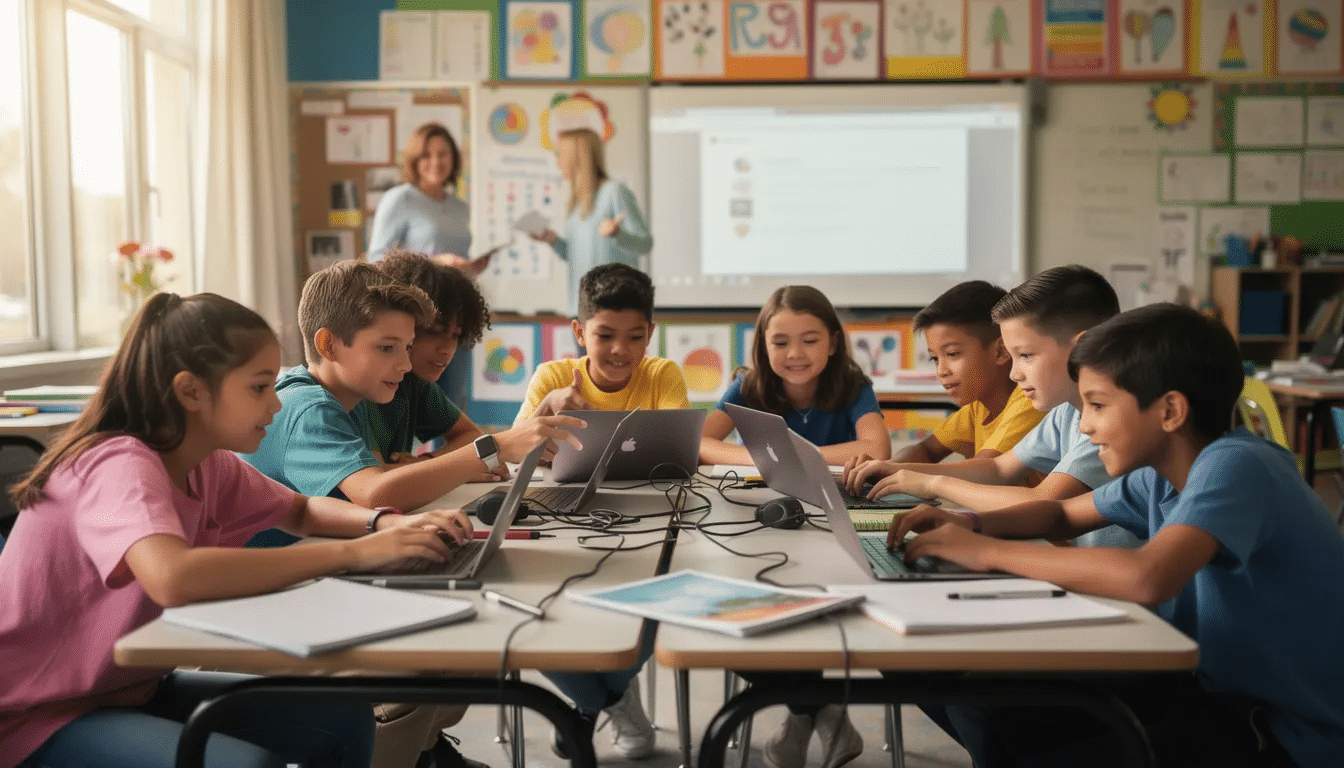
The key is structure. Teachers set clear learning goals, define how long students will play, and build in time for debrief discussions where kids connect in-game experiences to real-world knowledge. When organizing group activities, teachers ensure that no one group has an unfair advantage, and all groups participate for the same amount of time, promoting fairness and equal engagement among students.
Dynamic, Culturally Relevant Content Through Tech Games
One advantage of digital games is how quickly they update. Unlike printed textbooks that grow outdated, many games allow teachers to connect lessons to current events in 2024 and beyond.
Here’s how teachers create culturally relevant content:
- Civic engagement games: Titles like Good Trouble or Active Citizen let students explore voting rights, community organizing, and social justice movements in a U.S. civics context.
- Sandbox customization: Students use modding tools to redesign game worlds around local issues—reimagining a neighborhood park for better accessibility or modeling traffic patterns near their school.
- Real-life connections: Teachers build debrief discussions where students present their in-game choices and connect them to real-world ethics and decision-making.
A teacher might ask: “You chose to allocate resources this way in the game. What would that look like in our city? Who benefits? Who might be left out?” These conversations turn entertainment into genuine civic education.
Gamification: Quests, Badges, and XP in Everyday Lessons
Gamification takes game mechanics—points, quests, badges, levels—and applies them to non-game contexts. You don’t necessarily need a video game. You need the structure that makes games engaging.
Between 2012 and 2017, the percentage of teachers using digital games and gamified tools in classrooms jumped from 30% to 62%, according to research from that era. That growth has continued through the early 2020s as platforms have become easier to use and more aligned with curriculum standards.
Common gamification mechanics in classrooms include:
- Weekly quests: Instead of assigning worksheets, teachers frame activities as missions. “Complete three science observations this week to earn your Explorer Badge.”
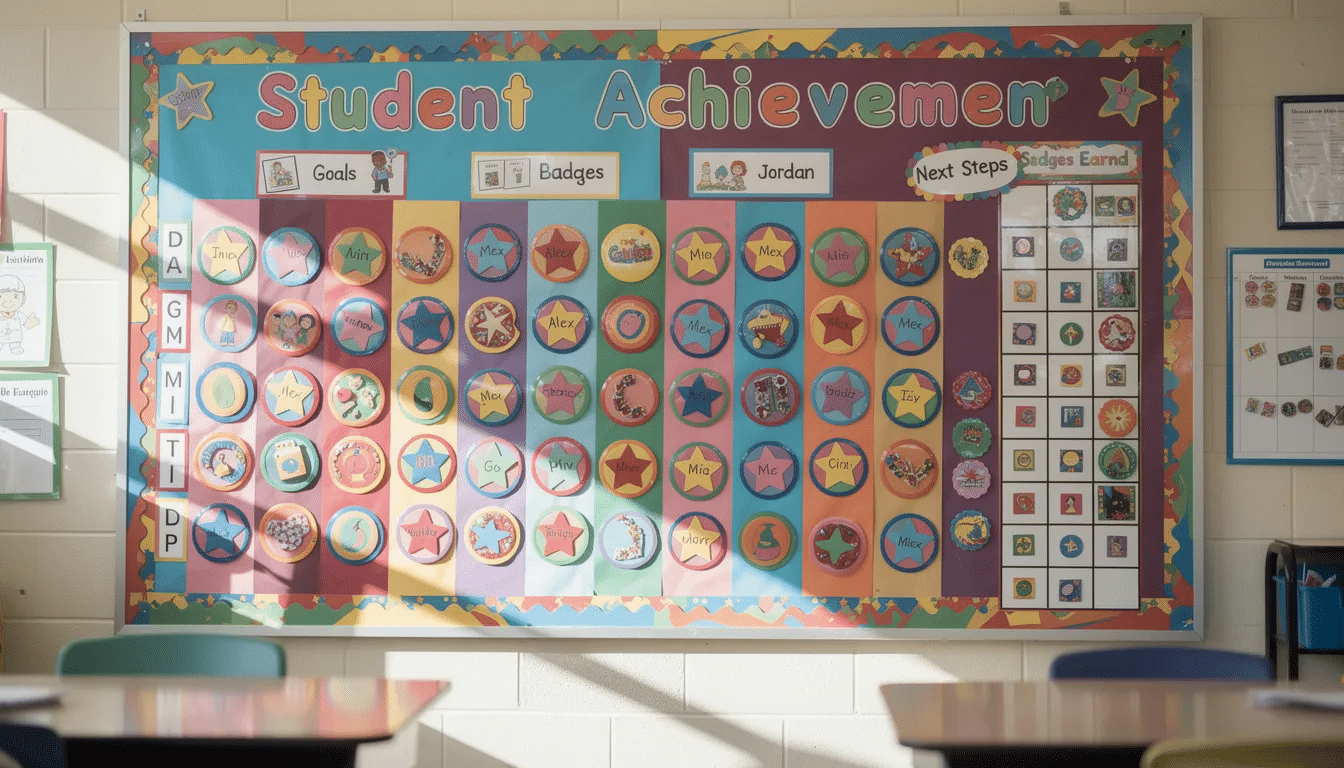
- Experience points (XP): Students accumulate XP for completing math challenges, helping classmates, or demonstrating creativity. Points can unlock privileges or recognition.
- Digital badges: Visible achievements for collaboration, persistence, or mastery give students tangible progress markers.
- Class leaderboards: When used carefully, leaderboards can motivate friendly competition—though they require thoughtful implementation.
A classroom story: In 2022, a 3rd-grade teacher transformed a science unit on space into a semester-long exploration quest. Students earned XP for lab work, journal entries, and teaching concepts to classmates. Each milestone unlocked new “missions” and collaborative challenges. By the end, students had covered the same curriculum as before—but engagement and test scores had noticeably improved.
Reality Check: Benefits and Challenges of Classroom Gamification
Not every gamification experiment succeeds. Some teachers scale back after pilot years due to the workload of designing quests or managing competitive stress among students. A balanced view matters.
Common benefits:
- Higher engagement and participation, especially from students who struggled with traditional formats
- More student choice and autonomy in how they demonstrate learning
- Clearer progress tracking that helps teachers identify who needs support
- Richer data on student behavior and learning patterns
Common challenges:
- Time required to design quests, create materials, and provide frequent feedback
- Students who dislike public competition or feel anxious about leaderboards
- Equity issues when gamified elements require tech access at home
- Risk of extrinsic rewards undermining intrinsic motivation if overused
Practical adjustments:
- Make competition opt-in rather than mandatory
- Use private progress dashboards instead of public rankings
- Rotate “co-designer” roles where students help build or adapt game rules
- Focus gamification on mastery and collaboration, not just winning
The goal isn’t to turn every lesson into a game show. It’s to borrow what works from game design and apply it thoughtfully.
Making School Feel More Fun and Meaningful
Joy and motivation aren’t luxuries in education—they’re foundational. When students feel excited to come to class, they learn more. When school feels like a meaningful world to explore, not a series of hoops to jump through, kids develop a sense of agency that carries into adulthood.
Consider a 1st-grade teacher who transforms routine literacy centers into an episodic detective mystery. Each week, students receive a new “case file” with clues embedded in reading passages. They earn points for solving puzzles and cooperating with teammates. Over the school year, the narrative builds, and students become invested in characters they’ve helped create—just one example of how innovative creative ideas for classroom engagement and learning can reshape everyday routines.
This approach works because:
- Students help design characters, rules, and missions, making the classroom culture more collaborative
- Kids who previously avoided reading now rush to literacy centers
- Confidence grows as children see themselves as capable problem-solvers
- The sense of story transforms routine practice into adventure
One child told her teacher: “I didn’t know reading could feel like this.” That’s the power of making school feel like a space worth exploring.
Building Digital Citizenship and Future-Ready Skills
Since around 2018, digital citizenship frameworks have become standard in schools—covering topics like online safety, empathy, media literacy, and responsible tech use. Game-based approaches offer a natural fit for teaching these skills because they put students in situations requiring real-time ethical decisions.
When students engage in multiplayer games and virtual worlds, they practice:
- Respectful communication: Coordinating strategies in Minecraft or Roblox requires clear, kind language
- Conflict resolution: Disagreements over resources or approaches happen constantly—and must be resolved
- Teamwork: Many games simply can’t be won alone
- Media literacy: Understanding how games present information builds critical thinking about all media
The concept of the “metaverse” already exists in spaces where students design avatars, build worlds, and create social experiences. These aren’t futuristic hypotheticals—they’re current reality for millions of young people.
Games also introduce students to artificial intelligence in accessible ways. Block-based coding inside platforms like Scratch or MakeCode lets students tweak simple AI behaviors. They can examine how NPCs respond to player actions, building understanding of how algorithms shape digital experiences.
Classroom activities linking gameplay to digital citizenship:
- After a collaborative Minecraft session, discuss: “What happened when your team disagreed? How did you resolve it?”
- Analyze how a game’s point system might influence player behavior—for better or worse
- Create class norms for online play that students help design and enforce
- Examine game monetization: “Why is this game free? What are they selling?”
Ethics, Representation, and Safe Use of Educational Games
Games are powerful media. They can challenge stereotypes and build empathy—but they can also reinforce harmful biases if teachers don’t choose carefully.
Teachers should analyze representation in the titles they use:
- Whose stories are centered in the game’s narrative?
- What roles do marginalized groups occupy—heroes, villains, or background characters?
- How is gender portrayed? Age? Disability?
- What cultural assumptions does the game make?
- Are different types of person authentically and nuancedly portrayed, including gender, ethnicity, and societal roles, to foster empathy and challenge stereotypes?
Data privacy also matters. Responsible programs limit student data collection, avoid selling youth information, and follow school or district policies. Before adopting any platform, teachers should review terms of service and understand what data flows where.
Classroom discussions can turn students into critical consumers of games:
- “Who benefits from this game’s design? Who might be harmed?”
- “If you were the game designers, what would you change about representation?”
- “What rules should our community have for online play?”
These conversations teach kids that technology isn’t neutral—and that they have the ability to question and reshape it.
Beyond Playing: Students as Game Designers and Change-Makers
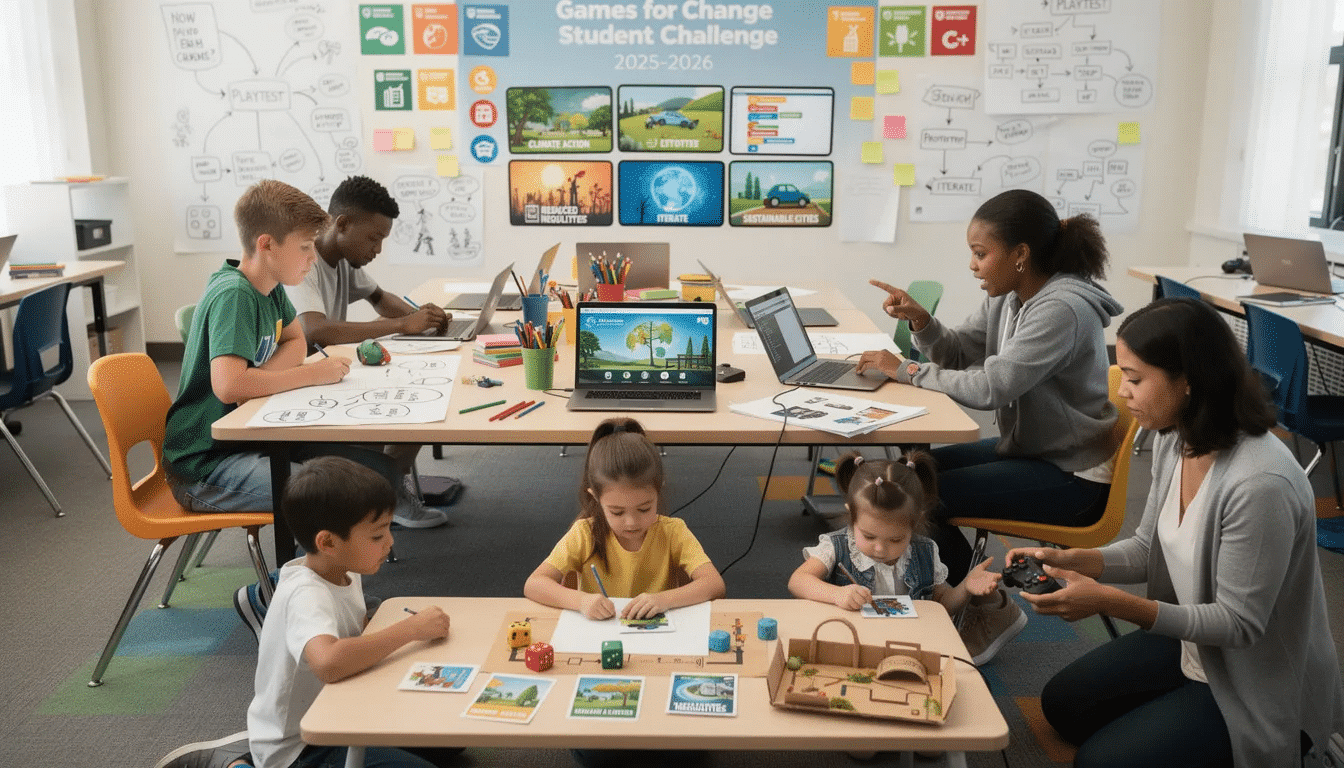
Education doesn’t just use finished games—it increasingly invites students to build their own. When kids become game designers, they develop skills that transfer across subjects and into future careers.
Consider the Games for Change Student Challenge running in 2025-2026, where students design games around UN Sustainable Development Goals like climate action or reduced inequalities. Participants don’t just consume content about global issues—they translate that knowledge into interactive experiences others can play.
For younger learners, especially in early grades, thoughtfully designed creative kindergarten class ideas for engaging learning experiences lay the groundwork for this kind of playful, inquiry-based learning.
Skills built through game design:
- Systems thinking: Understanding how game mechanics interconnect
- Narrative writing: Creating stories that engage players
- Art and visual design: Building appealing interfaces and environments
- Coding: Implementing logic that makes games work
- User testing: Gathering feedback and iterating based on real players
- Problem solving: Debugging code and balancing gameplay
Low-barrier tools students can use:
Tool | Age Range | Key Features |
|---|---|---|
Scratch | K-8 | Block-based coding, animation, game creation |
MakeCode for Minecraft | 3rd-12th | Code modifications inside familiar world |
Twine | 6th-12th | Interactive fiction and branching narratives |
GDevelop | 8th-12th | No-code game development with more complexity |
The point isn’t to create future professional game developers (though some will). It’s to help students see themselves as creators, not just consumers, of technology. |

Real Impact: Games for Social Good in and Beyond School
Serious games and VR experiences have been used to raise awareness about climate change, public health, and social justice. When students create these tools themselves, the impact multiplies.
Example: In 2024, a middle school group in the Pacific Northwest created a browser game about reducing plastic waste in their city. Players made choices about consumption, recycling, and advocacy—watching a simulated version of their local waterways respond. The team presented their game at a community event, fielding questions from city council members and local environmental groups. Several players reported changing real-life habits after the experience.
Teachers can connect student game projects to authentic audiences:
- School showcases where families play student-created games
- City council presentations on local issues students explored
- Online youth festivals celebrating student creators
- Partnerships with local nonprofits who use student games for awareness campaigns
When kids know their work matters beyond a grade, their passion and creativity multiply. They’re not just completing a project—they’re making a contribution to their community.
Advanced Technologies Powering the Next Generation of Educational Games
The classroom of the future is already here, and it’s powered by some of the most exciting technologies in the world. Game designers are now harnessing artificial intelligence, virtual reality, and augmented reality to create educational games that do more than just entertain—they adapt, challenge, and inspire students in ways never before possible.
Take Minecraft Education, for example. With the integration of artificial intelligence, this platform can now personalize learning paths for each student. As students practice problem solving and explore digital worlds, the game responds to their choices, offering hints, adjusting difficulty, and encouraging them to find their own solutions at their own pace. This means every child in the class can work on the same project, but each student’s journey is unique—mirroring the real-life diversity of learning styles and abilities found in every classroom.
Virtual reality is also transforming classroom games. Imagine a history lesson where students don VR headsets and step into ancient Rome, walking its streets and interacting with historical figures. Instead of reading about the past, students experience it firsthand, making the lesson more memorable and meaningful. In science, digital games powered by advanced simulations let students experiment with complex systems—like ecosystems or chemical reactions—without leaving the classroom. They can test hypotheses, see immediate feedback, and understand how small changes ripple through an entire system.
Collaboration is another area where advanced technology shines. Many games now encourage students to work in teams, tackling challenges that require communication, creativity, and cooperation. Teachers can divide the entire class into groups, assigning each a different aspect of a larger project. As students play, they learn from one another, share their findings, and build a sense of community—skills that are just as important as any academic content.
Real-time feedback is a game changer for both students and teachers. Educational games powered by AI can instantly assess student progress, highlight strengths, and pinpoint areas where more practice is needed. This allows teachers to tailor support, ensuring that no student falls behind and that everyone is challenged at the right level.
Perhaps most importantly, these technologies are making learning more accessible and equitable. Games can be designed to accommodate different learning needs, providing extra support or advanced challenges as needed. This flexibility helps ensure that every student—regardless of background or ability—can participate fully and make meaningful progress.
As we move further into the school year and beyond, the possibilities for classroom games and game based learning will only expand. Game designers are constantly pushing boundaries, creating new ways to engage students and connect lessons to the real world. Whether it’s through immersive VR field trips, AI-driven math challenges, or collaborative digital projects, the future of educational games is bright—and it’s already making a difference in classrooms around the globe.
By embracing these advanced technologies, educators can create a curriculum that’s not only fun and engaging, but also deeply effective. Students aren’t just playing—they’re building skills, exploring new ideas, and preparing for a world where creativity, problem solving, and digital literacy are more important than ever. The next generation of educational games is here, and it’s transforming what it means to teach, learn, and play.
Tech-Free and Low-Tech Games: Balancing Screens and Play
Education loves all tech game, but that doesn’t mean every lesson needs a device. Some of the most effective classroom games use the same engaging mechanics—competition, cooperation, narrative missions—without screens at all.
Examples of tech-free classroom games:
- Vocabulary relay races: Teams compete to match terms and definitions, earning points for speed and accuracy
- Role-play simulations: Students take on historical characters or scientific concepts, acting out scenarios and making decisions
- Math scavenger hunts: Problems hidden around the classroom or school, with paper XP trackers for progress
- Mystery games: Students solve puzzles by collecting clues from reading passages, earning team badges
These approaches work well for teachers who don’t have access to extensive technology or who want to break up screen-heavy days. They’re quick to set up—often requiring only paper, markers, and creativity—and they get kids moving physically.
Blending high-tech and low-tech:
- Use a digital platform to track points and badges, but run the core activity face-to-face
- Have students design game rules on paper, then implement them digitally later
- Rotate between digital and analog versions of similar challenges throughout a unit
The focus should always be on learning, not on the technology itself.
Choosing the Right Mix for Your Classroom
There’s no universal formula for the “right” balance of digital, low-tech, and tech-free games. The best mix depends on student age, subject area, school resources, and teacher comfort with technology.
Criteria for selecting game-based approaches:
- Alignment with learning goals: Does this game actually teach what you need students to learn?
- Accessibility: Can all students participate, including those with disabilities or limited tech access?
- Cultural relevance: Does the content reflect your students’ backgrounds and interests?
- Hardware availability: What devices do you actually have, and how reliable are they?
- Teacher comfort: Can you troubleshoot if something goes wrong?
Practical guidance:
- Start small: Pilot one digital tool during a single unit, not an entire course
- Collect student feedback: What did they enjoy? What frustrated them? What did they learn?
- Refine before scaling: Make adjustments based on what you observe before expanding
- Involve students in decisions: Ask them which games or structures work best—their voice matters
- Share with colleagues: Once something works, help a fellow teacher try it
You don’t have to figure out everything alone. Many educators have walked this path before you, and communities exist to share what works.
Conclusion: Designing a Future Where Education and Tech Games Grow Together
Education loves all tech game because these approaches meet students exactly where they already learn, connect, and create. In 2024 and beyond, game-based learning, thoughtful gamification, and student game design offer pathways to higher engagement, deeper understanding of complex systems, stronger digital citizenship, and future-ready skills. These aren’t gimmicks or distractions—they’re tools that, when used thoughtfully, make learning more meaningful for the kids who need it most.
Educators and school leaders can see themselves as designers in this world. You can combine commercial games, educational titles, gamified structures, and student-made games into a curriculum that reflects your values and your community’s needs. The next 5-10 years will bring even more AI, VR, and mixed reality into schools—but the fundamentals won’t change. Keep equity, ethics, and joy at the center of every tech decision you make. Start with one small experiment this school year, gather feedback, and build from there. Your students are ready to play, create, and learn. Are you ready to join them?