

That jar you’re about to recycle could become a stunning lamp. Those old jeans sitting in your closet might transform into a gorgeous tote bag. Upcycling takes items destined for the trash and gives them new life as something more valuable, more beautiful, and more personal than anything you’d find in a shop.
In this post, you’ll discover dozens of upcycle ideas ranging from weekend-ready quick projects to show-stopping conversation pieces. Whether you’re looking to refresh your home decor, create beautiful items for your garden, or make meaningful gifts for friends and family members, these ideas will help you see everyday materials in a completely new light.
- Quick Start: 15 Easy Upcycle Ideas You Can Do This Weekend
- What Is Upcycling (and Why It Matters in 2025)?
- How to Start Upcycling at Home
- What Materials Can You Upcycle?
- Upcycle Ideas for Walls and Home Decor
- Upcycling Furniture and Storage
- Creative Clothing and Textile Upcycle Ideas
- Upcycle Ideas for Kids, Family Projects, and Gifts
- Garden and Outdoor Upcycling Ideas
- Upcycled Crafts from Thrift Store and Secondhand Finds
- Jewellery, Accessories, and Bags from Upcycled Materials
- Unusual and Conversation-Starting Upcycle Projects
- Planning Your Own Upcycling Projects
- Conclusion: Make Upcycling Part of Everyday Life
Quick Start: 15 Easy Upcycle Ideas You Can Do This Weekend
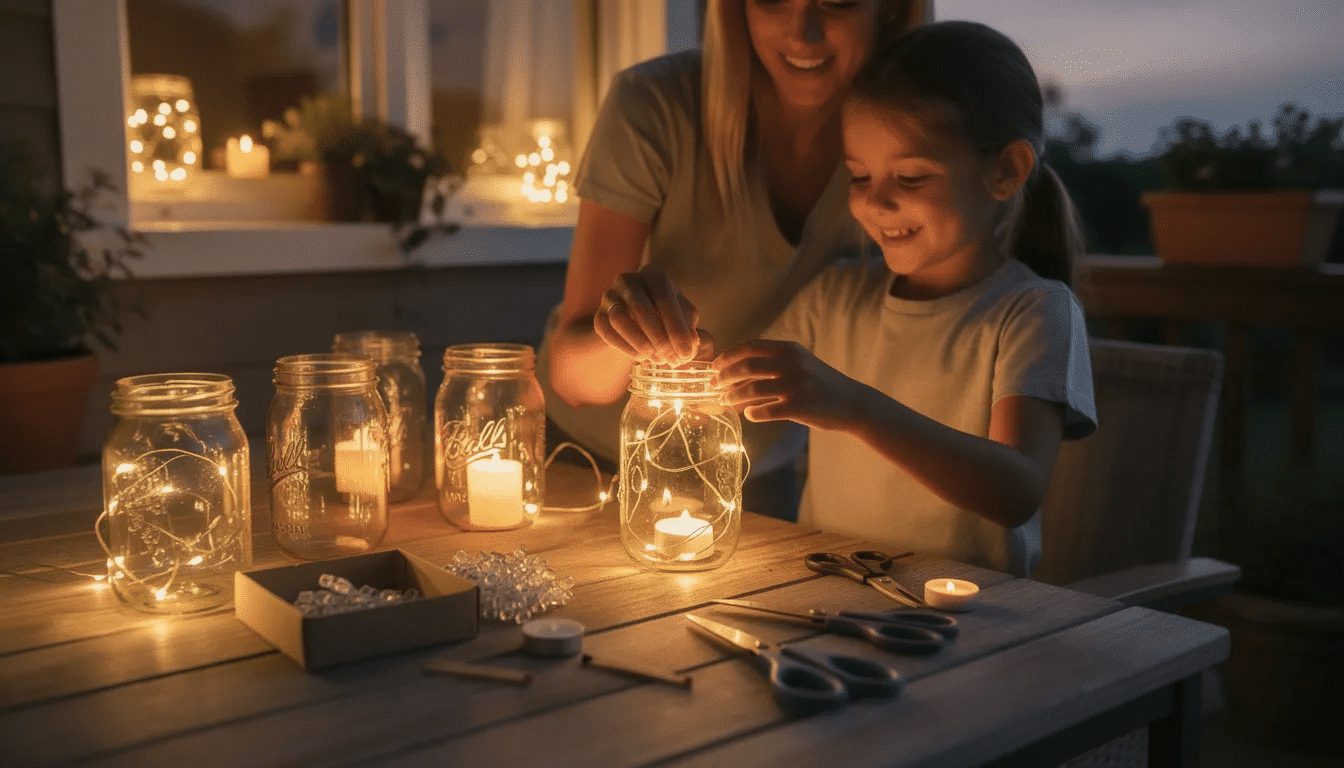
These are fast, beginner-friendly upcycling projects using items most homes already have. No special skills required—just a bit of creativity and an hour or two of your time.
- Mason jar lanterns – Fill clean jars with LED string lights or tea candles for instant ambiance on your patio or windowsill. 30 minutes, beginner, kid-friendly with supervision.
- Wine bottle fairy-light lamps – Insert battery-powered LED strings into empty wine bottles for a gorgeous centerpiece. 20 minutes, beginner.
- Tin can herb planters – Paint or wrap tin cans with rope, add drainage holes, and grow basil or mint on your kitchen window. 45 minutes, beginner, kid-friendly.
- Magazine garlands – Cut colorful pages into strips, fold into triangles or circles, and string together for party decor, or combine them with tissue paper crafts for fun and creative projects for extra texture. 60 minutes, beginner, kid-friendly.
- T shirt braided coasters – Cut old shirts into strips, braid tightly, and coil into circular coasters. 45 minutes, beginner.
- No-sew t-shirt tote – Transform any shirt into a reusable shopping bag with just scissors—no sewing required. 15 minutes, beginner, kid-friendly.
- Wine cork coasters – Glue corks together in a square or circular pattern for rustic table protection. 30 minutes, beginner.
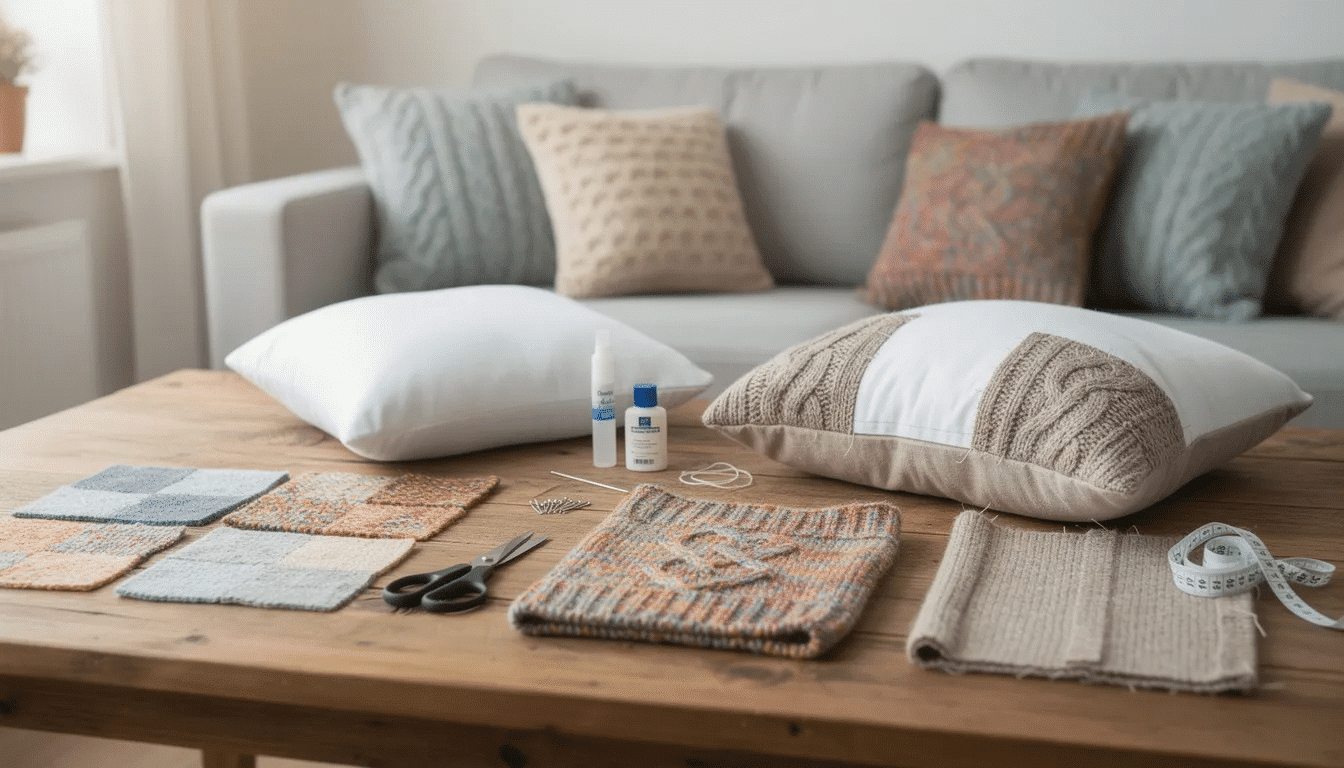
- Sweater cushion covers – Cut and sew (or glue) old sweater sections to cover throw pillows. 60 minutes, beginner to intermediate.
- Pallet vertical herb garden – Sand, paint, and attach small pots or fabric pouches to a wooden pallet for balcony gardens. 2-3 hours, intermediate, needs basic tools.
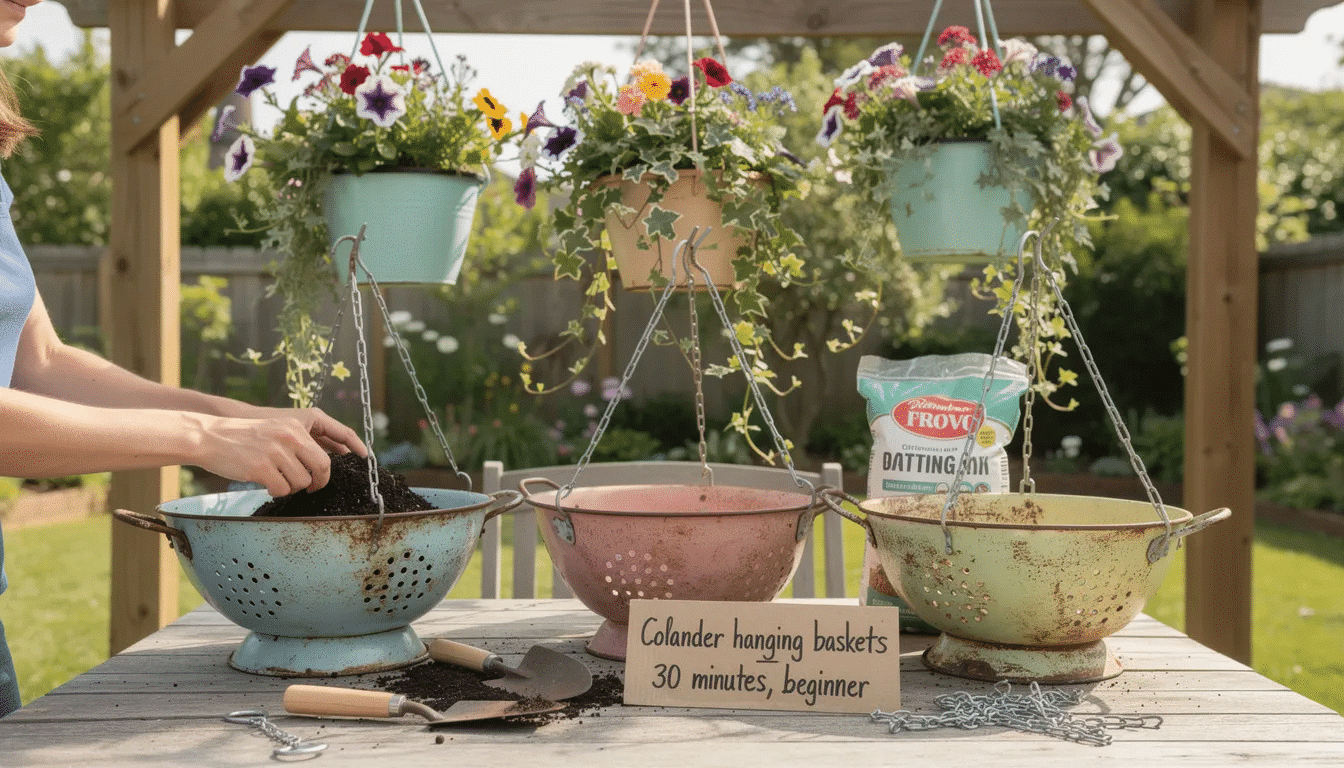
- Colander hanging baskets – Attach chains to vintage colanders, fill with soil and trailing flowers. 30 minutes, beginner.
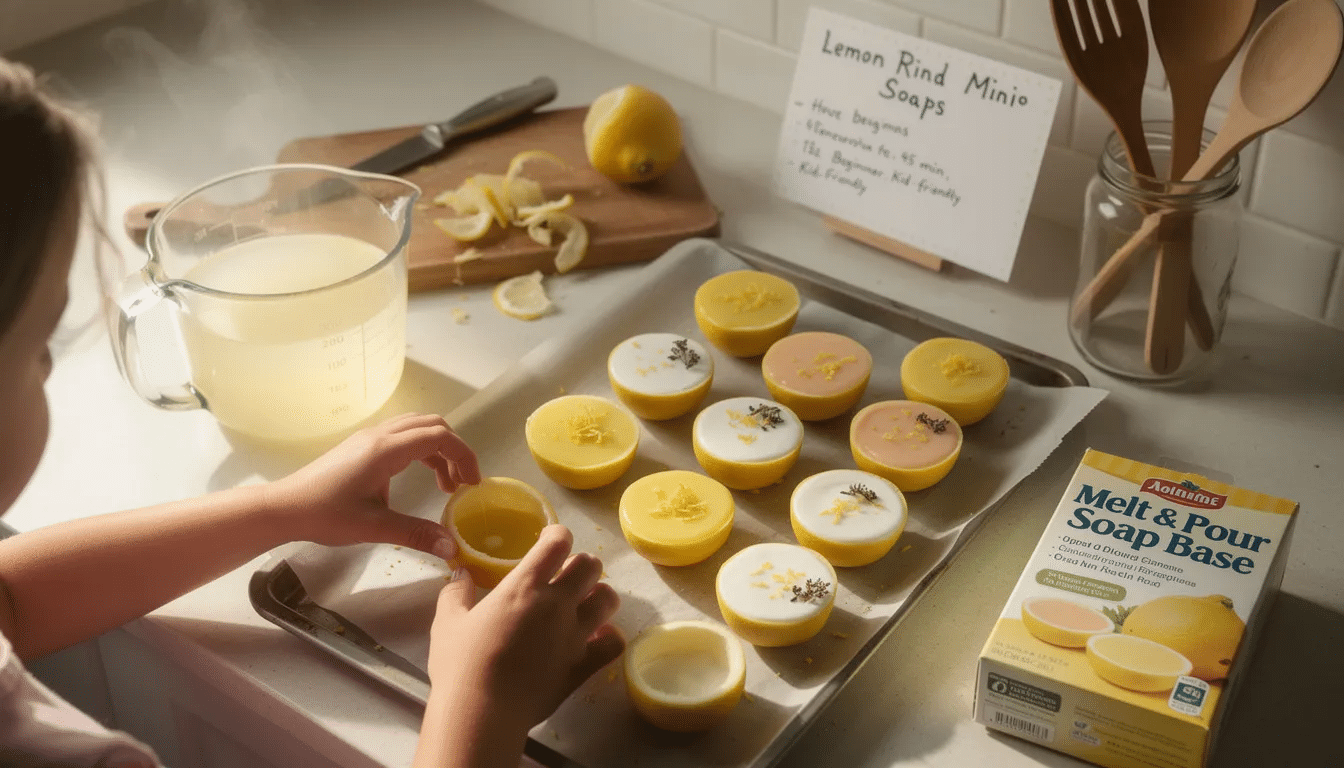
- Lemon rind mini soaps – Save lemon halves, dry them, and pour melt-and-pour soap inside for cute bathroom gifts. 45 minutes, beginner, kid-friendly.
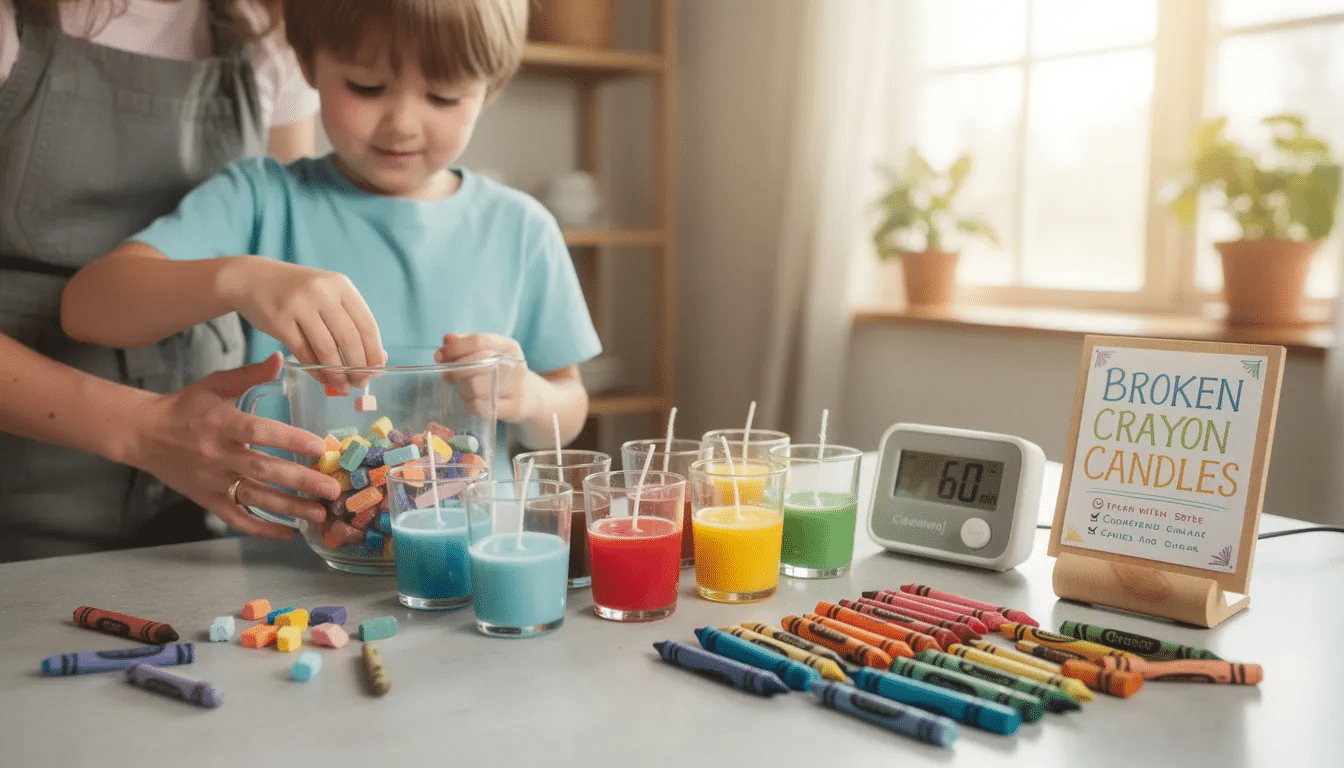
- Broken crayon candles – Melt crayon pieces into containers with wicks for colorful, scented candles. 60 minutes, beginner, kid-friendly with supervision.
- Glass jar terrariums – Layer stones, soil, and small plants in large jars for low-maintenance indoor gardens. 30 minutes, beginner.
- Drawer-on-wheels under-bed storage – Attach casters to old dresser drawers for roll-out storage. 60 minutes, intermediate, needs drill.
- Teacup candles – Pour candle wax into vintage teacups for charming gifts or decor. 45 minutes, beginner.
What Is Upcycling (and Why It Matters in 2025)?
Upcycling involves transforming discarded materials, waste, or unwanted products into new items of greater quality, utility, or aesthetic value. Unlike recycling, which breaks materials down into raw forms (often requiring significant energy), upcycling preserves the original material’s properties while adding creative value.
Think of it this way: recycling a glass bottle means melting it down to make another bottle. Upcycling that same bottle means turning it into a lamp, a vase, or wall art—no industrial process required.
Environmental benefits:
- Textile waste remains one of the fastest-growing waste streams, with millions of tons of clothing ending up in landfills annually. Upcycling extends product lifecycles and keeps stuff out of the ground.
- Single-use plastic continues to choke oceans and ecosystems. Repurposing plastic packaging into functional items reduces demand for virgin materials.
- According to textile industry research, producing clothing from upcycled materials can save up to 60% of CO2 emissions compared to virgin production.
- Upcycling uses up to 90% less energy than manufacturing entirely new goods.
Personal benefits:
- During ongoing cost-of-living increases, upcycling lets you save money by transforming what you already own rather than buying new.
- You create unique decor and accessories that no one else has—your style, your way.
- Preserve memories by turning meaningful old items (baby clothes, concert tees, grandma’s curtains) into quilts, wall art, or keepsakes.
How to Start Upcycling at Home
Most upcycling projects use items already in your recycling bin, wardrobe, or garage. You don’t need to buy anything special to begin—just shift how you look at things before they hit the trash.
A simple 4-step approach:
- Audit your trash for one week. Pay attention to what you throw away: jars, cans, cardboard boxes, fabric scraps, plastic containers. Set aside anything clean and structurally sound.
- Sort into material categories. Group items by type—glass, metal, wood, fabric, paper, plastic. This makes it easier to match materials to project ideas.
- Pick one small starter project per category. Don’t overwhelm yourself. Choose the easiest win from each group and complete it before moving on.
- Set up a small upcycle corner. Gather basic tools: scissors, a hot glue gun, sandpaper, acrylic paint, needle and thread. A single shelf or box is enough space to start.
Concrete examples from a typical home:
- Turn 3 jam jars from this week into bathroom organizers for cotton balls, Q-tips, and makeup brushes.
- Use 2 cereal boxes as drawer dividers for your junk drawer or kids’ craft supplies.
- Transform one unwanted t shirt into a reusable market bag using only scissors.
Safety tips:
- Always ensure proper ventilation when spray painting or using adhesives. Work outdoors or in a well-ventilated room.
- Adult supervision is essential for kids when projects involve cutting, hot glue guns, or sharp tools like box cutters.
What Materials Can You Upcycle?
Almost any household material can be upcycled if it’s clean and safe to handle. Here’s what you can do with common items:
- Glass: Turn jam jars into terrariums or bathroom organizers. Transform wine bottles into table lamps with plug-in light kits. Repurpose mason jars into soap dispensers by adding a pump lid.
- Metal: Convert tin cans into planters or desk caddies with a coat of paint. Upcycle a washing machine drum into an outdoor fire pit. Transform old bed frames into garden benches with added wooden slats.
- Wood: Build vertical gardens or outdoor sofas from shipping pallets. Turn old doors into desks, headboards, or gift wrap stations. Stack wooden crates horizontally or vertically as shelving units.
- Fabric: Cut old jeans into rugs, aprons, or wine totes. Transform t-shirts into bags, coasters, or cleaning rags. Convert sweaters into mittens, pet beds, or floor poufs.
- Paper and cardboard: Roll magazine pages into beads for jewelry or cut into strips for decorative garlands. Stack old hardcover books into side tables. Cut cereal boxes into custom drawer organizers.
- Plastic and packaging: Sew pet food bags into sturdy shopping totes. Fuse candy wrappers into zipper pouches. Cut vinyl packaging into pencil cases or document holders.
What NOT to upcycle at home:
- Certain electronics containing hazardous materials require professional recycling—don’t attempt to repurpose circuit boards or batteries without expertise.
- Chemically treated materials (pressure-treated wood, items with unknown coatings) may release harmful substances when cut, sanded, or heated.
Upcycle Ideas for Walls and Home Decor
Refreshing your room doesn’t require a shopping spree. Some of the most striking home decor comes from items you already own—transformed with a bit of creativity and paint.
- DIY record clocks – Attach a clock mechanism to vintage vinyl records for retro wall art that actually tells time.
- Window frame gallery walls – Hang old window frames on your wall and clip photos inside each pane for a farmhouse-inspired display.
- Framed fabric art – Stretch vintage scarves, shirts with sentimental prints, or quilt sections over canvas frames for instant wall art.
- Magazine or map quilt blocks – Cut pages into geometric shapes and arrange them on a backing board as no-sew wall panels.
- Painted shell displays – Collect shells from beach trips, paint them in metallic or pastel hues, and arrange them in shallow frames or glass dishes.
- Herringbone painted art – Tape off herringbone patterns on old canvases and repaint for modern geometric pieces.
- DIY cork boards – Fill old picture frames or cupboard doors with sheets of cork for functional pin boards in offices or kitchens.
Seasonal ideas: For holiday-specific decor, you can mix these projects with a craft festive round-up of Christmas makes to create a cohesive look.
- Paint bottles or jars in holiday colors (white and gold for Christmas, pastels for Easter) as festive centerpieces.
- Create magazine strip bunting for birthday parties—colorful, free, and completely customizable.
Each project can transform a space from bland to beautiful without spending money at a furniture shop.
Upcycling Furniture and Storage
From 2020 onward, secondhand furniture surged in popularity as people sought sustainable alternatives to mass-produced pieces. Upcycling lets you customize finds to your exact style while keeping perfectly good furniture out of landfills.
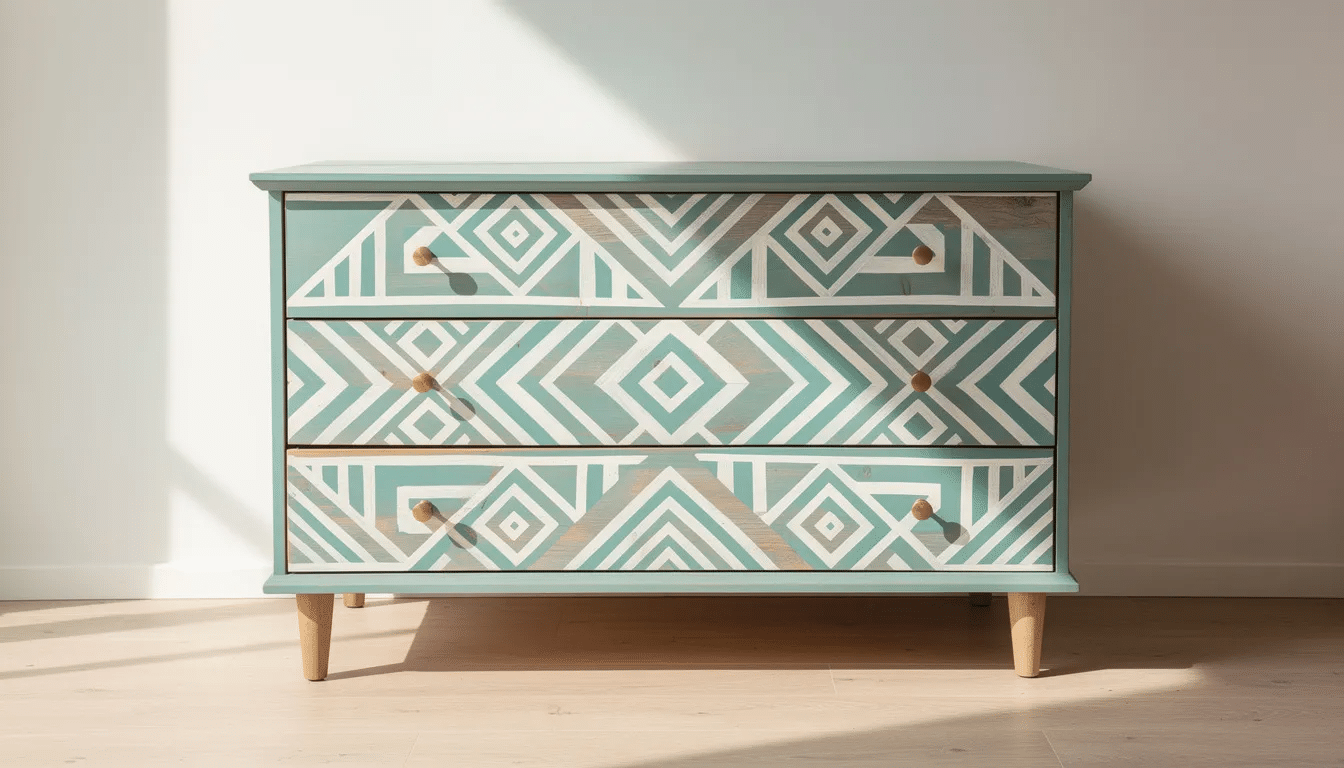
- Spray-painted side tables and geometric dressers – A can of paint and painter’s tape can turn dated furniture into statement pieces. Think bold colors or trendy color-blocking.
- Reupholstered chairs and sofas – Cover worn seats with thrifted fabric, old curtains, or even vintage tablecloths for a fresh look.
- Drawer-only projects – Remove drawers from broken dressers and repurpose them as bedside tables (add legs), under-bed storage (add wheels), or wall-mounted jewelry organizers.
- Ladder shelves – Lean old wooden ladders against walls as rustic shelving for plants, books, or towels in bathrooms.
- Pallet potting benches – Stack and secure pallets into outdoor workstations for gardening or as bar tables for entertaining.
- Filing cabinet makeovers – Cover metal cabinets with wallpaper or paint them in bright colors for home office storage that doesn’t look industrial.
- Library cart book trolleys – Restore wheeled library carts from thrift stores as mobile bookshelves or bar carts.
Planning tips:
- Measure your space before committing to any project—a gorgeous piece is useless if it doesn’t fit where you need it.
- Choose a color palette that matches your existing decor to ensure upcycled furniture looks intentional, not mismatched.
Creative Clothing and Textile Upcycle Ideas
Fast fashion generates enormous waste, but your wardrobe from years past holds plenty of potential. Instead of donating clothes that may end up in landfills anyway, give them new purpose.
- Old jeans transformations – Cut jeans into shorts, add fringe for boho vibes, or sew legs into wine totes. Denim also makes durable rugs, aprons, and even dog toys.
- Dress and skirt refashioning – Turn oversized dresses into kaftans or kimonos. Update outdated fits with simple alterations or new hems.
- T-shirt projects – Snip tees into halter tops, cut and braid into drawstring bags, or use the no-sew method for instant shopping totes.
- Sweater conversions – Felt old wool sweaters and cut into mittens or hats. Stuff sleeves for draft stoppers. Sew bodies into cushion covers or pet beds.
- Shirt upcycles – Transform men’s button-downs into pillowcases, girl’s skirts (using the body), or plastic bag holders for kitchens, or follow a tutorial on how to make a little girl’s dress from a shirt for a more advanced refashion.
- Baby clothes memory projects – Preserve tiny outfits by sewing them into memory quilts or stuffing them into soft toys for keepsakes.
Skill levels:
- No-sew projects: t-shirt tote, simple pillow cover wraps, braided coasters
- Sewing required: fitted clothing alterations, quilts, lined bags
Upcycle Ideas for Kids, Family Projects, and Gifts
Upcycling is a fun way to teach kids about sustainability while creating meaningful gifts for birthdays, holidays, and special occasions. These projects work well as afternoon activities with family members of all ages and can easily be combined with colorful craft ideas for a fun weekend.
- Milk carton bird feeders – Cut openings in clean cartons, paint with weatherproof colors, and fill with seed. Hang on trees for backyard bird watching. (Adult supervision required for cutting.)
- T-shirt yarn braided coasters – Cut fabric into strips, braid together, and coil into coasters—perfect for Mother’s Day or housewarming gifts.
- Sock gnomes – Fill orphan socks with rice, tie off sections for body and hat, and add felt features for adorable Christmas decor.
- Magazine or map bunting – Cut triangles from colorful pages, attach to string, and hang as birthday party decorations, or pair them with fun and easy craft dragonflies ideas for kids to create for a whimsical theme.
- Glitter rock bookends – Paint rocks with craft paint, add glitter, and use as cute bookends for kids’ shelves. Back-to-school project idea that pairs nicely with owl crafts for kids for a reading-corner theme.
- Scented sachets – Sew small pouches from fabric scraps, fill with potpourri or dried lavender, and gift as drawer fresheners.
- Paper and fabric gift tags – Cut shapes from cardboard scraps and fabric offcuts for reusable, personalized gift tags.
Safety note:
- Always supervise cutting, hot glue use, and any project involving sharp tools or heat sources when working with kids.
Upcycled gift wrapping ideas:
- Use fabric scraps as furoshiki wraps (Japanese-style cloth wrapping) that recipients can reuse.
- Decorate brown paper bags with hand-carved potato stamps or drawings for zero-waste gift wrap.
Garden and Outdoor Upcycling Ideas
Since 2020, more people have expanded balcony and garden spaces, making outdoor upcycling especially popular. These projects add charm to your outdoor space while keeping materials out of landfills.
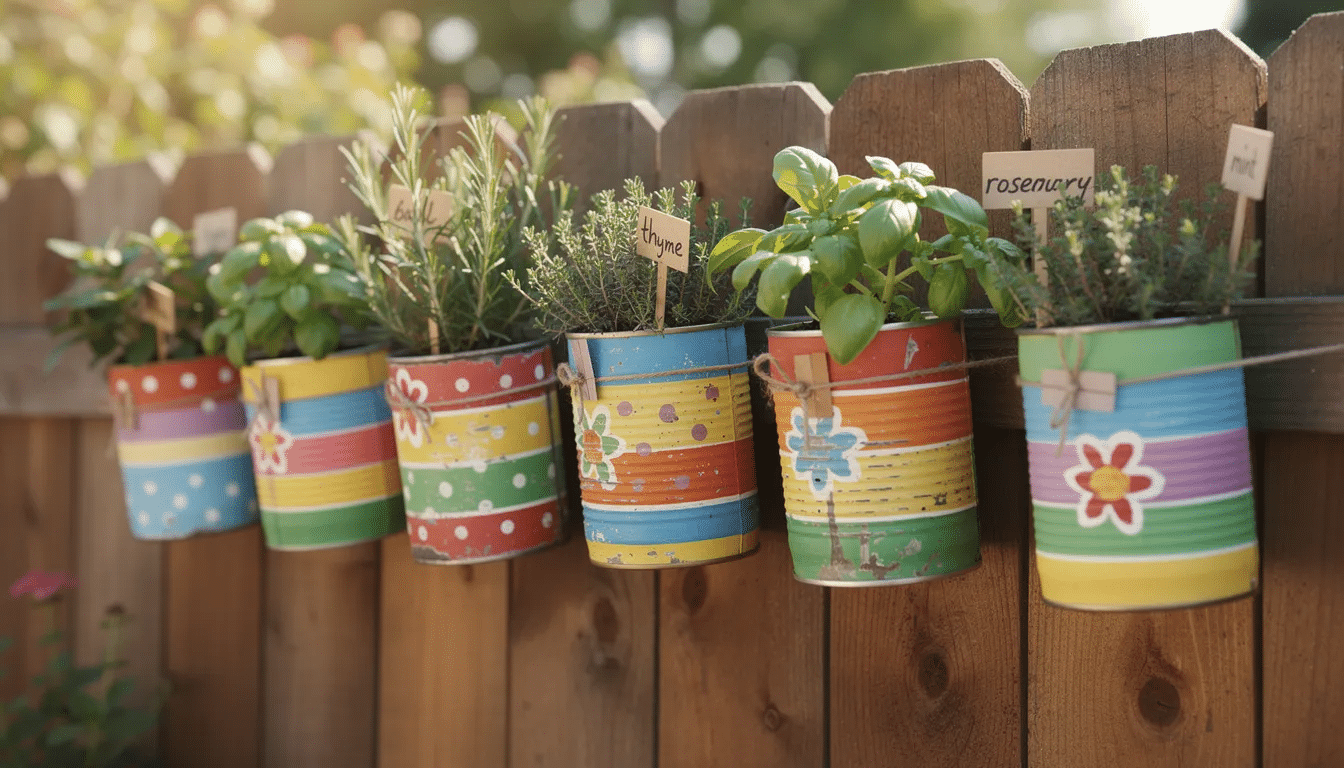
- Tin can and colander planters – Punch drainage holes, paint in cheerful colors, and hang on fences or balcony railings for vertical gardens.
- Pallet vertical gardens – Mount pallets against walls, line with landscape fabric, and plant herbs, succulents, or trailing flowers in the slats.
- Bed frame garden benches – Repurpose metal or wood headboards and footboards into seating areas surrounded by flowers.
- Bicycle wheel hanging racks – Attach hooks to old bike wheels for hanging tools, pots, or decorations in sheds or on porches.
- Welly boot planters – Drill drainage holes in worn rain boots and fill with soil and petunias for whimsical garden accents.
- Watering can rain features – Hang old watering cans with beads or LED strings threaded through the spout for decorative “rain” installations.
- Solar-powered fountains – Place solar pumps in old containers, bowls, or planters for self-sustaining water features.
- Tennis racket trellises – Attach vintage rackets to garden walls as supports for climbing plants like sweet peas or ivy.
- Unique garden paths – Create mosaic pathways from sea glass, broken tiles, or cracked crockery set in mortar.
Practical considerations:
- Weatherproof all outdoor projects with exterior paint or sealant to prevent rust and rot.
- Ensure proper drainage in planters to avoid root rot and mosquito breeding.
- Secure heavy items like pallet gardens or large planters to walls or posts to prevent tipping in wind.
Upcycled Crafts from Thrift Store and Secondhand Finds
Charity shops and thrift stores in 2024-2025 are treasure troves for budget upcycling. Frames, books, fabrics, and furniture await transformation at a fraction of retail prices.
- Vintage suitcase storage – Clean and line old suitcases for stylish storage or remove lids to create raised pet beds.
- Cabinet and hutch makeovers – Paint dated china hutches in modern colors, add new hardware, and repurpose as bar units, bathroom storage, or linen cabinets.
- TV tray transformations – Convert folding TV trays into portable pressing tables for sewing projects or laptop desks for working from the couch.
- Brutalist wall decor – Assemble abstract arrangements from thrifted metal pieces, wood scraps, and interesting hardware for industrial-style art.
- Thrifted holiday tablescapes – Build Thanksgiving or Christmas table settings from mismatched vintage plates, brass candlesticks, and linen napkins.
- Library cart rolling stations – Restore wheeled carts as mobile bookshelves, bar carts, or craft supply stations.
What to look for when thrift shopping:
- Solid wood construction (knock on it—solid wood sounds different than particleboard)
- Real glass in frames and cabinet doors
- Sturdy joints and frames without wobble
- Quality hardware that can be cleaned, painted, or easily replaced
Jewellery, Accessories, and Bags from Upcycled Materials
Small accessories offer space to experiment with bolder, more unusual upcycling ideas. Materials like bike chains, tyres, and electrical wire become wearable conversation starters.
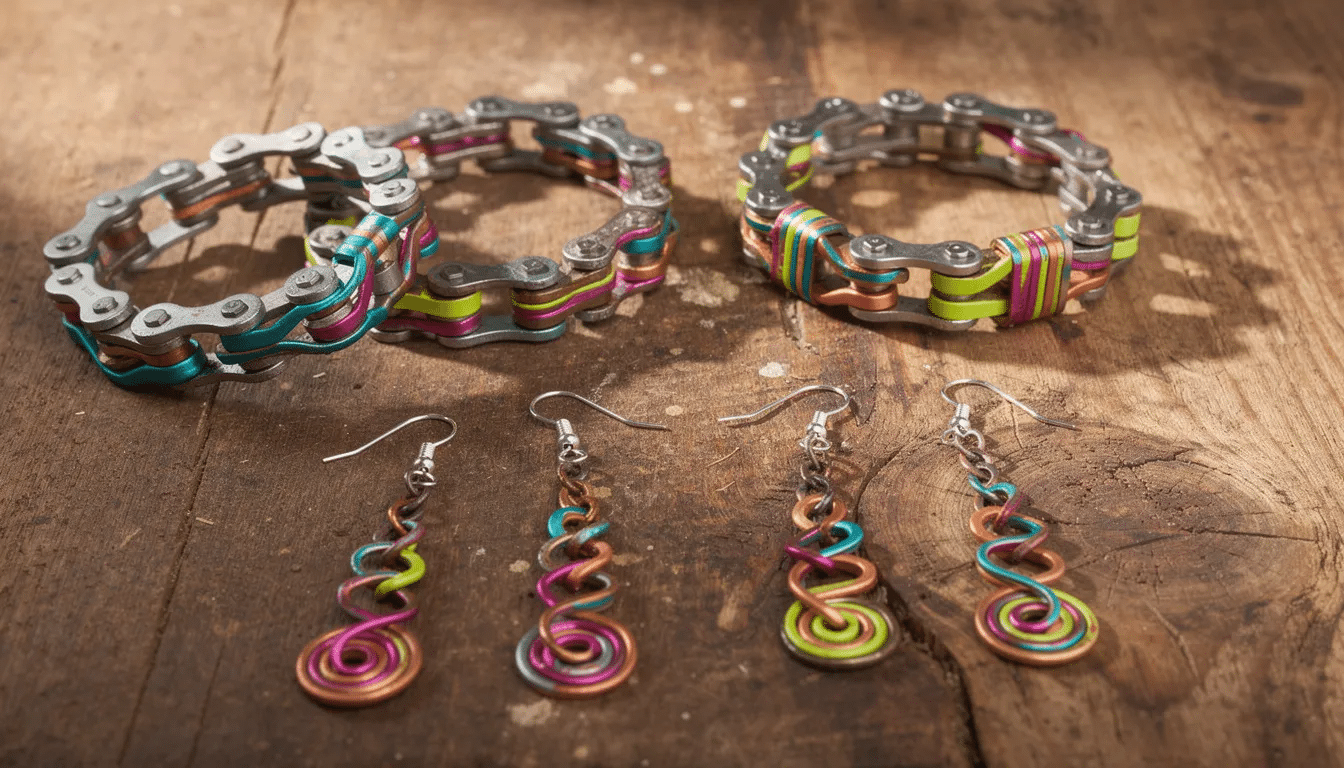
- Bike chain jewellery – Clean and reshape chain links into bracelets, earrings, and cufflinks for industrial-chic accessories.
- Inner tube and wire earrings – Cut inner tubes into shapes or coil electrical wire into spirals for lightweight, edgy earrings.
- Seatbelt and tyre belts – Sew buckles onto repurposed car seatbelts or cut strips from old motorcycle tyres for rugged, durable belts.
- Resin and wood dust pieces – Mix skateboard shavings or sawdust into clear resin for unique pendants and earrings with a handcrafted, boho vibe.
- Denim pocket embellishments – Cut pockets from old jeans and attach to plain tote bags as functional, decorative patches.
- Canvas bag upgrades – Cover corporate logos on promotional swag bags with patchwork, embroidery, or fabric appliqués for personalized shopping bags.
Upcycled bag projects:
- Pet food bag totes – Clean and sew sturdy pet food bags into reusable shopping bags—surprisingly durable and water-resistant.
- Denim messenger bags – Sew jean legs into crossbody bags or wine carriers using existing seams and pockets for minimal-waste construction.
- Military canvas backpacks – Repurpose tent fabric or military surplus canvas into rugged, minimalist backpacks with vintage appeal.
Unusual and Conversation-Starting Upcycle Projects
Ready to tackle something bigger? These show-stopping projects demand more time and tools but deliver amazing results that guests will talk about for years.
- Washing machine drum fire pit – The perforated drum creates mesmerizing light patterns when flames flicker through—perfect for small urban gardens.
- Television terrariums – Gut old CRT televisions (safely, with proper disposal of components) and fill the screen cavity with plants or a small aquarium.
- Oak barrel mini bars – Cut whiskey or wine barrels in half vertically, add shelves inside, and hang on walls as rustic bar storage.
- Mattress spring bulletin boards – Stretch old box springs on walls as industrial-style displays for photos, postcards, and notes clipped with clothespins.
- Guitar wall shelves – Cut acoustic guitars in half vertically and mount as shadow-box shelves for small plants or collectibles.
- Book shelves and tables – Stack hardcover books and drill through to create side tables, or mount individual books open-faced as wall-mounted display shelves.
- Stained glass sun catchers – Hang salvaged stained glass panels or vintage windows in bright rooms as stunning light filters.
Important notes:
- Some projects require advanced tools (saws, drills, welding equipment) or professional assistance.
- Always verify electrical safety and structural integrity before repurposing large items like TVs or appliances.
Planning Your Own Upcycling Projects
Once you’ve tried a few ideas from this collection, you’ll start seeing upcycling potential everywhere. Moving from copying tutorials to designing your own custom projects is where the real creative fun begins.
A simple planning process:
- Start with a problem. Need more storage? Want unique gifts? Looking for garden decor? Match your needs to “waste” items you have available.
- Sketch a rough design and list tools. Even a basic pencil sketch helps you think through construction. List every supply you’ll need before starting.
- Estimate cost versus buying new. Part of upcycling’s appeal is saving money. If your project costs more than buying new, reconsider the approach.
- Check safety and durability. Consider weight limits, fire risks (for candles or fire pits), sharp edges, and how long the item needs to last.
Documentation tips:
- Take before/after photos of every project. These make great inspiration for future ideas and satisfying reminders of what you’ve accomplished.
- Keep a simple log noting dates, materials saved from landfill, and approximate money saved. Over a year, the numbers add up impressively.
Build the habit:
- Complete one “quick win” project this week—something from the 15 ideas at the start of this post.
- Plan one longer project over the next month. Having both short and long-term goals keeps momentum going.
Conclusion: Make Upcycling Part of Everyday Life
The upcycle ideas in this post cover home decor, furniture, clothing, gifts, and garden projects—each one an opportunity to reduce waste and create something uniquely yours. By choosing to upcycle instead of recycle or throw away, you’re extending product lifecycles and reducing demand for new materials.
Even one small upcycling project per month in 2025 can keep dozens of items out of landfill over a year. The cumulative impact on your wallet, your home’s style, and the environment is remarkable.
Before you throw away your next jar, box, or shirt, pause and ask yourself: “What could this become?”
I hope this collection has inspired you to see old items as possibilities rather than garbage. Now it’s your turn—share your favorite upcycle ideas or before/after stories with friends and family. You might just spark someone else’s creative journey too.