Story stones are small, smooth stones decorated with images, patterns, or photographs that children use as prompts to build their own narratives. They might seem simple, but they’re one of the most effective ways to develop language, spark imagination, and build confidence in young storytellers. Story stones support language and cognitive development, enhance children’s storytelling skills, and encourage vocabulary expansion during storytelling-all through hands-on play.
In this blog post, we’ll walk through seven of our favourite story stones ideas, explain what makes each approach unique, and help you decide which style fits your family or classroom best. Whether you’re a parent looking for a fun way to spend time with your little one or a preschool teacher searching for open ended activities, there’s an approach here that will work for you.
How We Chose the Best Story Stone Ideas
Not all story stones are created equal. Here’s what we looked at when selecting these ideas:
- Engagement – Does this approach genuinely hold a preschooler’s attention?
- Ease of creation – Can a busy parent or educator create story stones without specialist supplies or hours of prep?
- Educational value – Does it support storytelling, vocabulary, narrative structure, or social skills?
- Versatility – Can you use story stones in many ways across different play scenarios?
- Cost-effectiveness – Does it rely on everyday materials rather than expensive kits?
- Durability – Will these stones survive being handled, dropped, and loved by kids?
Research backs up the value of these tools. A study with 47 preschoolers found that combining visual design with story grammar instruction significantly improved children’s use of narrative elements like setting, problem, and resolution. That’s exactly the kind of learning story stones can deliver.
Top 7 Story Stone Ideas for Preschool Storytelling
Before diving in, a quick practical note: acrylic paint is recommended for colouring story stones, and white stones are popular because images show up clearly on them. You can find flat stones at a beach, in your garden, or grab assorted stones from a hardware store-river pebbles work fine too. Always let story stones dry for a couple of days before use so paint or sealant cures properly.
1. Character Story Stones
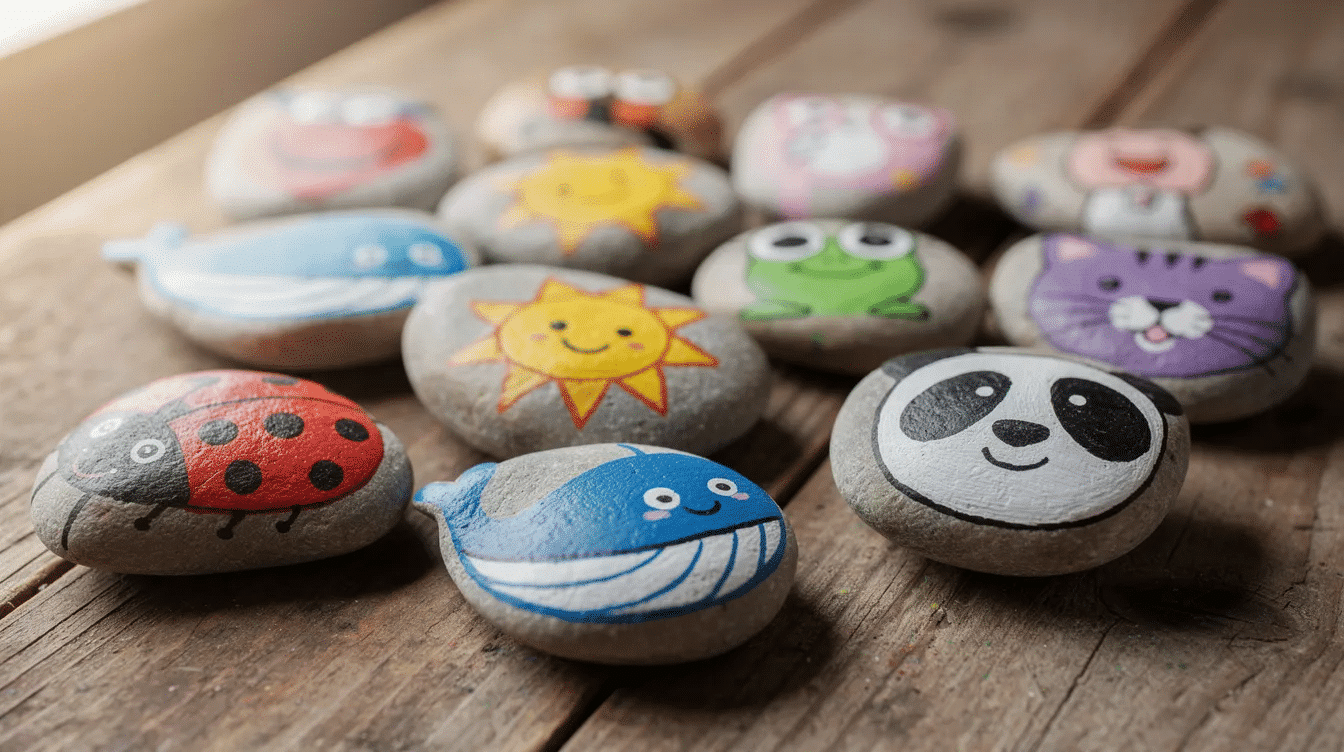
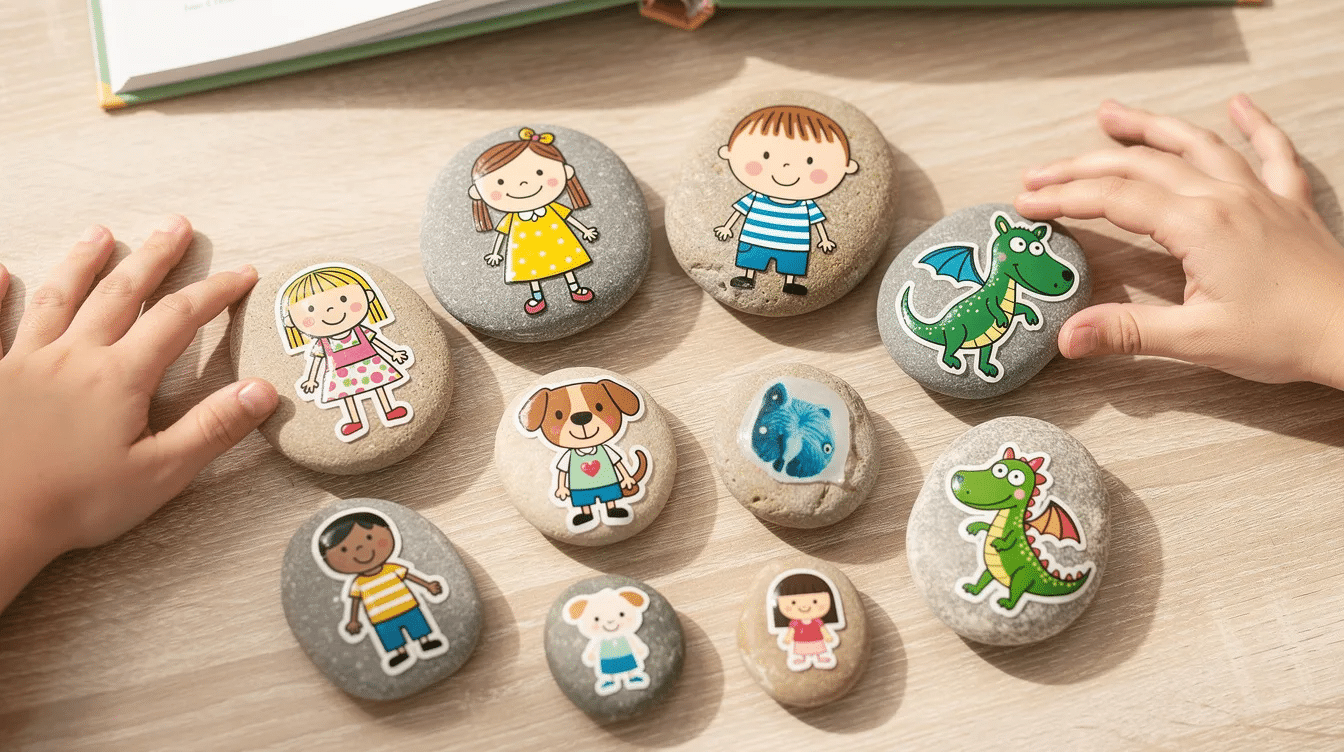
Character stones feature painted images of recognizable figures-animals, people, a girl, a boy, a dog, a dragon. You can also paint stones with characters from specific books your child already loves. Stickers can be used to create simple story stones if painting feels daunting.
Why It Stands Out
Recognizable characters give younger children a concrete starting point. Instead of staring at a blank stone wondering what to do, they pick up a painted fox and immediately begin: “Once upon a time, a fox went to the forest…” Using story stones this way encourages children to create and retell stories with confidence.
Best For
Beginning storytellers ages 2–4 who need visual prompts to start narratives.
Key Strengths
- Easy for children to understand and use immediately
- Connects to familiar books and stories children already know
- Simple to create with basic painting skills and craft supplies
- Stones can feature different emotions to help children explore feelings
Possible Limitations
- May limit creativity if children stick too closely to known storylines
- Requires some artistic ability to paint recognizable characters (though stickers solve this)
2. Blackboard Paint Story Stones
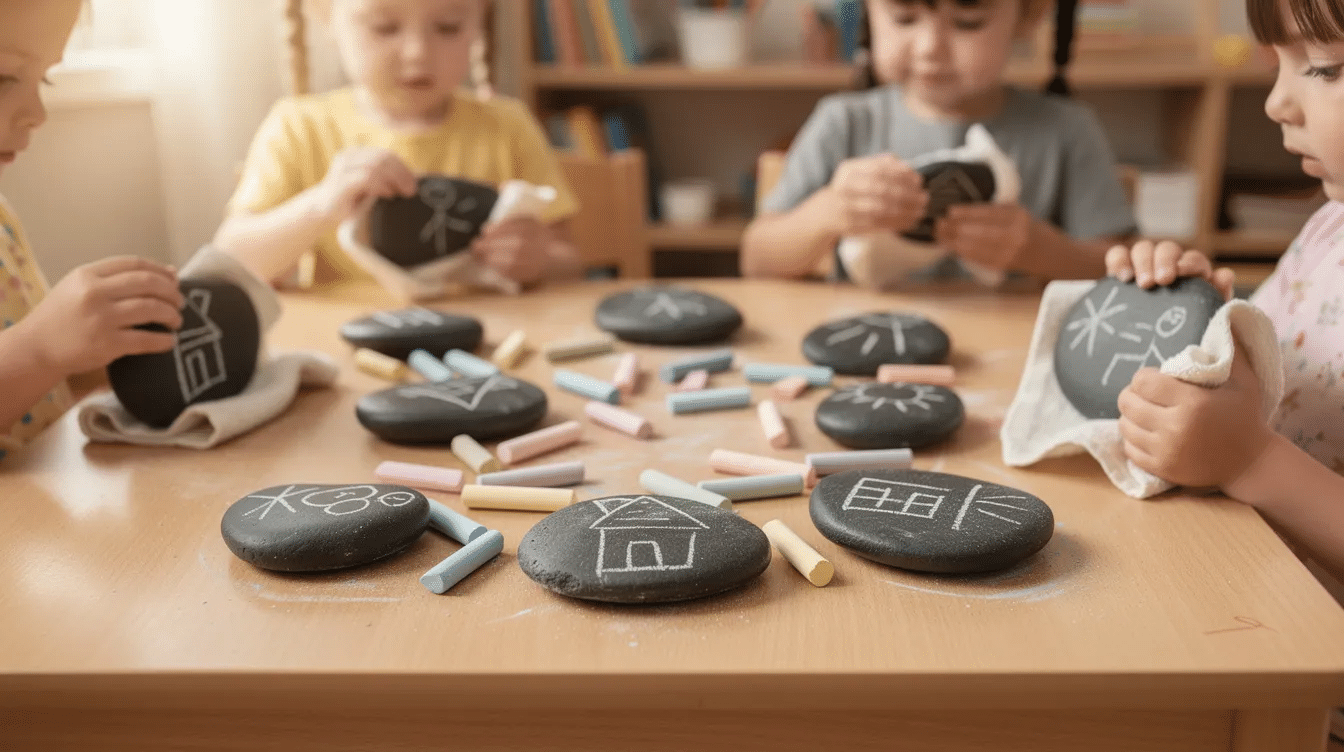
Coat flat stones with chalkboard paint and hand children a piece of chalk. Now they draw their own images, tell a story, wipe clean, and start again. Children can draw on stones painted with blackboard paint as many times as they like.
Why It Stands Out
When children create their own pictures, they own the story completely. This mark making story process builds both fine motor skills and narrative thinking simultaneously. It’s a fantastic approach for independent story tellers who want full creative control.
Best For
Independent players ages 3–6 who enjoy drawing and mark-making activities.
Key Strengths
- Endless reusability with different chalk drawings
- Develops fine motor skills alongside storytelling
- Completely child-led creative process
Possible Limitations
- Chalk can be messy for indoor play
- Requires chalk supplies and regular cleaning
3. Abstract Pattern Story Stones
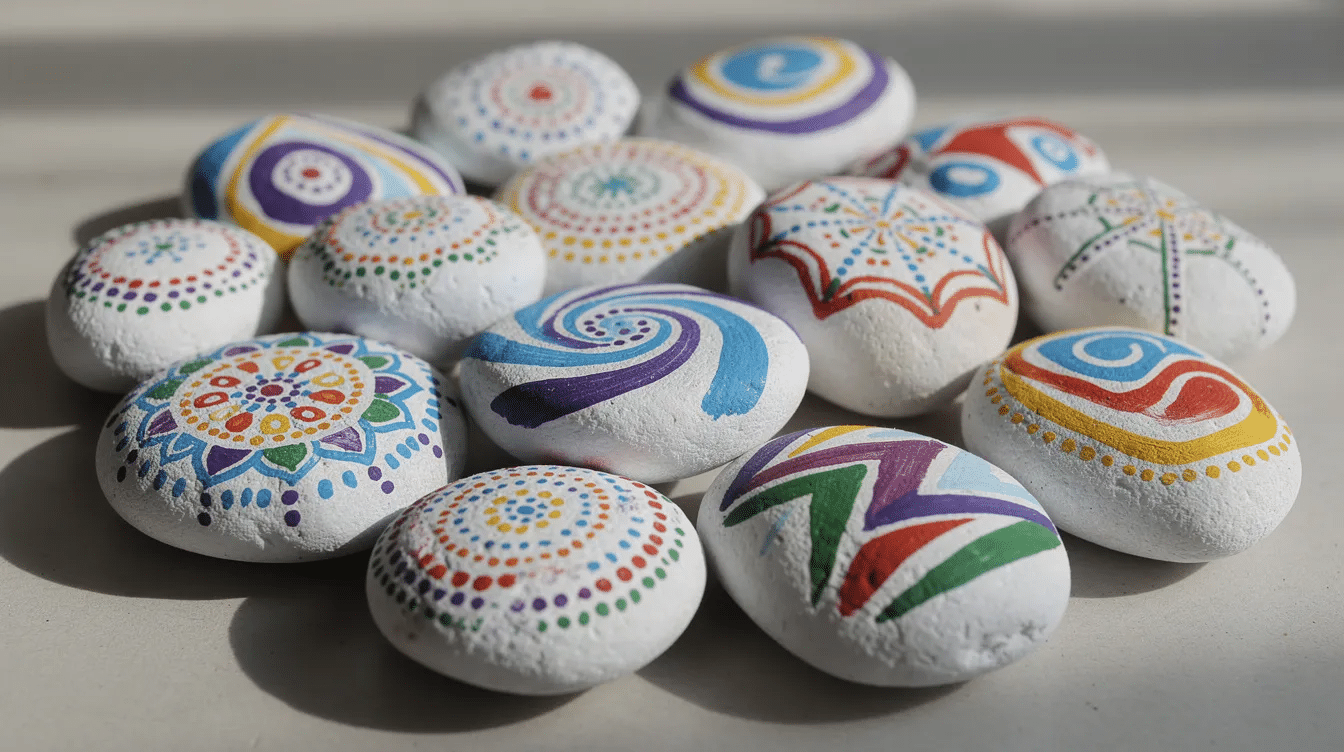
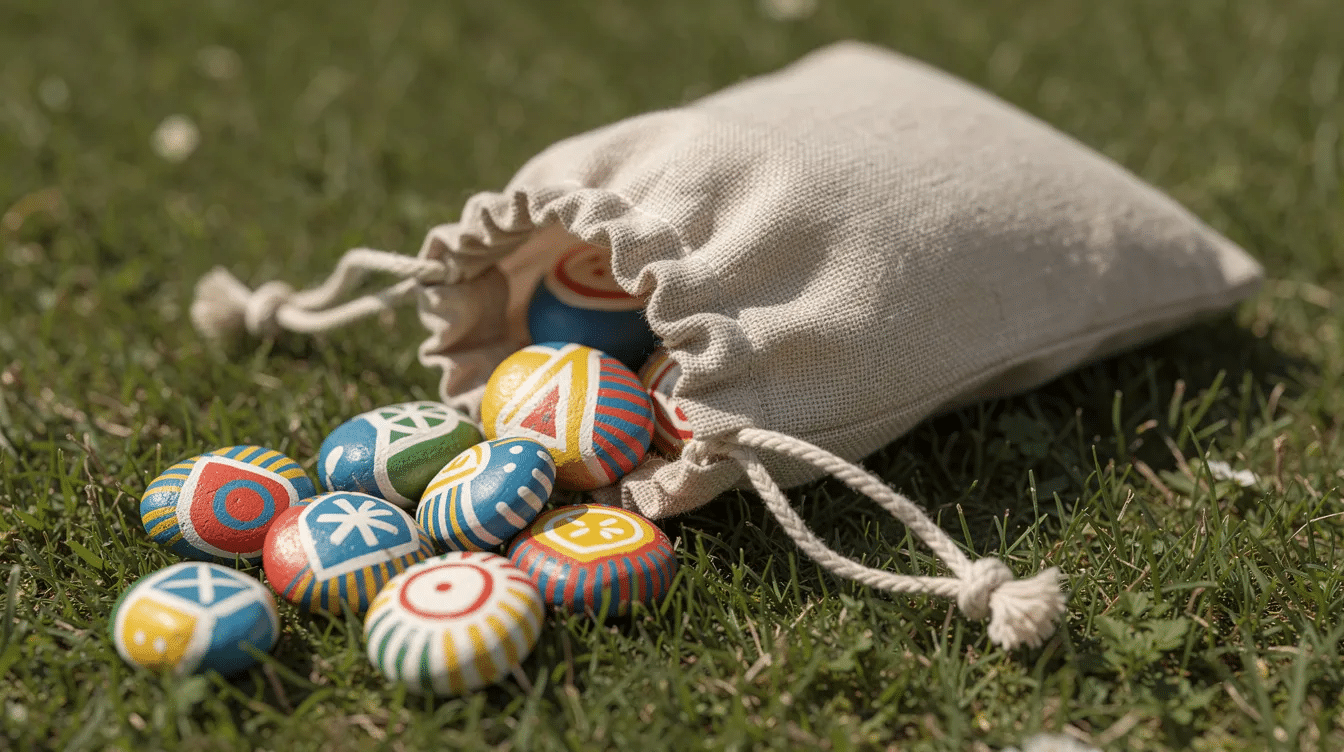
Paint simple lines, dots, swirls, and shapes onto stones using a permanent marker or acrylic paint. No recognizable images-just patterns that could mean anything.
Why It Stands Out
Abstract designs maximize creative storytelling because there’s no “correct” interpretation. One stone might be a volcano to one child and a birthday cake to another. Story stones like these encourage creativity and critical thinking, pushing children to use their imagination in different ways.
Best For
Imaginative children ages 3–6 who enjoy open-ended creative challenges.
Key Strengths
- Extremely easy to create-even a single dot on one stone works
- No wrong way to interpret or use the stones
- Develops abstract thinking alongside creative storytelling
Possible Limitations
- May be too open ended for children who need more structure
- Younger children might struggle without clear image guidance
4. Natural Story Stones
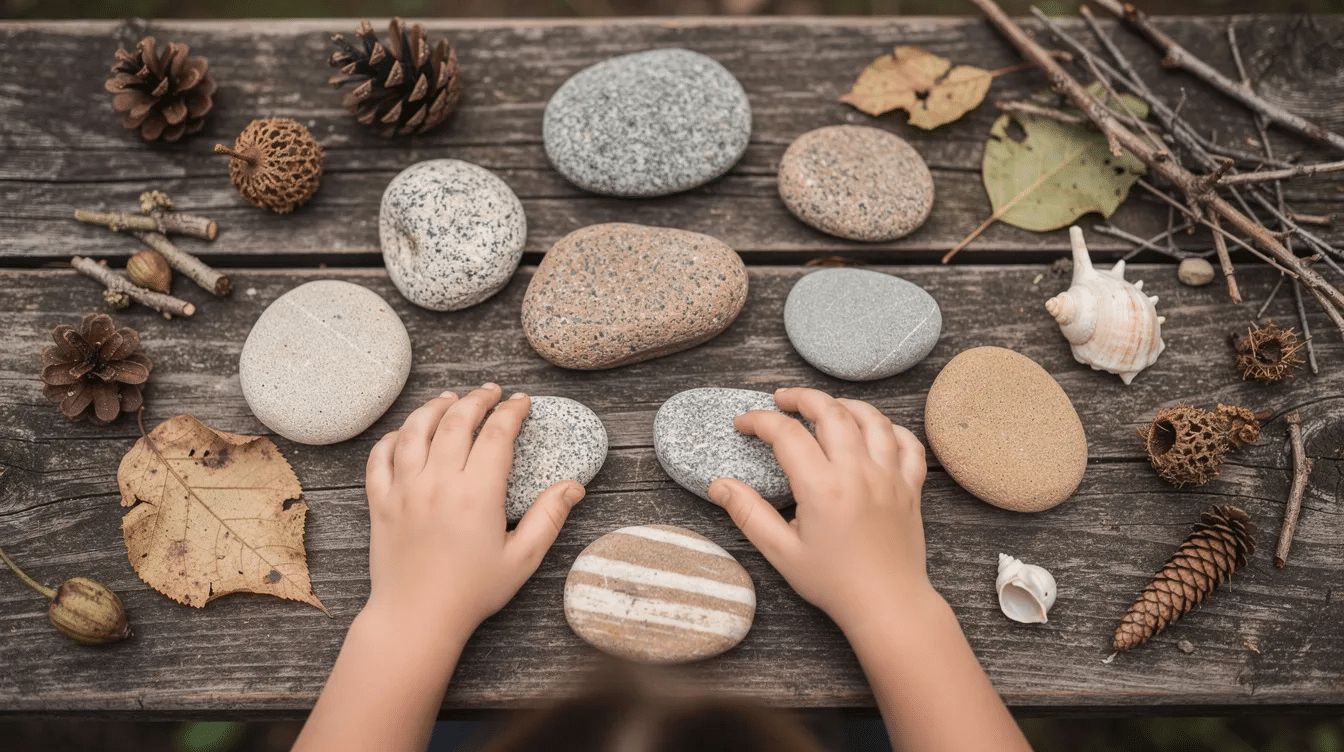
Skip the paint entirely. Collect unpainted stones with interesting natural textures, colours, and shapes. Combine them with other natural objects like pinecones, shells, or leaves.
Why It Stands Out
Natural story stones connect children to primal story telling traditions. A smooth beach pebble becomes a sleeping bear. A rough, speckled stone becomes a dragon egg. Story stones can be incorporated into sensory play using various materials, and they promote imaginative play in various settings-indoors, outdoors, anywhere.
Best For
Nature-loving families and outdoor learning environments with children ages 2–6.
Key Strengths
- Zero preparation time and completely free to collect
- Connects storytelling to outdoor exploration
- Develops imaginative thinking without visual prompts
- Story stones can be hidden for storytelling treasure hunts during outdoor play
Possible Limitations
- Requires more adult guidance to help children start stories
- May be challenging for children who need visual cues to begin
5. Themed Story Stone Sets
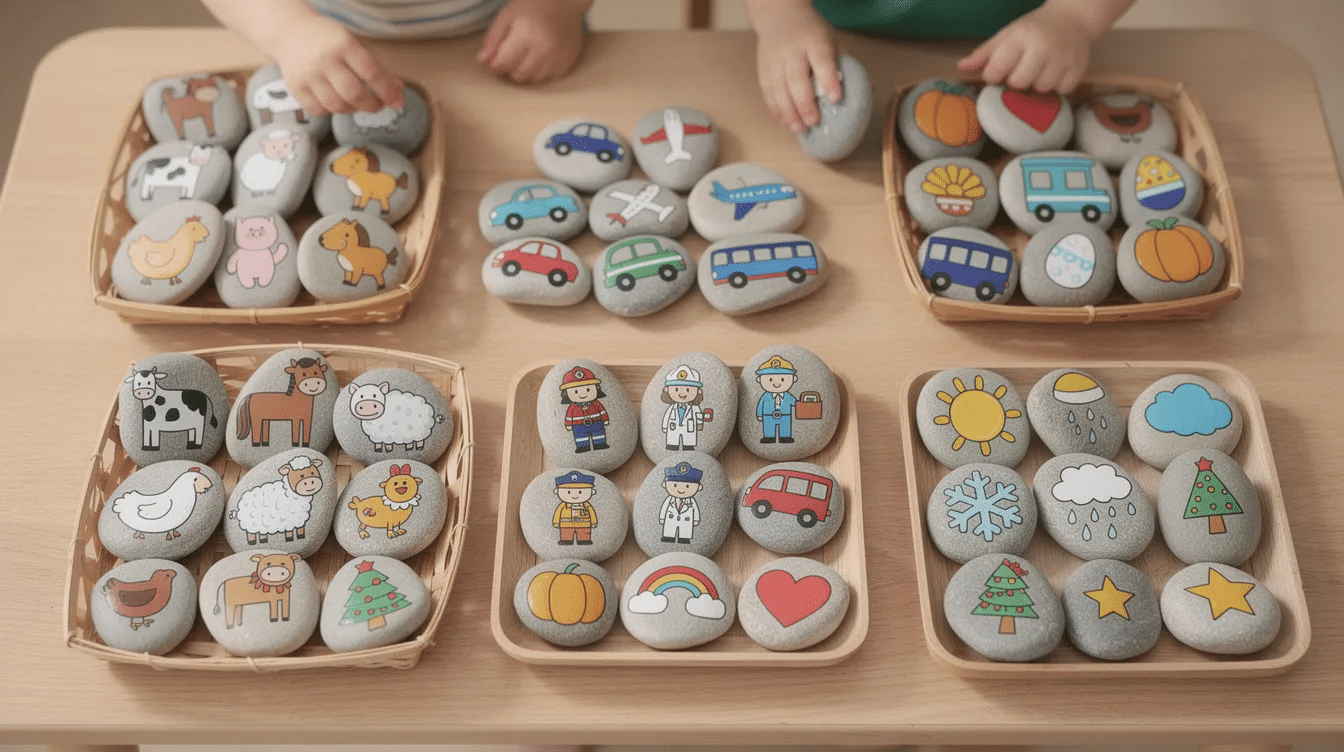
Organize stones around specific themes: farm animals, transportation, community helpers, weather, or holidays. Children can create themed sets of stones to practice narrative elements like character, setting, and action within a focused topic.
Why It Stands Out
Themed sets support curriculum learning and vocabulary development. A farm set with different pictures of cows, tractors, barns, and fences gives children a wonderful small world to narrate within.
Best For
Preschool classrooms and homeschool families focusing on specific learning themes.
Key Strengths
- Reinforces vocabulary and concepts from other learning activities
- Easy to organize and store in separate containers or four baskets by theme
- Story stones can be used for sorting activities in classrooms-children can sort story stones by categories like characters and objects, which develops cognitive skills
- Supports both telling stories and classification skills
Possible Limitations
- Stories may become predictable within each theme
- Requires creating multiple sets for variety
6. Photo Story Stones
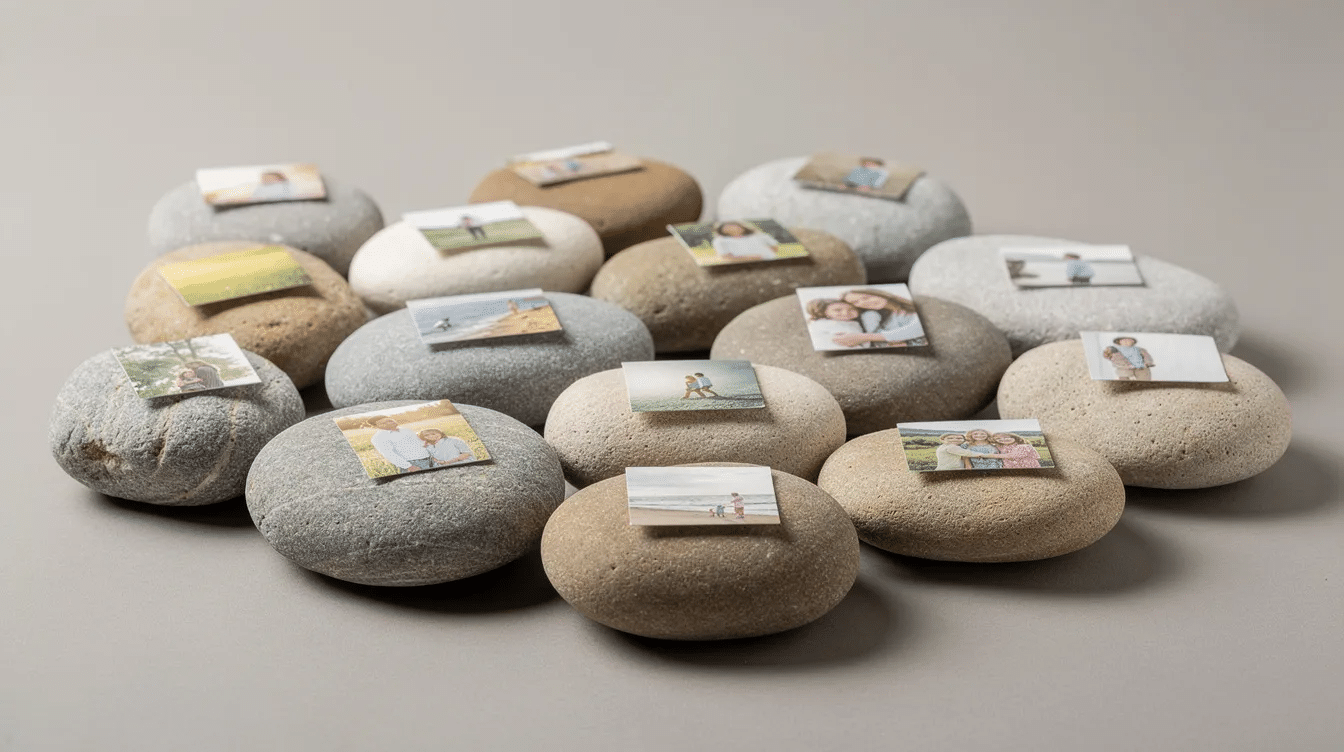
Instead of painting, attach printed photographs or magazine images to stones. Use mod podge to attach images to stones and seal them for durability. Family photos, magazine cutouts, or printed clip art all work.
Why It Stands Out
Photo story stones give you professional-looking results without any artistic skill. Including family photos makes storytelling deeply personal-children can tell their own story using pictures of people and places they know.
Best For
Parents who aren’t confident artists but want high-quality visual story stones for their kids.
Key Strengths
- Professional results without artistic skills
- Can include family photos for personalized storytelling
- Quick to create using mod podge and printed images
- A great idea for family-centred learning activities
Possible Limitations
- Requires printer access and photo paper costs
- Images may peel or wear faster than painted designs without proper sealing
7. Sequential Story Stones
Organize stones into story structure categories: characters (including bad characters and heroes), settings, problems, and solutions. Store each category separately so children draw one stone from each group to build a complete narrative.
Why It Stands Out
This approach explicitly teaches narrative structure and sequencing. Research shows that combining visual prompts with story grammar instruction leads to significant improvements in preschoolers’ ability to include setting, problem, plan, and consequence in their stories. Using story stones this way can improve children’s oral storytelling abilities and prepare them for writing.
Best For
Children ages 4–6 ready to learn story structure and older children developing early writing skills.
Key Strengths
- Teaches important narrative structure concepts
- Creates more coherent and complete stories
- The use of story stones supports narrative structure and sequencing directly
Possible Limitations
- May feel too structured for free-play storytelling
- Requires creating and organizing multiple stone categories
Quick Comparison of the Best Story Stone Ideas
Story Stone Type | Best For | Creation Difficulty | Ages |
|---|---|---|---|
Character Stones | Beginning storytellers needing familiar prompts | Medium (painting or stickers) | 2–4 |
Blackboard Paint Stones | Independent creators who love drawing | Medium (chalkboard paint) | 3–6 |
Abstract Pattern Stones | Imaginative children enjoying open ended play | Easy (markers or paint) | 3–6 |
Natural Stones | Outdoor learning and nature-based play | None | 2–6 |
Themed Sets | Curriculum-based vocabulary building | Medium | 3–5 |
Photo Stones | Non-artists wanting polished results | Easy (printing + mod podge) | 3–6 |
Sequential Stones | Teaching story structure and narrative skills | Medium–High | 4–6 |
How to Choose the Right Story Stone Idea
Choose Based on Your Child’s Age and Development
Story stones can be adapted for different age groups to enhance learning. Younger children (ages 2–3) generally do best with concrete, recognizable images-character stones or themed sets give them something to grab onto. Older preschoolers (ages 4–6) can handle abstraction, sequential structures, and child-led approaches like blackboard stones.
A Finnish study of 164 children found that frequency of storytelling at home was strongly associated with stronger expressive language and grammar skills between ages 2.5 and 4. The more you use story stones, the greater the benefit-so choose an approach your child will want to return to again and again.
Start with just 5–6 stones per session. Too many options can overwhelm a preschooler-keeping the set small helps them focus and build a coherent story.
Choose Based on Your Creative Confidence
Not every parent wants to paint detailed characters. That’s completely fine. Photo stones, sticker-based stones, and abstract patterns require minimal art skill but still deliver a fantastic storytelling experience. If you enjoy painting, character stones and themed sets let you explore that creativity with your child.
Choose Based on Your Learning Goals
If your goal is vocabulary expansion, themed sets are your best bet. If you want to develop narrative structure for early years writing readiness, sequential stones are the way to go. For pure creativity and divergent thinking, abstract or natural stones give children the most freedom. Story stones can also be used to foster collaboration during storytelling activities-try passing stones around a group and building a story together.
Using a story bag helps children create stories collaboratively too. Put a selection of stones in a little bag, let each child reach in, draw one stone at a time, and add to the story. A simple fabric bag or story bag makes this easy to set up anywhere-at home, in a classroom, or at the park.
Which Story Stone Idea Is Best for You?
Here’s a quick way to decide:
- Choose Character Story Stones if your child is new to storytelling and needs familiar starting points to happen upon a story
- Choose Blackboard Paint Stones if your child loves drawing and you want maximum reusability
- Choose Abstract Pattern Stones if you want the simplest creation process with maximum creative freedom
- Choose Natural Story Stones if you prefer outdoor activities and zero-prep nature play
- Choose Themed Sets if you’re focusing on specific learning topics or vocabulary development in the past or present moment
- Choose Photo Stones if you want polished results without painting
- Choose Sequential Stones if you want to build strong narrative and cognitive foundations
Research with 60 PreK dual language learners showed that visual storytelling tools like story cubes and stones increased participation, confidence, and language use-especially when children could bring culturally relevant content into their stories. Whatever approach you decide on, let your child’s world and interests stick with them throughout.
Final Thoughts
The best story stones idea is the one that gets your child talking, imagining, and building stories. Over the last ten years, these humble painted stones have become a staple in early childhood settings for good reason-they’re low-cost, endlessly adaptable, and genuinely effective.
You don’t need to be an artist. You don’t need expensive materials. You just need some stones, a bit of inspiration, and a willingness to join in when your child says, “Let me tell you a story.”
We hope this post gives you the confidence to try at least one approach this week. Start simple, watch what captures your child’s imagination, and grow from there. Homemade story stones carry something no shop-bought set ever will-your family’s creativity baked right in. If you’d like a step-by-step creation guide, check out our post on how to make your own story stones.
We’d love to hear which idea you try first-drop us a comment and let us know what works for your family.