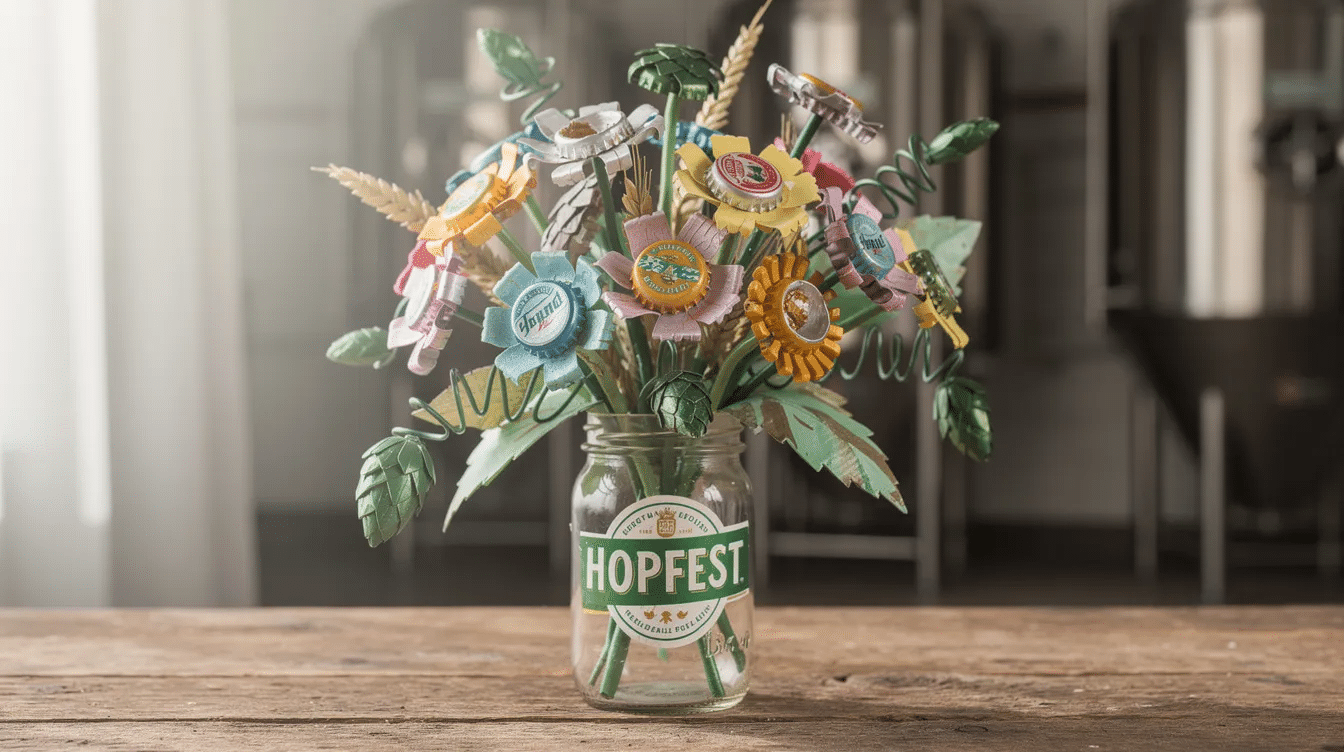
Spring is here, the recycling bin is overflowing, and your preschooler is bouncing off the walls. Sounds like the perfect time to combine all three into one cheerful afternoon project. This hopfest recycled spring bouquet craft turns everyday recyclables into a bright, handmade bouquet that kids can display at a school fair, pop on Granny’s kitchen table, or proudly carry through the front door on Easter morning. Below you will find everything you need to get started, from the materials list to step-by-step instructions, safety tips, and ideas for adapting the project to different ages.
Key Takeaways
- A hopfest recycled spring bouquet is a kid-friendly upcycling craft where children turn recyclables like egg cartons and juice boxes into cheerful spring flowers, perfect for Easter, May Day, or a spring fair.
- The project is designed for preschoolers (ages 3–6) with simple steps, light adult help for cutting, and lots of freedom for painting and decorating.
- Families can use common household items – egg cartons, cardboard, leftover ribbon, glass jars – to make an eco-friendly bouquet and keep costs low.
- The finished spring flowers bouquet makes a thoughtful handmade gift for teachers, grandparents, or neighbours during spring events like school hopfests or community fairs.
- This tutorial comes from Little Button Diaries and is meant to feel bright, playful, and easy to follow, with clear instructions and safety notes for crafting with young children.
What Is a Hopfest Recycled Spring Bouquet?
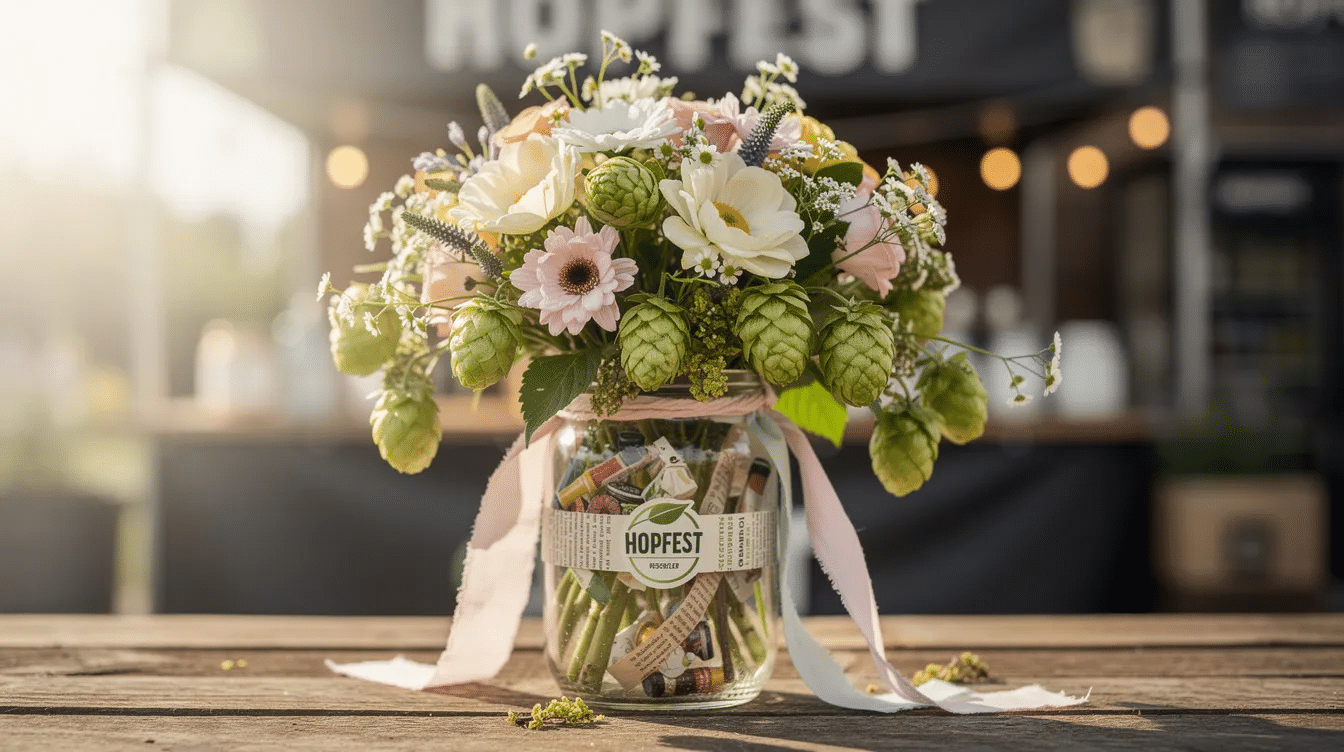
Hopfest” is one of those lovely, catch-all names for the family-friendly spring celebrations that pop up in school halls and community centres every march through April – think egg-and-spoon races, cake stalls, and tables full of kids’ art. The Hopfest event featured a recycled spring bouquet project to promote crafting, and it has since become a go-to activity for parents and teachers who want something hands-on, low-cost, and seasonal.
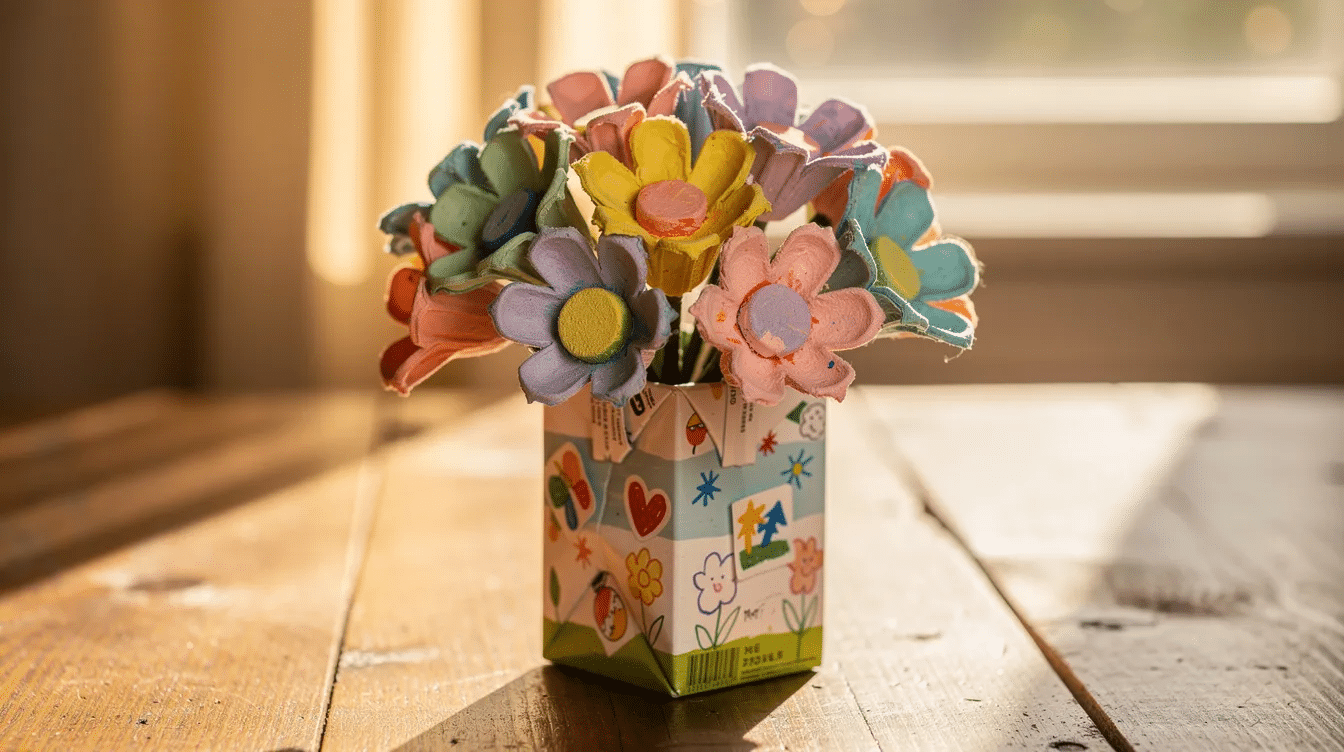
A recycled spring bouquet is exactly what it sounds like: a bunch of handmade flowers created entirely from stuff rescued from the recycling bin. Egg cartons get cut into tulip and daisy shapes, juice boxes become miniature flower pots, and scraps of tissue paper and wrapping paper add colour and texture. Recycled bouquets can be made from reused household materials and craft supplies, so there is very little to buy. The philosophy behind recycled bouquets combines sustainability with creativity – and the result is a rustic, one-of-a-kind arrangement that mass-produced decorations simply cannot match.
Here is why this craft keeps turning up at spring events everywhere:
- Budget-friendly. Recycled bouquets offer budget-friendly decoration solutions for spring celebrations. You are working with materials that would otherwise end up in the bin.
- Sustainable. Using recycled floral arrangements reduces waste and lowers carbon footprints. Paper and cardboard make up roughly 23% of municipal solid waste in the US alone, so every egg carton repurposed as a flower is a small win for the planet.
- Long-lasting. Unlike fresh flowers, recycled bouquets can be saved and reused year after year.
- Social. Guests can create individual flowers from recycled materials for a communal bouquet, making it a wonderful group activity. Crafting with recycled materials encourages family participation and shared memories.
This craft works beautifully for school hopfest stalls in spring, Teacher Appreciation Day in early May, Easter Sunday breakfast tables, or as a May Day surprise for neighbours.
Materials: Turning Recycling into Spring Flowers
Good news – you probably have most of the supplies already sitting in your kitchen. That is the whole point. The upcycling angle fits right in with frugal, eco-friendly crafting, and it means you can pull this project together without a trip to the craft shop.
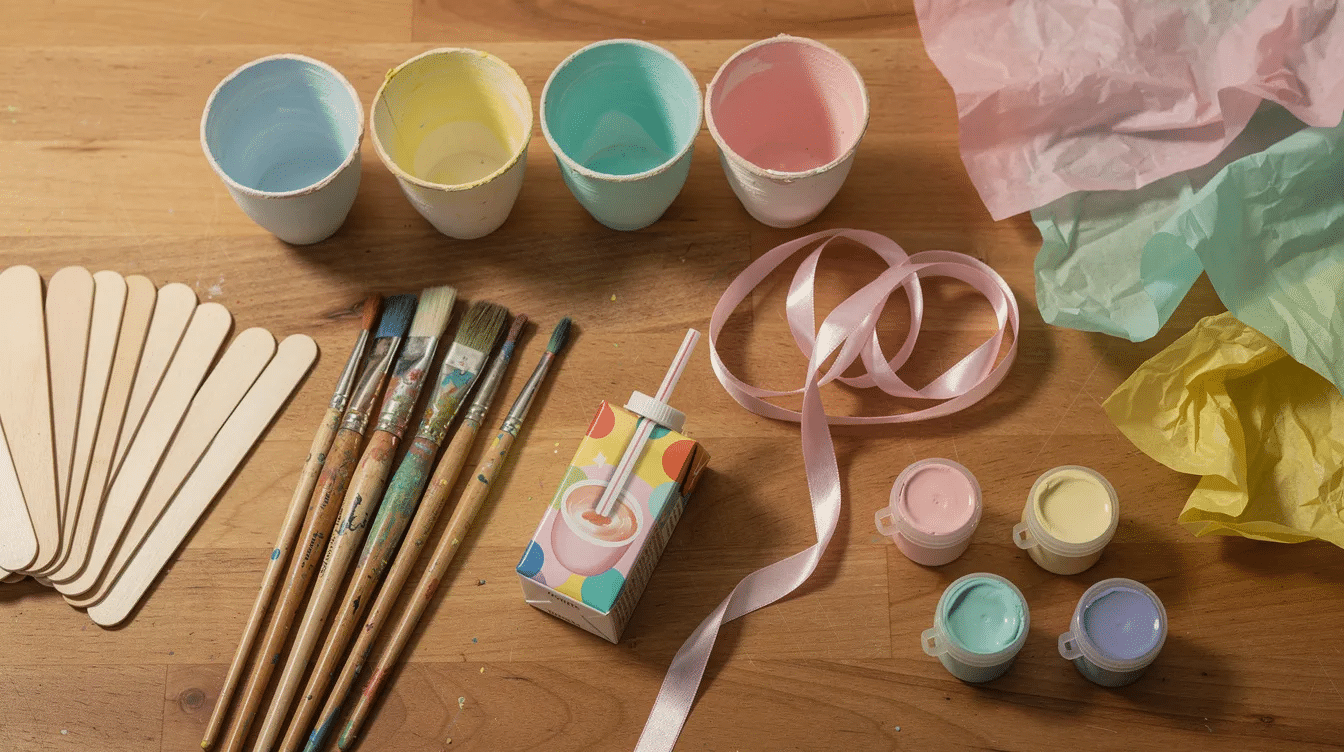
Recycled Items You Will Need
Item | Approx. Quantity | What It Becomes |
|---|---|---|
Cardboard egg cartons (12-egg size) | 1–2 | Flower heads (tulips, daisies, bells) |
Clean juice box (6.75 oz / 200 ml) or small glass juice bottle | 1 per bouquet | Flower pot or vase |
Scrap cardboard | A few pieces | Leaf shapes |
Leftover tissue paper and wrapping paper offcuts | Handful | Vase decoration, colour layers |
Egg cartons can be cut to resemble flowers – each cup becomes a petal-edged bloom when an adult trims the rim into curves or points. Juice boxes can be transformed into flower pots with a quick rinse and a layer of pastel card, and a standard 6.75 oz juice box measures 4.75 inches tall, which is the perfect size for a mini bouquet. Tissue paper can be used to decorate glass bottles for vases too, giving them a lovely stained-glass look.
Craft Supplies to Gather
- 6–10 wooden kebab sticks or paper straws for stems. Kebab sticks can be used as stems for egg carton flowers, and they hold up well once painted green.
- Child-safe paints in spring colors – pastel pink, yellow, mint, lilac.
- PVA glue or a glue stick.
- Ribbon or string for tying the bouquet.
- Child-sized scissors, paintbrushes, and optional glitter or stickers.
- Pipe cleaners can be twisted to form flower shapes if you want variety beyond egg carton blooms.
Optional Upgrades
- Floral foam to hold stems upright inside the vase. Use floral foam to stabilize mini bouquet stems so nothing topples over at a busy fair table.
- Chalk paint (like Rust-Oleum) to respray an old tin as a rustic pot.
- Alphabet stickers so children can spell out “MUM”, “NANA”, or “THANK YOU” on the vase.
- Floral picks are inexpensive for creating mini bouquets and add a professional touch.
Safety and Supervision Note
Before you let little hands loose, a quick note on safety. Adults should handle cutting egg cartons into petal shapes, snipping kebab sticks to size, and using hot glue if needed. Under-3s should avoid sharp points entirely. Always check recycled containers for staples, sharp edges, or residue, and use only non-toxic, ASTM D4236-certified paints and glues. Clean and dry every recycled item before crafting – discard anything that held raw meat or chemicals.
Step-by-Step: Making Your Hopfest Recycled Spring Bouquet
Set aside roughly 30–45 minutes of active crafting time, plus a few hours (or overnight) for everything to dry. If your little one has a short attention span, you can easily split this across two sessions – paint one day, assemble the next. Invite children to help at every stage where it is safe, and leave the trickier cutting and gluing to an adult.
1. Prepare and Paint the Flower Heads
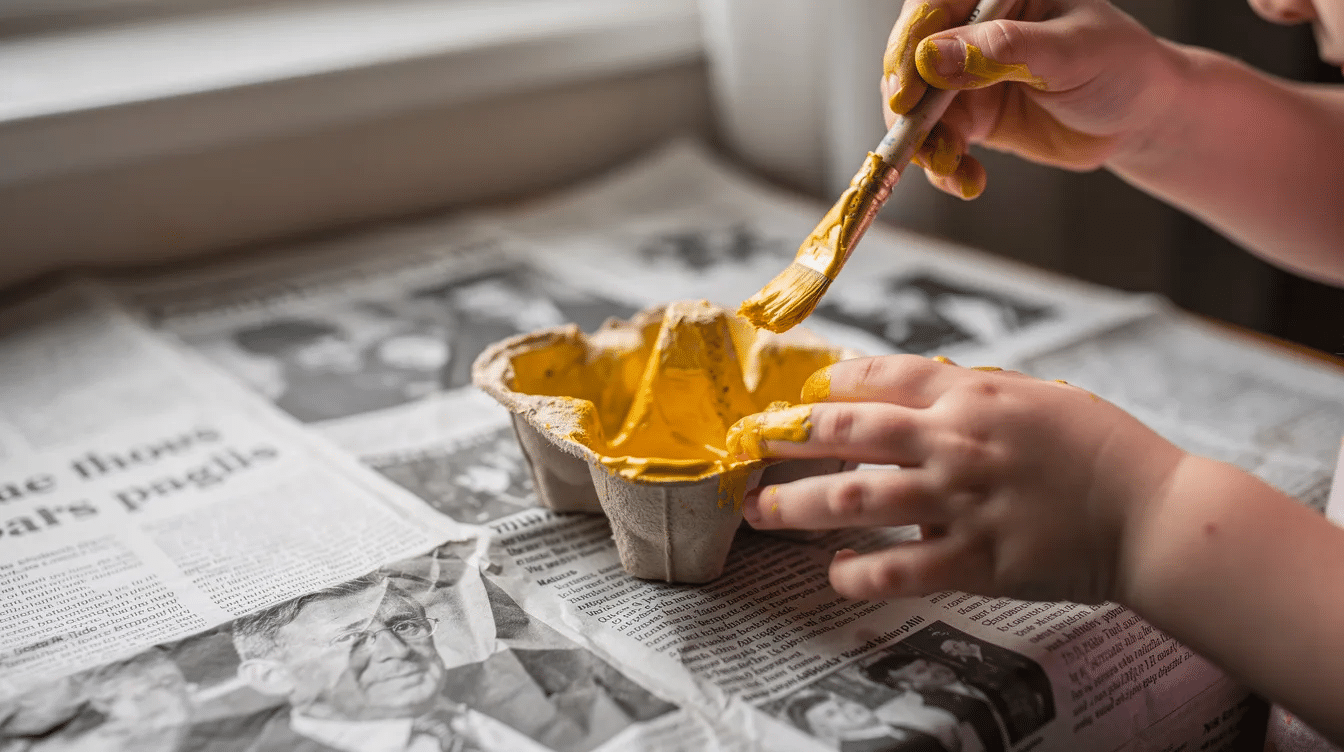
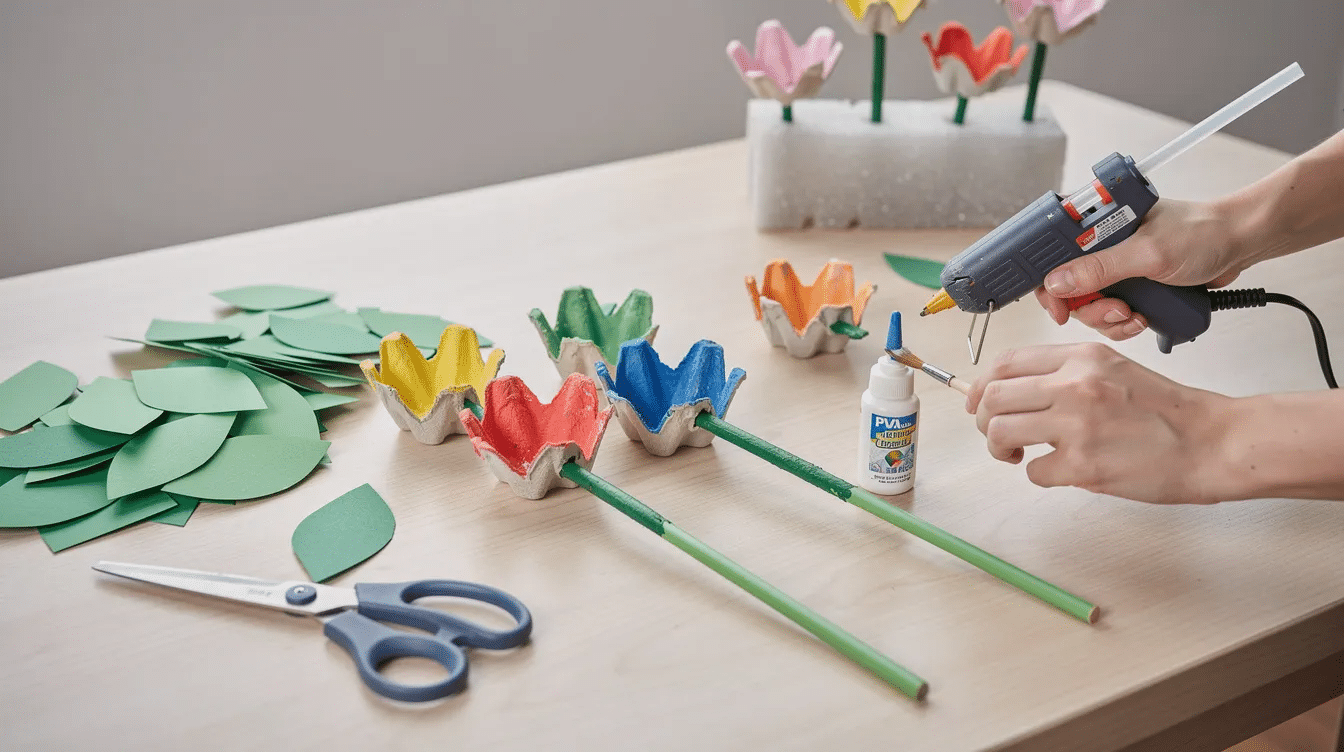
- An adult cuts individual cups from the egg carton and trims each one into a tulip, daisy, or bell shape. Egg cartons can be cut to resemble flowers for crafts – simply snip the rim into rounded petals for daisies or pointed petals for tulips.
- Children paint each flower head in bright spring colors. Let them choose – mismatched colours are part of the charm.
- Once the base coat is dry, add contrasting centres with a dabbed dot of paint, a small pom-pom, or a circle of tissue paper glued on top.
2. Decorate the Vase or Juice Box Pot
You have a few options here, depending on what you find in your recycling:
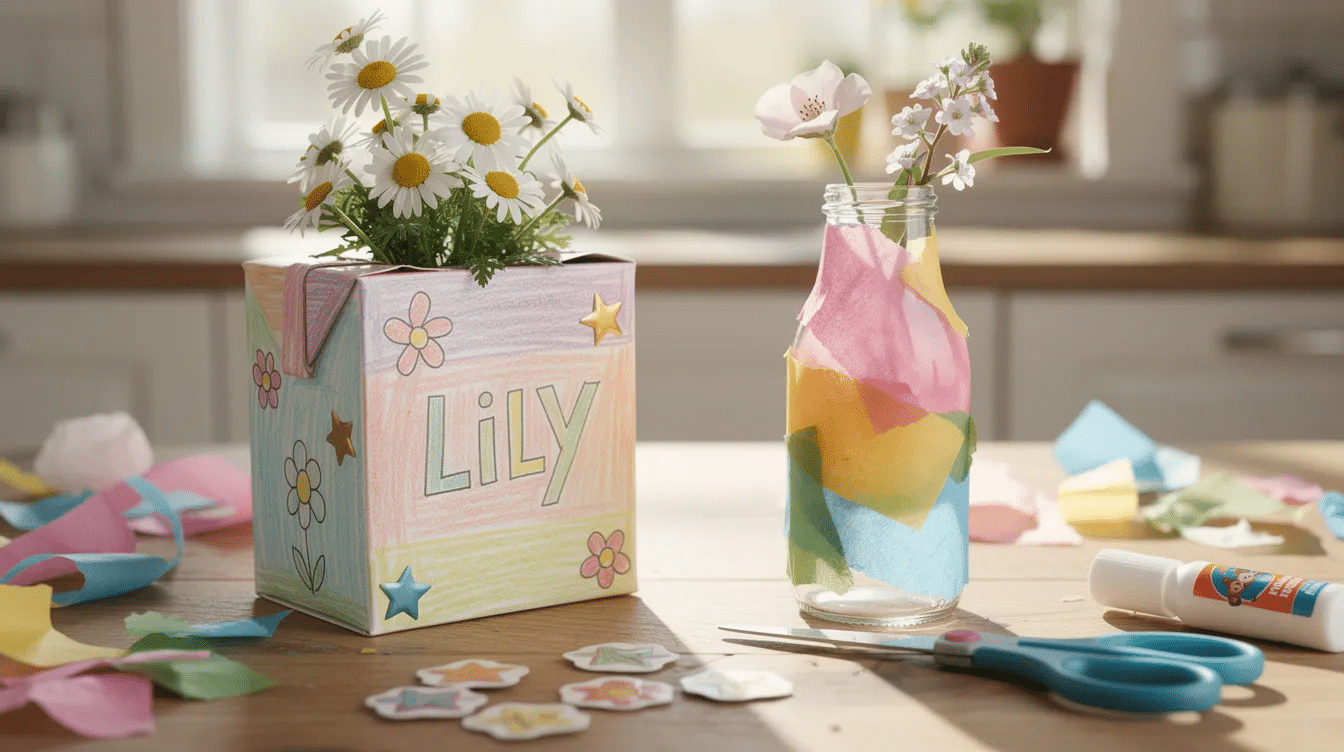
- Juice box pot: Rinse a Juicy Juice box (or similar), let it dry, then wrap it in pastel card secured with glue. Add stickers, drawn flowers, or the child’s name. Juicy Juice boxes can be used for flower pots and they are sturdy enough to stand on their own.
- Glass bottle vase: Cover a small glass bottle with torn pieces of tissue paper using watered-down PVA, layering colours for a stained-glass effect. Tissue paper can be used to decorate vases in spring crafts, and the result looks surprisingly professional. For more on this technique, check out tissue paper stained glass crafts for all ages.
- Add finishing details like washi tape, doodled spring flowers, or a strip of ribbon around the middle.
3. Assemble Stems and Leaves
- Paint wooden kebab sticks green, or simply use green paper straws for a no-paint option. Use kebab sticks to create flower stems in crafts for the sturdiest result.
- Glue the pointed end of each stick inside an egg-carton flower cup. A dab of hot glue (adult job) holds firm, or PVA works if you leave it to dry overnight.
- Cut simple leaf shapes from green card and glue one or two onto each stem.
- Leave everything to dry fully before handling – rushing this step is the fastest route to floppy petals and tears at the fair.
4. Arrange the Bouquet
- Trim a few stems shorter than others for a natural, layered look.
- Pack the vase with scrunched-up tissue paper or a small block of floral foam so the stems stand upright.
- Tie a ribbon or twine bow around the middle of the bouquet, and attach a handmade tag if it is a gift.
- Mini bouquets are perfect for gifting and small spaces – a single juice box pot with five or six flowers makes a lovely teacher’s desk decoration. A mini bouquet can enhance tablescapes and food tables at a spring fair, and mini bouquets can be made from recycled materials like juice boxes, keeping the whole project waste-free.
Adapting for Different Ages
- Toddlers (2–3): Sponge-paint or finger-paint pre-cut flower shapes. Skip sharp tools completely.
- Preschoolers (3–6): Let them design their own petal shapes in pencil for an adult to cut out. Encourage them to pick their own color combinations and decorate the vase themselves.
- Older siblings (7–8): They can help younger children write messages on tags, count how many flowers they have made for a sneaky maths moment, or experiment with making egg carton animals from the leftovers.
Where to Display Your Bouquet
Once your bouquet is finished, find a spot where it can be admired. At a hopfest, these recycled spring bouquets work brilliantly as stall decorations, raffle prizes, or centrepieces for the welcome table. At home, try a breakfast tray, a bedside table, or a sunny windowsill. Upcycled arrangements provide a rustic aesthetic that mass-produced arrangements lack, and there is room for every single one in your spring decor. If you enjoy making things with your children, explore more easy craft ideas for kids and keep the creativity rolling all week long.
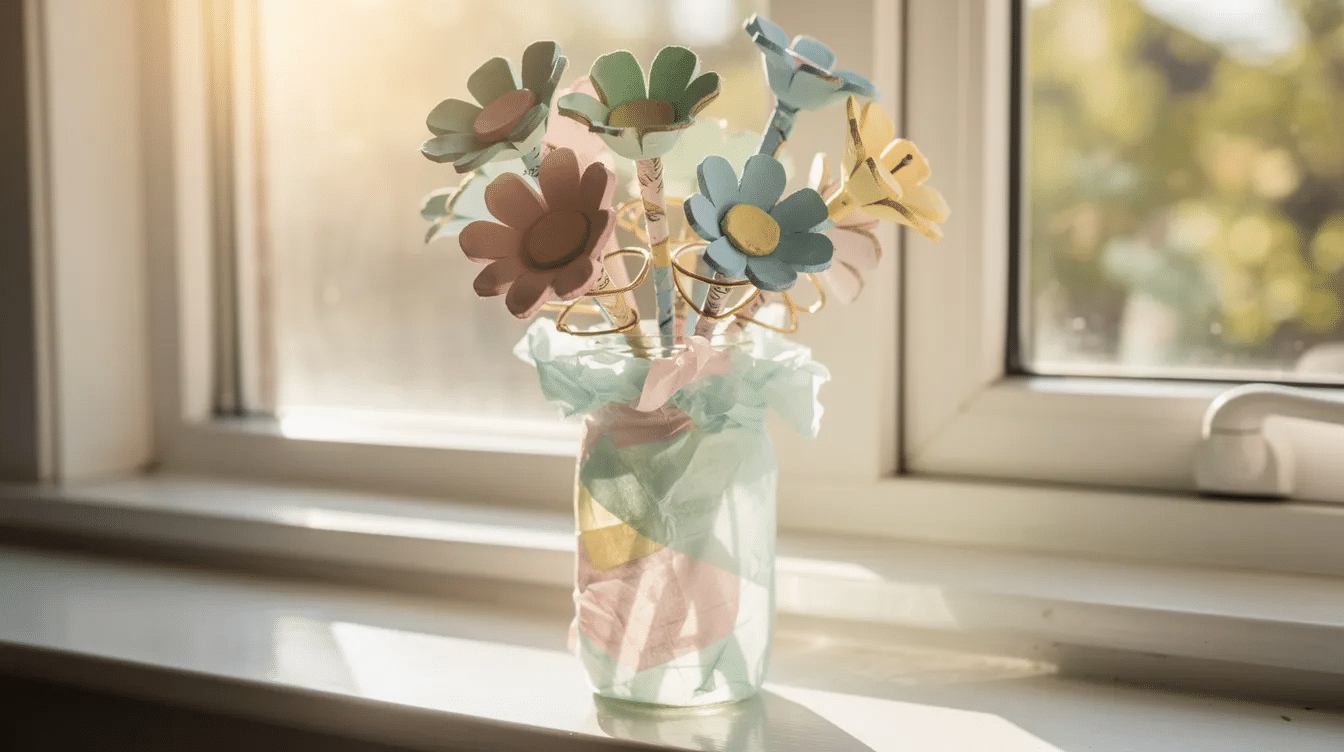
There is nothing quite like watching your little one beam with pride as they hand over a bouquet they made entirely from stuff that was heading for the bin. Whether it is for a school hopfest, a neighbour’s doorstep, or Granny’s mantlepiece, this is one of those activities that is as meaningful to the maker as it is to the person who receives it. We love seeing what you create – drop your photos in the comments or reply to this post and let us know how it went. And if you are looking for more recycled crafts, seasonal recipes, and easy preschool activities, have a look around the rest of Little Button Diaries. Enjoy the rest of your spring!
FAQ
Below are answers to the questions we hear most often about this craft, covering everything from timing and safety to scaling up for a whole class.
How early can I prepare a recycled spring bouquet before a hopfest or school fair?
The egg-carton flowers can be painted and assembled 1–2 weeks in advance as long as you store them somewhere dry. Tissue-covered vases should be made at least 24 hours before the event to give the glue time to dry fully. If you are making several bouquets for a stall, spreading the work over a week keeps it manageable and fun rather than stressful.
What can I use instead of wooden kebab sticks for stems if I am crafting with very young children?
Paper straws, rolled-up green paper, or reusable plastic craft sticks all work well and avoid sharp points entirely. Pipe cleaners are another great option – they are easy for small hands to bend and can be twisted to form flower shapes of their own. For under-3s, we recommend skipping anything with a pointed end altogether.
Can we make this bouquet without paint to keep mess to a minimum?
Absolutely. Try using coloured egg cartons (some brands come in pink or blue), wrapping each flower cup in tissue paper, or colouring them with crayons and felt-tip pens. This no-paint approach is ideal for quick classroom sessions or for days when you simply cannot face the clean-up. You still get bright, cheerful spring flowers without a single paint pot in sight.
How do I adapt this recycled spring flowers craft for a whole preschool class or Brownie pack?
Set up stations: one for cutting (adult-only), one for painting flower heads, and one for decorating vases. Pre-cut all egg-carton pieces before the session so children can get straight to the creative part. Label stems and trays with names so finished work does not get mixed up, and lay everything out on cardboard sheets to dry. With the needed supplies prepped in advance, a group of 20 kids can comfortably complete the craft in a 45-minute session.
Are there other recycled spring crafts we can try with the same materials?
Plenty. With leftover egg cartons you can make fun egg carton animals like caterpillars and ladybirds. Spare tissue paper is perfect for tissue paper stained glass window art, and a clean plastic bottle can become a DIY bird feeder for the garden. Reuse what you have, and you will never run out of project ideas.