Fall is the season when nature hands you an art supply list for free. Leaves shift through reds, oranges, and golds. Pumpkins line doorsteps. Acorns and pinecones scatter across sidewalks. For kids and students, this seasonal shift creates the perfect backdrop for art projects that feel immediate, tactile, and alive.
Autumn is a great season for art because it offers rich colors and interesting textures that you simply can’t replicate in spring or summer. Whether you’re an art teacher planning lesson plans for the classroom, a parent looking for craft ideas at home, or a teacher running an after-school program, fall art projects combine creativity with seasonal learning and sensory exploration in ways that stick with children long after the leaves have fallen.
This post breaks down the best fall art project categories by what matters most: accessibility, educational value, age appropriateness, and seasonal relevance.
How We Chose the Best Fall Art Project Categories
Not all fun projects are created equal. Here’s what guided our selection:
- Age appropriateness and skill adaptability. Children move through developmental stages in art, from scribble stage (ages 2–4) through pre-realism (9–11) to decision-making (14+). The best categories scale across these stages.
- Seasonal authenticity. Projects should use fall-specific materials – real autumn leaves, pumpkins, acorns – not generic supplies you could use any time of year.
- Material accessibility and cost. Fallen leaves and twigs are free. We prioritized categories where the core materials are inexpensive or already in your classroom.
- Educational value. Every category here supports fine motor skills, color theory, nature study, or cross-curricular learning and highlights the benefits of arts and crafts for child development.
- Creative flexibility. Students should be able to make personal choices in color, style, and technique. Collaborative projects can emphasize teamwork in art activities, while individual work builds personal voice.
- Time requirements. Young preschoolers may need only 20 minutes; older students can sustain multi-day work. Categories here fit typical class periods.
- Cleanup and mess management. We favored washable paints, outdoor-friendly setups, and projects where cleanup is manageable in a school or home setting.
Top 5 Fall Art Project Categories
1. Leaf Art Projects
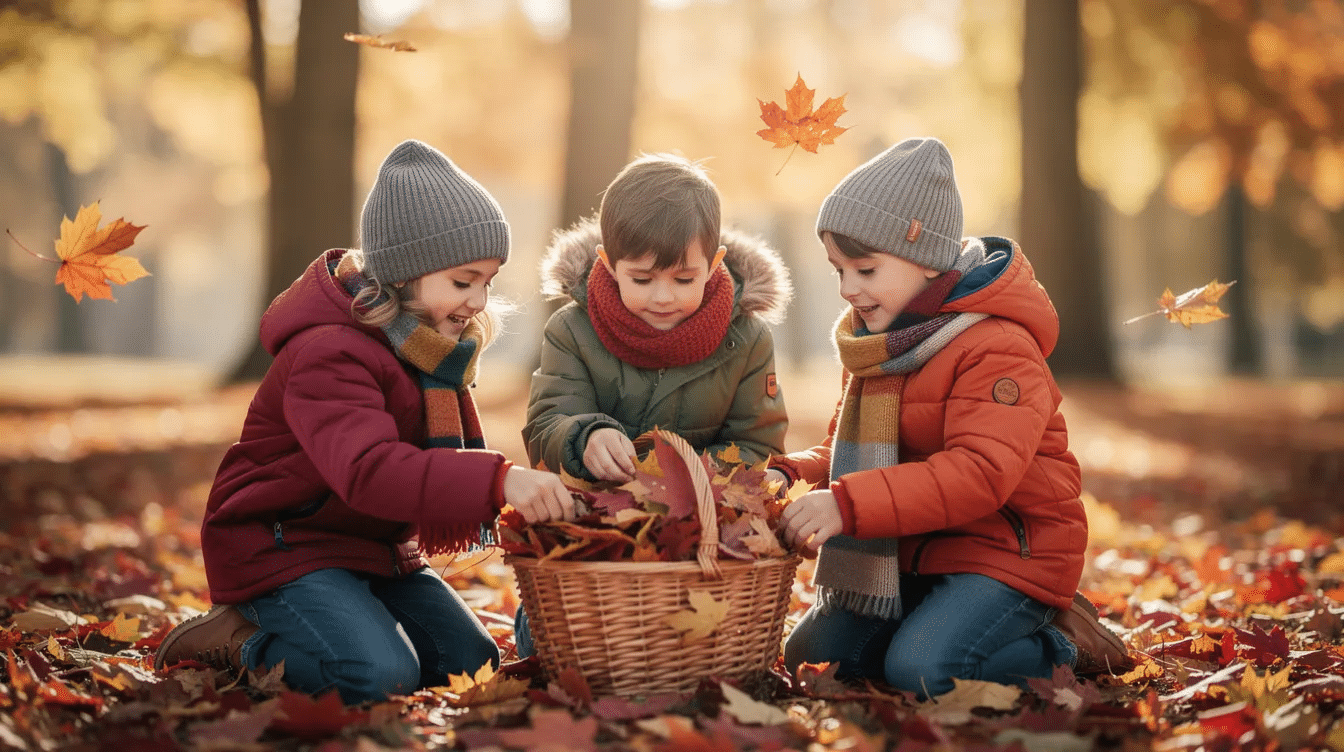
Collecting leaves can inspire various art projects, from the simplest rubbing to complex mixed-media compositions. Core techniques include leaf printing (painting the veined underside and pressing onto paper), leaf stamping, leaf rubbings, collages, and watercolor overlays.
Painting leaves is a fun project for kids during fall, and it scales beautifully. You can create leaf prints by pressing leaves into ink and stamping them onto construction paper or fabric. Nature art can include creating leaf prints with ink for bolder, more graphic results. Leaf rubbings reveal textures and can create colorful collages when layered with different colors of crayon. Pressed leaves can be used to create landscapes, animals, or abstract patterns – a fantastic way to bridge art and science.
For more structured art lesson options, try watercolor resist techniques, which can be used to illustrate leaf shapes against vivid backgrounds. Use watercolor and oil pastels to create leaf art collections that explore fall colors across species. You can also collect leaves to create a fall leaf print collage, or use colorful leaves to create a fall leaf color wheel that doubles as a color theory exercise. Leaf mobiles can be made with various leaf types, and you can even create a leaf crown using 10–13 dried leaves.
Why It Stands Out: Direct connection to the season’s most visible change. Penn State Extension research shows that leaf printing improves knowledge of leaf anatomy and increases botanical vocabulary.
Best For: All ages from preschoolers to teens, nature study integration, outdoor enthusiasts.
Key Strengths: Materials are free from nature. Develops observation skills and leaf identification. Builds fine motor skills through cutting, pressing, and painting.
Possible Limitations: Weather dependent for collection. Fresh leaves become brittle quickly, so timing matters.
2. Pumpkin and Gourd Decoration Projects
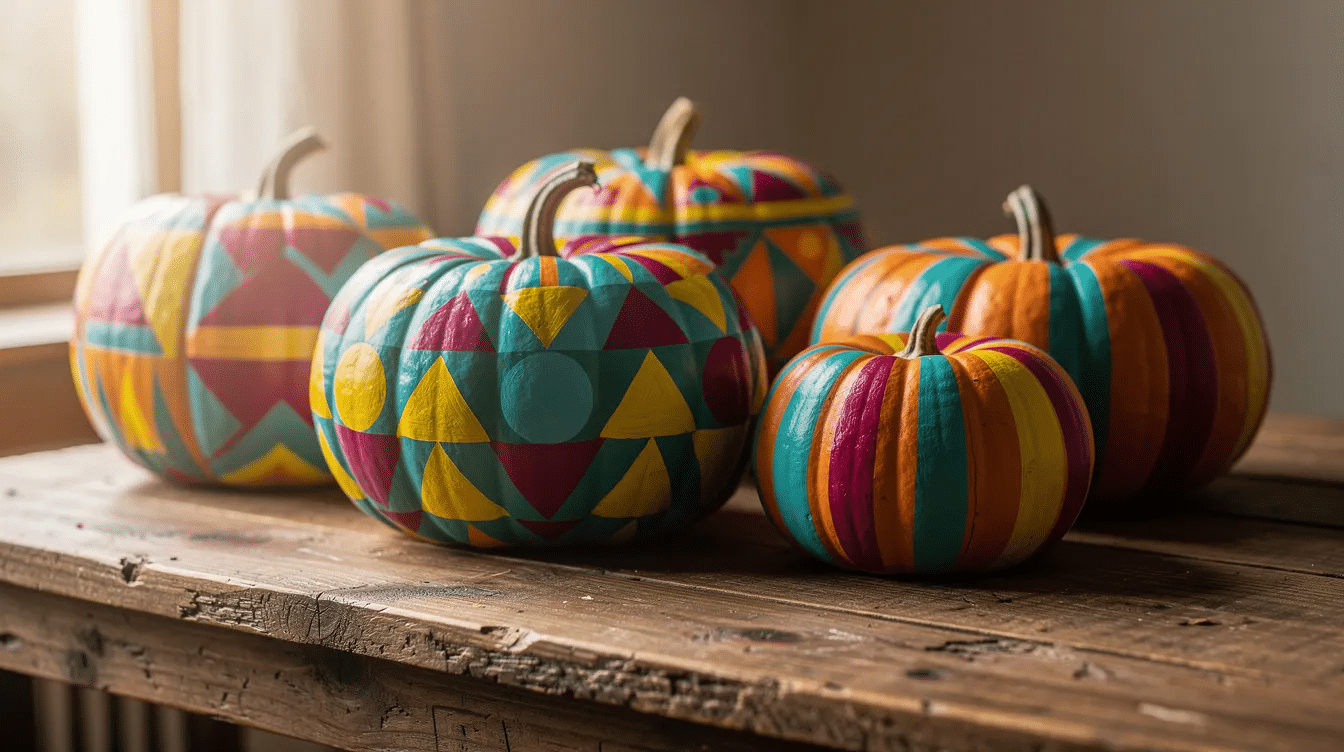
Pumpkins are the icon of fall art. You can paint pumpkins with tempera, acrylics, or even liquid watercolors for a translucent effect. Try stamping, stenciling, collaging paper faces, or sculpting clay versions. The Smithsonian’s Hirshhorn Museum offers a fun art project inspired by Yayoi Kusama, where kids create pumpkin pinch pots from clay.
Painting pumpkins with geometric patterns can enhance artistic skills and introduce students to symmetry and repetition. For a bold look, paint pumpkins using black acrylic paint and foam brushes, then add contrasting dots or lines. Make a 3D paper pumpkin for a fun fall project using construction paper strips – 3D paper pumpkins challenge older kids creatively and teach them about form and volume without the mess of real gourds.
Why It Stands Out: Iconic fall symbol with versatile creative possibilities across 2D and 3D media.
Best For: Elementary to middle school students, halloween celebrations, harvest festivals.
Key Strengths: Durable display pieces. Safe carving alternatives for younger children. Strong visual appeal for a bulletin board or school entrance.
Possible Limitations: Requires purchasing pumpkins. Storage space needed since they eventually rot. Strictly seasonal, though many preschool 3D art projects let you explore similar sculptural ideas with reusable materials.
3. Nature Collection Mixed Media Art
This category sends kids outside to gather acorns, twigs, pinecones, seed pods, bark, and moss, then brings those materials into creative compositions. Nature art involves collecting leaves and framing them, but it goes far beyond that.
Kids can create colorful acorn dolls for play, turning tiny caps and nuts into characters. Crafting with pinecones can lead to creating animal sculptures – owls, hedgehogs, foxes – using glue and paint, or you can explore owl crafts for kids that fit perfectly with fall themes. Nature weaving uses twigs, grasses, leaves, and yarn to create tapestries that hang beautifully in a classroom or home, and simple nature stick crafts extend this idea with frames, mobiles, and more. A nature scroll can be made by foraging natural materials and arranging them on a long strip of paper or fabric. Make a nature scroll by combining foraged items with paint for a mixed-media effect.
One idea that sparks real excitement: mark-making brushes can be made from natural items like pine needles, bundled grasses, or feather tips. Use natural materials to create mark-making brushes, then experiment with the textures they produce on paper. This is a fun way to explore process art while connecting to the outdoor environment.
Why It Stands Out: Combines outdoor exploration with creative expression and texture variety. Research on nature-based art with 602 children found that even 30-minute guided sessions using natural materials increased nature connectedness and well-being.
Best For: All ages, hands-on learners, sensory seekers, forest school approaches.
Key Strengths: Encourages outdoor time and sorting skills. Sustainable, cost-effective materials. Supports gross motor play during collection.
Possible Limitations: Requires outdoor access. Materials may need cleaning (insects, dirt). Some items are perishable.
4. Apple and Harvest Themed Projects
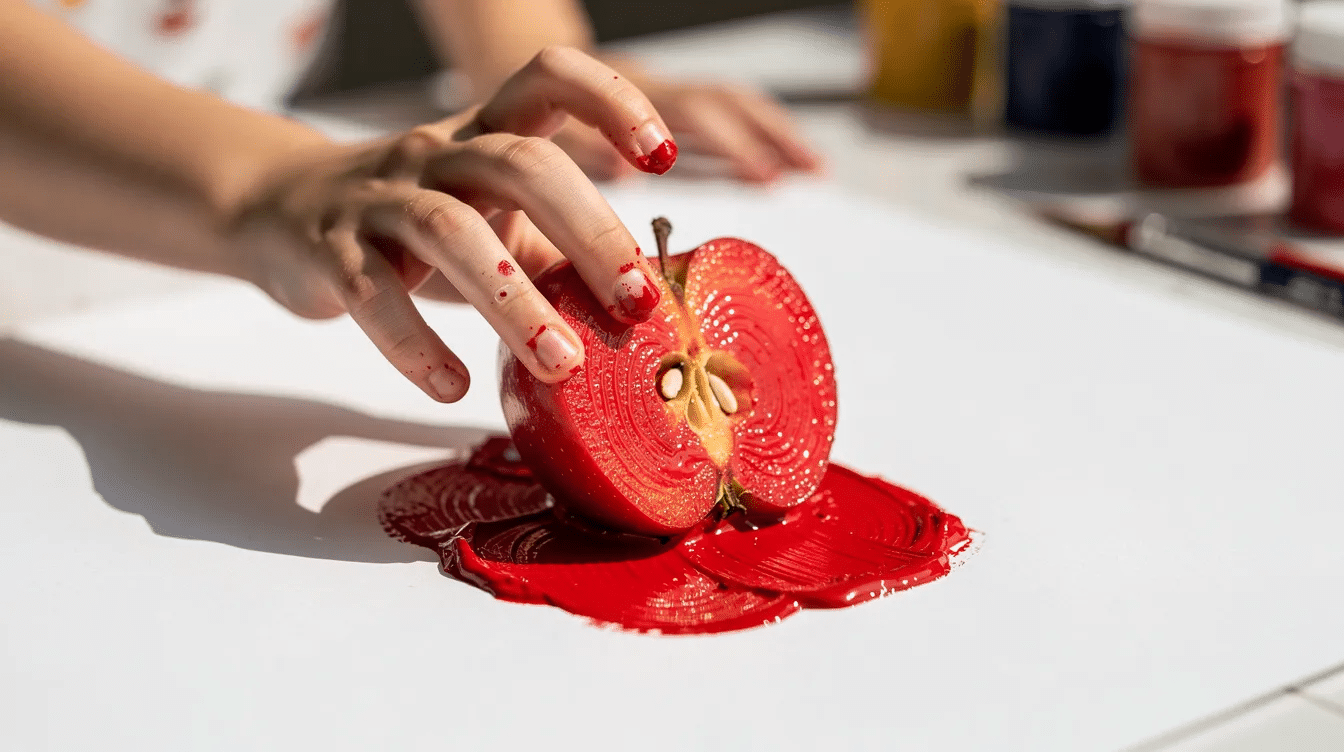
Harvest season brings apples, corn, and gourds into the art room. Apple stamping – cutting an apple in half, dipping it in paint, and pressing onto paper – is a classic fall activity that works for the youngest learners. Autumn-themed crafts can involve simple materials and techniques like this, making them accessible even for preschoolers.
Beyond stamping, students can draw harvest still lifes, build scarecrow collages, or weave with corn husks. Use tissue paper crafts to create translucent mosaic stained glass windows featuring apple or harvest motifs – a cute project that fills a classroom window with fall colors. Pair these with cooking activities (apple sauce, cider) for cross-curricular learning that’s so much fun.
Why It Stands Out: Connects to harvest season and agricultural themes with edible elements.
Best For: Preschool to early elementary, farm unit studies, cooking integration.
Key Strengths: Edible materials make art more engaging. Connects food and art with cultural significance. Quick to execute.
Possible Limitations: Food waste concerns. Sticky cleanup. Limited complexity for older students seeking skill development.
5. Fall Landscape and Scene Projects
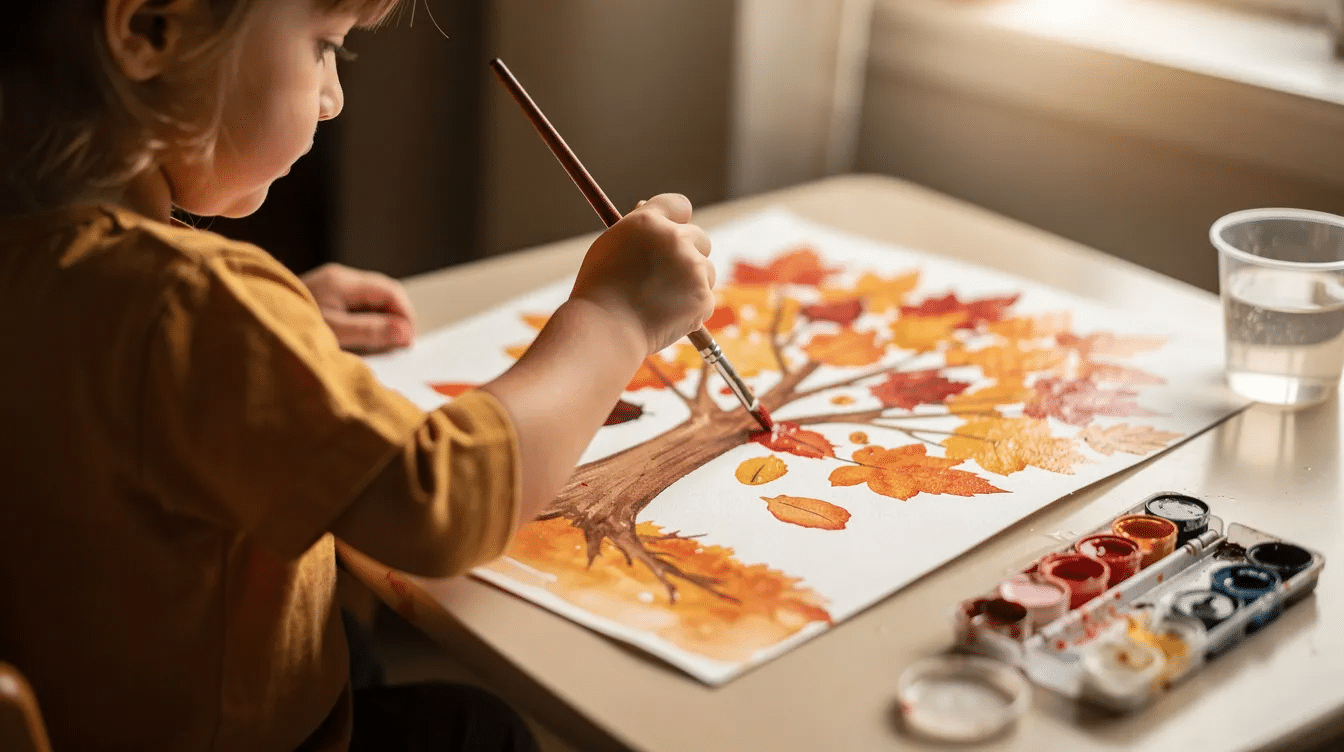
This category pushes students into composition, perspective, and color theory. Colorful autumn landscapes can be created using paints and mixed media – think rolling hills of warm oranges, misty skies, and trees against golden light. Students can pour paint in layered washes to build atmospheric depth, or use acrylic paints for more controlled brushwork.
Silhouette trees can create striking classroom displays when painted as dark tree trunk shapes against vibrant sunset backgrounds. Autumn handprint trees suit ages four to ten, making this a category that works across a wide range with step by step instructions adjusted by skill level. Older students can explore impressionistic techniques, soft pastels, or digital photography of local fall scenes.
Why It Stands Out: Develops composition, value, and warm-vs-cool color understanding.
Best For: Upper elementary to high school, art skill development, portfolio building.
Key Strengths: Teaches advanced techniques. Creates keepsake artwork. Flexible media choices from watercolor to collage.
Possible Limitations: Requires more art supplies. Longer time commitment. Higher skill requirements for realistic results.
Quick Comparison of Fall Art Project Categories
Category | Best For | Cost | Age Range | Time Needed |
|---|---|---|---|---|
Leaf Art | Nature connection, free materials | Very Low | All ages | 20–45 min |
Pumpkin & Gourd Crafts | Iconic fall displays | Moderate | Elementary–Middle | 30–60 min |
Nature Collection Art | Outdoor exploration, texture | Very Low | All ages | 30–60 min |
Apple & Harvest Projects | Young children, edible fun | Low | Preschool–Early Elem. | 20–30 min |
Fall Landscape Art | Skill development, portfolios | Moderate–High | Upper Elem.–High School | 45+ min |
How to Choose the Right Fall Art Project
Choose Based on Age and Skill Level
Preschoolers thrive with process-focused work – apple stamping, finger painting on leaves, sensory exploration. Early elementary students can begin structured projects like leaf printing or painting pumpkins with guidance. Upper elementary kids are ready for multi-step processes: mixed media landscapes, nature weaving, or 3D sculpture. Teens can experiment with stylization, advanced composition, and symbolic artwork.
Adapt any project up or down. A leaf print can be a simple stamp for a four-year-old or a layered botanical study for a twelve-year-old.
Choose Based on Available Time and Resources
If you have 20 minutes, go with leaf stamping or apple printing. For a season long unit, build toward a landscape painting or nature collection that evolves over weeks. If your supply list is tight, leaf art and nature collection projects use materials you can shop for outside your door, and choosing the best art supplies for young artists helps you stretch your budget further. Pre-prep like drying leaves or gathering acorns before the art lesson saves class time.
Choose Based on Learning Objectives
Want to teach science? Leaf art lets students talk about photosynthesis, pigment chemistry, and plant anatomy. Need to celebrate harvest traditions? Apple and pumpkin projects connect to cultural studies and agriculture. Looking to build portfolio-quality artwork for an art education showcase? Fall landscapes let students draw on composition and color theory, while targeted art fine motor skill activities support handwriting and classroom readiness. On weekends or school breaks, colorful craft ideas can keep kids creating even outside of class time.
The strongest projects let students problem solve and experiment, not just follow a template.
Which Fall Art Project Category Is Best for You?
- Choose Leaf Art Projects if you want free materials and direct seasonal connection. Begin with a simple print session and expand from there.
- Choose Pumpkin Crafts if you want to decorate iconic fall symbols and create display-worthy results you can hang or place at a school entrance, or pair them with DIY kits for creative projects for an easy setup.
- Choose Nature Collection Art if you want to encourage outdoor exploration, sensory play, and creative use of found objects. Visit a nearby park or trail to gather your collection.
- Choose Apple Projects if you’re working with young children or want edible elements that join art and cooking, or if you want to tie in preschool crafts about family for a cozy fall family theme.
- Choose Fall Landscapes if you want to develop advanced art skills, teach composition, and create pictures worth framing.
- Choose Nature Collection Art if you want to encourage outdoor exploration, sensory play, and creative use of found objects. Visit a nearby park or trail to gather your collection.
- Choose Apple Projects if you’re working with young children or want edible elements that join art and cooking.
- Choose Fall Landscapes if you want to develop advanced art skills, teach composition, and create pictures worth framing.
Final Thoughts
The best fall art projects depend on your students’ ages, the materials you have on hand, and what you want them to learn. Fall offers a unique window of seasonal materials and themes – from autumn leaves to pumpkins to pinecones – that simply aren’t available the rest of the year.
Don’t feel locked into one category. Combine leaf printing with landscape painting. Use nature collection materials alongside pumpkin decoration. A well-rounded fall art experience draws from multiple categories across the season.
Most importantly, remember that the process and exploration matter more than a perfect final product. Let kids explore, experiment, and play with the season. That’s where the real learning – and the real art – happens. Start with one project this week and see where the season takes you.