Fall is a great time for preschool art activities. The changing leaves, harvest themes, and warm color palettes give young kids a natural canvas for creativity. But with hundreds of fall craft ideas floating around, it can be hard to know which ones actually deliver on both fun and developmental value.
This guide breaks down the seven best fall art activities for preschool, evaluated on real criteria that matter: age appropriateness, material safety, mess level, and educational impact. Whether you’re a teacher setting up a classroom station or a parent planning a weekend project, you’ll find activities here that work.
How We Chose the Best Fall Art Activities for Preschoolers
We didn’t pick these activities at random. Each one was evaluated against six criteria grounded in early childhood development research and practical classroom realities.
Age appropriateness and fine motor skill development. Preschoolers ages 3–5 are actively building hand-eye coordination, pincer grasp, and hand strength. Activities that involve stamping, painting, and manipulating natural materials directly support these fine motor skills. According to Edutopia, manipulating art tools helps strengthen coordination foundational to writing and counting. Fall crafts help preschoolers explore creativity and fine motor skills simultaneously, which is why we prioritized activities that develop these areas.
Material accessibility and safety. Natural materials like leaves, pinecones, and apples are commonly used in preschool art, and for good reason: they’re affordable and tactile. Pinecones are great materials for tactile fall crafts, and acorns add sensory variety. However, all materials must be non-toxic and conform to safety standards like ASTM D4236. Washable materials work best for preschool art projects, so we favored activities that use water-based paints and school glue.
Mess level and cleanup ease. Messy play has documented cognitive and motor benefits, but it needs to be sustainable. We considered whether each activity needs tarps, smocks, or outdoor space.
Seasonal relevance and educational value. Art projects that utilize colors and textures help children engage with nature. Each activity connects to observable fall season changes, reinforcing vocabulary and science concepts.
Creativity and open-ended exploration. Open-ended process art is well-suited for preschoolers. Children ages 3–5 benefit from creative process rather than strict final products in art. Offering choices rather than detailed instructions promotes creativity in preschool art, so we weighted activities that allow exploration over replication.
Preschool art activities encourage sensory exploration and fine motor skill development, and a 2026 Head Start study of 74 children found that visual arts participation was linked to lower cortisol levels and greater observed interest compared to non-art classes. These benefits reflect how arts and crafts support overall child development, from emotional regulation to social connection. That’s a strong signal that these activities do more than keep kids busy.
Top 7 Fall Art Activities for Preschool
1. Apple Stamping Art
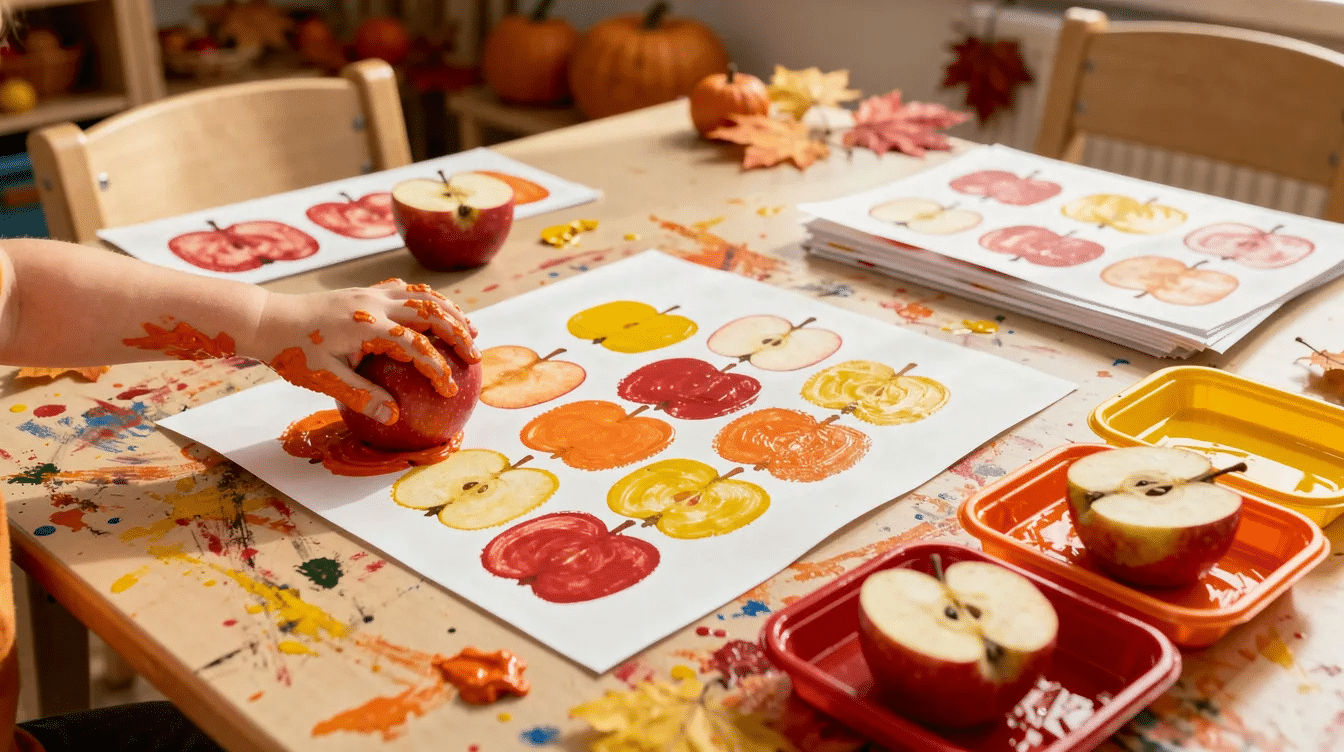
Cut an apple half, dip it in paint, and press it onto white paper. That’s the entire setup for one of the most reliable fall crafts for kids. This apple craft tops our list because it delivers consistent results with almost zero learning curve. Kids choose from red, orange, and yellow paint, press the apple half onto paper, and immediately see a satisfying print.
Why It Stands Out
This is such a fun craft because the simplicity guarantees success. Even children who are hesitant about art get drawn in by the novelty of using food as a tool. The apple creates a natural shape that connects directly to autumn themes.
Best For
First-time craft activity sessions and mixed-age groups where you need an activity everyone can do independently.
Key Strengths
- Minimal materials: apples, pour paint onto a plate, and cardstock or construction paper
- Develops hand-eye coordination and bilateral coordination as children hold the apple with one hand and steady the paper with the other, similar to other fine motor art activities for preschoolers
- Creates beautiful shapes that connect to harvest and fall themed units
- Apple seed counting puzzles can extend this activity to develop counting and number matching skills
Possible Limitations
- Apples can get slippery and messy during extended use
- Limited to circular shapes unless you try different cuts like quarters
2. Handprint Fall Trees
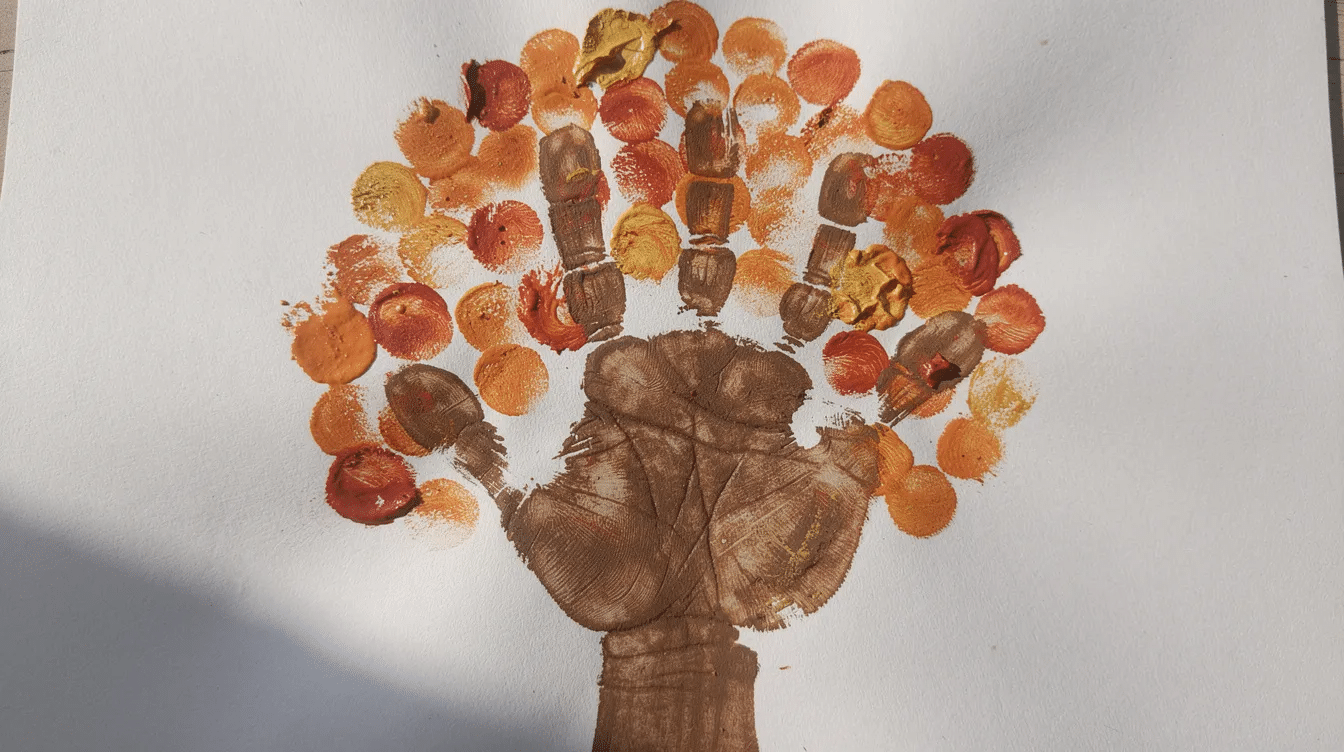
Trace a child’s hand and arm onto brown construction paper to form a tree trunk, then use finger prints in fall colors to add leaves. This fall tree craft earned its spot because it creates something parents genuinely treasure.
Why It Stands Out
The handprint captures a moment in time. A year from now, that little hand will be bigger. This is a perfect craft for creating lasting memories, and the finished piece doubles as a beautiful classroom display or gift.
Best For
Parent-child activities, classroom displays, and holiday gift-making sessions. This is a great craft for building personal connection to art and can easily tie into preschool family-themed crafts and activities.
Key Strengths
- Creates personalized keepsake art pieces that families keep for years
- Incorporates the child’s body as the primary art tool, reinforcing body awareness
- Allows exploration of fall colors: use yellow paint, orange paint, red construction paper scraps, and brown paint to create trees with rich autumn palettes
- Children can create a fall tree using a brown marker for the trunk and finger prints for leaves
Possible Limitations
- Requires adult assistance for hand tracing and positioning
- Paint cleanup needed for hands and surfaces; have paper towels ready
- Some children may resist having their hands painted
3. Coffee Filter Leaf Sun Catchers
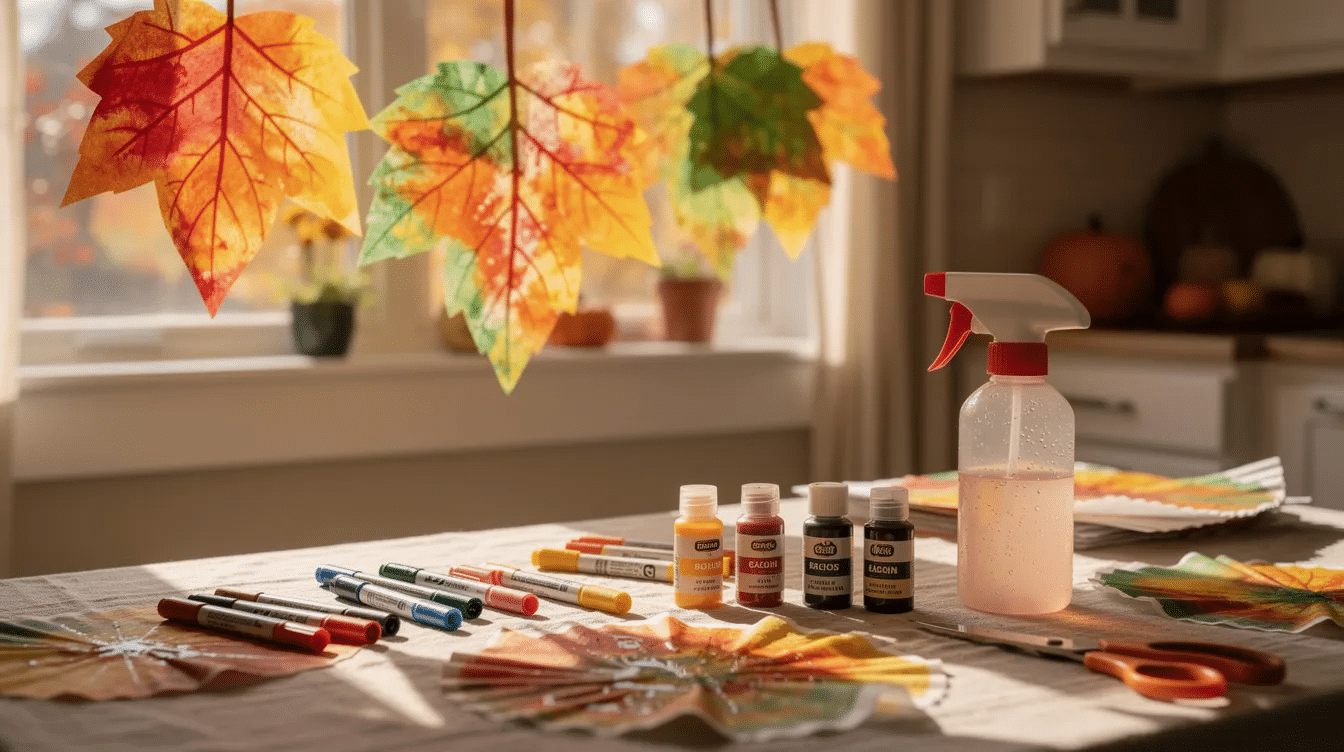
Drop food coloring or washable markers onto coffee filters, spray with water, let the colors blend and bleed, then cut into leaf shapes and hang in windows. Coffee filter leaves are a simple and engaging fall craft that made our list for its pure process art magic.
Why It Stands Out
The color-blending process is genuinely captivating. Children watch colors merge in real time, learning cause and effect without a single worksheet. This is process art at its best, and it’s a fun way to explore arts and science simultaneously.
Best For
Children who enjoy process over product, and anyone looking for a great sensory craft. This activity rewards experimentation and curiosity.
Key Strengths
- Teaches color mixing and absorption concepts through hands-on discovery
- Creates beautiful window decorations that let light pass through, similar to tissue paper stained glass crafts for kids
- Encourages experimentation and scientific thinking about how water moves color
- Minimal materials: coffee filters, food coloring or markers, water, and a glue stick to attach to contact paper for display
Possible Limitations
- Requires water and can create a wet mess during the process
- Final product may be fragile for some children to handle
- Drying time needed before cutting and displaying
4. Pumpkin Painting with Pool Noodles
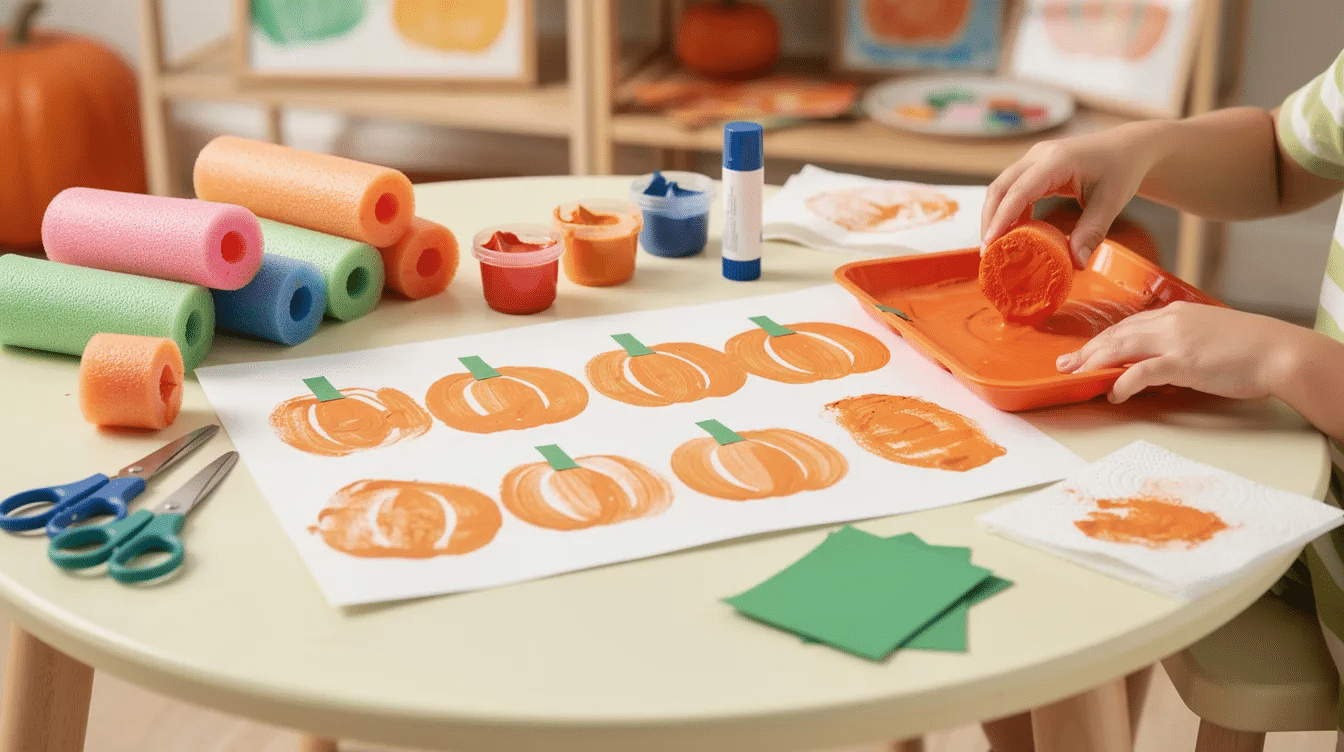
Cut pool noodles into cross-sections to create circular stamps, then dip them in orange paint and press onto paper. Add a green paper stem on top, and you have a fun pumpkin craft that looks impressive every time.
Why It Stands Out
The innovative use of unconventional art tools makes this activity stand out. Pool noodles aren’t something children associate with art, and that novelty sparks curiosity and engagement. You can also decorate pumpkins in different sizes by varying the noodle diameter.
Best For
Large group activities and outdoor art sessions where you need something that scales well. This is a simple craft that keeps its appeal across a full classroom, especially if you’re building a collection of ready-to-use DIY craft kits for kids for seasonal themes.
Key Strengths
- Creates consistent pumpkin shapes every time, building confidence
- Develops gross motor skills through stamping motions
- Pool noodles are reusable and easy to clean
- Pair with alphabet pumpkins to help kids practice the alphabet, or use pumpkin seed counting to reinforce counting skills for preschoolers
Possible Limitations
- Requires adult preparation to cut pool noodles safely
- Initial investment in pool noodles may be needed
Bonus pumpkin craft ideas: A noodle pumpkin craft uses different pasta shapes for decoration, and using pasta for crafts is a fun sensory activity for kids. Tissue paper pumpkins are great for preschoolers’ fine motor skills. Ripped paper pumpkins enhance fine motor skills in toddlers. You can even try cork pumpkins, which require 10 corks for small and 24 for large versions. Alphabet pumpkins also help preschoolers practice letter recognition.
5. Leaf Printing with Real Leaves
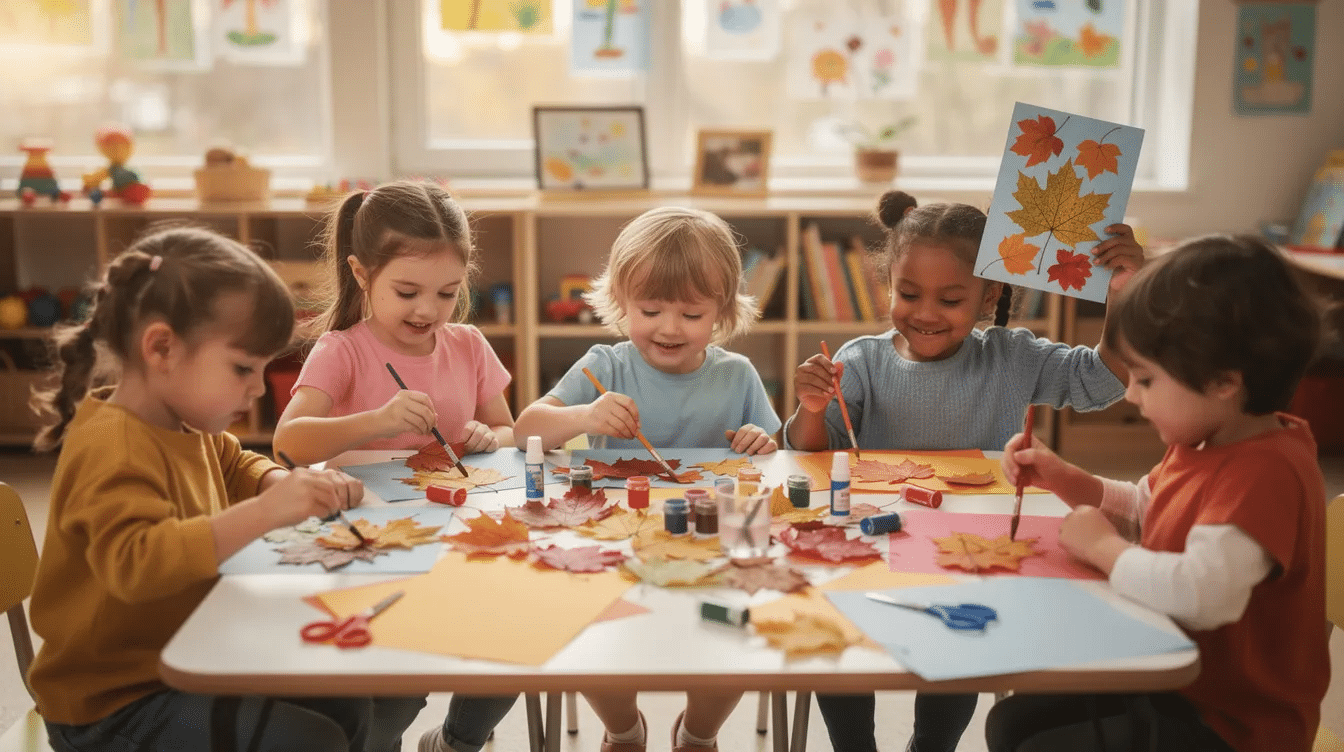
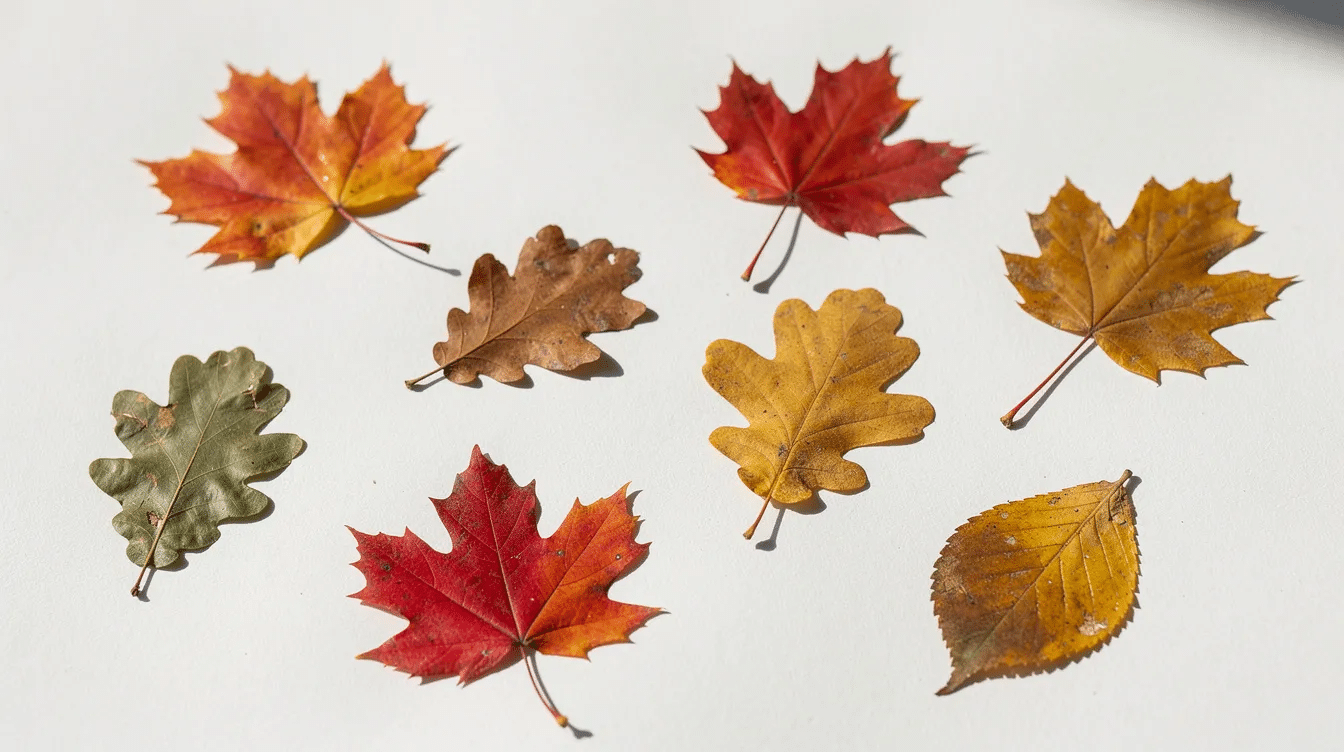
Head outside, collect leaves from the yard or park, paint the underside of each leaf, and press it onto paper. Leaf printing creates unique and colorful designs that no two children will replicate. This fall leaf craft made our list for its direct connection to exploring nature and pairs well with other nature stick crafts that use outdoor materials.
Why It Stands Out
This activity combines outdoor exploration with indoor art creation. Collecting leaves for crafts encourages outdoor exploration, and the resulting prints carry the actual texture and shape of real autumn foliage. Kids can use leaves to make prints with paint in countless color combinations.
Best For
Nature-loving children and schools with outdoor access. Start with a nature walk to collect leaves, then bring them inside for the art projects portion.
Key Strengths
- Connects children directly with natural materials through hands-on exploration
- Each leaf print is unique and authentic; kids can create colorful leaf prints using paint and leaves
- Encourages observation of leaf shapes, veins, and textures
- Nature crafts can include making leaf prints with paint as a foundation, then extend into more ideas like leaf rubbings with crayons on scrapbook paper
- Collecting leaves for crafts helps children explore nature and builds vocabulary around seasons
Possible Limitations
- Requires advance leaf collection and preparation time
- Leaf availability depends on local climate and season timing
Extension ideas: Black glue and watercolors create stunning leaf art when you outline leaf shapes with glue and fill them in. Leaf ghosts can be made by painting leaves white for a Halloween twist. Kids can create leaf people using collected leaves and twigs for bodies and limbs. You can also try an acorn craft where acorns can be used to create decorative crafts with pom poms to complement your leaf collection.
6. Paper Plate Scarecrow Faces
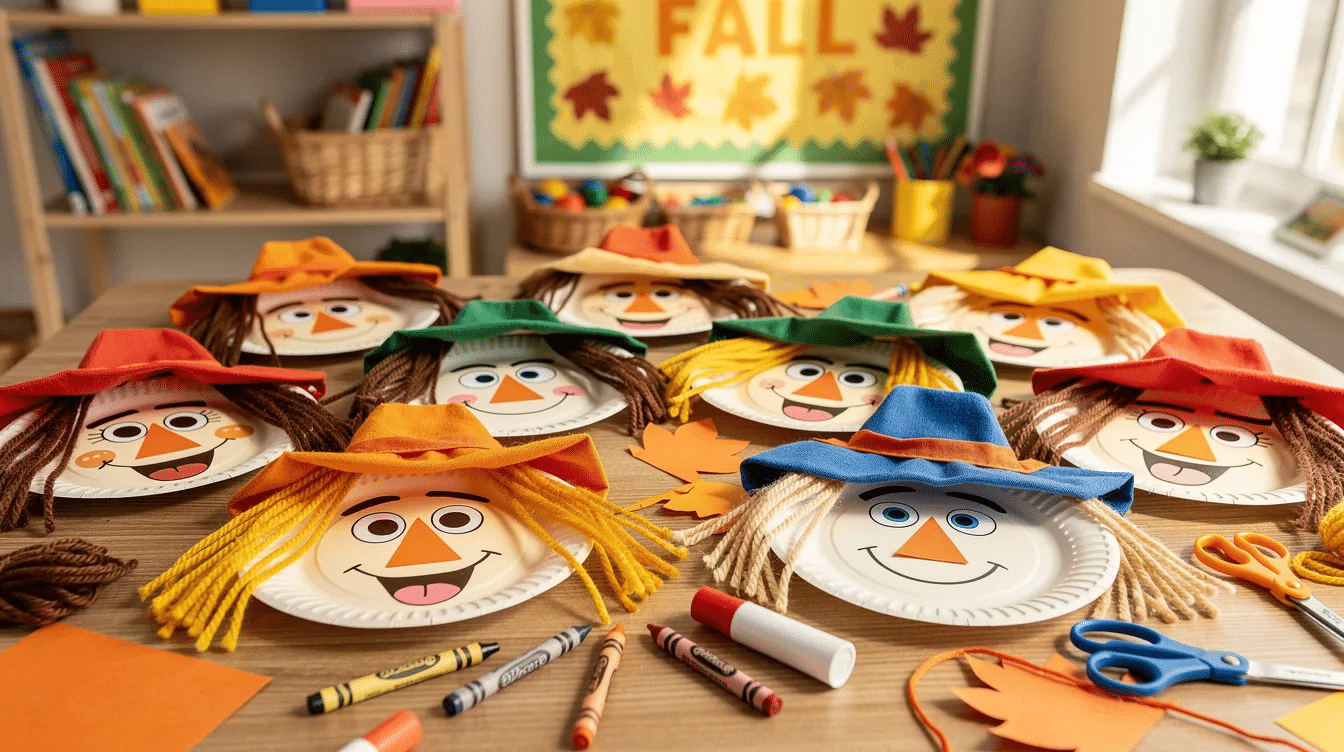
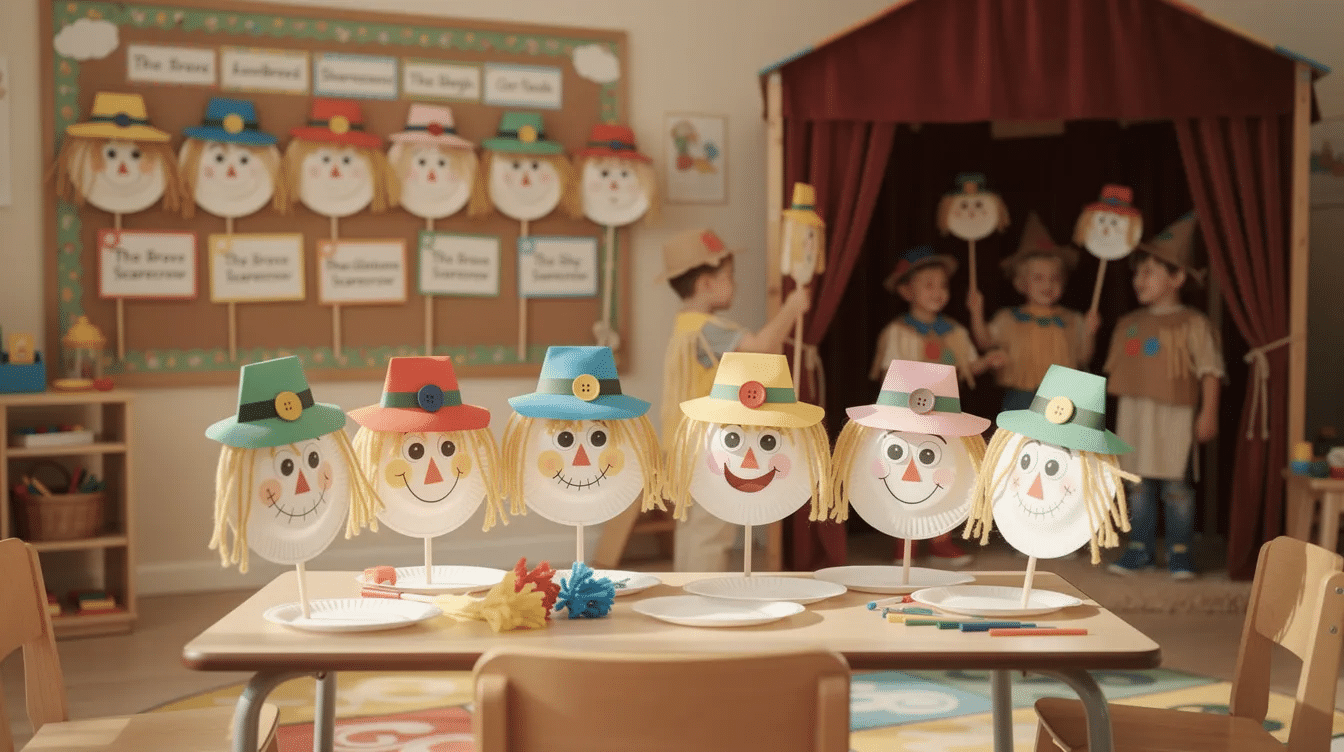
Use a paper plate as the base, then add yarn for hair, fabric scraps for hats, and orange paper or orange construction paper for noses. Draw or glue on facial features, and suddenly you have a character with personality. Fall crafts can include making scarecrows from paper plates, and this craft activity extends naturally into storytelling and dramatic play.
Why It Stands Out
This goes beyond art into character building. Children name their scarecrows, give them backstories, and connect them to fall books and harvest themes. It’s such a fun craft because it bridges creative fall crafts with language development.
Best For
Children who enjoy dramatic play, storytelling, and building characters. This is also a fun fall craft for integrating with read-aloud sessions about farms and harvests, and it can serve as a 2D complement to more hands-on preschool 3D art projects.
Key Strengths
- Develops facial feature recognition and placement skills, including scissor skills when cutting shapes
- Integrates with fall books and harvest educational themes
- Uses easily accessible paper plate base; add construction paper glue, tissue paper, brown paper scraps, and red construction paper for cheeks
- Connects to the broader fall season curriculum
Possible Limitations
- May require multiple small materials that can be overwhelming to manage
- Less open-ended than other process art activities on this list
- Results may look similar across children if too template-driven
7. Corn Cob Rolling Paint
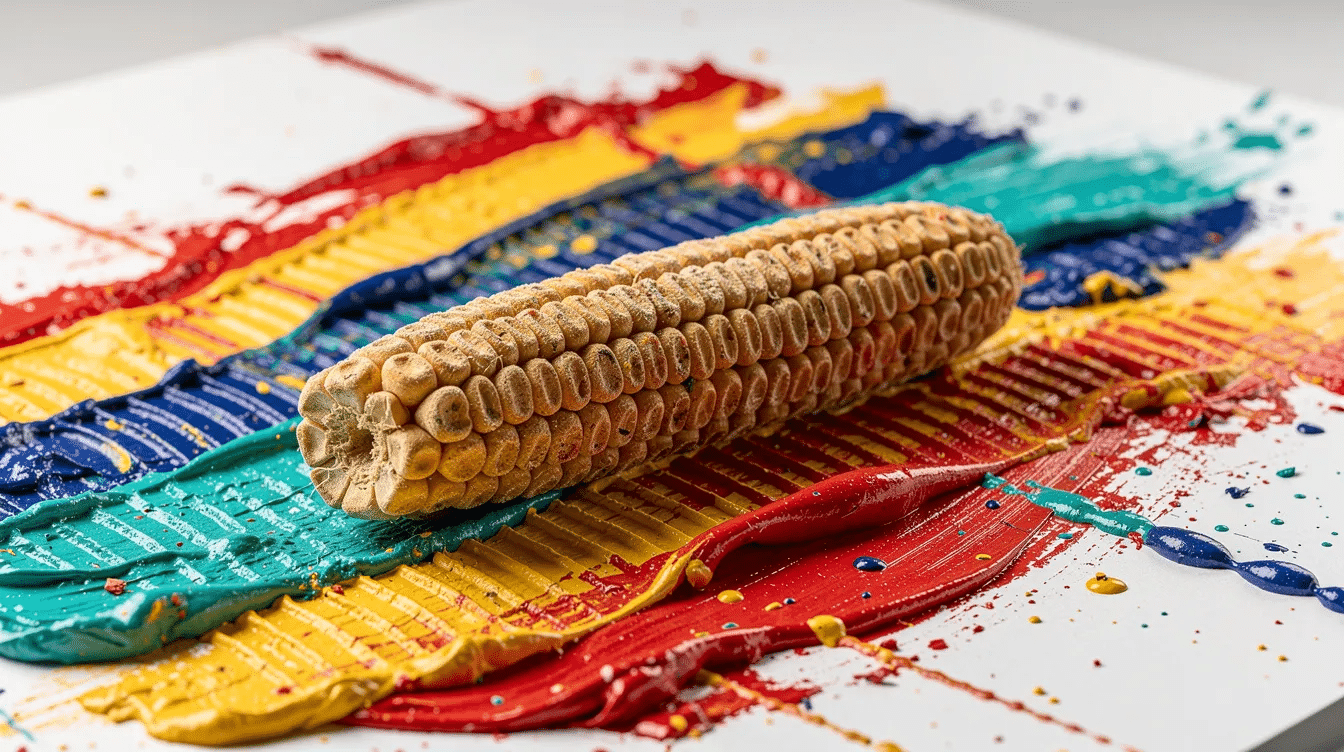
Dried corn cobs become textured rolling tools when dipped in paint and rolled across paper. The irregular kernels create patterns that are impossible to replicate with any brush or sponge. This is a fantastic fun activity that connects directly to farm and harvest themes.
Why It Stands Out
The textural experience is exceptional. Children feel the bumpy corn cob, hear it roll across paper, and see unpredictable patterns emerge. This is a great sensory craft that engages multiple senses simultaneously.
Best For
Sensory-seeking children, harvest theme units, and any setting where you want to combine art with tactile exploration. Ideal for autumn inspired crafts that connect to farm education.
Key Strengths
- Creates unique textural patterns impossible with traditional brushes
- Connects to farm and harvest educational themes
- Develops bilateral coordination through rolling motions; children use both hands to guide the cob
- Works with acrylic paint or tempera on large sheets of paper; give children as much space as possible to roll freely
Possible Limitations
- Corn cobs may be difficult to source in some areas; try craft stores or farmers’ markets
- Can be messier than traditional painting tools; use a toilet paper roll as a handle insert for cleaner grip
- Surfaces need protection with tarps or newspaper
Quick Comparison of the Best Fall Art Activities
Here’s a side-by-side look at what each activity does best:
- Apple Stamping – Best for simple success and classic fall fun; minimal prep, guaranteed results
- Handprint Fall Trees – Best for creating lasting keepsakes; personal, meaningful autumn crafts
- Coffee Filter Leaves – Best for process art and color exploration; science meets creativity
- Pumpkin Pool Noodle Painting – Best for large groups and unique tools; scales easily
- Leaf Printing – Best for nature connection and outdoor integration; each print is one-of-a-kind
- Paper Plate Scarecrows – Best for storytelling and character building; extends into dramatic play
- Corn Cob Rolling – Best for sensory exploration and texture; harvest connection
Activity | Prep Time | Mess Level | Best Setting | Motor Focus |
|---|---|---|---|---|
Apple Stamping | Low | Medium | Indoor/Outdoor | Fine motor |
Handprint Trees | Medium | Medium | Indoor | Fine motor |
Coffee Filter Leaves | Low | Medium-High | Indoor | Fine motor |
Pool Noodle Pumpkins | Medium | Medium | Outdoor | Gross motor |
Leaf Printing | Medium | Medium | Both | Fine motor |
Paper Plate Scarecrows | Medium | Low | Indoor | Fine motor + scissor skills |
Corn Cob Rolling | Medium | High | Outdoor | Bilateral |
How to Choose the Right Fall Art Activity
Choose Based on Available Time and Preparation
Projects should be kept to about 15–30 minutes for preschool-age children. If you have under 20 minutes and minimal prep time, apple stamping and leaf printing are your fastest options: collect leaves or cut apples, set out paint, and go.
Activities like paper plate scarecrows and handprint trees require more setup: cutting shapes from green paper, brown construction paper, and other materials. Budget an extra 10–15 minutes for preparation if you choose these. Candy corn crafts and yarn pumpkins are additional easy fall crafts that need minimal prep for quick sessions, while no-mess activities for toddlers can fill in the gaps when you don’t have time for full paint projects.
Choose Based on Group Size and Setting
For large groups of 10+ children, pumpkin pool noodle painting and corn cob rolling work well because they allow simultaneous participation without bottlenecks. Both activities use gross motor movements, so children need as much space as possible to work comfortably.
For individual or small group settings at home, handprint trees and coffee filter leaves allow more one-on-one interaction. If you’re working at a kitchen table, a simple craft like apple stamping keeps the footprint small.
For outdoor settings, leaf printing and corn cob rolling are ideal since the mess stays outside and the nature walk component adds physical activity.
Choose Based on Children’s Developmental Focus
Match the activity to specific learning goals:
- Fine motor development: Apple stamping, coffee filter cutting, and scarecrow assembly all strengthen pincer grasp and hand control. Fall crafts can improve fine motor skills in preschoolers across all these options.
- Sensory exploration: Corn cob rolling and leaf printing provide rich tactile input. Bubble wrap can also be added as a stamping tool for additional texture exploration.
- Cognitive and math skills: Pumpkin seed counting reinforces counting skills. Color-by-code activities enhance number recognition in preschoolers. Apple seed counting puzzles develop counting and number matching skills, and themed projects like a number 9 craft activity for preschoolers support early numeracy. These extensions turn art projects into cross-curricular learning.
- Creative expression: Coffee filter leaves and corn cob rolling are the most open-ended, allowing children to explore arts without a fixed endpoint.
- Language development: Paper plate scarecrows naturally generate storytelling. Use a free printable scarecrow template to scaffold the activity for young kids who need structure.
For more ideas on extending fall art into literacy, try pairing activities with fall-themed picture books. You can also explore arts through resources like red ted art for seasonal project inspiration and fun a day for daily activity ideas.
Which Fall Art Activity Is Best for You?
Here’s a quick decision guide based on your situation:
- Choose Apple Stamping if you want guaranteed success with minimal prep. It’s a craft for kids of every skill level and a reliable starting point.
- Choose Handprint Trees if creating keepsakes is your priority. This is the activity grandparents frame.
- Choose Coffee Filter Leaves if process and exploration matter most. Let children combine art and science without worrying about the final product.
- Choose Pool Noodle Pumpkins if you need something that works for a full classroom. It’s a fun way to decorate pumpkins without the mess of real ones.
- Choose Leaf Printing if you want to connect art with exploring nature. The nature walk alone makes this worth doing.
- Choose Paper Plate Scarecrows if storytelling is your angle. This is a fun fall craft that sparks imaginative play.
- Choose Corn Cob Rolling if sensory experience is your focus. Nothing else on this list delivers the same tactile richness.
Final Thoughts
The seven activities above cover the full spectrum of what fall art can offer preschoolers: from the satisfying stamp of an apple half to the unpredictable textures of a corn cob rolling through green paint and brown paint on white paper. Each one supports different developmental areas, from fine motor skills and math skills to social-emotional growth and creative expression.
The research backs this up. NAEYC emphasizes that process-focused art supports cognitive flexibility, emotional expression, and language development far more effectively than template-based crafts. When you display children’s artwork as unique instead of comparing it, you reinforce that their creative choices matter.
There’s no single perfect craft. The best approach is to rotate through several activities across the fall season, giving children exposure to different materials, techniques, and themes. Start with one this week. Grab some construction paper, a few apples, or take a nature walk to collect leaves. The materials are already falling from the trees.
Fall crafts aren’t just about filling time. They’re about helping young kids build coordination, confidence, and a genuine connection to the world changing around them. That’s worth a little mess.