The last day of the school year can feel rushed, emotional, and exciting all at once. A memory book gives students a simple way to slow down, reflect on what happened, and turn favorite memories into a sweet keepsake they can take home.
End-of-year memory books can include photos, writing, drawings, teacher notes, peer messages, goals, summer plans, and special memories from field trips or classroom celebrations. The best memory book ideas for end of school year depend on your students, available time, budget, and whether you want a print project, a digital version, or a hybrid.
How We Chose the Best Memory Book Ideas
To choose the strongest book ideas, we looked at what works in a real classroom during a busy week at the end of the year.
Here are the main factors:
- Age appropriateness: A preschool or pre k memory book should rely on pictures, draw activities, and short answers, while older grades can handle deeper writing.
- Time required: Some teachers need a fun end-of-year activity that can be completed in one afternoon. Others can spend several days on year memory books.
- Cost and access: A printable memory book resource is usually cheaper than a hardbound photo book or published keepsake.
- Customization: Customizable memory books can include various page options that allow students to document their personal experiences, such as favorite memories, achievements, and reflections on the school year.
- Durability: A lasting keepsake should hold up over time. The Florida Division of Library and Information Services recommends acid-free materials and avoiding PVC plastics when preserving scrapbooks and photos.
- Reflection value: Creative end-of-year memory books help students reflect on their growth and document milestones.
- Ease of use: The right idea should keep students engaged without creating too much extra work for teachers or parents.
Best 6 Memory Book Ideas for End of School Year
1. DIY Printable Memory Books
DIY printable memory books are one of the easiest ways to create a meaningful end of year memory project. Students complete themed pages about their school year, including favorite subject, favorite teachers, favorite memories, friends, achievements, and goals for next year.
Many memory book templates offer editable pages, allowing users to personalize text and images to better reflect individual student experiences and preferences. Memory books can be designed in different sizes, such as full sheet and half-sheet options, providing flexibility in how they are printed and customized for students.
Printable memory books can include a variety of themed pages, such as travel-themed pages that help students document their learning journey over the school year. A travel-themed memory book can include pages for students to document their learning journey, such as a “passport” page for personal facts and a “school year road map” to reflect on what they learned.
Students can also document challenges faced and overcome during the school year in themed pages such as “Mountains I Climbed.” This is a natural way to teach growth mindset because kids can review hard moments and see how much growth came from them.
Why it stands out: You get complete creative control with minimal prep. Print the pages, choose the order, and let students draw pictures, write messages, and add their own memories.
Best for: Busy teachers who want a low-cost, customizable memory book that works across elementary grades.
Key strengths:
- Cost-effective and easy to print
- Works for preschool, pre k, and upper elementary with adjusted prompts
- Can include a self portrait, “Favorites” page, and goal-setting pages
- Many printable memory books offer customizable options, allowing teachers to adapt the content to fit different grade levels and student needs
- Printable memory books often include sections for students to reflect on their school year, such as favorite memories, achievements, and messages from friends
Possible limitations: You need printer access, and most students will need different levels of writing support.
2. Teacher-Signed Keepsake Books
A teacher-signed keepsake book uses a published book, blank journal, or special notebook where teachers, school staff, and sometimes classmates write personal messages. Parents often save this type of memory book for graduation or another big life moment.
Why it stands out: It creates a treasure filled with meaningful messages from people who helped shape the child’s school experience.
Best for: Parents who want a long-term graduation gift or teachers looking for a simple but wonderful way to celebrate children.
Key strengths:
- Creates a lasting keepsake with personal notes
- Simple to execute if started early
- Looks polished and professional
- Helps students remember favorite teachers and classroom moments
Possible limitations: It can burden teachers if everyone asks for signatures during the same week. It can also become expensive for a family with multiple children, especially if using hardback books.
A helpful approach is to send the book discreetly once or twice a year rather than waiting until the end of the school rush.
3. Digital Interactive Memory Books
Digital interactive memory books use tools like google slides, Canva, Book Creator, or a dedicated digital book platform to combine pictures, writing, audio, and video. Students can design digital scrapbooks on platforms like Canva or Book Creator, making this format especially appealing to tech-comfortable classrooms.
A digital version can include voice reflections, short video clips, scanned artwork, and photos from the whole class. Some platforms even allow QR codes in a printed book so students can scan a page and hear a message or watch a classroom moment.
Why it stands out: It brings the memory book into the world students already know: interactive, visual, and easy to share.
Best for: Classrooms with strong device access and students who are excited by technology.
Key strengths:
- Great for multimedia memories
- Easy to share with parents and family
- Environmentally friendly if kept fully digital
- Helpful for students who express themselves better through images, video, or audio
Possible limitations: Technology access is not equal for every school. A digital book may also lack the tactile feel of turning real pages, and long-term access depends on saving backups.
For accessibility, Perkins School for the Blind recommends using clear titles, descriptions, and accessible formats so every student can participate in slideshows and memory books.
4. Collaborative Class Memory Books
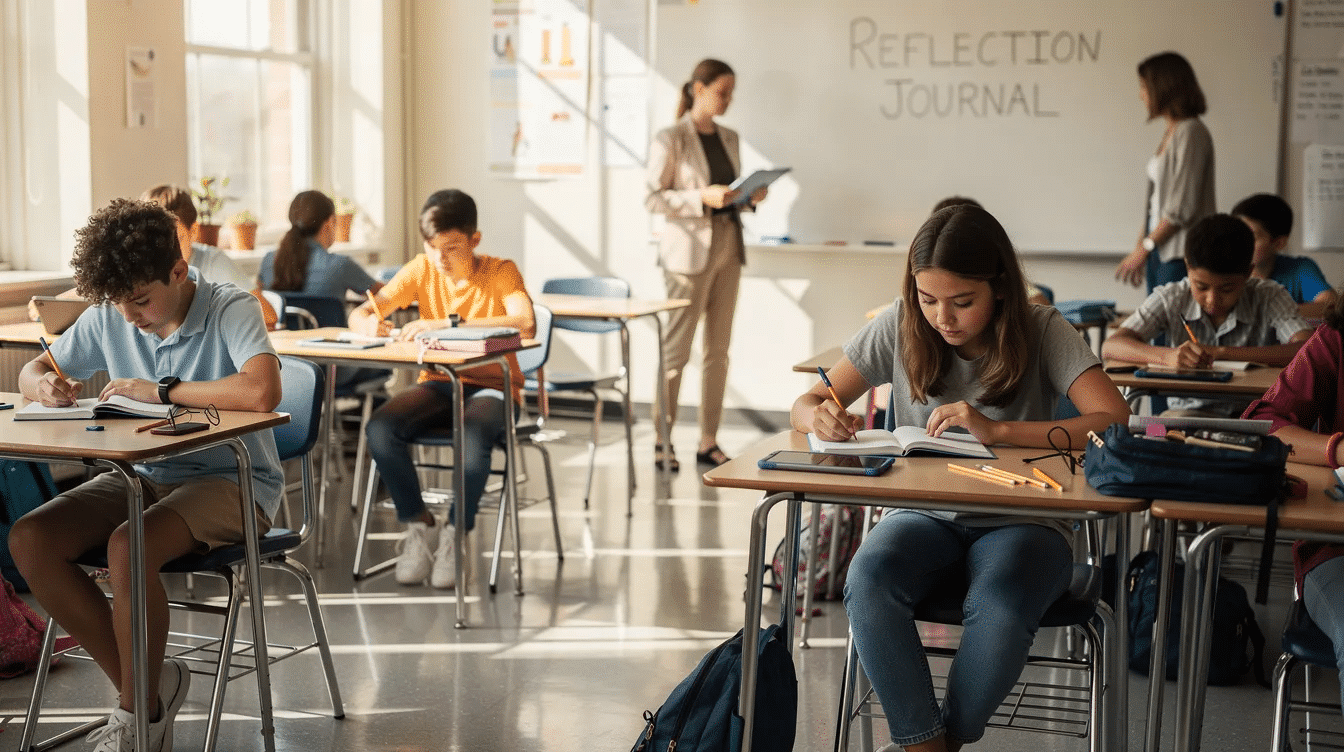
Collaborative class memory books are built by the whole classroom. Each student contributes a page, note, drawing, photo caption, or compliment for classmates. The final pages of memory books can be dedicated for classmates to write well wishes and favorite memories together.
Including a page for “messages from people I met” allows students to collect personal messages from friends and teachers, making the memory book a cherished keepsake.
Why it stands out: It celebrates the class as a community, not just individual experiences.
Best for: Close-knit classrooms where students know each other well and teachers can guide peer interaction.
Key strengths:
- Builds friendship bonds
- Encourages students to write messages kindly
- Helps classmates celebrate shared fun times
- Creates peer recognition and a strong sense of belonging
Possible limitations: This idea requires thoughtful management. Without clear rules, some students may receive fewer messages, or someone may write something careless. Use sentence starters and review pages before students take them home.
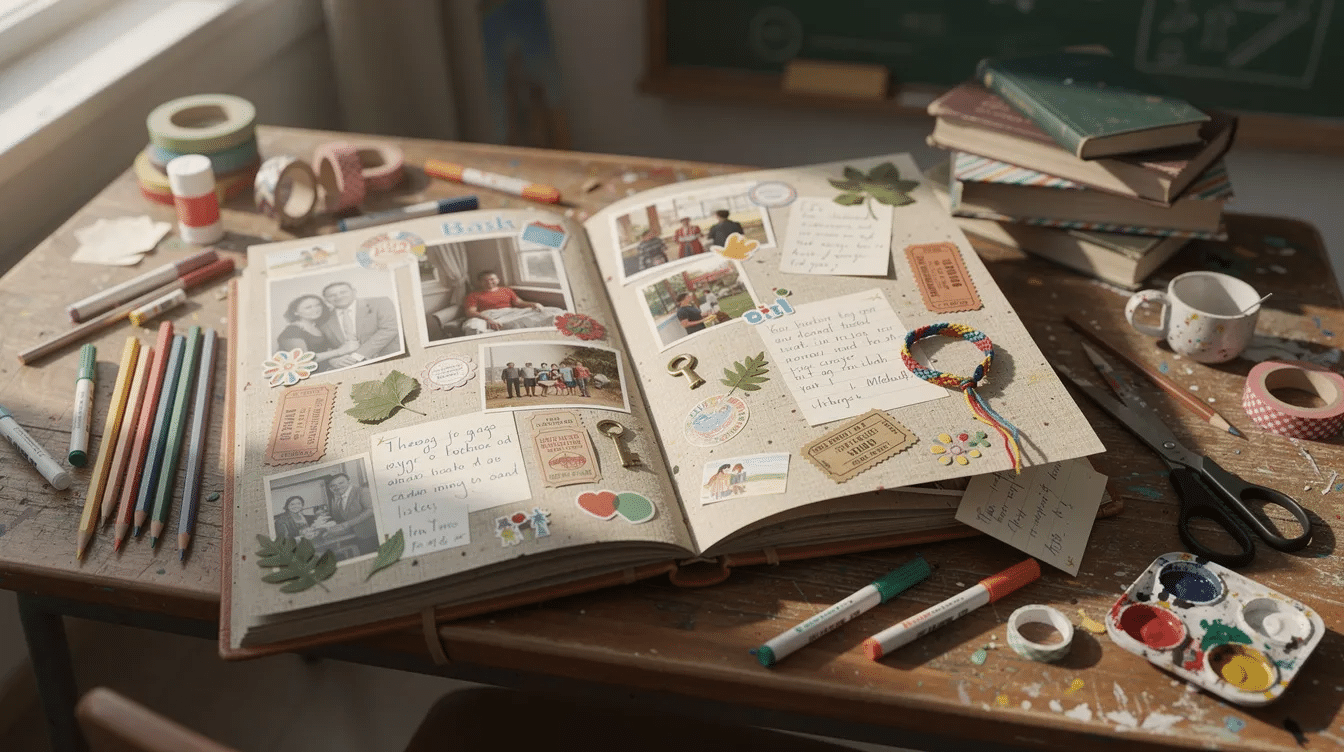
5. Photo Scrapbook Memory Books
A photo scrapbook memory book focuses on pictures from the year: first day photos, field trips, assemblies, science experiments, recess, art projects, and special events. Memory books can feature pages for students to illustrate and label “souvenirs” from field trips and special events, capturing significant moments from the school year.
Each month of the school year can be dedicated to a two-page spread in a memory book, including candid photos and descriptions of memories. This monthly timeline format helps students see how the year unfolded, moment by moment.
Students can use a 3-ring binder and plastic sheet protectors to store precious items like directed drawings and writing samples. This scrapbook-style binder is practical because teachers can add pages throughout the year instead of assembling everything during the final week.
Why it stands out: Photos capture authentic moments that students and parents may forget without a visual reminder.
Best for: Visual learners, younger students, and families who love preserving pictures.
Key strengths:
- Easy for kids to understand
- Great for documenting growth
- Can include artwork, photos, and classroom artifacts
- Works especially well when students draw captions or labels
Possible limitations: You need consistent photo-taking. Printing costs can also add up, especially for large classes. For long-term preservation, use acid-free paper and safe photo sleeves where possible.
6. Time Capsule Memory Books
A time capsule memory book captures who students are in the present and saves it for the future. It can include current favorites, predictions, goals, handwriting samples, photos, and a letter to their future self.
Excellent formats for end-of-year memory books include interactive time capsules, scrapbook-style binders, and monthly timelines. A time capsule can also include a summer bucket list so students can document summer plans before moving into the next grade.
Students can draw side-by-side self-portraits from September and May to visualize growth. A “Favorites” page can highlight preferred lunch, recess game, and class read-aloud, giving families a small but vivid snapshot of school life.
Why it stands out: It creates anticipation. Students may open it at the start of next year, at the end of elementary school, or during graduation.
Best for: Students who enjoy goal-setting and families who want a future-opening surprise.
Key strengths:
- Captures a specific moment in time
- Encourages goal-setting
- Makes students excited about the future
- Turns small answers into a meaningful document
Possible limitations: Delayed gratification is not ideal for every child. The book also needs to be stored safely so it is not lost before the opening date.
Quick Comparison of the Best Memory Book Ideas
Memory book idea | Best for | Time needed | Budget | Main benefit |
|---|---|---|---|---|
DIY Printable Memory Books | Busy teachers wanting student-led reflection activities | Low | Low | Flexible and easy to customize |
Teacher-Signed Keepsake Books | Medium | Medium to high | Sentimental messages | |
Digital Interactive Memory Books | Tech-integrated classrooms with multimedia capabilities | Medium | Low to medium | Video, audio, and easy sharing |
Collaborative Class Memory Books | Building community and celebrating friendships | High | Low | Peer connection |
Photo Scrapbook Memory Books | Visual storytelling and capturing authentic moments | Medium | Medium | Strong emotional impact |
Time Capsule Memory Books | Future-focused families planning graduation surprises | Low to medium | Low | Long-term excitement |
If you need one perfect end option for the final week, choose printable pages. If your class has taken many photos all year, choose a scrapbook. If your priority is relationships, choose a collaborative class book.
How to Choose the Right Memory Book Idea
Choose Based on Available Time
If you have one afternoon, keep it simple. A printable memory book with a cover, self portrait, favorites page, favorite memories page, and messages page is enough to feel complete.
If you have several days, try a collaborative class memory book or a monthly photo timeline. These take longer because students need time to collect photos, answer prompts, sign pages, and review their work.
The more people involved, the more coordination you need.
A low-maintenance option is best when testing, ceremonies, cleaning, and report cards are already competing for attention.
Choose Based on Student Age
For preschool and pre k, use pages that ask students to draw, circle answers, or dictate a sentence to an adult. Young kids enjoy pictures, handprints, simple prompts, and “my favorite subject” style choices.
For elementary students, include writing prompts, field trips, friends, favorite read-alouds, and a summer bucket list. Older students can reflect on challenges, achievements, growth mindset, and future goals with more detail.
Middle school students may prefer digital formats, photo timelines, or time capsules that feel less childish and more personal.
Choose Based on Budget
The lowest-cost option is usually a printable memory book resource. You only need paper, pencils, crayons, and a way to bind the pages.
Published keepsake books and photo books cost more. According to Tom’s Guide, some premium 8×8 hardcover photo books can start around $79, so they may be better for individual family gifts than whole-class projects.
To reduce costs, consider:
- Half-sheet printing
- Black-and-white pages students color
- Shared classroom supplies
- A 3-ring binder students already own
- Digital-only books
- Optional parent contributions
Which Memory Book Idea Is Best for You?
Choose DIY Printable Memory Books if you need quick, cost-effective student activities that still allow reflection.
Choose Teacher-Signed Keepsake Books if you want meaningful graduation gifts with personal notes from teachers and school staff.
Choose Digital Interactive Memory Books if your students have device access and enjoy creating a digital book with photos, audio, videos, and google slides.
Choose Collaborative Class Memory Books if building community is your priority and you want students to celebrate classmates, friends, and shared memories.
Choose Photo Scrapbook Memory Books if you prefer visual storytelling and have plenty of classroom photos from fun times, field trips, and special events.
Choose Time Capsule Memory Books if you want a unique future-opening idea that helps students reflect on who they are now and who they hope to become.
Final Thoughts
The best memory book ideas are not about making the fanciest product. They are about helping students pause, celebrate growth, and preserve the people and moments that made the school year meaningful.
A simple memory book can become a treasure for parents, a confidence boost for students, and a fun way to close the end of the school year. You can also combine formats: use printable pages, add class messages, include photos, and save a digital version for family members.
Start with the format that fits your time, budget, and students. Then create a memory book that helps every child remember the wonderful parts of the year and carry those memories into next year.