Childhood moves fast. One moment you are saving a baby hospital bracelet, and the next you are sorting school artwork, family photos, birthday cards, and photographs from a first trip. The right scrapbook can turn those loose pieces into special memories your child can revisit for years.
In this post, we’ll walk through practical scrapbook ideas for kids memories, from quick mini books to digital-physical albums with QR codes. You’ll also learn how to choose a format that fits your child’s age, your available time, and the kinds of memories you want to preserve.
- How We Chose the Best Scrapbook Ideas for Kids Memories
- Top 7 Scrapbook Ideas for Kids Memories
- 1. Mini Pocket Memory Books
- Why It Stands Out
- Best For
- Key Strengths
- Possible Limitations
- 2. School Year Milestone Albums
- Why It Stands Out
- Best For
- Key Strengths
- Possible Limitations
- 3. Interactive Memory Treasure Boxes
- Why It Stands Out
- Best For
- Key Strengths
- Possible Limitations
- 4. Travel Adventure Journals
- Why It Stands Out
- Best For
- Key Strengths
- Possible Limitations
- 5. Birthday Memory Collections
- Why It Stands Out
- Best For
- Key Strengths
- Possible Limitations
- 6. Theme-Based Memory Albums
- Why It Stands Out
- Best For
- Key Strengths
- Possible Limitations
- 7. Digital-Physical Hybrid Books
- Why It Stands Out
- Best For
- Key Strengths
- Possible Limitations
- Quick Comparison of the Best Scrapbook Ideas
- How to Choose the Right Scrapbook Idea for Your Family
- Which Scrapbook Idea Is Best for You?
- Final Thoughts
How We Chose the Best Scrapbook Ideas for Kids Memories
We evaluated each scrapbook idea using seven practical criteria:
- Age-appropriateness and kid-friendly execution: Younger kids need simple tasks like choosing stickers, drawing, sorting pictures, or using a pencil to write a short note. Older kids can handle scissors, journaling, QR codes, and more complex layout choices.
- Ease of creation for busy parents: A project should not take over the house. The best ideas can be completed in short sessions, even if you only finish half a page at a time.
- Durability and longevity: Using acid-free materials is essential in scrapbooking to ensure that photos and memorabilia do not deteriorate over time. Acid-free paper, photo-safe adhesives, and PVC-free protectors are recommended by preservation groups such as the Florida Department of State Archives.
- Child engagement: Involving kids in the design of their scrapbooks by choosing stickers and drawing can enhance their engagement.
- Storage efficiency: Some albums fit neatly on a shelf, while a treasure box or bulky album needs more room.
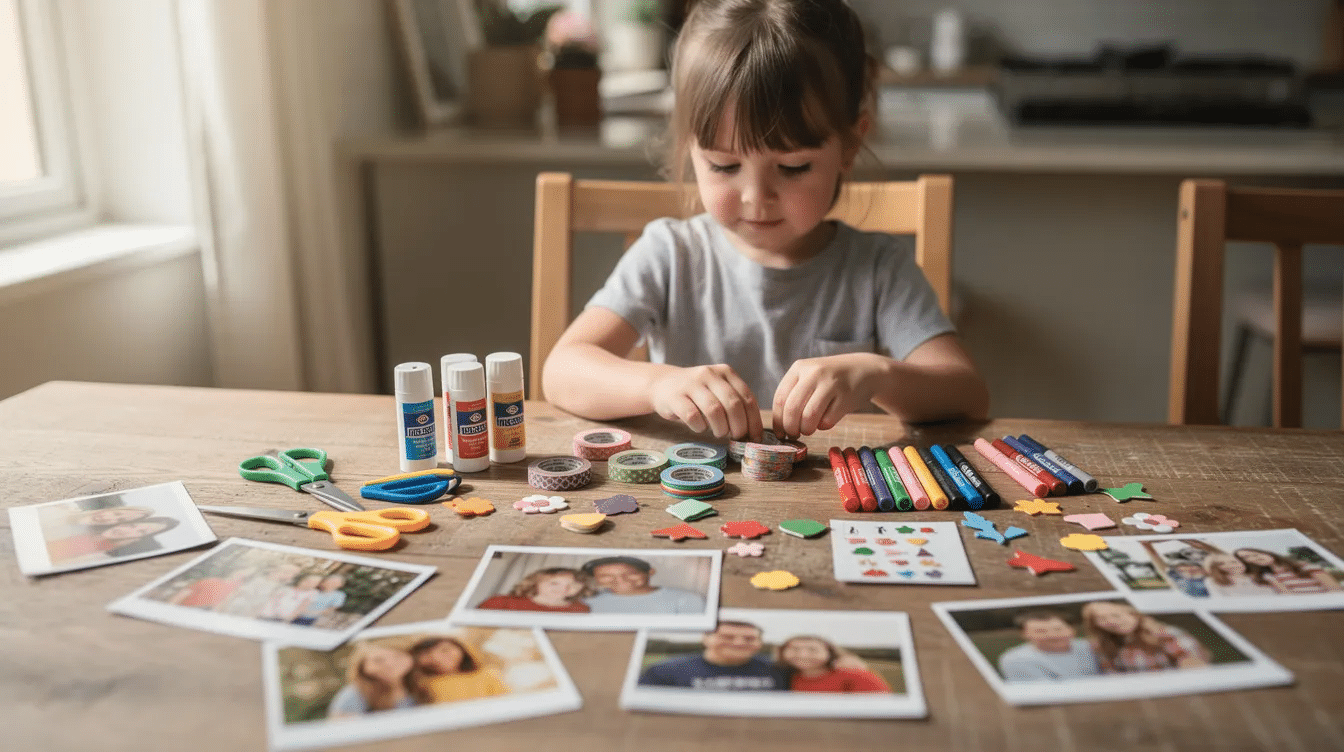
- Cost-effectiveness: Basic supplies like scrapbook paper, cardstock paper, decorative paper, washi tape, rubber stamps, stickers, and safe glue are usually enough to begin.
- Flexibility: Good scrapbook pages can hold artwork, ticket stubs, family vacations, recipes, school events, and everyday stories.
Scrapbooking is an effective way for kids to document their milestones. To keep pages neat, consider using a grid layout to arrange photos and embellishments, which can create a visually appealing and structured presentation of memories.
Top 7 Scrapbook Ideas for Kids Memories
1. Mini Pocket Memory Books
Mini Pocket Memory Books are compact scrapbooks that work especially well for toddlers, preschoolers, and any child at the beginning of their craft journey. Mini scrapbooks can be made using notecards and scrapbook paper cut into smaller pieces, allowing for a compact and personalized collection of memories.
Mini scrapbooks can also be made using cardstock and rubber stamps, allowing children to customize their own memory books with photos and decorations, especially when you have essential art supplies for young artists on hand. Kids can create small albums for their scrapbook, each with a story to tell, using stiff paper covers along with paper spines and corners to give them a hardcover feel.
Why It Stands Out
The small format feels manageable in little hands. A child can fill one book with pictures from day care, an adorable pet moment, or a fun afternoon with friends.
Best For
- Ages 3-7 years old
- First-time scrapbooking projects
- Busy families wanting quick memory preservation
Key Strengths
- Easy to complete without overwhelming kids
- Affordable because you only need minimal supplies
- A fun way to build confidence with cutting, gluing, and decorating
- Portable enough to bring to grandparents as a gift
Possible Limitations
- Limited space for large photo collections
- Not ideal for bulky memorabilia
- Small pages may feel restrictive for kids who love big drawings
2. School Year Milestone Albums
A School Year Milestone Album documents each school year from kindergarten through graduation. Each section can include class photos, artwork, report cards, awards, teacher notes, and a short reflection from your child.
Using pockets made from notebook paper can help organize and display a child’s artwork, awards, and photographs in a scrapbook, allowing for easy access and growth of the collection.
Why It Stands Out
This approach creates a consistent yearly tradition. It captures how handwriting, friendships, interests, and confidence change over time.
Best For
- Kindergarten through high school students
- Parents wanting structured memory keeping
- Families who value educational milestones
Key Strengths
- Built-in organization by school year
- Easy to add photos, school certificates, and favorite work
- Helps kids write simple reflections, such as “My favorite subject was…” or “I was proud when…”
Possible Limitations
- Requires annual commitment
- The format may become repetitive unless you change the theme, colors, or prompts each year
3. Interactive Memory Treasure Boxes
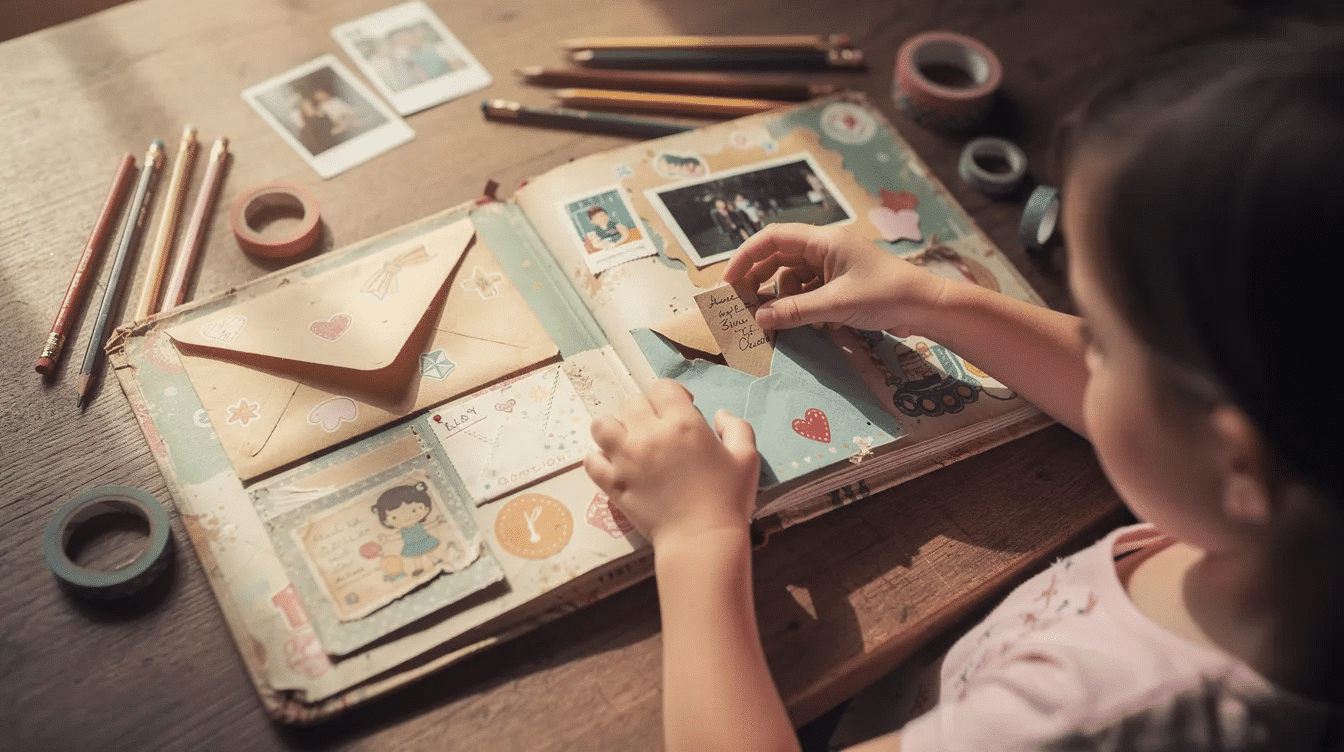
Interactive Memory Treasure Boxes combine scrapbook pages with pockets, envelopes, fold-outs, and hidden compartments. Kids can include pockets in their scrapbooks to store items like tickets, pressed leaves, or tokens, or even hide tiny creations from treasure chest craft projects.
Interactive scrapbooking elements can include lift-the-flap designs, comic strip layouts, and sensory features. Kids can also create sensory and 3D layered scrapbooks using items like popsicle sticks, puff paint, and real-life items such as pressed flowers and ribbons, similar to many preschool 3D art projects that encourage hands-on exploration.
Why It Stands Out
This style invites kids to explore. A flap can reveal a funny quote, an envelope can hold a secret note, and a pocket can preserve a museum wristband or ticket stubs from special events.
Best For
- Ages 5-12 years old
- Families with lots of ticket stubs and memorabilia
- Kids who enjoy surprise elements and discovery
Key Strengths
- Stores flat and 3D memory items together
- Makes storytelling more interactive
- Works well with embellishments such as ribbon, buttons, die cuts, and little envelopes
Possible Limitations
- More complex to build
- Bulkier to store than a standard album
- Needs stronger paper or cardstock to support layered items
4. Travel Adventure Journals
A Travel Adventure Journal focuses on one trip, road trip, or vacation. A travel scrapbook is a creative way to showcase photographs from a recent trip, along with printed ephemera gathered along the way, such as business cards, café napkins, ticket stubs, and maps, and it pairs beautifully with simple keepsakes like a crab paper plate craft for kids from a favorite beach day.
A travel scrapbook can creatively showcase photographs from a trip along with printed ephemera like business cards and ticket stubs, making it a memorable keepsake. Add postcards, sketches, map pieces, and short captions so your child does not forget the details later, or tuck in small nature-themed creations inspired by dragonfly craft ideas for kids.
Why It Stands Out
It captures the full experience, not just the polished photos. Kids can collect items during the journey and later create pages that show what they saw, ate, learned, and loved.
Best For
- Families who travel frequently
- Road trip and vacation documentation
- Kids ages 6+ who can participate in collection
Key Strengths
- Documents the trip from planning to return
- Works beautifully for family vacations and a first trip
- Encourages kids to notice details like signs, menus, flowers, maps, and local art
- Journals can feature writing prompts that encourage personal reflections such as favorite memories or aspirational thoughts
Possible Limitations
- Best for families who travel at least occasionally
- Requires collecting items during the trip
- Can become messy without a small travel folder or pouch
5. Birthday Memory Collections
Birthday Memory Collections track growth year by year. Include party photos, cards, invitations, favorite foods, height measurements, gift lists, and a few handwritten answers from the birthday child.
Creating a birthday memory box filled with mementos like invitations, cards, and photos can help capture and preserve the memories of special birthdays.
Why It Stands Out
Birthdays already have a natural deadline, which makes this one of the easiest scrapbook ideas for kids memories to maintain. You can complete a spread after each birthday instead of trying to catch up on an entire year.
Best For
- Birth through age 18
- Families who celebrate birthdays significantly
- Parents wanting yearly growth documentation
Key Strengths
- Clear annual rhythm
- Easy to compare growth year to year
- Great place to include a “favorites” list, such as favorite toy, favorite meal, favorite song, and favorite friends
Possible Limitations
- May feel repetitive after several years
- Focuses on one type of memory unless you add broader life updates
6. Theme-Based Memory Albums
Theme-Based Memory Albums focus on one part of a child’s life, such as sports, dance, art, a pet, holidays, family recipes, or “My Favorites.” Recipes and family memories can be incorporated into scrapbooks as themed elements, and nature-loving kids might enjoy pages built around easy owl crafts for children.
Engaging themes like “My Favorites” or “Road Trip Chronicles” can transform scrapbooking activities for kids, especially when you incorporate colorful pieces from tissue paper stained glass crafts as bright window or sky backgrounds.
Why It Stands Out
A theme gives the album direction. If your daughter loves ballet or your boy loves dinosaurs, a themed collection lets them go deep instead of trying to include everything.
Best For
- Kids with strong interests or hobbies
- Families with pets or specific activities
- Ages 4+ who can identify favorite subjects
Key Strengths
- Highly personalized to the child
- Easy to add pages over time
- Lets kids decorate with a consistent pattern, color palette, or icon style
- Scrapbooking can involve a variety of materials including patterned paper, washi tape, rubber stamps, and stickers to enhance the visual appeal of pages
Possible Limitations
- May miss broader childhood experiences
- Risk of abandonment if interests change
- Some themes need editing so the album feels complete instead of endless
7. Digital-Physical Hybrid Books
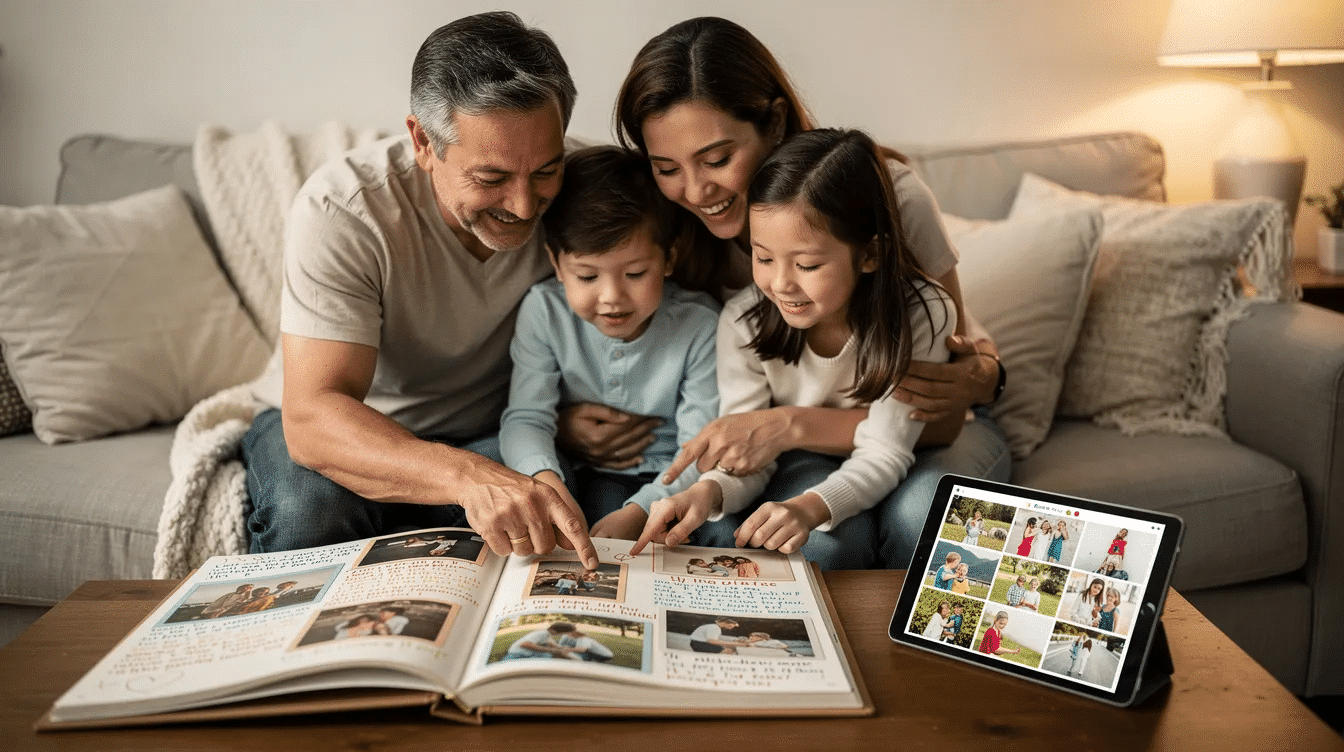
Digital-Physical Hybrid Books combine printed scrapbook pages with QR codes that link to videos, voice recordings, digital artwork, or scanned stories. This is especially useful when a moment is better captured in motion, like a first bike ride or a school performance.
Why It Stands Out
It bridges physical and digital memory storage. The child still gets a real album to hold, but the family can preserve sounds, movement, and longer stories.
Best For
- Tech-savvy families
- Ages 8+ who understand QR code technology
- Parents wanting multimedia memory preservation
Key Strengths
- Incorporates video clips and voice recordings
- Saves space when you have too many digital photos
- Useful for long-form memories like interviews with grandparents
Possible Limitations
- Requires technical setup and maintenance
- Links can break over time
- Parents should keep backups of videos and audio files
Quick Comparison of the Best Scrapbook Ideas
Scrapbook idea | Best use | Effort level | Storage needs |
|---|---|---|---|
Mini Pocket Memory Books | Best for toddlers and quick projects | Low | Low |
School Year Milestone Albums | Best for systematic educational documentation | Medium | Medium |
Interactive Memory Treasure Boxes | Best for hands-on exploration and 3D items | High | High |
Travel Adventure Journals | Best for vacation and trip memories | Medium | Medium |
Birthday Memory Collections | Best for annual growth tracking | Low-medium | Medium |
Theme-Based Memory Albums | Best for specific interests and hobbies | Medium | Medium |
Digital-Physical Hybrid Books | Best for multimedia memory integration | Medium-high | Low-medium |
If you’re hoping to start without buying too much, choose one idea, one album, and a small box for supplies. You’ll be glad you kept it simple. |
How to Choose the Right Scrapbook Idea for Your Family
Choose Based on Child’s Age and Attention Span
For younger kids, keep the task short: choose photos, add stickers, draw a cover, or glue one strip of decorative paper onto white paper. For older kids, add journaling, layering, lift-the-flap details, or a comic strip layout.
A good rule is to match the project to the child’s current skills. If your child gets tired after 15 minutes, complete one small page instead of planning a full afternoon.
Choose Based on Available Time and Commitment Level
Be realistic about your schedule. A mini book may take one evening. A school album needs a yearly routine. A travel scrapbook works best when you collect postcards, ticket stubs, and notes during the trip.
If the rest of life is busy, keep a memory box in a closet. Drop in photos, cards, and memorabilia, then create pages when you have time, or pull out DIY craft kits for creative projects when you want a ready-made activity that still adds to your albums.
Choose Based on Memory Types and Collections
Think about what you already save. Do you have family photos, school papers, baby keepsakes, vacation maps, or birthday invitations, or even pieces from a homemade fuzzy felt activity board that you’d like to remember?
Organizing scrapbook pages can be enhanced by creating themed albums, such as a family album, individual albums for each child, or albums dedicated to specific events like vacations or holidays.
Once you know your memory type, the format becomes easier to decide. A treasure box fits 3D items. A grid layout fits many pictures. A themed album fits a hobby. A digital-physical book fits videos.
Which Scrapbook Idea Is Best for You?
Choose Mini Pocket Memory Books if you want quick, manageable projects for young children.
Choose School Year Milestone Albums if you prefer structured, systematic memory keeping.
Choose Interactive Memory Treasure Boxes if your child loves hands-on discovery and you have lots of memorabilia.
Choose Travel Adventure Journals if your family travels frequently and wants comprehensive trip documentation.
Choose Birthday Memory Collections if you want an annual tradition with clear growth tracking.
Choose Theme-Based Memory Albums if your child has a favorite hobby, pet, sport, or collection.
Choose Digital-Physical Hybrid Books if you want to preserve video, audio, and digital stories alongside printed pages.
Final Thoughts
The best scrapbook ideas for kids memories depend on your family style, your child’s age, and the memories you most want to preserve. You do not need a perfect layout, expensive supplies, or a complete plan from the start.
Begin with one page, one box, or one small album. Let your kids help choose, cut out, decorate, write, and explore. Over time, those simple pages become a record of childhood that your family will be glad to have.