Counting activities for 3 year olds work best when they feel like play, not a lesson. At this age, children often begin by saying the names of numbers 1-10, then progress to other ideas like counting, grouping, and comparing quantities. The goal is not just to recite a number word in the correct order, but to count objects one by one and understand that the last number tells the total number.
Engaging counting activities for three-year-olds focus on hands-on play, movement, and everyday objects. Integrating numbers into daily routines, such as counting cars or buttons, helps solidify counting skills, and practicing numbers in everyday contexts makes learning effortless and fun. Incorporating play into math learning, such as through games and crafts, can make counting more enjoyable and effective for young children.
We selected these preschool counting ideas based on age, safety, engagement, setup time, and how well each activity supports preschool math skills like one-to-one correspondence, number recognition, fine motor skills, and early understanding of quantities.
- How We Chose the Best Counting Activities
- Top 7 Counting Activities for 3 Year Olds
- Quick Comparison of the Best Counting Activities
- How to Choose the Right Counting Activity
- Which Option Is Best for You?
- Final Thoughts
How We Chose the Best Counting Activities
The best counting activities are simple enough for toddlers but flexible enough for growing preschoolers. Preschool-aged children can focus on activities with numbers 1-5 and possibly up to 10, while kindergarteners and first graders can work on numbers up to 10 and beyond.
Here are the criteria that mattered most:
- Age-appropriate difficulty level for 3-year-olds
- Hands on learning with tactile materials
- Fine motor skill development and broader motor skills
- Safe, accessible materials from everyday life
- A fun factor that keeps kids interested
- Educational value for counting, number recognition, and early math
- Quick setup for parents, teachers, homeschool routines, and classroom use
Counting activities help children grasp one-to-one correspondence and number recognition up to 10 or 20. Number recognition is the ability to recognize written numerals and understand that combinations of those numerals represent different numbers. Visual reinforcement through physical counting aids helps children understand numerical concepts better because objects make abstract numbers concrete.
Research on preschool numeracy also supports this approach. Studies on early counting and cardinality show that children learn more deeply when adults connect counting words to real sets of objects. Research on manipulatives also suggests that colorful and tangible items can support learning when they help children focus rather than distract them.
Top 7 Counting Activities for 3 Year Olds
1. Number Cups with Pompoms
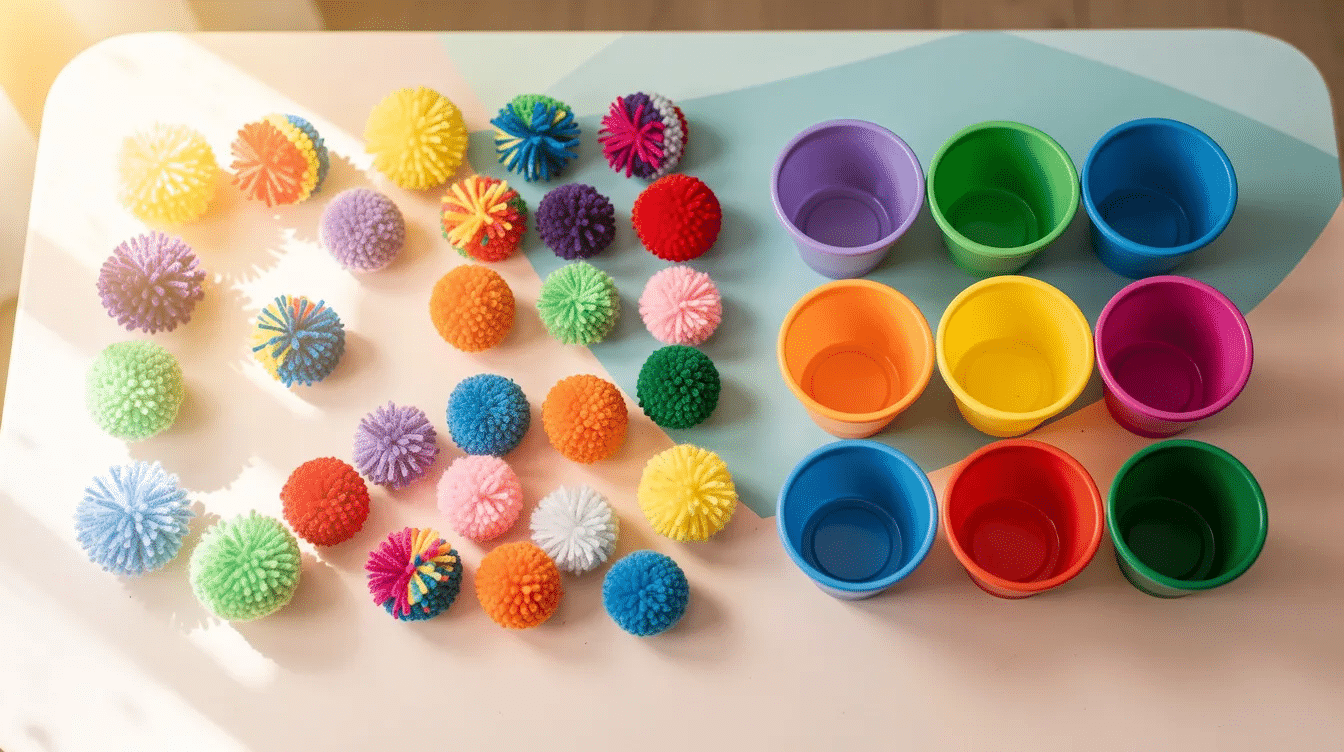
Numbered cups with pom poms are one of the easiest counting activities to set up. Write a numeral on each cup, then invite your child to fill each one with the correct number of objects. Using numbered cups and objects allows children to practice counting by placing the correct number of items into each cup, reinforcing their understanding of numbers and quantities.
You can use pom poms, bottle caps, buttons, small toys, or play doh balls. Using everyday materials, like bottle caps or pom poms, in counting activities allows children to explore numbers in a fun and engaging way, enhancing their learning experience.
Why It Stands Out
This activity connects written numbers with real quantities. The child sees the number card or numeral, says the number, and then counts the same number of objects into the cup.
Best For
This is best for hands-on learners who like sorting, scooping, and filling. It also works well when you want a short table activity with a clear beginning and end.
Key Strengths
- Develops fine motor skills through grasping small objects
- Supports visual number recognition with physical counting
- Colorful materials and different colors maintain engagement
- Can become a color sorting game if you ask the child sort red, blue, or yellow items first
Possible Limitations
Small objects may pose a choking hazard without supervision. It also requires a little preparation time to create the cups, especially if you want to decorate them with stickers, shapes, or construction paper.
2. Dice and Sticker Counting Games
Dice and sticker games bring surprise into counting practice. Roll a die, count the dots, then place that many stickers on paper. You can also draw circles, connect the dots, or make simple clip cards where children match a die face to the correct number.
Why It Stands Out
Dice make counting feel like a real game. The roll adds anticipation, while the dots support subitizing, which means recognizing small quantities without counting every item.
Best For
This is best for kids who enjoy movement, chance, and quick turns. Activities like Jump/Clap Counting involve physical movement while counting, enhancing engagement. For example, roll a 4, then jump or clap four times.
Key Strengths
- Combines physical movement with number recognition
- Builds excitement through rolling
- Reinforces subitizing skills with dot patterns
- Easy to connect with crafts by adding stickers to paper
Possible Limitations
This may be too advanced for children still learning numbers 1-3. Adult guidance helps keep the focus on counting instead of only rolling.
3. Nature Counting Adventures
Nature counting adventures use rocks, leaves, flowers, sticks, pinecones, or shells as counting tools. Activities like counting in nature can help preschoolers learn to count by engaging them with their environment, making learning more interactive and fun.
Why It Stands Out
Nature gives children a real life reason to count. Hands-on learning activities, such as counting with natural objects like rocks or leaves, help children develop a strong foundational number sense by engaging them in tactile experiences.
Best For
This is best for children who love outdoor play, movement, and sensory exploration.
Key Strengths
- No special materials needed
- Combines physical activity with learning
- Seasonal variety keeps activities fresh
- Works well for family walks, preschool playground time, or a homeschool nature table
Possible Limitations
Outdoor counting depends on weather and location. It may also require more supervision because children may run, climb, or become interested in bugs, mud, and toys nearby.
4. Number Card Matching Activities
Number card matching is a structured way to connect numerals, objects, and quantities. Put a number card on the table, then ask your child to match blocks, pom poms, play doh balls, or toy animals to that number.
You can also create clip cards: draw dots on one side and three possible numerals on the other, then let children clip the correct answer with a clothespin.
Why It Stands Out
This activity gives children a clear visual sign for each number. It also helps them understand that a written numeral represents a quantity.
Best For
This is best for visual learners who like organized activities. It can also help children who already know alphabet letters begin to notice that numbers, like letters, carry meaning.
Key Strengths
- Clear visual representation of numbers and quantities
- Reusable materials for repeated practice
- Easy to customize with animals, vehicles, shapes, or favorite characters
- Simple to include in a preschool curriculum
Possible Limitations
You may need to print, purchase, or create cards. The activity can become repetitive, so vary the objects, let children draw their own sets, or ask them to write a number with help.
5. Building Block Counting Towers
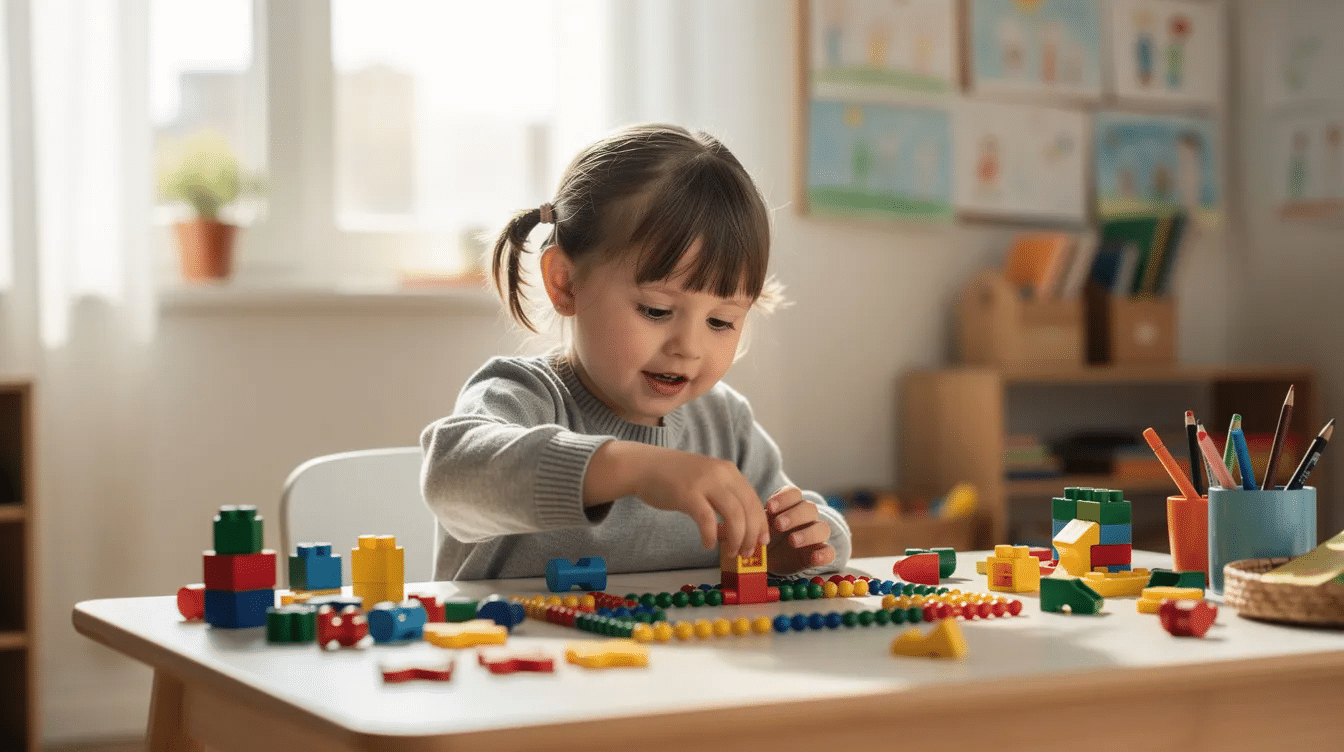
Building block counting towers combine construction play with early math. Ask your child to build a tower with three blocks, then five blocks, then seven blocks, or focus on a specific quantity like a number 9 tower activity. As the tower grows, children can see that bigger numbers often mean more objects.
Why It Stands Out
Blocks make number growth visible. A tower of 6 is taller than a tower of 2, which helps children compare quantities in a concrete way.
Best For
This is best for children who love construction, stacking, and problem-solving.
Key Strengths
- Develops both math and early engineering thinking
- Visual height increase shows number growth
- Encourages persistence when a structure falls
- Easy to adapt with wooden blocks, magnetic blocks, or interlocking 3D block projects
Possible Limitations
Some children may focus more on building than counting. Towers can also fall down and cause frustration, so keep the first sets small and celebrate effort.
6. Bead Threading and Counting
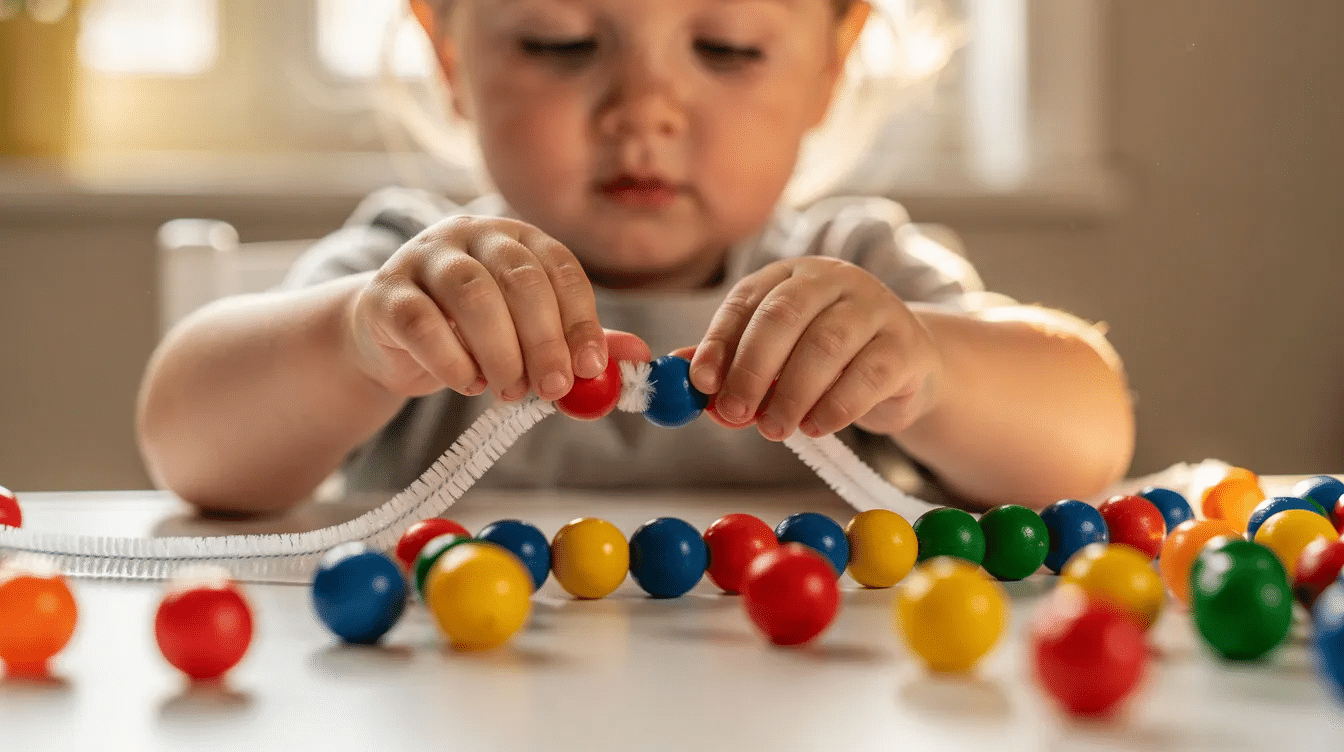
Bead threading combines counting with fine motor precision and can be a natural extension of DIY craft kit projects. Give your child large beads and pipe cleaners, then ask them to thread two beads, four beads, or the correct number shown on a card.
Why It Stands Out
This activity strengthens fine motor control while reinforcing counting sequence and one-to-one correspondence. The child touches each bead while counting, which makes the process slower and more intentional.
Best For
This is best for children who are ready for detailed work and can safely handle larger beads with supervision.
Key Strengths
- Significant fine motor skill development
- Creates a bracelet, necklace, or pattern children can keep
- Naturally limits counting to manageable numbers
- Can include different colors for pattern practice
Possible Limitations
Small beads require close supervision. Some preschoolers may find threading difficult, so begin with large beads and stiff pipe cleaners instead of string.
7. Musical Counting Songs and Fingerplays
Musical counting songs and fingerplays help children learn through rhythm, repetition, and movement. Top counting activities for toddlers include counting snacks and singing nursery rhymes while using fingers.
Number songs like “Five Little Monkeys” can facilitate counting and number recognition through music. Singing number songs is an effective way for preschoolers to build counting skills and can also introduce simple subtraction concepts as the monkeys fall off the bed one by one.
Why It Stands Out
Music helps children remember the sequence of number words. Fingerplays also let children show quantities with their hands, which supports understanding.
Best For
This is best for auditory learners, active kids, and busy families who need counting practice during car rides, bath time, or transitions.
Key Strengths
- No materials needed
- Builds rhythm and language skills at the same time
- Easy to use in everyday life
- Works well before kindergarten because it blends language, movement, and math
Possible Limitations
Songs alone may not help every child understand object counting. Pair music with real objects when possible, such as counting toy monkeys, crackers, or fingers.
Quick Comparison of the Best Counting Activities
Counting activity | Best fit | Main skill |
|---|---|---|
Number Cups with Pompoms | Hands-on learners who need visual-tactile engagement | Counting objects and quantities |
Dice and Sticker Games | Children who enjoy games and surprises | Dots, subitizing, and number recognition |
Nature Counting Adventures | Outdoor enthusiasts and sensory seekers | Real life counting and observation |
Number Card Matching | Visual learners who like organized activities | Matching numerals to sets |
Building Block Towers | Children who love construction and building | Comparing quantities |
Bead Threading | Developing fine motor skills with counting practice | Fine motor and counting sequence |
Musical Counting Songs | Auditory learners and busy schedules | Number words and rhythm |
Snack Time Math is another simple option: count out small snacks before eating, combining play and learning. Count five crackers, match raisins to a number card, or ask your child to place the correct number of cereal pieces on a plate. |
How to Choose the Right Counting Activity
Choose Based on Your Child’s Learning Style
Visual learners often enjoy number cards, stickers, dots, and written numerals. Auditory learners may prefer songs, rhymes, and repeated number phrases. Kinesthetic learners usually benefit from jump games, blocks, nature walks, and hands-on counting activities.
Choose Based on Available Materials and Setup Time
If you have two minutes, sing a counting song or count buttons on a shirt. If you have ten minutes, set up numbered cups, clip cards, or a small tray of objects. If you want a creative craft, use construction paper, stickers, and crayons to create a simple counting mat.
Choose Based on Developmental Readiness
Start with 1-3 if your child is just beginning. Move to 1-5 when they can touch and count each object once. Try 1-10 when they can keep the number sequence steady and answer “how many?” after counting.
A quick note: if your child can recite numbers to 20 but cannot count objects accurately yet, that is normal for this age. Keep the practice playful and concrete.
Which Option Is Best for You?
Choose Number Cups with Pompoms if you want maximum engagement with fine motor development.
Choose Dice Activities if your child loves games and needs excitement in learning.
Choose Nature Counting if you prefer screen-free outdoor activities with no cost.
Choose Musical Counting if you want activities that work during car rides or busy days.
For many families and teachers, the best approach is to rotate several ideas. Count stairs on Monday, sing “Five Little Monkeys” on Tuesday, build block towers on Wednesday, and use Snack Time Math on Thursday.
Final Thoughts
The best counting activities for 3 year olds depend on your child