

There is something magic about handing a child a fistful of colourful pipe cleaners and watching their eyes light up as they bend, twist, and create something entirely their own. This mini makers pipe cleaner dreamcatcher craft is one of our all-time favourites here at Little Button Diaries – simple enough for a rainy Tuesday afternoon, special enough to hang above a little one’s bed at night.
Key Takeaways
- This pipe cleaner dream catcher craft takes just 20–30 minutes, uses materials most families already have at home, and is perfect for kids ages 3–7.
- The mini makers dreamcatcher swaps rigid metal hoops for safe, bendable pipe cleaners that preschoolers and early elementary kids can handle easily – making it a mess-free craft for kids.
- Threading beads, twisting pipe cleaners, and tying knots all build fine motor skills, hand-eye coordination, and early maths concepts like counting and patterning.
- You can adapt the craft for any season – spring pastels, Halloween black and orange, winter sparkle – and personalise it with a child’s name or initials using alphabet beads.
- Like most Little Button Diaries projects, this tutorial sticks to everyday craft-drawer supplies and a frugal, creative ethos that real families can actually pull off.
Mini Makers Pipe Cleaner Dreamcatchers: A Cozy Craft for Little Hands
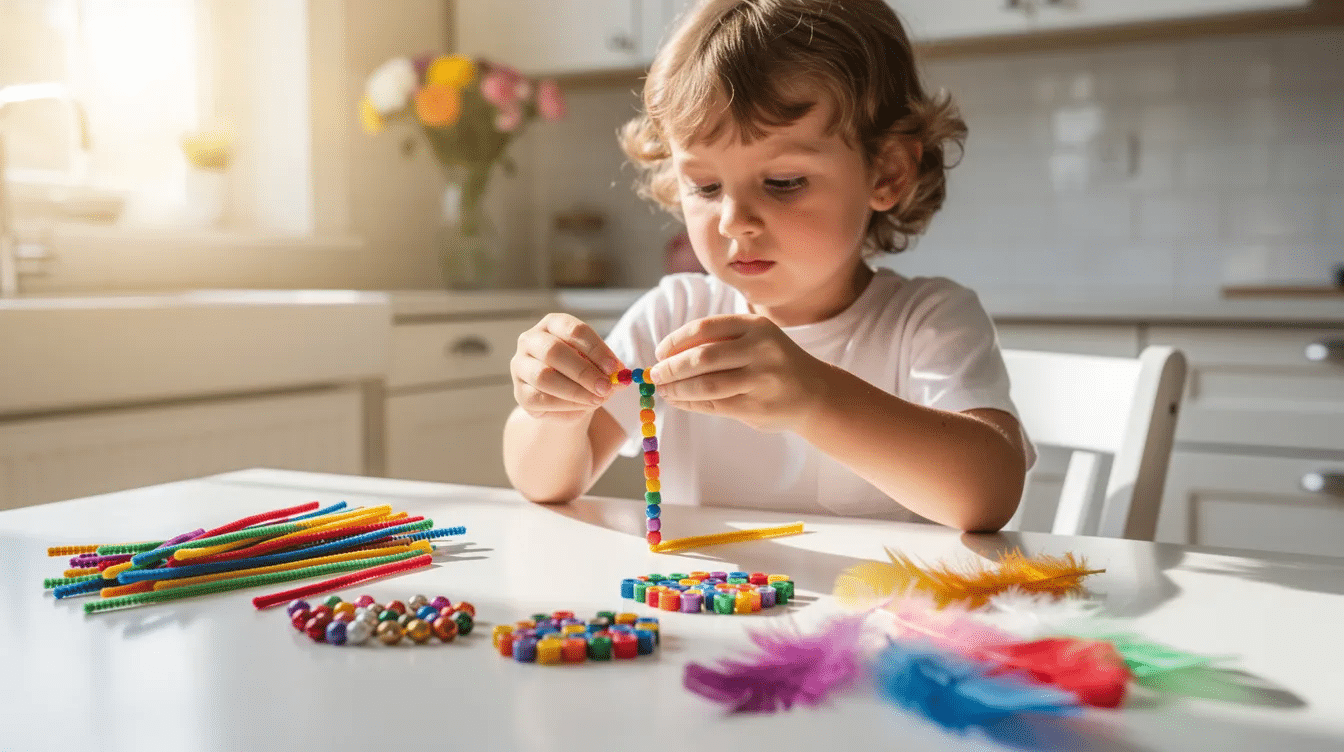
Picture this: it is Saturday morning, the toast crumbs have been swept away (mostly), and your little one is tugging at your sleeve asking for something to do. You pull open the craft drawer, grab a handful of pipe cleaners, tip a few beads into a bowl, and within minutes you are both sitting at the kitchen table making something genuinely lovely together. That is exactly what this project is about.
A dream catcher is a hanging circle with a woven web inside that, as the story goes, catches bad dreams in its threads and lets the good ones slip through to the sleeper below. Traditional dreamcatchers have deep roots in Ojibwe (Anishinaabe) Indigenous culture, where they were originally woven from willow hoops and sinew as protective charms for infants. If your children are old enough and curious, it is well worth exploring that history together respectfully – but for the youngest makers, the simple idea of a “good dreams catcher” is a beautiful starting point.
Our pipe cleaner dream catcher version swaps the traditional hoop for soft, flexible chenille stems. Pipe cleaners can hold their shape and are easy to bend, which makes them ideal for ages 3–7 who are still mastering the pinch-and-twist movements that come before pencil grip. Pipe cleaner dreamcatchers are colorful and easy to make – and because mini dreamcatchers allow for creativity and personalization by using decorative elements, every single one turns out unique.
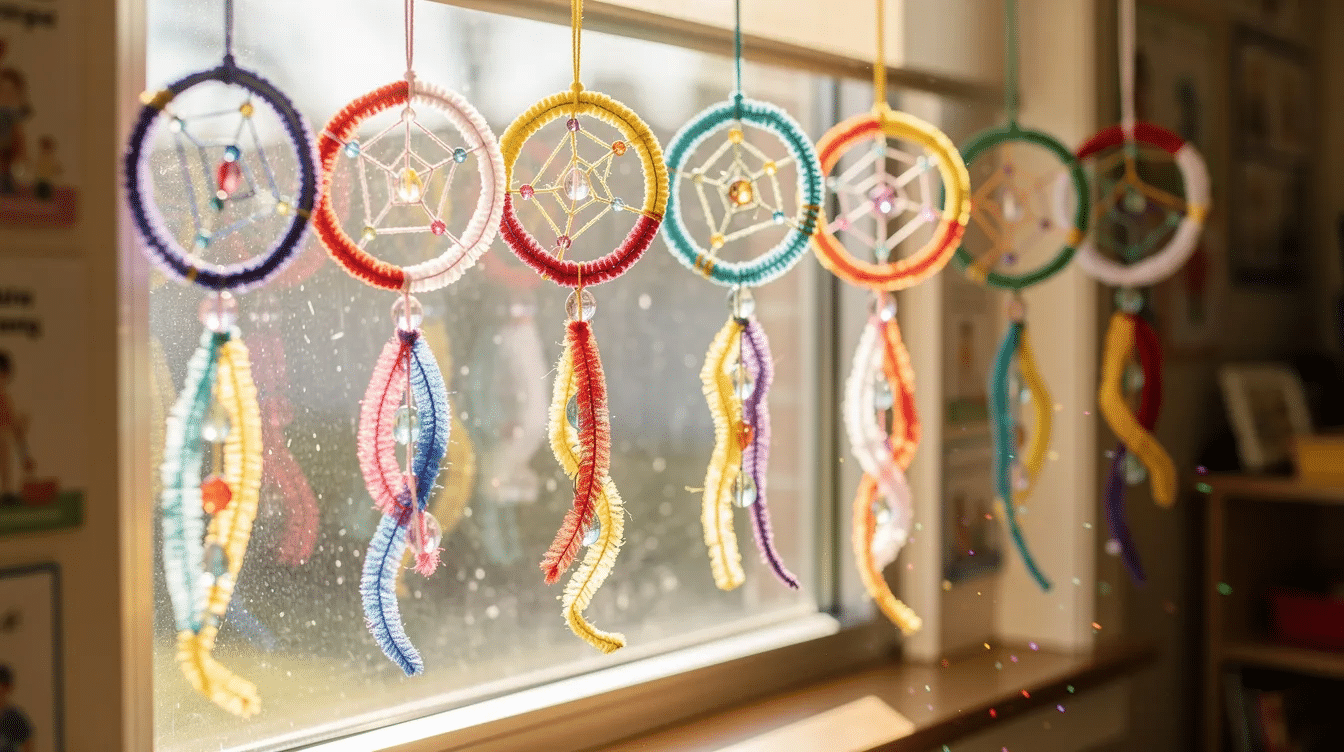
The finished piece is small and light (about 3–4 inches across), so it is perfect for hanging over a child’s bed, looping onto a bedroom door handle, or dangling in a classroom reading corner. And like many Little Button Diaries projects that have been shared since around 2013, this one uses everyday bits from the craft drawer and recycling box rather than fancy supplies. No glue gun, no special tools, no drama.
What You’ll Need & How to Make a Pipe Cleaner Dreamcatcher
This section walks you through making one mini pipe cleaner dream catcher with a child, from gathering materials to tying the final hanging loop. The whole thing can be made using just pipe cleaners and beads if that is all you have, but a few extras make it really shine.
Materials for one mini dreamcatcher:
- 4–5 coloured pipe cleaners (standard chenille stems) – for the hoop and optional criss-cross web
- 20–30 pony beads – using larger beads with wide holes is recommended for children working on crafts, as they are much easier for small fingers to thread
- A length of yarn or embroidery thread (about 1 metre / 3 feet) for weaving the web
- Kid-friendly scissors with rounded tips
- 3–5 small craft feathers or ribbon scraps for the hanging tails
- Optional extras: sequins, foam stickers, alphabet beads for initials, fabric scraps
You will find everything at a dollar store, craft shop, or – honestly – buried in that plastic tub in the cupboard. If you love working with chenille stems, you might also enjoy our tutorial for pipe cleaner flowers, which uses similar supplies.
Age guidance: Children aged 3–4 will need close grown-up help with twisting and threading. Ages 5–7 can follow most steps with light supervision. Creative activities like dreamcatcher crafting are suitable for preschool-aged children, but under-3s should sit this one out – small beads and detachable feathers are a choking risk for that age group. Always stay with children while they use scissors, and tuck or cover any sharp wire ends on cut pipe cleaners.
Step-by-Step: Building the Pipe Cleaner Dream Catcher Hoop and Web
Follow these directions with your child, taking each step at their pace. There is no rush – half the fun is in the working and chatting together.
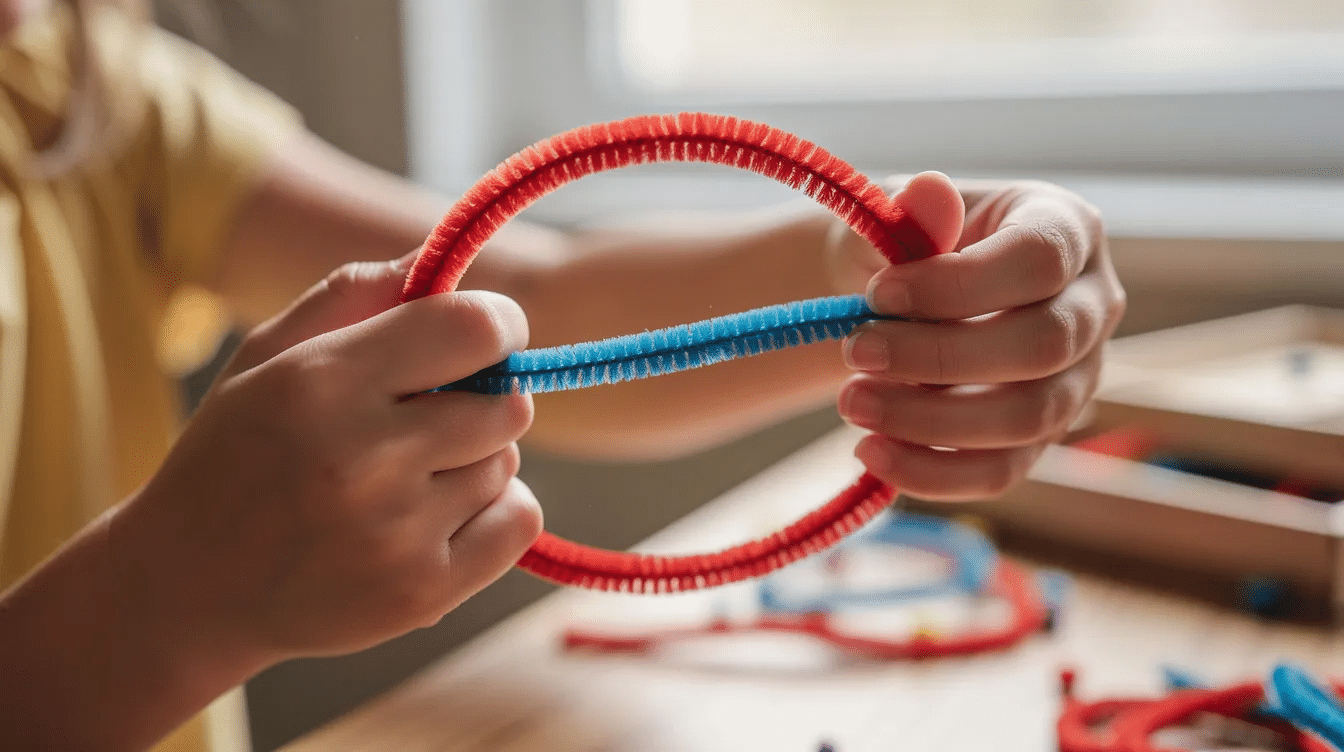
Step 1: Make the hoop. Take 2–3 pipe cleaners and twist them together end to end so you have one long, sturdy strand. Now bend it into a circle about 8–10 cm (3–4 inches) wide. Twisting a pipe cleaner into a circle forms the hoop for a dreamcatcher – the foundation everything else hangs on. Overlap the ends by about 2 cm and twist firmly to join them. If the join looks messy or has sharp ends, wrap a short piece of contrasting pipe cleaner around it to cover it up.
Step 2: Attach your web thread. Tie a length of yarn or embroidery thread to the top of the hoop with a double knot. Leave a short tail – you will use this later for the hanging loop.
Step 3: Weave the web. String or yarn can be wrapped around the hoop to create a web pattern. Loop the yarn across to the opposite side of the hoop, wrap it once around the pipe cleaner, then stretch it to another point and wrap again. You are not aiming for perfection here – a loose, slightly wonky web is exactly right. Continue looping and wrapping, working your way around and across the hoop until the center has a criss-cross of threads with small opening spaces between them. Repeat the loop-and-wrap motion until the web feels full enough.
Step 4: Add beads to the web. As you weave, pause to slide a pony bead onto the yarn before making the next loop. Space them out – these are the “good dream” beads sitting in the middle of the web. Three or four beads scattered across the web is plenty for a mini version.
Step 5: Tie off the web. When you are happy with the web, tie the yarn firmly to the hoop with a double knot and trim the tail.
Tip for very young makers: If weaving a web feels too fiddly, skip the yarn altogether. Instead, stretch 3–4 extra pipe cleaner pieces across the hoop like a star or criss-cross, twisting each end onto the hoop to secure it. Kids can then slide beads directly onto those pipe cleaner lines for an easier version that still looks brilliant.
Adding Feathers, Beads, and Extra Sparkle
Now comes the part where your child’s personality really comes through. Kids can create unique designs with various colors of pipe cleaners, and the decorating stage is where that happens.
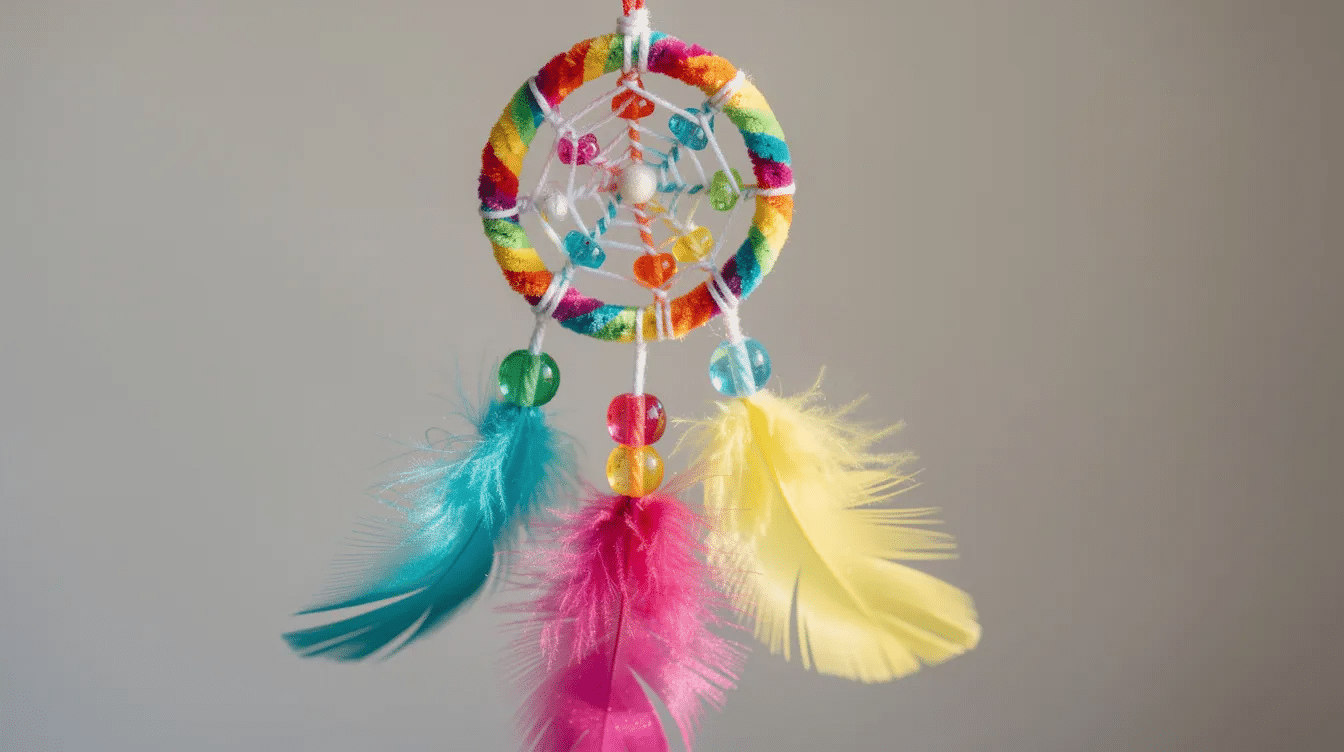
Hanging strands: Cut 3–5 short lengths of yarn or ribbon, each about 10–15 cm (4–6 inches) long. Tie them along the bottom half of the dream catcher hoop, spacing them roughly evenly. These are your dangling tails.
Thread and decorate: Invite your child to thread beads onto each hanging strand – this is wonderful time for practising that pincer grip. Beads and feathers are commonly used as finishing decorations on mini dreamcatchers: once beads are in place, tape or tie a feather at the end of each strand. If you can, hide the tape with one final bead pushed down over it.
Variations to try:
- Swap feathers for cut fabric scraps, lace loops, or tissue paper tassels
- Add the child’s initials with alphabet beads or a tiny cardboard name tag tied on with thread
- Use ribbon curls instead of yarn for a party-ready look
Hanging loop: Finally, make a simple loop at the top of the hoop from a spare pipe cleaner or a length of yarn, and tie it securely. Then hand the dreamcatcher to your child and let them decide where it should live – bed frame, curtain pole, classroom hook, or a special branch in a nature display.
Ideas for Extending the Mini Makers Dreamcatcher Craft
One of the best things about this pipe cleaner dream catcher is how easily it stretches into other activities without adding cost or complexity. Here are a few of our favourite ways to keep the magic going.
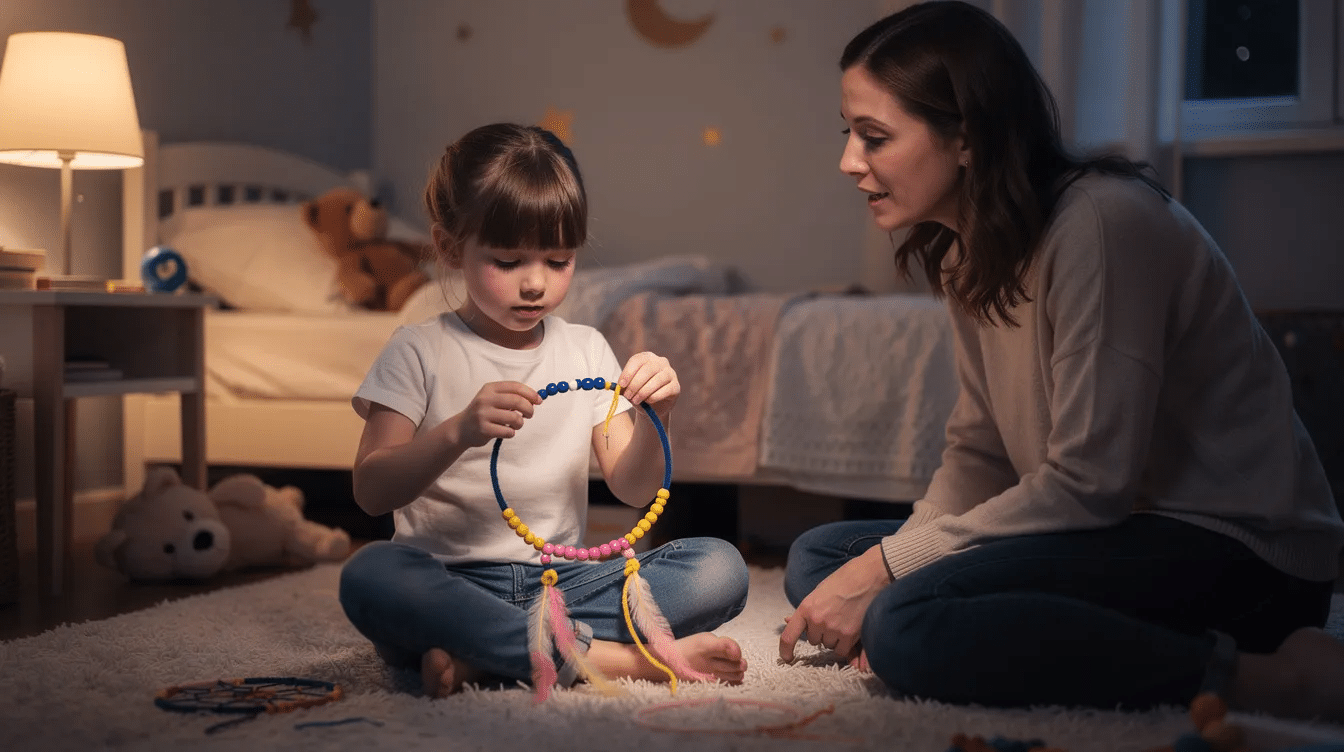
- Bedtime calm-down ritual: Let children choose bead colours that represent different kinds of dreams – maybe blue for “brave” dreams, yellow for “silly,” pink for “happy.” As they thread each bead, chat about worries or hopes. It turns a simple craft into a gentle emotional check-in before bed. Crafting allows children to express themselves and develop fine motor skills at the same time.
- Group craft station: Turn this into a playdate or preschool activity by setting up a “mini makers” station with pre-cut pipe cleaners, shared bowls of beads, and feather bundles. Making mini dreamcatchers using pipe cleaners is a mess-free craft for kids, which teachers and party hosts genuinely appreciate. For more group-friendly craft activities for kids, we have a whole roundup on the blog.
- Seasonal twists:
- Halloween: Black, orange, and purple pipe cleaners with paper bats glued to the hoop
- Winter: White and silver chenille stems with snowflake sequins threaded onto the web
- Spring: Pastel pipe cleaners with small paper flowers tucked into the web – pair it with our rainbow crafts roundup for a full colour-themed afternoon
- Whole-family craft: Recommend that older siblings (ages 8–10) design more intricate webs or help the littles with threading, turning it into a family project rather than a “just for littles” activity.
If your children love this kind of hands-on making, some local studios even run dedicated workshops. At Memo’s Art House, for example, participants create their own dreamcatcher in workshops that can last up to 120 minutes, with the cost of a dreamcatcher workshop at $40.00. It is a great next step for older kids who want to try bigger, more detailed designs.
Learning Links: Fine Motor Skills and Early Maths
You do not need to turn this craft into a formal lesson – the learning happens naturally while your child is having fun. But it is reassuring to know what is going on behind the scenes.
Twisting pipe cleaners, threading beads, and tying knots all support fine motor control and hand-eye coordination – the same skills children need for holding pencils, buttoning coats, and using cutlery. Research highlighted by Edutopia shows that regular craft and loose-parts play correlates with measurable improvements in pencil grasp and bilateral coordination in children ages 3–5.
Simple counting and pattern ideas to weave in:
- Ask your child to count out exactly 10 beads for each hanging string
- Try an ABAB colour pattern (red-blue-red-blue) or an ABC pattern for older children
- Sort beads by colour or shape before starting – a sneaky classification exercise
Language practice: Invite kids to describe their dreamcatcher – what colours did they pick? What does the feather feel like? What good dreams do they hope it will catch tonight? This kind of gentle conversation builds vocabulary and storytelling skills without any pressure.
Teacher tip: Display a row of finished mini dreamcatchers along the classroom window or reading nook as a collaborative “dreams wall.” Children love seeing their work alongside their friends’, and the benefits for child development go well beyond the craft itself. Pipe cleaner dreamcatchers are suitable for preschool-aged children and fit neatly into a 30-minute session if hoops are prepped in advance.
Mini Makers Pipe Cleaner Dreamcatchers FAQ
Here are the questions parents and carers ask us most often about making pipe cleaner dream catcher crafts with young children.
What age is best for making a pipe cleaner dreamcatcher?
Ages 3–7 is the sweet spot. Children aged 3–4 will need more help twisting pipe cleaners and threading beads – expect to do some of the fiddly bits yourself while they choose colours and hand you pieces. By age 5–7, most kids can follow the steps with just light supervision. Under-3s are not recommended because small beads pose a choking risk and toddlers tend to mouth materials. If you want to include a very young sibling, give them a pipe cleaner and a few chunky, oversized beads to explore separately.
Can I make this craft without feathers or beads?
Absolutely. Beads and feathers are lovely finishing touches, but they are entirely optional. You could use rolled-up tissue paper “beads,” small cardboard shapes with holes punched through, spare buttons, or scraps of ribbon tied along the bottom. A plain pipe cleaner dream catcher with just a woven yarn web can still look beautiful hanging in a child’s bedroom or playroom. Use what you have – that is the Little Button Diaries way.
How long does a mini makers dreamcatcher take to make?
A simple design takes about 20–30 minutes from start to finish. If your child wants to add lots of beads, multiple feather strands, and extra sparkle – or if several siblings are sharing supplies and taking turns – allow closer to 40 minutes. For group settings like a preschool class or birthday party, preparing pipe cleaner hoops and pre-cut yarn lengths ahead of time keeps the activity within a short session.
How can we store or display our dreamcatchers so they last?
Hang your dreamcatcher somewhere dry and out of reach of very small hands so the yarn web does not get stretched or pulled. A bed frame rail, curtain pole, or high hook works well. If your family wants to keep finished dreamcatchers as keepsakes after children outgrow them, pack them flat between sheets of tissue paper inside a memory box – they will hold their shape surprisingly well.
Is it okay to call this a dreamcatcher with young children?
Many kids’ crafts use the dreamcatcher idea as a simple, comforting symbol for happy dreams, and that is a perfectly gentle way to introduce it to little ones. It is worth knowing, though, that traditional dream catchers have Indigenous roots in Ojibwe culture and carry deep spiritual significance. If your child is curious or older, you can age-appropriate books or videos about Native American cultures and explain that your pipe cleaner version is a playful, inspired craft – not a reproduction of a sacred item. Teaching respect alongside creativity is always a good call.