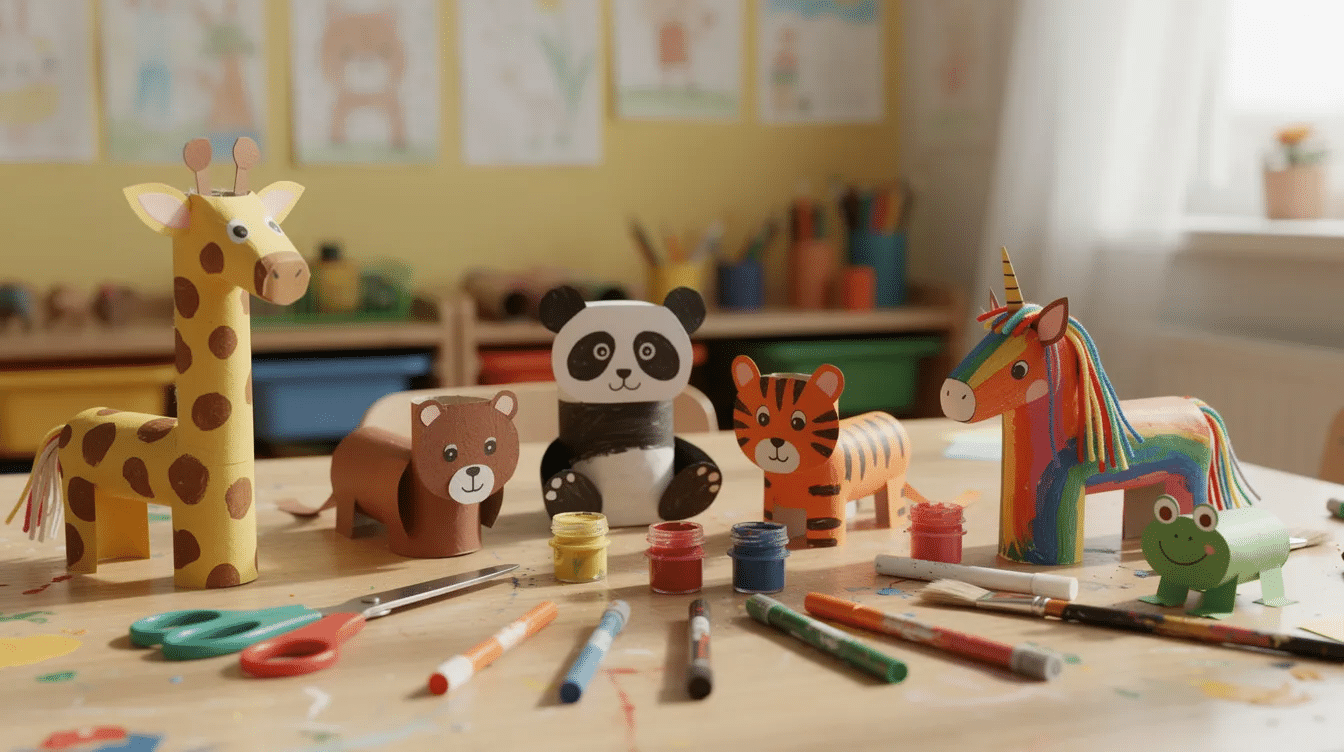
Cardboard tube animals for preschoolers are simple crafts where cardboard tubes from toilet paper rolls, paper towel tubes, or wrapping paper become animals through paint, paper, glue, and imagination. These diy cardboard animals are budget-friendly, tactile, and perfect for little ones who are building fine motor skills. They also spark creativity because a plain tube can become an owl, pig, fox, monkey, elephant, sheep, or amazing made-up creatures.
- How We Chose the Best Cardboard Tube Animals
- Top 7 Cardboard Tube Animals for Preschoolers
- 1. Cardboard Tube Owl
- Why It Stands Out
- Best For
- Key Strengths
- Possible Limitations
- 2. Farm Animal Collection (Pig, Chicken, Cow)
- Why It Stands Out
- Best For
- Key Strengths
- Possible Limitations
- 3. Cardboard Tube Butterfly
- Why It Stands Out
- Best For
- Key Strengths
- Possible Limitations
- 4. Toilet Paper Roll Giraffe
- Why It Stands Out
- Best For
- Key Strengths
- Possible Limitations
- 5. Cardboard Tube Lion
- Why It Stands Out
- Best For
- Key Strengths
- Possible Limitations
- 6. Toilet Paper Roll Bee
- Why It Stands Out
- Best For
- Key Strengths
- Possible Limitations
- 7. Cardboard Tube Robot
- Why It Stands Out
- Best For
- Key Strengths
- Possible Limitations
- Quick Comparison of the Best Cardboard Tube Animals
- How to Choose the Right Cardboard Tube Animal
- Which Animal Is Best for You?
- Final Thoughts
How We Chose the Best Cardboard Tube Animals
We chose cardboard tube animals that use simple materials, take about 15–30 minutes, and let kids create without too much frustration. Simple cardboard tube projects promote fine motor skills and encourage creative pretend play, echoing the broader art and craft benefits for child development.
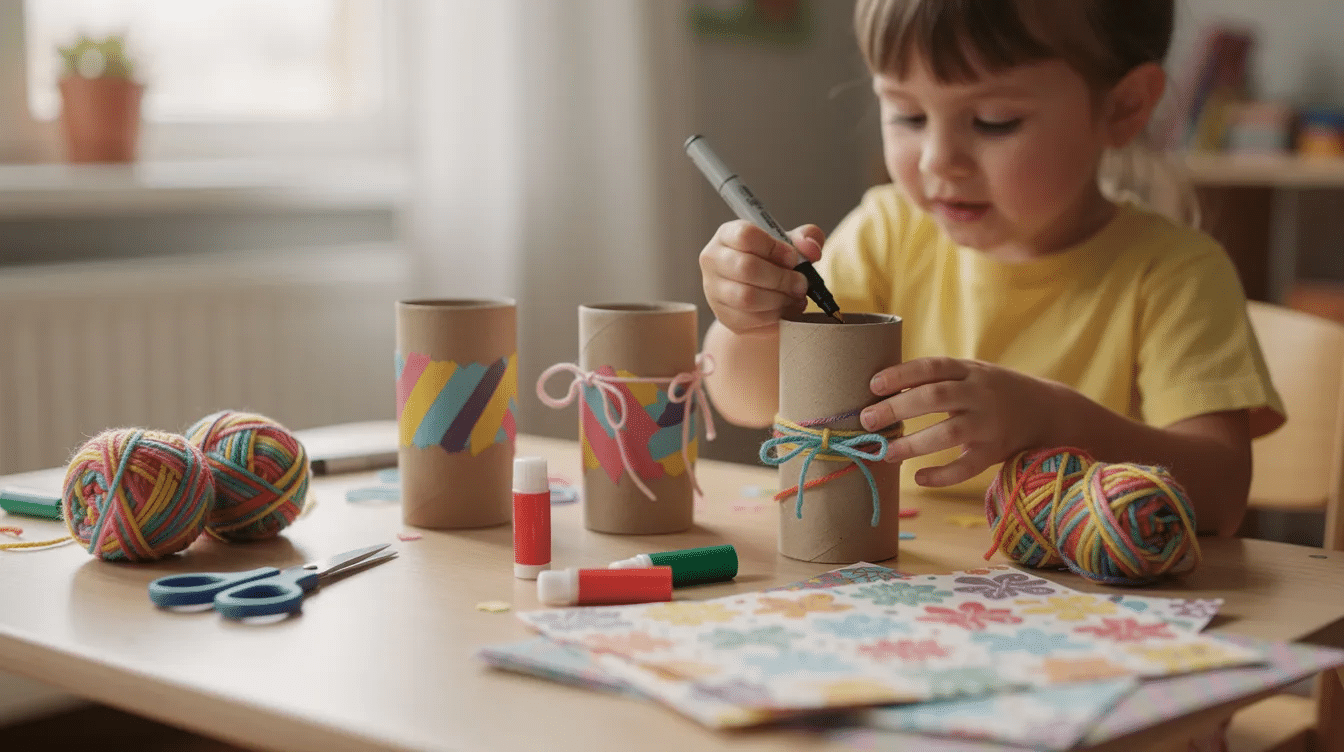
To make cardboard tube animal crafts, you will need empty toilet paper tubes or paper towel tubes cut in half, construction paper in various colors, wiggly eyes, foam pieces, markers, glue, scissors, and a hole punch. Basic crafting tools such as scissors and glue are essential for creating cardboard tube animals, allowing preschoolers to cut and assemble their projects safely with adult supervision, especially when paired with age-appropriate art supplies for young artists.
We favored crafts with strong learning value: animal identification, storytelling, patterns, shapes, and sensory exploration, making them ideal art activities to build fine motor skills. Research on recyclable maker activities found significant creativity gains in young children, while pediatric safety guidance recommends non-toxic supplies and supervision for small parts like googly eyes (HealthyChildren.org).
Top 7 Cardboard Tube Animals for Preschoolers
1. Cardboard Tube Owl
An owl is a cute starter project: paint the body, fold one end into ears, then draw feathers with a black marker.
Why It Stands Out
It uses simple cutting and decorating. Preschoolers can create tube animals by painting and decorating toilet paper rolls and using materials like googly eyes and yarn.
Best For
Beginners, bird units, nighttime themes, and children learning about nature.
Key Strengths
Yarn wrapping adds texture, minimal cut work keeps it safer, and paper wings on one side teach symmetry.
Possible Limitations
Yarn may need adult help, and the owl has fewer moving parts than other paper roll animals.
2. Farm Animal Collection (Pig, Chicken, Cow)
A farm series gives you several paper roll animals for pretend barns, songs, and animal sounds, and you can round out an animal theme with a simple crab paper plate craft for ocean play.
Why It Stands Out
Multiple animals extend play. To create a cardboard tube pig, wrap a pink piece of construction paper around a toilet paper roll, glue it down, and add foam ears, wiggly eyes, and a foam snout with nostrils.
Best For
Preschoolers learning farm vocabulary, sounds, and matching games.
Key Strengths
For a cardboard tube cow, cover a roll with white construction paper, attach rounded foam ears, add a pink triangle to each ear, and glue on wiggly eyes and a foam snout. Simple shapes work well for small hands.
Possible Limitations
A full set needs several tubes. To make a cardboard tube dog, use light brown construction paper to cover the roll, attach dark brown oval ears, and add foam eyes, a foam nose, and draw a mouth with a black marker.
3. Cardboard Tube Butterfly
The butterfly turns a paper roll into a bright spring project with painted wings and patterns, similar in feel to whimsical dragonfly craft ideas for kids.
Why It Stands Out
It is excellent for symmetry: decorate one side, then copy the pattern on the rest of the wing.
Best For
Spring, insects, garden lessons, and children who kids love bright colors.
Key Strengths
Decorating cardboard tubes can use materials like paint, markers, felt, and yarn for texture. Common supplies for customizing cardboard tube crafts include paint, fabric, and ribbon, which can enhance the creativity of preschoolers during the crafting process.
Possible Limitations
Wings may need extra glue time, and paint can delay finishing touches.
4. Toilet Paper Roll Giraffe
A giraffe uses height, spots, and a long neck to create a wow moment, and you can extend the theme with additional owl crafts for kids during a broader animal unit.
Why It Stands Out
It makes measurement visible: compare a short tube, a tall tube, and paper towel tubes.
Best For
African animals, zoo themes, puppets, and counting spots.
Key Strengths
It can become a puppet with legs, tail, head, and a mouth for storytelling.
Possible Limitations
Taller cardboard creations can topple, so add a wider cardboard base.
5. Cardboard Tube Lion
A lion is an adorable jungle project with a big mane and expressive face.
Why It Stands Out
The mane gives children a sensory task: snip, glue, curl, or fold paper strips.
Best For
Dramatic play, roar practice, story retelling, and kids who like bold animals.
Key Strengths
It links to books, sound play, and pretend habitats.
Possible Limitations
The mane is a bit more complex, so supervise scissors closely.
6. Toilet Paper Roll Bee
A bee is a fast, fun way to teach stripes, gardens, and pollination, and it pairs nicely with creative nature stick crafts for kids for outdoor-themed lessons.
Why It Stands Out
Yellow and black construction paper bands make clear patterns.
Best For
Garden projects, spring science, and environmental education.
Key Strengths
Wings add movement, and decorated cardboard tubes can be used in musical activities by associating different animal tubes with songs during circle time.
Possible Limitations
Small wings and antennae need secure glue and supervision.
7. Cardboard Tube Robot
A robot is not a traditional animal, but it can become a robot dog, robot owl, or robot fox.
Why It Stands Out
It mixes cardboard tube crafts with STEM thinking and can be a fun counterpart to DIY kits for creative projects and learning.
Best For
Builders, problem-solvers, and children who like mechanical toys.
Key Strengths
Geometric shapes are easy to cut, and moving arms make a great addition.
Possible Limitations
Joints may need a hole punch, fasteners, or adult help.
Quick Comparison of the Best Cardboard Tube Animals
- Owl – Best for nature learning and yarn skills.
- Farm Animals – Best for imaginative play scenarios.
- Butterfly – Best for spring themes and symmetry.
- Giraffe – Best for height measurement and storytelling.
- Lion – Best for dramatic play and mane textures.
- Bee – Best for garden themes and environmental education.
- Robot – Best for STEM introduction and building skills.
Cardboard tubes can be cut into cylindrical puzzle pieces to help preschoolers practice matching and sliding pieces together. Children can build slithered snake chains using painted paper towel rolls cut into segments. Creating mismatched animal anatomy from cardboard tubes encourages imagination and problem-solving in children.
How to Choose the Right Cardboard Tube Animal
Choose Based on Your Child’s Skill Level
For 3-year-olds, pick an owl, bee, or pig with pre-cut pieces. For 4–5-year-olds, try a lion mane, giraffe puppet, or robot joints. Activities using cardboard tubes help develop fine motor skills, practice animal identification, and engage in storytelling among preschoolers, or even inspire larger pretend-play builds like a cardboard time machine craft.
Choose Based on Learning Objectives
Use the butterfly for symmetry, the bee for gardens, the farm series for sounds, and the giraffe for measurement. Creative cardboard tube crafts for preschoolers include transforming toilet paper rolls into various animal shapes using paint, construction paper, and pipe cleaners.
Choose Based on Available Materials
If your supplies are limited, use a paper roll, markers, scissors, glue, and scrap paper. Add a template you can print, then decorate with felt, ribbon, yarn, or fabric. Using cardboard tubes for crafts encourages creativity and problem-solving skills in preschoolers, just like creating tissue paper stained glass art projects.
Which Animal Is Best for You?
Choose Owl if your child loves yarn and texture activities. Choose Farm Animals if you want multiple projects for extended play. Choose Butterfly if you’re doing spring or insect themes. Choose Giraffe if your child loves tall animals and puppets.
If you search your recycling bin and find only one tube, start small. I’m glad these ideas work with everyday cardboard, and I hope your son, daughter, class, or group feels proud enough to pose for a photo. You can add post tags like preschool crafts, paper roll, animals, and crafty ideas if you share the post online.
Final Thoughts
Cardboard tubes can be transformed into a variety of animal crafts, including monkeys, penguins, and giraffes, making them versatile for preschool activities. Crafting with cardboard tubes allows preschoolers to explore their creativity and develop motor skills through hands-on activities.
Start with one animal, then build the rest over time. Add antlers, ears, legs, a tail, or silly mixed-up creatures-the possibilities are wide open.