If you have a packet of wooden spoons in the kitchen drawer and a handful of craft supplies, you already have everything you need for an afternoon of creative play. Wooden spoon puppets are one of the simplest, most rewarding projects you can do with young children – and the best part is, every single one turns out completely unique. In this guide from Little Button Diaries, we’ll walk you through how to make them, decorate them, and turn them into a proper puppet show.
Key Takeaways
- A wooden spoon puppet is made by painting the bowl as a face and the handle as a body, then adding crafty bits like felt, yarn, and buttons for character details – no sewing required.
- This project works brilliantly for kids aged 2–6 with simple adjustments for different ages, and wooden spoon puppets can be customized into people or animals using materials you likely already own.
- Spoon puppets support preschool learning by encouraging language development and imagination, building fine motor skills, and giving children confidence to perform and tell stories.
- At the end of this guide you’ll find puppet show ideas, storage tips, and a short FAQ covering durability, cleaning, and toddler-friendly adaptations.
What Are Wooden Spoon Puppets & Why We Love Them
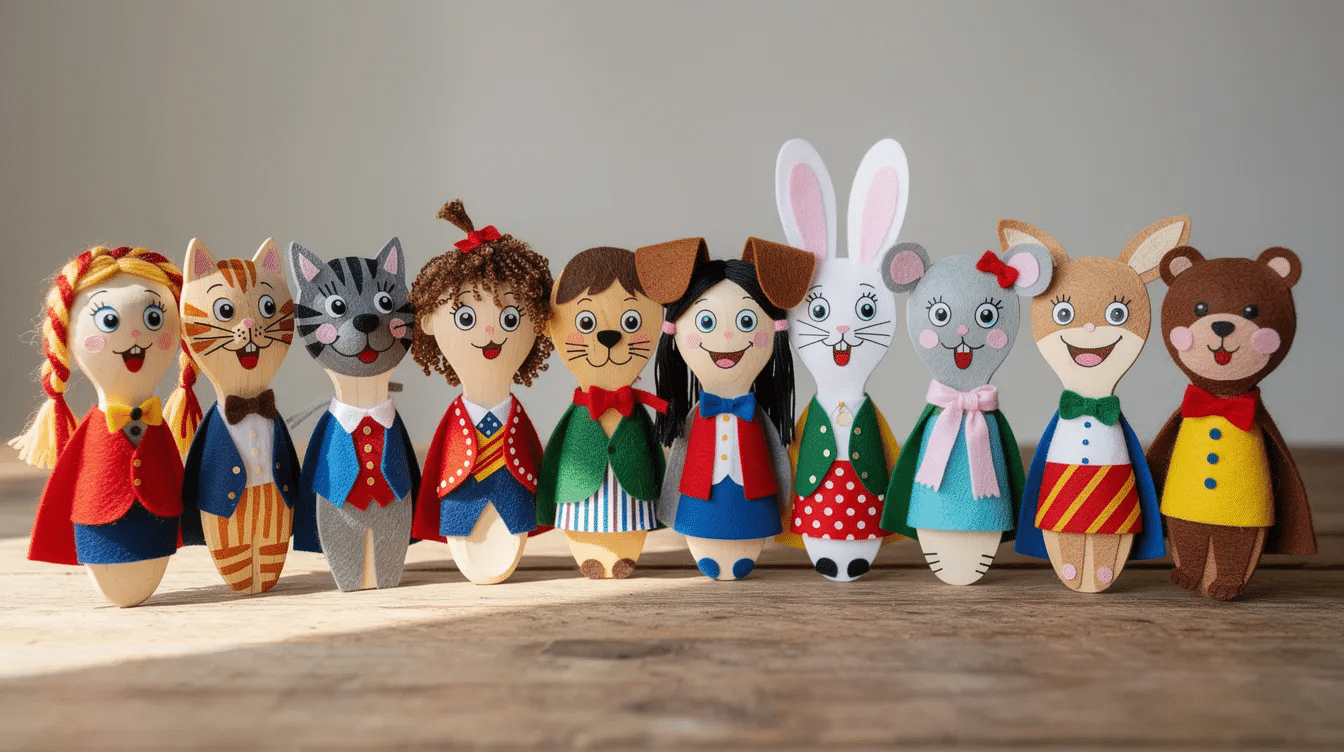
Here at Little Button Diaries, we are always on the lookout for crafts that are cheap, cheerful, and genuinely fun for little hands. A wooden spoon puppet is exactly that: you take a plain wooden spoon, turn the bowl into a face, and decorate the handle as the body. That’s it. No specialist tools, no complicated templates, and no need to spend a fortune.
Wooden spoons make brilliant puppets because they’re sturdy enough for enthusiastic play, easy for small hands to grip, and wooden spoons can be bought cheaply in bulk – multipacks from supermarkets or pound shops cost next to nothing. Wooden spoon crafts are popular with children for good reason: there’s something satisfying about transforming a boring kitchen utensil into a friend with a face.
But these little puppets are more than just cute. Wooden spoon puppets allow for a variety of educational activities in preschool settings, from counting games to character studies. Crafting puppets can support fine motor skills in young children – all that painting, sticking, and cutting builds hand strength and coordination. Storytelling with wooden spoon puppets can enhance active communication in children, and puppetry can even be used to teach concepts related to science and nature. A 2024 survey of 121 early-years educators found that teachers who used puppets regularly reported stronger engagement, better communication of behaviour norms, and improved wellbeing in their classrooms.
Wooden spoon puppets can be made with simple craft materials like felt and paint, and they can represent historical figures or community helpers just as easily as farmyard animals. Families can keep a puppet at home for shared storytelling activities long after the glue has dried. This guide focuses on simple, open-ended designs so that even a 3-year-old can take the creative lead – no Pinterest-perfect results required.
How to Make Wooden Spoon Puppets (Step‑by‑Step)
Here’s the good news: there’s one basic process that works whether you want wooden spoon puppet people, a farmyard set, or a troupe of silly monsters. Once you know the method, you can repeat it with different colours and details every time.
What You’ll Need
Gather your supplies before you start. You don’t need everything on this list – just pick what you have:
Essentials | Nice to Have |
|---|---|
Plain wooden spoons | Googly eyes |
Child-safe paint (tempera or acrylic) | Washi tape |
PVA glue or fabric glue | Stickers and sequins |
Felt-tip pens or Sharpies | |
Scraps of felt and fabric | Pom-poms |
Wool or yarn for hair | Ribbon |
Scissors (adult-handled) | Low-temp glue gun (adults only) |
Kids can use washi tape and sharpies for decoration alongside paint, and puppets can be created using liquid watercolors or tempera paints depending on what you have in the cupboard. Wooden spoons are often available cheaply in bulk, so grab a big pack and let everyone have a go.
Safety First
A quick note before the fun part starts:
- Adults should handle the glue gun and scissors. A glue gun can help attach difficult decorations, but the tip gets hot enough to burn little fingers.
- For children under 3, skip tiny pieces like beads, buttons, and loose googly eyes. Stick to large felt shapes and chunky paint instead.
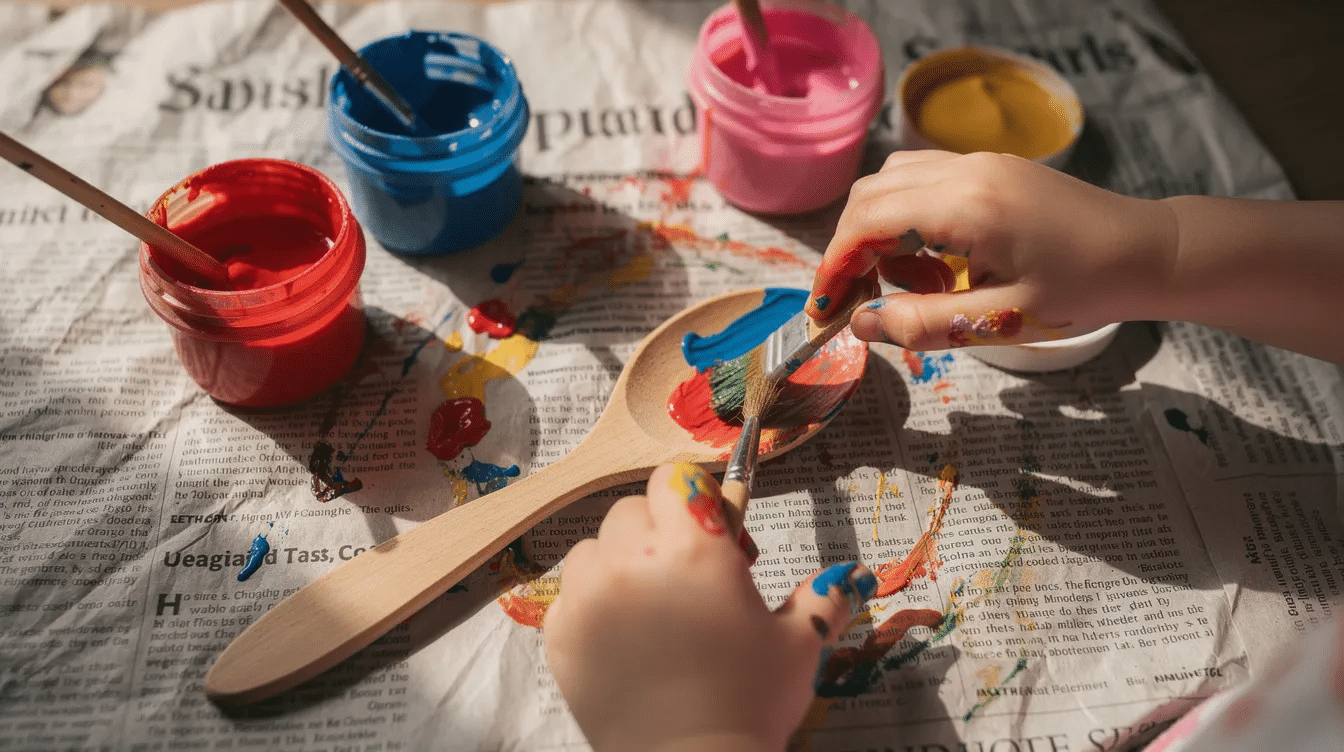
- Cover the table with newspaper or an old sheet to contain mess, and use masking tape to hold it in place.
The Basic Method
- Paint the base colour. Choose a colour for the face – pink for people, red for a fox, blue for a monster, whatever your child fancies. Paint the bowl of the spoon and let it dry completely. If needed, add a second coat and let it dry again.
- Decorate the handle. This becomes the body. You can paint it a different colour, wrap it in fabric scraps secured with tape, or leave it plain.
- Add a face. Once the base is dry, draw on eyes, a mouth, and a nose with felt-tip pens. Alternatively, glue on googly eyes or cut small circles from black felt.
- Attach character details. This is where each puppet gets its personality. Cut ears from felt. Glue on yarn for hair. Add a beak cut from paper for a bird, or use wooden spoons felt pieces layered to create a hat. The possibilities are wide open.
- Let everything dry. Give it at least 20 minutes before play begins – patience now saves tears (and lost ears) later.
Easy Variations to Try
- Quick people puppets: Draw a face, glue on yarn hair, and wrap the handle in a scrap of fabric for a dress or jacket. A boy character might get a felt waistcoat; a girl might get a ribbon bow.
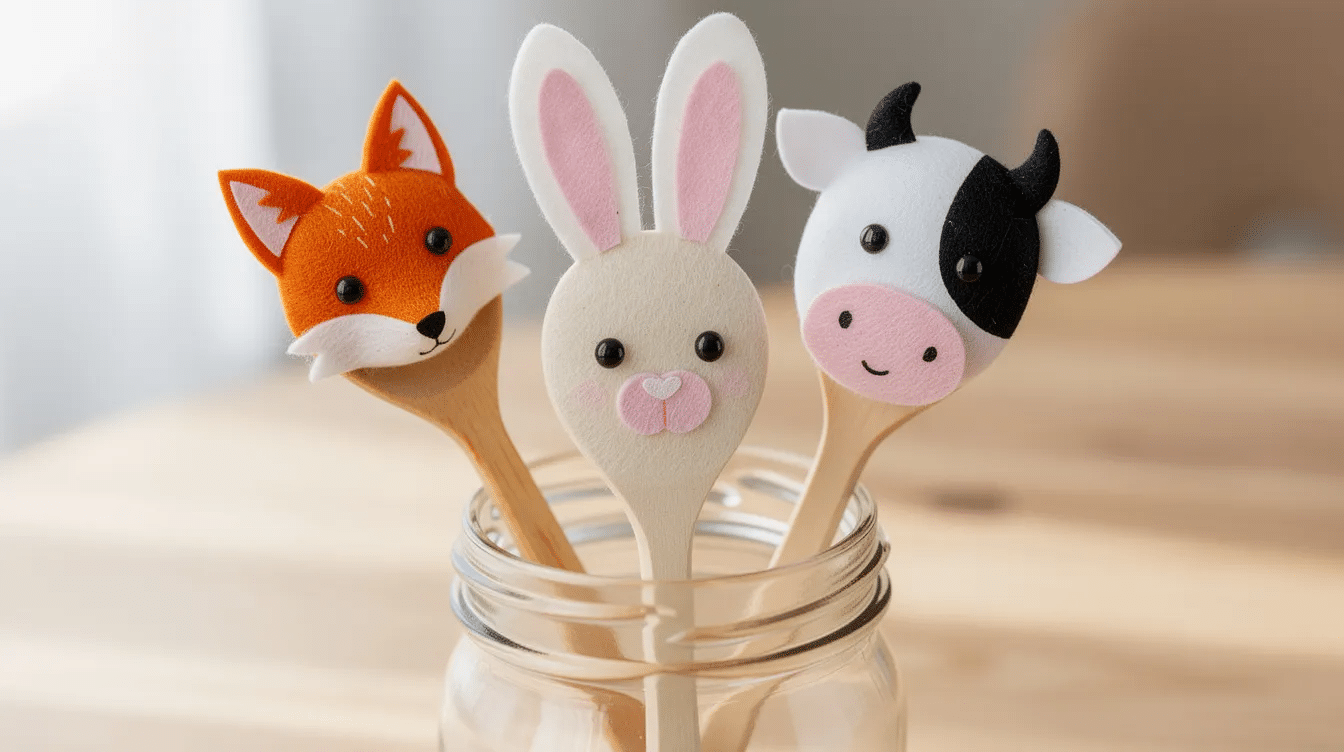
- Animal set: Kids can create a wooden spoon fox puppet easily with orange paint, white felt for the muzzle, and two pointed black ears. A cow needs white paint with black spots, and a bunny gets long pink-lined ears. For a bird, add hennie’s feathers using real craft feathers or snipped paper strips, and don’t forget the beak.
- Monster puppet: Kids can make a wooden spoon monster puppet from craft supplies by using mismatched buttons for eyes, zigzag teeth cut from white paper, and wild pipe-cleaner arms. There are no rules here – the weirder, the better.
- Seasonal ideas: A wooden spoon angel is a simple Christmas craft – just add a doily halo and fabric wings. For Halloween, paint spoons black or green for bats, witches, or ghosts.
Wooden spoon puppets can be made with kids aged 4 and up with minimal help, and younger children can join in with painting and sticking if an adult handles the fiddly pieces. Wooden spoon puppets can act out emotions and facilitate character studies, so encourage your child to think about how their character feels – is the monster grumpy or friendly? Is the fox sneaky or kind?
Set up the craft as an invitation to create: lay out bowls of materials and let children design their own characters without strict templates. You’ll be amazed at what they come up with.
Puppet Show Ideas & FAQ
Once your spoon puppets are finished, the real magic begins. Making the puppets is only half the project – the other half is bringing them to life. Puppet shows with wooden spoon puppets can help children focus on characters and plot, and even a two-minute performance builds confidence, vocabulary, and joy.
Setting Up a Simple Stage
You don’t need anything fancy. Here are three easy stage ideas:
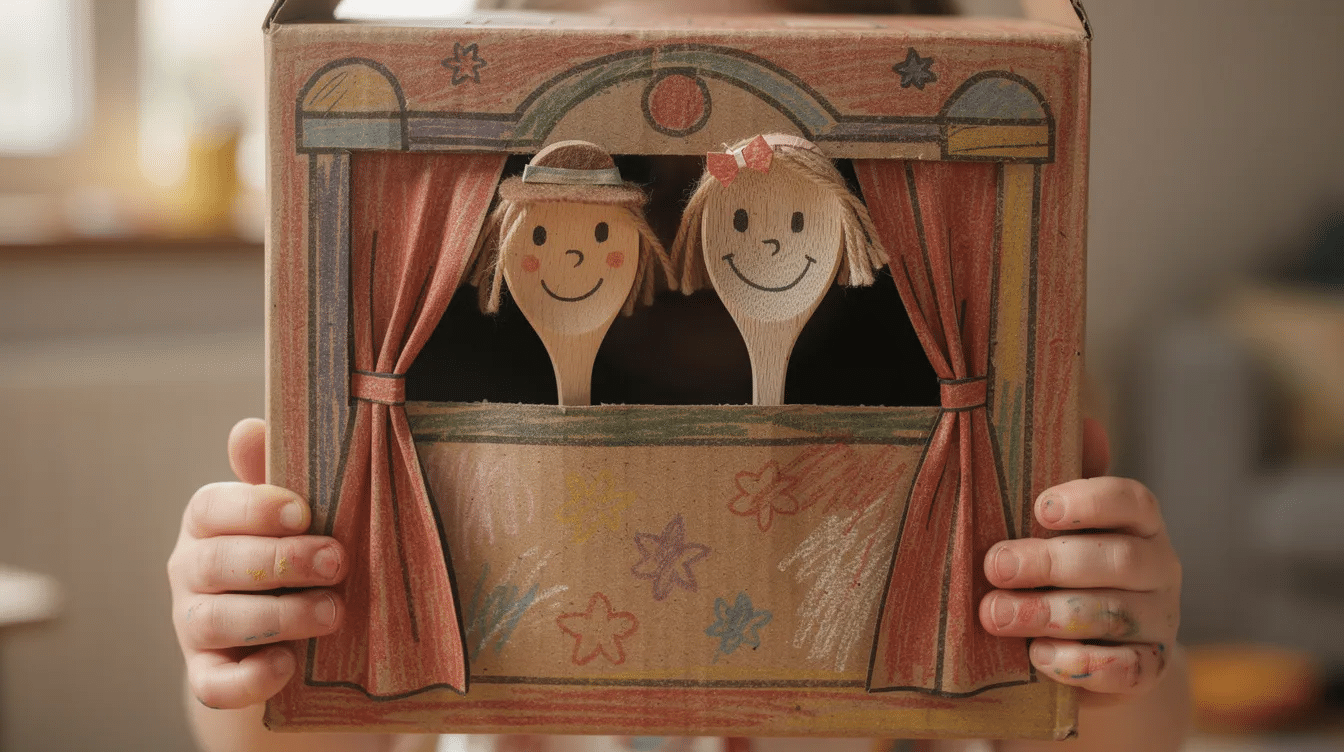
- Cardboard box theatre: Cut a rectangular window in the front of a delivery box. Your child crouches behind it and holds the spoons up through the opening. Decorate the front with paint or stickers.
- Blanket stage: Drape a blanket over two dining chairs. Children kneel behind and hold puppets above the edge.
- Tabletop show: Simply hold the puppets up from behind the sofa or a large book propped on the table.
Story Prompts to Get Started
Let your children narrate in their own words – even if the story is short, silly, or makes no sense to grown-ups. That’s the whole point. Here are a few ideas to spark things off:
- Farm stories for cow, pig, and chick puppets: “The animals woke up and the farmer had disappeared…”
- Woodland tales for fox and squirrel friends: “Two friends set off to find the tallest tree in the forest…”
- Seasonal plays: A Christmas story starring a wooden spoon angel and Rudolph, or a spooky halloween mini-play with bat and ghost puppets.
- Family and community stories where puppets represent community helpers – a doctor, a firefighter, a teacher – which is a wonderful way to sign up for deeper conversation about the world around us.
Wooden spoon puppets encourage language development and imagination every time your child picks one up and invents a new adventure.
Quick Storage and Display
Keep puppets accessible so children reach for them again and again. Stand them in a jar or plant pot on the kitchen table, or stick velcro dots to a wall so kids can “park” their puppets between shows. A simple system means the play doesn’t end when the craft session does.
Frequently Asked Questions
How long do wooden spoon puppets last?
With acrylic or tempera paint sealed with a clear child-safe varnish, they can last for many months of gentle play. The main threats are peeling paint and small pieces coming loose over time, so give them a quick check now and then. If anything feels wobbly, a dab of glue sorts it out.
Can I make spoon puppets with toddlers?
Absolutely. For children under 3, simplify the design: skip small detachable parts like loose buttons or beads, use thick paintbrushes for easy grip, and let an adult handle any sticking. The chunky handle of a wooden spoon is perfect for toddlers to hold, and even basic painted faces delight them. You can find more no-mess activities for 2-year-olds on our site too.
How do I clean painted wooden spoon puppets?
These are for play, not food. Wipe gently with a dry or slightly damp cloth and avoid soaking in water – wood can warp and paint can peel if it gets too wet. Store in a dry spot and they’ll stay in good shape.
What if I don’t have wooden spoons?
No problem at all. You can cut a spoon shape from cardboard and tape it to a lollipop stick, or use plastic spoons kept strictly for play. The method is the same – paint, decorate, and perform. You might also enjoy our carton animal crafts for another upcycled approach.
What age is this craft best for?
Wooden spoon puppets can be made with kids aged 4 with a good level of independence – they can paint, draw faces, and choose their own materials. Children aged 2–3 can join in with adult help on the fiddly bits, while kids aged 5–6 often love adding elaborate character details and writing short scripts for their puppet show.
We hope you and your little ones have as much fun making these wooden spoon puppets as we did. If you’re after more easy craft ideas or DIY activities, have a browse around Little Button Diaries – there’s plenty to keep small hands busy. And if your children create something brilliant, we’d love to see it. Share your finished puppets with us on social media or drop us an email. Happy crafting!