Rain on the window sounds cozy until cabin fever hits. These boredom buster ideas for kids rainy day help parents keep kids entertained with easy activities that burn energy, build creativity, teach letters, shapes, numbers, and colors through play-based learning, and create quiet time indoors.
How We Chose the Best Boredom Buster Categories
We ranked boredom busters by what matters in real life: setup time, supplies, cost, engagement, ages, educational value, mess, cleanup, energy expenditure, and parent involvement. The best rainy day plan mixes active play, creativity, and imagination, since pediatric experts emphasize the value of play.
- Top 7 Boredom Buster Categories for Rainy Days
- Quick Comparison of the Best Boredom Buster Categories
- How to Choose the Right Activity Category
- Which Activity Category Is Best for You?
- Final Thoughts
Top 7 Boredom Buster Categories for Rainy Days
1. Arts and Crafts Activities
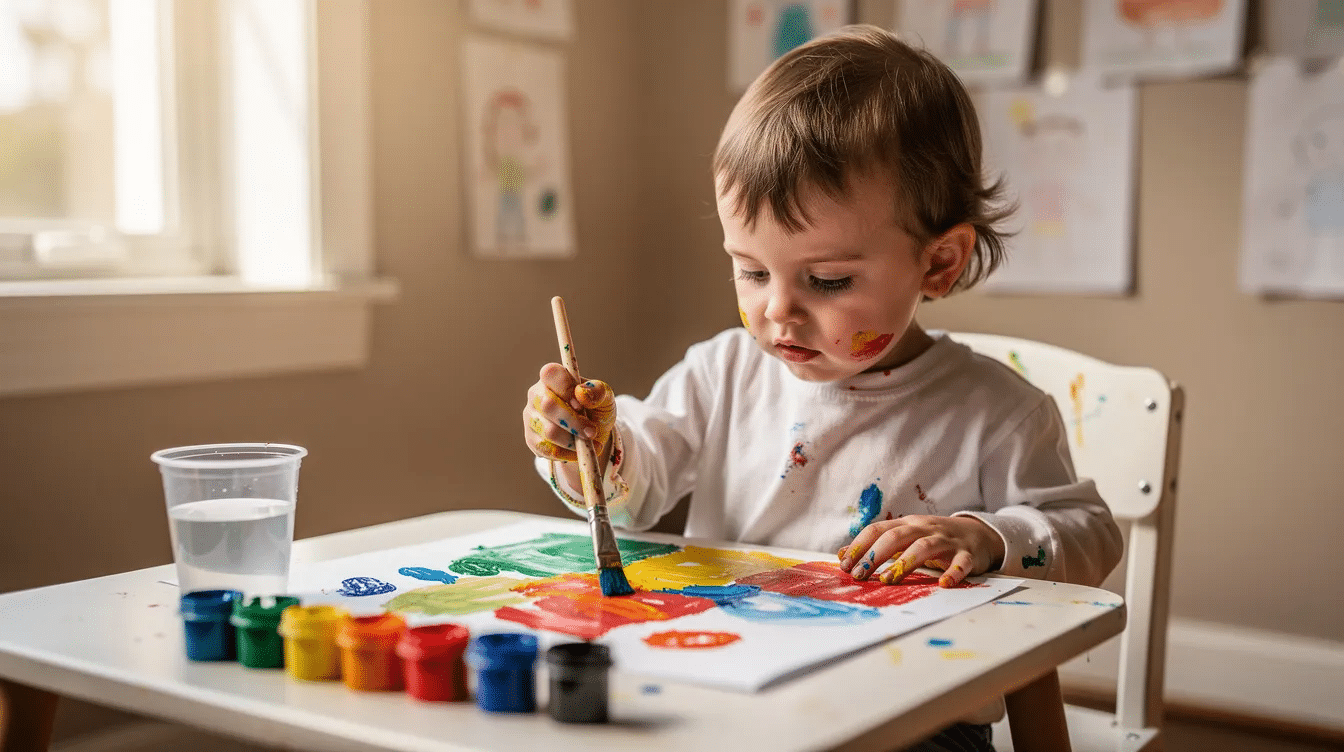
Creative expression can be facilitated by DIY slime, homemade play dough, and washable markers for window art, especially when you stock up on the best art supplies for young artists.
Why It Stands Out
A little imagination can turn crayons, markers, scissors, glue, sheets, and recycled objects into so much fun.
Best For
Creative kids, little ones needing quiet focus, and any child who loves to draw.
Key Strengths
Create magazine collages by cutting out pictures and forming vision boards or funny stories. Kids can make princess or dinosaur crafts using free printable templates for coloring, cutting, and gluing, reaping many of the arts and crafts benefits for child development. Making a sock puppet or paper bag puppet is a fun craft that encourages imaginative play and can be used for a puppet show afterwards.
Possible Limitations
It can be messy, and adults should watch scissors, glue, and small supplies.
2. Physical Movement Activities
Use the house as a safe adventure zone.
Why It Stands Out
Physical play helps kids jump, crawl, balance, and beat rainy day restlessness.
Best For
High-energy kids and gross motor development.
Key Strengths
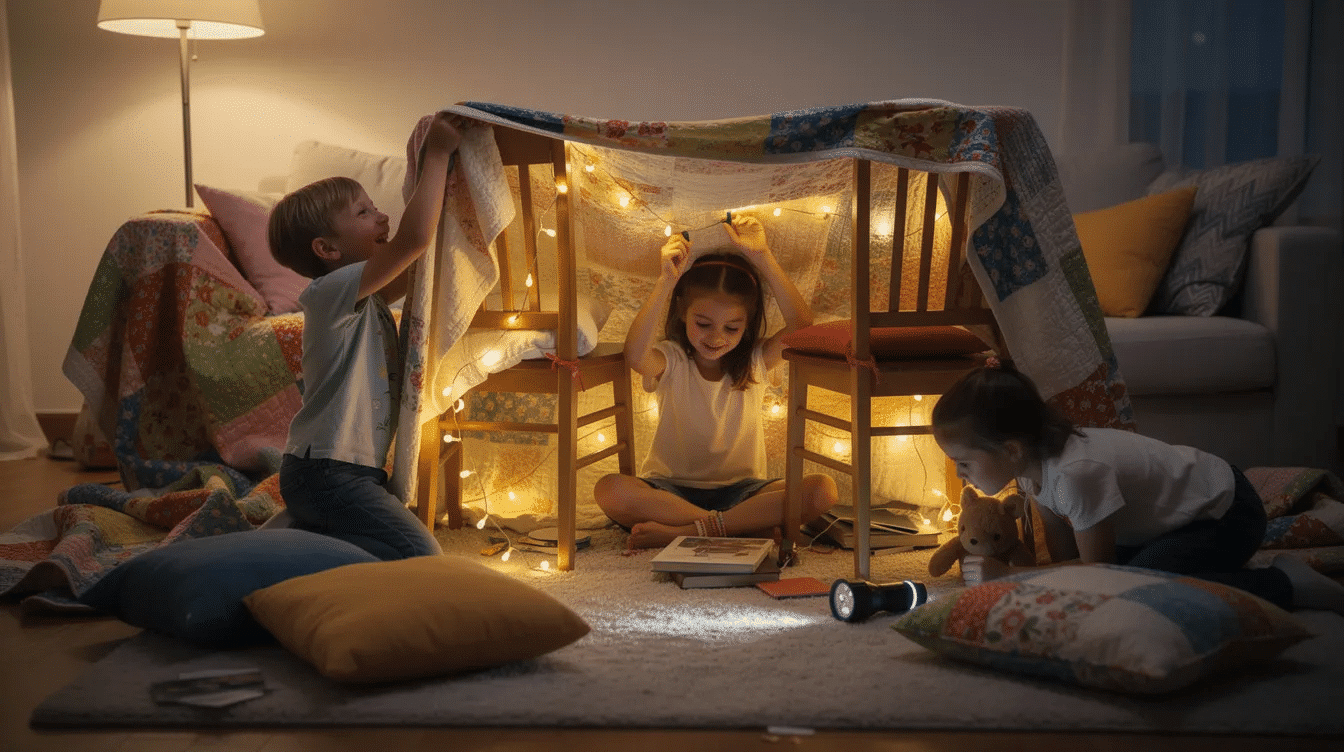
Indoor activities can include building blanket forts, obstacle courses, and hosting balloon tennis tournaments. Transform your living room into a mini adventure course using pillows, chairs, and blankets to create tunnels and balance beams, making it a fun indoor obstacle course for kids. Active play activities can include indoor dance parties, balloon volleyball, and paper airplane races. Playing indoor bowling can be a fun game for kids, using toilet paper rolls as pins and rolled-up socks as the bowling ball.
Possible Limitations
The course needs floor space and rules; apartments may find the music, dance party, and jump games noisy.
3. Science and Discovery Activities
Why It Stands Out
Kitchen science experiments, such as making a vinegar and baking soda volcano, provide thrilling and educational experiences for children, combining fun with learning.
Best For
Curious school-age kids.
Key Strengths
Balloon rocket races can be created by stringing yarn across a room and using balloons taped to straws. Use cups, rice, water, and safe pantry items; follow basic home science safety.
Possible Limitations
Some experiments need supervision and cleanup.
4. Building and Construction Play
Why It Stands Out
Building develops spatial thinking and problem-solving.
Best For
Kids who love cars, castles, LEGO, and teamwork.
Key Strengths
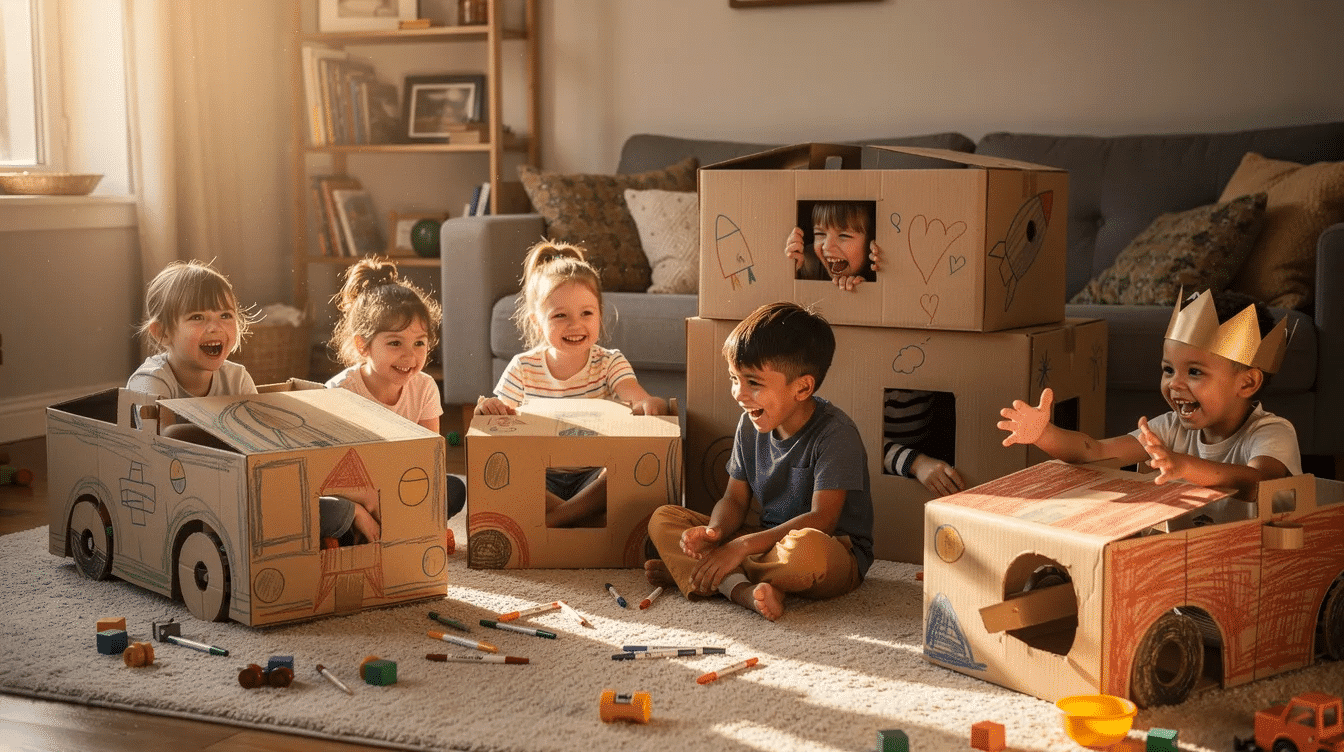
Using cardboard boxes, children can create various structures like cars or castles, which allows for creativity and art fine motor skills development. Cardboard boxes can be used to create a miniature city for playing with toy cars or adapted into creative space-themed crafts and projects. Tape can be used on floors to map out roads and intersections for toy vehicles. Building a blanket fort is a classic imaginative play activity that allows children to design and construct their own cozy space.
Possible Limitations
Forts fill the room; lay blankets carefully to reduce tripping.
5. Dramatic Play and Storytelling
Why It Stands Out
Dramatic play activities allow children to create and imagine their own unique stories and songs, fostering self-expression and building on engaging activities for imagination to inspire creative thinking.
Best For
Imaginative kids, language practice, and siblings.
Key Strengths
Creating story dice with characters, settings, and actions can enhance children’s creativity and language skills. Creating story dice with characters, settings, and actions encourages children to roll them and invent unique stories. A cardboard box can be transformed into a puppet stage for shadow puppet shows using a flashlight. Imaginative play can involve creating base camps with tents and blankets, reading stories with flashlights, and making shadow puppets, similar to many fun art activities to do when you’re bored. Children can roleplay a restaurant by creating menus and serving pretend snacks. DIY sticker stories can be created by sticking stickers into notebooks and drawing around them to form stories.
Possible Limitations
It may require adults to entertain, pull props together, or settle conflicts.
6. Kitchen and Cooking Activities
Why It Stands Out
Cooking brings math, science, and life skills together with warm rewards.
Best For
Food-interested kids and family bonding.
Key Strengths
Baking teaches measuring, sequencing, patience, and cleanup. Kids enjoy snacks they helped make.
Possible Limitations
Heat, knives, hygiene, and ingredient cost mean parents must be prepared.
7. Sensory and Calm Activities
Why It Stands Out
Sensory play is low-pressure and calming.
Best For
Toddlers, overstimulated kids, and transitions.
Key Strengths
Making homemade playdough with basic pantry ingredients like flour, salt, and water is a simple and fun indoor activity that also provides sensory play for children, similar in spirit to tissue paper stained glass crafts for all ages.
Possible Limitations
Rice, slime, and water can spill, and may not hold high-energy attention.
Quick Comparison of the Best Boredom Buster Categories
Category | Best use |
|---|---|
Arts and Crafts | Creativity and quiet focus |
Physical Movement | Energy and coordination |
Science and Discovery | STEM learning |
Building and Construction | Engineering skills |
Dramatic Play | Imagination and language |
Kitchen Activities | Life skills |
Sensory and Calm | Self-regulation |
Indoor scavenger hunts, building giant LEGO cities, and trying cute craft ideas for a fun and creative day are fun challenges for kids. |
How to Choose the Right Activity Category
Choose Based on Your Child’s Energy Level
High energy calls for an obstacle course, hallway laser maze made with masking tape or yarn, or balloon volleyball. Low energy calls for puzzles, playdough, or stories.
Choose Based on Available Time and Setup
A DIY indoor scavenger hunt can be tailored by age, using simple picture clues for younger kids or riddles for older ones. A DIY indoor scavenger hunt can be tailored to different age groups, making it a versatile game that promotes problem-solving and exploration, much like DIY kits for creative projects and fun learning.
Choose Based on Learning Goals
Pick science for discovery, crafts for fine motor skills, dramatic play for language, or building for planning. Transforming a living room into an interactive adventure zone can help alleviate cabin fever.
Which Activity Category Is Best for You?
Choose Physical Movement if your child has excess energy. Choose Arts and Crafts for quiet time. Choose Science Activities if your child loves discovery. Choose Building Play for problem-solving. Choose Dramatic Play to boost imagination. Choose Kitchen Activities for life skills. Choose Sensory Activities for calm.
Final Thoughts
Great rainy day activities are not about tons of expensive supplies; they are about matching the moment. Keep ideas ready, mix categories through the day, and simply turn the rain into play. If you have a favorite game you heard works well, share it in a comment.