

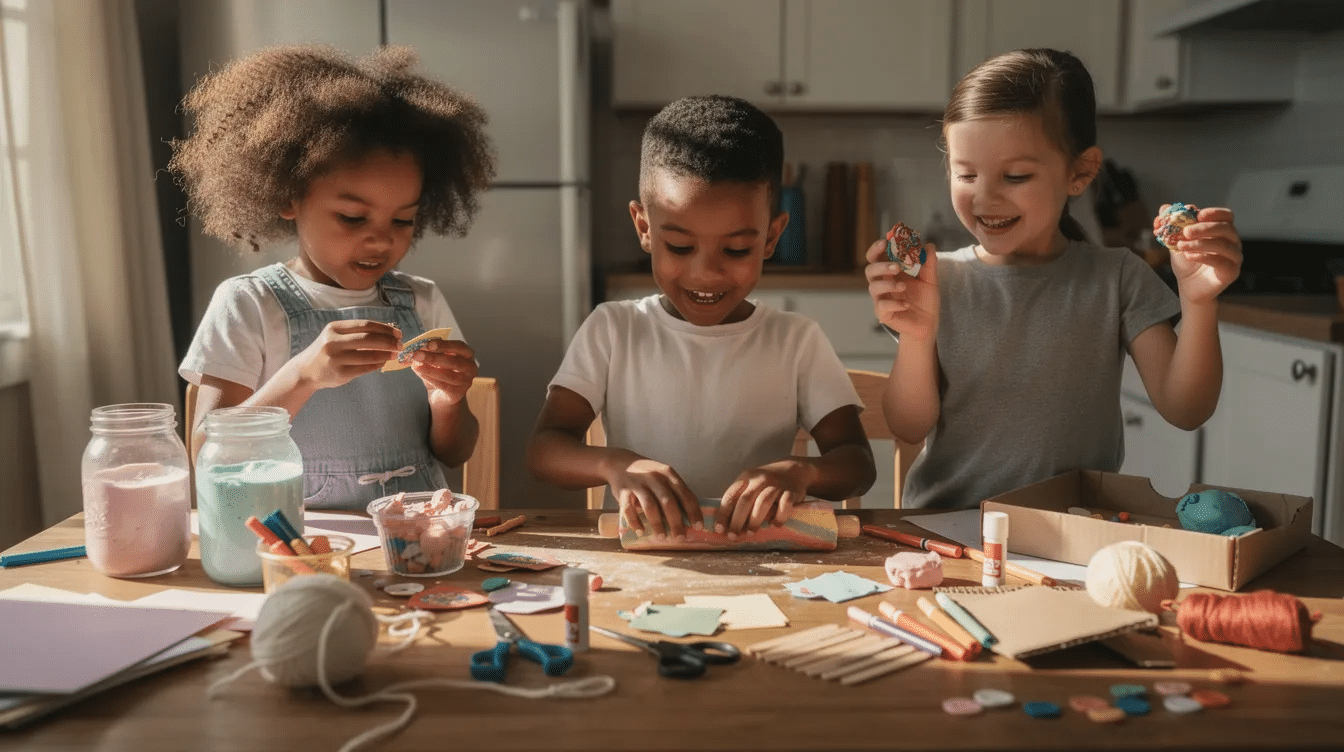
Keeping kids busy does not have to mean buying new toys, booking classes, or turning on another screen. The best cheap kids activities at home use what you already have: flour, cardboard, couch cushions, paper bags, rubber bands, painters tape, and a little imagination.
For this guide, “cheap” means under $10 per session, and often close to free. These activities for kids were selected for engagement, educational value, affordability, age flexibility, easy setup, safety, and cleanup. You’ll find indoor activities for a rainy day, outdoor activities for the yard or local park, and fun activities that work for younger kids, older kids, and family members who want simple family bonding.
- How We Chose the Best Home Activities for Kids
- Top 7 Cheap Kids Activities for Maximum Fun at Home
- 1. DIY Playdough and Salt Dough Creations
- Why It Stands Out
- Best For
- Key Strengths
- Possible Limitations
- 2. Kitchen Science Experiments
- Why It Stands Out
- Best For
- Key Strengths
- Possible Limitations
- 3. Indoor Obstacle Courses and Movement Games
- Why It Stands Out
- Best For
- Key Strengths
- Possible Limitations
- 4. Cardboard Box Fort Building
- Why It Stands Out
- Best For
- Key Strengths
- Possible Limitations
- 5. Nature Art and Crafts
- Why It Stands Out
- Best For
- Key Strengths
- Possible Limitations
- 6. Homemade Musical Instruments
- Why It Stands Out
- Best For
- Key Strengths
- Possible Limitations
- 7. Cooking and Baking Projects
- Why It Stands Out
- Best For
- Key Strengths
- Possible Limitations
- Quick Comparison of the Best Home Activities
- How to Choose the Right Activity for Your Child
- Which Activity Is Best for You?
- Final Thoughts
How We Chose the Best Home Activities for Kids
The best cheap kids activities at home meet a few practical standards. First, they are cost-effective: most use household items or supplies from the dollar store, such as construction paper, colored pencils, fabric markers, pipe cleaners, masking tape, sidewalk chalk, shaving cream, bubble wrap, bean bags, paper bags, or balloons. Second, they keep kids entertained for more than five minutes, whether through sensory play, problem-solving, movement, or imaginative play.
We also looked for learning value. The American Academy of Pediatrics notes that play supports cognitive, language, social, and emotional development, and everyday activities can teach planning, self-control, cooperation, and creativity. Cost matters, but so does setup simplicity, the child’s age, safety, and mess tolerance. In the same way, a quiet play dough session may suit little kids before dinner, while an indoor obstacle course may be better when everyone needs to burn energy.
Top 7 Cheap Kids Activities for Maximum Fun at Home
1. DIY Playdough and Salt Dough Creations
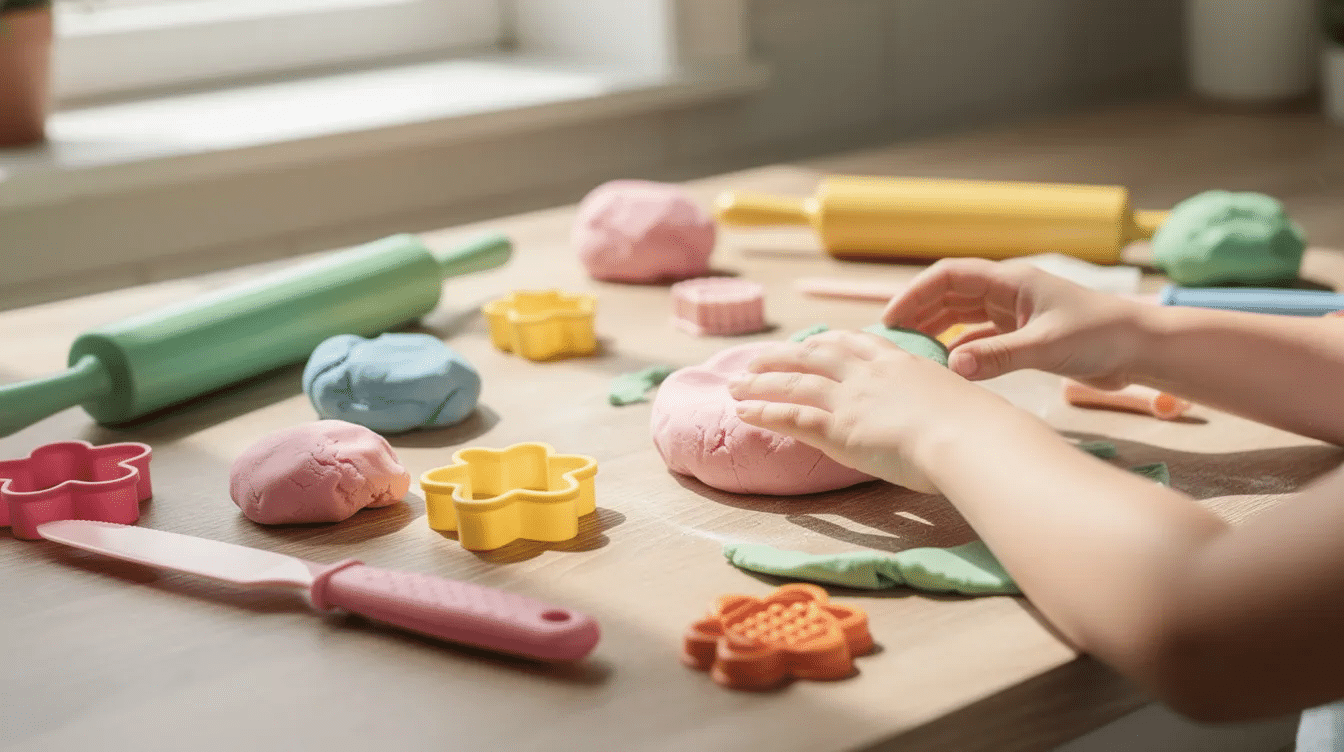
Homemade play dough is one of the most budget friendly activities because it turns pantry basics into hours of play. Kids can make their own play-dough using a simple recipe that includes flour, salt, cream of tartar, water, and vegetable oil, which can be a fun and engaging activity. You can also make salt dough using just salt, flour, and water, which can be shaped into various forms and baked to create ornaments or sculptures.
Why It Stands Out
Play dough and play doh-style creations are ideal for sensory play. Kids squeeze, roll, pinch, stamp, cut, and build, which helps fine motor control and creative juices at the same time. Add toy cars for tire tracks, cookie cutters for pretend baking, or halloween costumes and play dress themes to turn the activity into a bakery, monster lab, or tiny play house. NAEYC also highlights playdough as a simple way to build language, math, and social skills through hands-on exploration.
Best For
This works well for toddlers through elementary school children. Younger kids may simply squash and explore texture, while older kids can design sculptures, ornaments, beads, pretend food, or mini characters.
Key Strengths
- Costs under $2 to make large batches.
- Develops fine motor skills, creativity, and calm focus.
- Can be stored in airtight containers and reused multiple times.
- Pairs well with cookie decorating tools, paper planes challenges, or a pretend tea party setup.
Possible Limitations
Adult supervision is needed during mixing, especially with hot water or small add-ins. It can also be messy without a tray, plastic tablecloth, or clear kitchen table boundary.
2. Kitchen Science Experiments
Kitchen science experiments turn common ingredients into memorable wow moments. A baking soda and vinegar volcano, invisible ink, color mixing, rock candy crystals, or floating-and-sinking tests can all happen with inexpensive supplies already in many kitchens.
Why It Stands Out
Engaging in simple science experiments using common household ingredients can spark children’s interest in science and critical thinking. Kids love seeing a prediction turn into fizz, foam, color, or crystals. You can also make homemade slime, test oil and water with vegetable oil, or grow rock candy to introduce chemistry and observation.
Best For
This is best for school-age children who enjoy asking “why” and “how.” Preschoolers can participate too, but they need closer adult guidance.
Key Strengths
- Uses common pantry ingredients like baking soda and vinegar.
- Teaches basic scientific principles such as reactions, density, and cause and effect.
- Creates memorable wow moments that feel like fun games instead of lessons.
- Can extend into more ideas such as magic tricks, shadow puppets with light, or a free virtual field trip afterward.
Possible Limitations
Some activities need careful timing, exact measurements, or safety rules. Avoid ingestion, protect eyes from splashes, and supervise heat, sharp tools, and glass.
3. Indoor Obstacle Courses and Movement Games
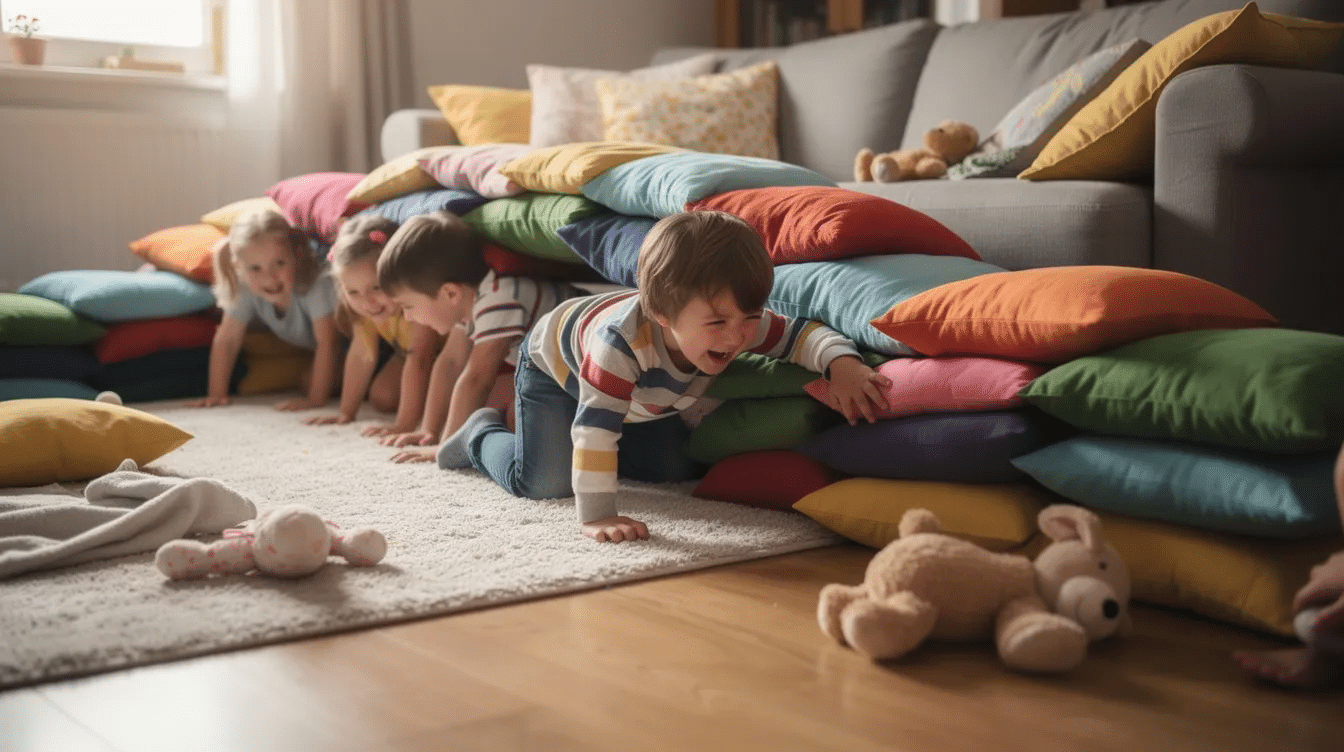
An obstacle course is one of the easiest ways to turn a living room into a gym. Use couch cushions, pillows, painters tape, masking tape, a laundry basket, chairs, blankets, stuffed animal targets, and bean bags to create stations for crawling, jumping, balancing, tossing, and rolling.
Why It Stands Out
Creating an obstacle course at home can be a fun way to keep kids active and engaged, allowing them to time how fast they can complete it. Playing balloon volleyball involves using balloons to play “keep it up” to avoid breaking items in the house. Dance parties are a great way for kids to get moving and have fun, allowing them to learn new dance moves or just enjoy music together. Playing games like Simon Says or Freeze Tag can help kids stay active while also encouraging listening skills and physical movement.
Best For
These indoor games are best for energetic kids who need a physical outlet. An indoor obstacle setup is especially useful on a rainy day when outdoor activities are limited.
Key Strengths
- Uses existing household furniture and items.
- Promotes physical fitness, coordination, balance, and turn-taking.
- Easily adaptable for different skill levels.
- Supports extra movement options: classic games like hopscotch, skipping, and elastics can provide physical activity and fun for kids at home.
- Setting up a mini golf course at home using plastic cups and pool noodles can be a creative way to encourage kids to be active indoors.
- Laundry basket sledding is an indoor activity where kids are pulled across the floor in a laundry basket.
Possible Limitations
You need adequate indoor space and a clear safety zone. A pillow fight may be fun, but it needs rules. If you shift the activity outside, weather matters; save a water balloon fight, blow bubbles, or sidewalk chalk games for safe outdoor space.
4. Cardboard Box Fort Building
A cardboard box can become almost anything. Using cardboard boxes, kids can create imaginative structures such as rocket ships, cars, houses, or even a cardboard time machine craft. One large cardboard box can become a castle; several smaller boxes can become roads, tunnels, puppet theaters, or garages for toy cars.
Why It Stands Out
Cardboard forts are powerful because they combine engineering and pretend play. Building a fort using couch cushions and blankets is a classic indoor activity that encourages creativity and imaginative play, and boxes add walls, windows, doors, and secret compartments. Kids can play house, run a shop, craft a DIY cardboard sword as a prop, launch a rocket, or create an indoor treasure hunt inside the fort.
Best For
This is best for creative kids who love building and pretend worlds. Little kids may need help cutting doors and windows, while older kids can design floor plans and strengthen structures.
Key Strengths
- Completely free using recycled materials.
- Encourages architectural thinking, problem-solving, and collaboration.
- Provides hours of entertainment value.
- Works well with scavenger hunt clues, treasure hunt maps, or a list of hidden items.
Possible Limitations
You need to save boxes, and the finished fort can take up space. Adults should handle box cutters or sharp scissors.
5. Nature Art and Crafts
Nature crafts begin with a nature walk, a backyard search, or a nature scavenger hunt. Children can collect fallen leaves, rocks, twigs, petals, and bark, then bring them inside for leaf printing, rock painting, flower pressing, collages, or other creative nature stick crafts for kids.
Why It Stands Out
Nature art connects outdoor observation with indoor creativity. Kids can create their own art by gathering leaves and flower petals outdoors, arranging them on wax paper, and then having an adult cover them with more wax paper and iron them together. Creating a collage by cutting up pictures from magazines or colored paper, or trying tissue paper stained glass crafts for all ages, is a fun and creative craft that can be done with materials at home.
Best For
This is ideal for nature-loving kids and artistic personalities. It also works well after a visit to a local park or a short backyard collecting trip.
Key Strengths
- Materials can be collected for free from outdoor spaces.
- Combines outdoor exploration with indoor creativity.
- Creates keepsakes, decorations, cards, and seasonal displays; keep a small stash of essential art supplies for young artists on hand so kids can easily turn their finds into finished projects.
- Making paper airplanes is a simple craft that can be enjoyed by kids of all ages, allowing them to experiment with different designs and see which flies the best.
- Making a flip book involves drawing a picture in the corner of each page of a drawing pad, changing the picture slightly from page to page to create the illusion of movement.
- Kids can also make friendship bracelets, write letters, decorate paper airplanes, or create art with colored pencils.
Possible Limitations
Nature materials depend on the season, and paint or glue can add mess. Keep a tray nearby and check leaves, flowers, and rocks before bringing them indoors.
6. Homemade Musical Instruments
A family band can start with recycled materials. Make shakers from bottles and rice, drums from pots, guitars from boxes and rubber bands, or rhythm sticks from paper towel tubes, or explore all-in-one DIY kits for creative projects if you want supplies bundled together.
Why It Stands Out
Homemade instruments teach sound through play. Children can test pitch, volume, vibration, rhythm, and tempo without needing formal music lessons, or follow a guide to make a DIY marching drum at home. Add a dance party afterward and everyone gets movement plus music.
Best For
This is best for music-loving kids and those who enjoy making noise. It can include siblings, parents, grandparents, and other family members.
Key Strengths
- Uses recyclable materials like cans, bottles, boxes, and rubber bands.
- Introduces basic music concepts and rhythm.
- Encourages family band performances, listening, and cooperation.
- Can be paired with karaoke, freeze dance, or homemade concert tickets.
Possible Limitations
It can be noisy, especially in apartments or shared homes. Set a performance time, quiet time, and storage spot for instruments.
7. Cooking and Baking Projects
Cooking projects turn snack time into learning time. Pancakes, cookies, no-bake bars, fruit kabobs, hot cocoa, and own popsicles are simple ways to teach measurement, sequencing, patience, and responsibility.
Why It Stands Out
Cooking delivers an immediate reward: kids can eat what they make. Activities such as cookie decorating and setting up a tea party for stuffed animals can engage kids. Research on cooking with children has also linked family food preparation with better diet quality and greater willingness to try vegetables and new foods.
Best For
This is best for kids who enjoy helping in the kitchen and learning independence. Toddlers can stir or sprinkle; school-age children can read steps, measure, and clean up.
Key Strengths
- Uses ingredients already available in most kitchens.
- Teaches math, reading, following directions, and patience.
- Results in delicious treats to enjoy.
- Turns snacks into family bonding instead of another chore.
Possible Limitations
Cooking requires constant adult supervision around heat, knives, ovens, and raw ingredients. It can also create kitchen messes, so build cleanup into the activity.
Quick Comparison of the Best Home Activities
- DIY Playdough – Best for sensory play and fine motor development.
- Kitchen Science – Best for curious minds who love experiments.
- Obstacle Courses – Best for burning energy indoors.
- Cardboard Forts – Best for imaginative builders and creators.
- Nature Crafts – Best for artistic kids who love outdoor collecting.
- Musical Instruments – Best for rhythm and music exploration.
- Cooking Projects – Best for learning practical life skills.
For quick extras, indoor games like board games and card games promote critical thinking and cooperation among children. You can play board games, play games with simple dice, fold paper planes, stage shadow puppets, take a bubble bath, plan a family movie night, or organize a treasure hunt. Scavenger hunts can be organized with kids searching for items based on a provided list, and creating a treasure hunt with clues around the house can be an exciting indoor activity that keeps kids engaged and active.
How to Choose the Right Activity for Your Child
Choose Based on Your Child’s Age and Development
Toddlers usually do best with sensory play, music, blocks, and simple sorting. Preschoolers enjoy pretend play, scavenger hunt lists with pictures, play dress corners, and hands-on crafts. Older kids often want harder challenges, such as timed obstacle course rounds, science experiments, flip books, mini golf design, or cooking projects with more independence, while five-year-olds thrive with engaging group activities that build teamwork.
Reading new books can significantly enhance children’s literacy skills and foster a love for reading. Learning a new language can be an engaging educational activity for children, with apps like Duolingo providing interactive lessons. Creating a family travel bucket list by looking at a world map can help children learn geography and planning skills.
Choose Based on Available Time and Energy
If you have 15 minutes, choose paper airplanes, card games, balloon volleyball, Simon Says, or a quick dance party. If you have an hour, choose play dough, cooking, nature crafts, or a cardboard fort. Affordable at-home activities for kids include building blanket forts, creating obstacle courses, making homemade slime or play-doh, and staging dance parties.
When parent energy is low, choose activities with simple rules and low cleanup. When you have more time, join the play, invite family members, and let kids lead.
Choose Based on Space and Mess Tolerance
Small spaces work well for board games, card games, write letters projects, shadow puppets, collages, and reading. Larger rooms work better for an indoor obstacle course, balloon volleyball, laundry basket sledding, or mini golf. Messier activities like shaving cream play, painting, play dough, and cooking should happen on washable surfaces, while a compact fuzzy felt activity board can offer quiet, low-mess play.
Virtual field trips to museums and zoo webcams are often available for free, which makes them a useful calm option when space, weather, or cleanup time is limited.
Which Activity Is Best for You?
Choose DIY Playdough if you want calming, focused play that keeps hands busy. Choose Kitchen Science if your child loves asking “why” and “how.” Choose Obstacle Courses if you need to burn energy on rainy days. Choose Cardboard Forts if you have boxes and imaginative kids. Choose Nature Crafts if you want to combine outdoor and indoor time. Choose Musical Instruments if your family loves music and noise. Choose Cooking Projects if you want to teach practical skills.
If you need kids entertained with almost no prep, start with balloon volleyball, paper airplanes, a scavenger hunt, or board games. If you want family bonding, try cooking, a family band, a tea party, or family movie night. If you want a bigger project, build a cardboard box city, create an indoor treasure hunt, or turn the living room into a full indoor obstacle challenge.
Final Thoughts
The best cheap kids activities at home combine fun, learning, and minimal cost. Household items often make the best activity materials because they are flexible, familiar, and easy to replace.
Rotate between quiet crafts, active indoor games, science experiments, cooking, and imaginative play to prevent boredom. Start with one idea today, keep the setup simple, and let your kids help decide what comes next.