

When the rain will not quit and the backyard is off-limits, the best rainy day activities 4 year old at home are simple, safe, and short enough to match a preschooler’s attention span. At this age, kids need a mix of movement, creativity, sensory exploration, and pretend play to stay regulated and happy.
This guide focuses on low-prep indoor activities that keep kids entertained without requiring fancy equipment. The activities were selected for developmental fit, engagement level, ease of setup, safety, and how well they help children build real skills while they play.
- How We Chose the Best Rainy Day Activities for 4-Year-Olds
- Top 6 Types of Rainy Day Activities for 4-Year-Olds at Home
- 1. Arts and Crafts Activities
- Why It Stands Out
- Best For
- Key Strengths
- Possible Limitations
- 2. Simple Cooking and Baking Projects
- Why It Stands Out
- Best For
- Key Strengths
- Possible Limitations
- 3. Indoor Physical Activities
- Why It Stands Out
- Best For
- Key Strengths
- Possible Limitations
- 4. Building and Construction Play
- Why It Stands Out
- Best For
- Key Strengths
- Possible Limitations
- 5. Sensory Play Activities
- Why It Stands Out
- Best For
- Key Strengths
- Possible Limitations
- 6. Pretend Play and Dress-Up
- Why It Stands Out
- Best For
- Key Strengths
- Possible Limitations
- Quick Comparison of the Best Activity Types
- How to Choose the Right Activity for Your 4-Year-Old
- Which Activity Type Is Best for You?
- Final Thoughts
How We Chose the Best Rainy Day Activities for 4-Year-Olds
Good rainy day activities should match how 4-year-olds actually think, move, and focus. Many preschoolers can handle about 8–12 minutes of structured adult-led focus, while self-chosen activities may last closer to 15-30 minutes if they are hands on and fun.
We evaluated each activity type using these factors:
- Developmental fit for 4-year-old ages and preschoolers
- Support for fine motor skills and gross motor coordination
- Independence level and how much adult supervision is needed
- Materials commonly found around the house, art supplies, toys, or recycling bin
- Educational value, including memory, sequencing, problem-solving, and language
- Safety for indoor play, including a clear safe spot for movement
- Mess level and how easy it is to save time during cleanup
For milestones and general development, parents can also compare activities with guidance from the CDC’s 4-year-old developmental milestones.
Top 6 Types of Rainy Day Activities for 4-Year-Olds at Home
1. Arts and Crafts Activities
Arts and crafts are classic rainy day activities because they turn a gray afternoon into a creative project. Give children paper, paint, crayons, googly eyes, pipe cleaners, buttons, and glue, and they can create animals, monsters, houses, cards, or a story scene while enjoying the developmental benefits of arts and crafts.
Rock painting, homemade stuffed animals, and preschool 3D art projects work especially well indoors. Making homemade stuffed animals using construction paper, markers, and recycled newspaper is a fun and engaging project that encourages creativity and hands-on learning. Creating a three-dimensional collage with reusable materials like craft sticks and buttons allows children to express their creativity while developing fine motor skills.
Making DIY natural watercolors from flowers, fruits, and vegetables allows children to explore color creation while learning about natural sources of pigments, especially if you have essential art supplies for young artists on hand.
Why It Stands Out
Crafts develop fine motor skills and creativity at the same time. Cutting, squeezing glue, placing small objects, and drawing lines all strengthen hand control for school readiness and build fine motor skills through art activities.
Best For
Arts and crafts are best for children who enjoy quiet focus, decorating, coloring, or making gifts for family and friends.
Key Strengths
- Develops fine motor skills and hand-eye coordination
- Encourages self-expression and creative thinking
- Can be done independently with minimal supervision once materials are ready
Possible Limitations
- Paint, glue, and glitter can create mess
- Some projects need specific supplies, though paper, crayons, and recycling bin items are often enough
2. Simple Cooking and Baking Projects
Cooking is one of the most useful indoor activities for kids because it mixes food, science, math, and responsibility. Cooking can be a hands-on project for children, allowing them to explore sensory experiences, logical ordering, and boosting their confidence.
Kids can learn to cook by making easy, hands-on recipes like sandwiches, wraps, or salads, which are suitable for their skill level. Making butter is another simple cooking activity that requires just a lidded container and some heavy cream, making it easy for kids to participate.
For more ideas, try banana “sushi,” yogurt parfaits, or no-bake snack bites with three ingredients. If you want a simple science experiment, mix baking soda and vinegar in a bowl and watch the bubbles rise before moving to a real recipe.
Why It Stands Out
Cooking combines following directions, sensory exploration, counting, pouring, mixing, and practical life skills. Children often love watching ingredients change from separate pieces into something they can eat.
Best For
Cooking projects are best for kids who like helping, tasting, smelling, pouring, and working beside an adult.
Key Strengths
- Teaches practical life skills and following directions
- Provides sensory experiences and early math concepts
- Results in edible rewards that motivate kids engaged in the task
Possible Limitations
- Requires adult supervision near knives, heat, and kitchen equipment
- Waiting time during baking can test patience, so plan a short game while food cooks
3. Indoor Physical Activities
Some rainy day kids do not need a quiet table activity first. They need to jump, throw, catch, toss, balance, and move. Indoor obstacle courses can be created using pillows, tape lines, and cushions to promote physical activity and coordination for children.
Dance parties are a fun way for children to engage in physical activity, allowing them to express themselves and burn off energy. Put on music, start a dance party, and play freeze dance when the song stops.
Playing balloon tennis is an engaging indoor activity that helps children develop hand-eye coordination while keeping them active. You can also throw soft socks into a laundry basket, jump over bubble wrap, or make easy games with playing cards, such as “draw a red card and hop five times.”
Why It Stands Out
Movement activities burn energy while improving balance, coordination, and body awareness. Research shows preschoolers are more active outdoors than indoors, so short active bursts matter when weather keeps kids inside.
Best For
Physical activities are best for high-energy kids, toddlers with older siblings, or children who need movement before they can sit and focus.
Key Strengths
- Burns excess energy in confined indoor spaces
- Improves gross motor skills and coordination
- Can involve the whole family for bonding
Possible Limitations
- Requires adequate indoor space for safe movement
- May be too stimulating before nap, bedtime, or quiet time

4. Building and Construction Play
Building play keeps many 4-year-olds busy for longer stretches because it gives them a challenge they control. Blocks, magnetic tiles, cushions, cardboard boxes, plastic container lids, and tubes can become roads, towers, animal homes, or a pretend city.
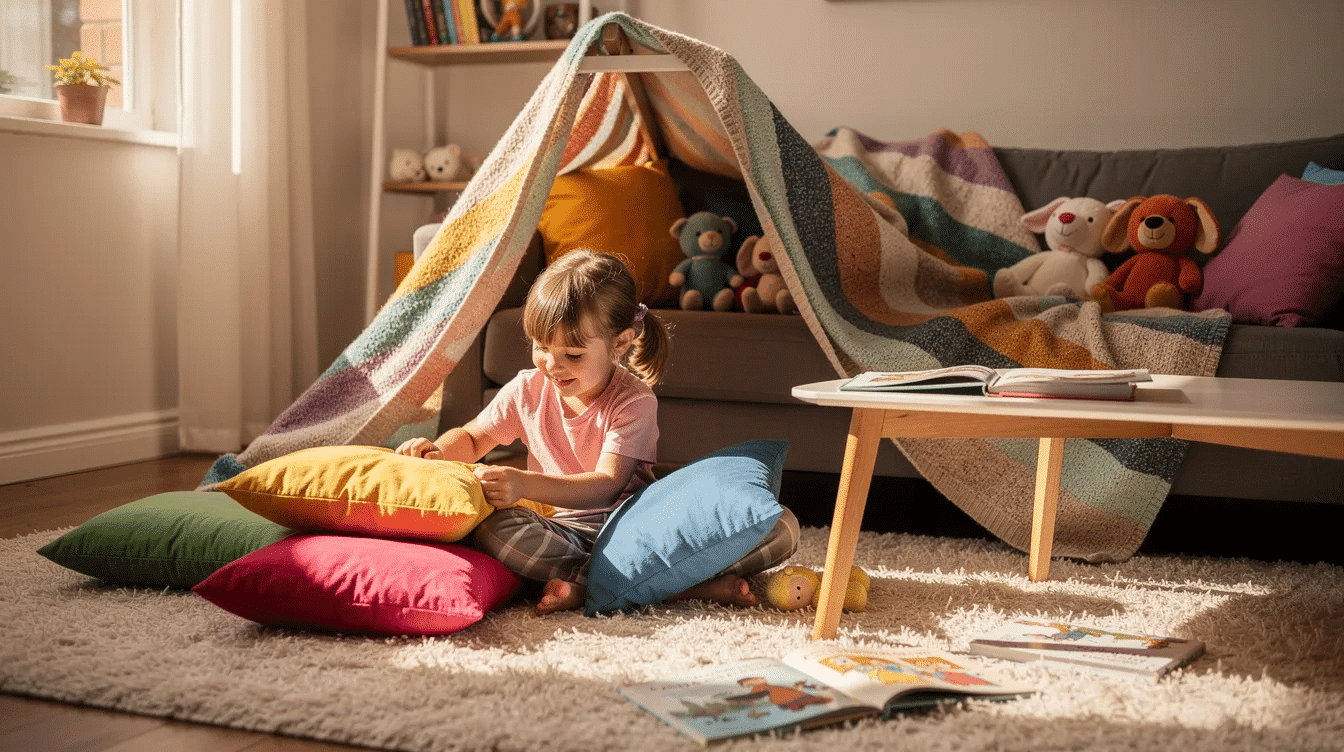
Building a fort using sheets, blankets, and pillows can create a cozy play space that encourages imaginative play and storytelling. Building a toothpick bridge with toothpicks and marshmallows encourages kids to learn about engineering concepts like structural integrity and weight distribution while fostering creativity.
You can also let kids hammer golf tees into a cardboard box or foam block, build a car wash for toy cars, or use the recycling bin to create a robot.
Why It Stands Out
Construction play develops spatial reasoning, planning, persistence, and problem-solving. When the tower falls, children learn to test a new idea instead of giving up.
Best For
Building play is best for logical thinkers, children who like challenges, and parents who need longer independent play time.
Key Strengths
- Develops spatial awareness and early engineering thinking
- Can support independent indoor play for extended periods
- Uses common household items or basic toys
Possible Limitations
- May frustrate children who struggle with small pieces or fine motor skills
- Cleanup can take time if blocks, boxes, and loose parts spread through the house
5. Sensory Play Activities
Sensory play is one of the most reliable ways to calm a restless preschooler. A sensory bin can include rice, dry pasta, water beads for older supervised children, scoops, spoons, cups, toy animals, or shells.
Building a sensory bin can be soothing for kids of all ages, providing a hands-on way to explore different textures and materials. Creating a nature sensory bin with items like pinecones, leaves, and twigs encourages exploration of different textures and fosters imaginative play, similar to simple nature stick crafts for kids that can extend the activity.
Water play is a popular sensory activity that allows children to explore and experiment with water in a safe environment, enhancing their sensory experiences. DIY slime can be made by mixing cornstarch and water or glue with an activator. You can also try play dough, shaving cream trays, or a rain cloud in a jar; making a rain cloud in a jar is a fun science experiment that can be done indoors, allowing children to explore weather concepts in a hands-on way, or use simple DIY kits for creative projects if you prefer ready-made setups.
Creating a tabletop biosphere can teach children about ecosystems by using a clear glass jar, small plants, soil, pebbles, and water to create a self-sustaining environment.
Why It Stands Out
Sensory play gives children tactile input that can support focus, calm, and curiosity. It is especially useful when a rainy day has made everyone feel stuck indoors.
Best For
Sensory activities are best for sensory seekers, anxious kids, and children who need calming before lunch, rest, or bedtime.
Key Strengths
- Provides calming, therapeutic benefits
- Supports sensory processing and focus
- Can be contained in a tray, tub, or plastic container
Possible Limitations
- May create mess requiring immediate cleanup
- Some children may dislike wet, sticky, loud, or strong-smelling textures
6. Pretend Play and Dress-Up
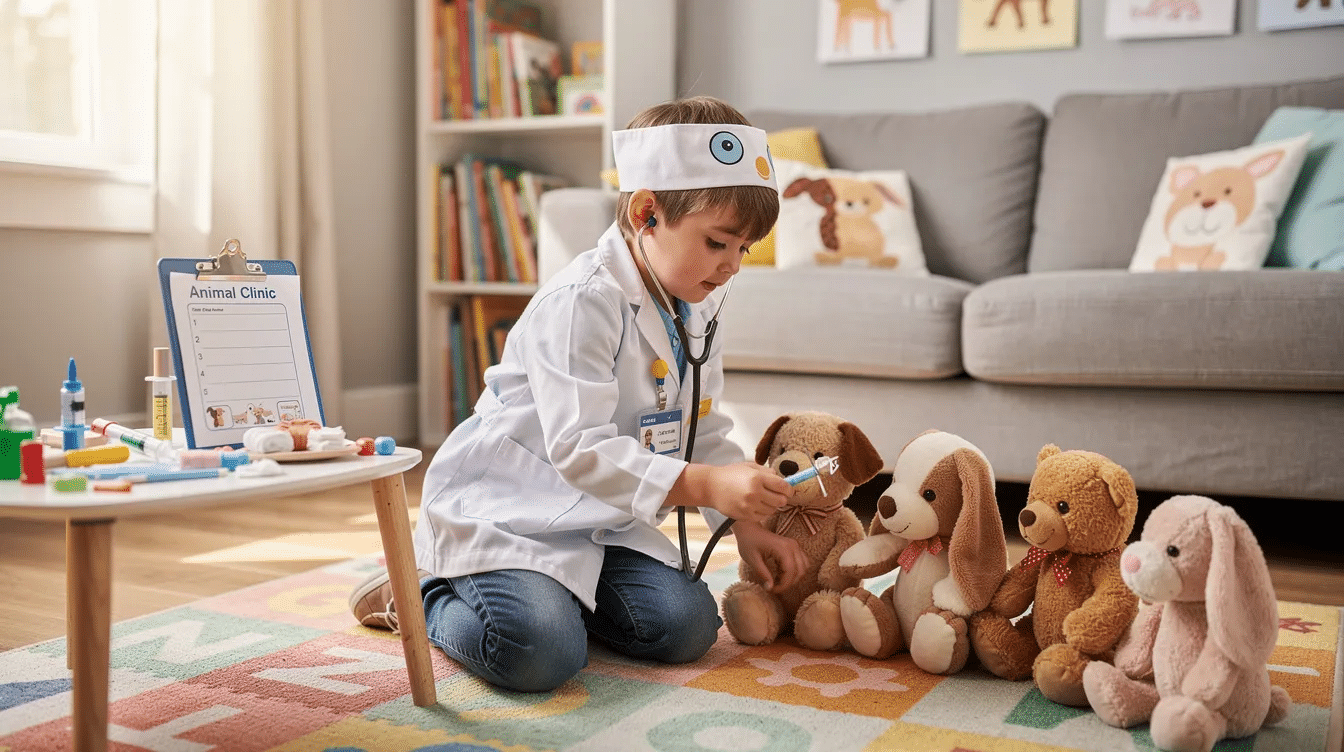
Pretend play is where 4-year-olds often shine. They can turn own clothes, scarves, hats, stuffed animals, spoons, boxes, and blankets into a shop, school, vet clinic, camping trip, snow rescue, or restaurant, or act out seasonal stories with winter polar bear crafts as props.
This type of kids play builds language, confidence, and social-emotional growth. A child can become a doctor helping animals, a parent cooking dinner, or a mail carrier delivering paper letters around the house.
Scavenger hunts can engage children by having them find listed items around the house, or you can hide simple owl crafts for kids as special treasures to discover. Creating an indoor scavenger hunt can enhance cognitive skills such as memory and attention to detail while providing physical activity as children search for hidden treasures around the house.
Why It Stands Out
Imaginative play helps children practice storytelling, empathy, problem-solving, and self-expression. It also gives adults a simple way to teach new words and social scripts.
Best For
Pretend play is best for imaginative kids, children developing social skills, and preschoolers who enjoy acting out real life.
Key Strengths
- Develops imagination and storytelling abilities
- Can be done with items already at home
- Builds confidence and self-expression
Possible Limitations
- May become repetitive without new props or ideas
- Some children may need prompting to get started
Quick Comparison of the Best Activity Types
Use this quick guide when you need creative ideas fast:
Activity type | Best use |
|---|---|
Arts and Crafts | Best for developing creativity and fine motor skills |
Cooking Projects | Best for practical learning and sensory experiences |
Physical Activities | Best for burning energy and gross motor development |
Building Play | Best for problem-solving and independent focus |
Sensory Activities | Best for calming and therapeutic benefits |
Pretend Play | Best for imagination and social-emotional growth |
The strongest rainy day activities often combine categories. For example, build a fort, decorate signs for it, then turn it into a pretend library or animal hospital. |
How to Choose the Right Activity for Your 4-Year-Old
Choose Based on Energy Level
If your child is bouncing off the couch, start with active movement: freeze dance, balloon tennis, an indoor obstacle course, or sock toss. After 10 minutes of movement, transition to play dough, drawing, or a sensory bin.
If your child is tired, avoid overstimulating games and choose quieter indoor activities like books, crafts, puzzles, or water play.
Choose Based on Available Time
For 5-10 minutes, choose quick fun indoor activities: dance, stickers, sorting toys, or a mini scavenger hunt.
For 15-30 minutes, choose building, pretend play, crafts, or cooking prep. If you need more than an hour, rotate activities instead of expecting one idea to last for hours.
Choose Based on Materials at Home
No fancy equipment is needed. Use blankets, cushions, paper, crayons, kitchen bowls, cardboard, socks, music, and safe household objects.
If you have art supplies, set up crafts like tissue paper stained glass projects. If you have blocks, create a city. If you have flour, cream, fruit, or vegetables, try a simple kitchen activity. If the rain changes to snow, bring a bowl of clean snow inside for supervised sensory play.
Which Activity Type Is Best for You?
Choose Arts and Crafts if your child needs quiet focus time and a creativity outlet.
Choose Cooking Projects if you want educational value with practical skills.
Choose Physical Activities if your child has high energy to burn.
Choose Building Play if you need longer independent play time.
Choose Sensory Activities if your child needs calming or therapeutic input.
Choose Pretend Play if developing imagination and social skills is the goal.
The best choice is usually the one that fits your child’s current mood, your available space, and how much supervision you can give.
Final Thoughts
The best rainy day activities depend on your child’s interests, energy level, and developmental needs. Variety is key: rotating between movement, sensory play, crafts, building, cooking, and pretend play helps keep kids engaged without turning the day into a battle.
A successful rainy day usually includes 2-3 activity types ready to switch between. Keep a few supplies in one basket, clear a safe spot before active play, and choose low-prep ideas that make indoor life easier for the whole family.
Next time the weather keeps everyone indoors, pick one active idea, one calming idea, and one creative idea. That simple plan can turn a long weekend rainstorm into a cool day of play.