Learning activities for 2 year olds at home work best when they feel like play, not school. At this stage, a toddler is learning through movement, repetition, imitation, touch, sound, and simple instructions. Play is central to early childhood development, helping children make sense of the world and their place in it.
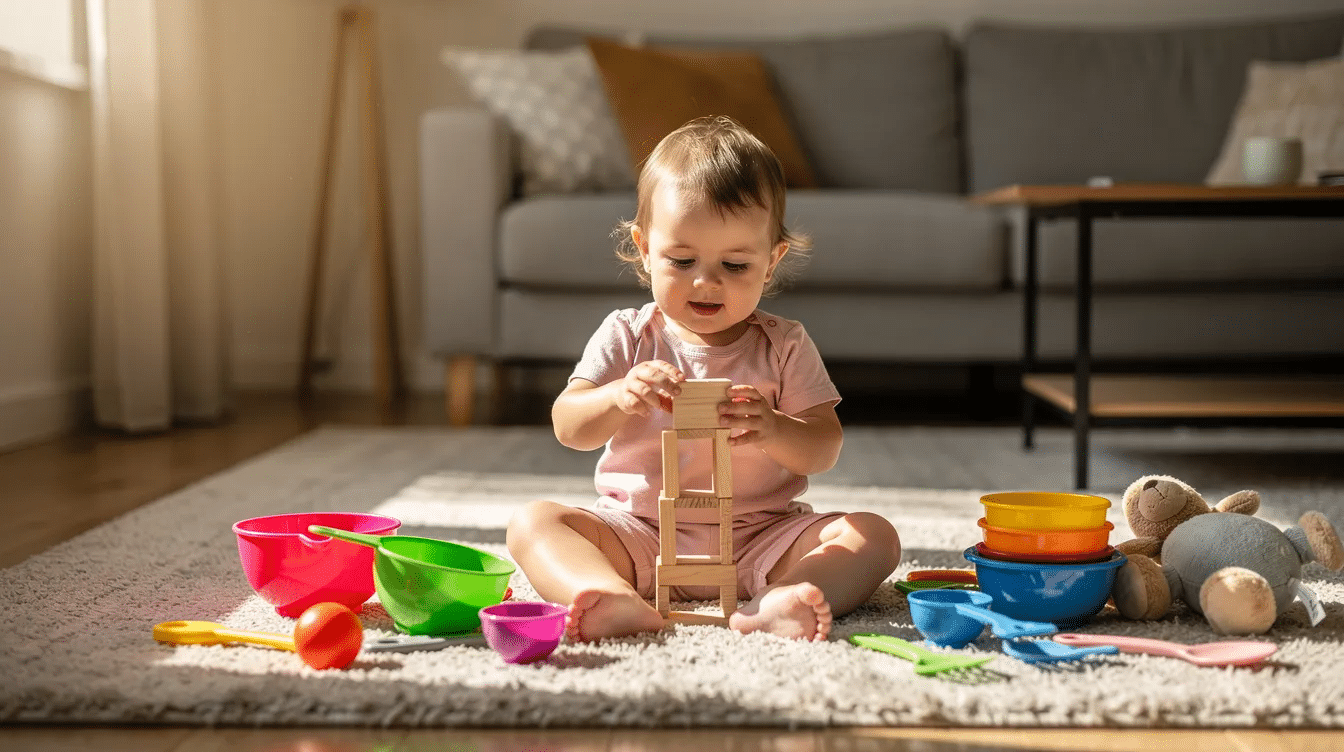
Effective activities for toddlers build fine and gross motor skills, cognitive awareness, and communication. By 24 months, children can sort shapes and colors, build towers of four or more blocks, and communicate in simple two- to four-word sentences, which are key milestones in motor skills development. The best activities for 2 year olds at home support several skills at once, from language skills and social skills to problem solving, creativity, and brain development.
- How We Chose the Best Learning Activities
- Top 7 Learning Activities for 2 Year Olds at Home
- 1. Sensory Bin Exploration
- Why It Stands Out
- Best For
- Key Strengths
- Possible Limitations
- 2. Water Play Activities
- Why It Stands Out
- Best For
- Key Strengths
- Possible Limitations
- 3. Interactive Storytime and Puppet Play
- Why It Stands Out
- Best For
- Key Strengths
- Possible Limitations
- 4. Music and Movement Activities
- Why It Stands Out
- Best For
- Key Strengths
- Possible Limitations
- 5. Building and Construction Play
- Why It Stands Out
- Best For
- Key Strengths
- Possible Limitations
- 6. Art and Creative Expression
- Why It Stands Out
- Best For
- Key Strengths
- Possible Limitations
- 7. Sorting and Matching Games
- Why It Stands Out
- Best For
- Key Strengths
- Possible Limitations
- Quick Comparison of the Best Learning Activities
- How to Choose the Right Learning Activities
- Which Activities Are Best for You?
- Final Thoughts
How We Chose the Best Learning Activities
We selected these educational activities based on developmental appropriateness, safety, low preparation, and real learning value. At-home learning for a 2-year-old is focused on hands-on play and exploration, so each activity uses common materials, encourages children to act, talk, touch, build, move, and practice new skills at their own pace.
Experts recommend a mix of guided and free-play activities to support well-rounded development in toddlers. Research also links varied play experiences with stronger language and reasoning skills by preschool age, and the CDC’s developmental milestones show why simple activities matter during this stage of growth and development.
When choosing learning activities for 2 year olds at home, look for:
- Developmental fit: The activity should match your child’s developmental milestones and different abilities.
- Safety: Avoid choking hazards, sharp items, unsafe water setups, and toxic materials.
- Accessibility: Everyday household items such as blocks, tape, and books can be used for toddler learning activities.
- Engagement: A busy toddler may focus for only a few minutes, so short playtime is normal.
- Adaptability: Activities for toddlers should be adaptable to meet different developmental stages and abilities, allowing for a range of engagement from simple to more complex tasks.
Encouraging toddlers to help with chores develops their cognitive abilities too. Sorting socks, wiping a table with a spray bottle, carrying a wooden spoon to the kitchen, or placing safe toys in a basket can become a learning game. Making cleanup into a game helps build independence and a sense of contribution in toddlers.
Top 7 Learning Activities for 2 Year Olds at Home
1. Sensory Bin Exploration
A sensory bin is a shallow tub filled with safe textures like rice, dry pasta, cereal, fabric scraps, pom poms, measuring spoons, scoops, and containers. A simple activity for toddlers is to create a noodle sensory bin by adding dry noodles to a plastic tub along with scoops or small toys. A fun and easy activity is to fill a sensory bin with cereal, allowing toddlers to snack and play while engaging their senses.
Why It Stands Out
Sensory play gives children new sights, textures, sounds, and vocabulary. Incorporating sensory experiences into activities can help toddlers explore their environment and develop skills, making it essential to choose activities that engage multiple senses.
Best For
This is best for kids who enjoy hands on activities, focused exploration, and calm play in one room of the house.
Key Strengths
- Develops fine motor skills and hand-eye coordination.
- Encourages focus, concentration, and independent learning.
- Engaging toddlers in activities that involve different textures, such as using various fabrics or materials, helps develop their sense of touch and introduces new vocabulary.
Possible Limitations
Sensory bins require cleanup and close supervision. Avoid small materials for children who still mouth objects, and remember that some kids ages two and up dislike sticky or grainy textures.
2. Water Play Activities
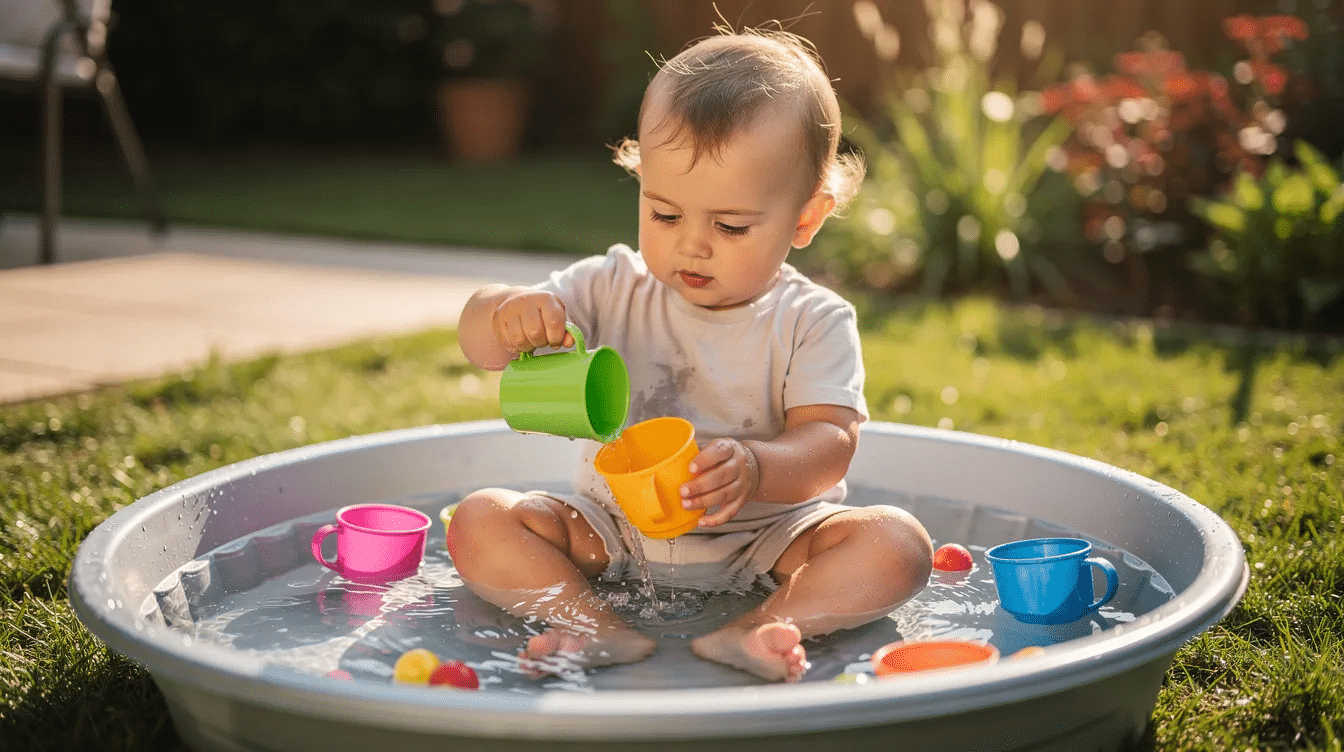
Water play can happen in a sink, bathtub, baby pool, or outdoor bin. Add cups, measuring spoons, a muffin tin, pool noodles cut into large pieces, bath toys, or a spray bottle. For extra interest, add food coloring with a few drops only, and keep towels nearby.
Why It Stands Out
Water play supports sensory exploration and motor development, allowing toddlers to practice coordination while learning basic concepts such as full and empty or sink and float. It naturally teaches cause and effect, volume, and early science.
Best For
Choose this for active toddlers, families with outdoor space, or parents who want fun learning activities for 2 year olds at home that also calm the body.
Key Strengths
- Builds pouring, squeezing, and hand coordination skills.
- Teaches floating, sinking, full, empty, heavy, and light.
- Bath activities that involve painting or using edible materials like yogurt allow for creative expression with easy cleanup.
Possible Limitations
Water always requires constant supervision. Even shallow water can be dangerous, so follow HealthyChildren.org safety guidance. Outdoor water play may also depend on weather.
3. Interactive Storytime and Puppet Play
Reading with toddlers while allowing them to turn pages and point to pictures expands vocabulary and speech. Use board books, puppets, stuffed animals, or silly voices. Pause to ask, “Where is the dog?” or “What sound does the car make?”
Why It Stands Out
Interactive reading builds language skills, attention, memory, empathy, and emotional understanding. It also creates a strong family bonding routine without relying on screen time.
Best For
This is ideal for parents who want to encourage language development, imagination, and quiet play.
Key Strengths
- Builds vocabulary, speech, and listening.
- Imaginative play allows toddlers to explore roles, emotions, and storytelling, which supports their creativity and social-emotional development, similar to other engaging activities for imagination that inspire creative thinking.
- Pretend play, such as using costumes, play kitchens, or a DIY cardboard time machine craft, encourages creativity and helps toddlers develop empathy and flexible thinking.
Possible Limitations
Some toddlers do not sit for long. Keep books short, let children move, and act out animals or characters instead of forcing stillness.
4. Music and Movement Activities
Music and movement can be as simple as singing songs, clapping, marching, dancing, or tapping a wooden spoon on a pot. Add glow sticks for a supervised dim-room dance party, or play freeze dance.
Why It Stands Out
Gross motor play helps toddlers build strength, balance, and coordination, which are essential for their physical development. Freeze dance promotes rhythm, listening skills, and impulse control.
Best For
This is best for energetic kids, rainy days, and families who need simple activities that burn energy indoors.
Key Strengths
- Improves balance, rhythm, and motor skills.
- Supports emotional regulation and self-expression.
- Playing with soft balls in a targeted toss game improves motor skills.
Possible Limitations
Movement games can be noisy or overstimulating. If your child loses focus, slow the pace, walk like quiet animals, or switch to stretching.
5. Building and Construction Play
Use blocks, stacking cups, cardboard boxes, magnetic tiles, or painter’s tape. Using painter’s tape, you can create a car track on the floor for toddlers to drive their toy cars on, which encourages imaginative play.
Why It Stands Out
Activities such as block building support spatial awareness and problem-solving, which are important aspects of motor skills development in toddlers. Building activities develop spatial awareness, persistence, planning, and early math.
Best For
This is a good fit for methodical toddlers, older kids who want to join in, and parents who want activities that grow with the child.
Key Strengths
- Builds spatial awareness and problem solving.
- Encourages trial and error.
- Setting up obstacle courses at home helps toddlers build balance and spatial awareness.
Possible Limitations
Some toys cost more upfront, and building needs floor space. Use large pieces and keep the area clear to prevent falls.
6. Art and Creative Expression
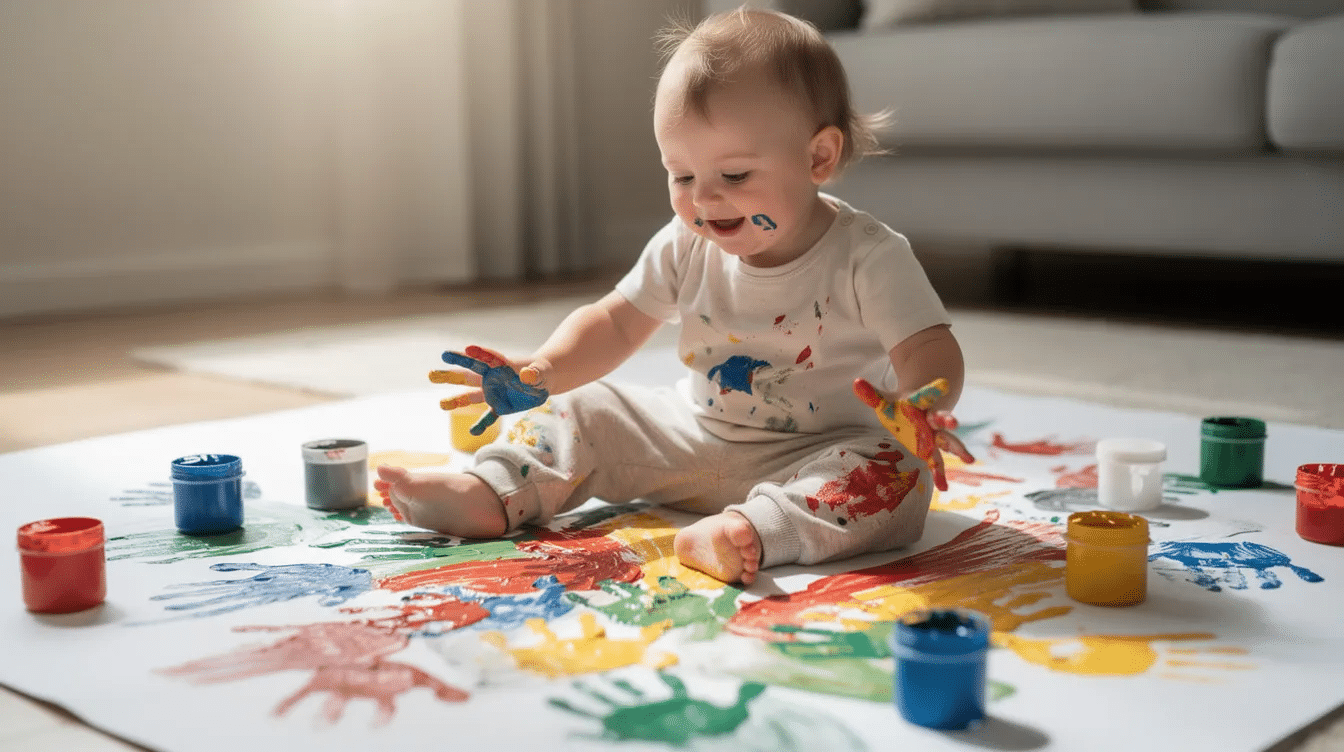
Art can include finger painting, crayons, textured collages, chalk, stickers, play dough, or edible paint. Playing with playdough builds hand muscles needed for holding pencils and writing. You can also mix baking soda, water, and a little color for fizzy supervised art, all of which highlight the art and craft benefits for child development.
Why It Stands Out
Sensory art exploration allows toddlers to engage with textures, colors, and movement through hands-on creativity, which supports early language development and self-expression. Sensory art exploration, such as finger painting and textured collages, encourages toddlers to explore colors and textures while fostering confidence, art-based fine motor skills, and self-expression.
Best For
Choose art if you want to encourage creativity and your child loves hands on exploration.
Key Strengths
- Toddlers can enhance fine motor skills through activities such as sorting, building, and arts and crafts.
- Develops grip strength, confidence, and self-expression.
- Helps children learn names for colors, shapes, lines, and feelings.
Possible Limitations
Art is messy. Cover the table with paper, use washable supplies, and dress for stains, or choose no-mess activities for 2 year olds when you want easy cleanup.
7. Sorting and Matching Games
Sorting toys by color helps toddlers practice cognitive development. Use socks, blocks, lids, pom poms, toy animals, or different shapes. Ask your child to place red items in one bowl and blue items in another.
Why It Stands Out
Color sorting activities help build hand-eye coordination and early problem-solving skills. Sorting also teaches categories, comparison, memory, and early math.
Best For
This is useful for detail-oriented toddlers and parents who want structured learning activities for 2 year olds at home.
Key Strengths
- Builds logic, focus, and early math skills.
- Uses everyday materials from around the house.
- Can be made harder in different ways, such as sorting by size, shape, or animal type.
Possible Limitations
Sorting may become repetitive. Keep your child’s interest by changing the objects, adding a pretend store, or turning cleanup into a matching game.
Quick Comparison of the Best Learning Activities
Activity | Best use |
|---|---|
Sensory Bin Exploration | Best for focused, calm learning and fine motor development |
Water Play Activities | |
Interactive Storytime | Best for language development and bonding time |
Music and Movement | Best for burning energy and gross motor skills |
Building and Construction | Best for spatial reasoning and problem-solving |
Art and Creative Expression | Best for creativity and fine motor control |
Sorting and Matching Games | Best for early math skills and logical thinking |
How to Choose the Right Learning Activities
Choose Based on Your Child’s Energy Level
High-energy toddlers often need movement first: dance, obstacle courses, soft ball toss, or a car track. Calmer children may prefer books, sensory bins, sorting, or play dough. Observing a child’s interests and responses can guide caregivers in selecting and adapting activities, ensuring they remain engaging and developmentally appropriate.
Choose Based on Available Space and Materials
If you have little space, choose tabletop art, sorting, storytime, or a small sensory bin. If you have outdoor space, try water play, a baby pool, chalk, simple obstacle courses, or creative nature stick crafts. You do not need expensive materials; tape, blocks, books, paper, cups, and safe kitchen tools create plenty of learning.
Choose Based on Developmental Goals
For communication, read, sing, talk, and name objects. For fine motor skills, use play dough, art, sorting, and scooping. For gross motor skills, try dancing, climbing cushions, throwing soft balls, or walking along a tape line. For cognitive growth, use matching, building, pretend play, and simple chores.
Which Activities Are Best for You?
Choose Sensory Bins if you want calm, focused activities that develop fine motor skills. Choose Music and Movement if you need to burn energy and develop gross motor skills. Choose Interactive Storytime if language development and bonding are top priorities. Choose Art Activities if you want to encourage creativity and are not afraid of mess.
If you are short on time, start with one 5-minute activity and follow your child’s lead. The best learning activities for 2 year olds at home are not complicated; they are consistent, safe, flexible, and connected to real life.
Final Thoughts
The best learning activities for 2 year olds at home depend on your toddler’s interests, energy level, environment, and developmental stage. Simple play can develop language, movement, social skills, creativity, and confidence when parents stay close and responsive.
Keep a small rotation of ideas ready: a sensory bin, a book basket, blocks, art materials, music, and sorting toys. I hope this gives you more ideas for meaningful playtime with 2 year olds. Start with what you already have, notice what your child enjoys, and create small moments of learning throughout the day.